Villers Bretonneux House by Pleysier Perkins
In Malvern East’s Villers Bretonneux Precinct, Pleysier Perkins has reworked a Californian Bungalow with a careful balance of restoration, restraint and contemporary family living.
Surrounded by an estate of intact and restored period homes, the project required a sensitive architectural response that could protect the character of the original dwelling while giving the house a more open, light-filled way of living.
The home sits on a corner site with a south-facing frontage, an eastern street elevation and a rear garden opening to the north. Heritage controls shaped the project from the beginning. The original façade and front rooms needed to be retained, while any new upper-level work had to sit quietly behind the existing roofline. Pleysier Perkins placed the two-storey extension behind the ridge of the bungalow, keeping the new volume discreet from the street and allowing the heritage frontage to remain the primary architectural gesture.
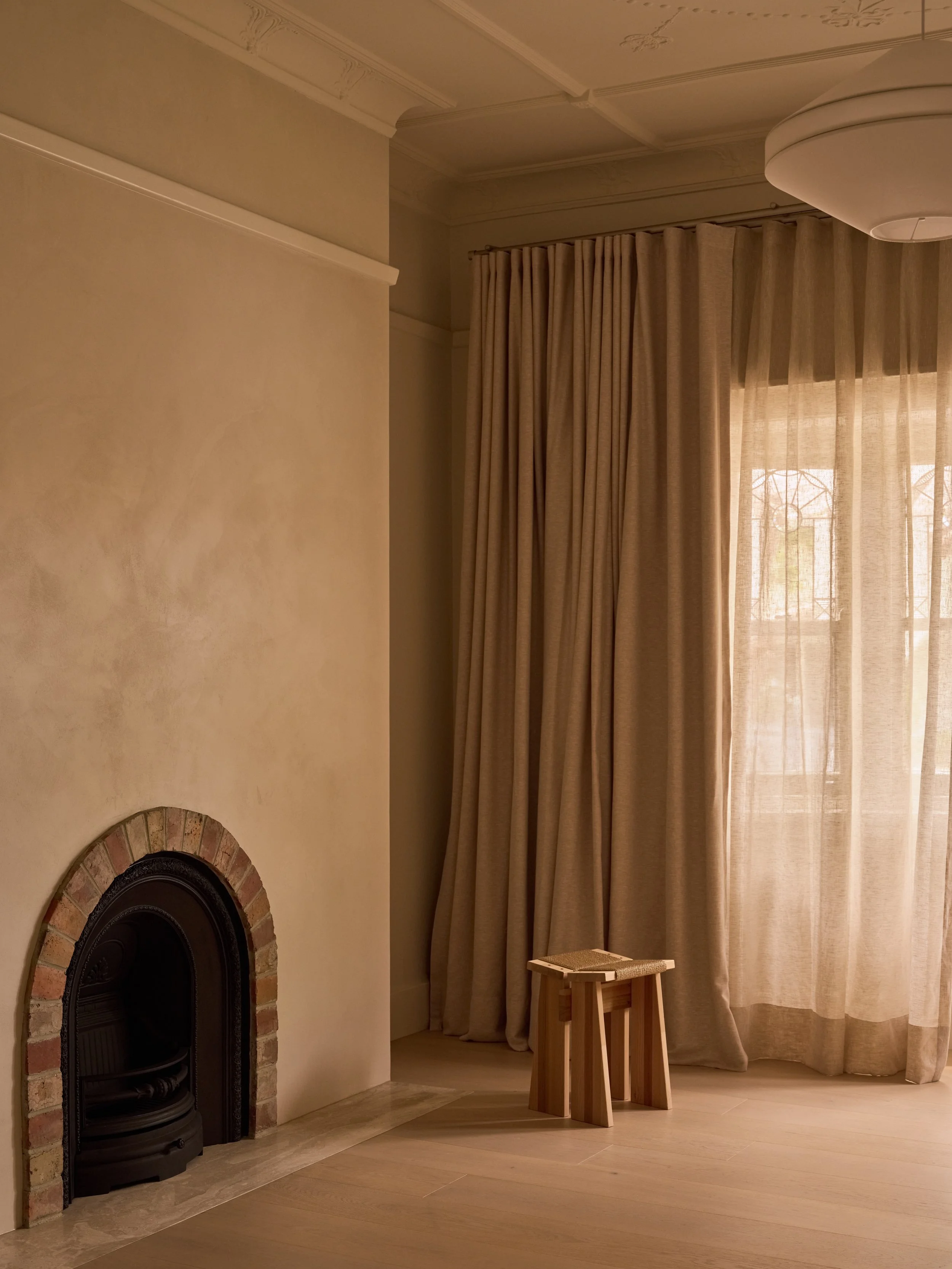
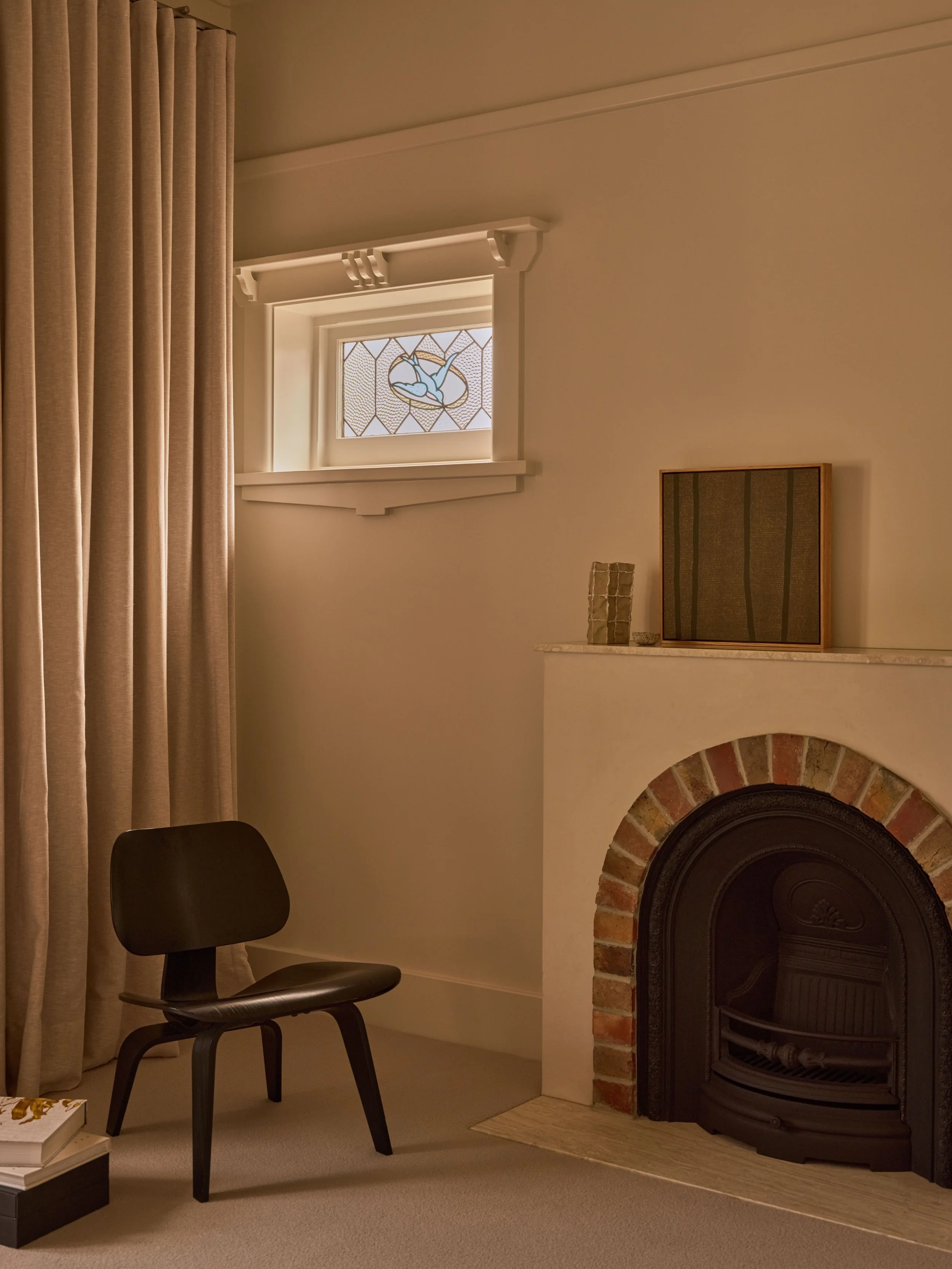
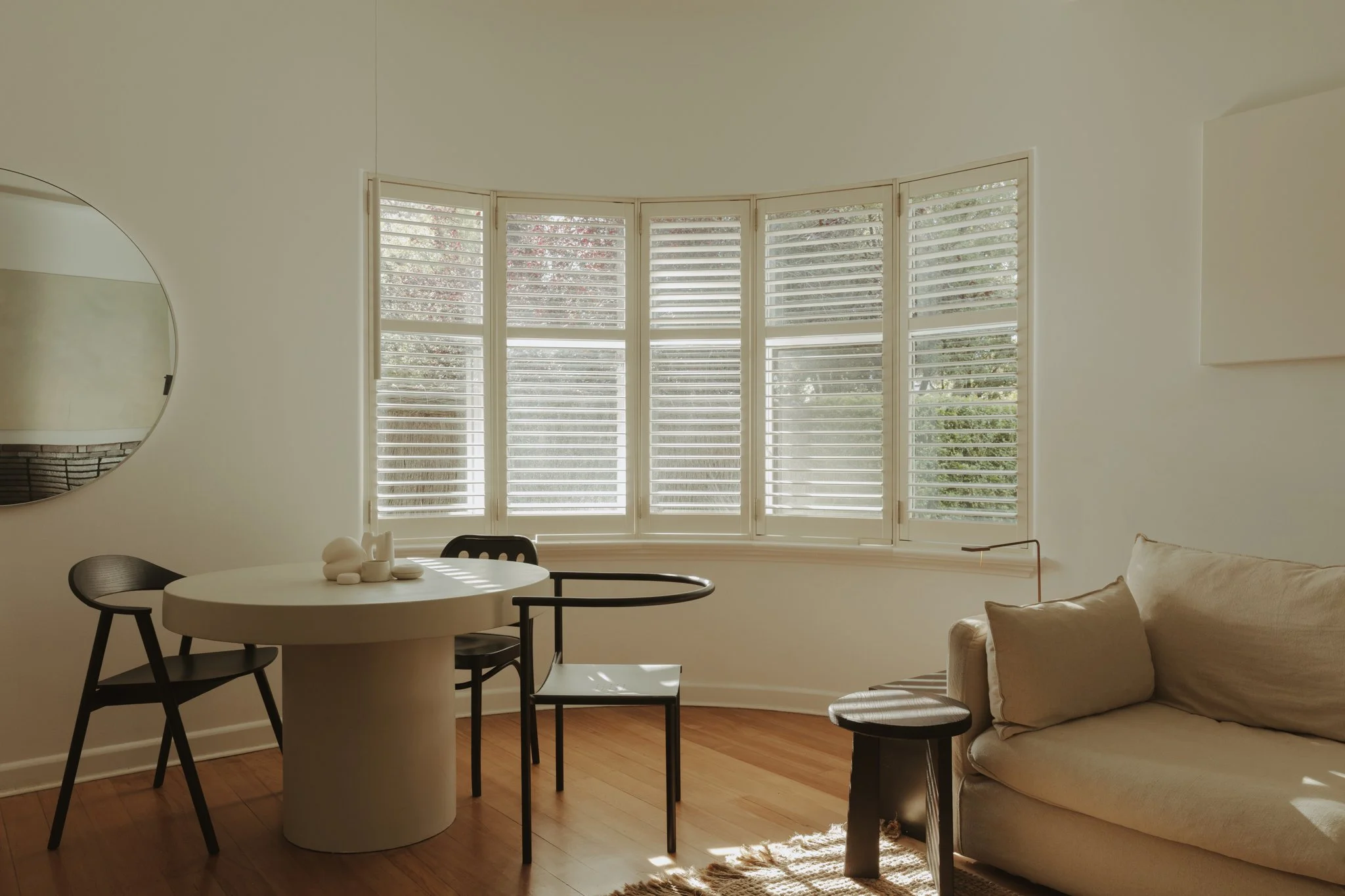
Within the original portion of the dwelling, Pleysier Perkins retained and restored the front rooms, including the existing ceilings, wall panelling and period detailing, while the exterior fabric underwent significant conservation works. The brickwork was tuckpointed, the eave lining boards were replaced with new boards made to match the original, and the roof was renewed with unglazed terracotta tiles from the Monier Marseille range. When the original front porch had to be removed during construction, Mortadello Terrazzo was engaged to create a new in-situ terrazzo pour that reinstated the porch in a manner consistent with the home’s original character.
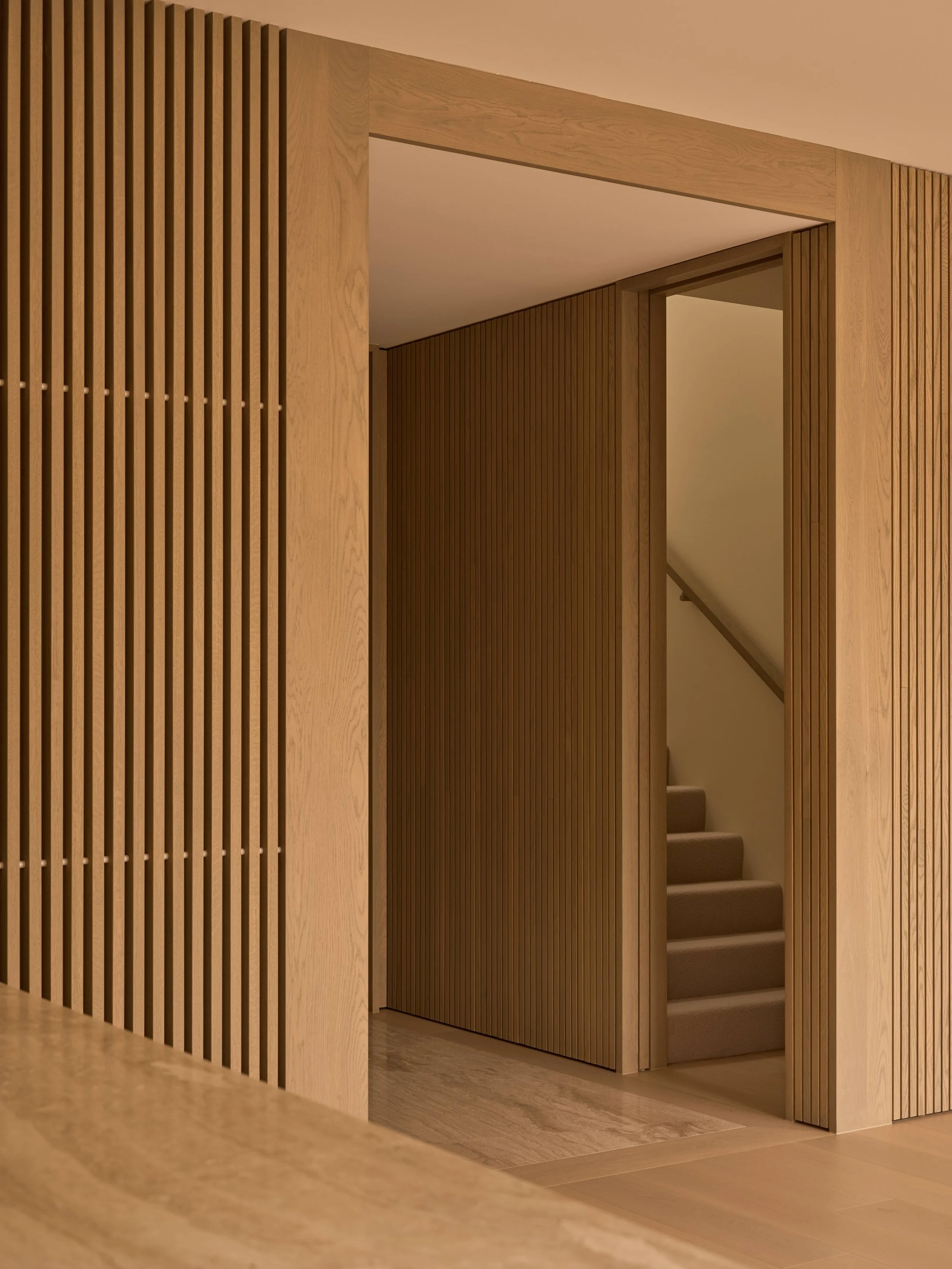
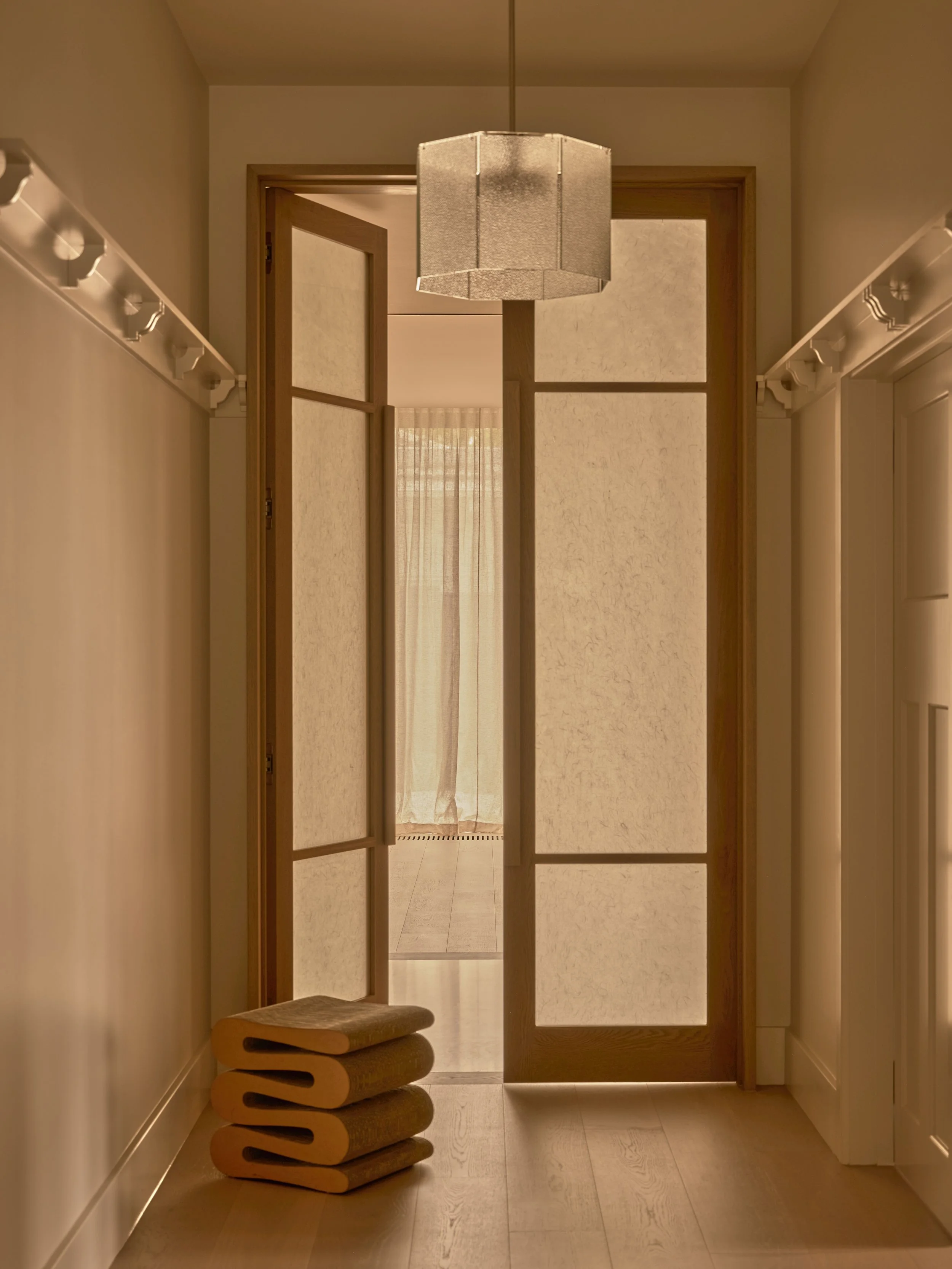
The connection between old and new is made through the existing hallway. Double doors mark the shift from the restored front rooms into the contemporary extension, while a stone inlay in the floor gives this threshold a sense of definition. Crafted timber battens line the walls and conceal a pocket slider to the laundry and stair, turning a practical junction into a finely detailed transitional space.
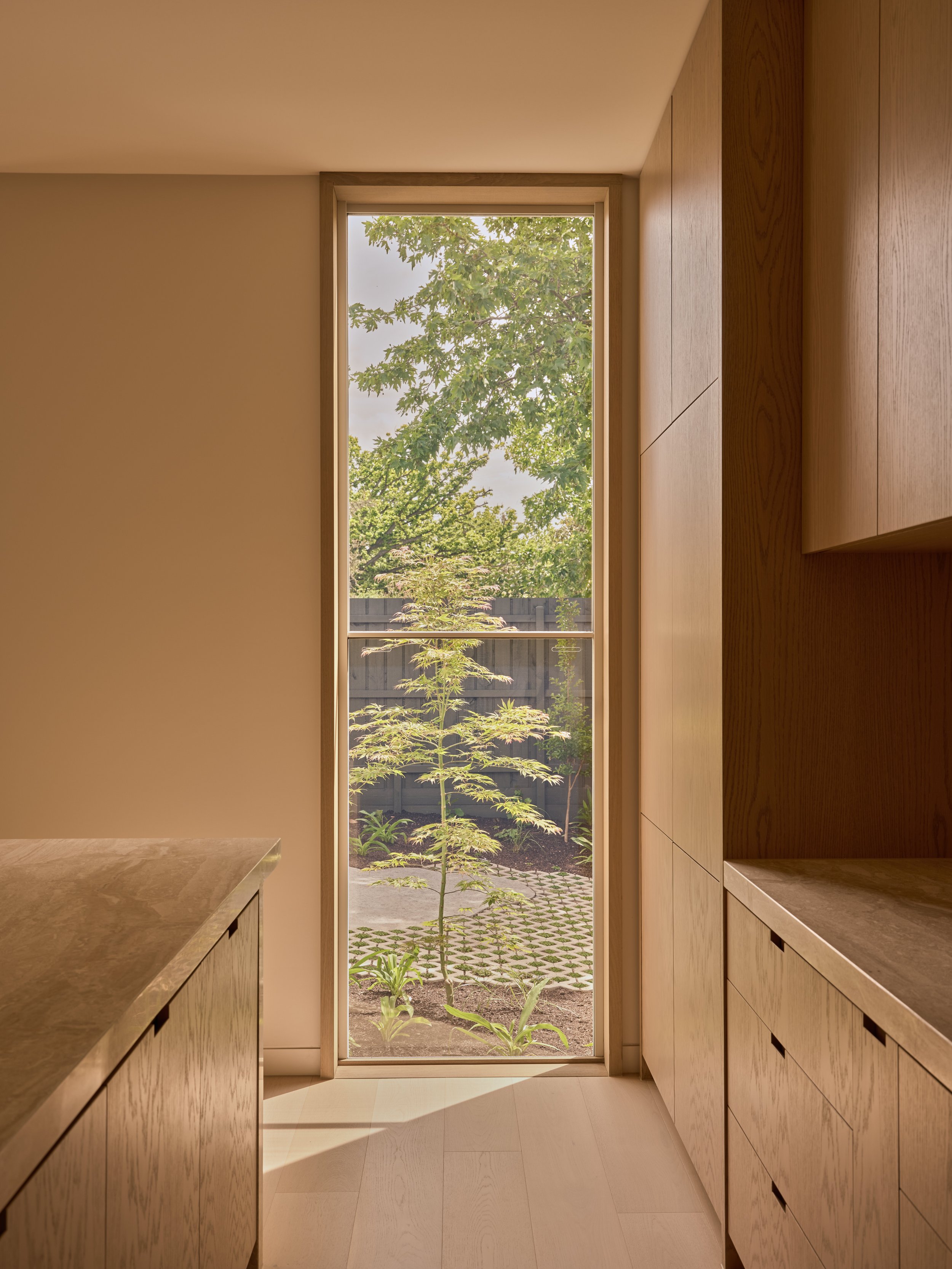
Beyond this point, the house opens toward the northern garden. The new living area is bright and generous, drawing sunlight deep into the plan and connecting the interior to an outdoor pergola and landscape by Eckersley Garden Architecture. The garden becomes an important part of the living experience, softening the extension and giving the family spaces a strong connection to the outdoors.
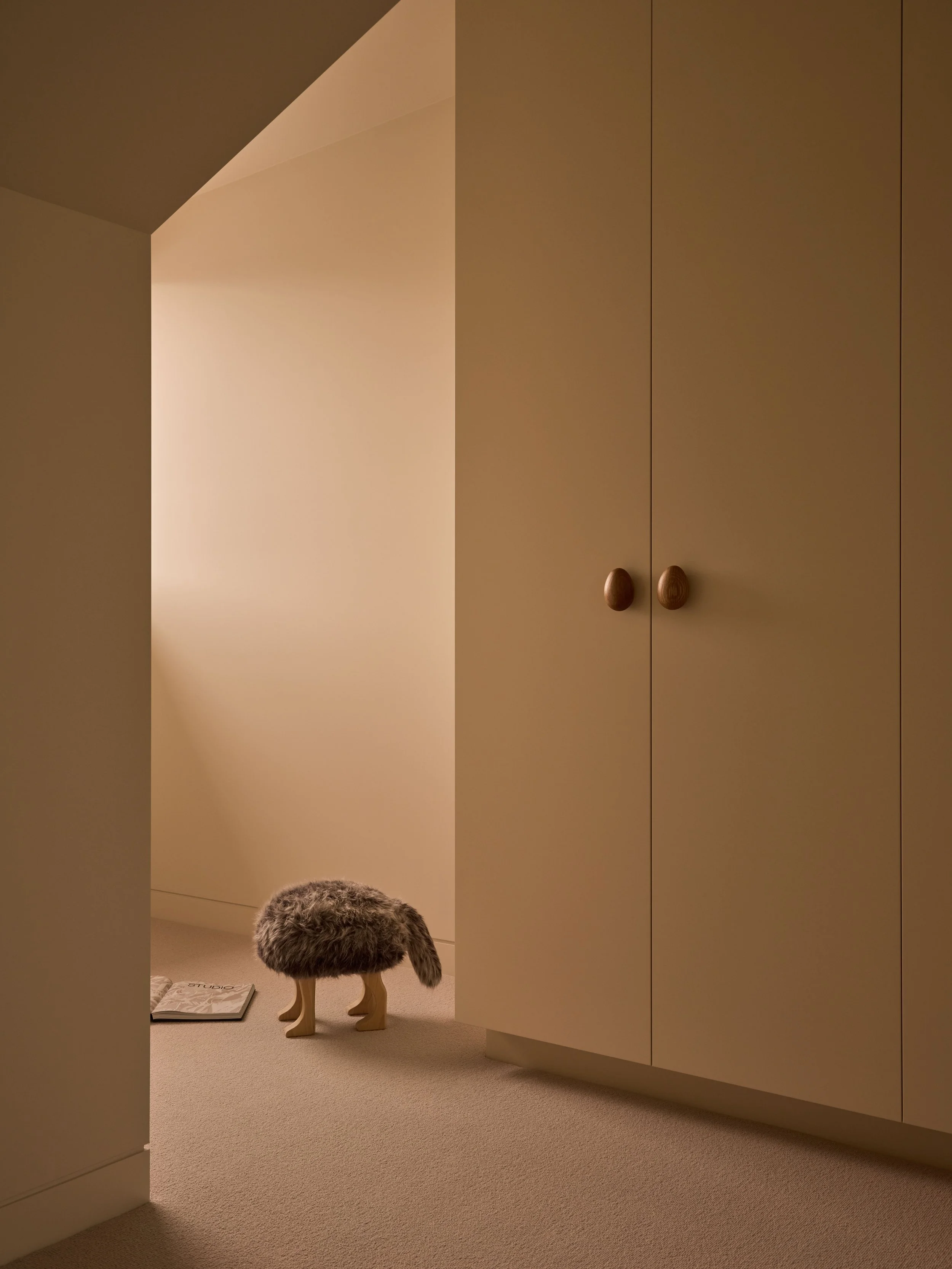
The upper level accommodates a private children’s retreat, with bedrooms and a rumpus room acoustically separated from the main living areas below. This arrangement gives the house a clear separation between shared and private spaces, allowing the restored front rooms, open-plan living area and upper floor retreat to each serve a distinct role within the family home.
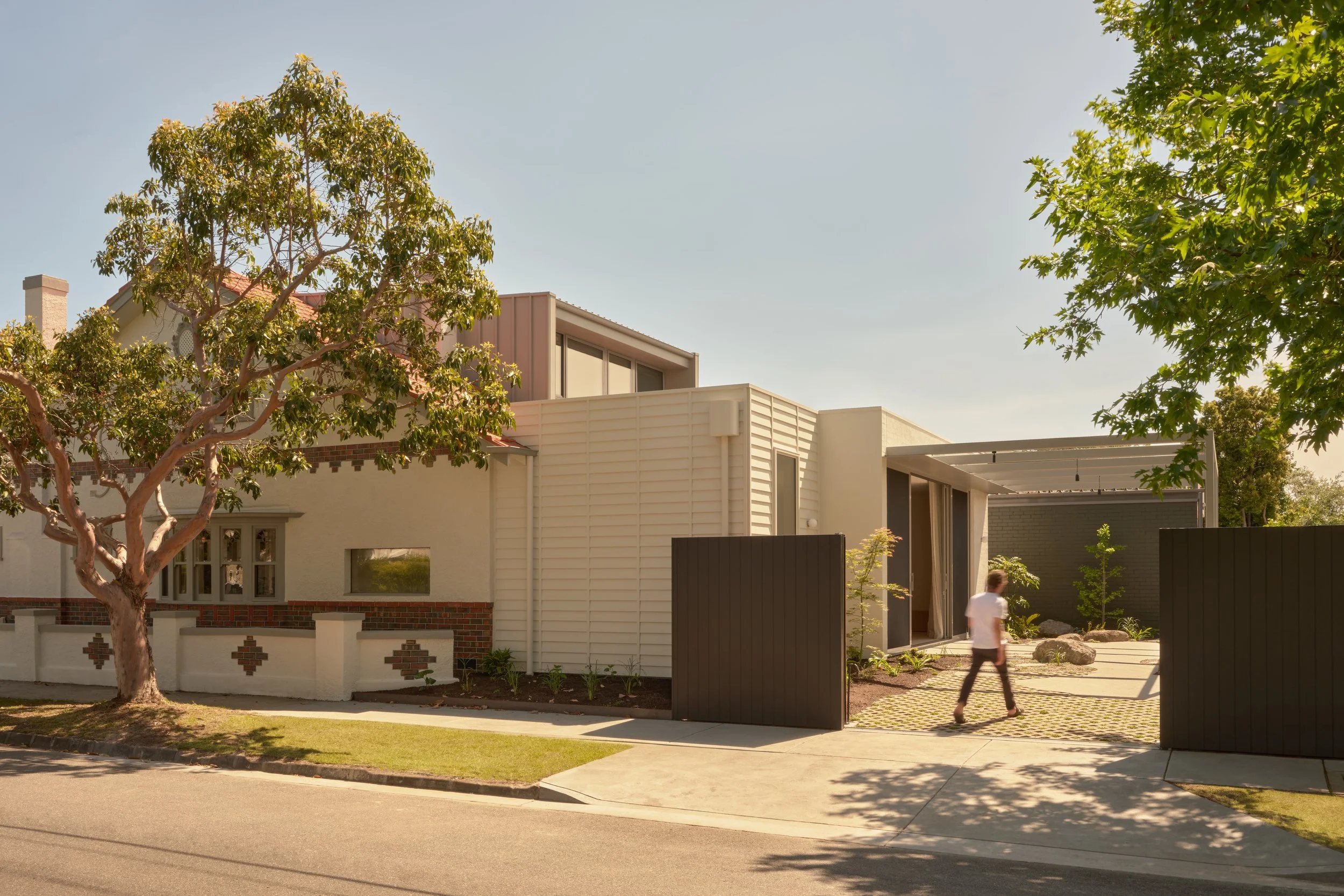
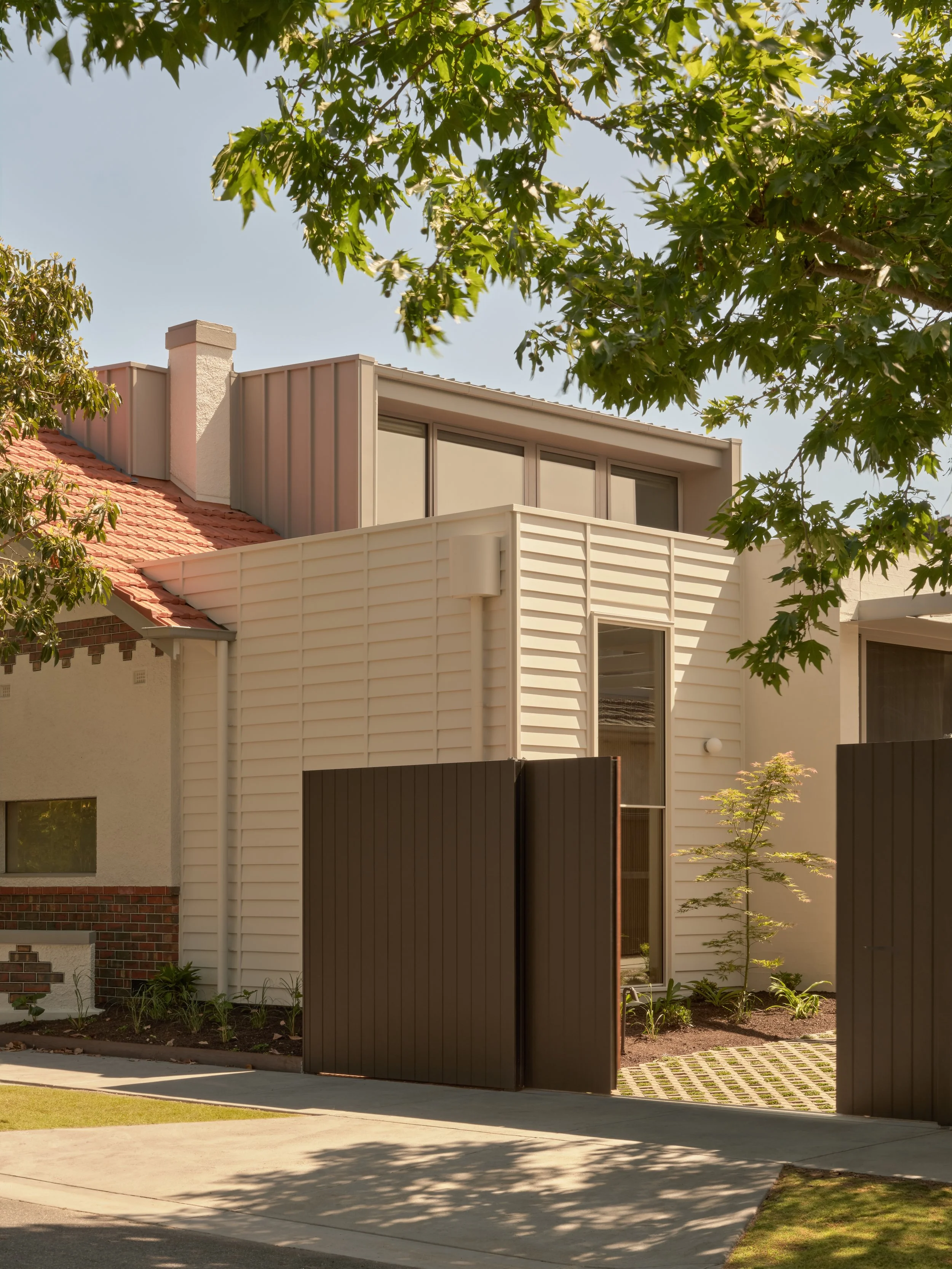
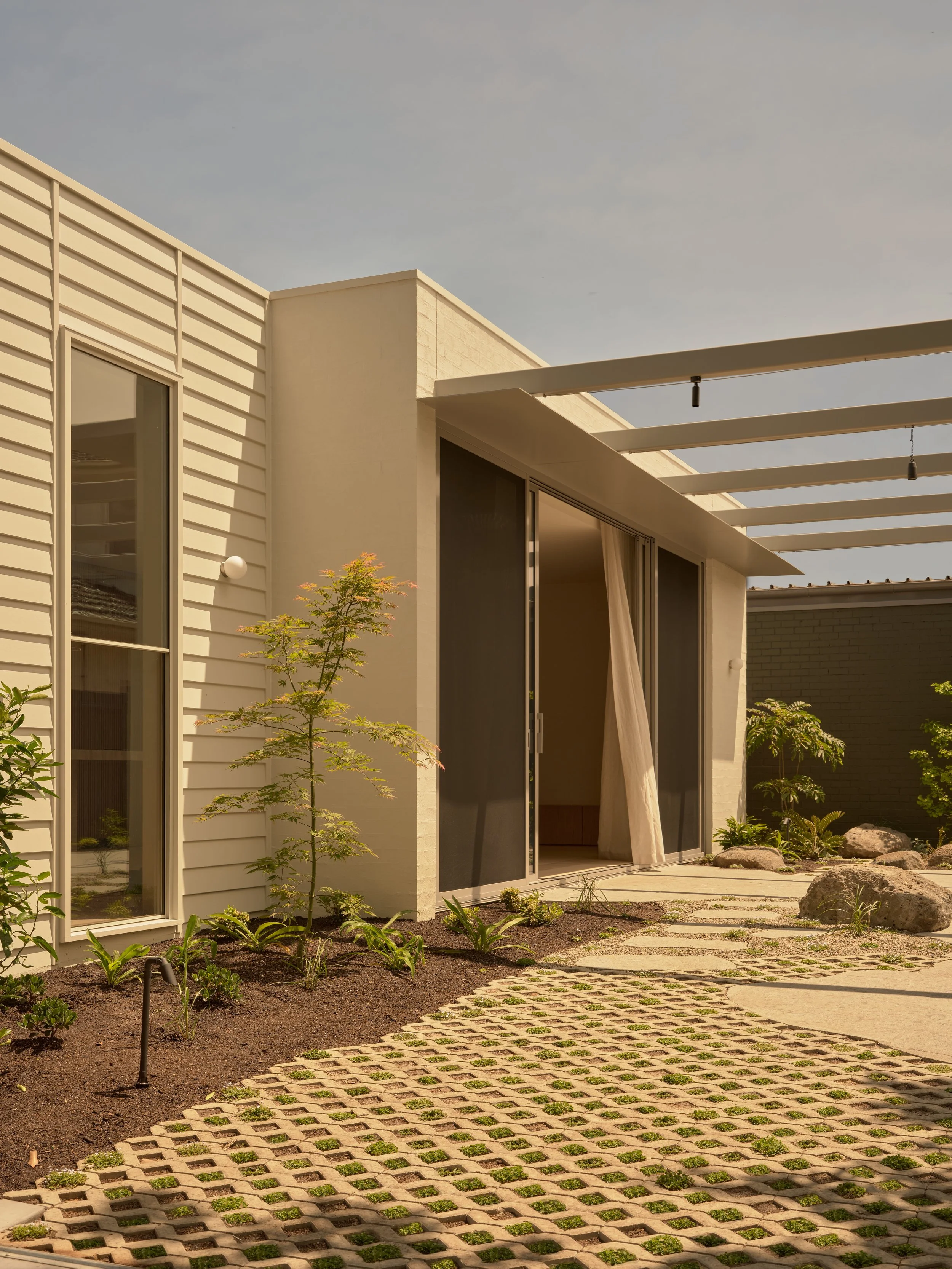
For the exterior of the addition, Pleysier Perkins selected fibre cement weatherboard cladding with vertical batten detailing at ground level, paired with fibre cement board and batten cladding to the upper storey.
A flat metal deck roof in a powder-coated finish is concealed from the streetscape, while the cladding is painted in a warm grey tone from the Haymes Pale Mushroom range to align with the repainted heritage façade. The crafted batten detailing gives the new work a hand-finished quality that responds to the ornate elements of the original house.
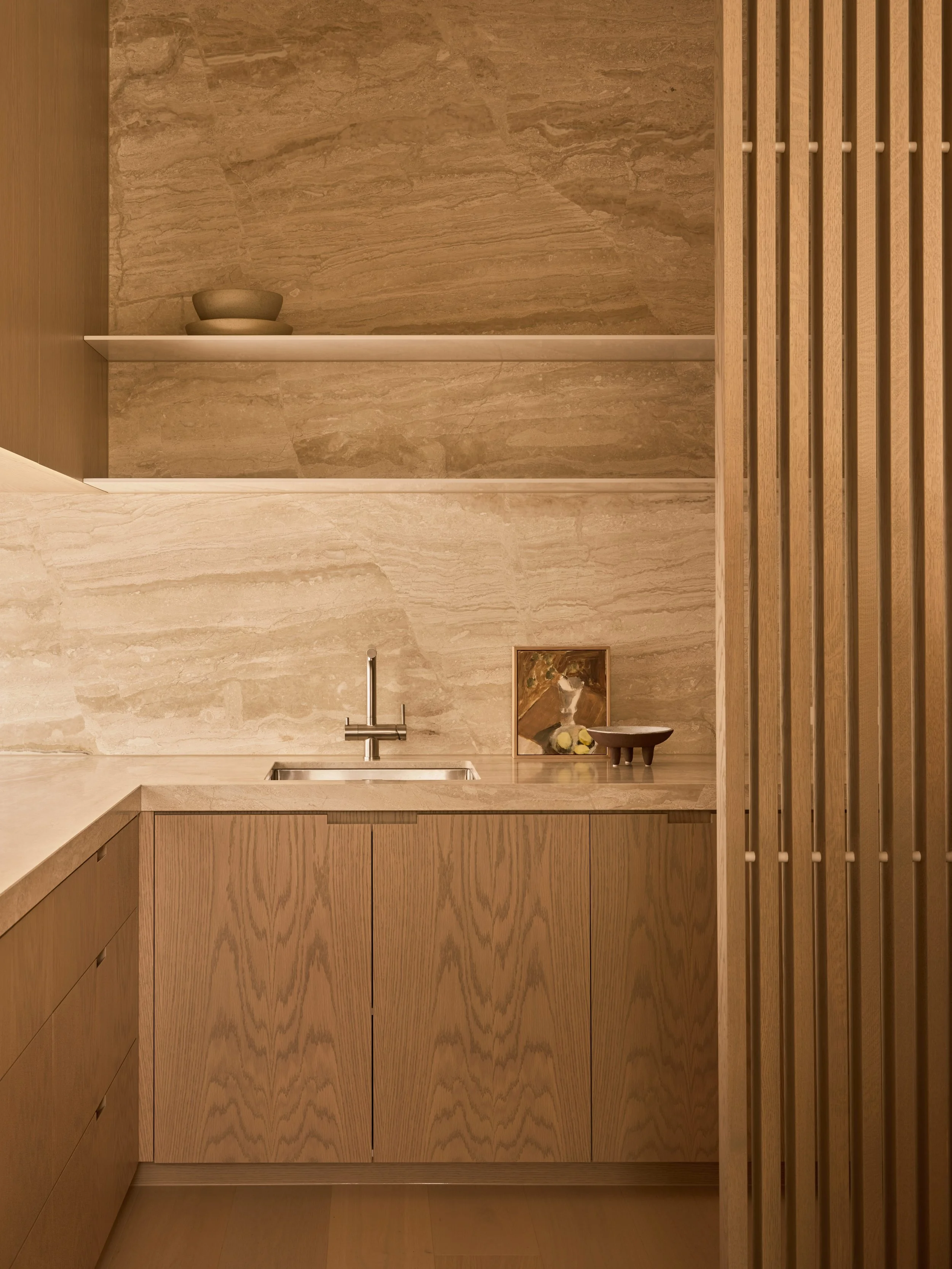
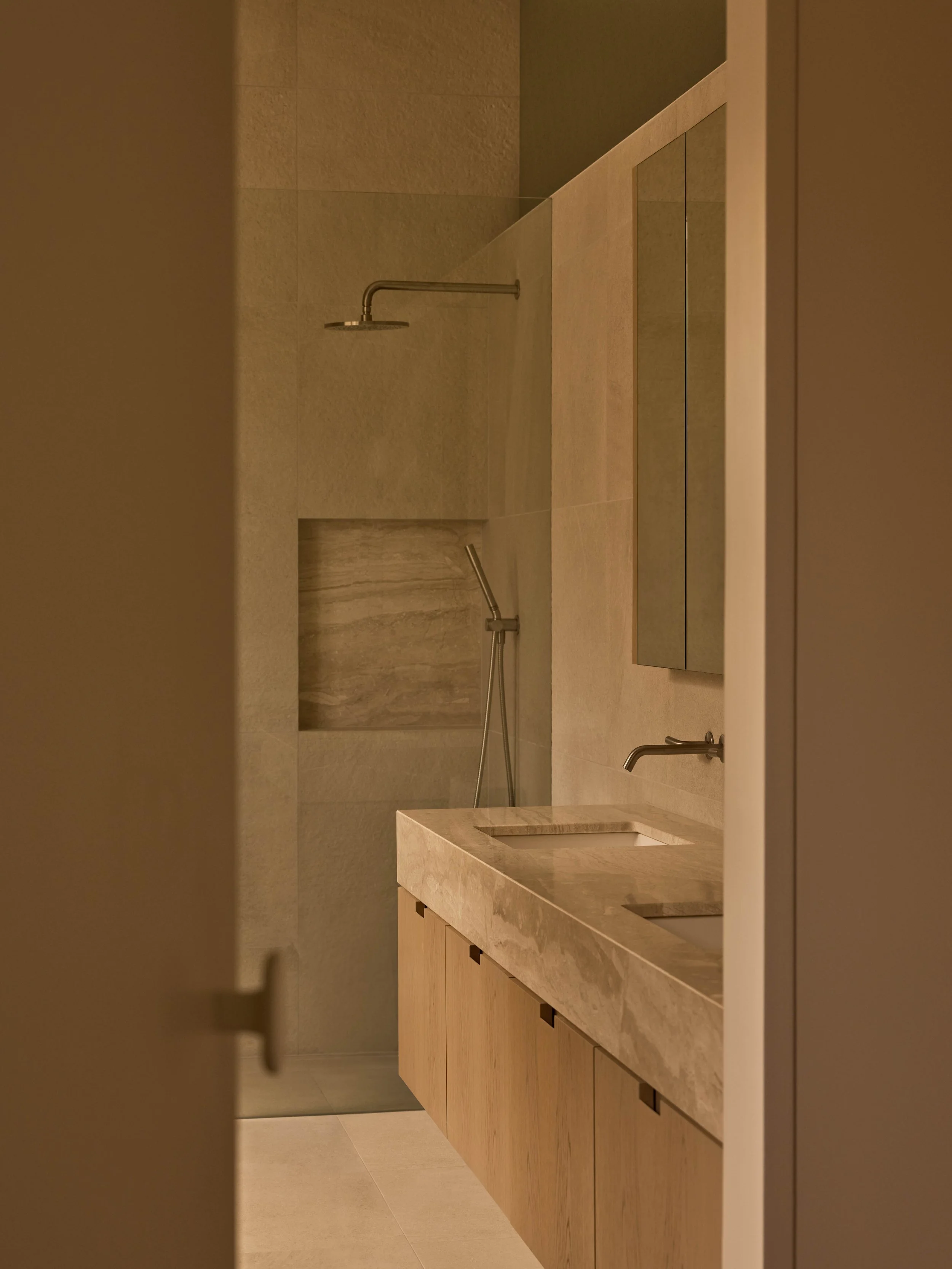
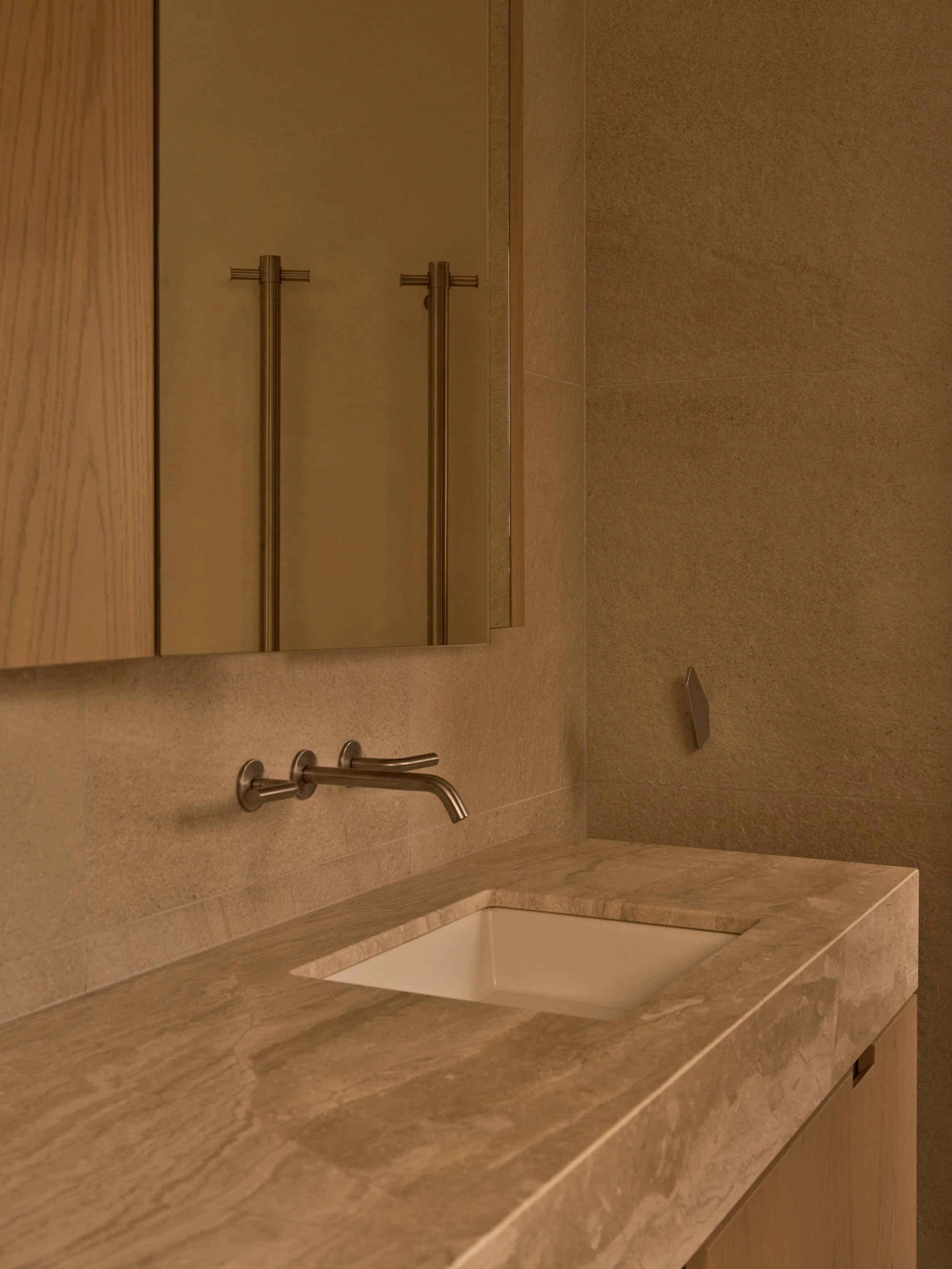
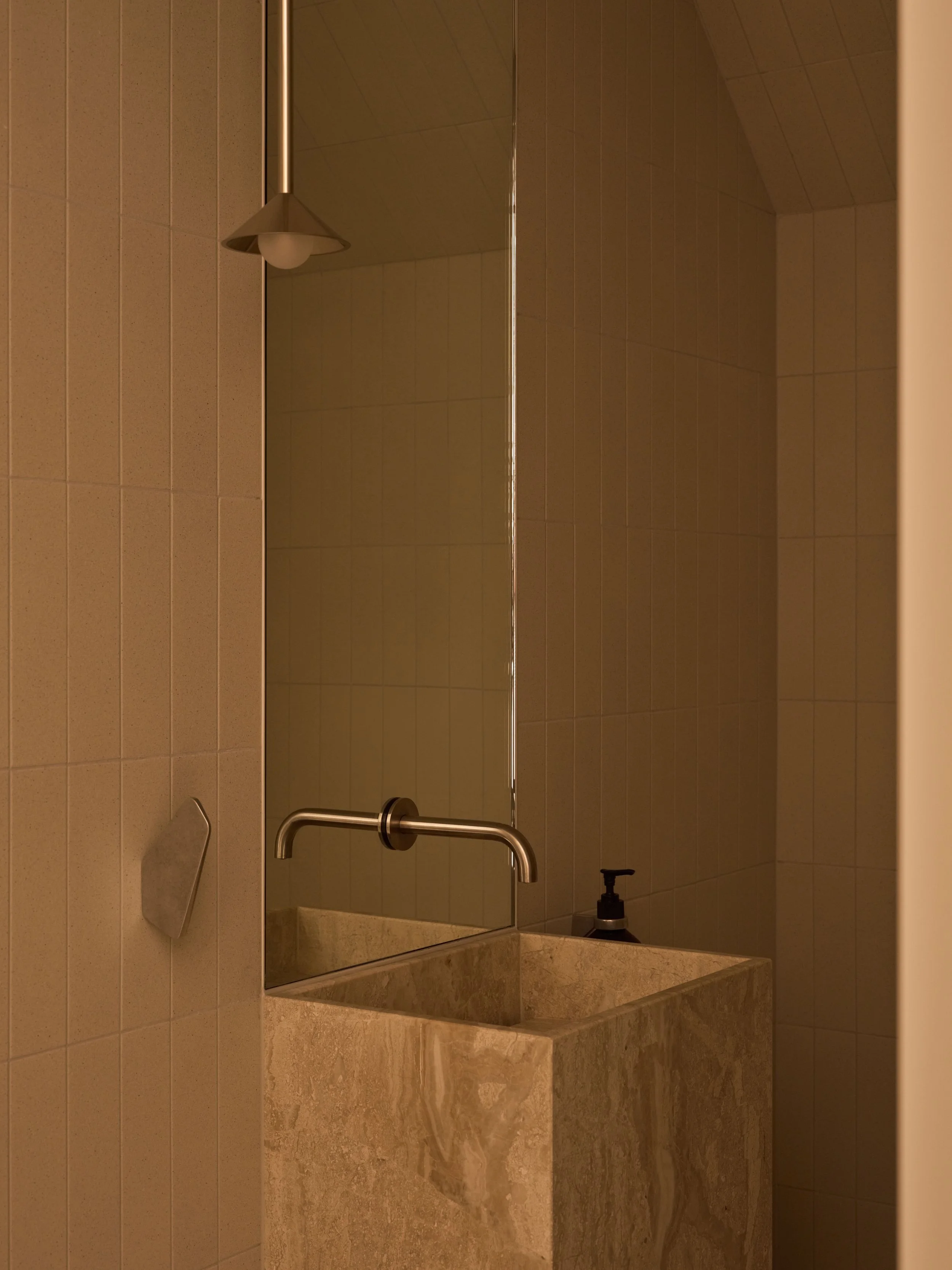
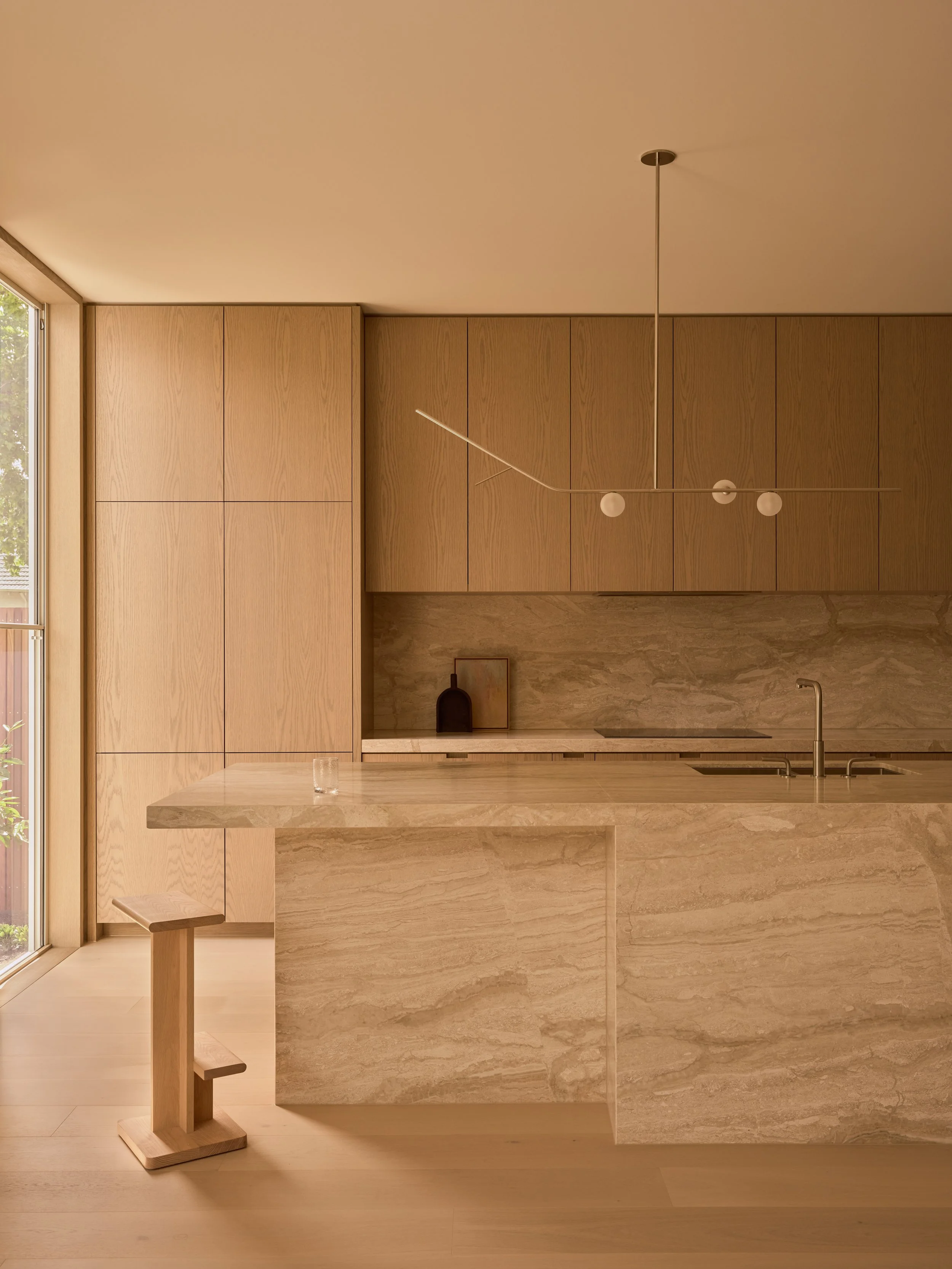
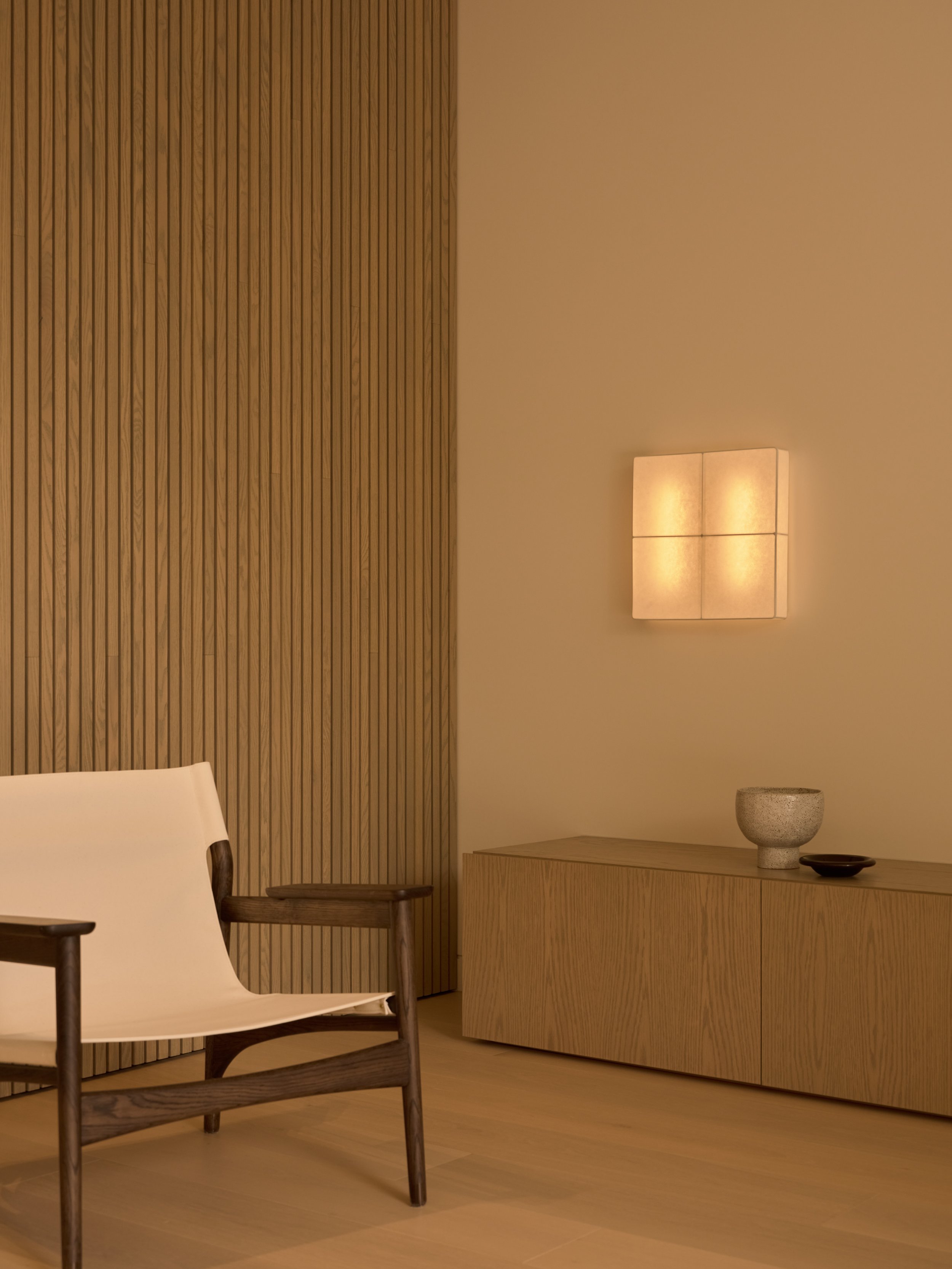
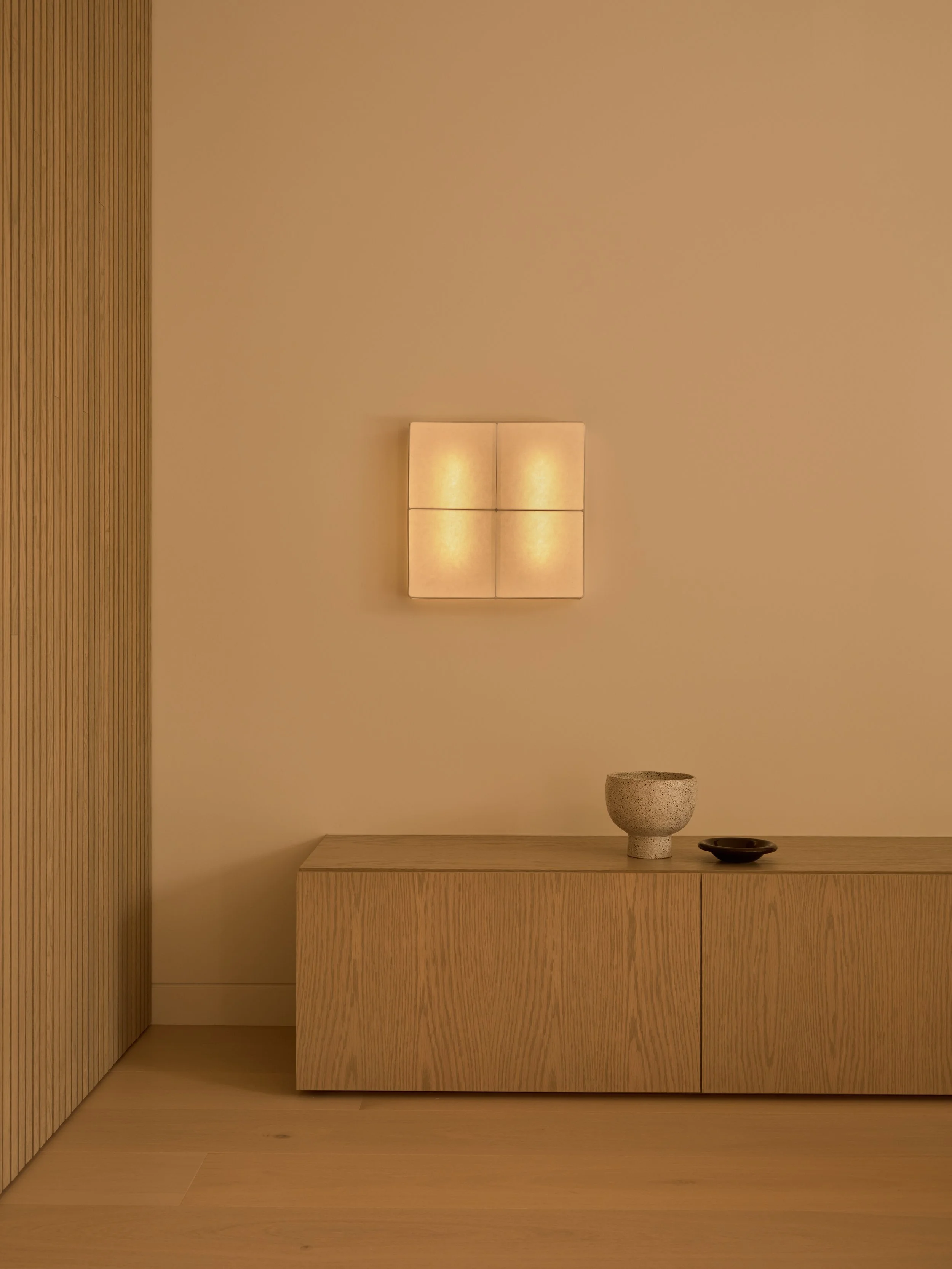
Inside, the palette is warm, soft and composed. Custom-stained American oak, Diana Royale marble, subtle Venetian plaster and Beige Royal Half paint create a calm interior language that ties the old and new areas together. The house was delivered as a fully custom fit-out, with Pleysier Perkins working closely with Mirabuild and GMD Architectural Joinery to refine the detailing throughout. Bespoke joinery gives the interior a tailored quality, while feature lighting from Melbourne makers Sozou Studio, Coco Flip and Volker Haug adds moments of sculptural character.
The extension was also planned with passive comfort and long-term performance in mind, using its northern orientation to capture daylight and winter warmth while deep eaves help limit summer heat gain. The home was fully electrified through the removal of the existing gas connection, with solar panels, all-electric appliances, EV charging and rainwater tanks introduced to support a more sustainable and future-ready way of living.
During construction, the restoration works revealed significant structural and damp-proofing issues within the heritage portion of the dwelling, including external brickwork that had not been secured to the internal framing. Mirabuild rectified this by tying the existing brickwork back to new internal stud work, with the clients allocating additional contingency to ensure the original house could be properly repaired, stabilised and made healthier for long-term occupation.