In Conversation with Claire Markwick-Smith
Conversation
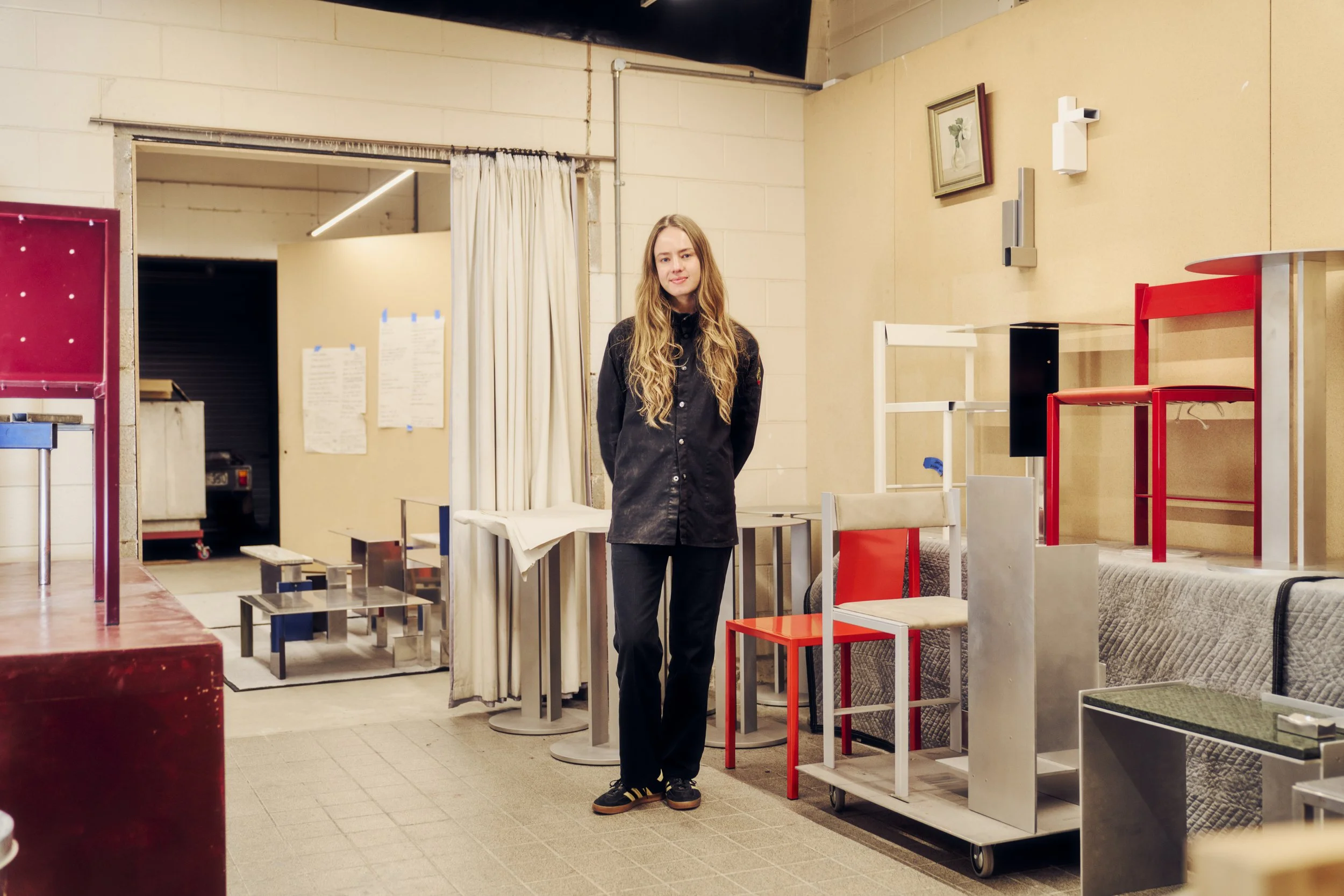
Claire Markwick-Smith’s practice sits at the intersection of interiors, object-making, and installation, shaped as much by material intelligence as by lived experience.
Raised among inherited furniture and everyday objects charged with memory, Markwick-Smith developed an early sensitivity to the stories things carry and the emotional weight they accumulate over time. That sensibility continues to inform a body of work defined by resourcefulness, restraint, and a deep respect for process.
Working across hospitality, spatial design, and fabrication, Markwick-Smith brings a rare dual perspective to design: one grounded equally in concept and construction. From steel and aluminium to salvaged stone and industrial offcuts, materials are never treated as passive components, but as active collaborators in the making of form. In this conversation, Markwick-Smith reflects on the formative influences behind the practice, the relationship between designing and making, and why doubt, constraint, and adaptation remain essential to the work.
Section 1 — Origins & Influences
1. Your home growing up was filled with inherited furniture, crockery, and objects carrying stories from your parents' earlier lives. How did that environment shape the way you perceive and value objects today?
Claire Markwick-Smith: Both my mum and I are reluctant to throw things away. We were raised to avoid buying unnecessarily and to value what we already have. When that instinct is paired with an appreciation for arts and craft, it creates warmth rather than clutter.
Objects follow us through different stages of life, and over time they gather nostalgia. I think of them as artefacts that reflect particular moments, lives, or ways of living. I certainly think about my own work in those terms.
2. Your influences seem to extend well beyond interiors. Which designers, places, or defining moments (from any discipline) have had the greatest impact on your aesthetic sensibility?
CMS: As a child, I attended group art classes run by artist and teacher Simone Black for 12 years, and that was hugely formative. She encouraged me to question why something feels resolved or beautiful, and to think ambitiously. No project ever felt off the table. That way of thinking still informs my practice.
There have also been several defining moments: studying Charlotte Perriand at university, receiving a book on Memphis during my first internship, and discovering Nathalie Du Pasquier. Repeated visits to the permanent concrete Judd sculpture in the Art Gallery of South Australia’s garden also stayed with me. As a child, it felt like a strange off-limits playground; as an adult, it became a beacon of site-specific design.Visiting the Schindler House in Los Angeles in 2018 had a strong impact. The alignment of composition, materiality, and site felt completely resolved.
My metal fabrication residency also deepened my understanding of engineering and sharpened my appreciation for industrial fixings, raw materials, and the way process shapes form and finish.
3. Take us back to the beginning: what first drew you toward interiors, spatial design, and the act of making?
CMS: Initially, I was interested in several different paths: studying architecture, learning a trade like carpentry, or going to art school. I began in architecture before eventually switching to interior architecture.
After studying and working in the industry, I started to feel constrained by long hours at a desk, a lack of creative freedom, and the disconnect between design and construction. Applying for a metal fabrication residency felt like a way through those frustrations. Object-making became a counterbalance and, in many ways, restored a missing link between design and outcome.
Today, spatial design sustains me professionally, while object-making remains an essential counterpart. The two constantly inform one another, but I also like keeping them intentionally distinct.
4. You spent formative years working in hospitality design. In what ways does that experience continue to inform how you think about space and the people within it?
CMS: Hospitality reinforced the idea that a space isn’t complete until it’s occupied. It taught me to think carefully about circulation, durability, and real use. It also shaped the way I work within constraints. Tight budgets, limited materials, and existing site conditions pushed me towards simplicity of form, straightforward construction, and a more resourceful mindset.
That way of working, adapting rather than overcomplicating, still informs how I design today. Hospitality taught me that while material and form shape experience, spaces are ultimately activated by people.
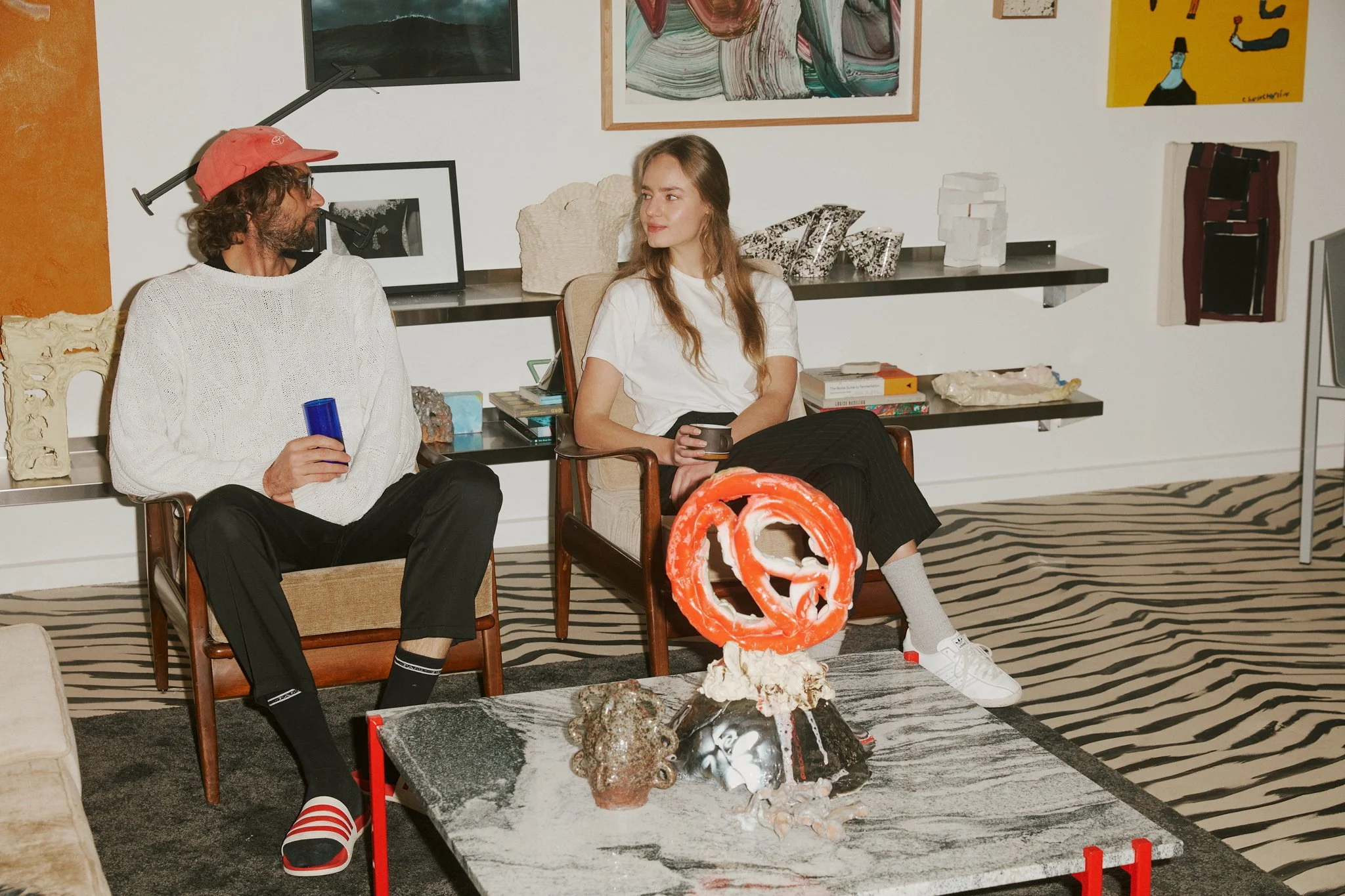

Claire Markwick-Smith & Henry Jock Walker at home, 2024, Photography by Jonathan van der Knaap
Claire Markwick-Smith at home, Photography by Jonathan van der Knaap
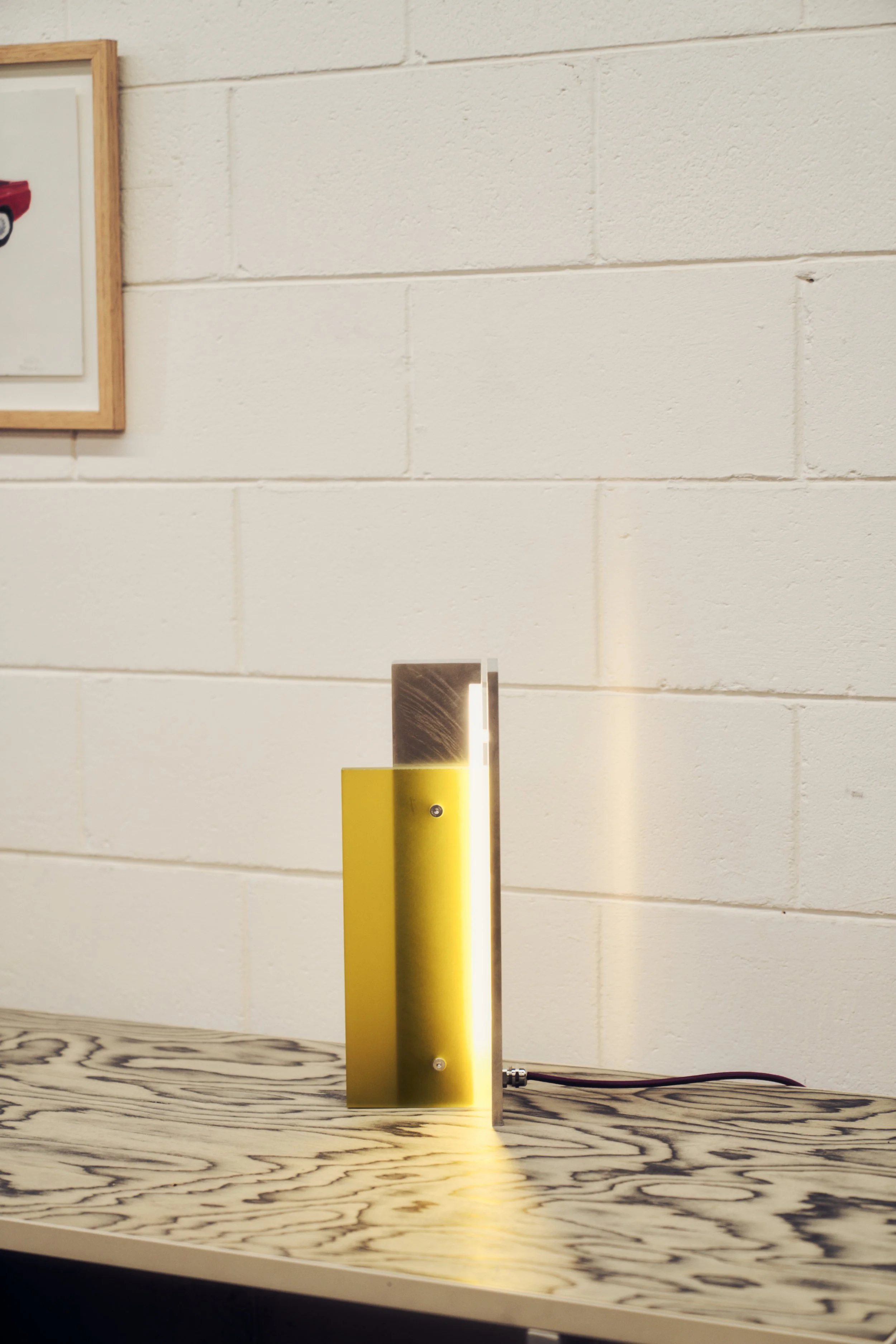
Table Lamp 001, 2025, Photograph by Emmaline Zanelli
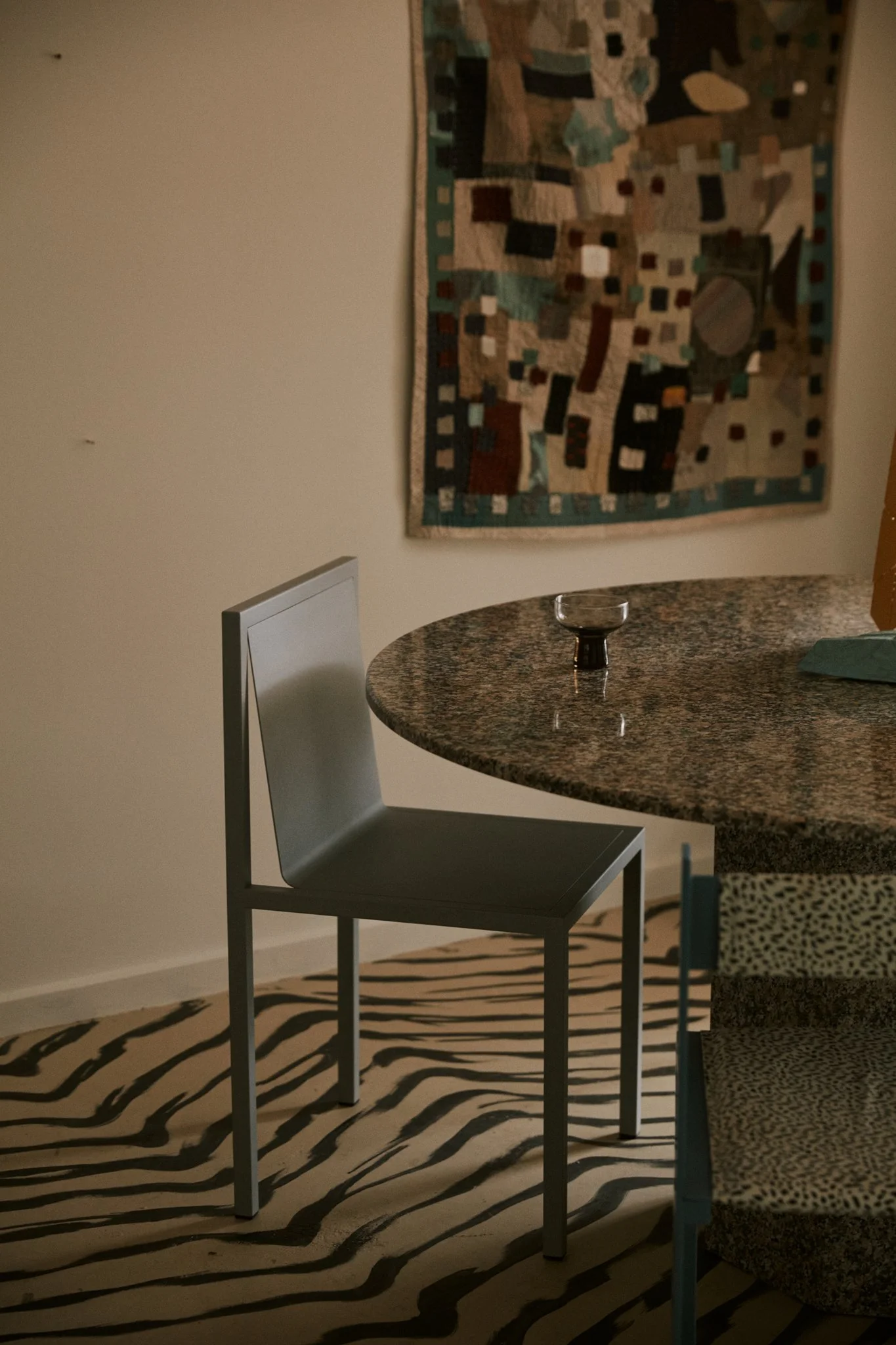
TC Chair, 2023, Photography by Jonathan van der Knaap

Table 01, Surface Series, 2024, Photography by Jonathan van der Knaap
Section 2 — Practice & Process
1. Your practice moves fluidly between interior spaces, standalone objects, and installations. How do you navigate the conceptual shift between designing at architectural scale and designing something you can hold in your hands?
CMS: I don’t see them as entirely separate in terms of process. I think about interiors as compositions of objects and as relationships between materials. The scale changes, but the underlying thinking is often the same.
Object-making allows me to focus on material and construction in a much more direct way. You can feel tolerances and weight in your hands, and that’s a very different experience. Moving between the two keeps my interiors practical and resourceful in both design and materiality. Making objects sharpens my attention to detail, while interiors allow those ideas to expand spatially.
2. Steel was the material that first brought you into fabrication, beginning with your residency at George Street Studios. How has your relationship with metal evolved since then — and are there materials you are now eager to work with?
CMS: Steel was the ideal material to introduce me to fabrication and industrial processes. I found it forgiving. If you make a mistake, you can weld it up, grind it back, and begin again.
Over time, I moved towards aluminium. Steel requires curing or powder coating to prevent rust, and it’s extremely heavy. Because I often work alone, I needed a material I could handle more easily. I was also interested in exploring raw finishes, so aluminium felt like a natural progression.
As I continue developing my aluminium welding skills, I’ve also been using mechanical fixing methods more often. I find those details genuinely beautiful. Spending time in fastener shops and seeing the variety of fixing systems has become an unexpected source of inspiration.
Around the same time, I began working with salvaged stone, largely because I kept finding discarded pieces at my local disposals lot. I’d come across irregular slabs and design the object around them, allowing the metal to cradle and support something that would otherwise have been thrown away. I like working with dimensions outside my control; it probably connects back to my interior design background.
There’s still so much to discover within these materials. At the moment, I’m more interested in pushing further into new processes, finishes, and treatments within them than moving on to something entirely different.
3. Much of your work incorporates industrial offcuts and salvaged materials, placing sustainability at the centre of your practice without it ever reading as a slogan. How do you think the broader design industry needs to rethink its relationship with materials and waste?
CMS: Once you start paying attention, the scale of construction waste becomes impossible to ignore. It’s confronting even on individual project sites. I haven’t found any radical solutions, but I do try to redirect material where I can.
One of my interior projects, Thelmain the Adelaide Hills, was built largely from construction waste. I was fortunate to work with a like-minded builder, Dusty Weatherald, who was just as committed to exploring that resource. The result was a space with warmth and patina shaped by prior use. My favourite feature is a collaged stone countertop made from my stonemason’s offcuts.
Across both my spatial and object work, I’ve always found a certain freedom in discarded materials. You’re less precious with them, and that opens up room for experimentation and new processes.
I’ve recently moved to Los Angeles, and some of the spatial work I’m doing is in set design, which has a significant waste problem. It’s been encouraging to see some of the systems here that redirect materials back into the circular economy, though I’m still only scratching the surface. I’m looking forward to finding new offcut resources and better ways of working. It feels like a challenge, but also a natural extension of my practice.

Scrap Light, 2025, Photography by Jonathan van der Knaap

Terese Table 1, 2025, Photography by Jonathan van der Knaap
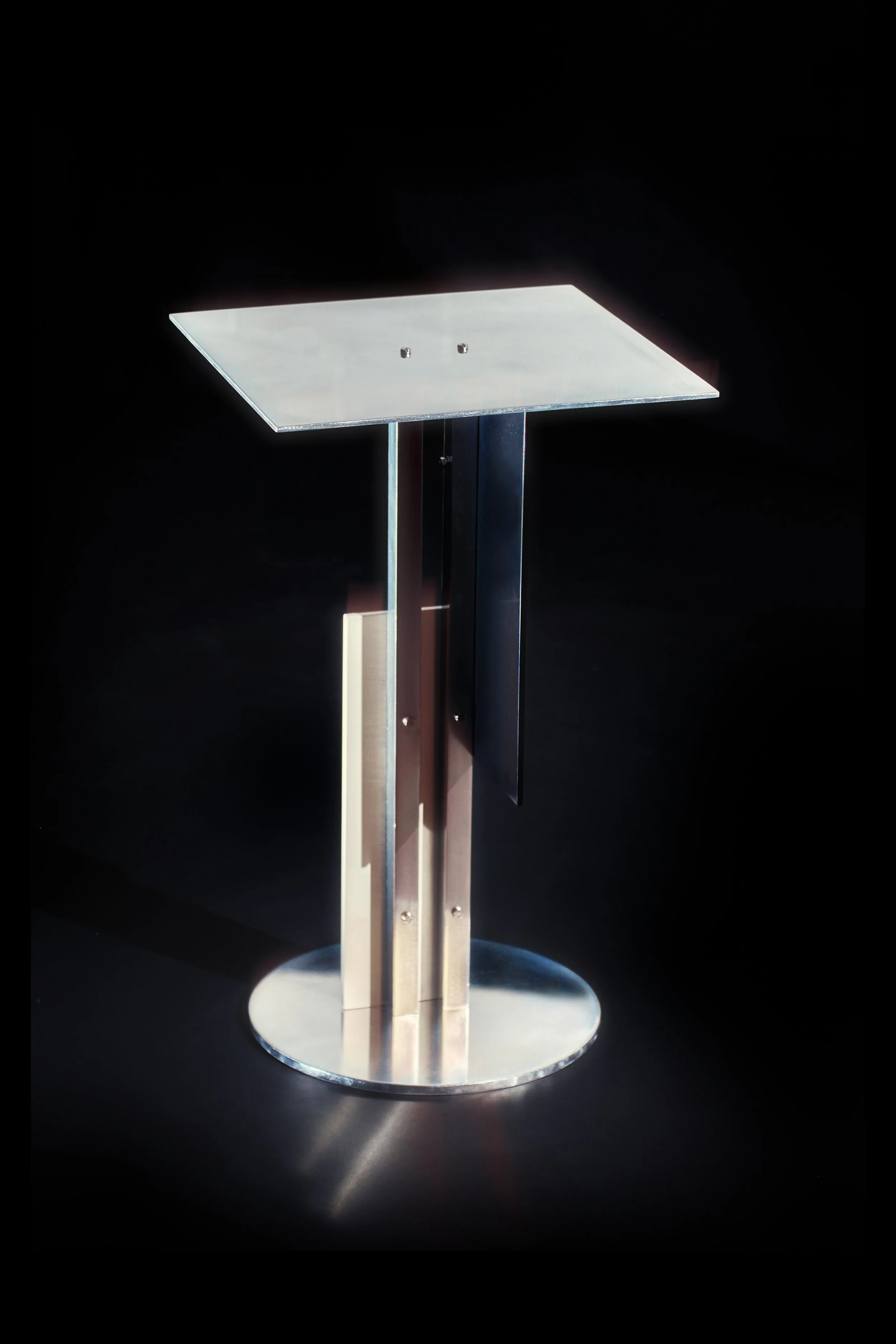
Black and White Side Table, 2025, Photograph by Emmaline Zanelli
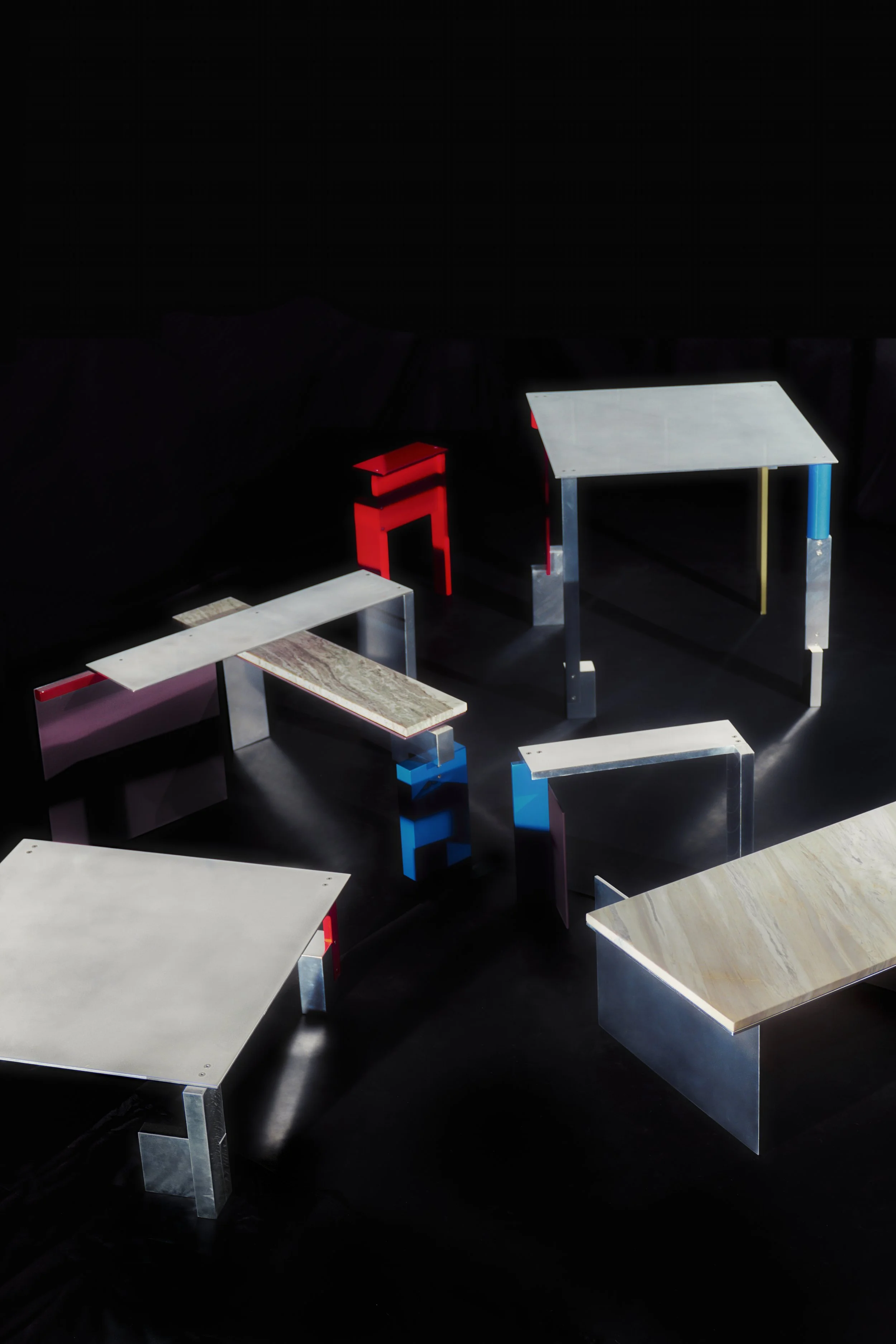
Portable Certainties Series, 2025, Photograph by Emmaline Zanelli

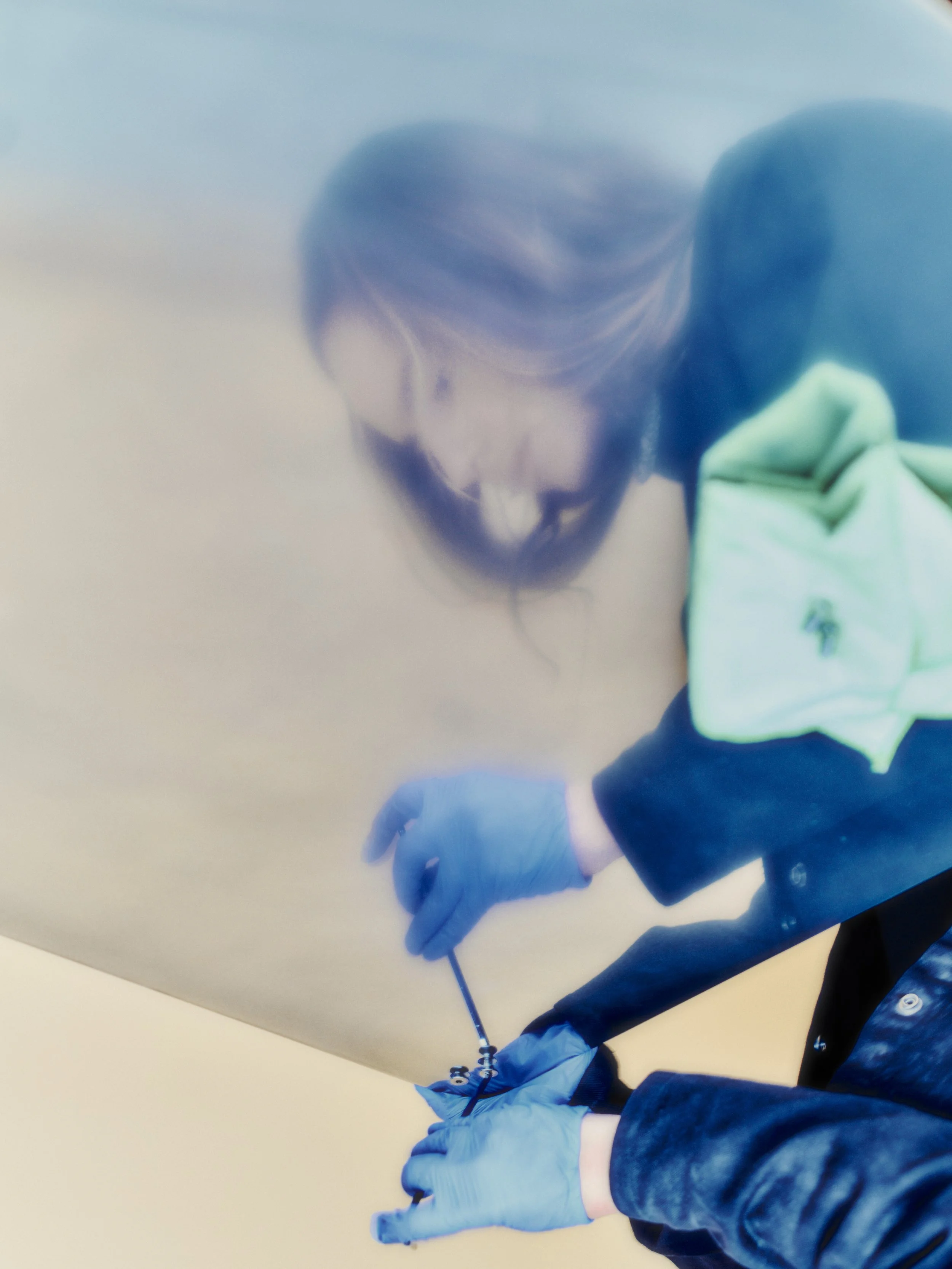
Table 3, 4 and 7, Portable Certainties Series, 2025, Photograph by Emmaline Zanelli

Table 5, Portable Certainties Series, Process Image, 2025, Photograph by Emmaline Zanelli

Table 5 Detail, Portable Certainties Series, 2025, Photograph by Emmaline Zanelli
Table 5 Detail, Portable Certainties Series, 2025, Photograph by Emmaline Zanelli
Section 3 — Resilience & Reflection
1. What has been the most significant challenge in building a practice that refuses to sit within a single discipline?
CMS: The biggest challenge has been structuring the practice itself: dividing time between spatial work and object-making, knowing when to bring in assistance, and building a working model that genuinely supports both disciplines. Conventional frameworks don’t always fit a hybrid practice.
Recently, I chose to take on a two-year contract in spatial design in California. It gives me stability while also allowing more freedom in my object work, without the pressure of managing a full studio structure. I see this period as a kind of study trip, absorbing a new context, particularly one with a strong manufacturing base and significant material waste streams.
I’m looking forward to eventually returning to Australia with that experience informing the next phase of the practice.
2. Having fabricated work with your own hands, how has that direct relationship with making shaped your view on design authorship and the line between designer and maker?
CMS: For me, design and making are deeply connected acts. The thinking and the fabrication carry equal weight, and both involve problem-solving. Working directly with materials, through cutting, sanding, and assembling, keeps me closely connected to the outcome and strengthens my understanding of how decisions translate into form.
I also rely on specialists for certain processes, and collaboration is an important part of the practice. Working with machinists, engineers, and suppliers is one of my favourite parts of the process, and a key way the work continues to evolve.
3. Every creative practitioner encounters periods of doubt. What grounds you and keeps the work moving forward in those moments?
CMS: Trusting the process helps, as does talking to the collaborators I work with in manufacturing and to friends in the industry. I tend to see doubt as a necessary part of the process, and often a sign that something meaningful is taking shape.
Most importantly, though, it helps to step away, do something completely unrelated, and return with fresh eyes. Then I triple-check my working files.
4. Adelaide's design scene is often described as close-knit, resourceful, and deeply maker-oriented. How has being rooted in that community — rather than a larger metropolis — shaped the trajectory of your career and the character of your work?
CMS: Adelaide’s scale makes the design community feel highly connected. Designers, fabricators, builders, and craftspeople tend to know one another, which makes collaboration and support more direct. Working in a smaller city also means you often have close access to trades and workshops. You can easily visit a fabricator, ask questions, and watch a prototype evolve in real time. That level of access helped shape my interest in industrial processes.
The community is generous and knowledge-sharing, and that has had a real impact on the trajectory of my career. At the same time, being based in Adelaide encouraged me to look outward, so travel and residencies have always felt like extensions of the practice rather than departures from it.

Materials 1, 2022, Photography by Jonathan van der Knaap

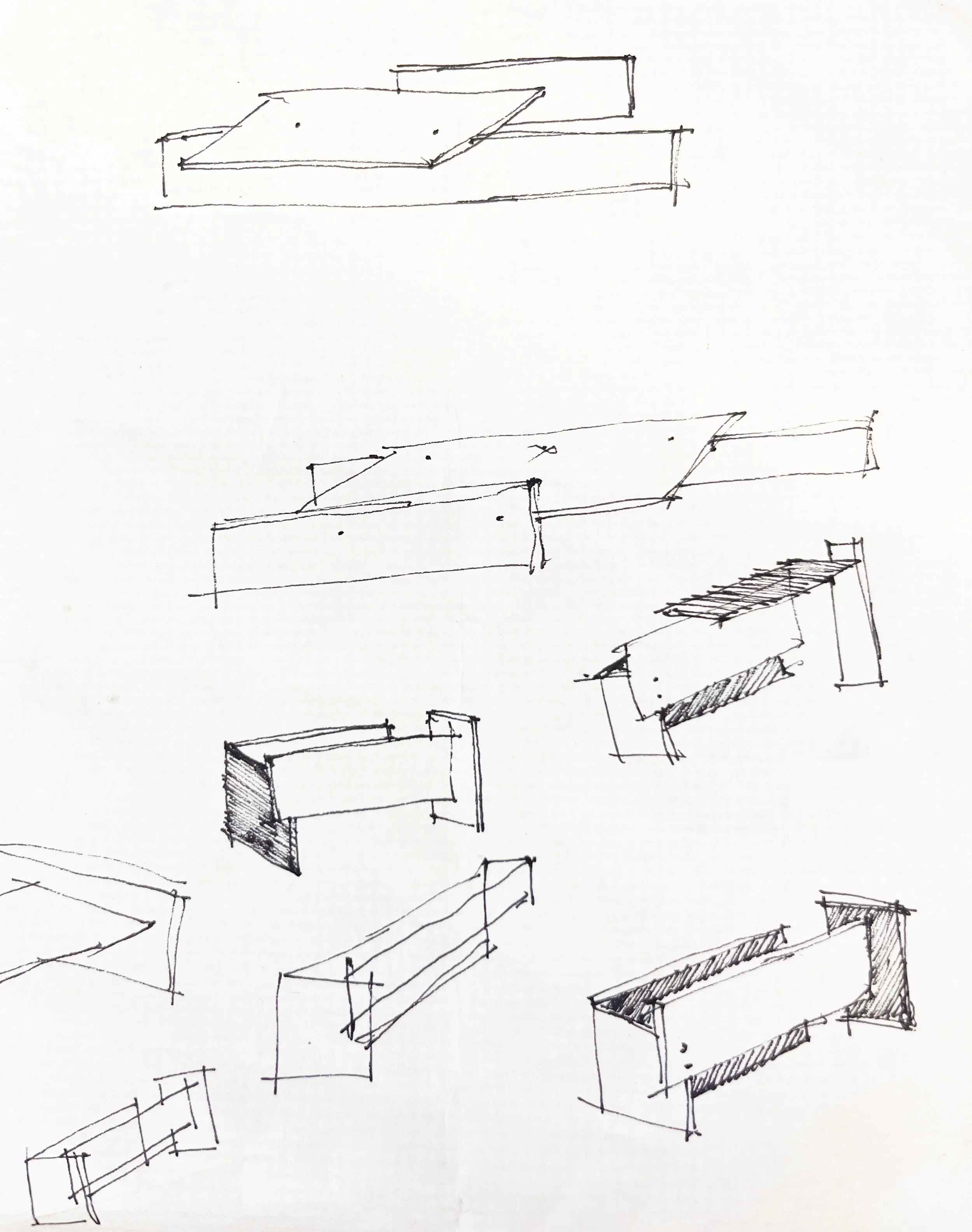
Surface Study Detail, Surface Series, 2023, Photography by Jonathan van der Knaap
Sketch 1, 2025

Process image 3, 2022, Photography by Jonathan van der Knaap

Collaboration, 2022, Photography by Jonathan van der Knaap