Naushad Ali Flagship Atelier by The Architecture Story
In Pondicherry, a 70-year-old load-bearing building has been carefully restored and adapted into the flagship atelier for fashion designer Naushad Ali.
Designed by The Architecture Story in dialogue with the designer, the 1,500-square-foot store takes its cues from the quiet, tactile character of the clothing, creating an environment shaped by craft, materiality and touch.
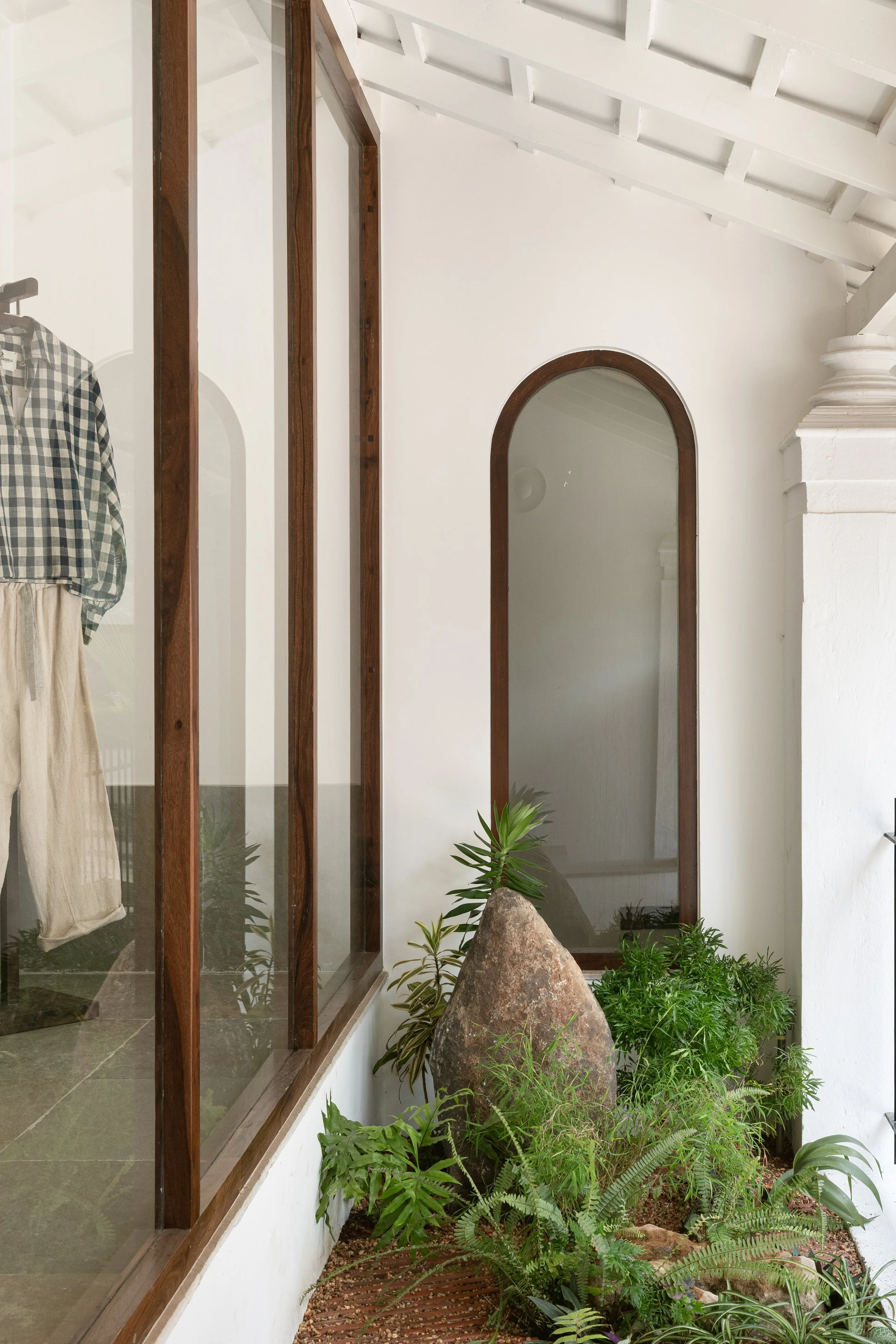
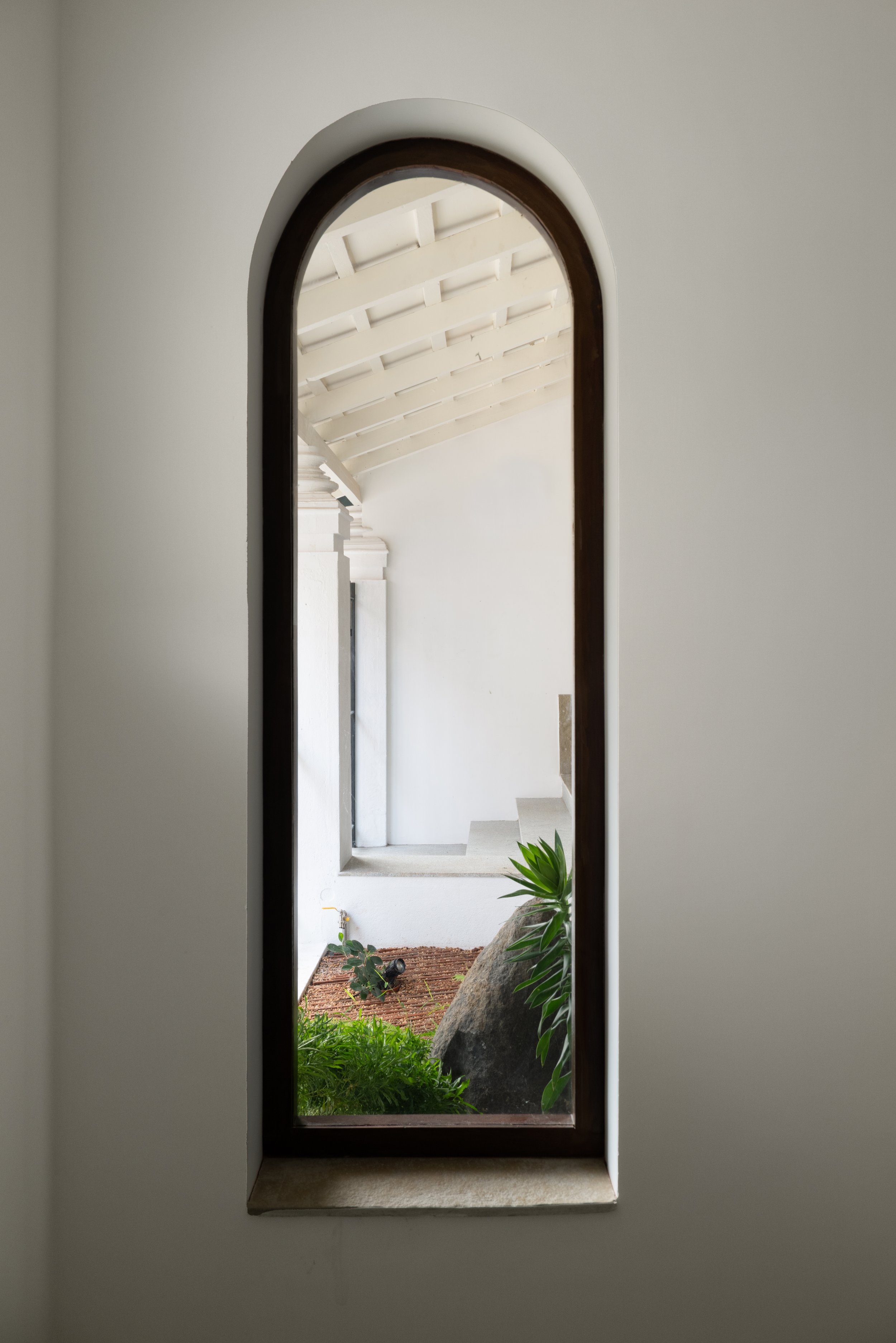
The approach was guided by restraint. Existing doors and timber elements were retained and restored wherever possible, allowing the building’s softness and character to remain present without turning the store into a nostalgic reconstruction. “We did not want to make it look old, nor did we want to make it look new. We wanted it to breathe,” explains The Architecture Story. The intervention preserves the building’s character while introducing a contemporary language that feels connected to Pondicherry without becoming themed.
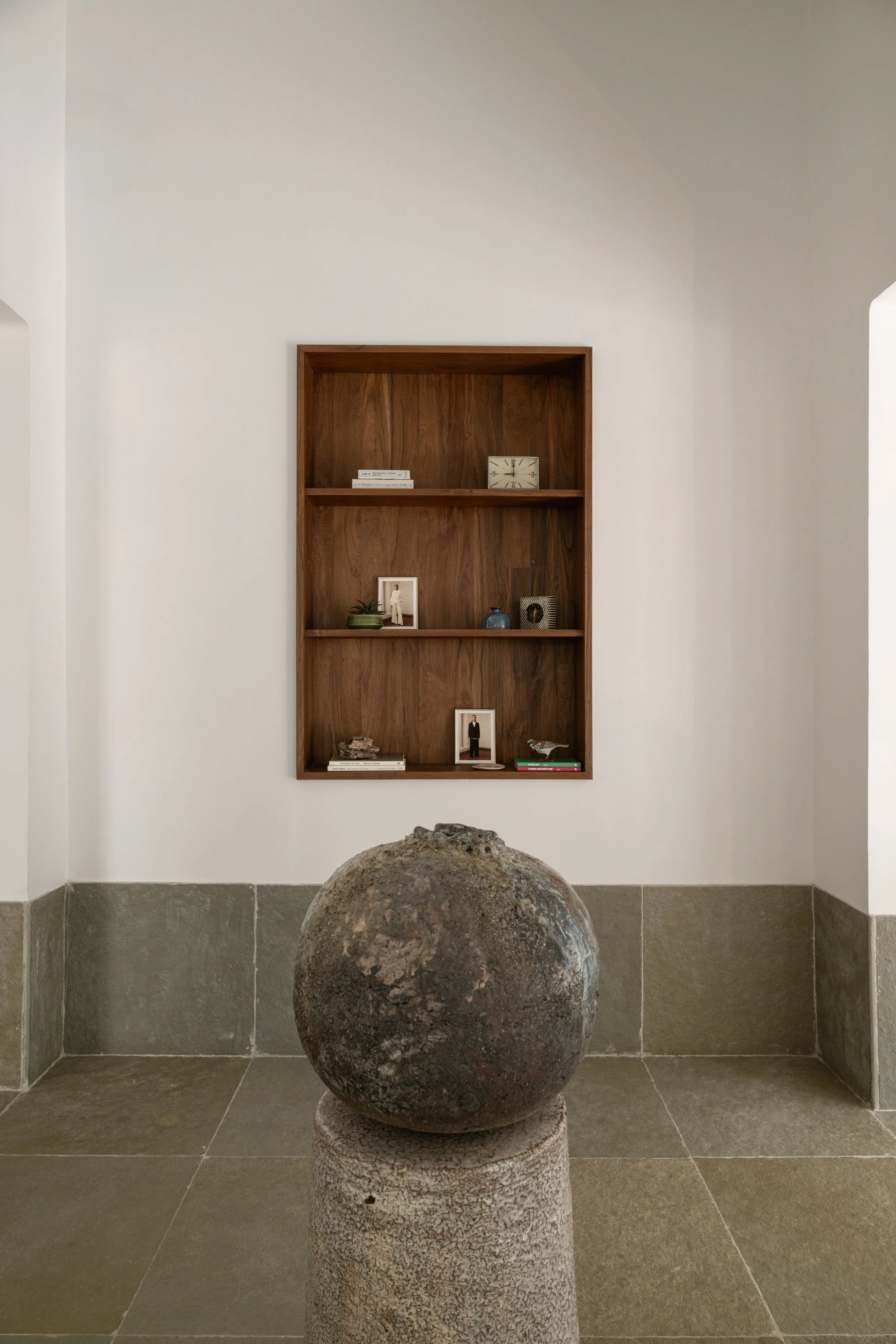
The store is conceived as a place where garments can be experienced at a slower pace. Moving away from conventional retail displays, the layout is organised through a series of quiet rooms that allow clothing, objects and material details to be encountered gradually. A large timber-framed pivot door leads into a small vestibule, where a garden by Jyoti Naoki Eri creates a pause between the street and the interior. A custom teak shelf displays objects collected by Naushad during his travels, with a moon vase by Indrani Singh Cassime placed at the centre as a sculptural focal point.
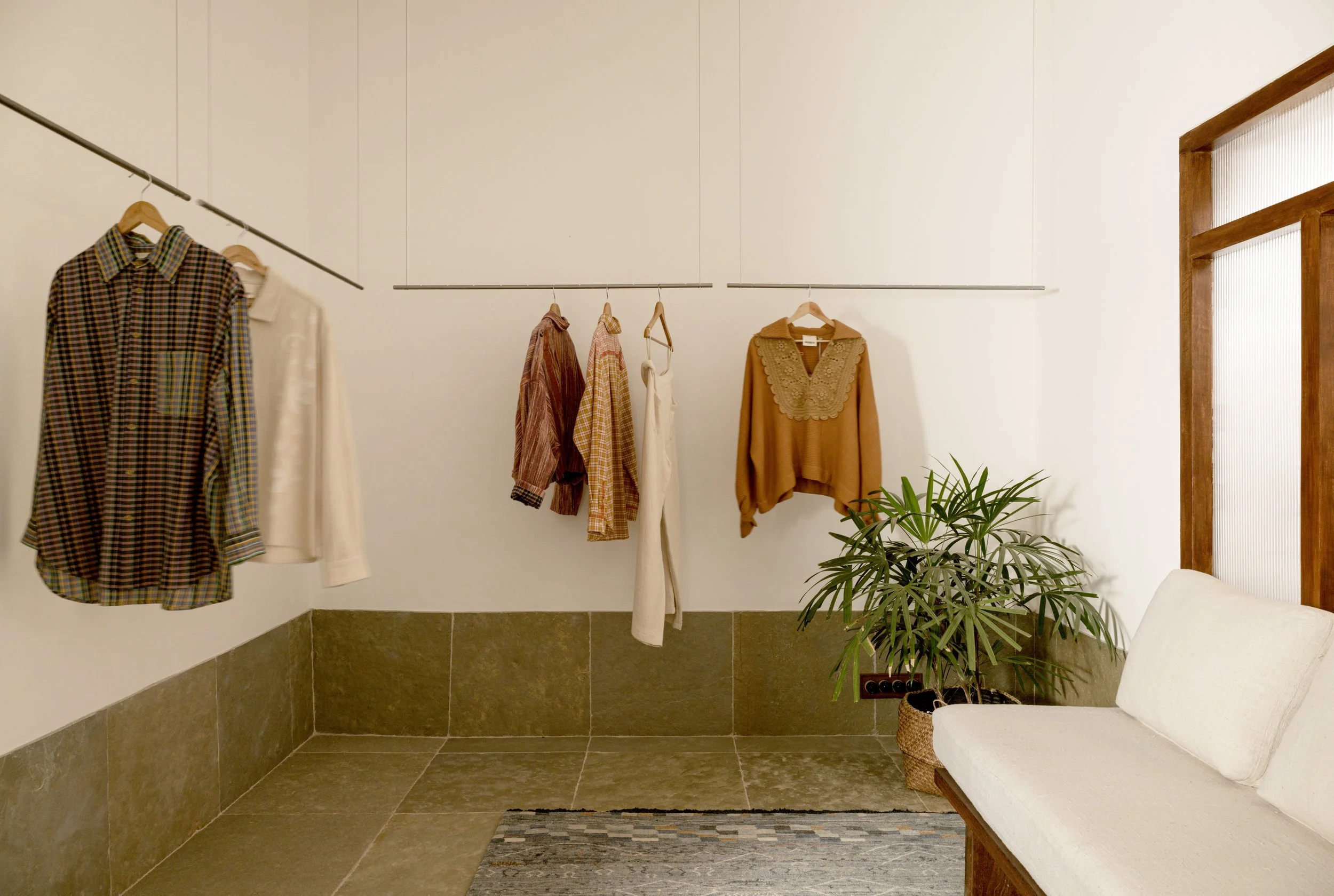
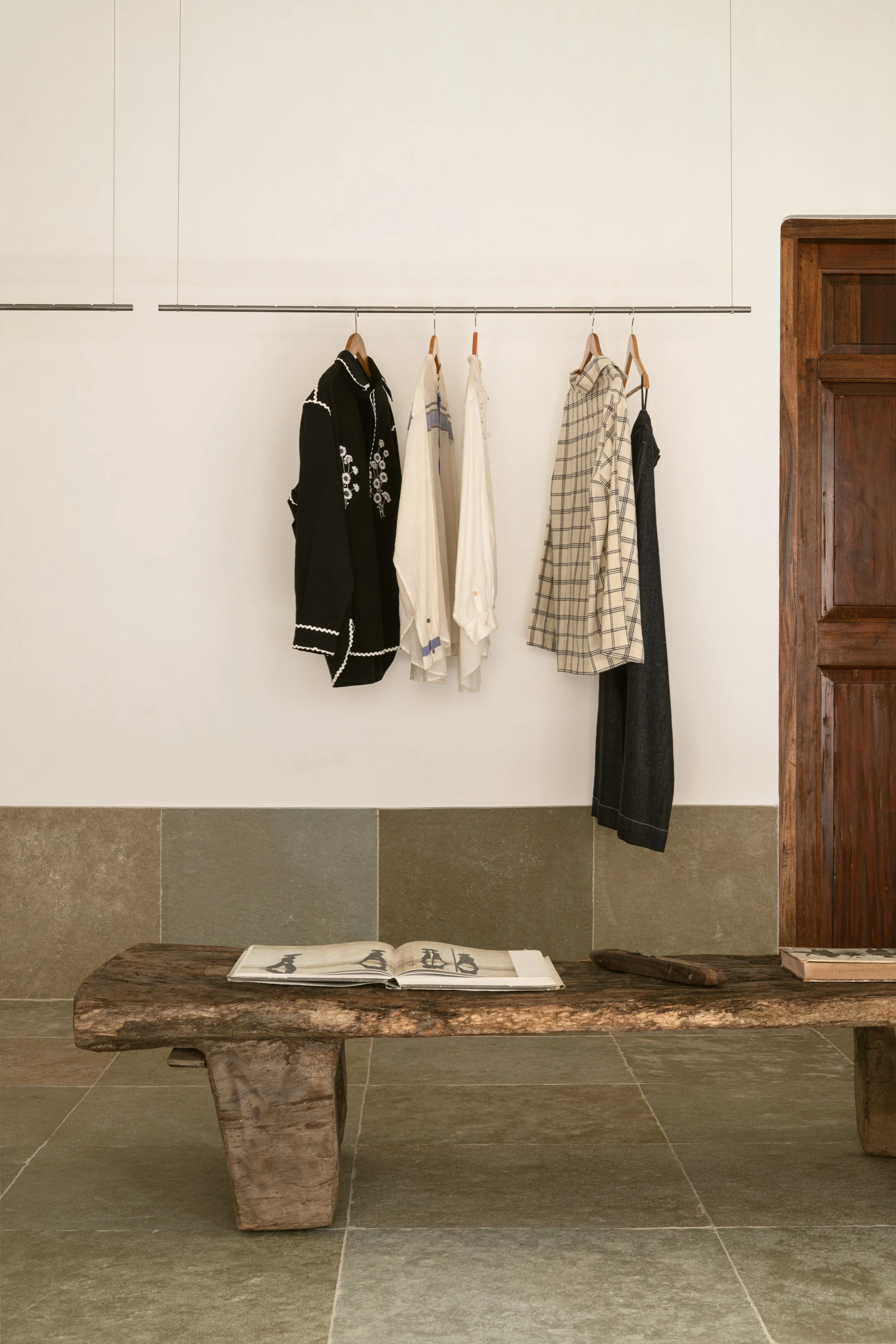
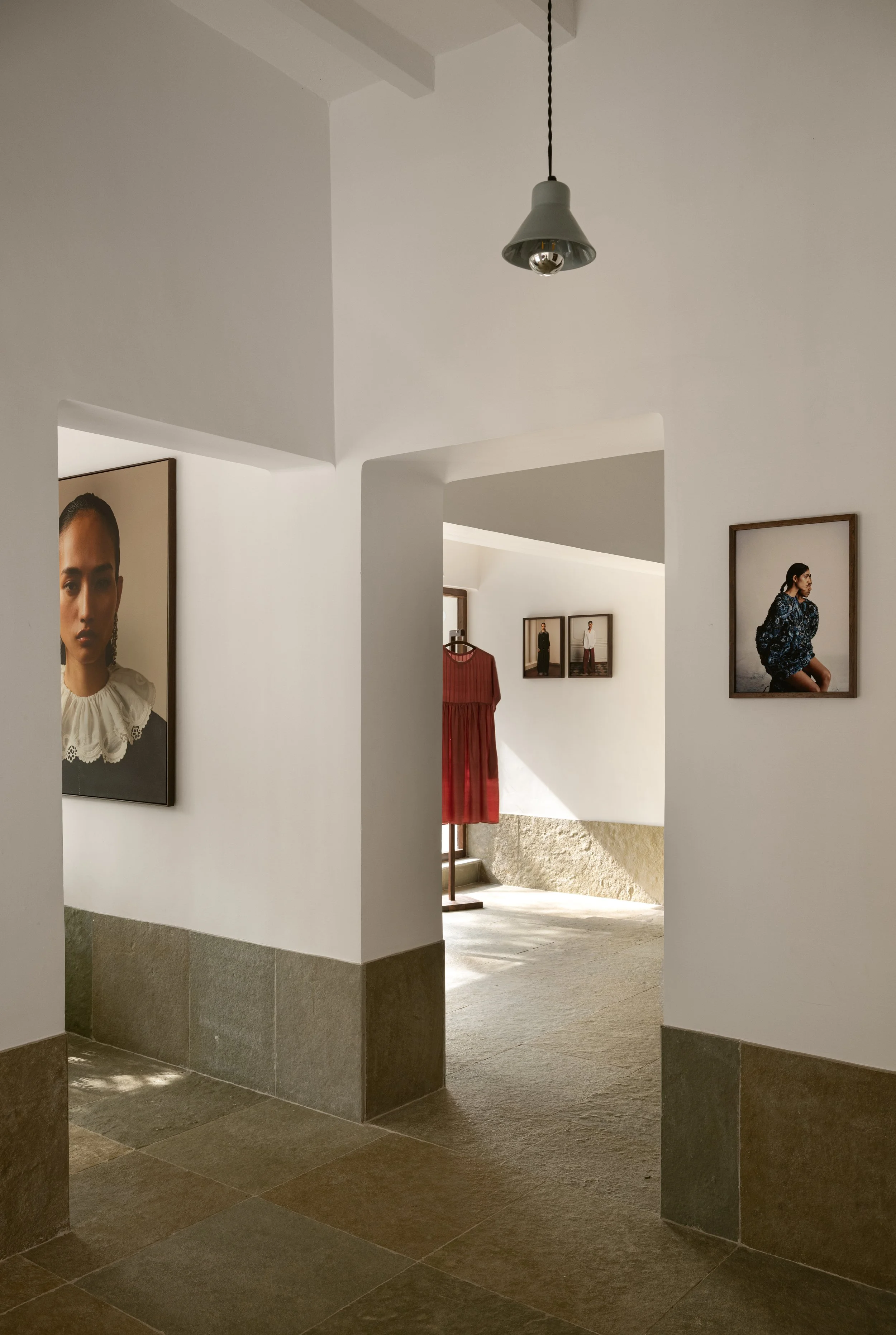
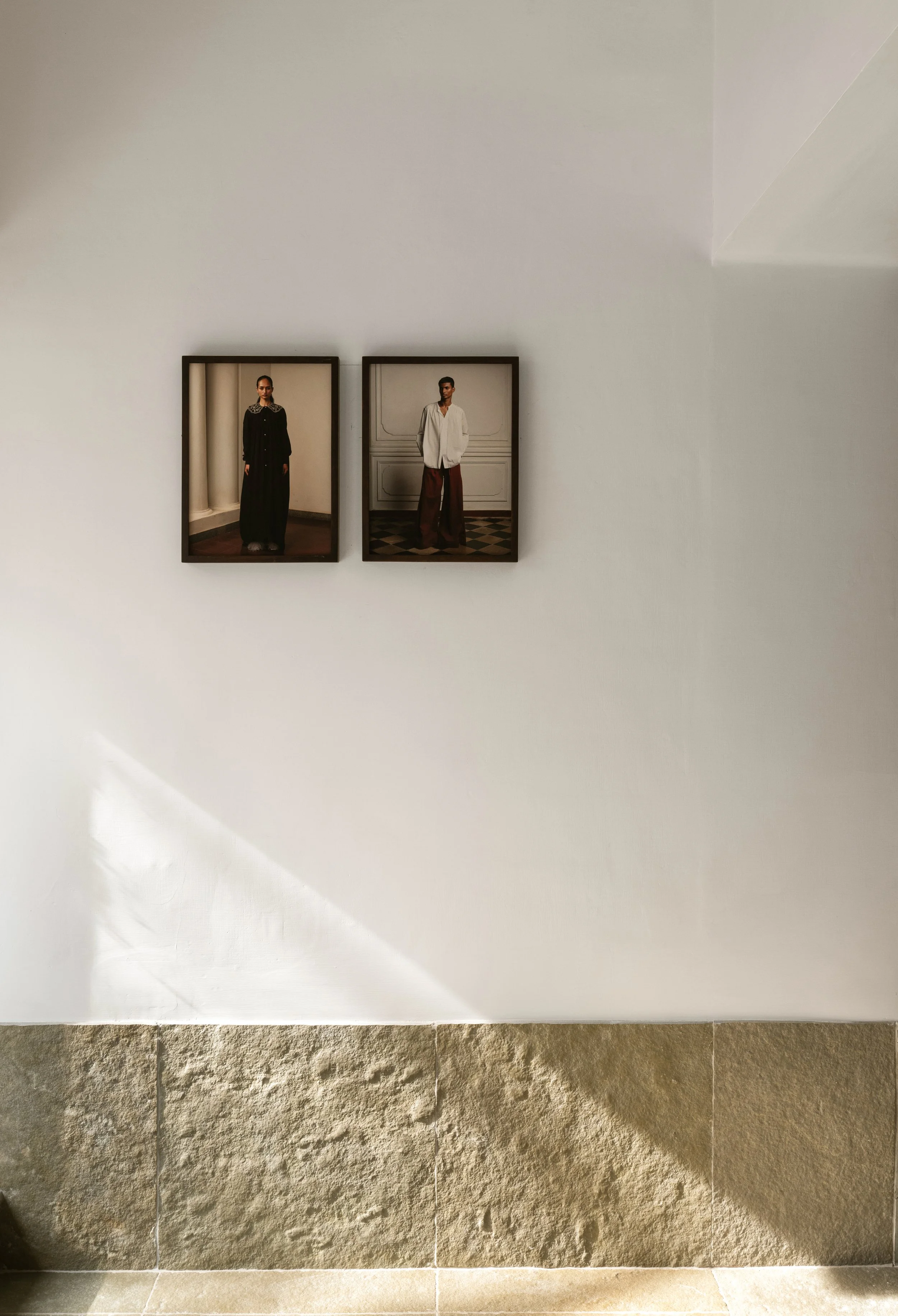
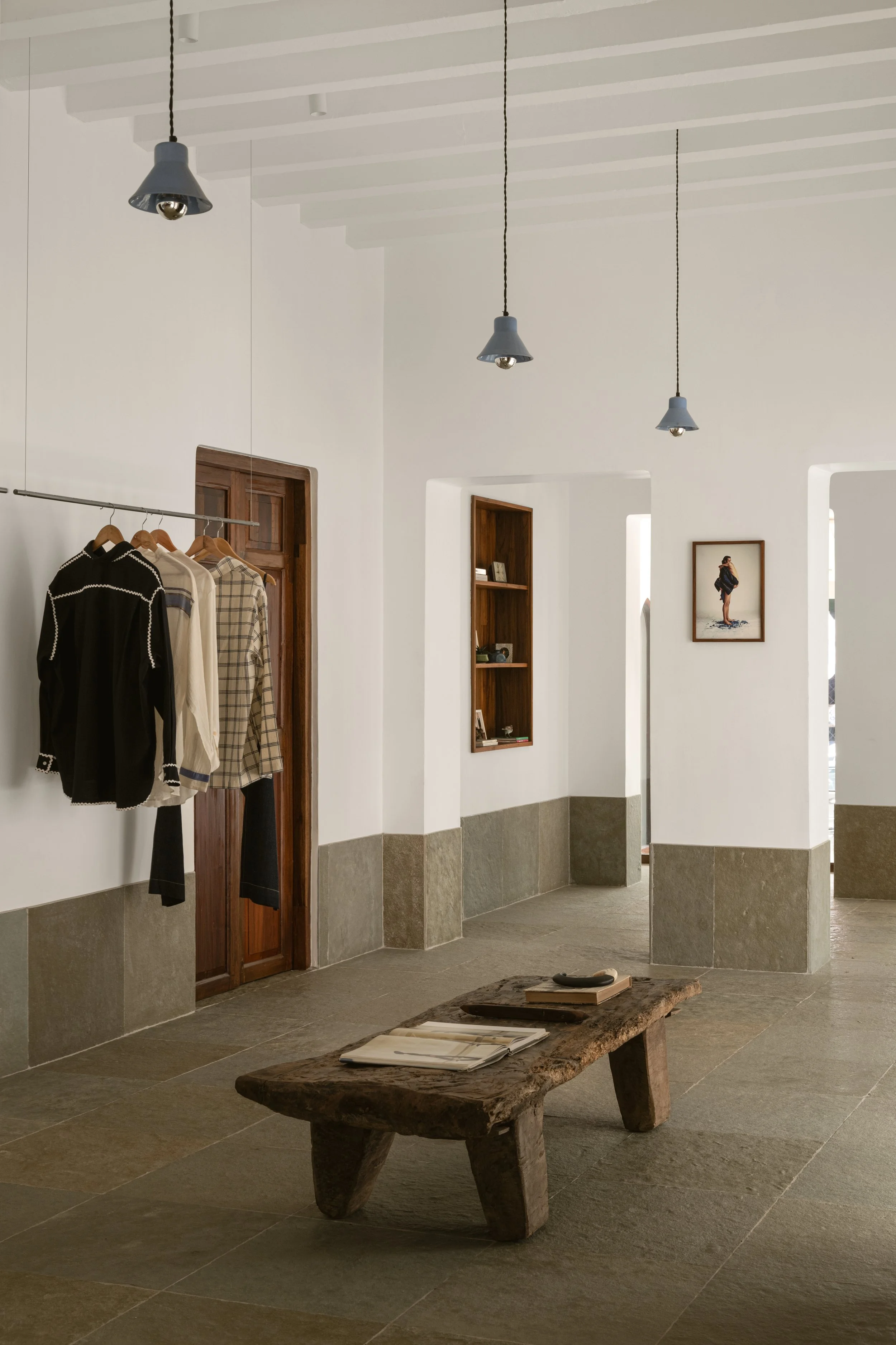
At the heart of the atelier, the main retail room is open and calm, grounded by natural Tandur stone flooring, restored timber joinery and suspended garment rails. Soft daylight moves across a restrained palette of stone, timber, textile, ceramic and planting. A Naga bed anchors the room, while ceramic pendant lights and framed photographs introduce small moments of colour. An existing cupboard has been restored to display scarves and folded garments, while a record player, vinyl collection and two armchairs form a listening corner that invites visitors to linger.
Smaller rooms beyond the main retail area accommodate menswear and atelier pieces, with custom display stands, timber furniture and photographs drawn from Naushad Ali’s fashion archive. Across the store, furniture and objects have been reduced to their essentials, with each element serving a practical, personal or narrative purpose.
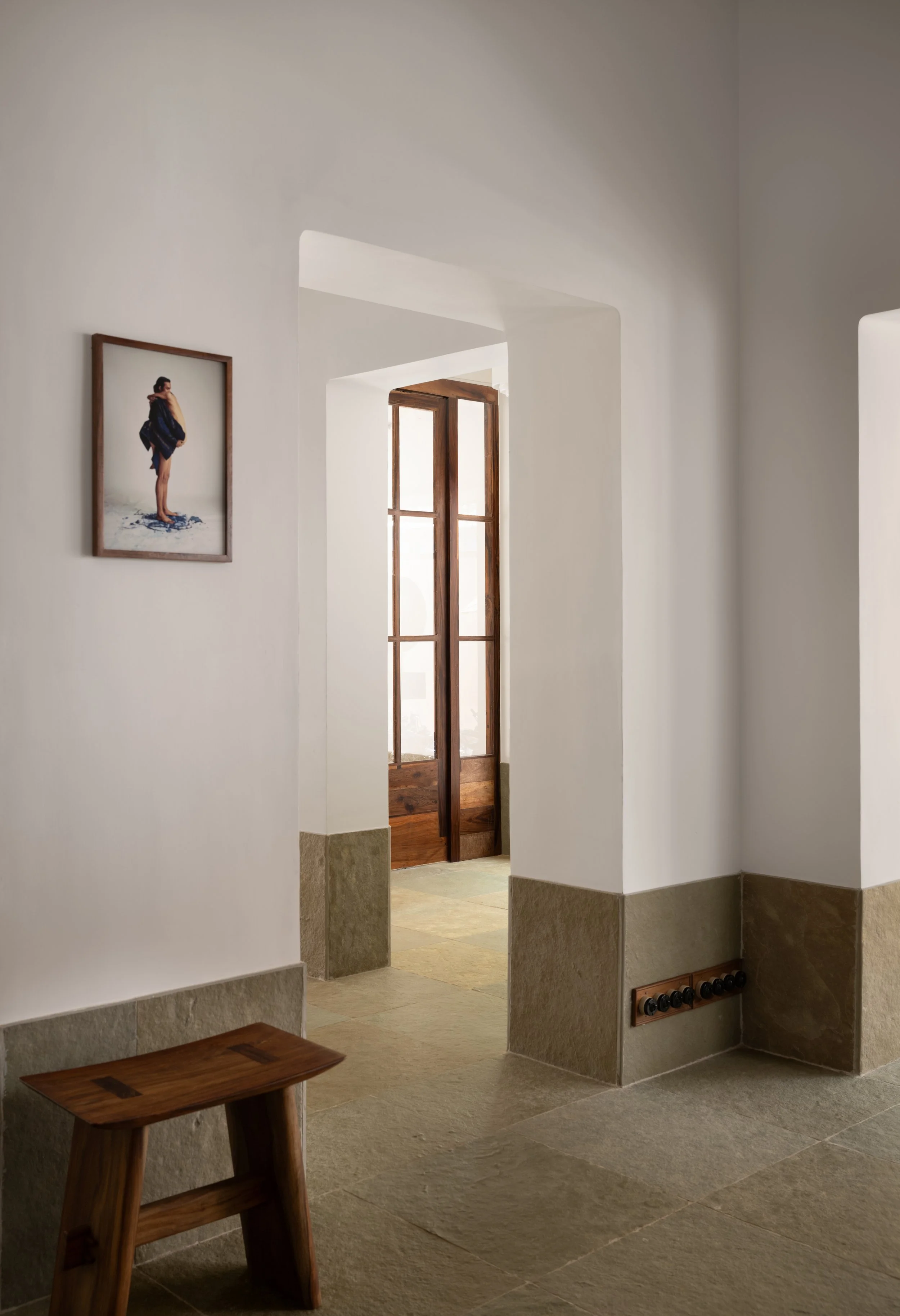
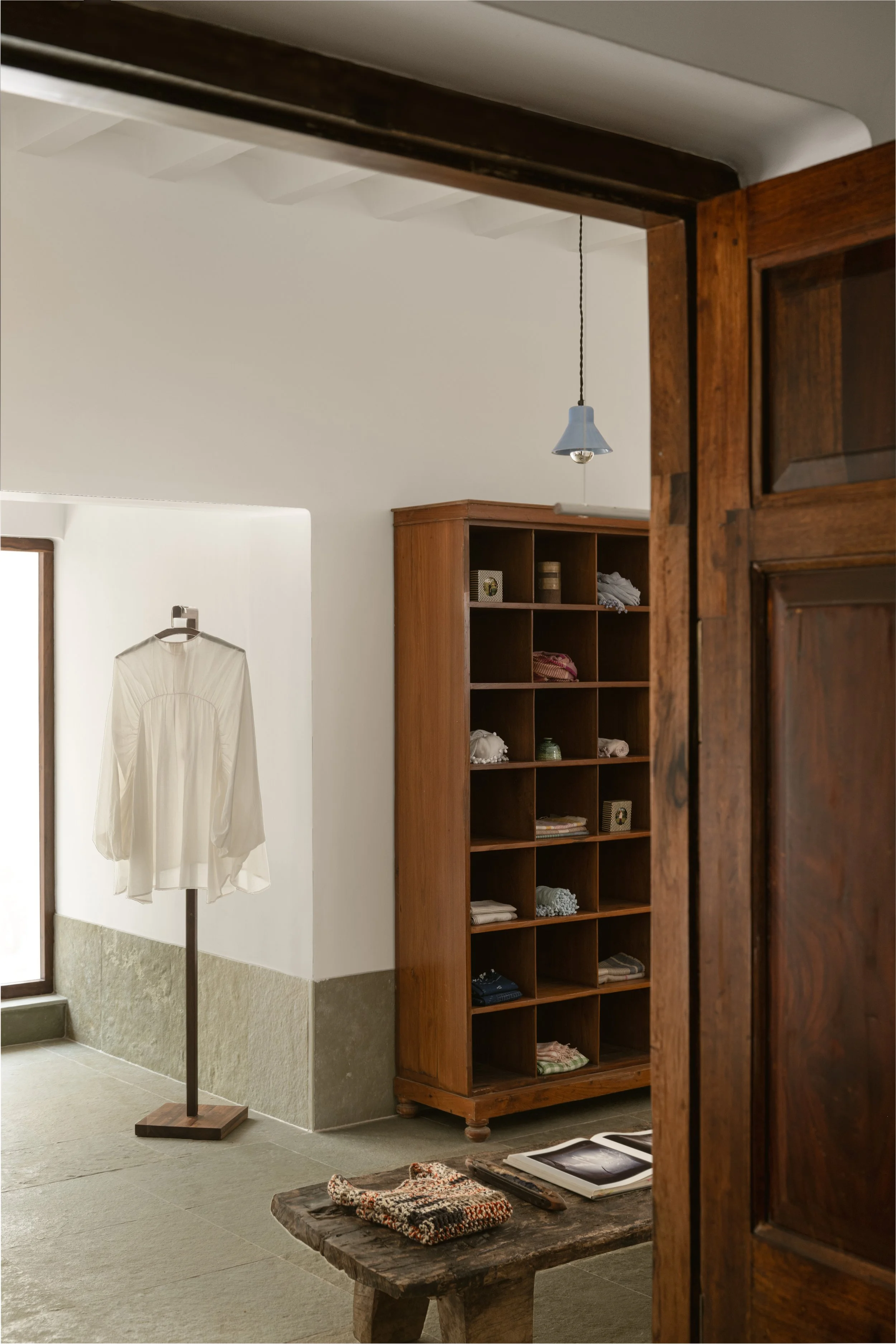
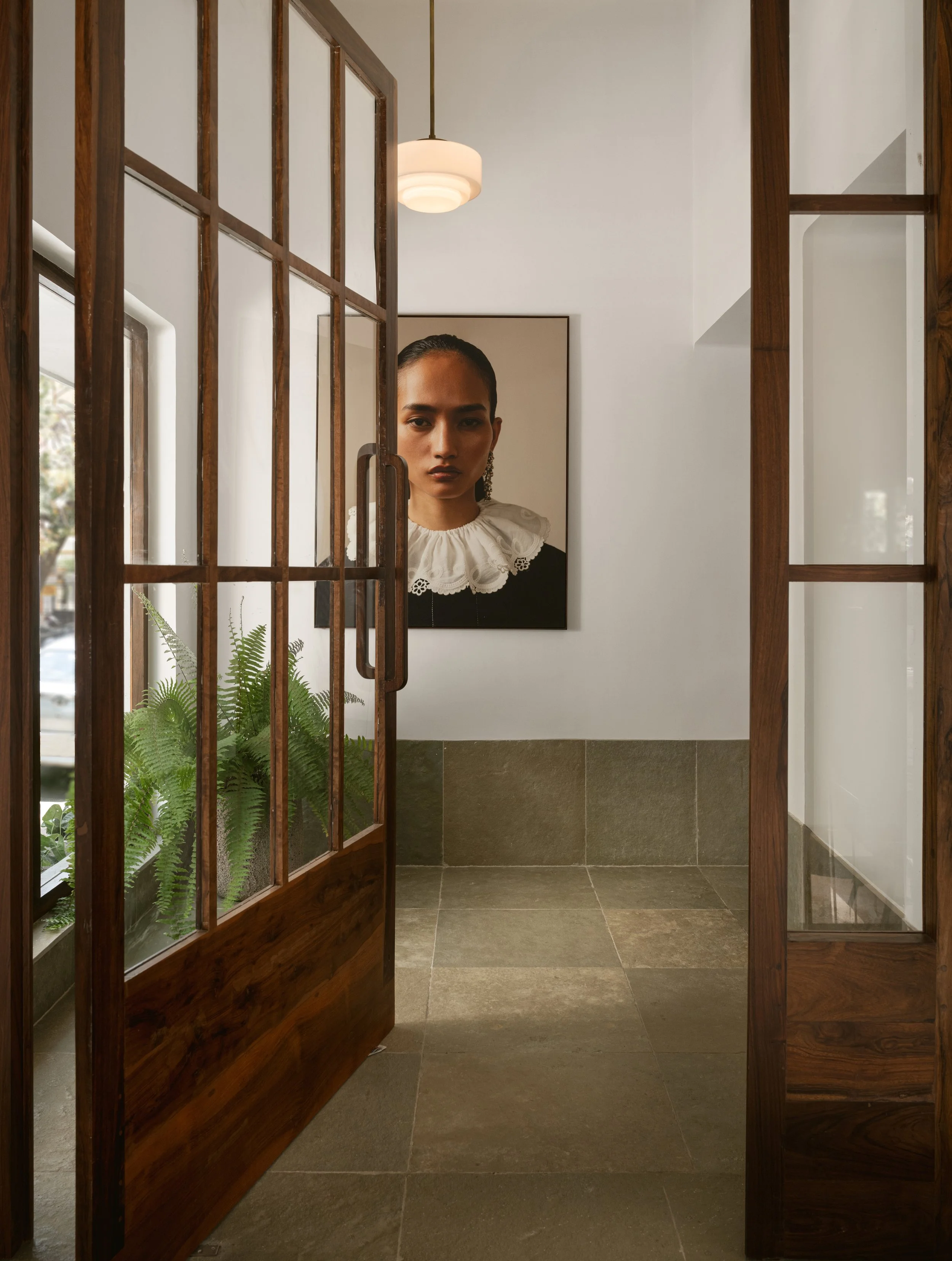
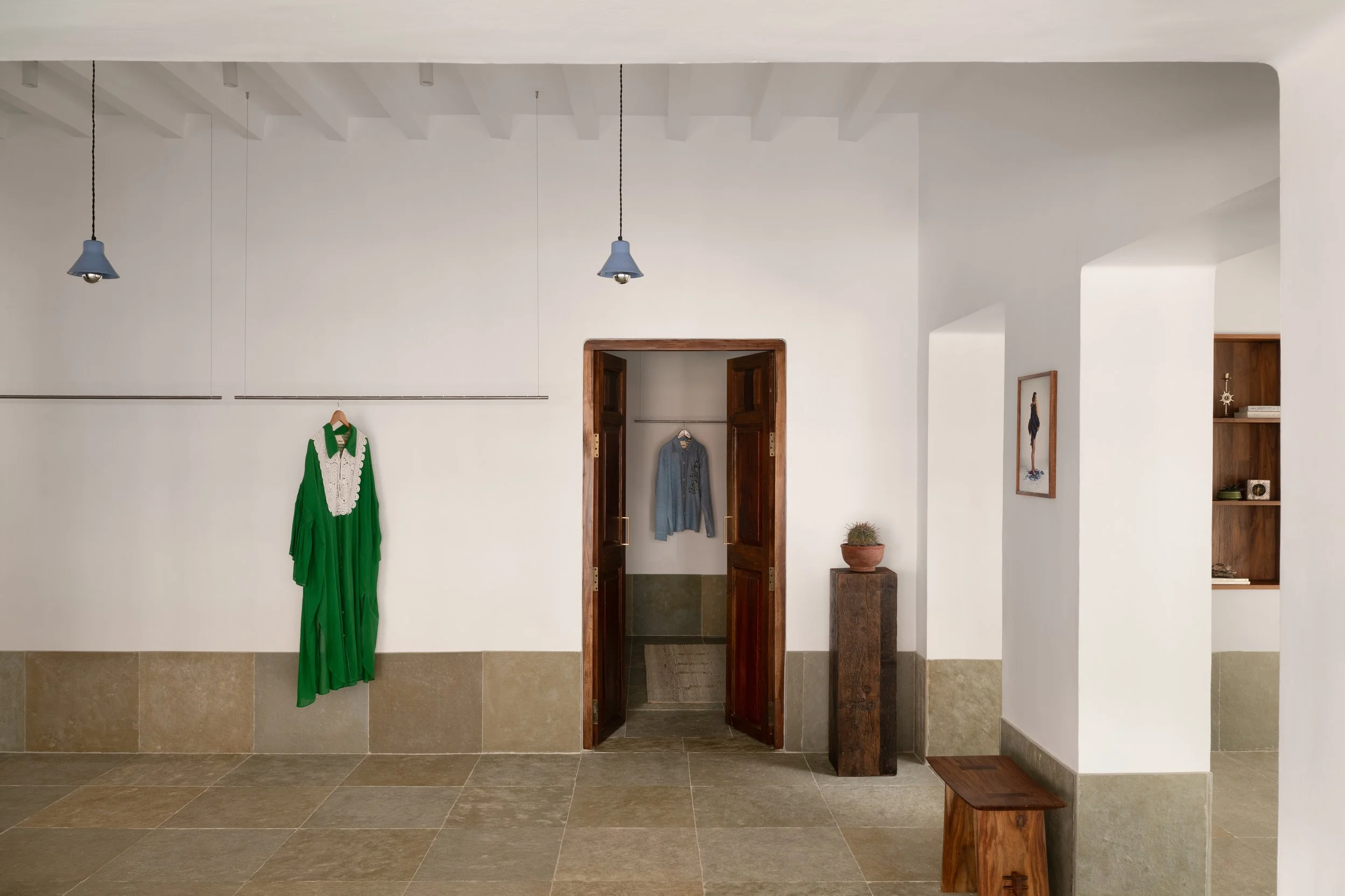

Material choices were made with longevity in mind. The natural stone, timber, ceramic and handmade details are intended to soften with time, allowing the atelier to develop a deeper character through use. Imperfections within handmade materials have been embraced as part of the store’s identity, while local makers and collaborators from Pondicherry and Auroville contributed to the ceramic, stone, landscape and other crafted elements.
The design process developed through a gradual accumulation of conversations and small decisions. Objects, plants, doors, ceramics and chairs became part of an ongoing process of editing, with the team continually simplifying and removing elements until the interior felt effortless. This careful balance between local craftsmanship and an international visual language became central to the design, with familiar materials and techniques reinterpreted through a cleaner and quieter lens.
For Naushad Ali, the atelier extends the sensibility of the clothing itself. “The store is also an extension of how we design clothing. Minimal, understated, functional, but emotional through detail and materiality,” he says. “The brand has always loved the old but lives in the present, and I think the same principle naturally carried into the store as well.”
The finished atelier carries this idea through every layer, pairing the patina of an old Pondicherry building with contemporary restraint and a deeply tactile material palette. It offers a retail experience that feels close to a quiet gallery or lived-in home, giving the garments room to breathe while creating a fresh cultural destination for the city.