Desnouettes by Martin Massé
Set within an early twentieth-century building in Paris’s 15th arrondissement, Desnouettes by Martin Massé is a duplex apartment shaped by history, light and colour.
The building was designed by architect Pierre Patout, and its street-facing façade carries the codes of its period through cut stone, facing brick and Art Deco ironwork.
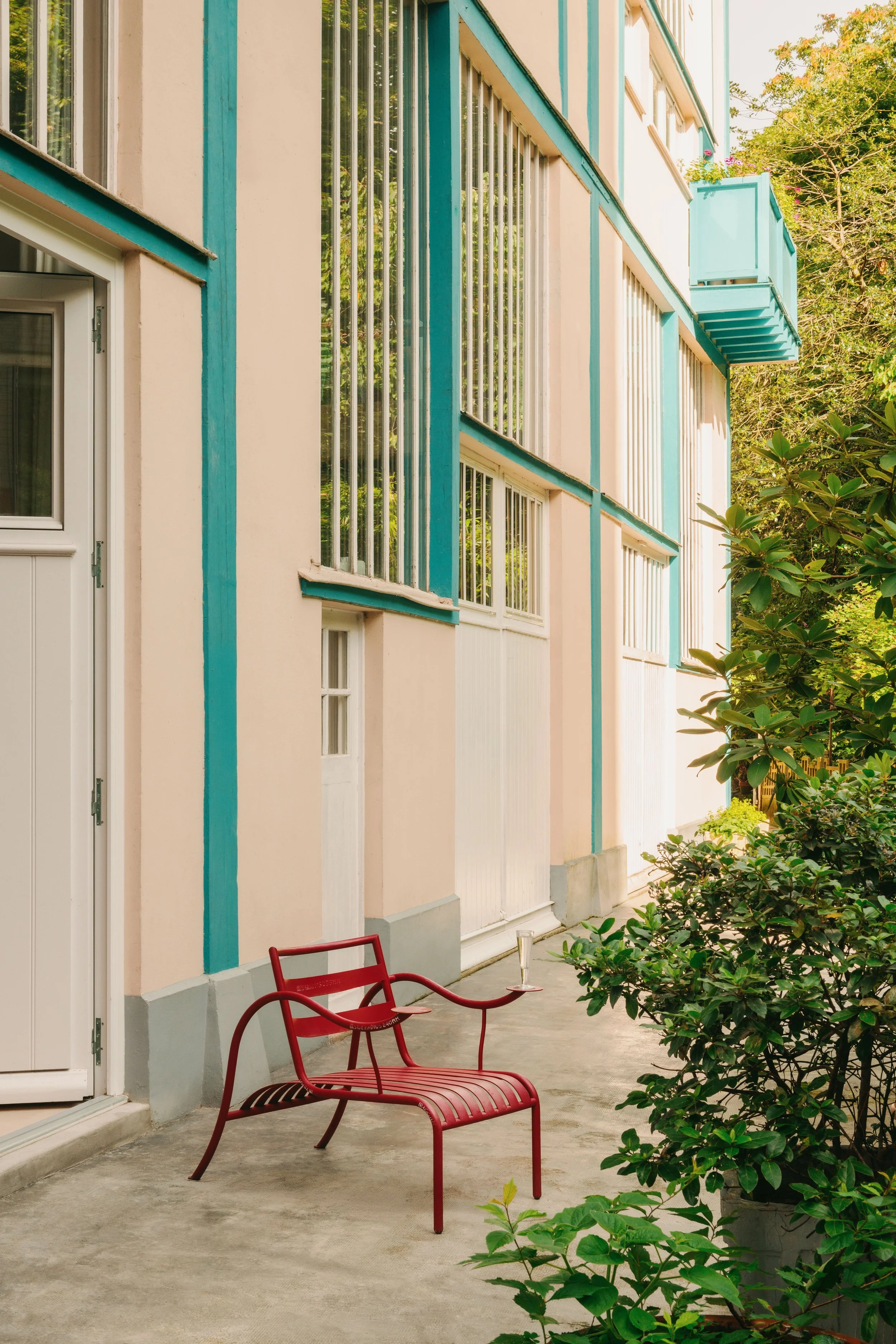
Behind this formal frontage lies another world. At the rear, the building opens onto artists’ studios defined by vast north-facing glass roofs, turquoise balconies, exposed structures and large steel bay windows. These studios look towards the greenery of the Petite Ceinture, and over time have hosted artists including Jules Cavaillès, Jean Vénitien and Camille Pissarro. It is within this layered architectural setting that Martin Massé was invited to transform a ground and first floor duplex into a home for living and working.
The apartment is accessed directly from the courtyard and is immediately distinguished by a 3.5-metre-high glass roof that draws natural light deep into both levels. The client was drawn to the unusual character of the space and wanted to preserve its studio-like quality while creating an intimate domestic interior. Massé responded with a radical reworking of the existing plan, replacing a conventional arrangement with a more fluid relationship between reception areas, private rooms and workspaces.
Before the renovation, the ground floor retained the feeling of a workshop. A bright double-height volume sat at the front, while the entrance hall, utility room and storage areas occupied the rear. The first floor contained the main living spaces, including a bedroom, a small mezzanine lounge, a kitchen and a bathroom. Massé reversed this arrangement, placing the reception rooms on the ground floor and moving the more private areas upstairs.
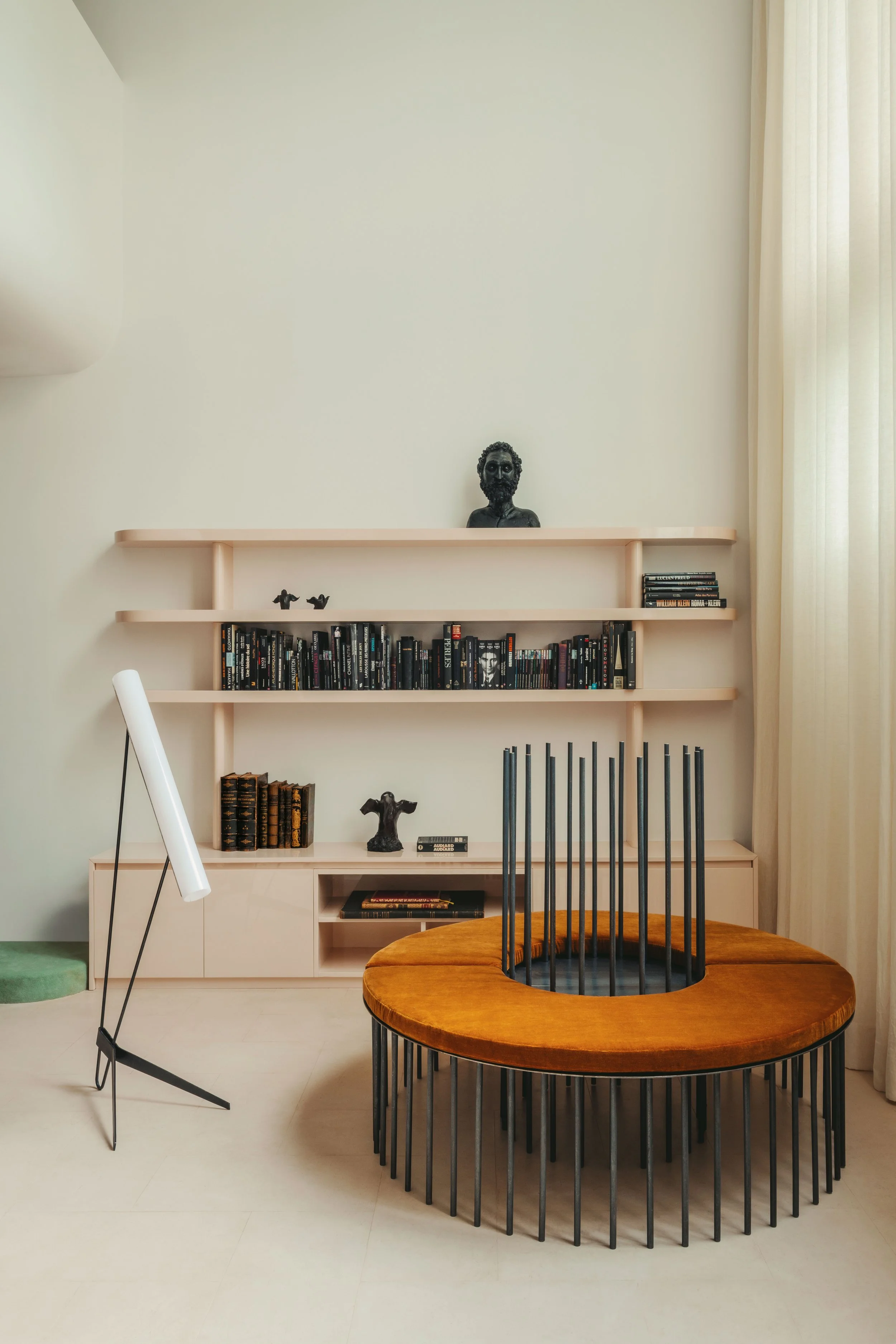
On the ground floor, the living room and library sit beneath the glass roof, taking advantage of the brightest part of the apartment and the generosity of the double-height ceiling. This area is deliberately calm, allowing the architecture and natural light to take precedence. Almost white Portuguese stone flooring, immaculate walls and a cream-lacquered bookcase introduce a soft clarity to the space. The curved forms of the bookcase draw on the work of Eugène Printz, bringing an Art Deco sensibility into a contemporary interior language.
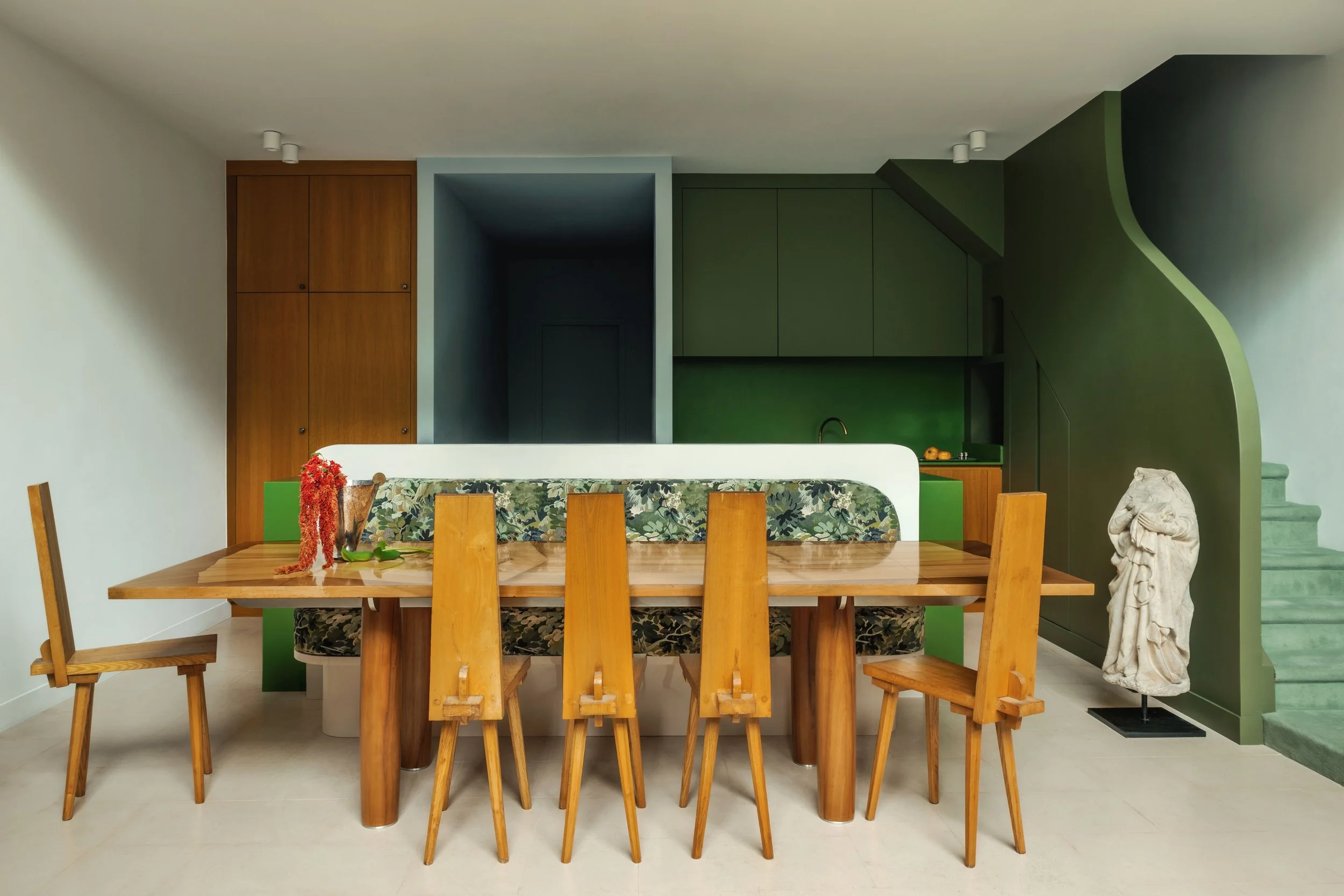
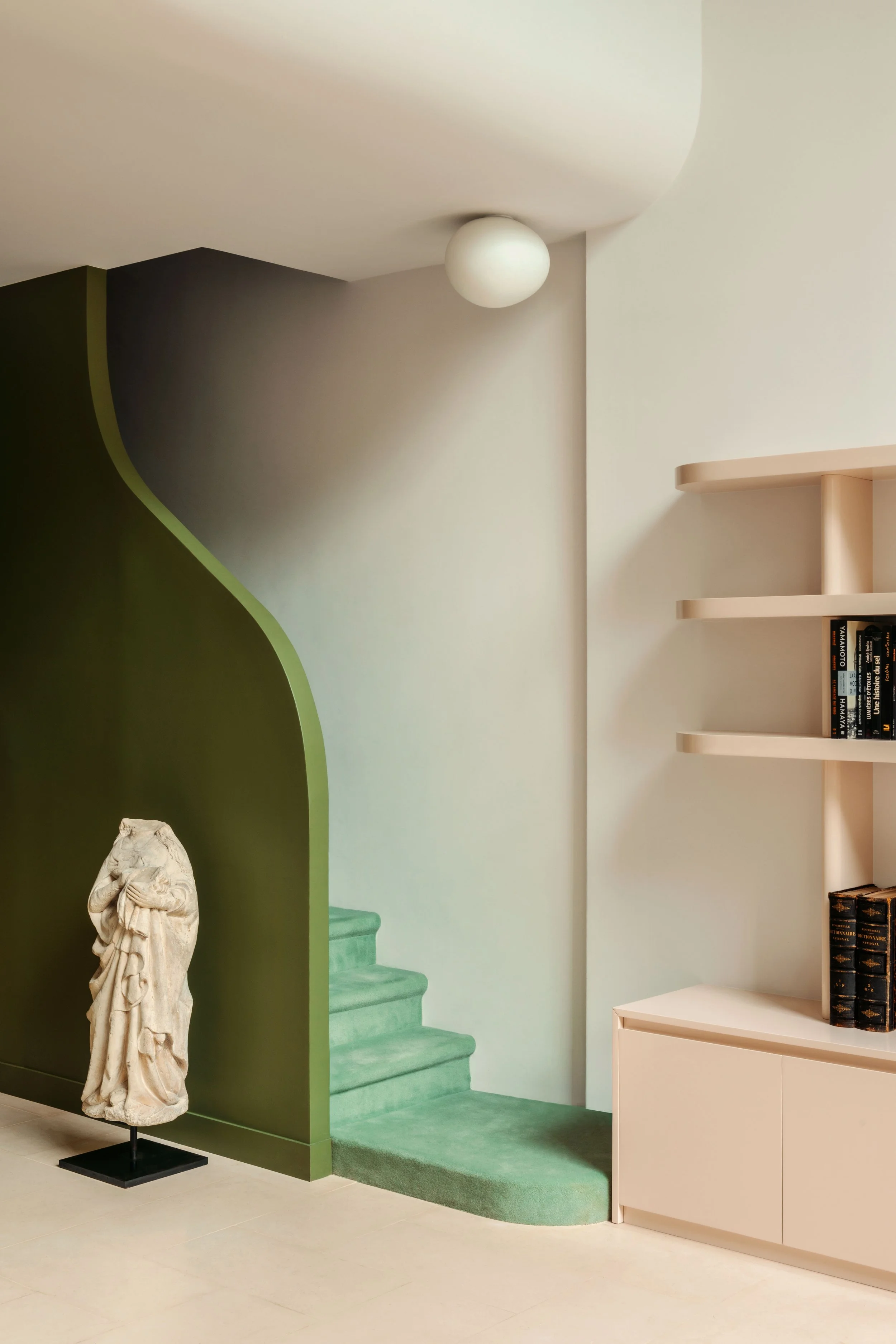
From this luminous front room, the open-plan dining area extends deeper into the apartment. A built-in bench positioned against the kitchen island helps define the room while partially screening the kitchen from view. The kitchen remains open to the living area, ensuring that the light from the glass roof continues to animate the plan. The staircase is concealed behind a wavy slatted element that also functions as a handrail, turning a practical feature into a sculptural gesture. At the far end of the ground floor, the entrance dressing room and a small toilet complete the sequence.
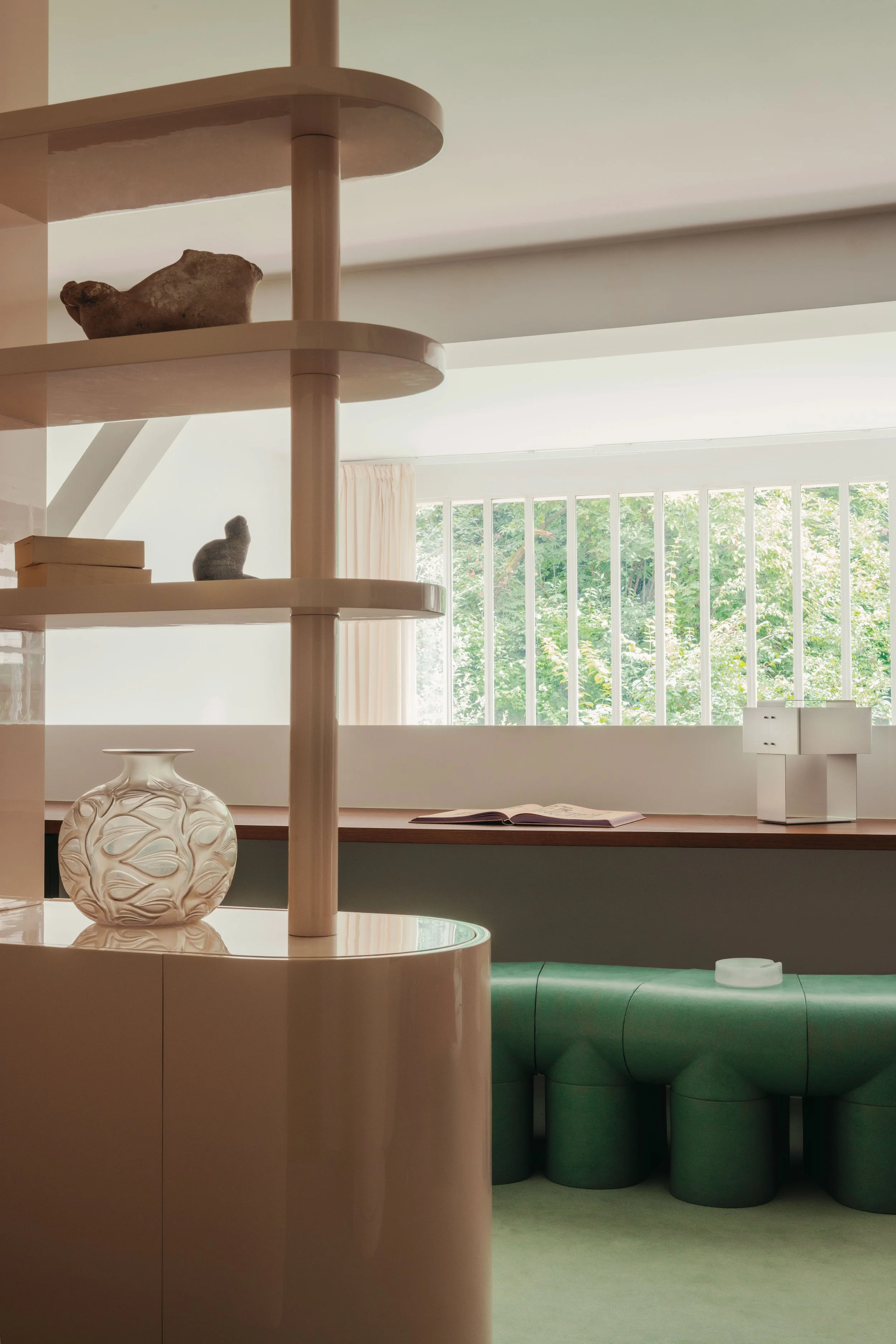
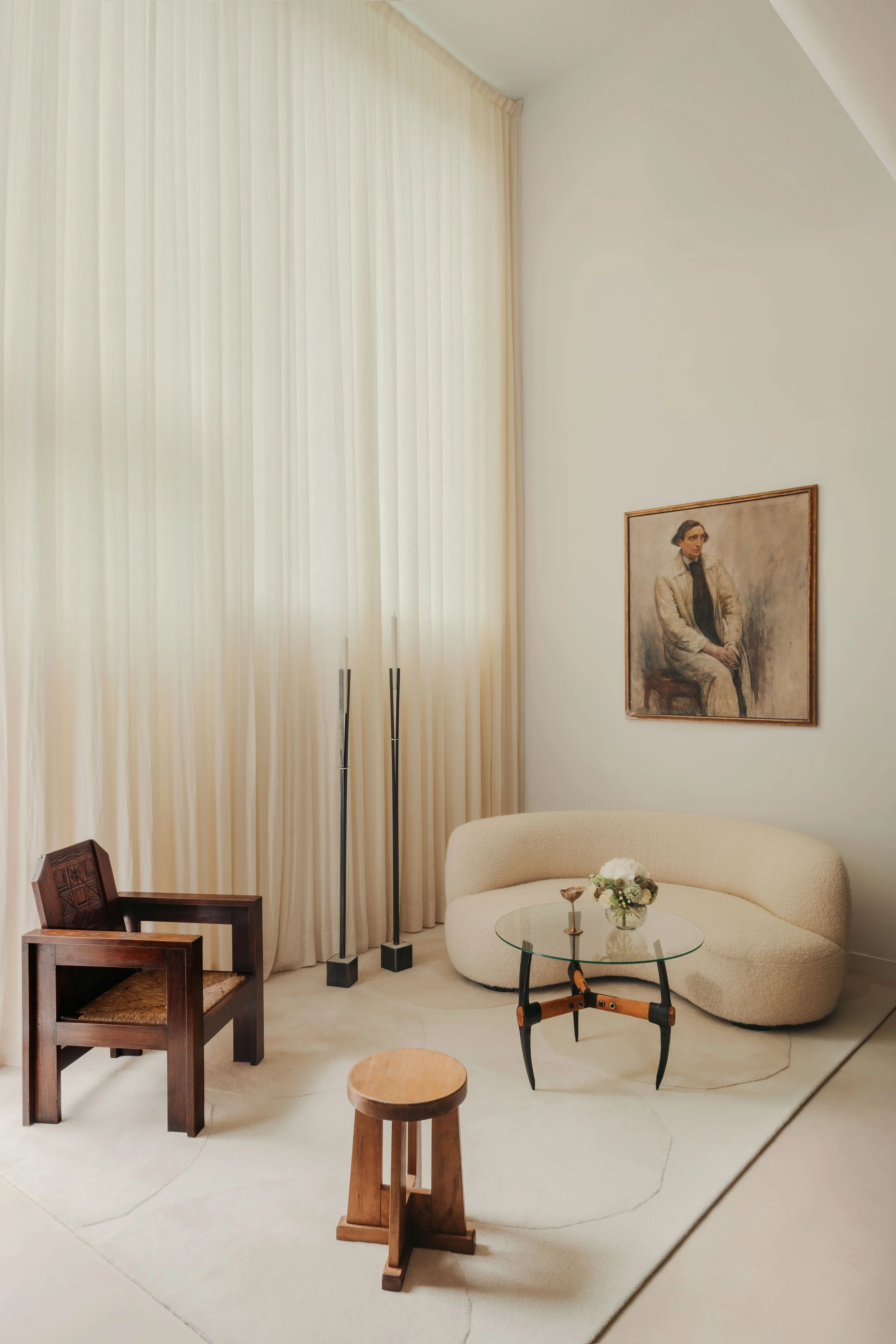
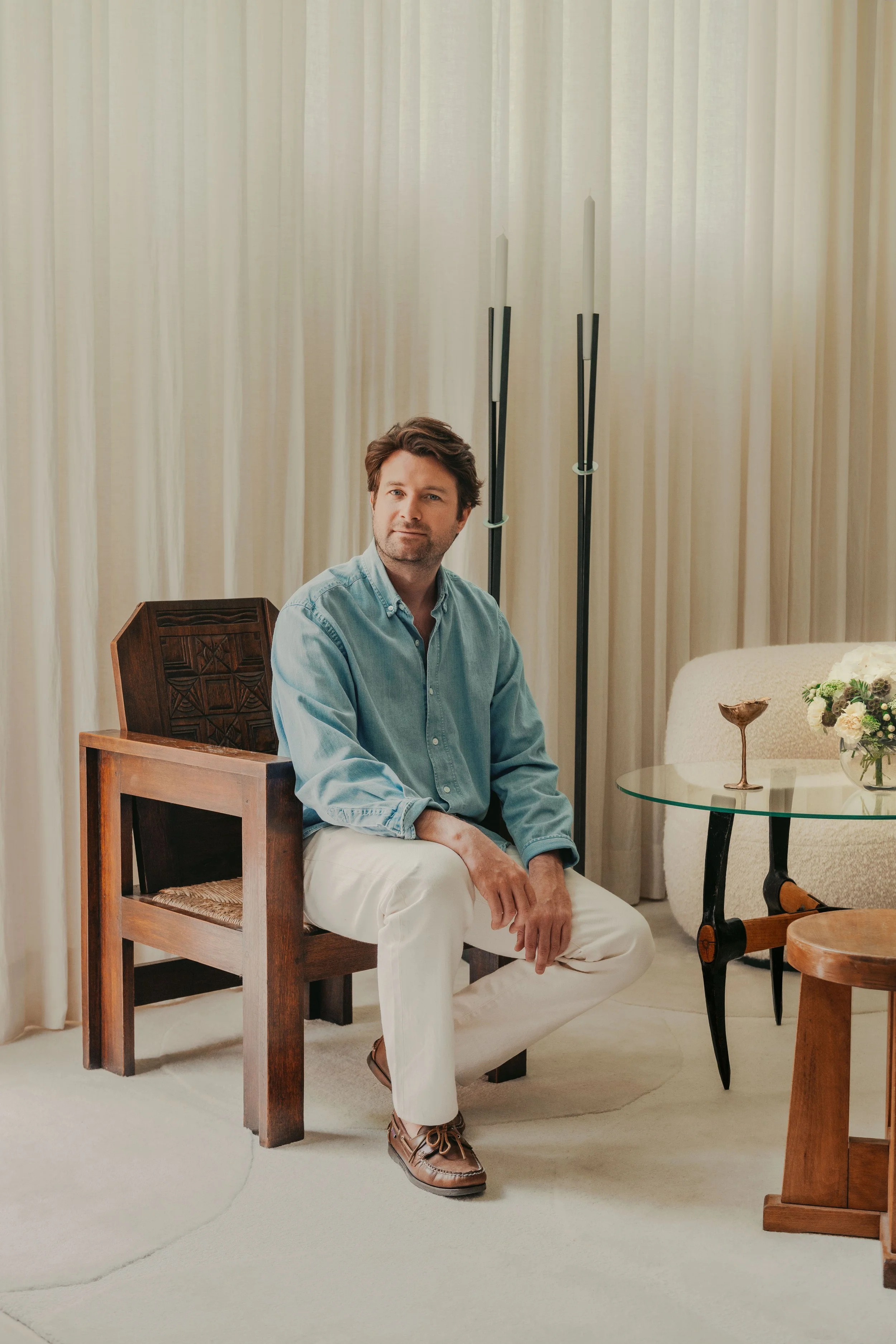
Massé conceived the project as a contemporary artwork informed by the Art Deco spirit and the modernist roots of the building. Le Corbusier’s architectural polychromy guided the use of colour throughout the apartment. The lounge beneath the glass roof is pale and restrained, acting as a bright threshold between interior and exterior. Deeper into the plan, the palette becomes richer and more expressive.
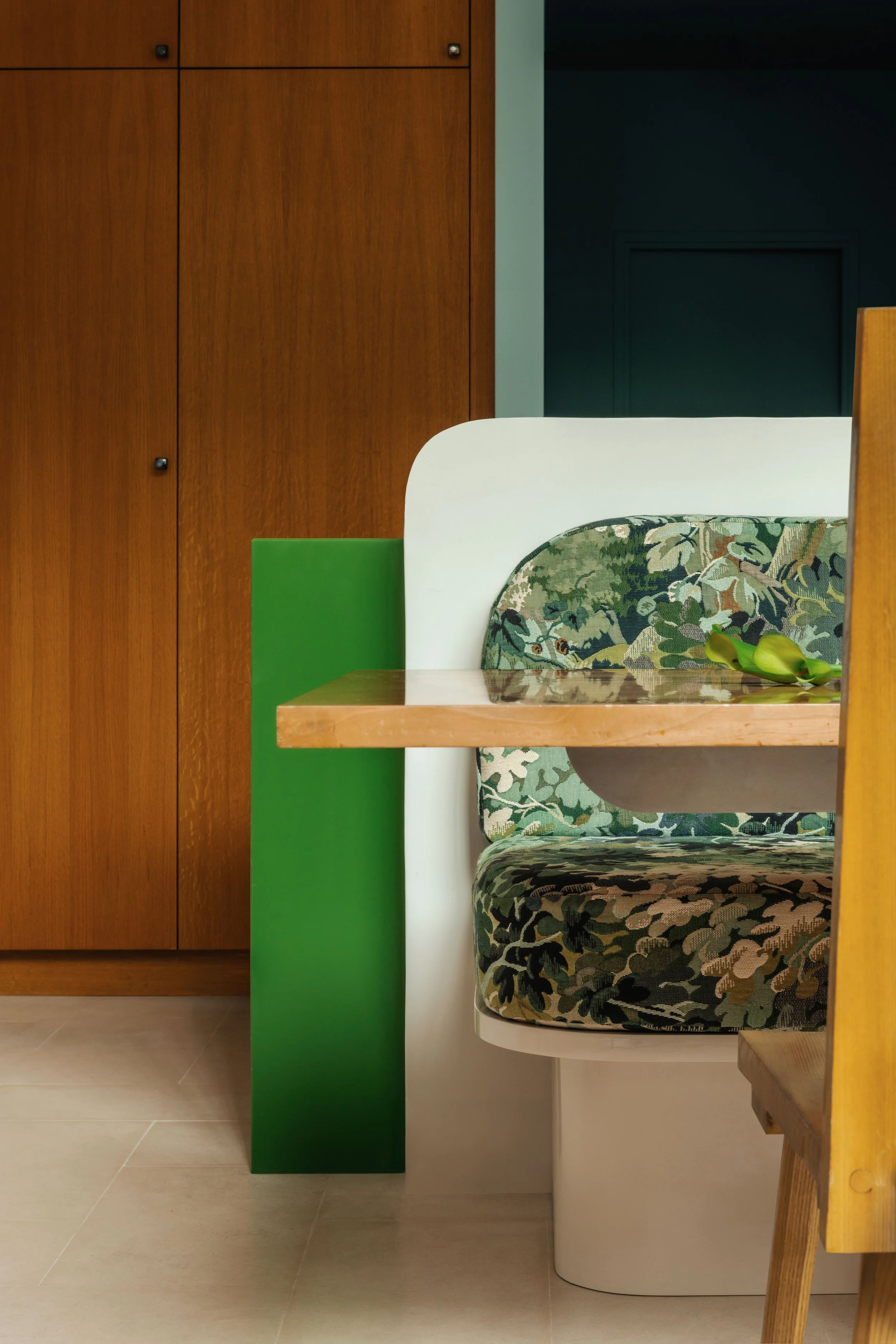
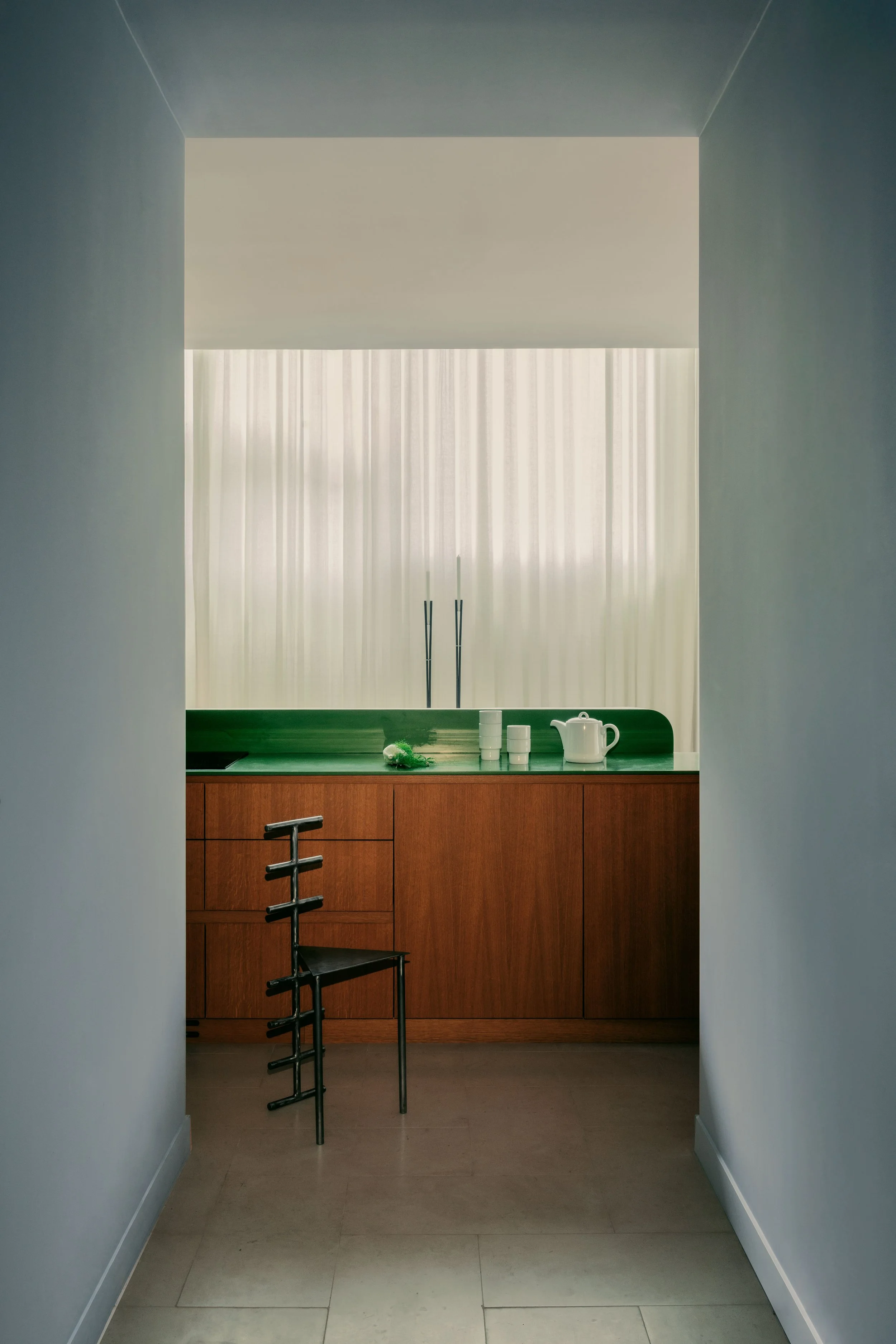
The rear of the ground floor forms a pictorial composition inspired by Serge Poliakoff. Colour, material and volume overlap across the kitchen and dining area. A bench upholstered in spring-green fabric by Braquenié x Pierre Frey sits beside a green Corian island. Warm orange-tinted oak appears on storage doors, while a green splashback and tall units wrap around the space and continue into the undulating stair handrail. A sky-blue opening marks the entrance, adding another chromatic layer to the composition.
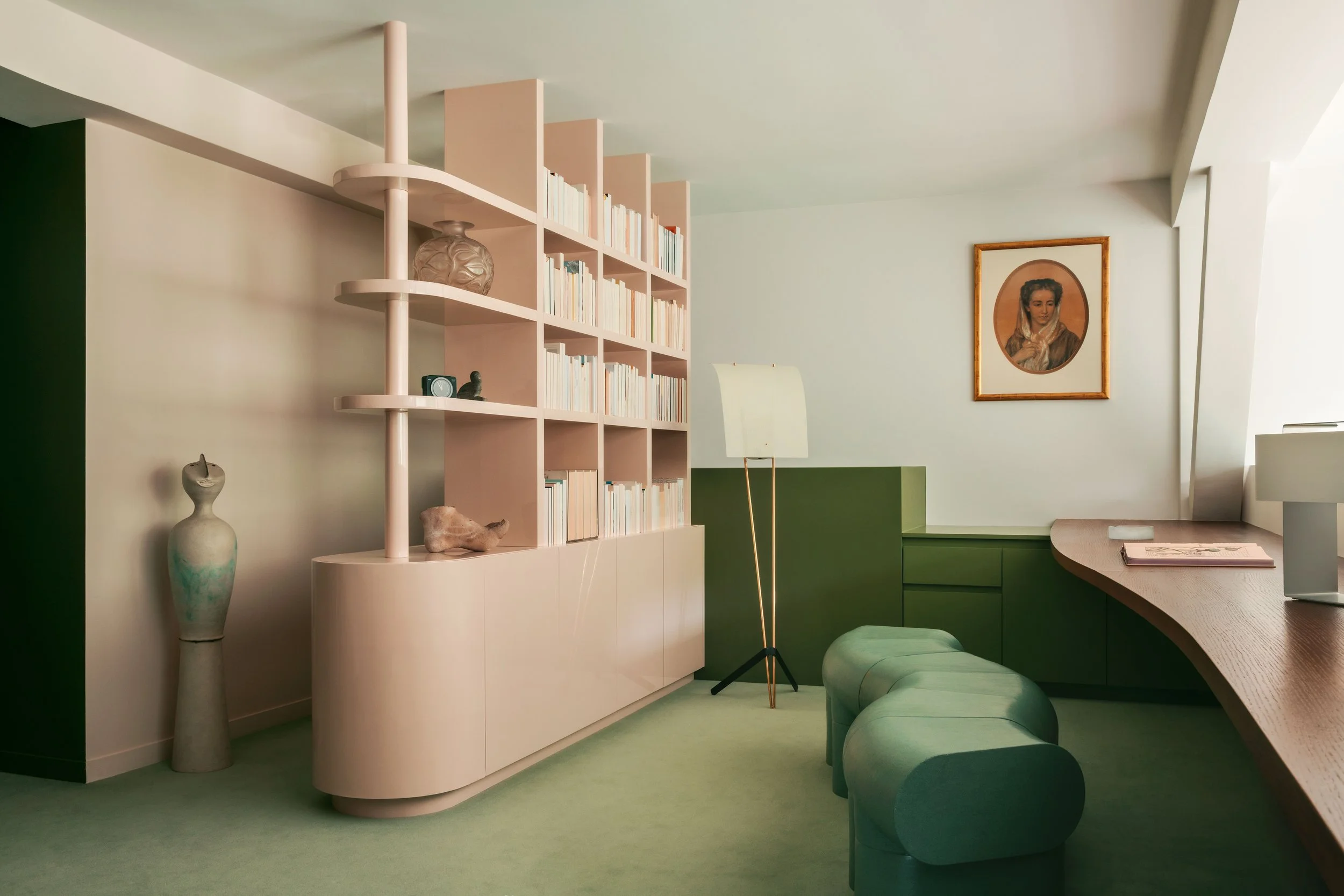
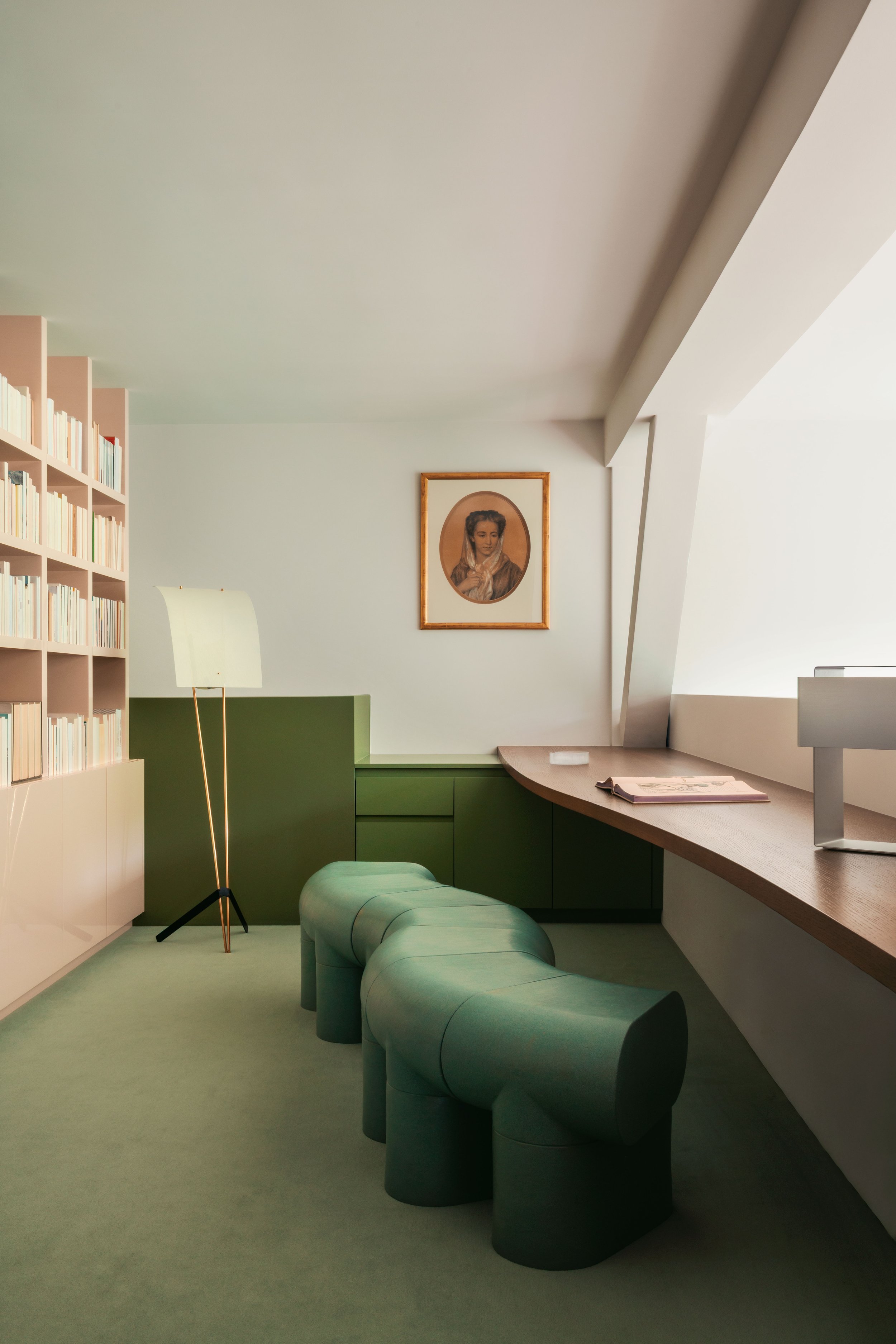
Upstairs, the atmosphere becomes more enveloping. The mezzanine-level study and library were designed around the client’s professional life, offering a generous view of the Petite Ceinture and its greenery. Green carpet softens the room, while a bespoke curved desk follows the balustrade. A lacquered bookcase inspired by Art Deco furniture reinforces the project’s dialogue with the building’s historic character.
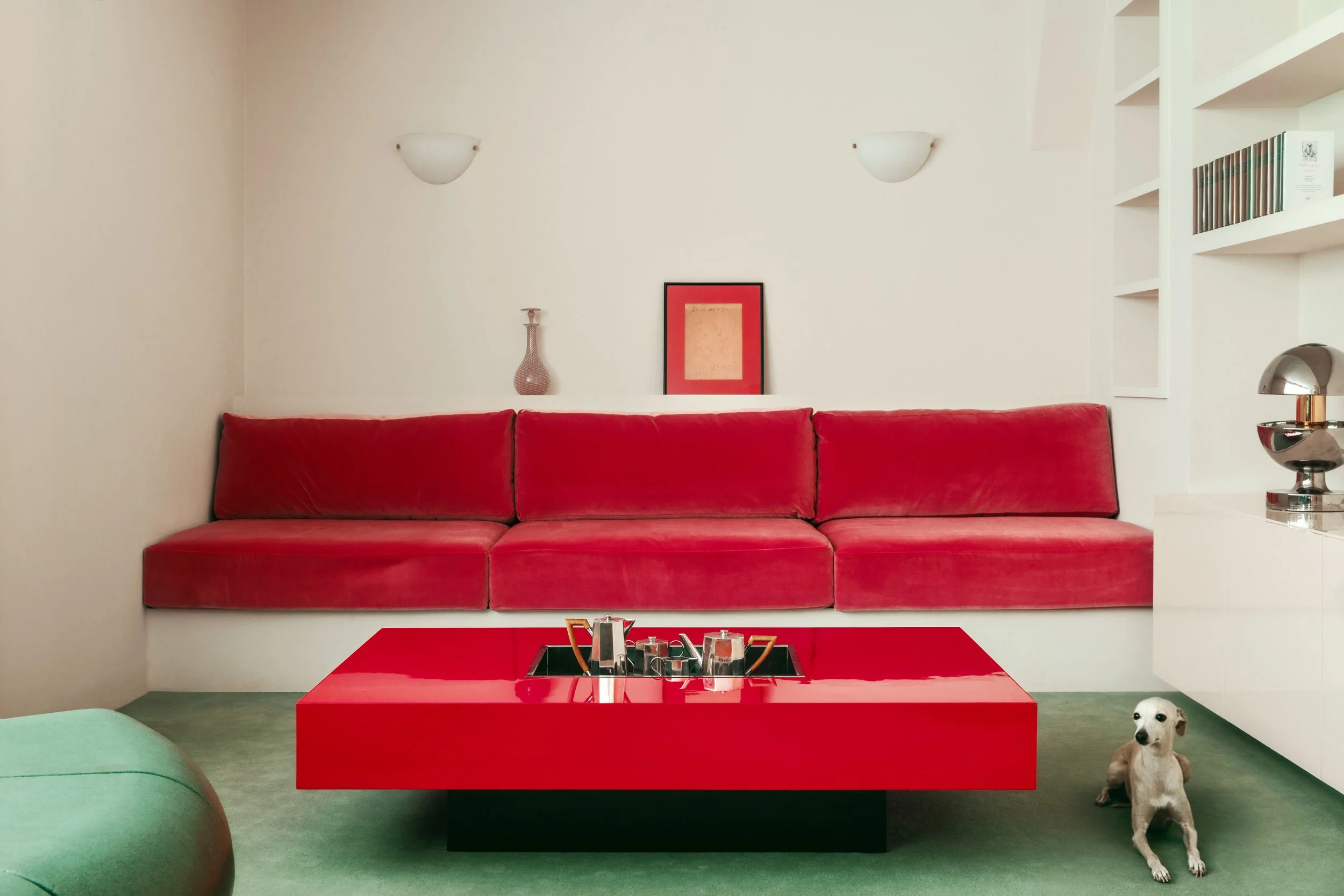
The private lounge introduces a more intimate mood. Bespoke shelving, a pink velvet bench and a red lacquered coffee table from the 1970s create a vivid counterpoint to the green carpet and cream walls. The room feels personal and collected, combining tailored joinery with vintage colour and texture.
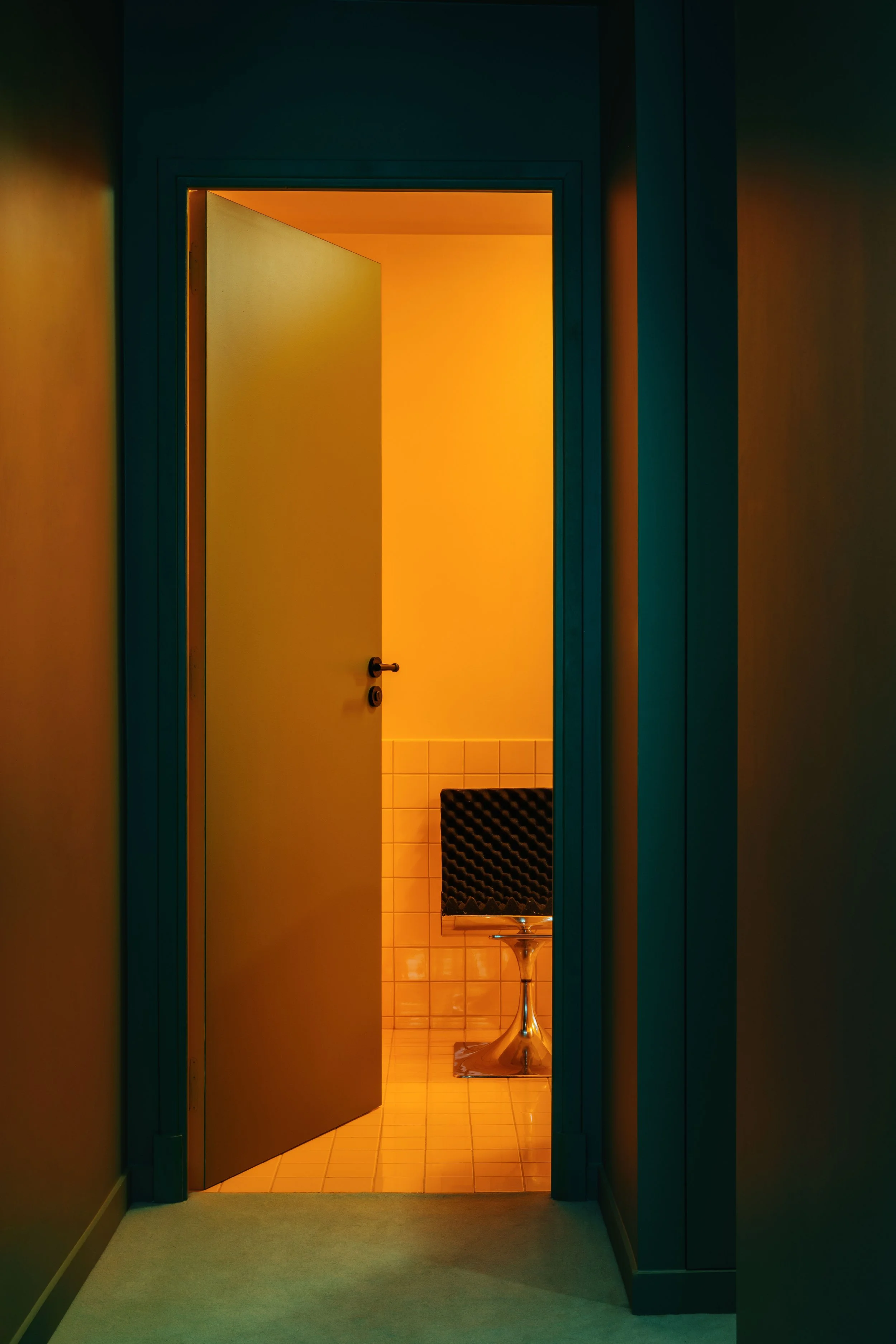
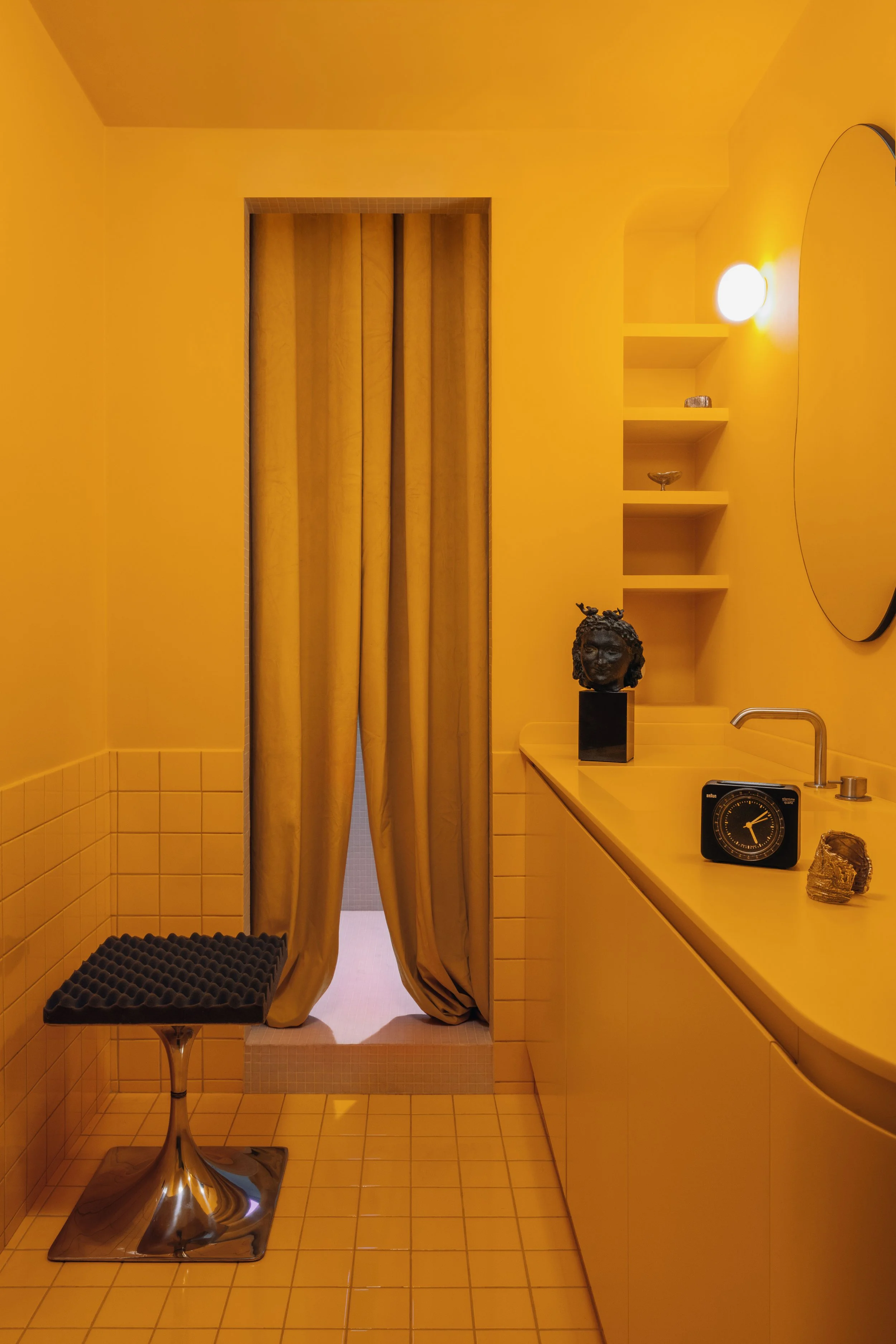
The walk-in wardrobe forms a transition between the bedroom and bathroom, and is finished in a deep green that connects visually with the kitchen below. This continuity gives the apartment a sense of cohesion without making each space feel the same. The bathroom then shifts into a fully immersive yellow world. Walls, ceiling, floor and skirting are clad in glossy glazed ceramic tiles, complemented by yellow lacquered cabinetry and a Corian washbasin. The references to Wes Anderson are explicit, particularly the set of the short film Hotel Chevalier. Within this saturated yellow environment, the shower introduces a gentle break through pale pink Bisazza mosaic.
The bedroom stands apart from the modernist and Art Deco language found elsewhere in the apartment. Treated as a self-contained retreat, it evokes an intimate, feminine world of the late nineteenth century. Floral Morris & Co wallpaper, typical of Art Nouveau, brings softness and ornament into the room. This deliberate shift creates a poetic pause within the home, offering a quieter and more romantic counterpoint to the colour-blocked spaces beyond.