Bayview Arrival by Soil Studios
Bayview Arrival by Soil Studios is a considered exploration of arrival as experience, shaping a graceful transition from the everyday to a calm, elevated home environment within Haikou’s coastal landscape.
Conceived as a continuous sequence rather than a single moment, the project connects the basement carpark lobby, ground floor lobby and landscaped exteriors through a shared language of material restraint, soft geometry and nature-led cues. Together, these layers establish Bayview’s identity as a place where elegance is grounded in comfort and clarity.
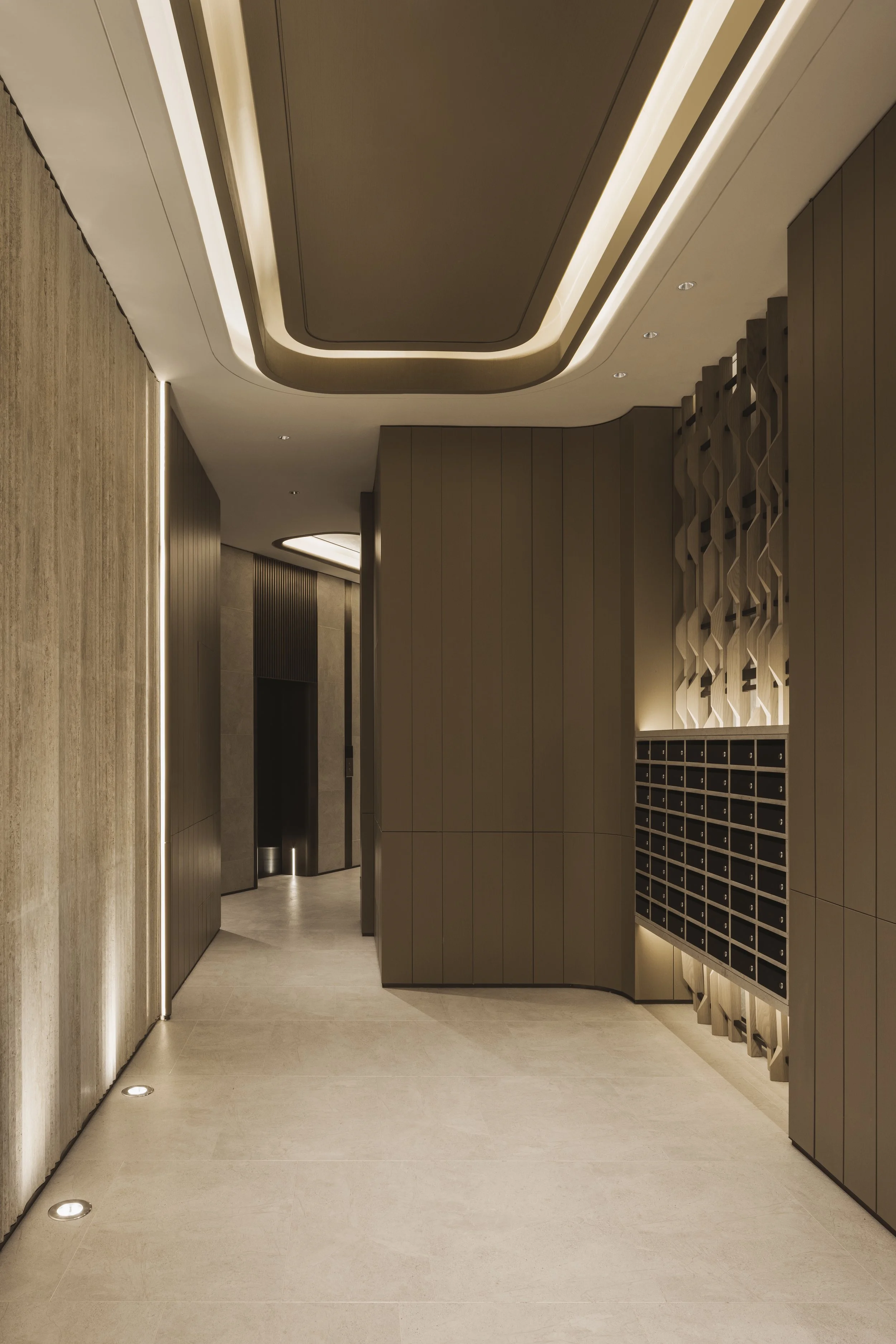
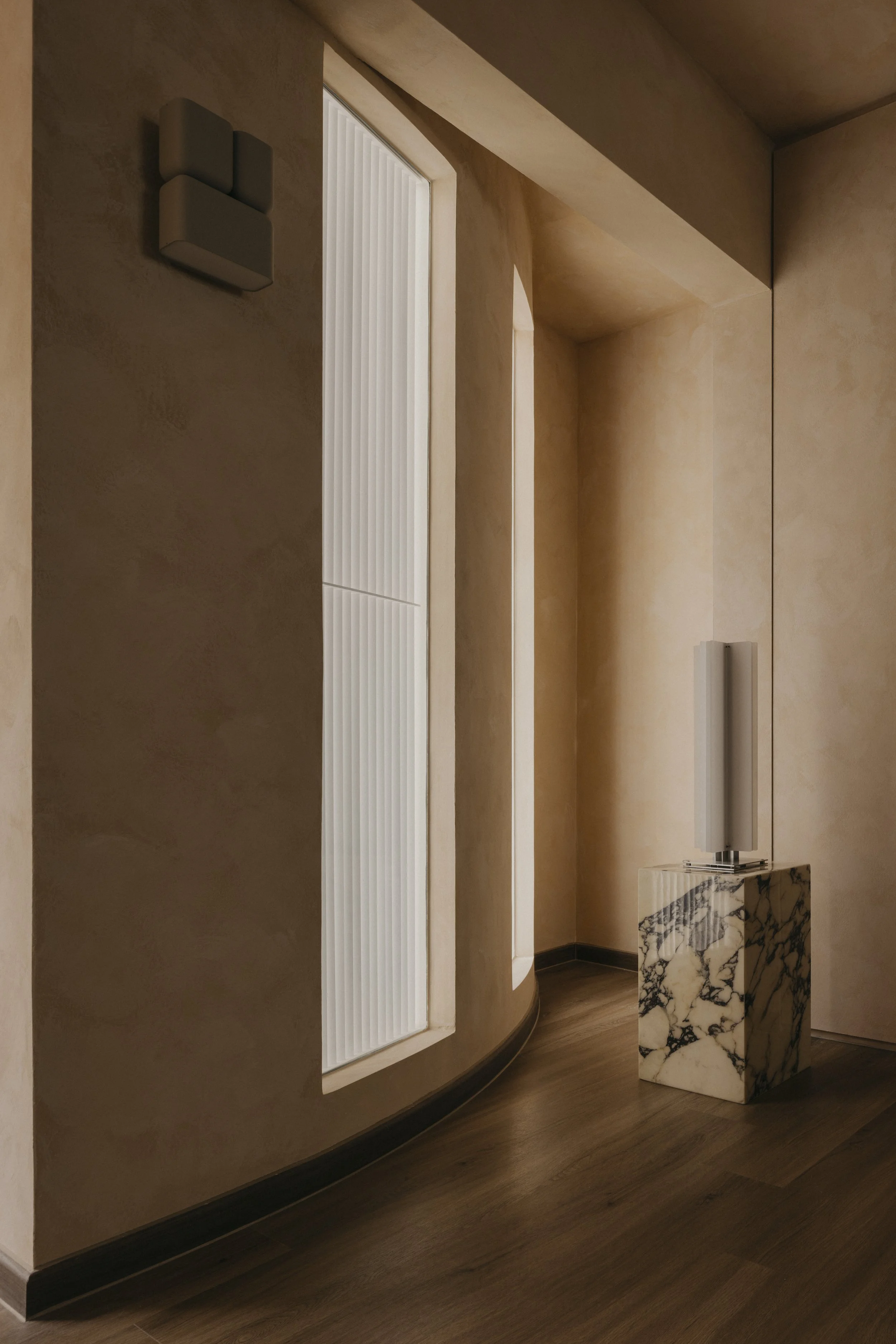
The journey begins below ground, where the basement carpark lobby has been treated as a quiet sanctuary rather than a purely functional threshold. Honed marble flooring and oak-veneered walls are complemented by warm, ambient lighting that softens the subterranean condition. Curved architectural niches introduce sculptural wayfinding elements, while timber screens discreetly separate service areas without interrupting visual continuity. A palette of sand and charcoal tones draws from Haikou’s coastal surroundings, offering residents an immediate sense of ease upon arrival.
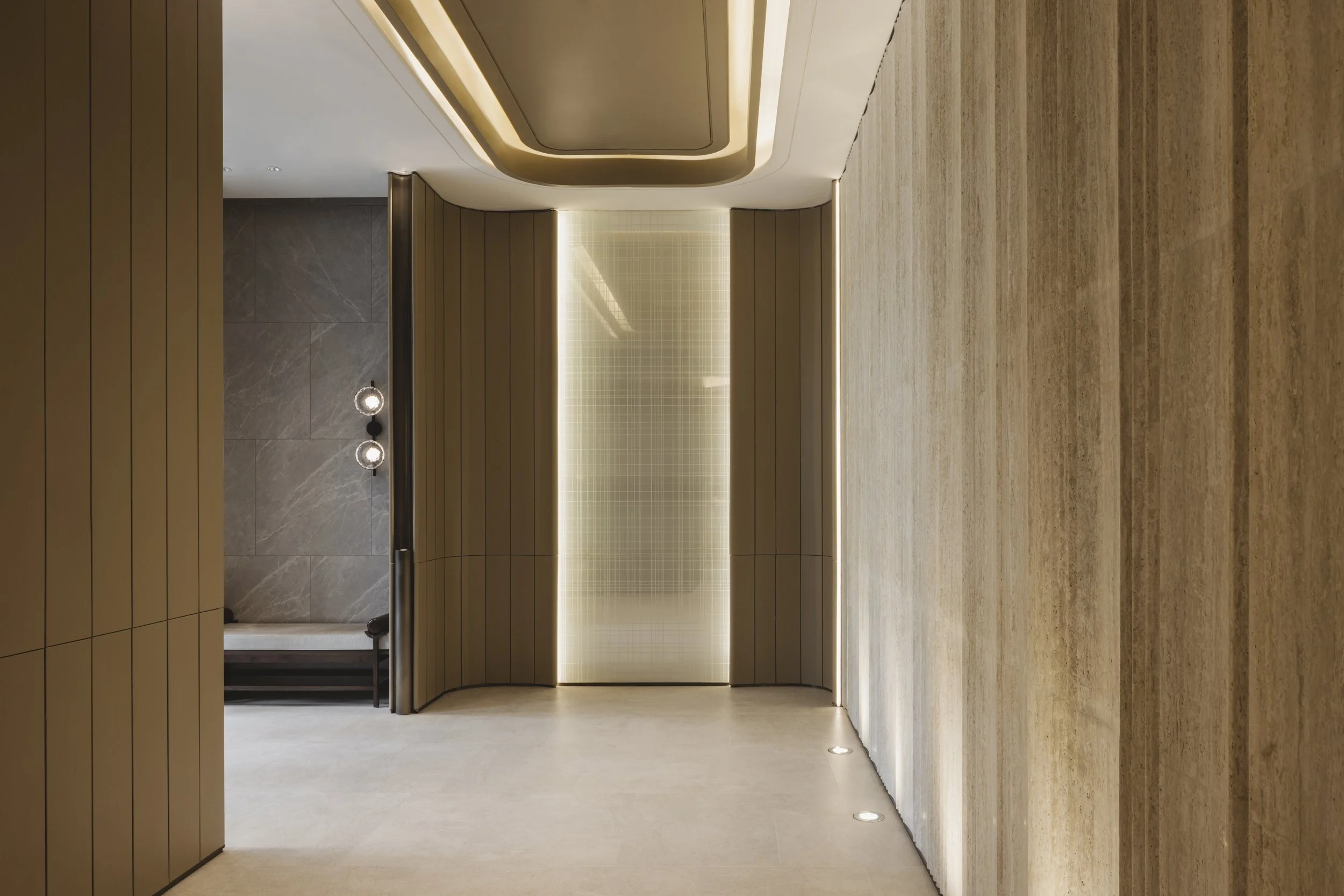
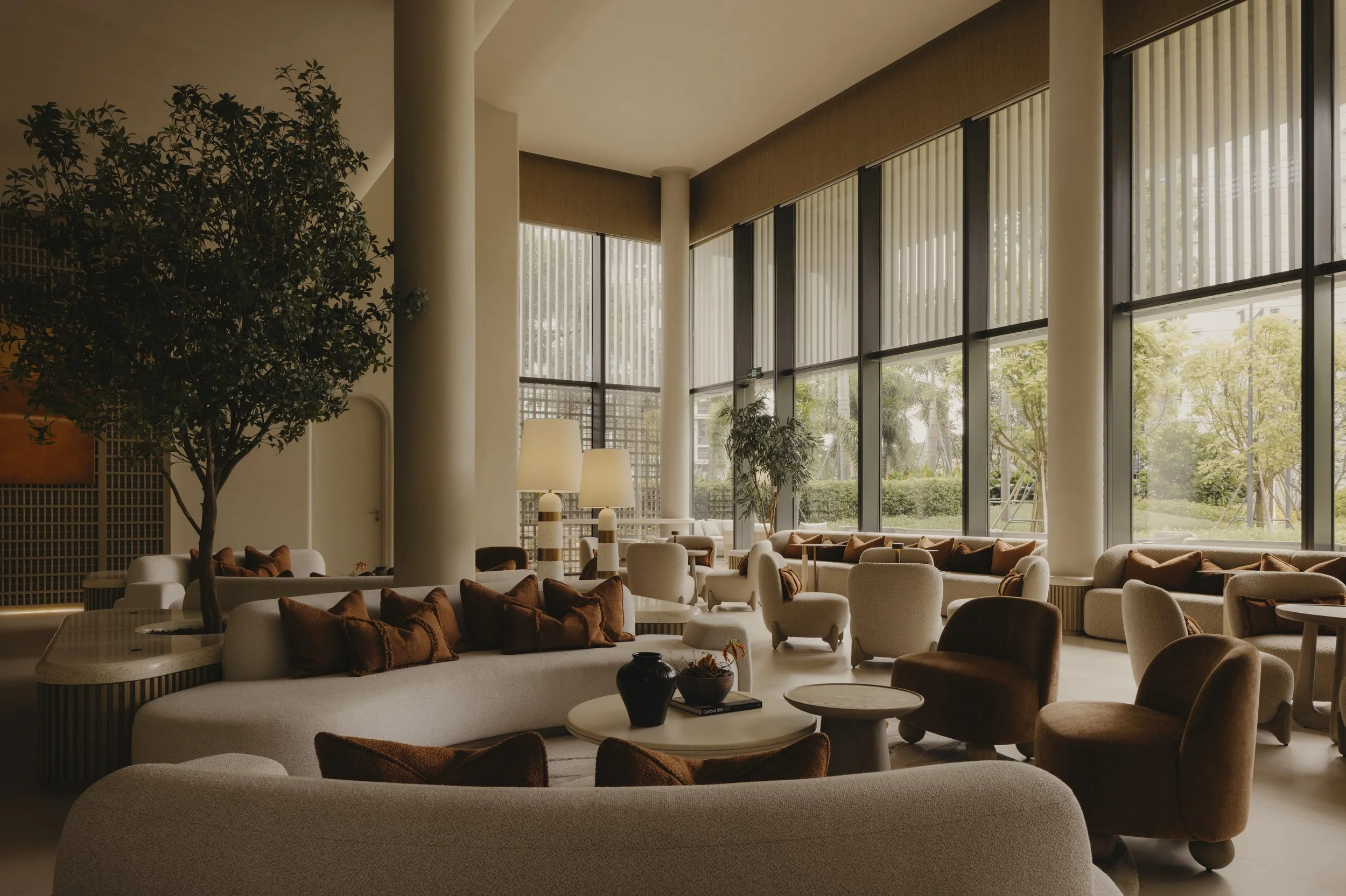
Ascending to the ground floor, the lobby opens into a light-filled interior defined by transparency and tactility. Floor-to-ceiling glazing frames views toward the gardens, allowing natural light to wash across textured clay walls and carefully detailed surfaces. A travertine reception desk anchors the room, positioned beneath a bespoke pendant that adds a gentle sculptural presence overhead. Rounded doorframes, ribbed wall treatments and recessed alcoves housing organic art pieces reinforce a cohesive narrative across the wider development, while maintaining a refined, gallery-like atmosphere.


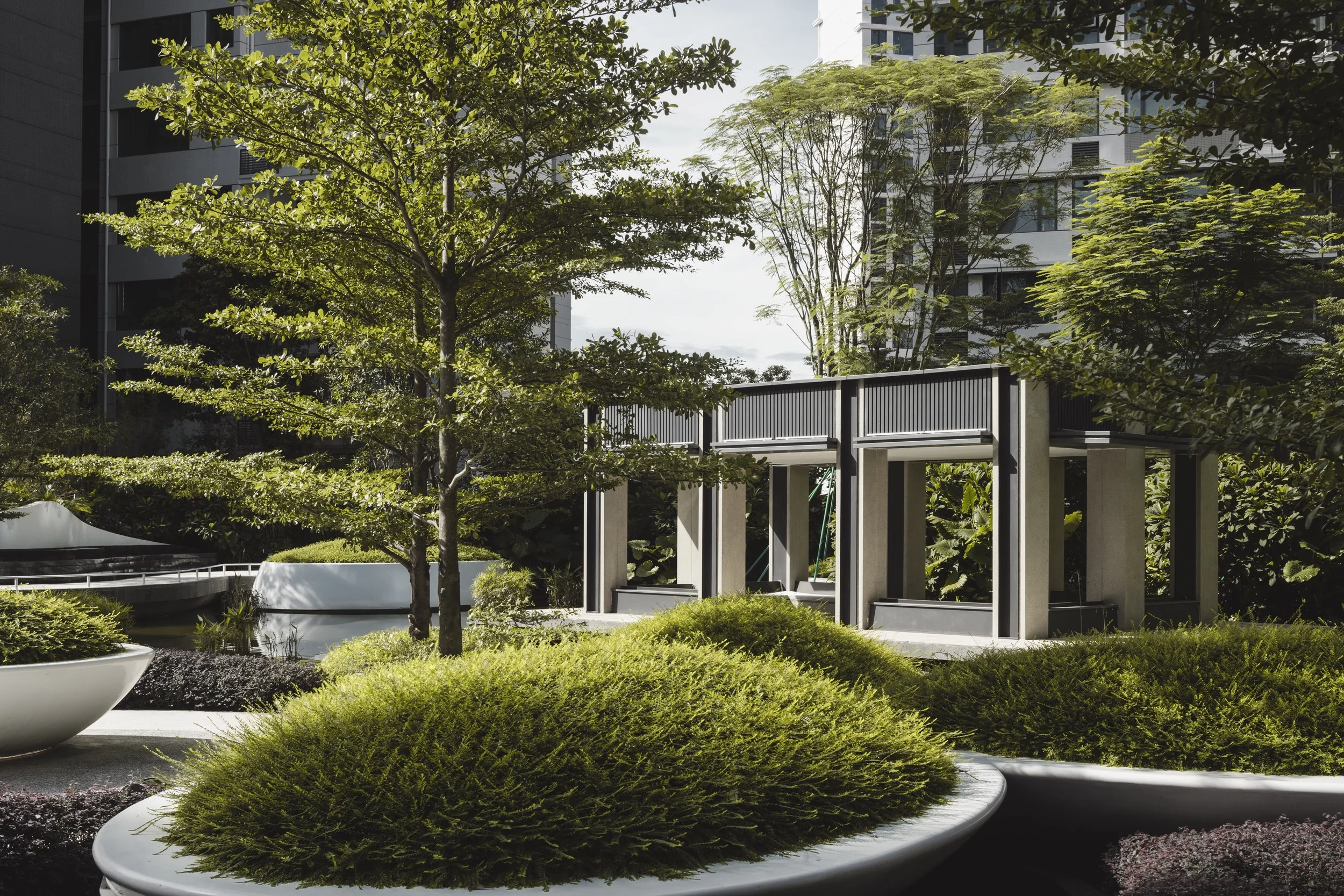
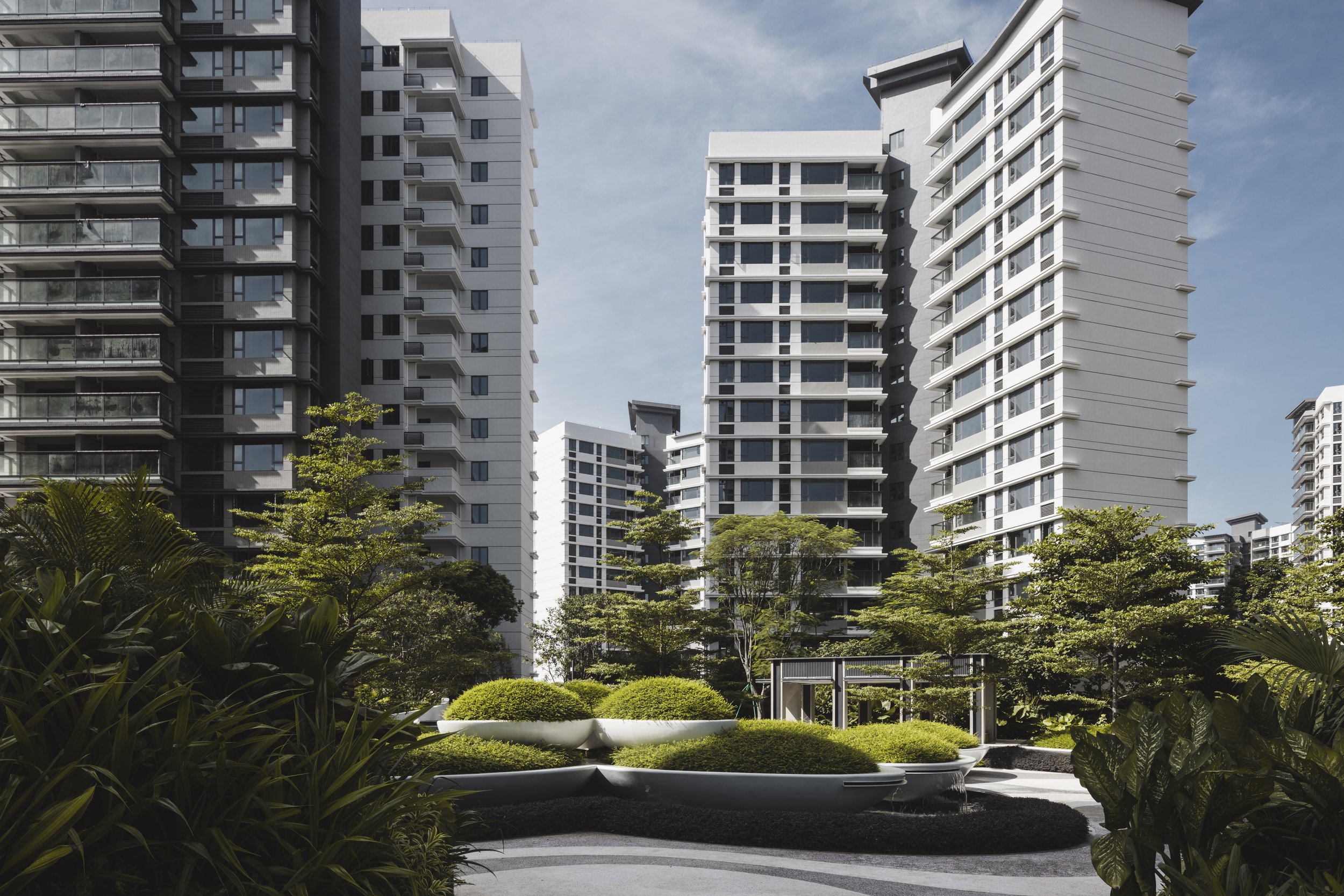
Beyond the building envelope, the landscaped exteriors extend the arrival experience into the outdoors. Meandering pathways, shaded decks and clusters of native planting create moments for pause and social gathering. Seating nooks are nestled among palms and flowering shrubs, some arranged for quiet tea rituals, others introducing playful forms that subtly reference earlier communal areas within the project. As evening falls, illuminated footpaths and lantern-like lighting transform the gardens into a softly glowing extension of the interior, encouraging unhurried movement and reflection.
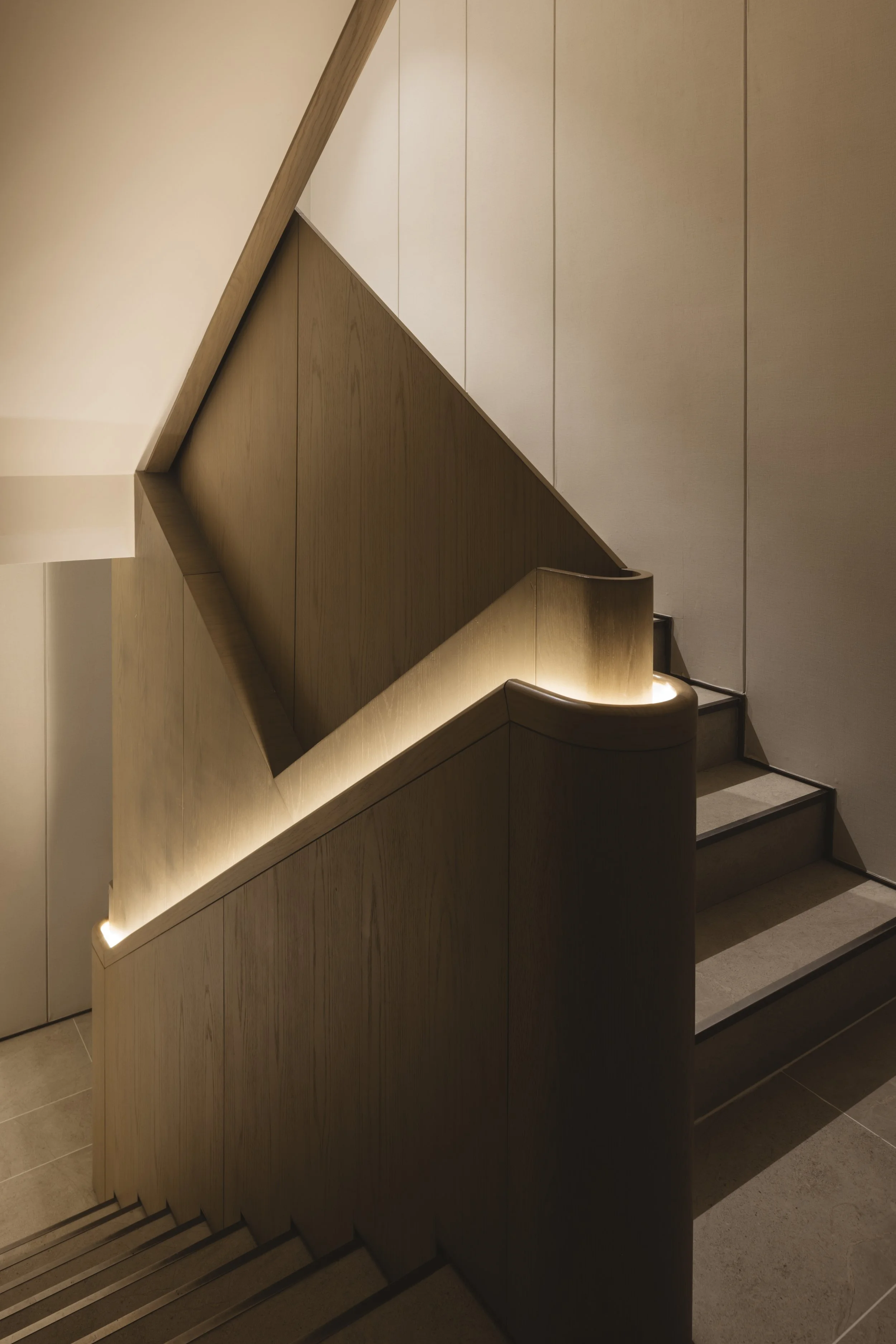
Circulation zones throughout Bayview are treated with equal care. Corridors and staircases adopt sculptural curves and ambient uplighting to guide residents intuitively through the building. Art installations, including woven textiles and driftwood-inspired benches, reference Hainan’s cultural and natural heritage, reinforcing a sense of place while adding warmth and texture to transitional areas.
Rather than functioning solely as an entry sequence, Bayview Arrival establishes a meaningful prelude to daily living. From the understated refinement of the basement lobby to the luminous calm of the ground floor and the restorative quality of the gardens, each element contributes to a cohesive whole. The project reflects Soil Studios’ commitment to crafting environments that encourage presence, connection and a lasting sense of belonging.