WatchHouse Park Avenue South by Thomas-McBrien Architects
WatchHouse Park Avenue South brings the London-based coffee brand’s Modern Coffee concept into a Manhattan setting, occupying a corner unit within the former United Charities Building in Midtown.
Designed by Thomas-McBrien Architects, the 1,800-square-foot interior balances the energy of New York City with a calm, materially precise atmosphere.
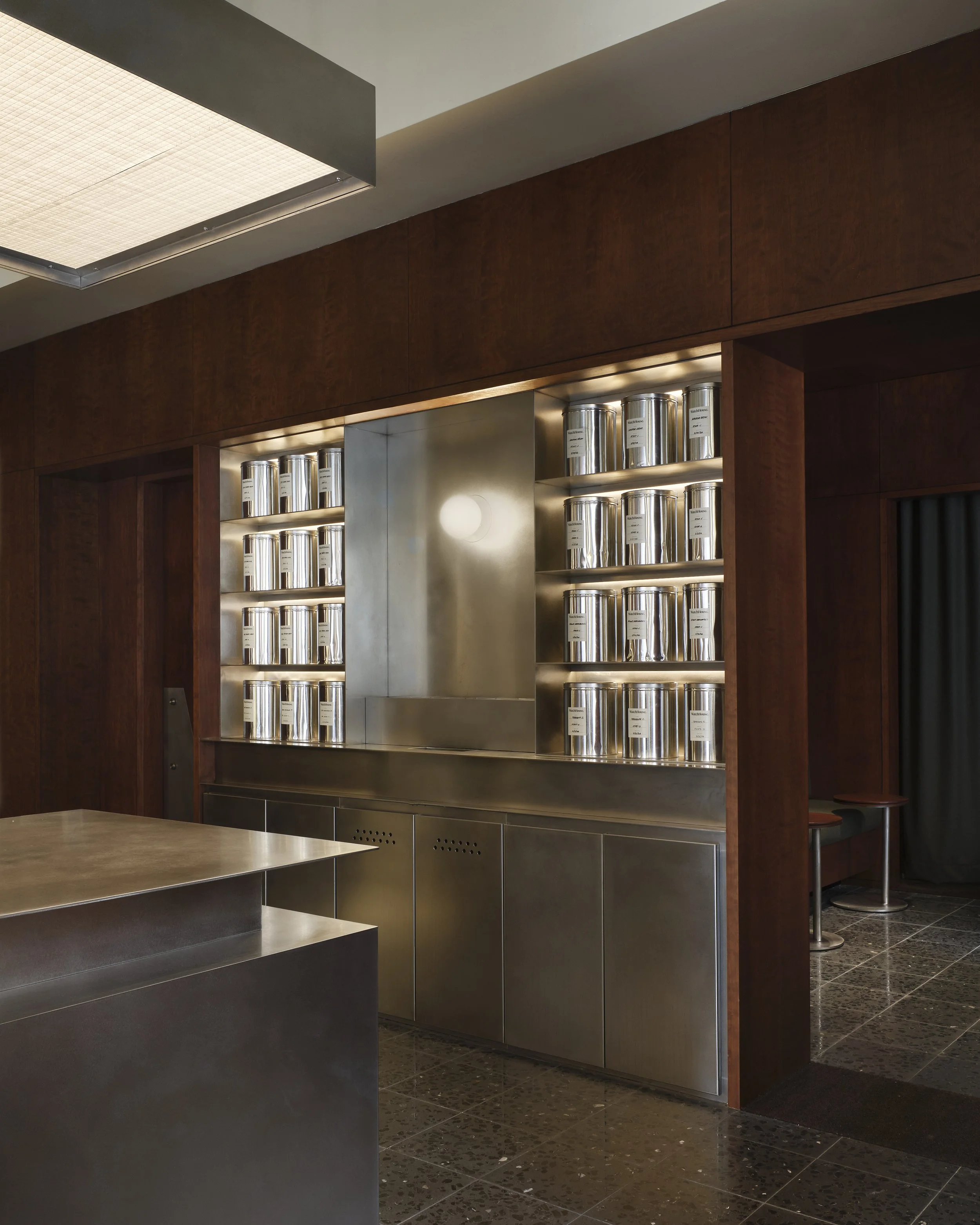
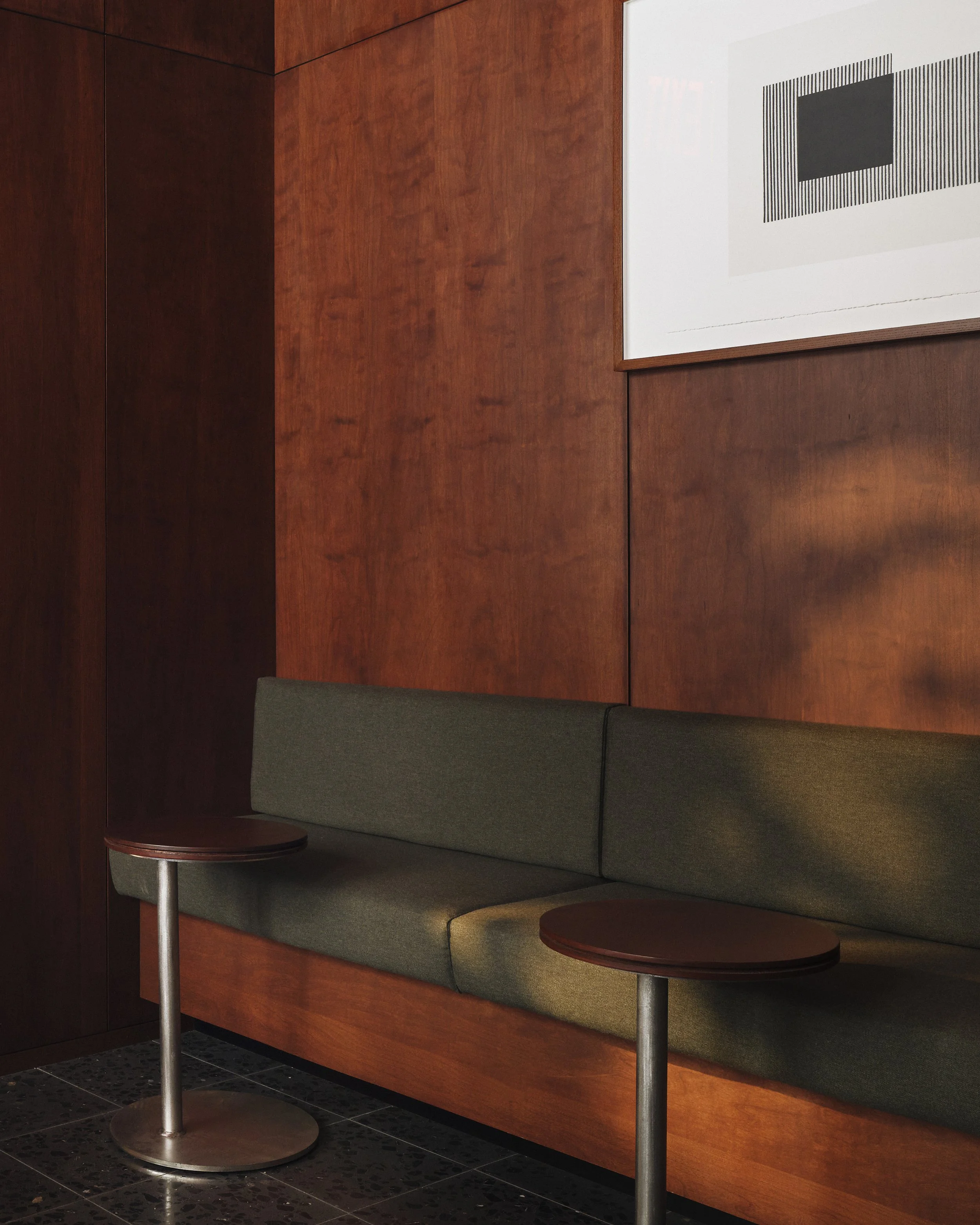
Set among the building’s grand neoclassical pillars, the 25-seat café draws from the material language of mid-century Madison Avenue interiors and galleries, combining cherry wood, stainless steel and dark terrazzo in a composition that feels warm, measured and quietly confident. Cherry timber wraps the walls, frames doorways and windows, and continues into the base of built-in seating, giving the interior a strong sense of continuity without overwhelming the historic shell.
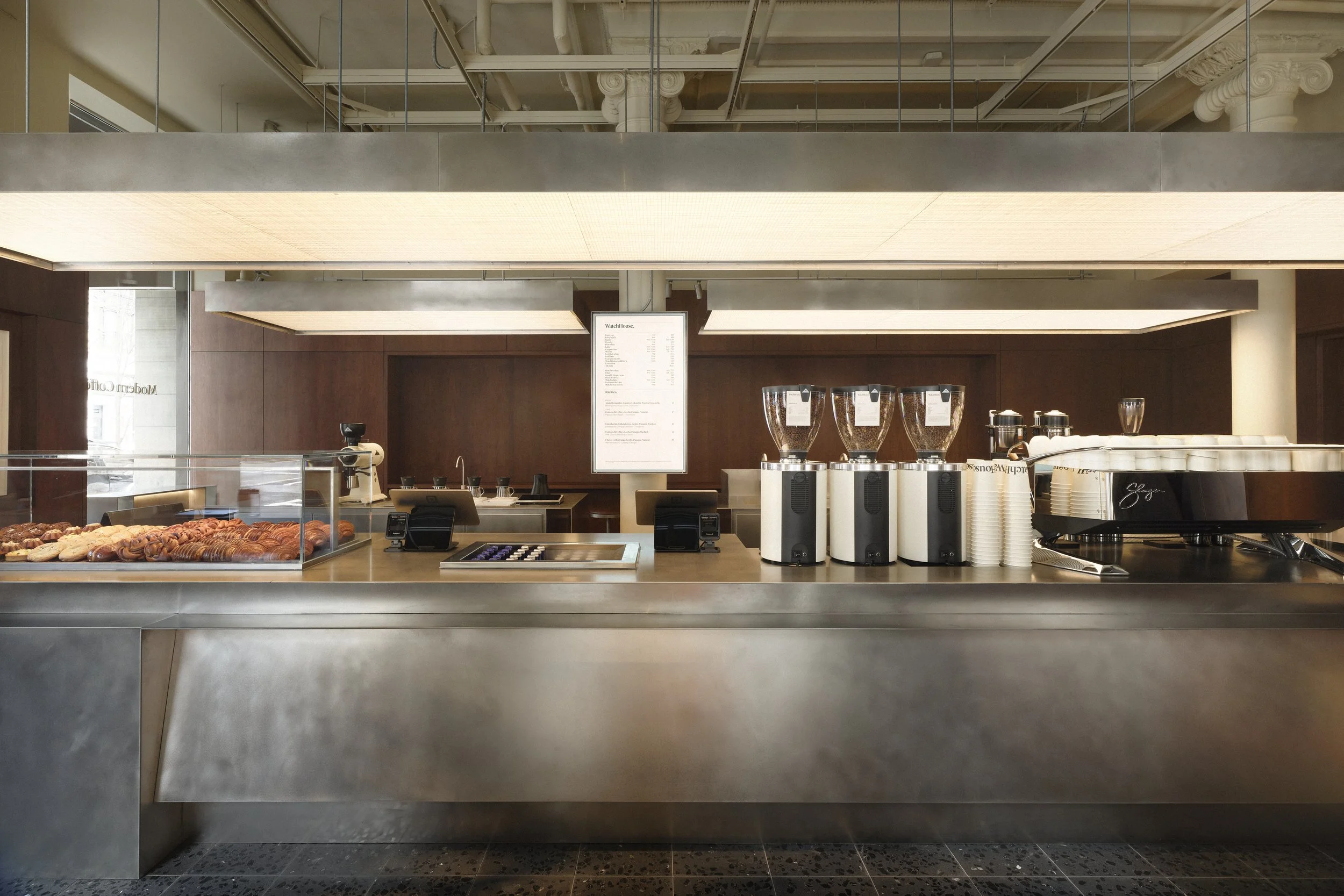
At the centre of the café, three monolithic polished steel counters organise the space as sculptural volumes, recalling the clarity and industrial presence of Donald Judd’s 100 Untitled Works while serving the practical demands of coffee preparation, pastry display and customer service. Running parallel through the room, these long cuboid forms anchor the interior visually and spatially, allowing the barista stations, ordering points and circulation paths to sit within a single architectural gesture.
Movement through the compact plan is guided by these continuous built elements, which separate preparation, ordering and seating areas without relying on heavy partitions or visual interruption. A further counter is set into the rear wall, accompanied by shelving that displays metal tins of coffee, extending the café’s service language into a quieter backdrop for the space.
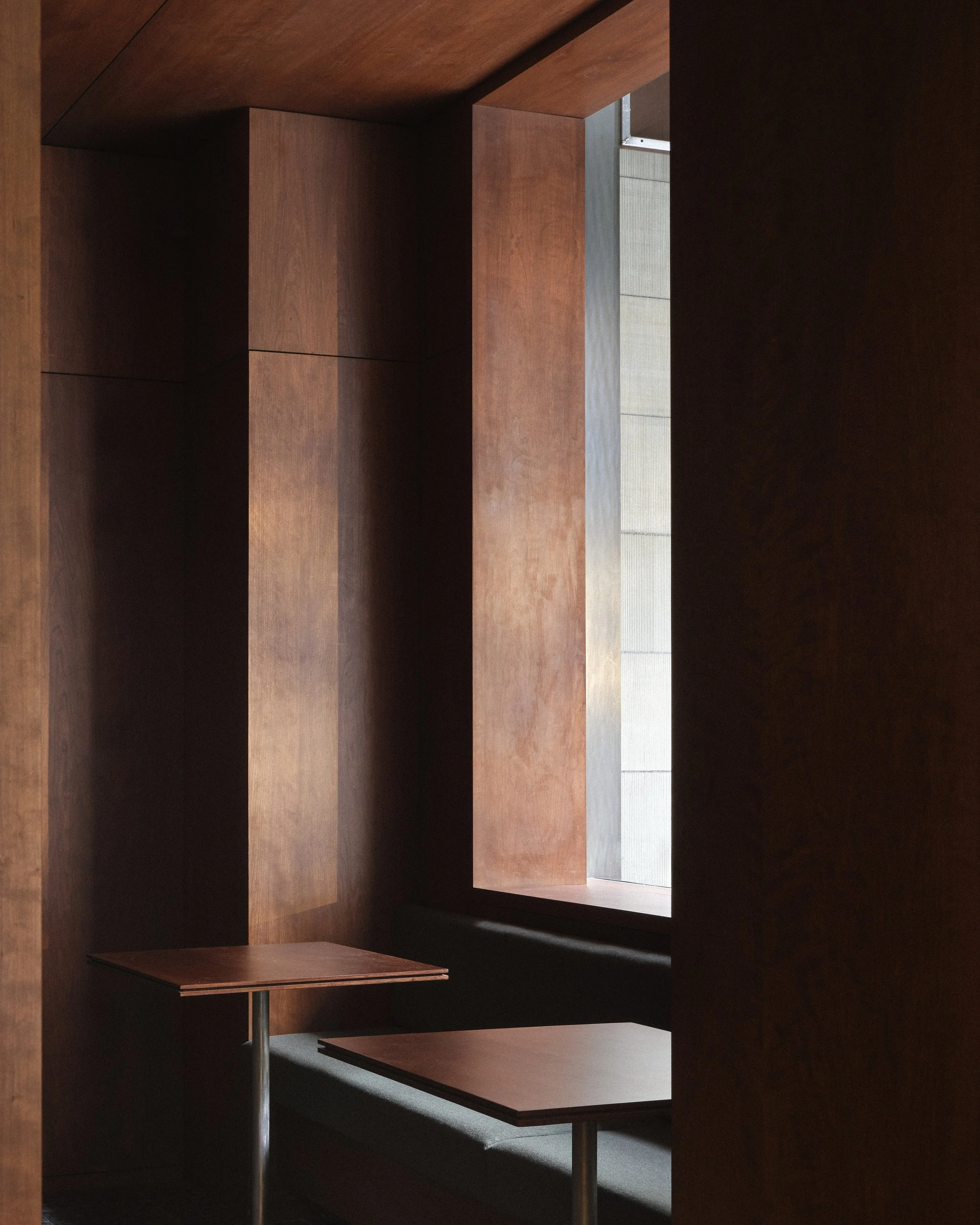
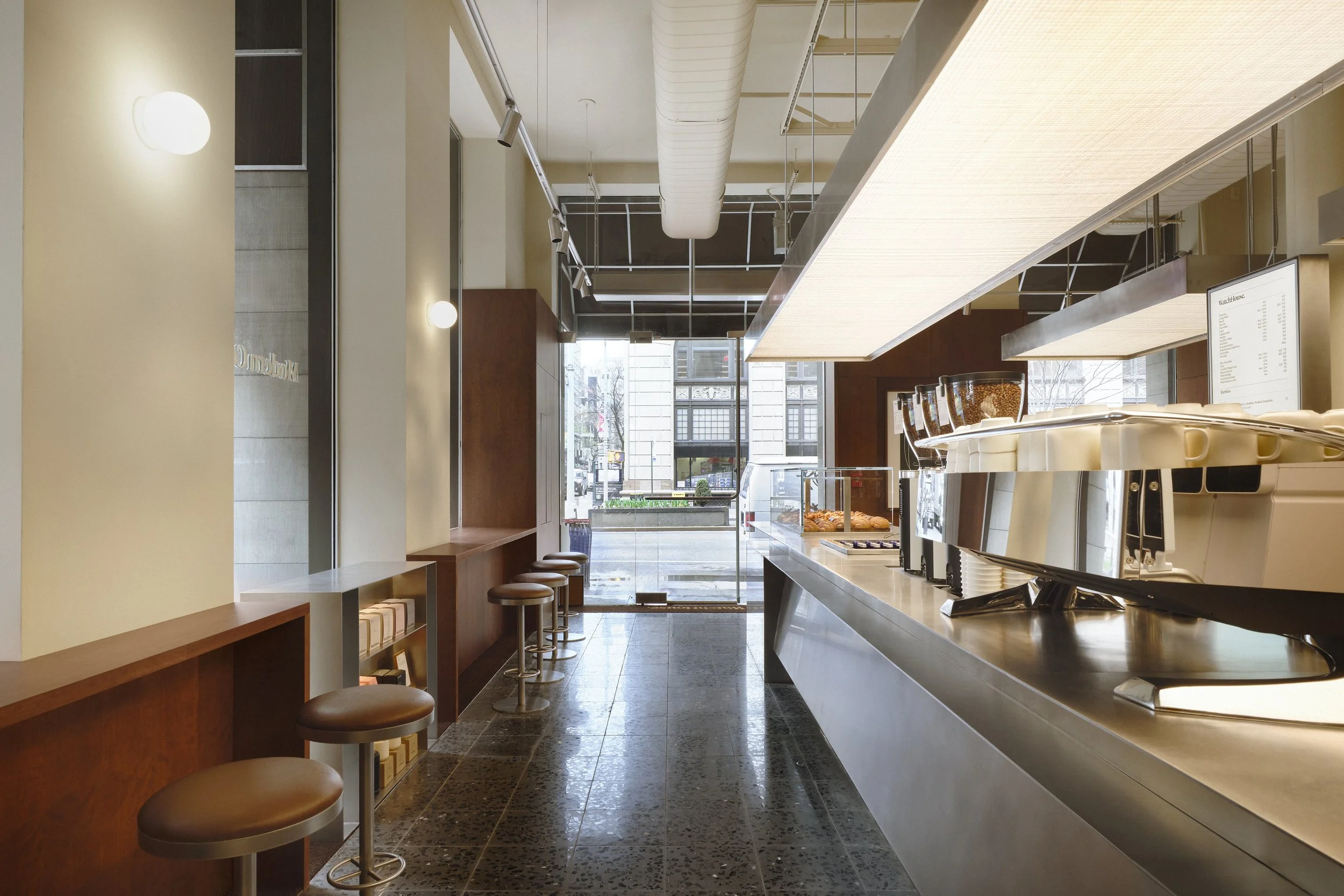
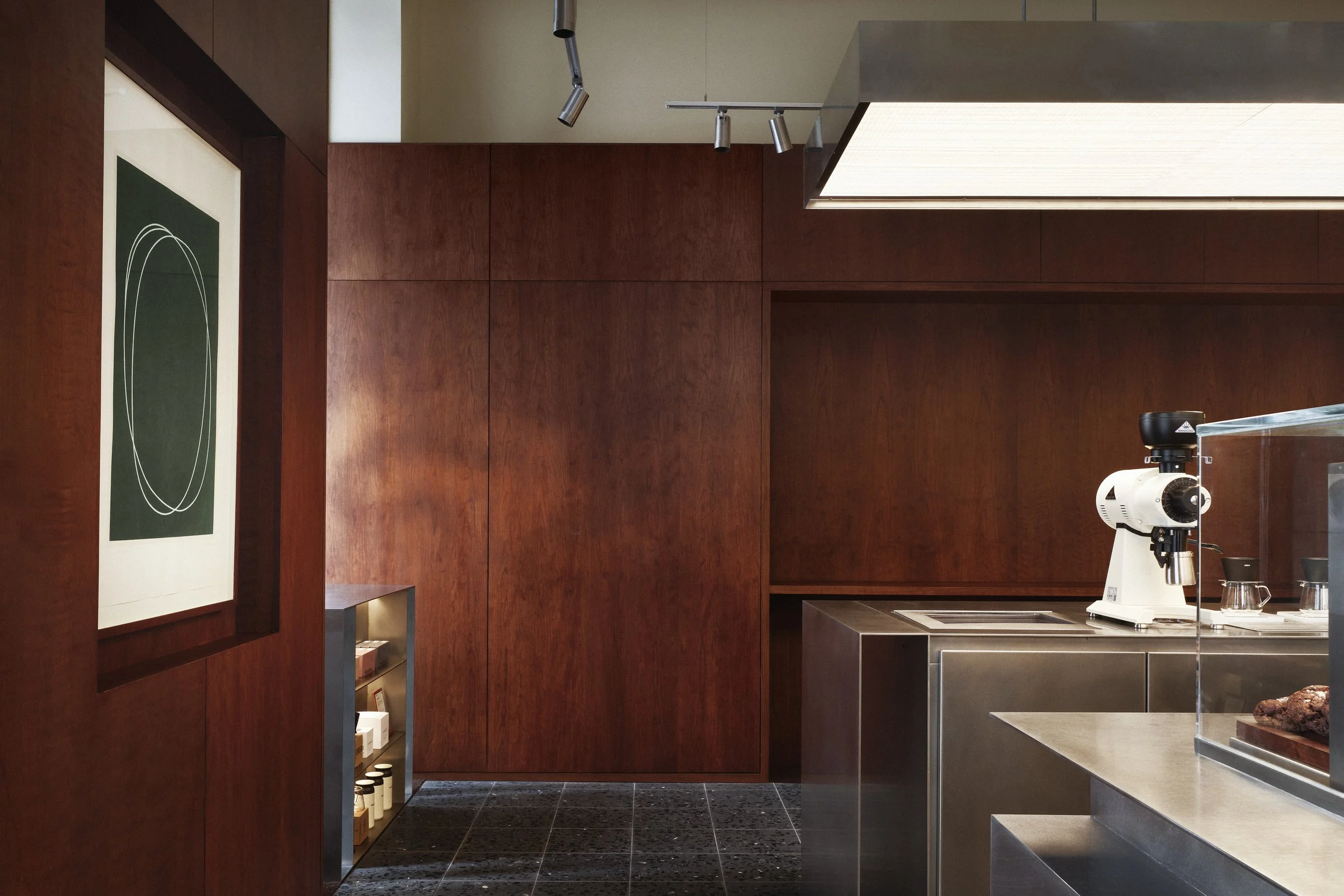
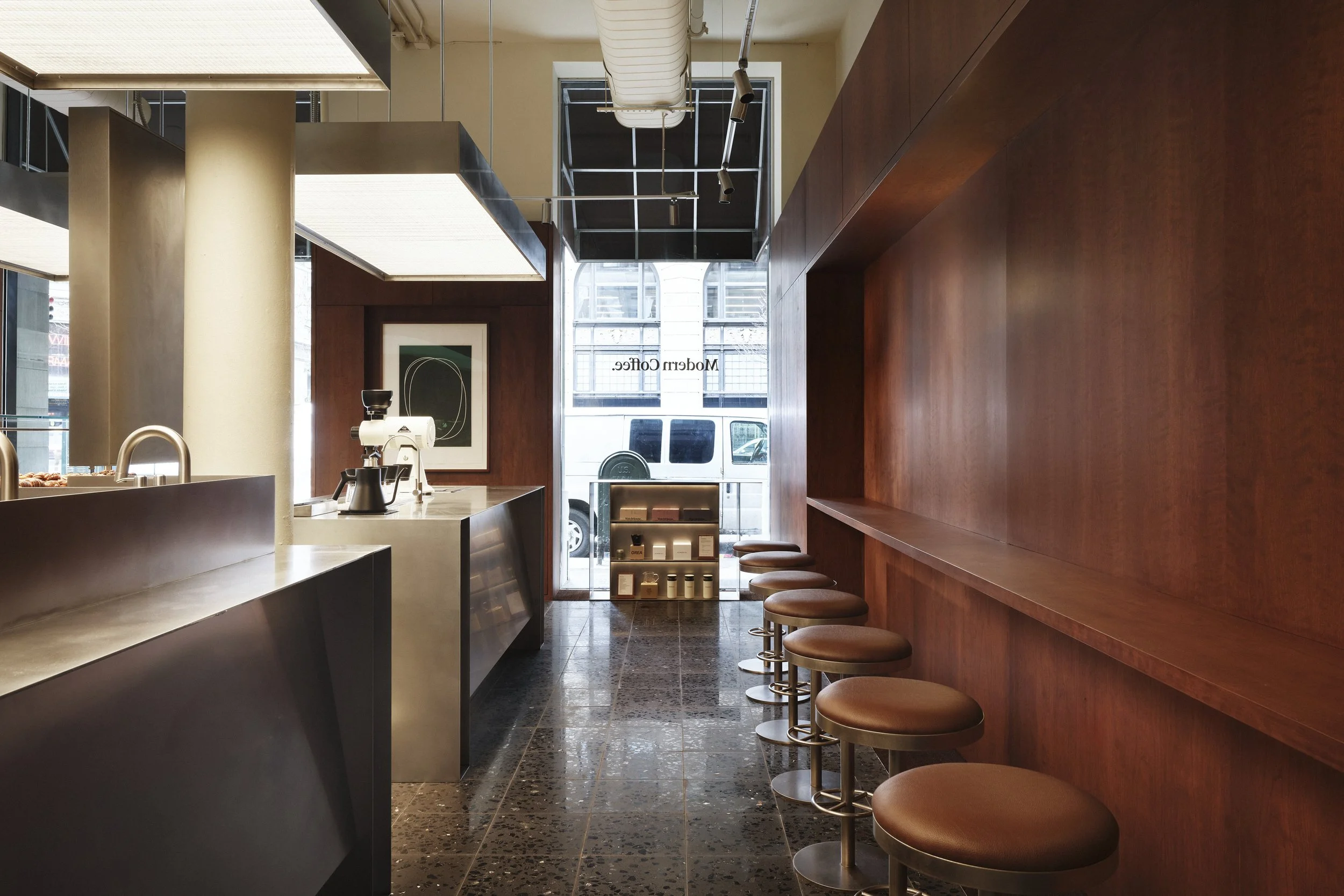
The material palette balances weight and warmth through the contrast between stainless steel, cherry timber and terrazzo, with each surface contributing to the café’s sense of restraint and permanence. Dark terrazzo floor tiles carry through the connected rooms, while forest green banquettes and fixed stools along the windows introduce a reference to the nostalgic American café, adapted here through a more refined and contemporary lens.
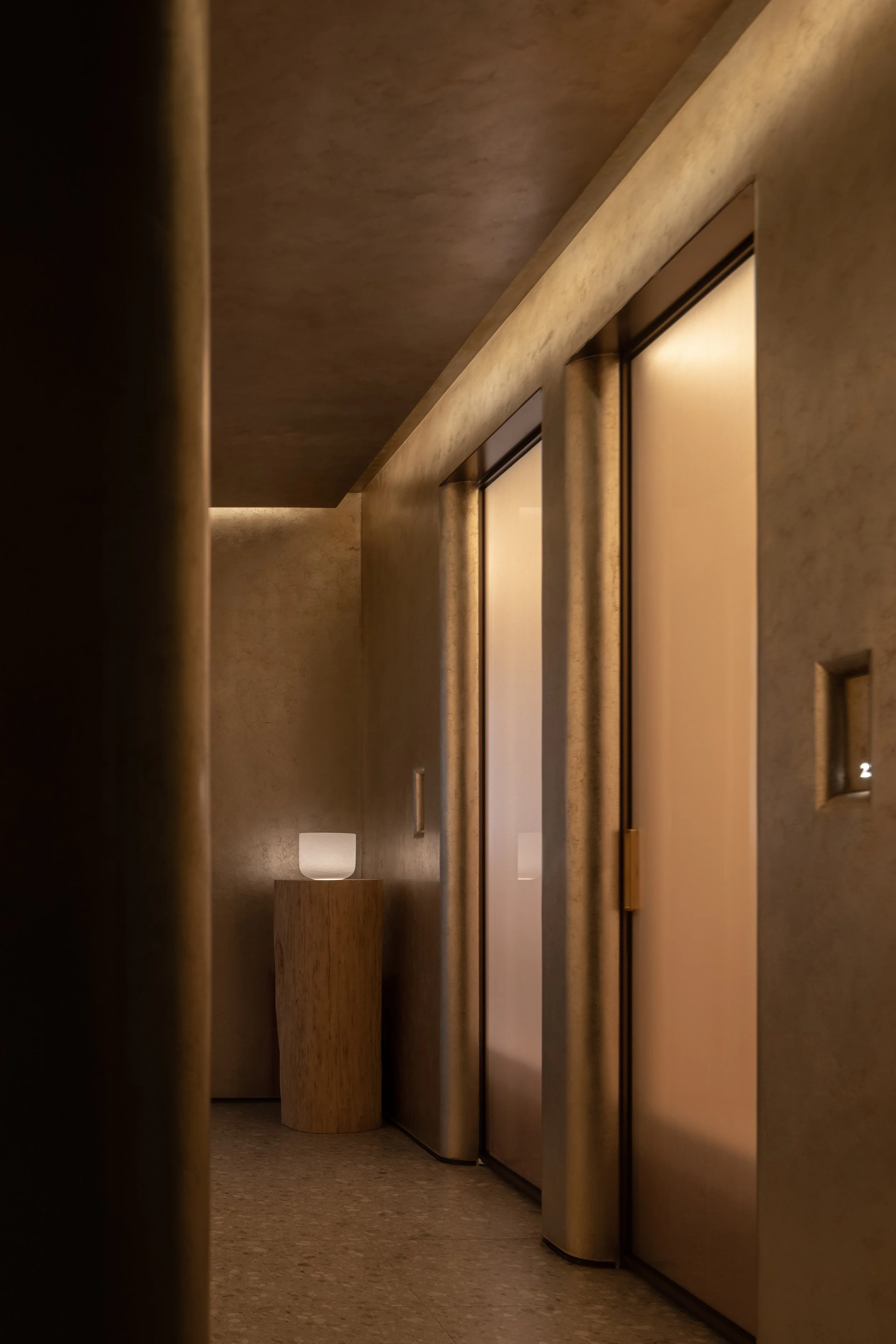
Lighting is integrated with the same level of restraint, as glowing rectangular pendants hover above the polished steel counters and diffused illumination softens the transition between the service areas, seating zones and timber-lined walls. Curved edges, custom joinery and carefully finished surfaces give the interior a tactile quality, allowing the compact footprint to feel composed, fluid and generous.
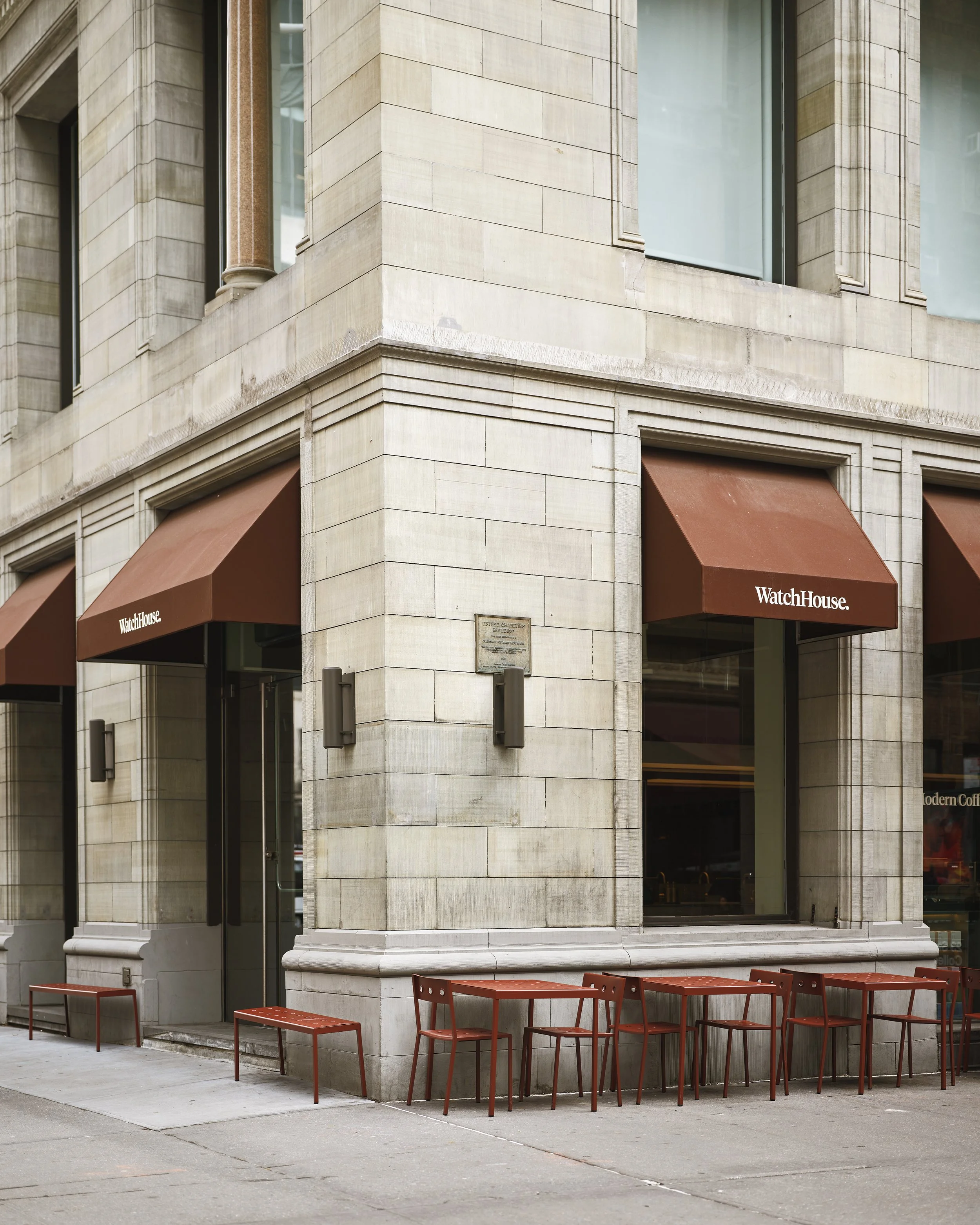
On the exterior, russet-toned awnings and matching outdoor furniture extend the WatchHouse palette to the street. The intervention remains subtle, giving the café a recognisable identity while allowing the stone architecture of the historic building to remain prominent.