Unit Villa in Minamiboso by ITSUKI MATSUMOTO + Horiuchi Steel Works
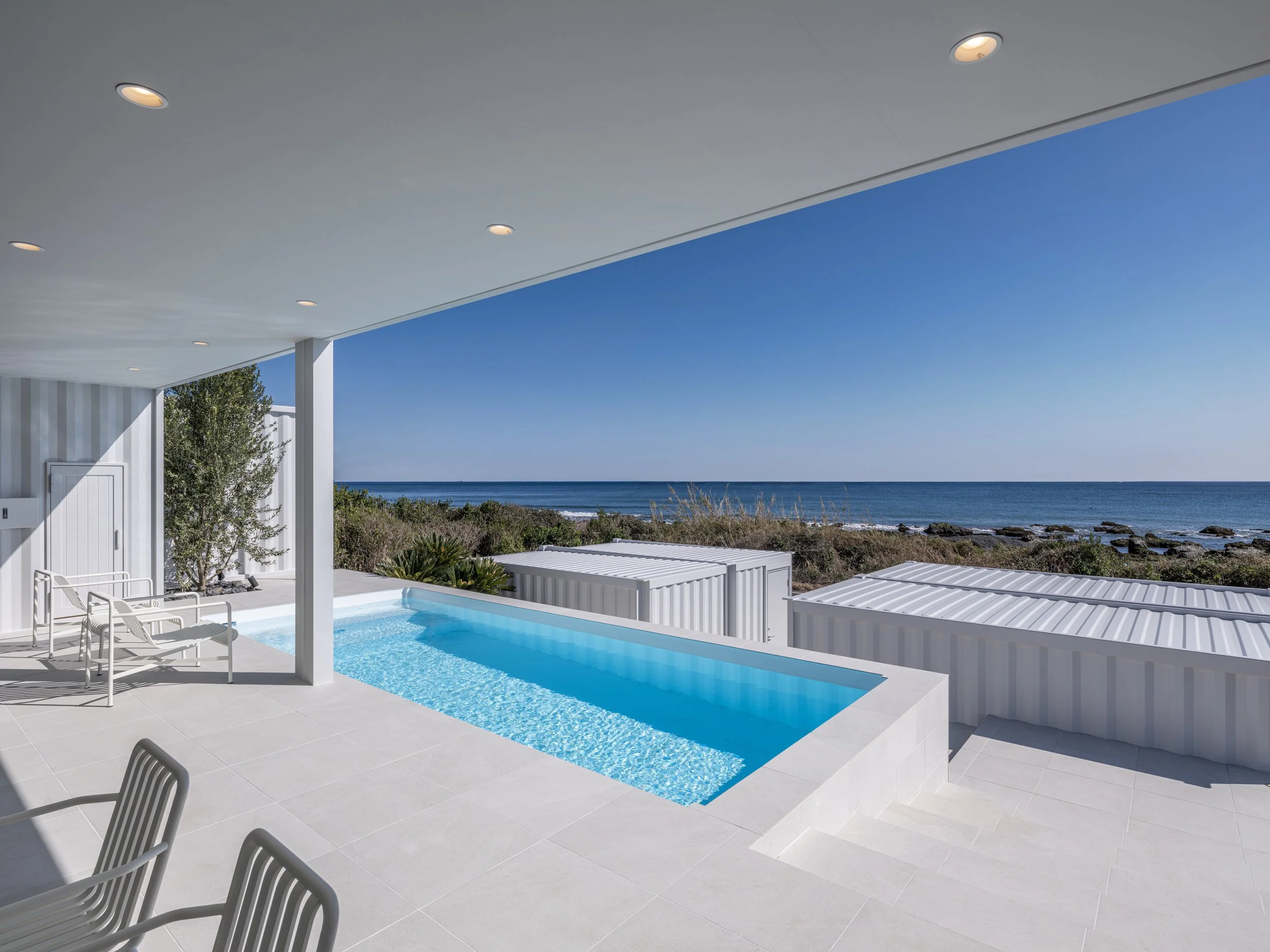
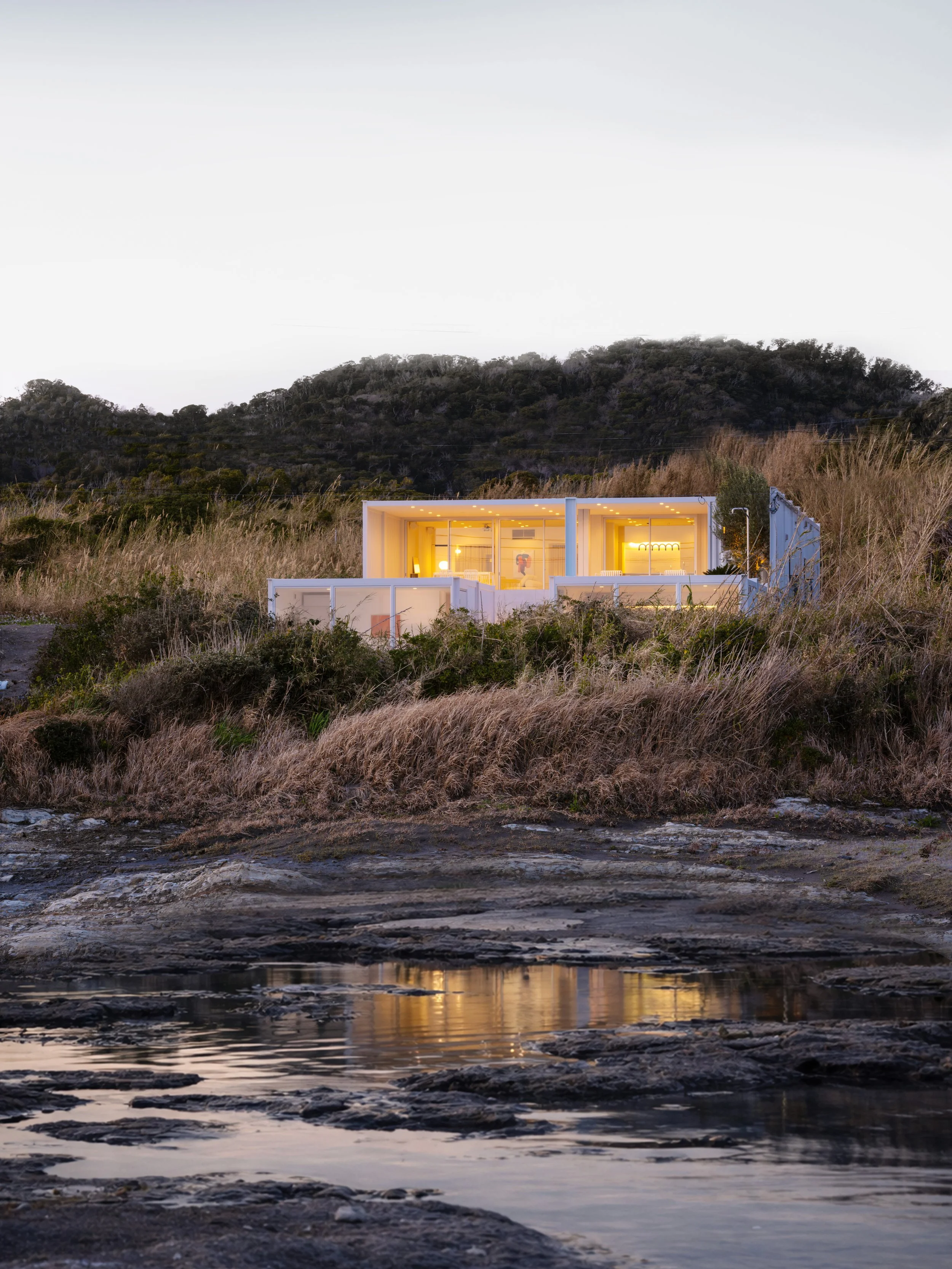
On an inclined site at the southern edge of Minamiboso City, Unit Villa looks out across an uninterrupted view of the Pacific Ocean.
Designed by ITSUKI MATSUMOTO with Horiuchi Steel Works, the project explores how modular construction can move beyond convenience and efficiency to create a refined architectural experience for a high-end coastal villa.
Itsuki Matsumoto, born in Nagoya in 1996, completed a master’s degree in engineering at Aichi Institute of Technology. Since graduate school, he has developed an independent design and creative practice, working across architecture, spatial design, renovation, and implementation-based projects in Japan and overseas. His early achievements include first prize in the implementation design competition for the Dogo Art Project base facility. The completed project received the Good Design Award in 2021 and the Matsuyama Landscape Award Special Jury Prize, while his renovation of a traditional Japanese house was recognized with the Japan Spatial Design Award and Young Talent Award. These awards reflect the body of independent work through which Matsumoto has continued to explore the relationship between construction, place, and spatial experience.
For Unit Villa, the main challenge was to realize a more than 400-square-meter vacation rental within a tight construction period and controlled budget. Remote villa sites often face shortages of skilled craftspeople, which can extend timelines and increase costs. Since the property was intended for rental use, construction delays and rising upfront costs would have a direct impact on its financial feasibility.
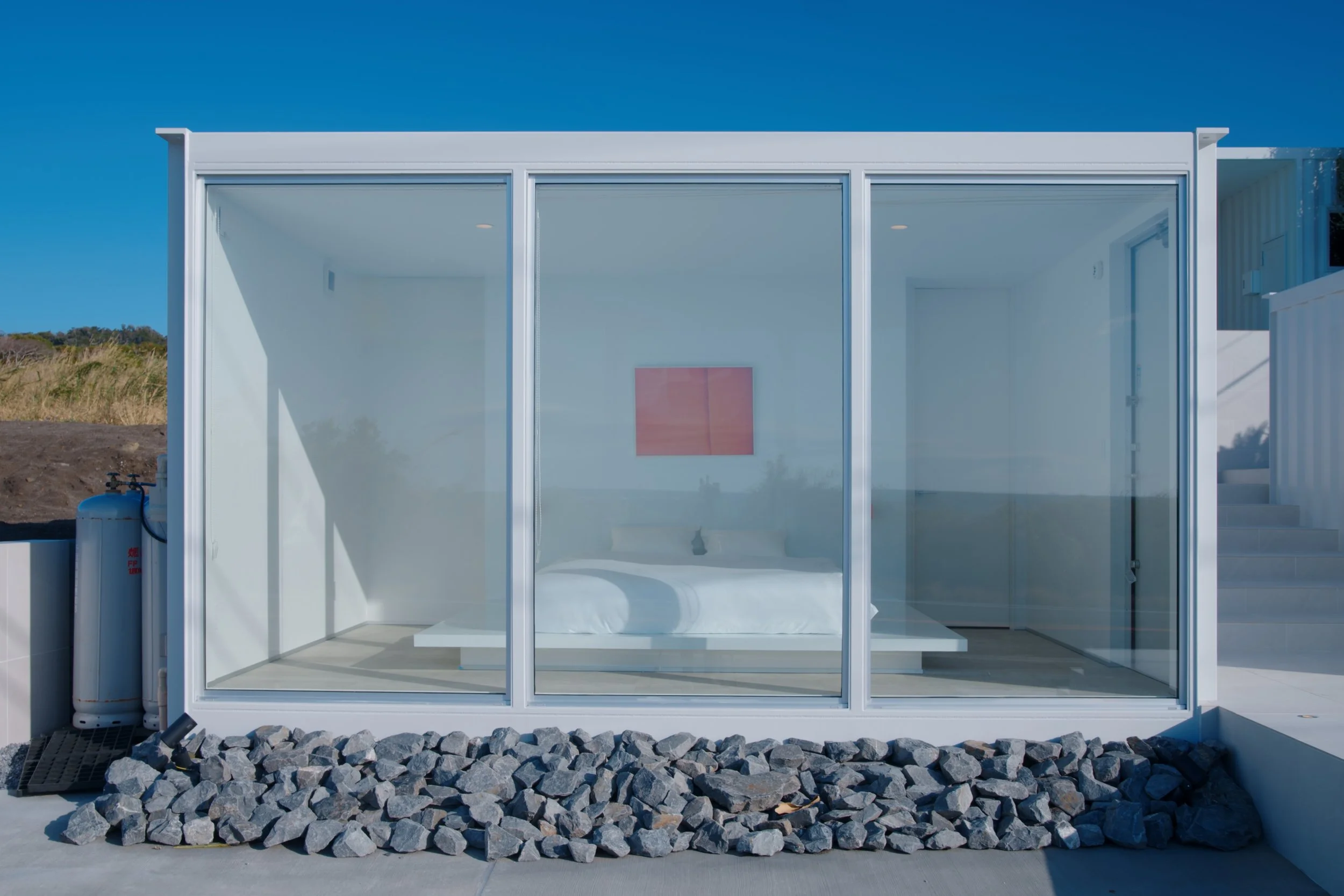
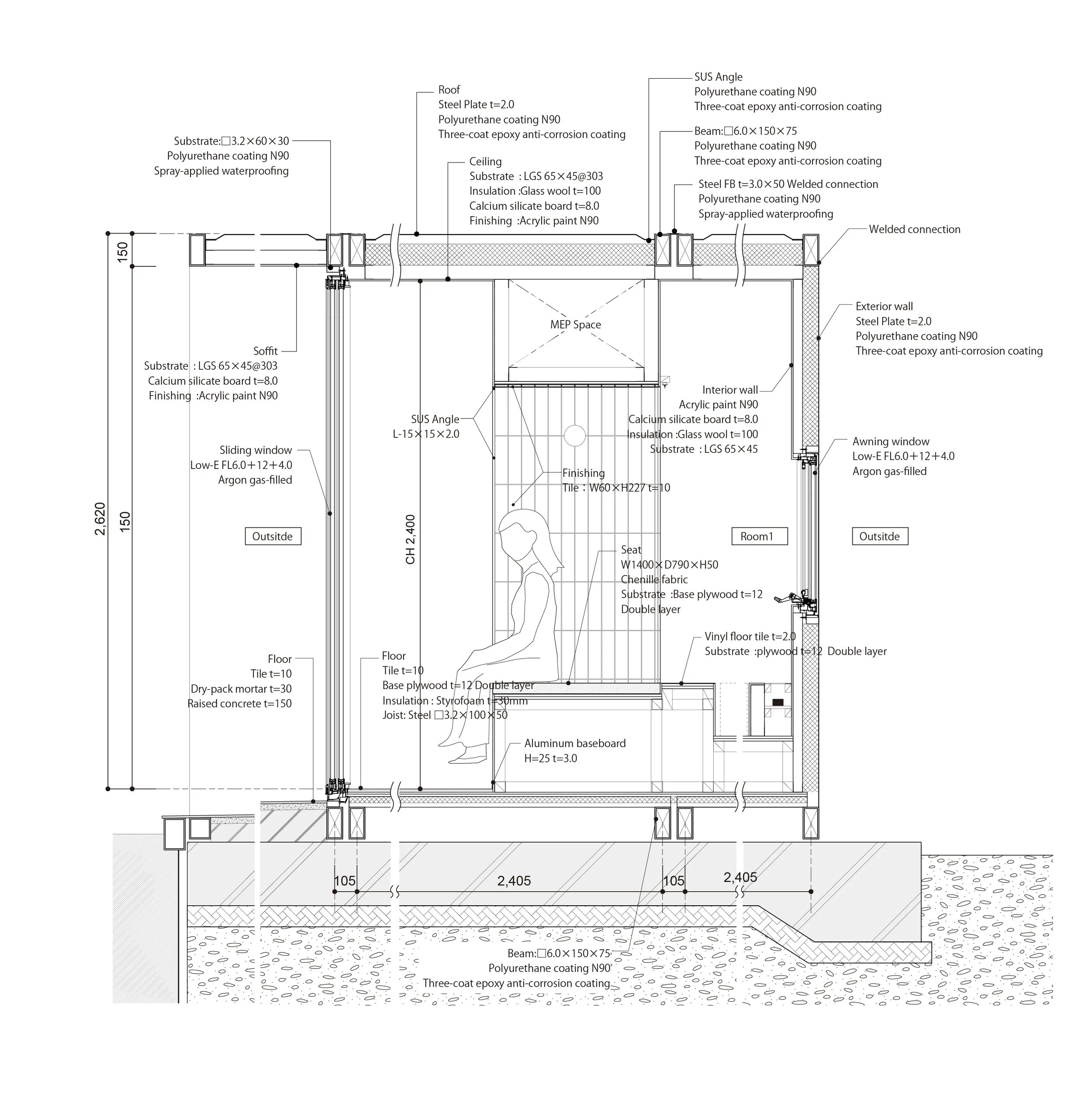
The design responds with a modular system built from fifteen 20-foot steel units, each measuring 2.5 by 6 meters. These units were preassembled in a factory, then transported to the site and connected through a simplified process of foundation anchoring, bolted joints, welding, and waterproofing between modules. This approach allowed the main structure to be erected in a single day, with the full project completed in only three months.
The villa’s planning also works closely with the natural slope of the land. To reduce earthworks, the architects adopted a split-level composition. Two detached wings sit at ground level, while the main residence is positioned above. Within the main volume, bedrooms and service areas are arranged in an L-shaped layout toward the northeast, allowing the south-facing living area to open fully toward the sea.
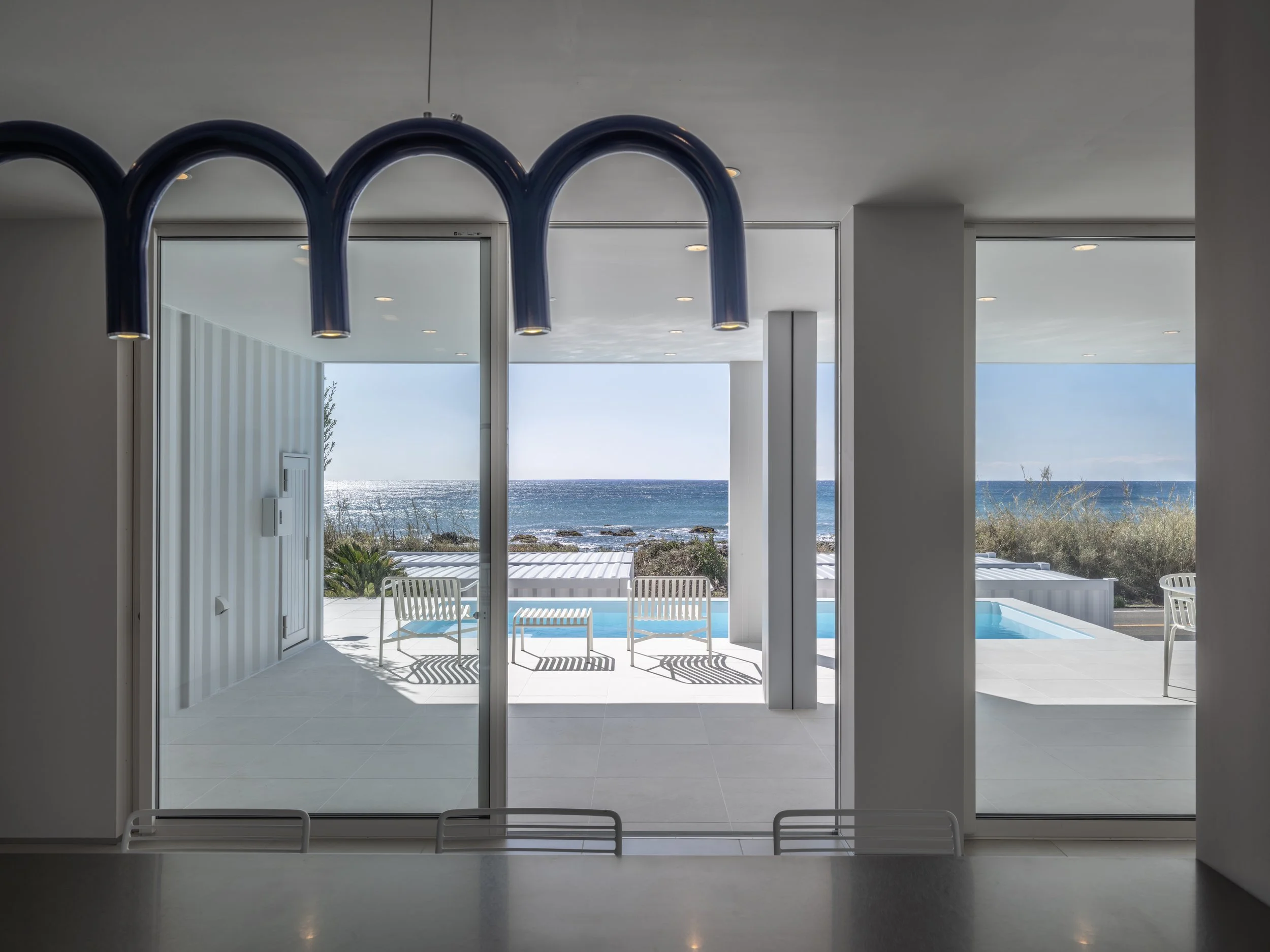
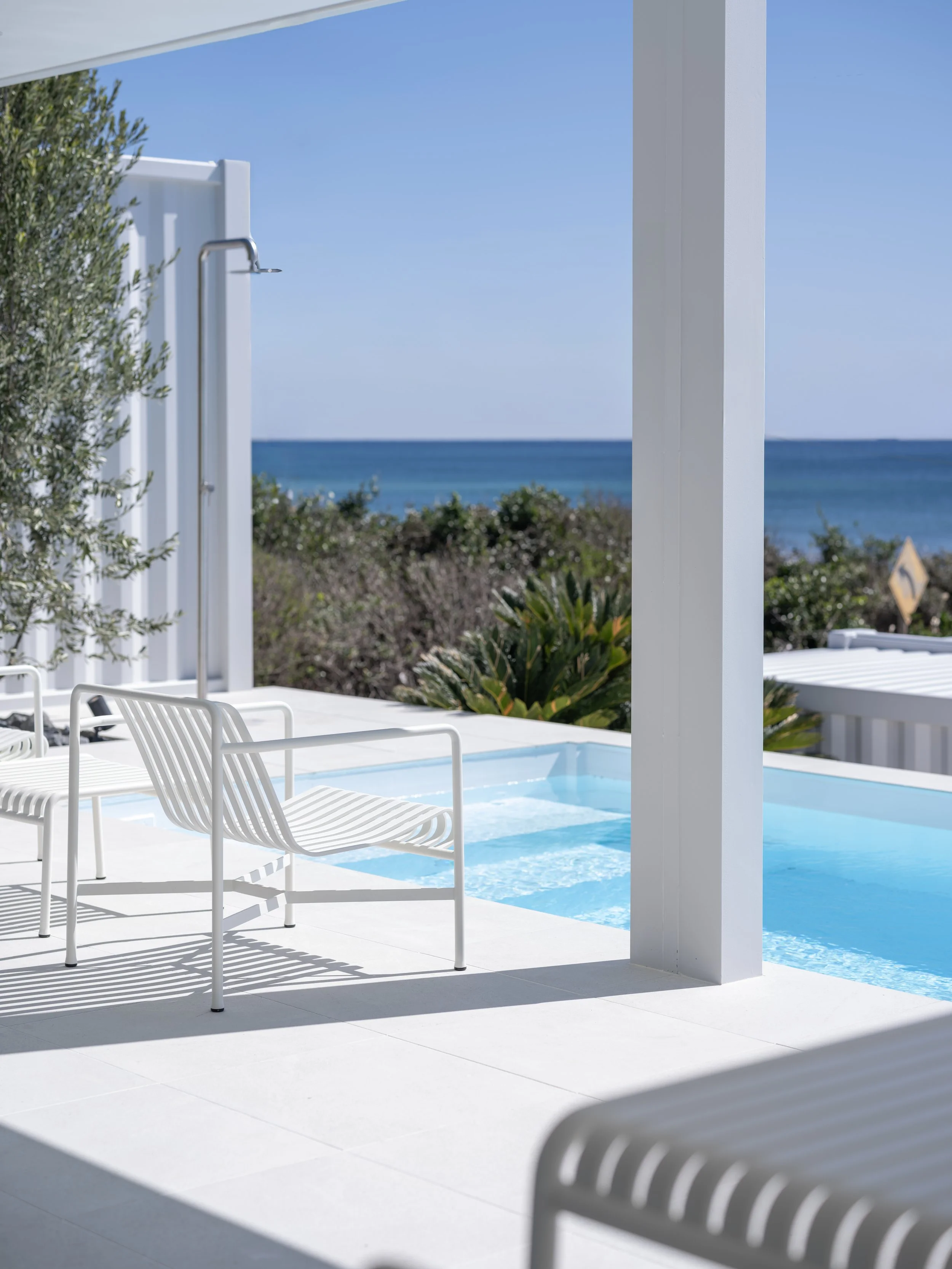
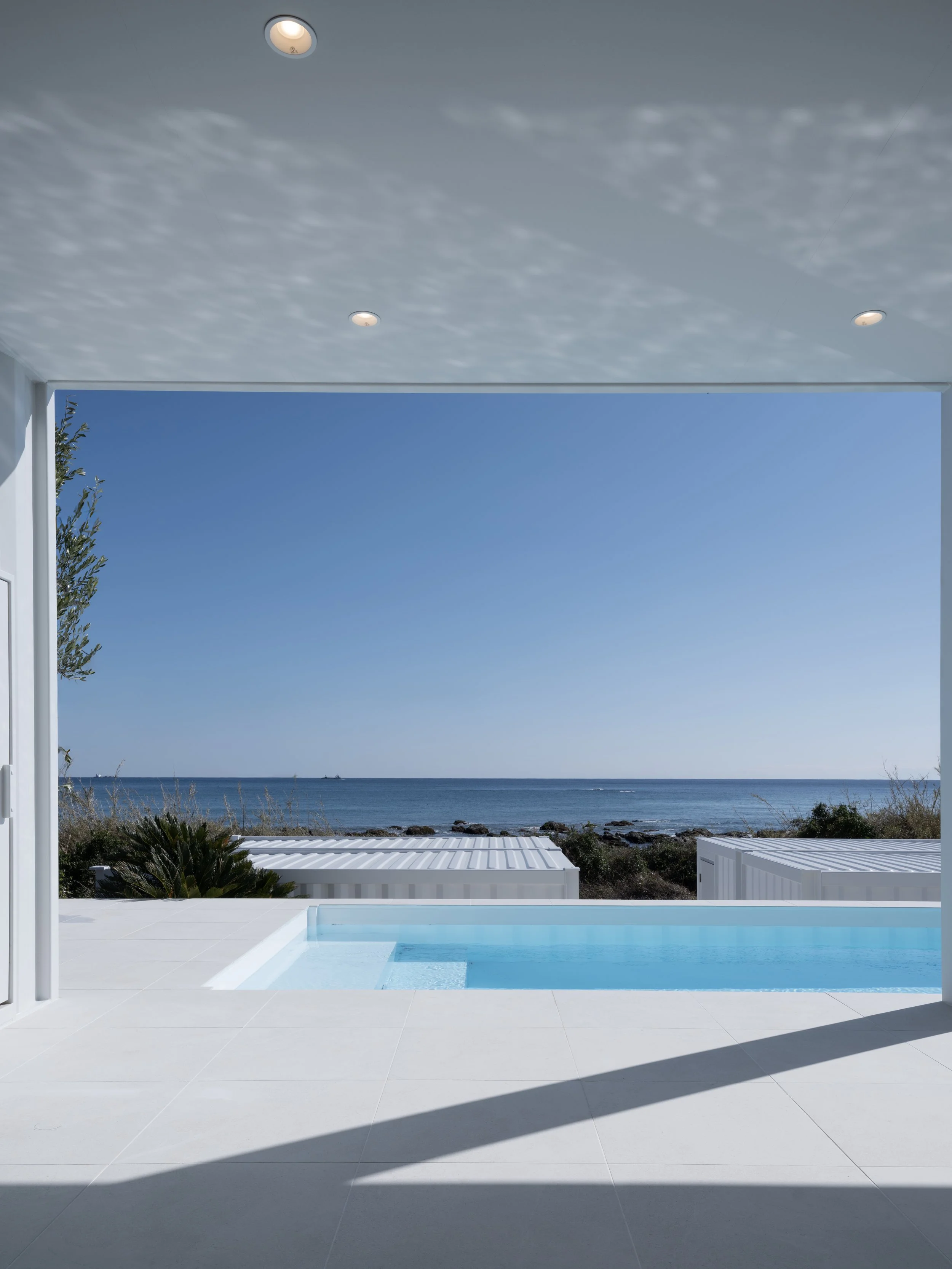
Full-height openings frame the ocean view, while a terrace with an approximately five-meter-deep overhang creates a generous semi-outdoor living area. Side walls control the field of vision from inside, screening the east–west road in front of the site and directing attention toward the Pacific. From the living space, the surroundings feel pared back to sea, sky, and coastal landscape.
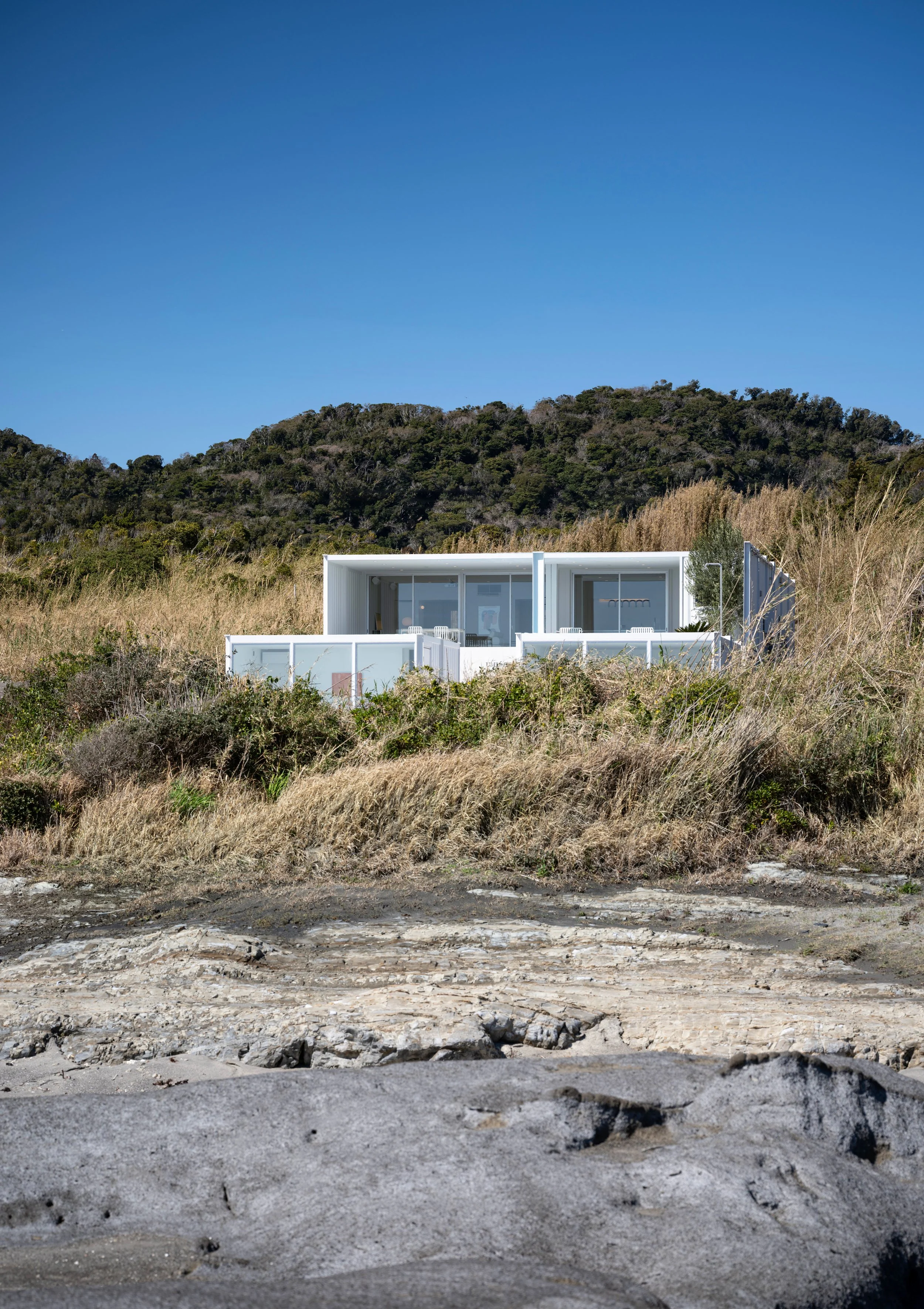
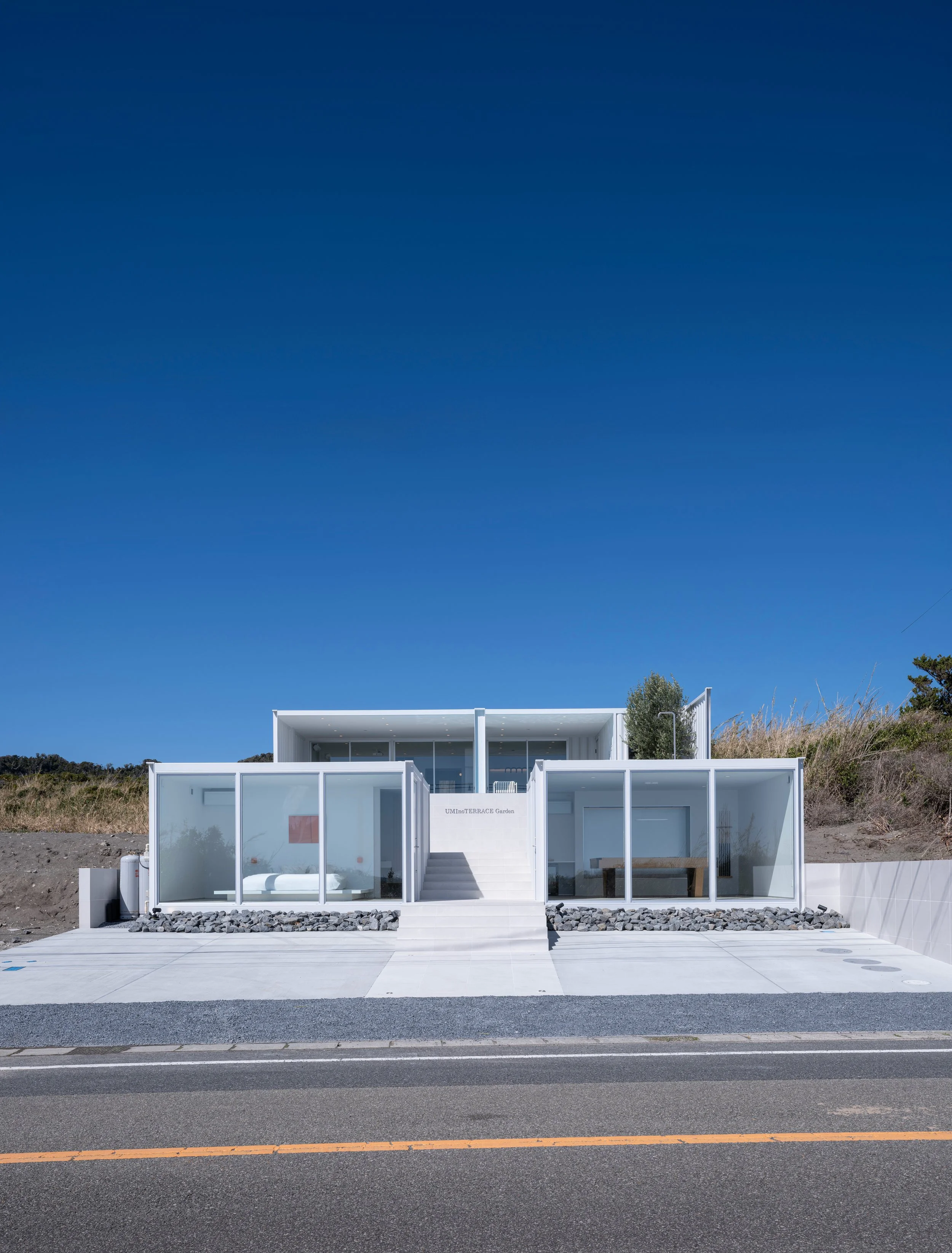
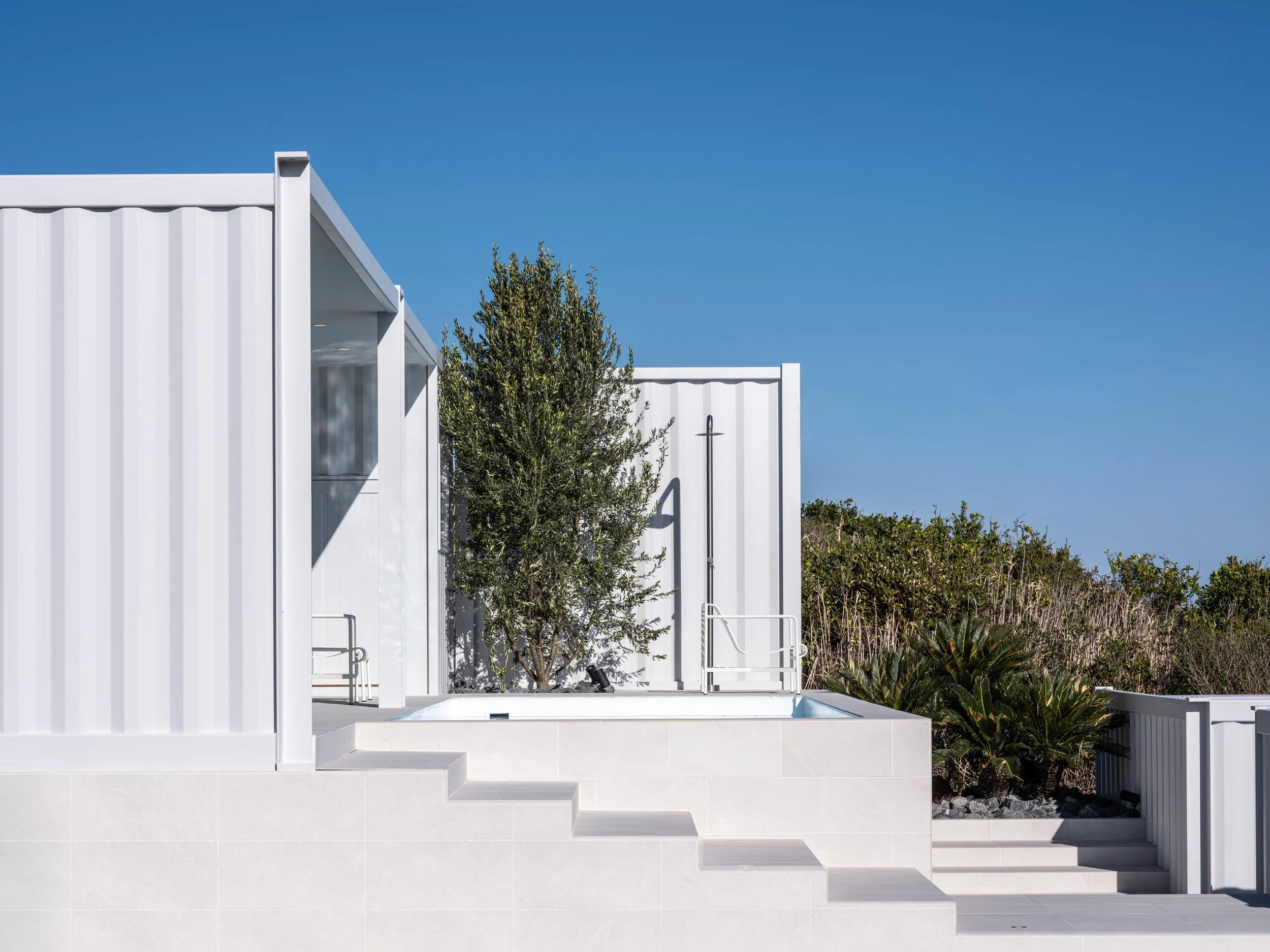
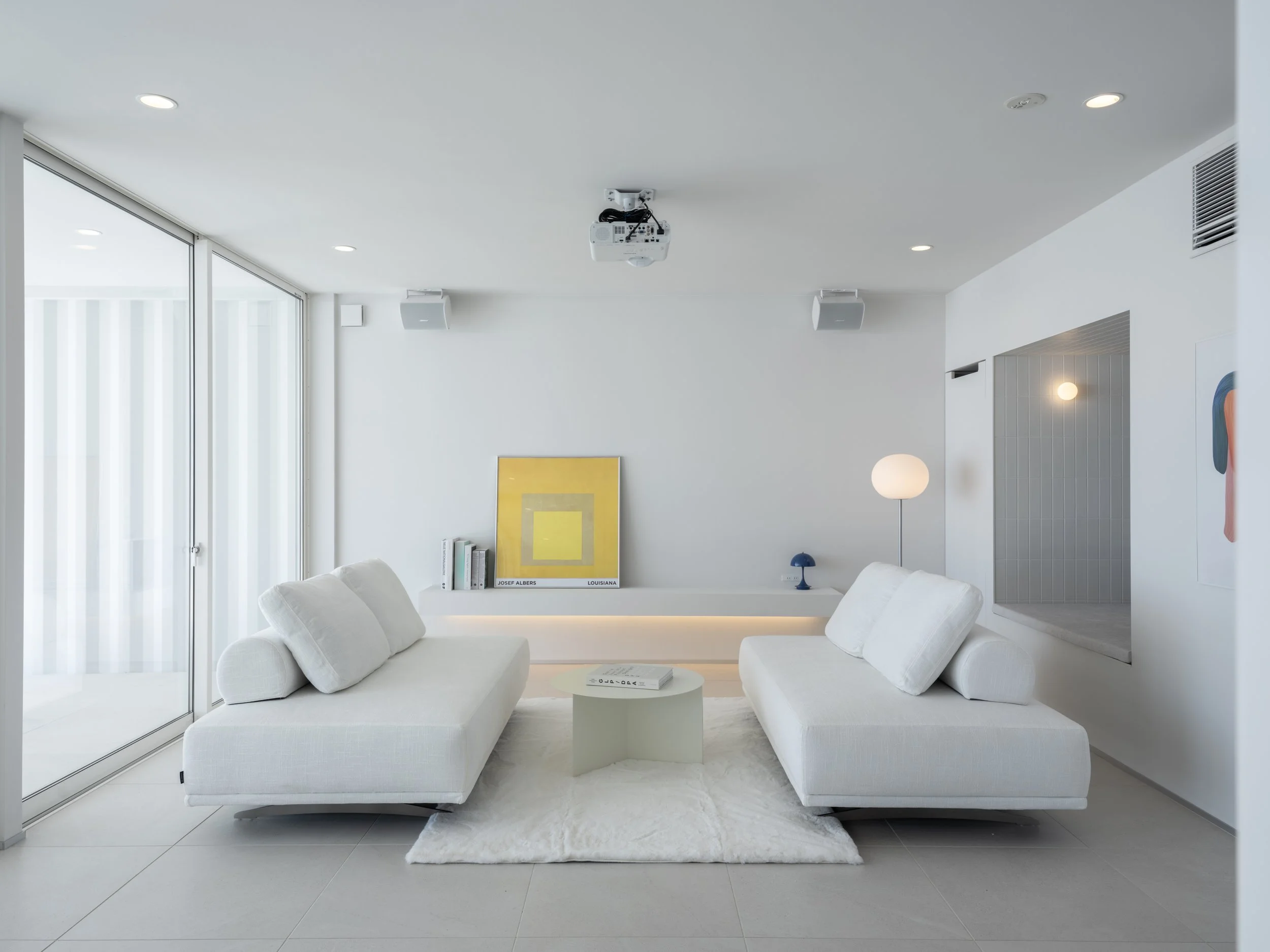
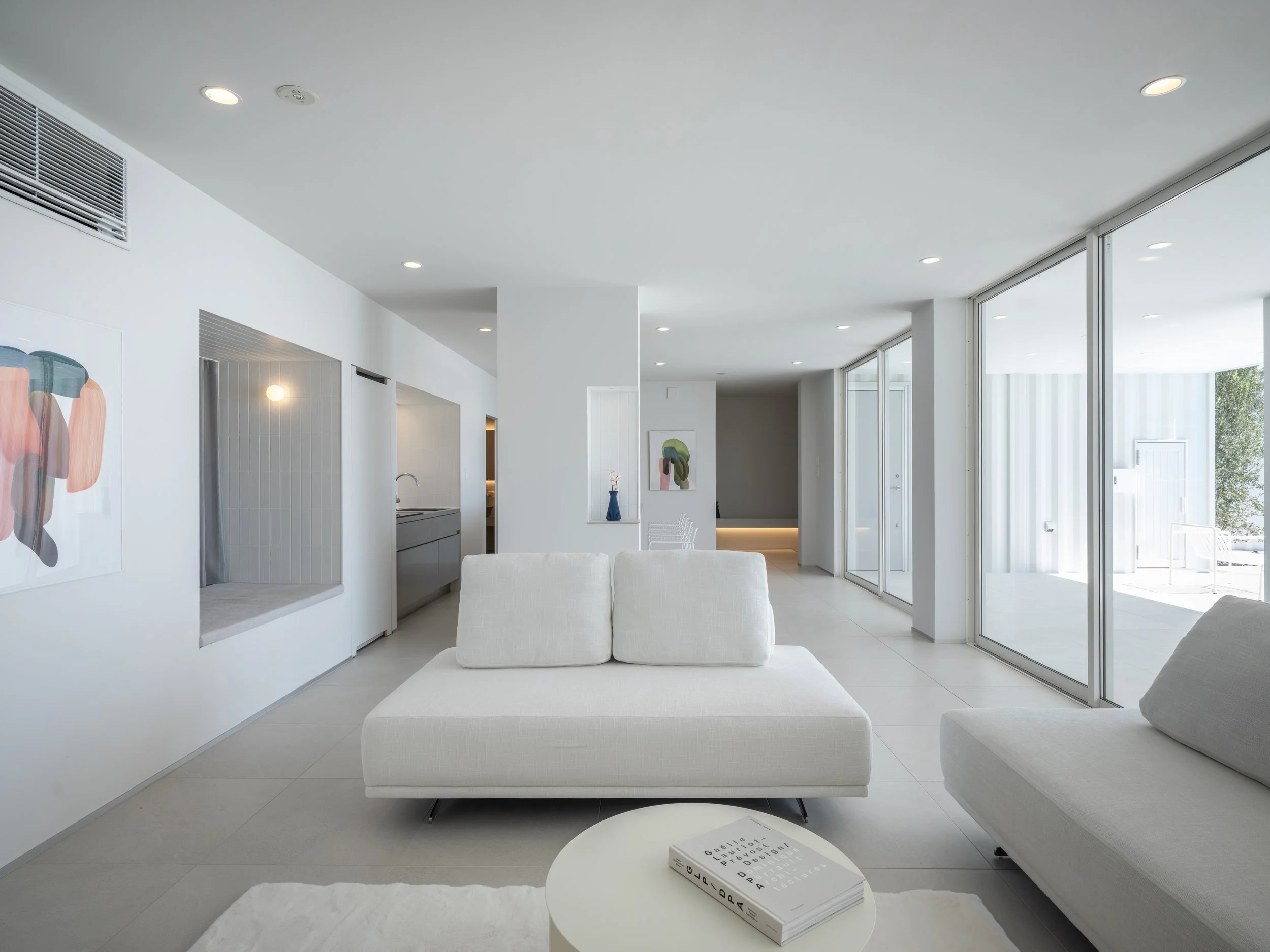
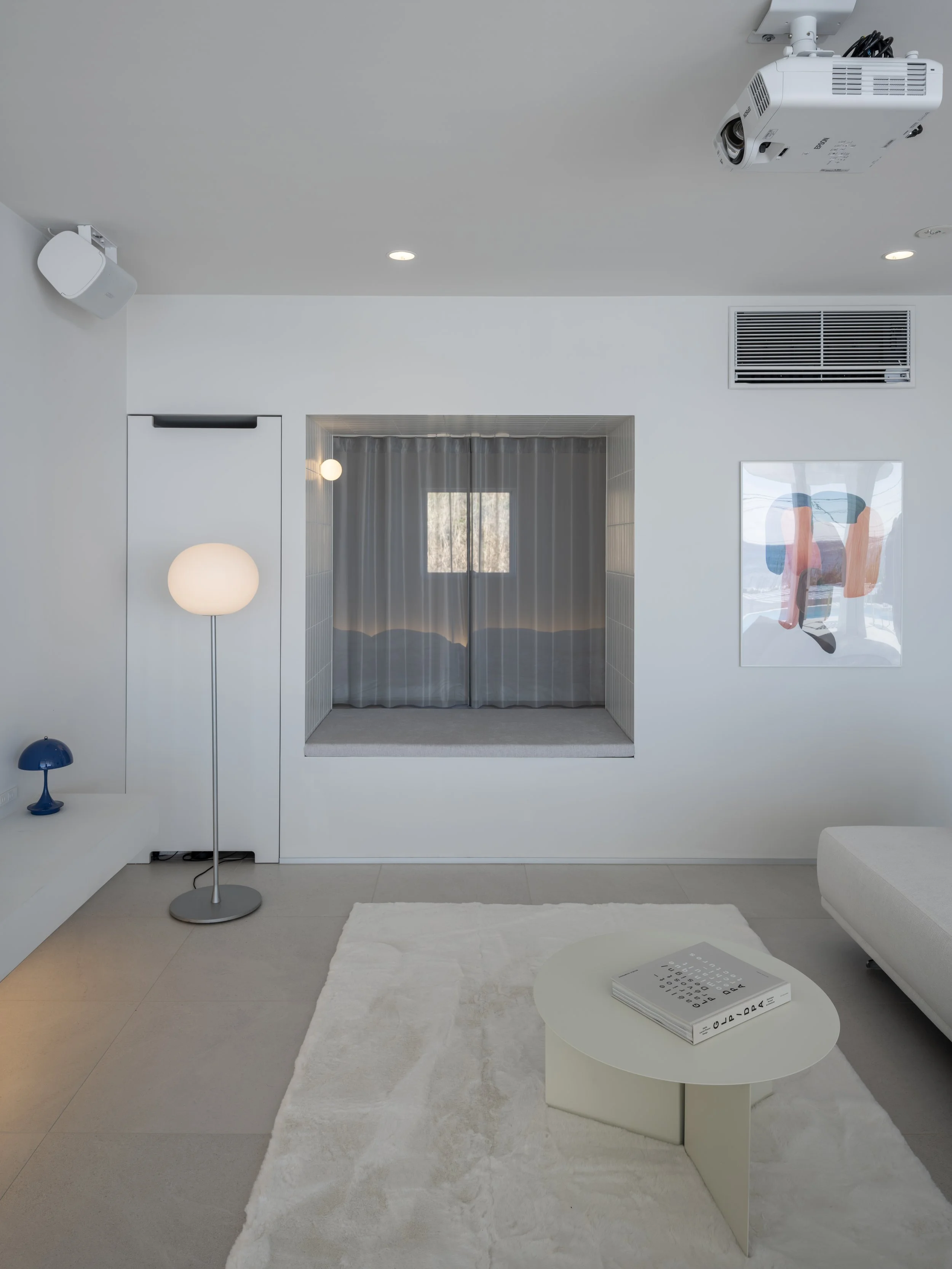
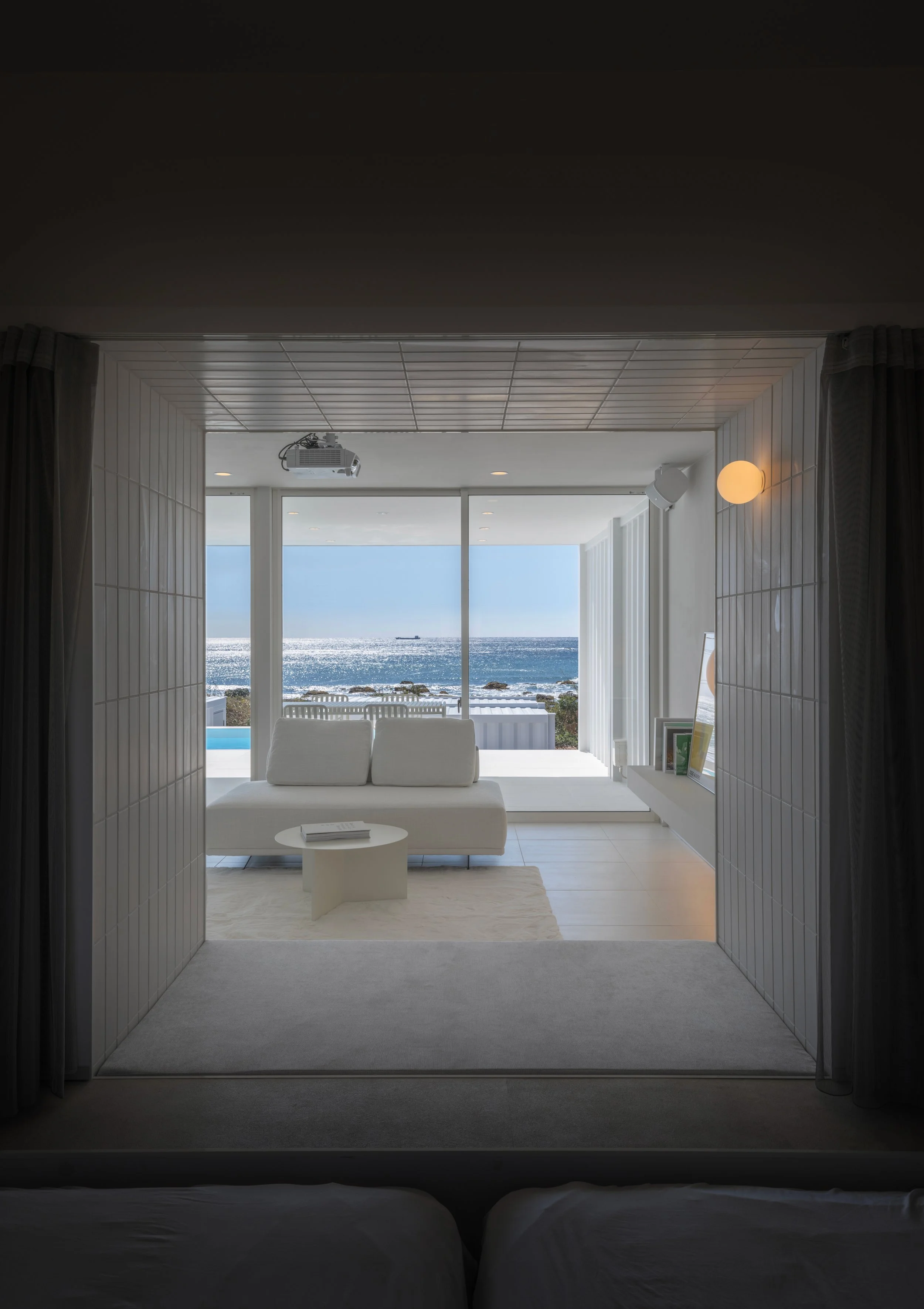
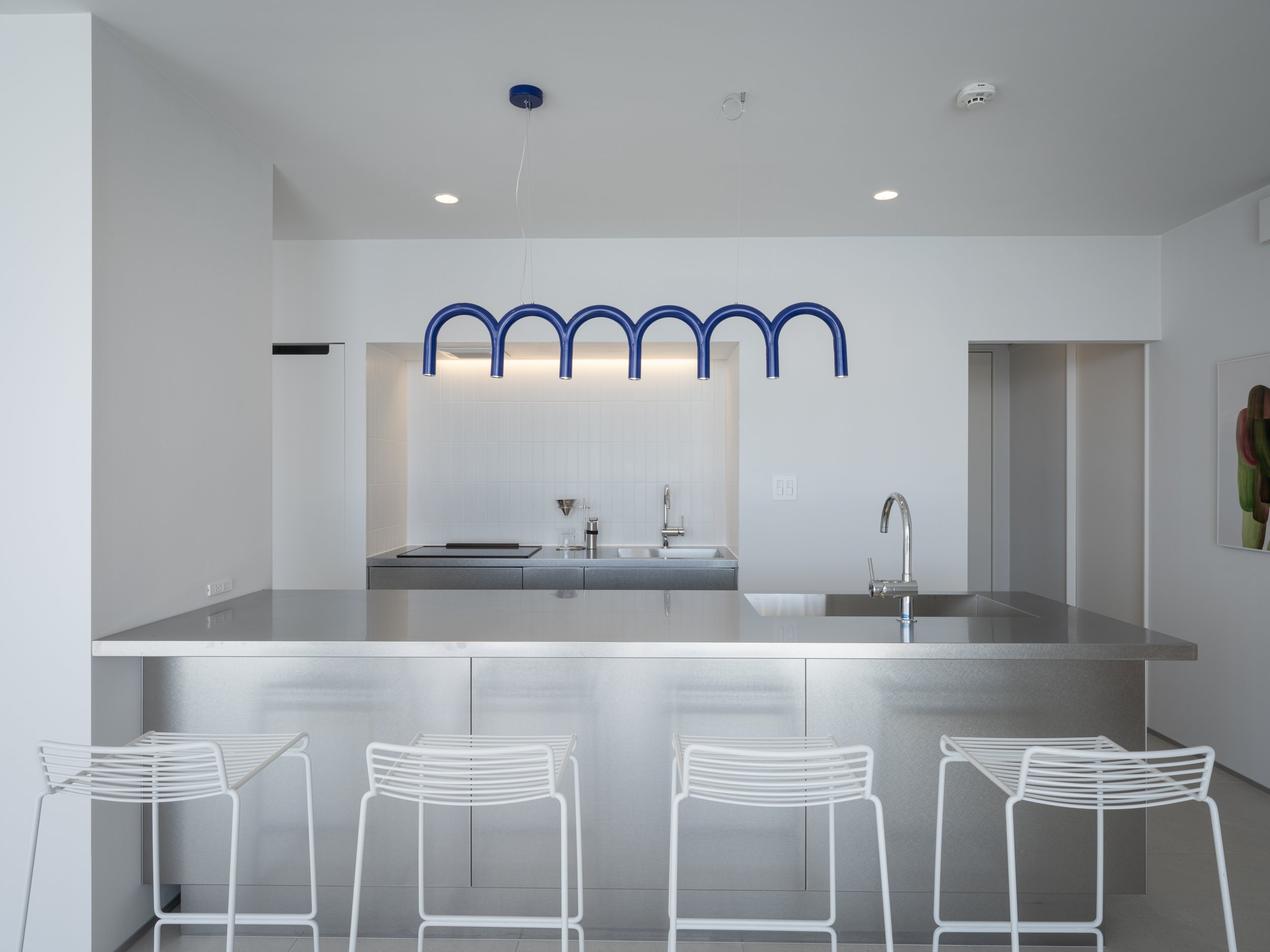
Although container-based construction offers speed, strength, and reduced structural weight, it also carries a strong industrial association. Corrugated steel panels are commonly linked to warehouses, storage facilities, and logistics infrastructure, which can feel distant from the atmosphere expected of a luxury villa. The project addresses this tension through abstraction.
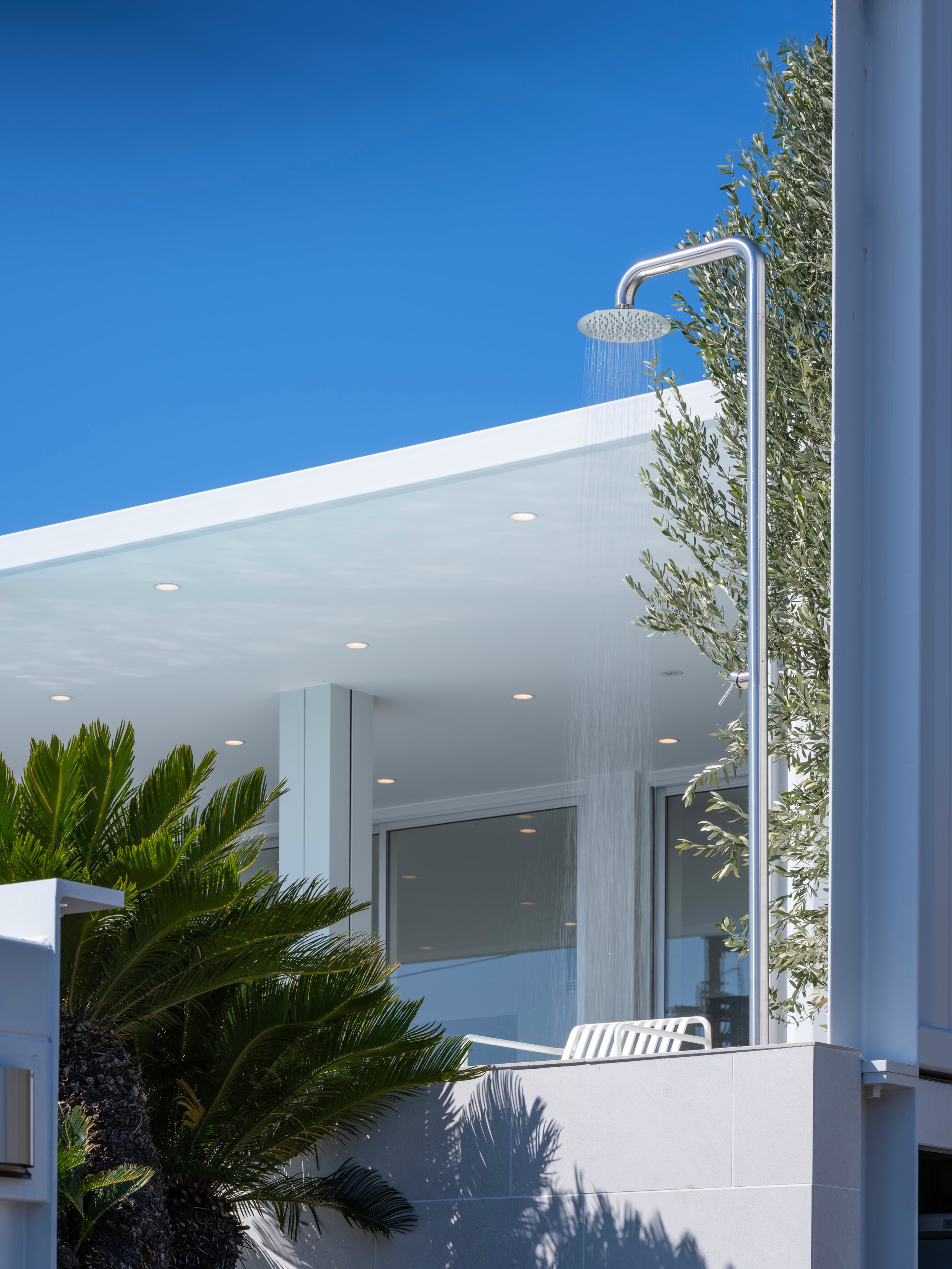
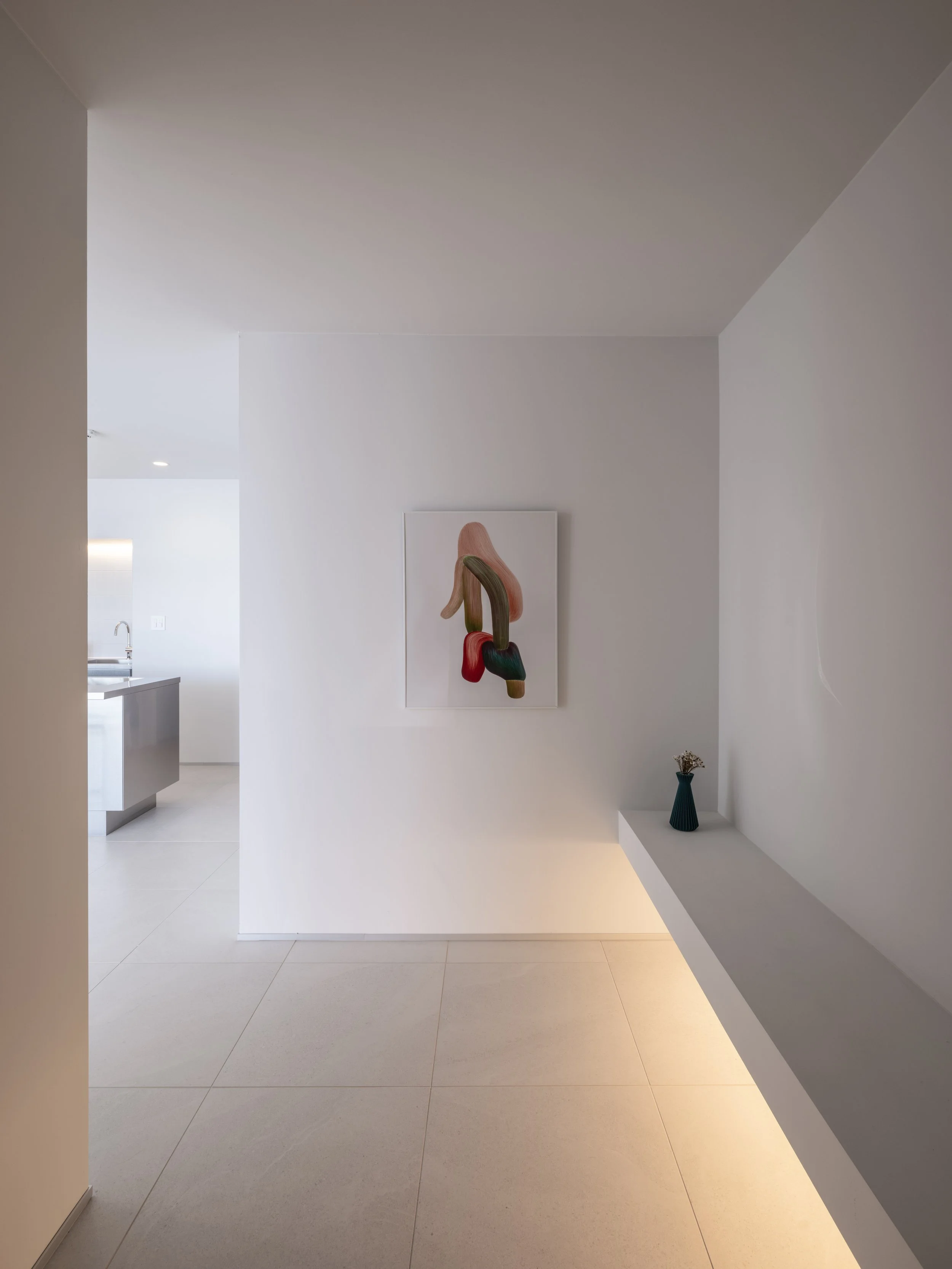
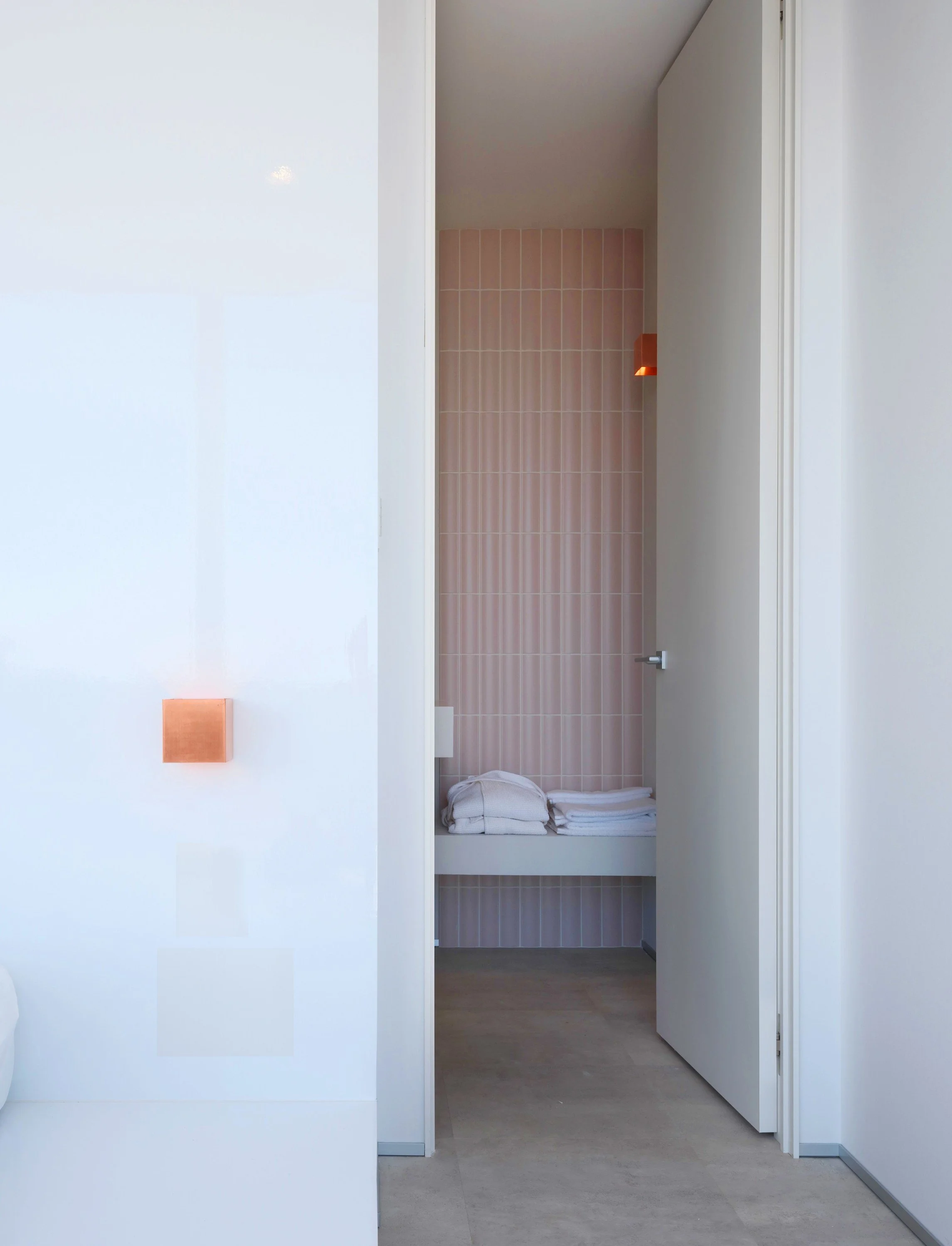
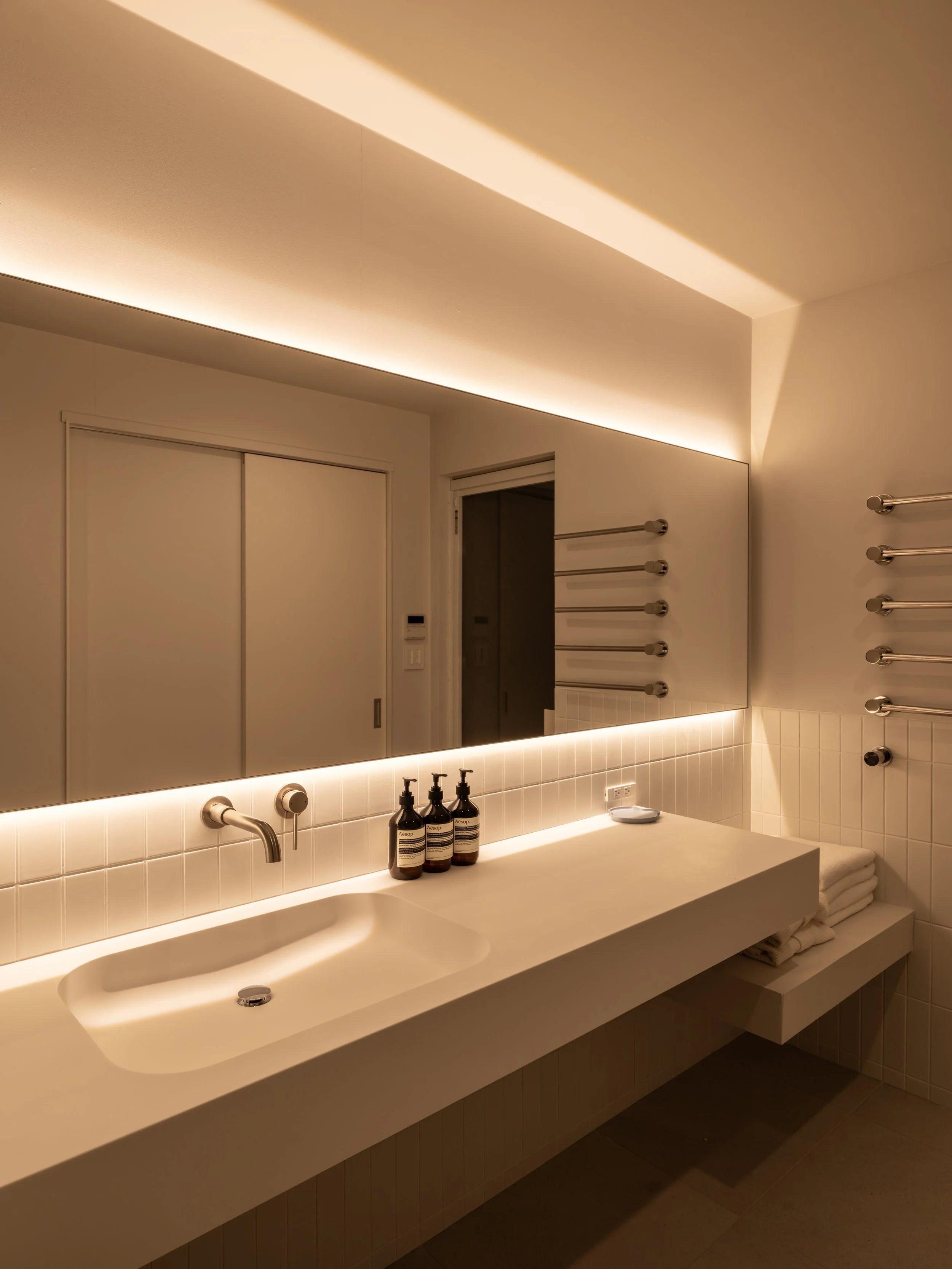
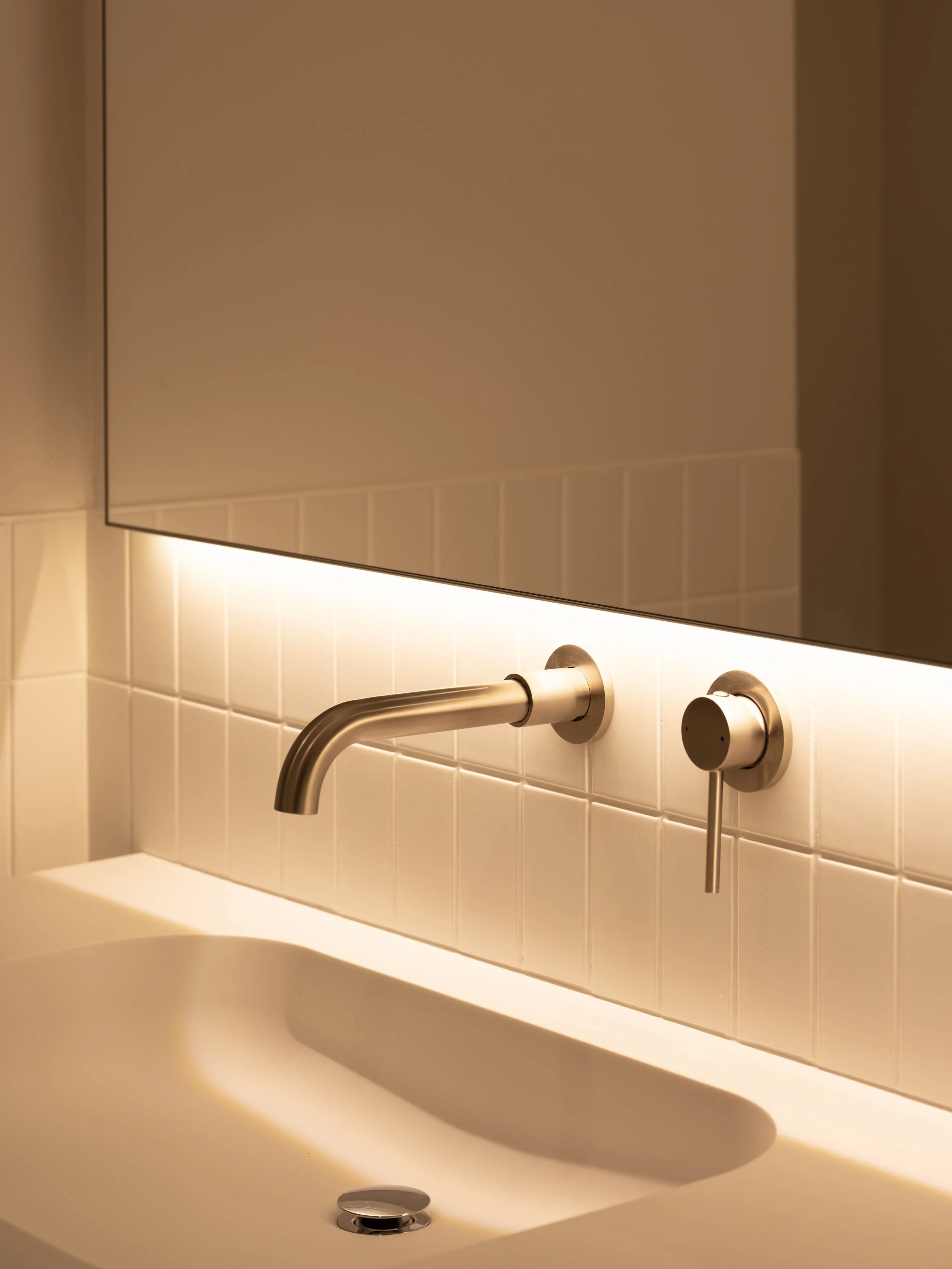
White is used consistently across floors, walls, and ceilings, creating a unified interior while allowing varied material textures to remain visible. This restrained palette softens the industrial character of the steel units and brings light deeper into the rooms beneath the broad overhangs. Against the white surfaces, the blue of the ocean and sky and the green of the surrounding trees become more vivid, making the landscape central to the spatial experience.
Unit Villa transforms a construction system associated with utility into an architectural language of clarity and calm. Through modular steel units, precise siting, and a carefully controlled interior palette, the project proposes a model for fast, cost-effective building that does not compromise the sense of retreat, openness, and luxury expected from a contemporary coastal villa.