The Space Between by Matthew Giles Architects
Set into Highgate’s steep hillside, The Space Between is a family home reshaped through a full-site masterplan by Matthew Giles Architects, treating architecture, interiors, and landscape as a single continuous project.
A comprehensive retrofit reorganises and extends the main house, introduces a new garden annex, and recalibrates the grounds to strengthen daylight, outlook, and day-to-day connection to the garden.
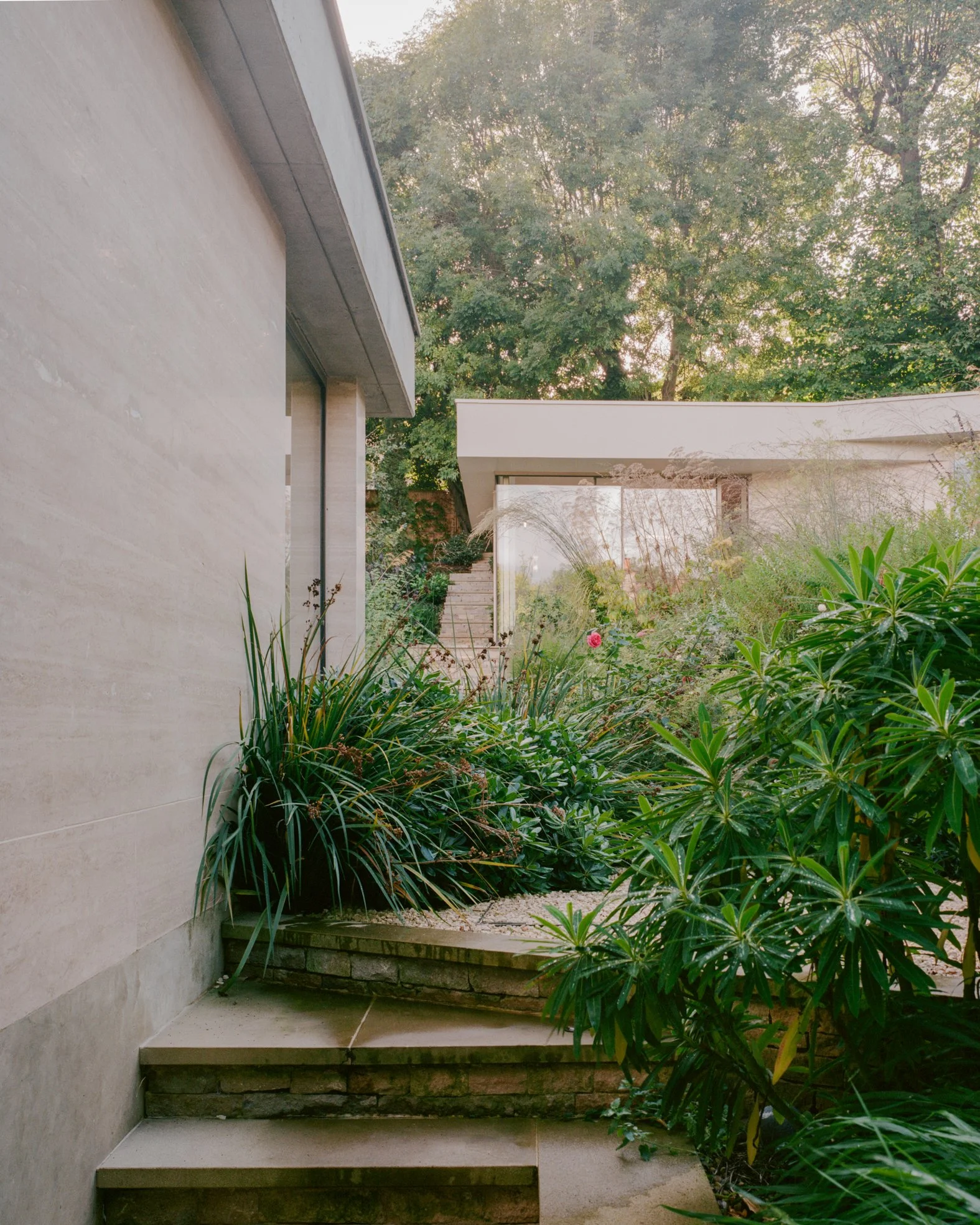
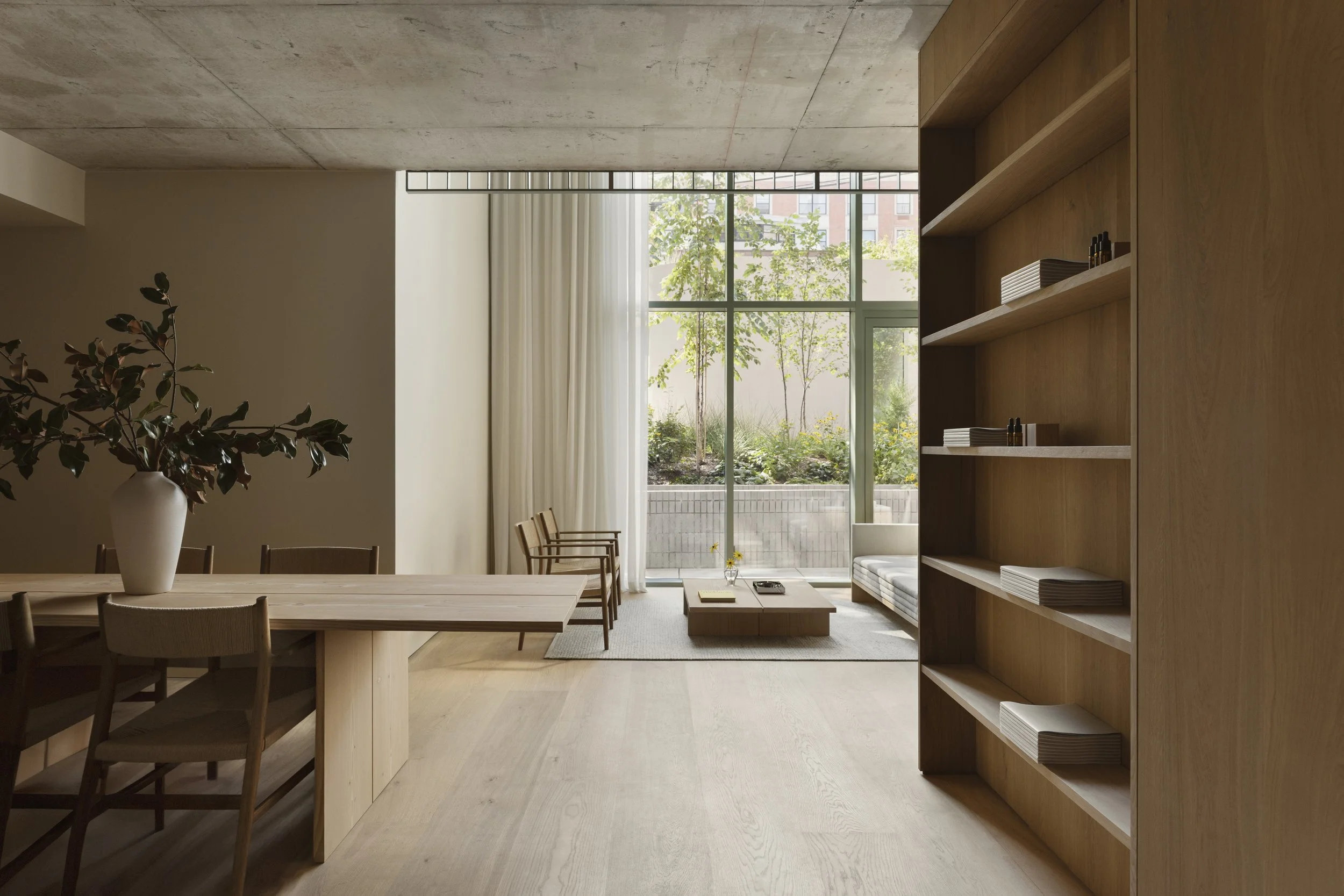
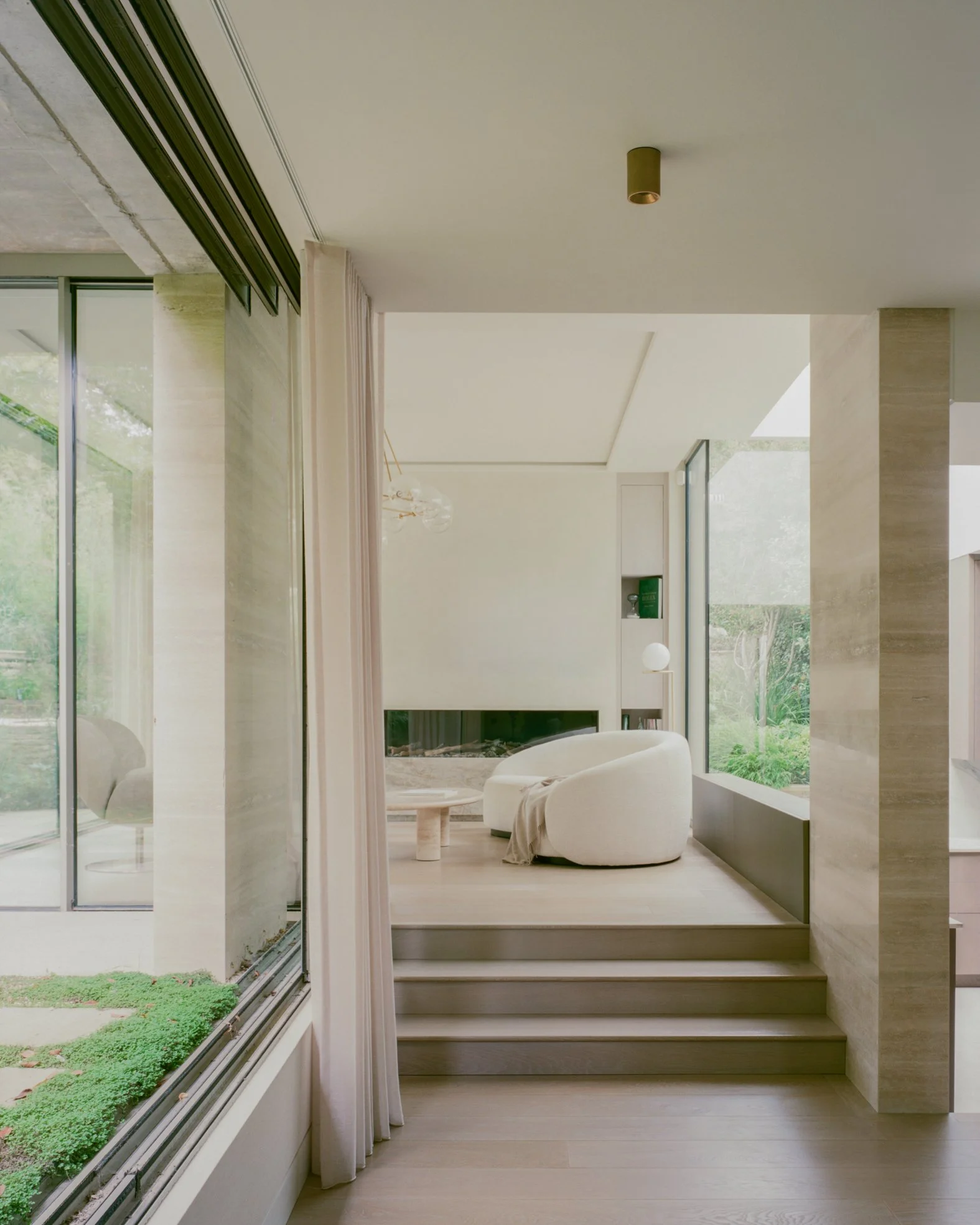
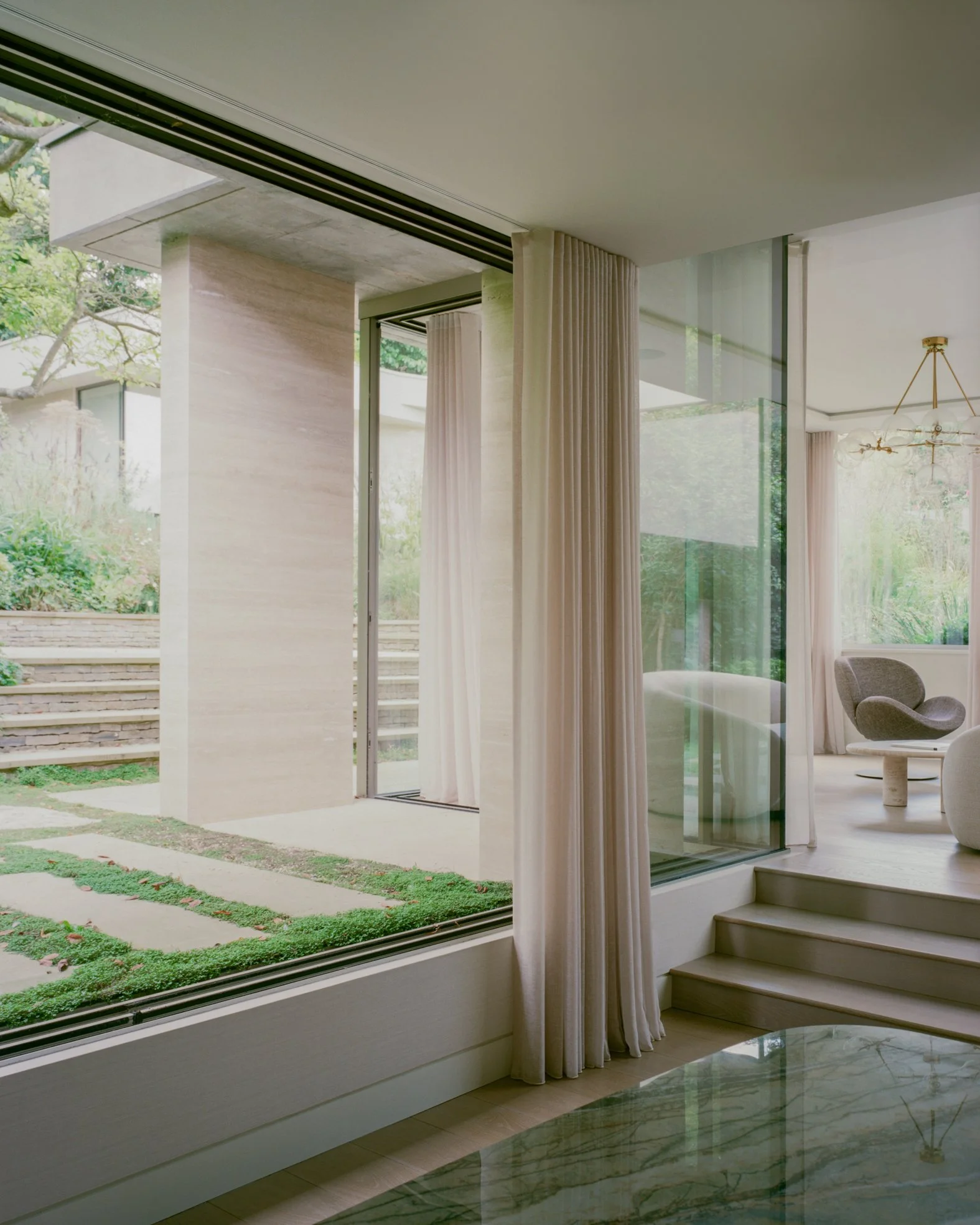
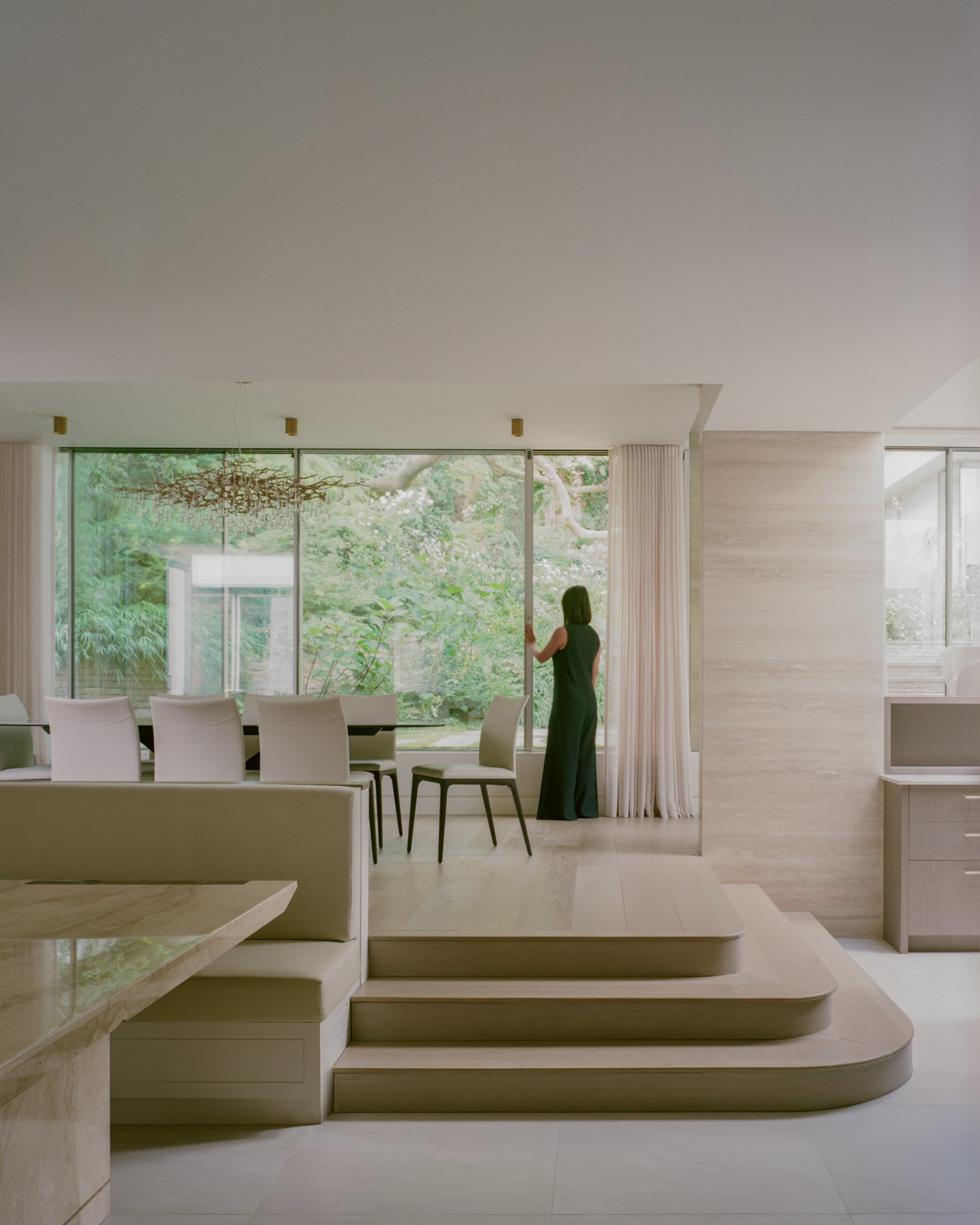
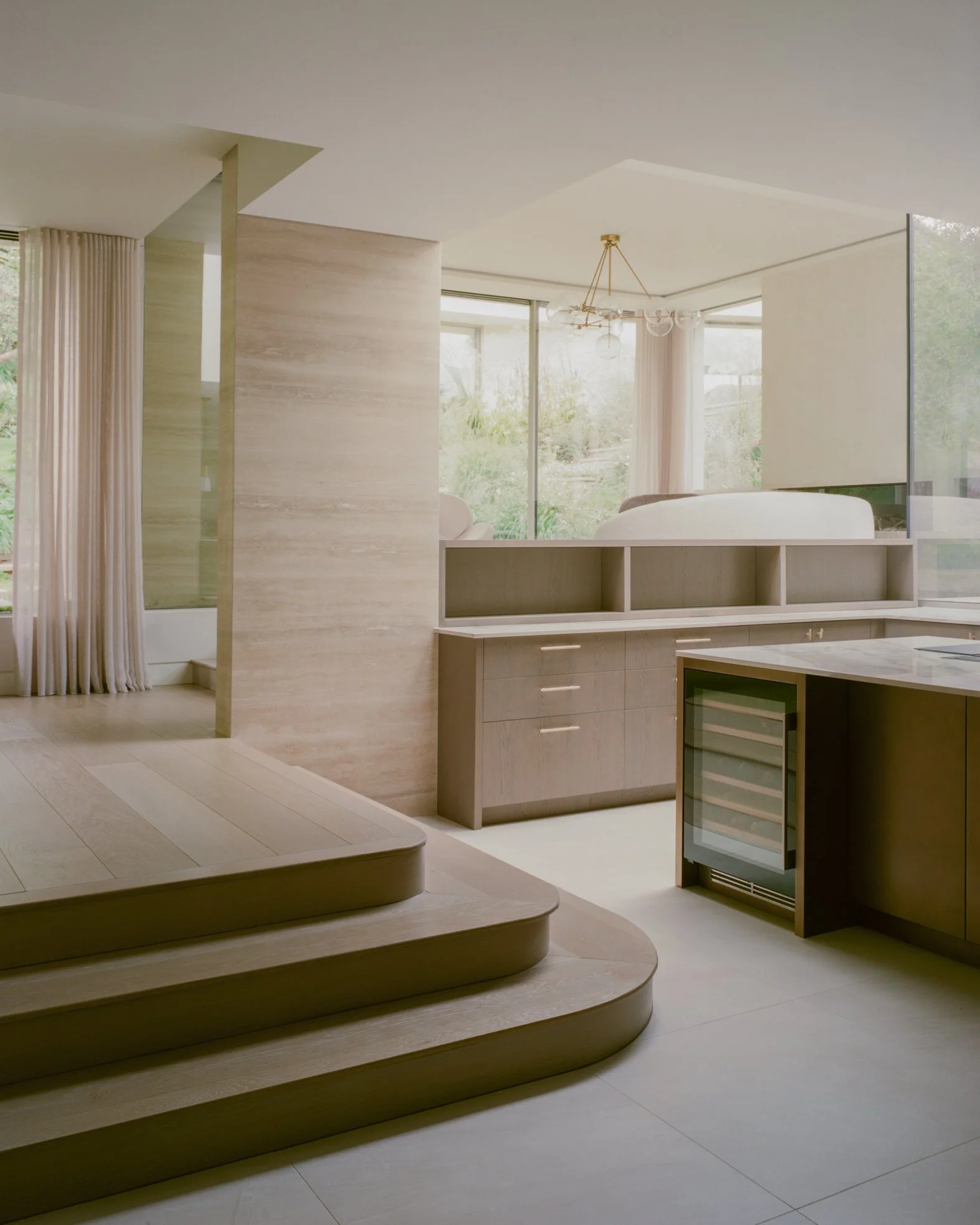
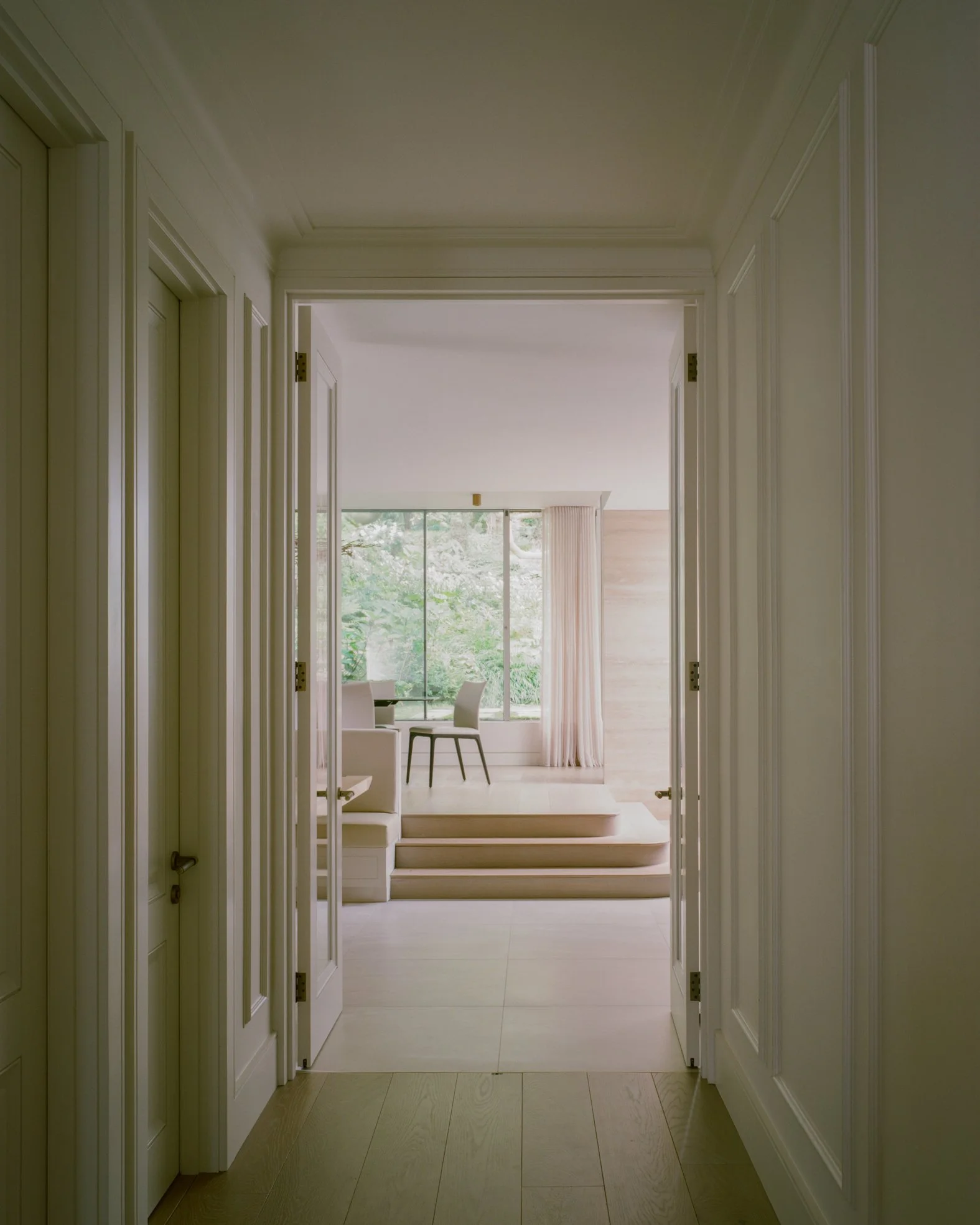
Inside, the interior plan is composed in direct response to the terrain. With almost seven metres of level change from the driveway down to the top of the garden, the rear living spaces are arranged as interlocking volumes that step with the slope. Kitchen, dining, and sitting room rise in increments of roughly half a metre, each space clearly defined in proportion and atmosphere while remaining visually linked across the sequence. This sectional approach creates a gradual shift from enclosed, grounded moments to more open rooms with longer views, allowing the house to feel both intimate and expansive without relying on a single, oversized volume.
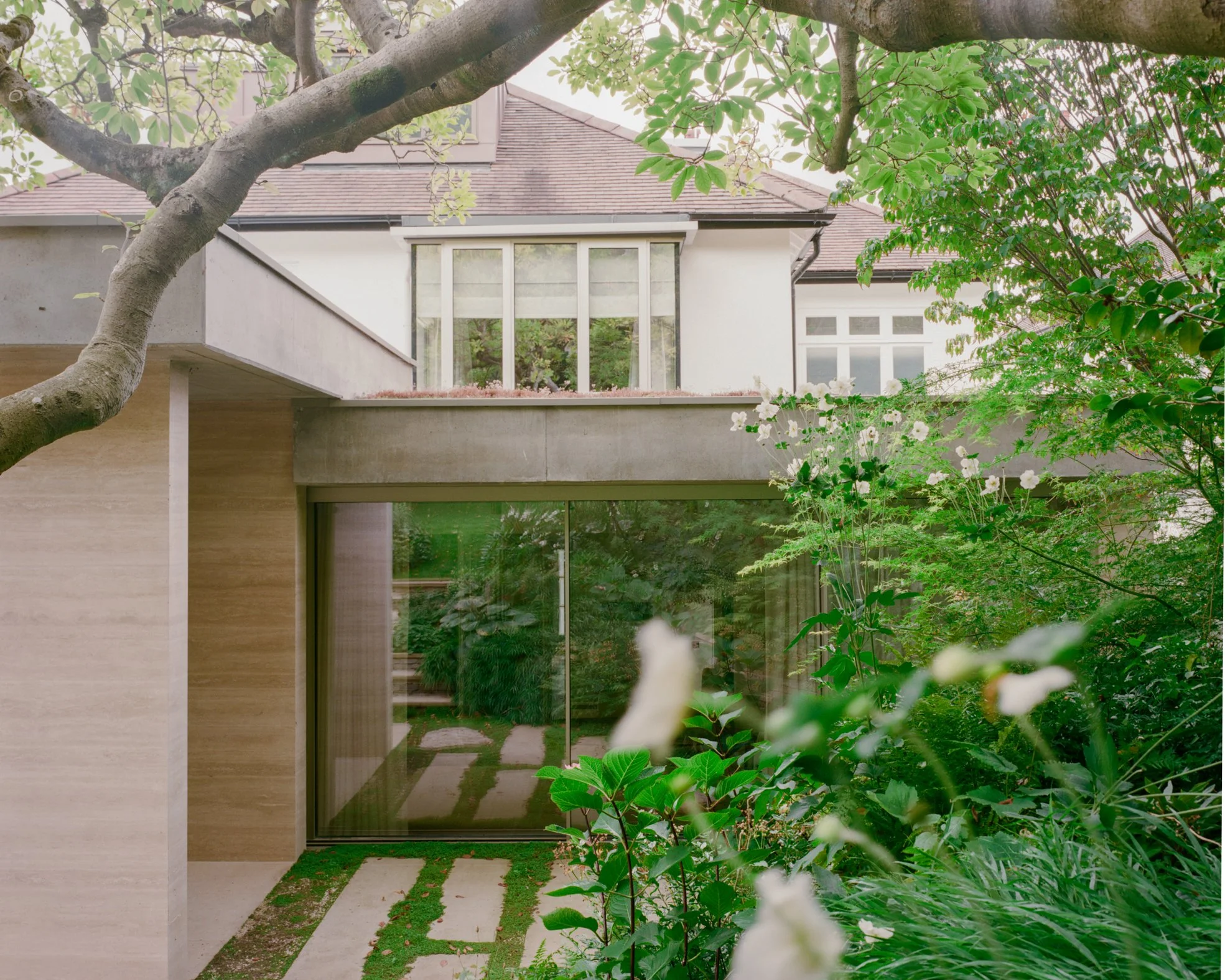
Material decisions reinforce that sense of clarity and weight. Travertine appears in contrasting finishes, from rougher, more textured surfaces to refined polished planes, paired with raw concrete structural elements that read as both framework and interior presence. Against this, timber joinery and warm finishes bring tactility and human scale, softening the mineral palette and supporting comfort in the everyday. The interior experience is defined by the balance between robust, architectural materials and the quieter warmth of wood, with light and shadow emphasising junctions, edges, and depth.
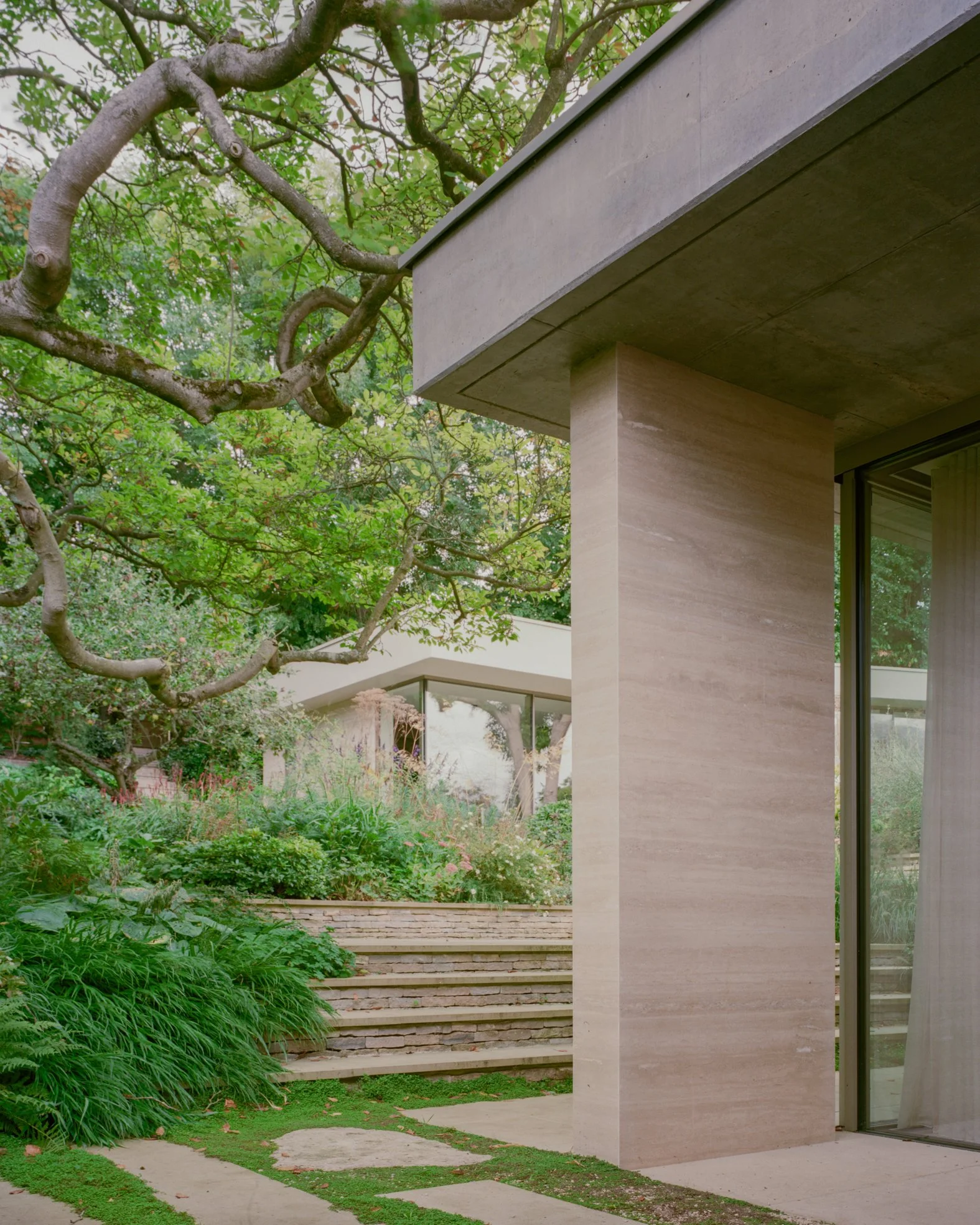
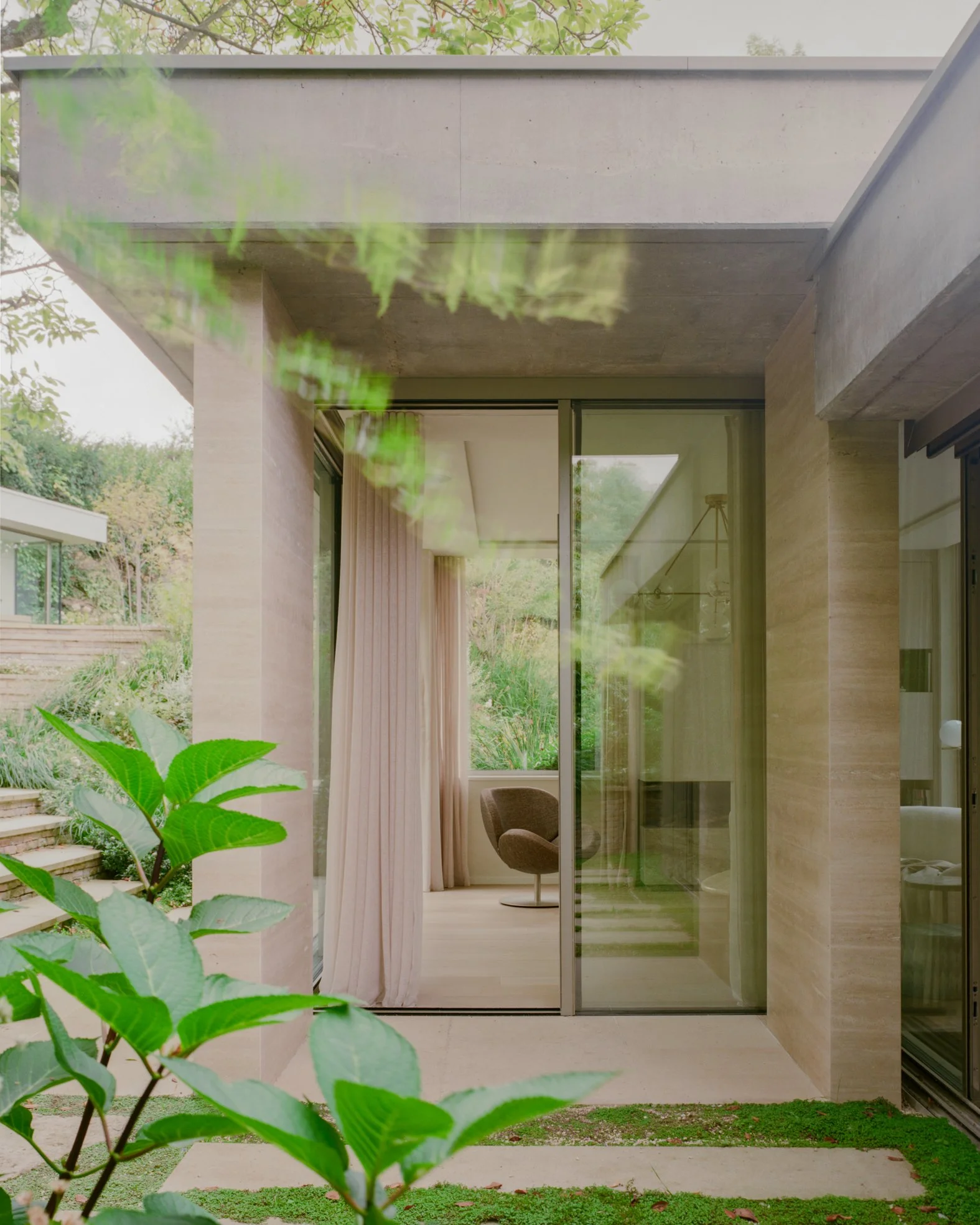
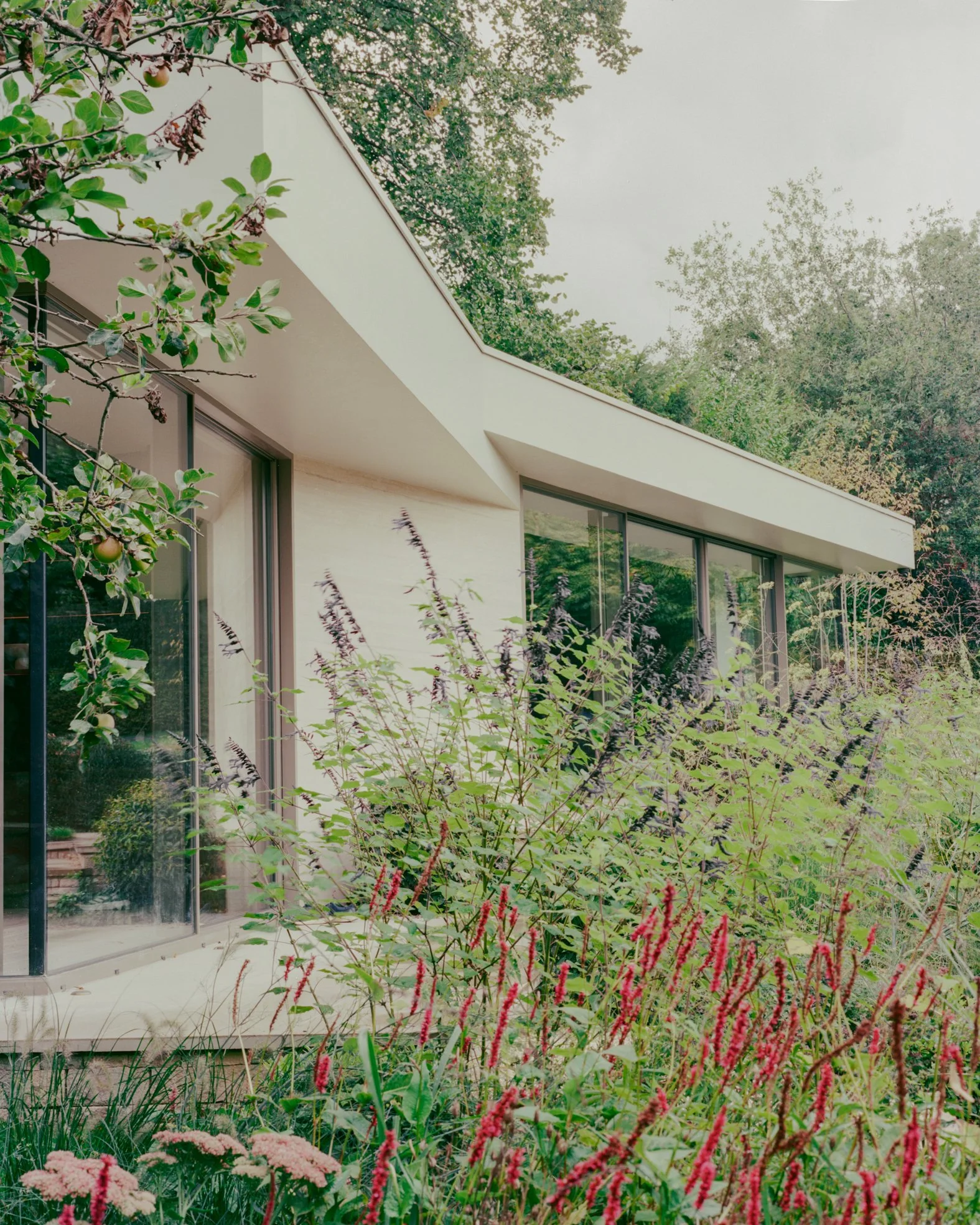
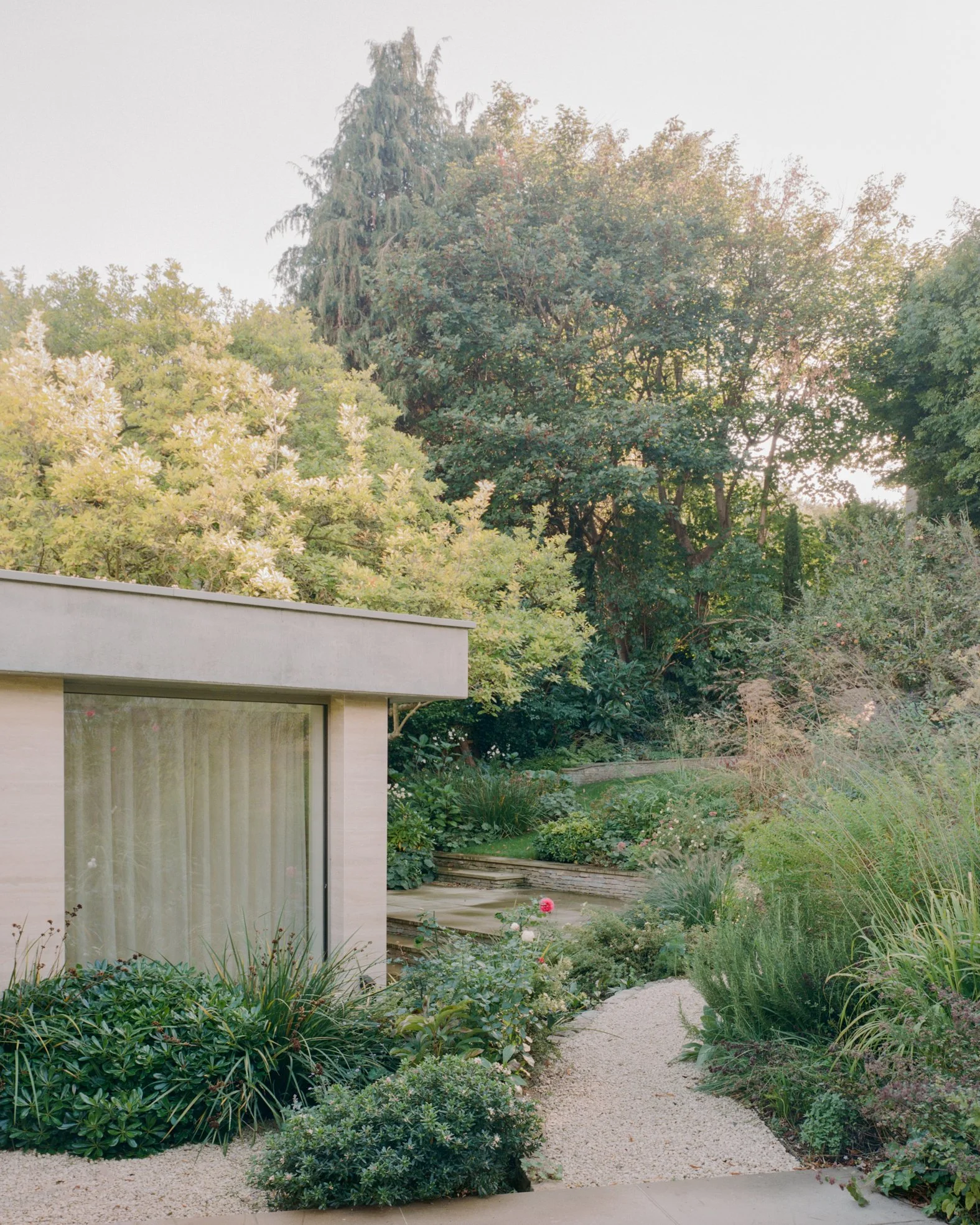
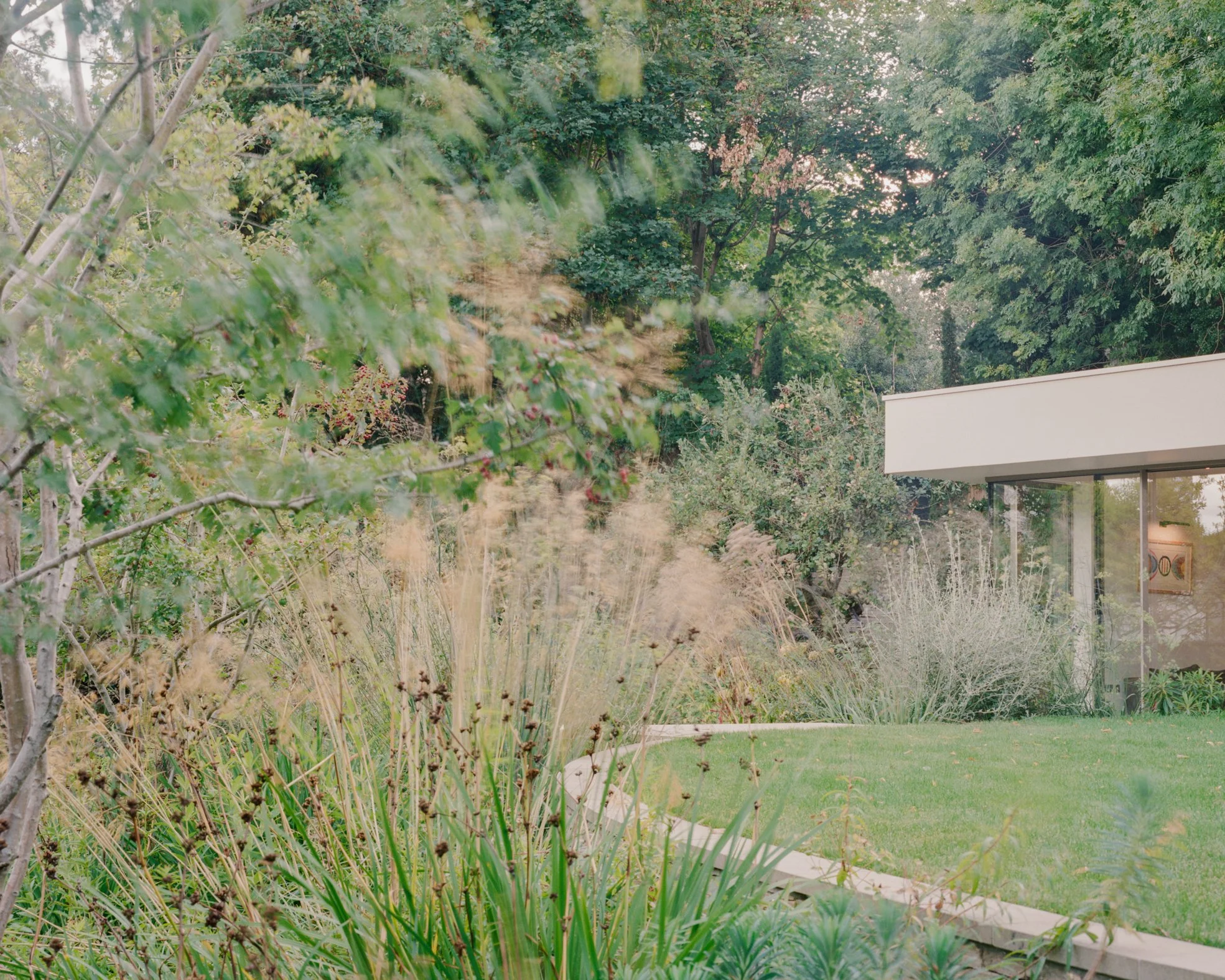
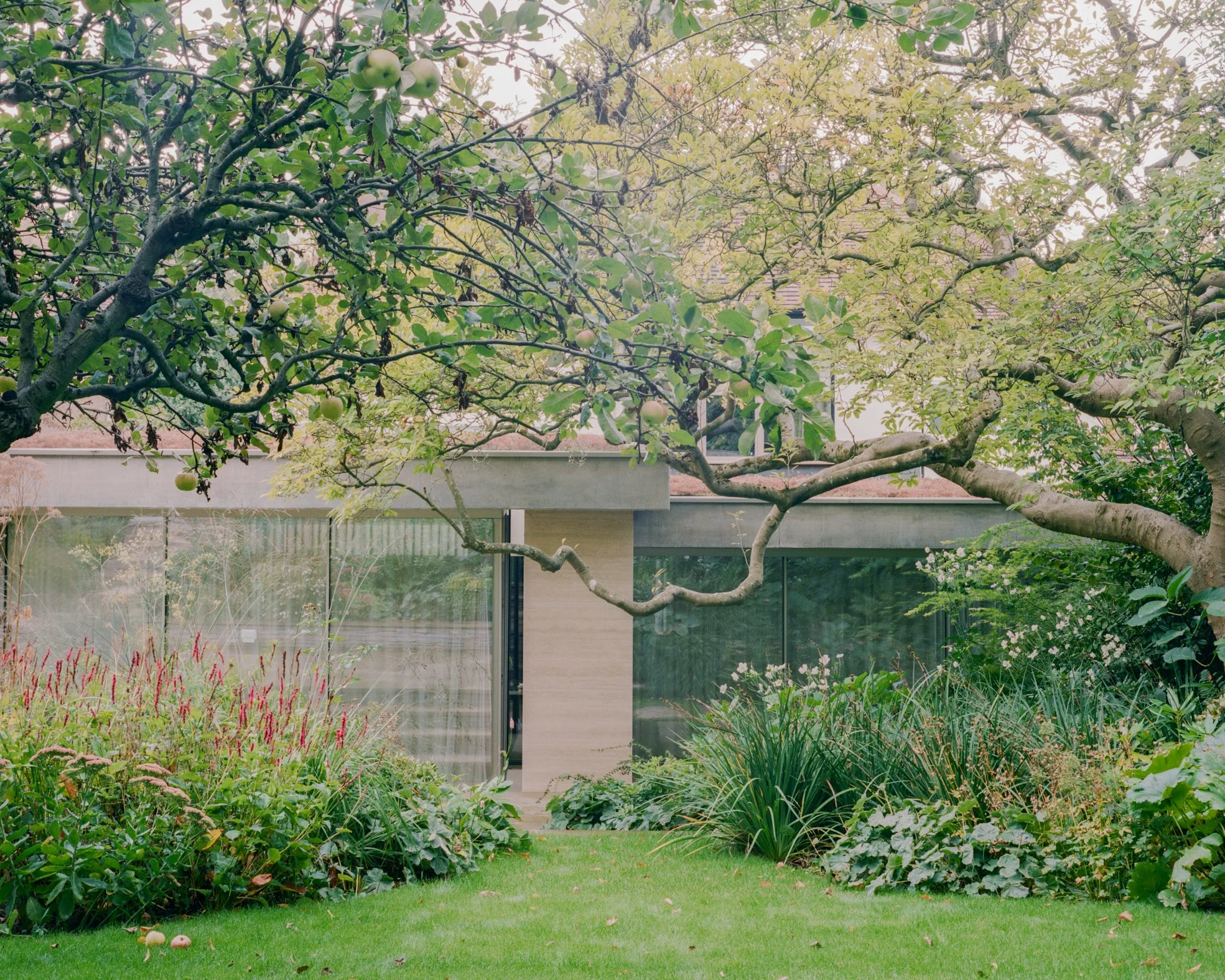
The extension’s green roof extends the landscape upward, making the addition feel embedded rather than imposed, particularly from the upper garden where the planted roof reads as a continuation of ground. At the far end of the site, the garden annex echoes the language of the main house, forming a measured counterpart across the length of the garden and establishing a clear relationship between living spaces and retreat.
Landscape design was developed alongside the architecture, shaping a series of outdoor rooms that align with interior thresholds and views. Planting, level changes, and circulation are treated as spatial tools, knitting the buildings into the site and making the garden feel inhabitable across seasons and times of day.
Sustainability is integrated through both performance and conservation. The existing concrete frame contributes thermal mass, supporting stable internal temperatures, while high-performance glazing, targeted insulation, and passive solar strategies reduce dependence on mechanical heating and cooling. The green roof contributes to biodiversity and water management, and the retention of the original timber structure and period elements, including cornicing and flooring, preserves the home’s character while reducing embodied carbon through material reuse.