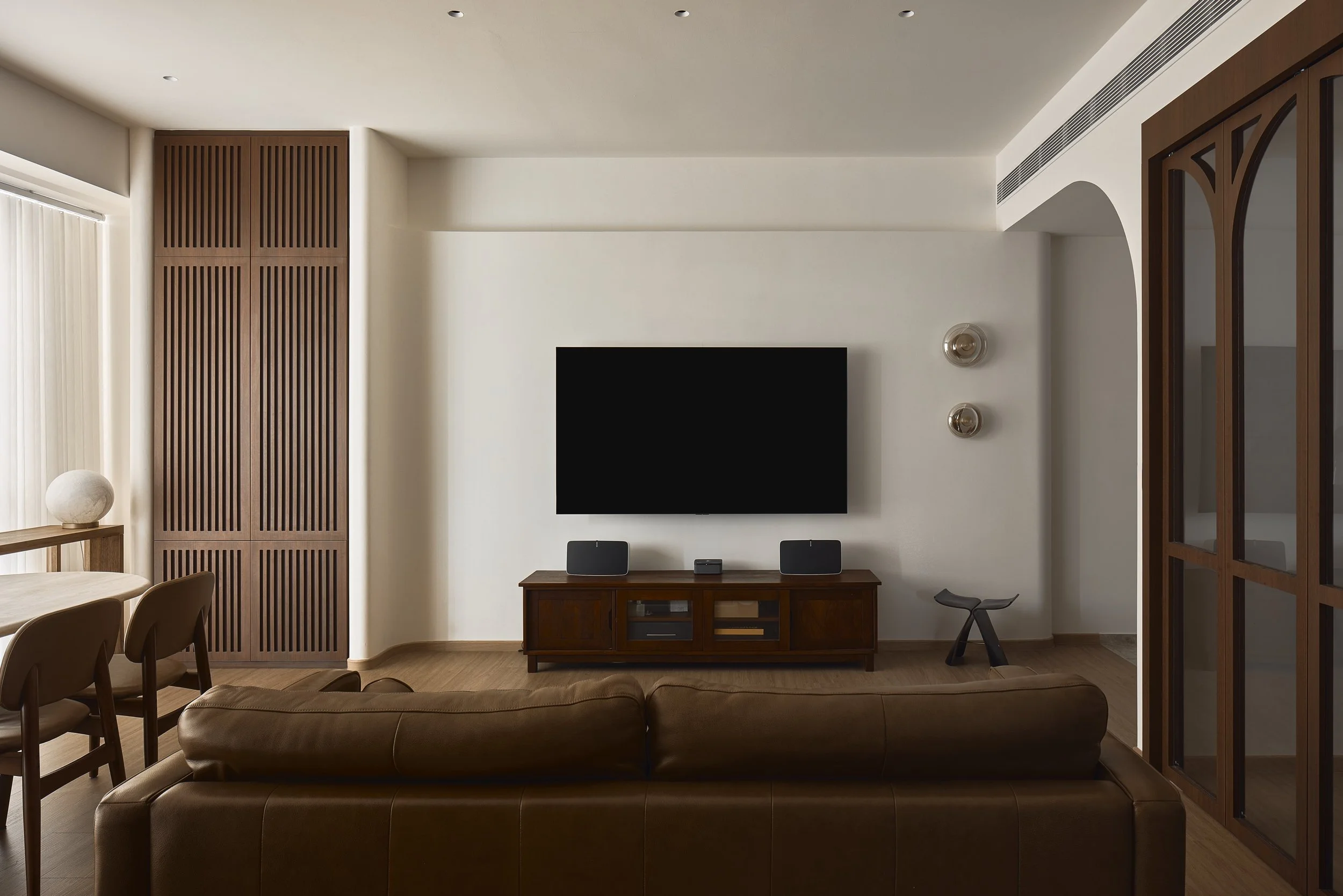
The Modern Canopy by Intheory Design
For a family balancing meetings, errands and the everyday demands of raising two children, home had begun to feel like a place they simply passed through between commitments. Their brief was shaped by a desire for less. Less rushing, less separation between work and family life, and fewer reasons to leave the comfort of home.
The Modern Canopy by Intheory Design responds to that desire by reimagining the home as a private retreat, drawing from the ease and atmosphere of a beachside holiday. The family did not want a home that imitated five-star luxury. They wanted the feeling of being away, where mornings move slowly, conversations linger and there is nowhere else to be.
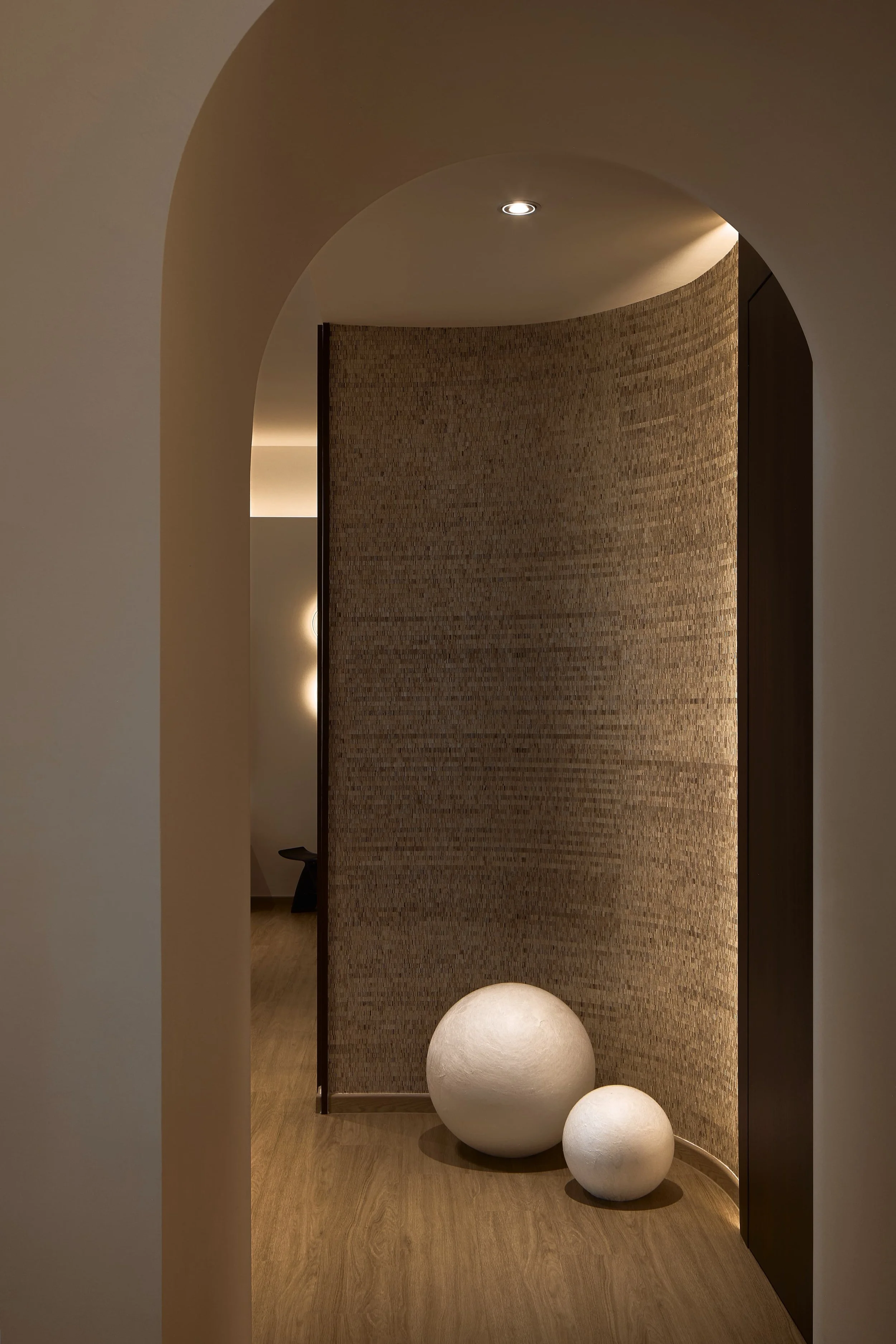
Vacation photographs became an unexpected point of departure, offering references for the warmth, openness and relaxed character the family hoped to bring into everyday life. Tropical Modernism provided the foundation, combining natural materials, soft light and connections to greenery to create an environment that encourages everyone to slow down.
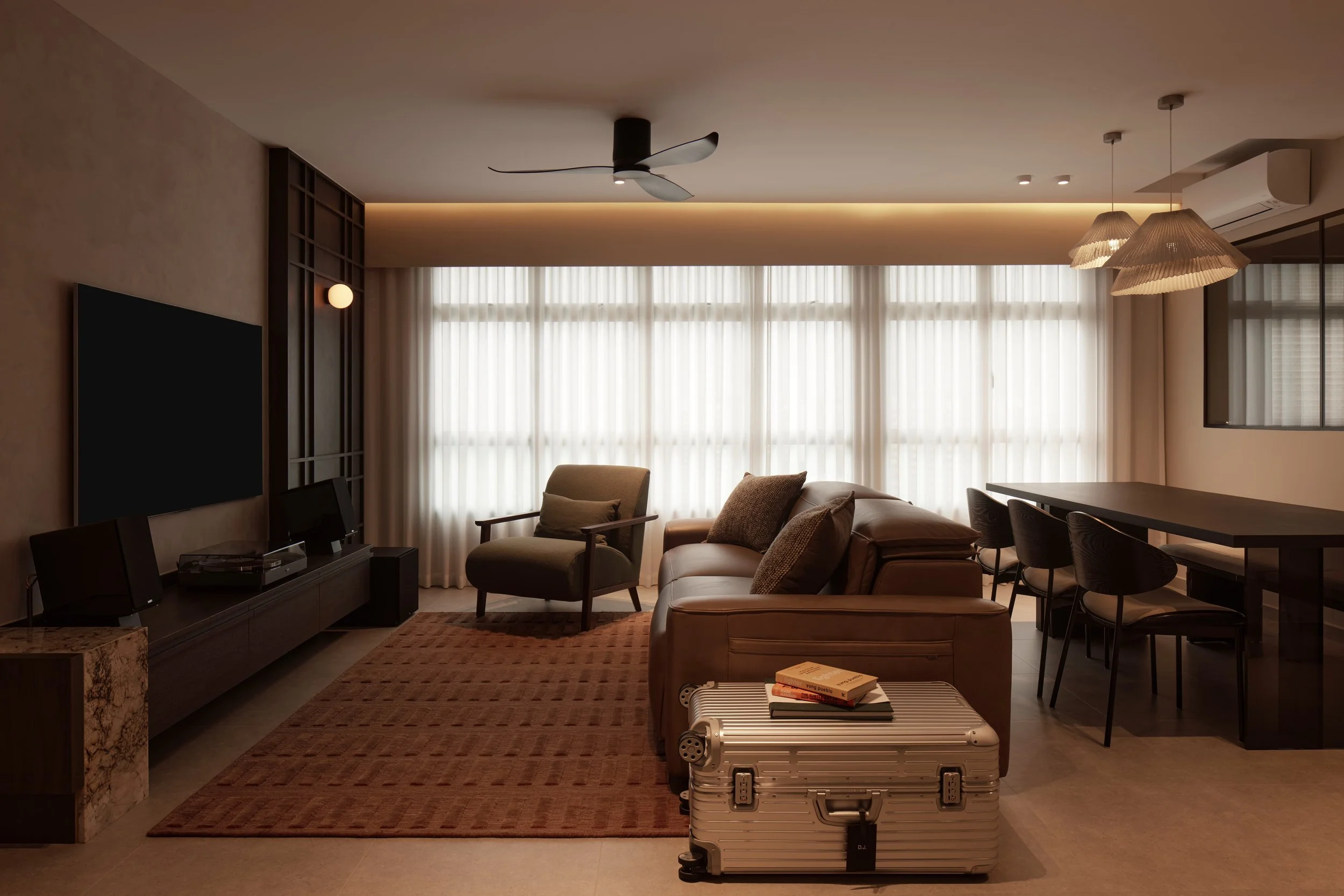
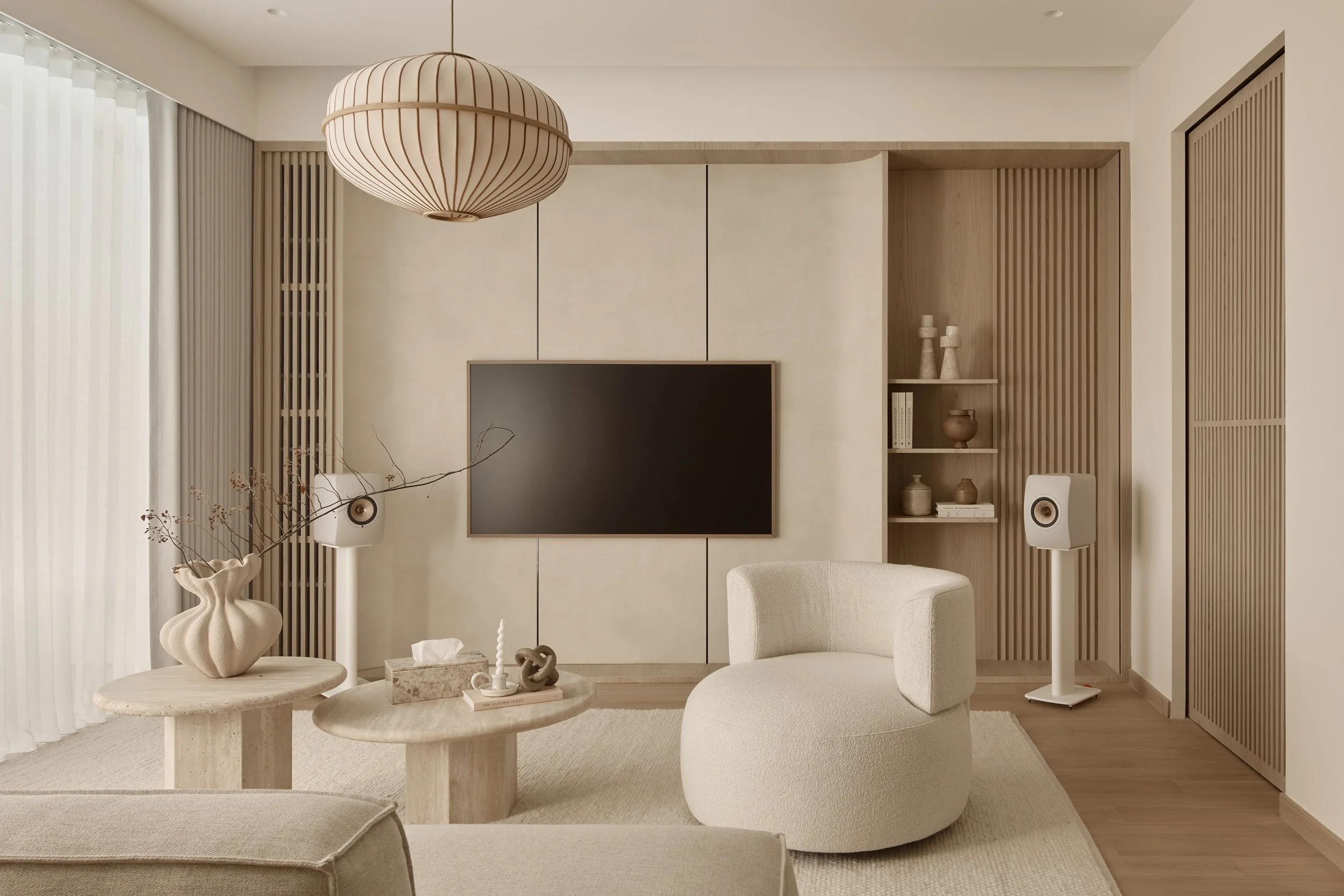
The communal areas are shaped around the family’s daily habits, giving weekends a more relaxed quality. The children settle into their favourite places on the sofa while their parents make tea and talk, with the home allowing these simple moments to take centre stage.
One of the most significant changes came through an overlooked pantry tucked into a darker corner of the home. Intheory Design opened up the area and transformed it into a glass-framed study, allowing whoever is working to remain connected to the communal areas.
The glass panels can fold flat against the wall in the late afternoon, allowing the study to disappear into the living area and returning the floor to the family. The flexibility also leaves plenty of room for the family dog to race through the living room, adding another layer of everyday life to the home.
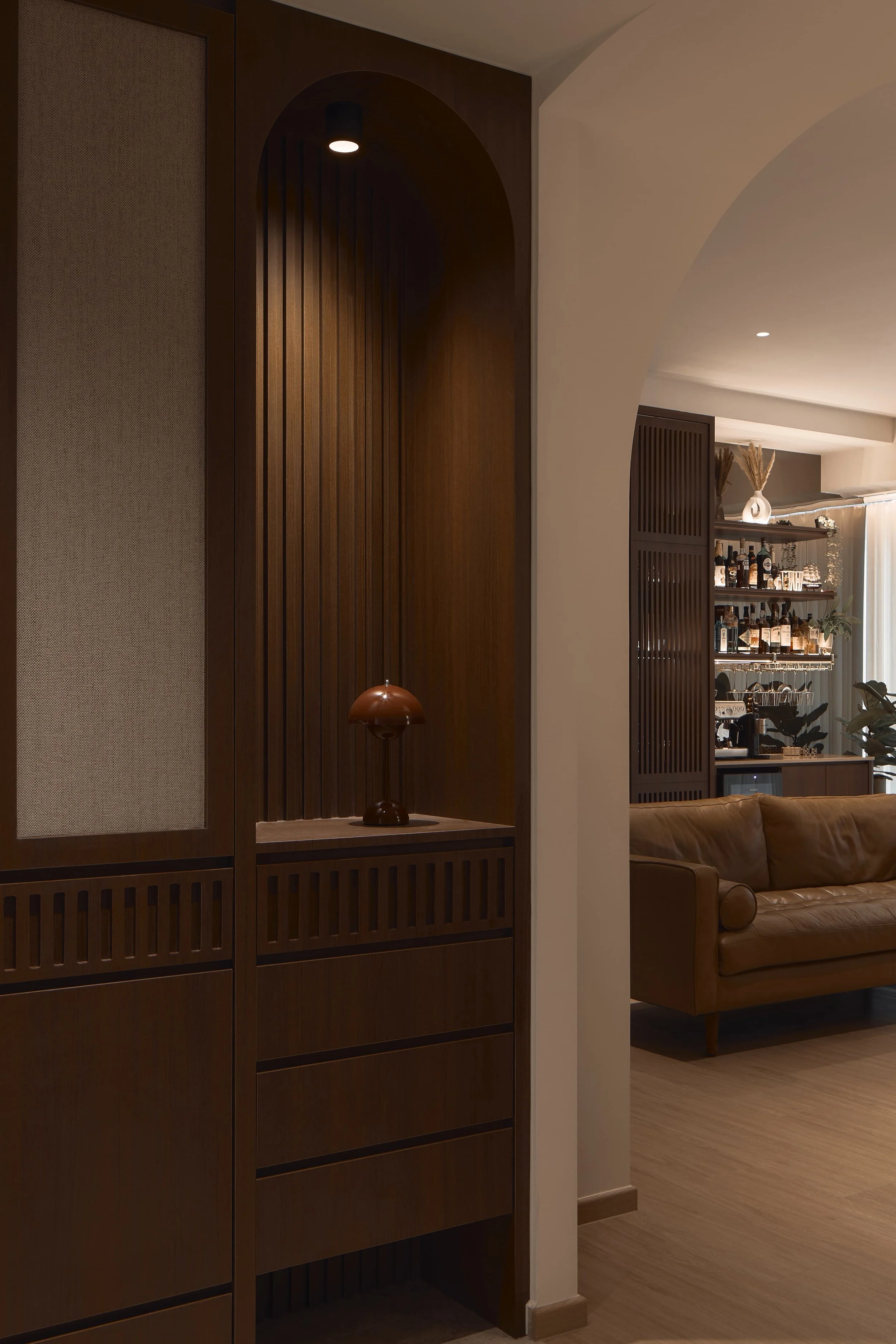
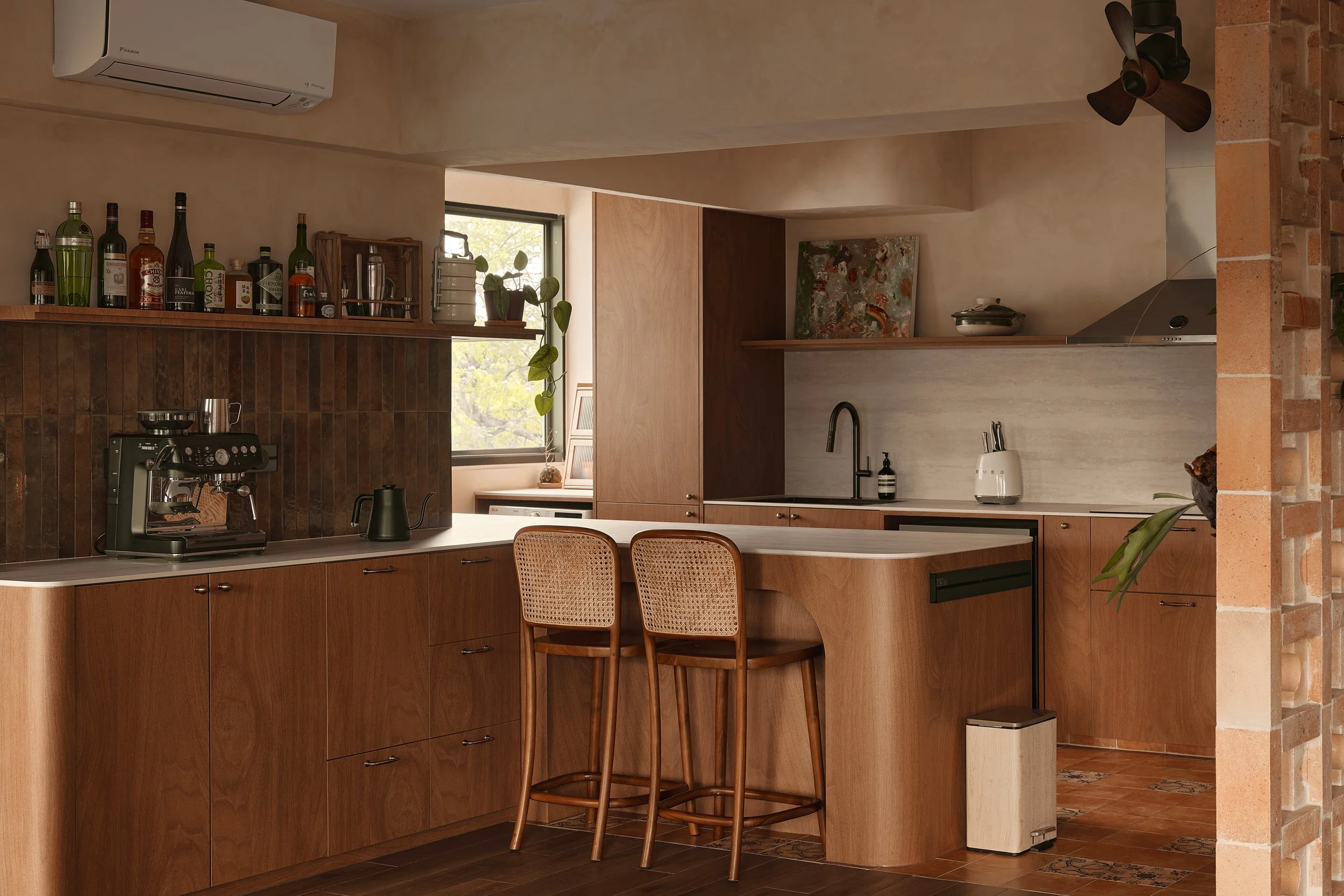
Along the window line, a highly personal corner brings together the couple’s individual rituals. One side houses the husband’s collection of spirits, gathered over years of travel and associated with different memories. The other holds the wife’s collection of teas, with blends collected from her own travels.
The arrangement is intentionally informal. It does not function as a conventional bar or display cabinet, but as a small place where the couple can pause at the end of the day. Beyond the window, trees catch the afternoon light, their shadows moving across the floor and reinforcing the sense of being surrounded by nature.
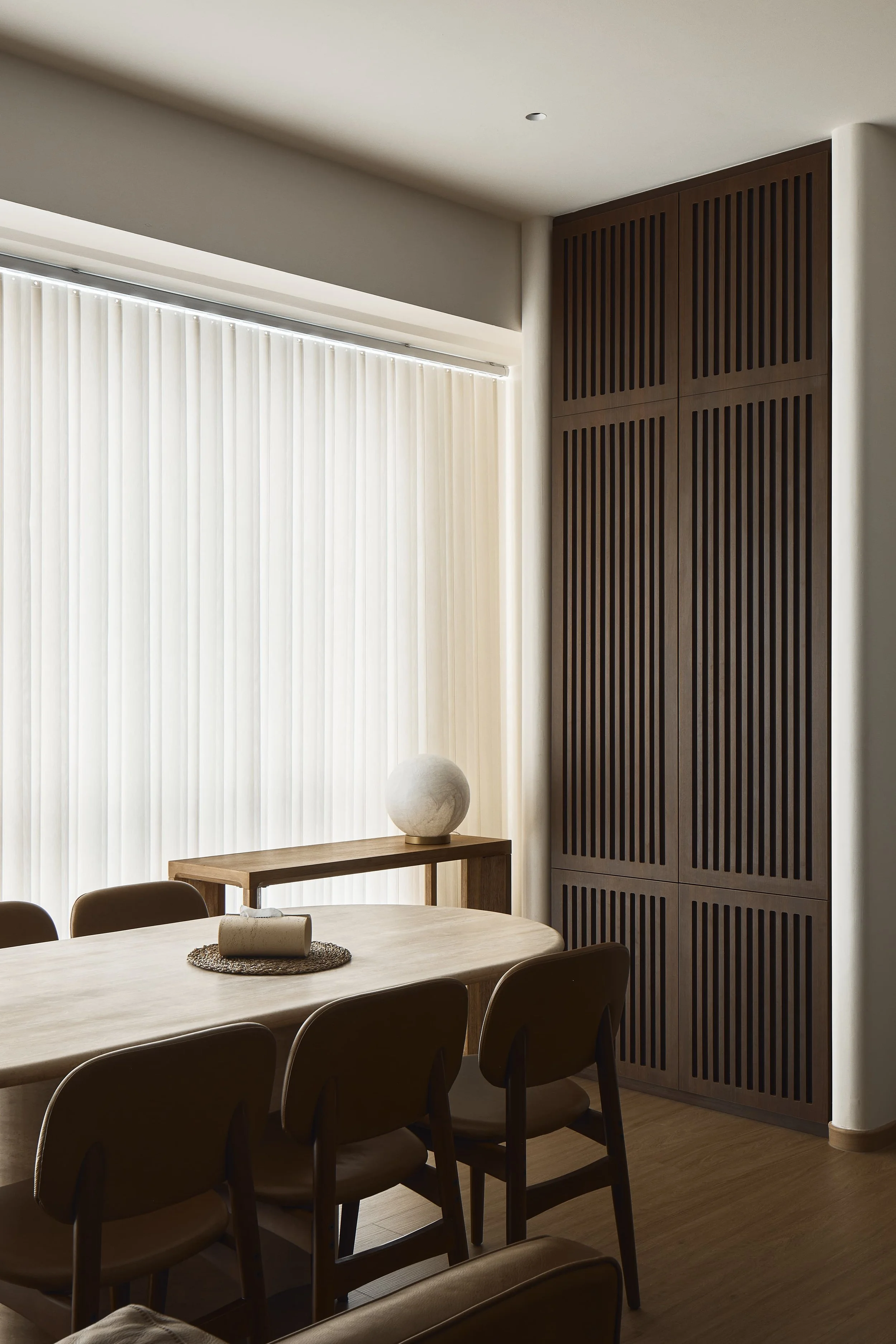
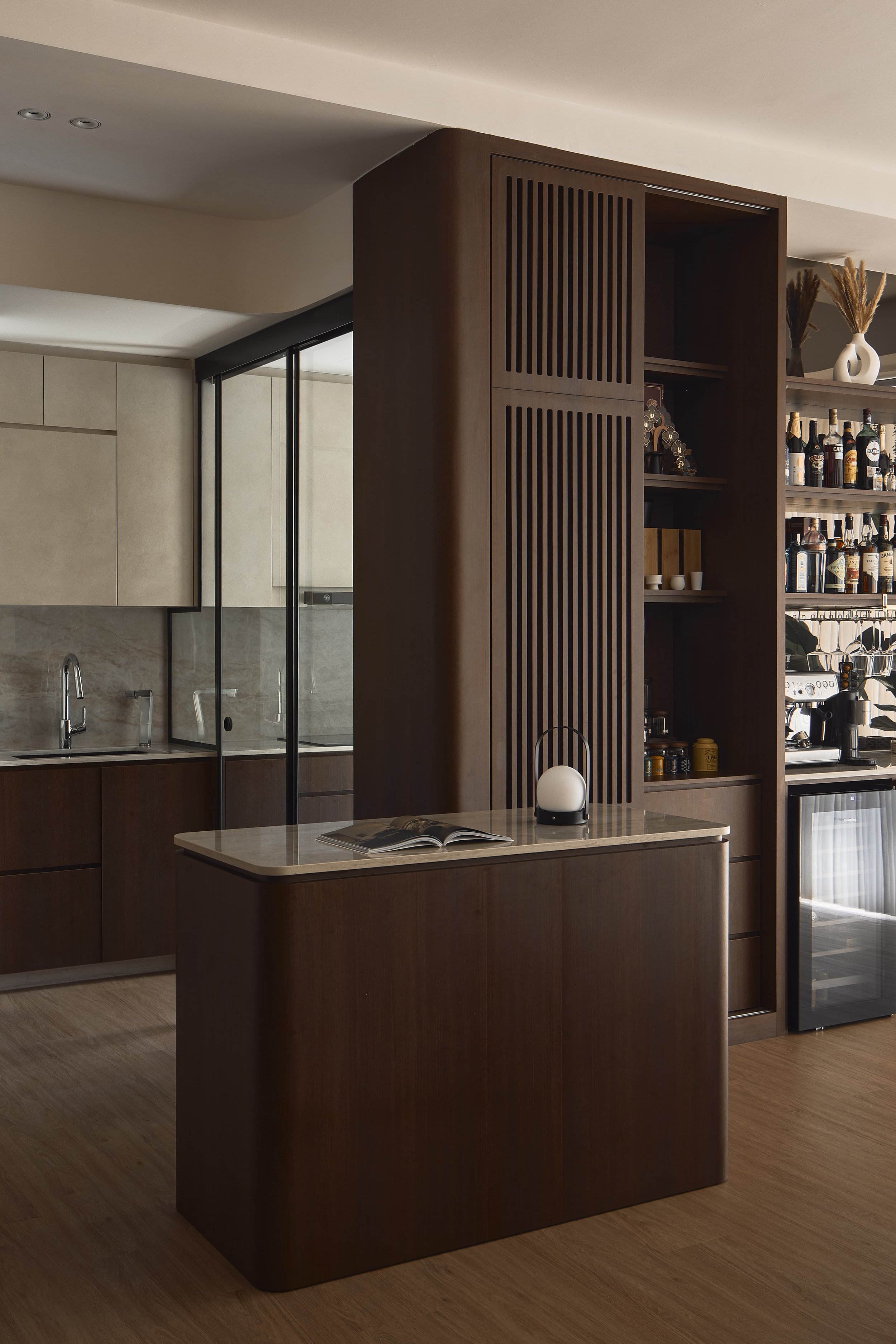
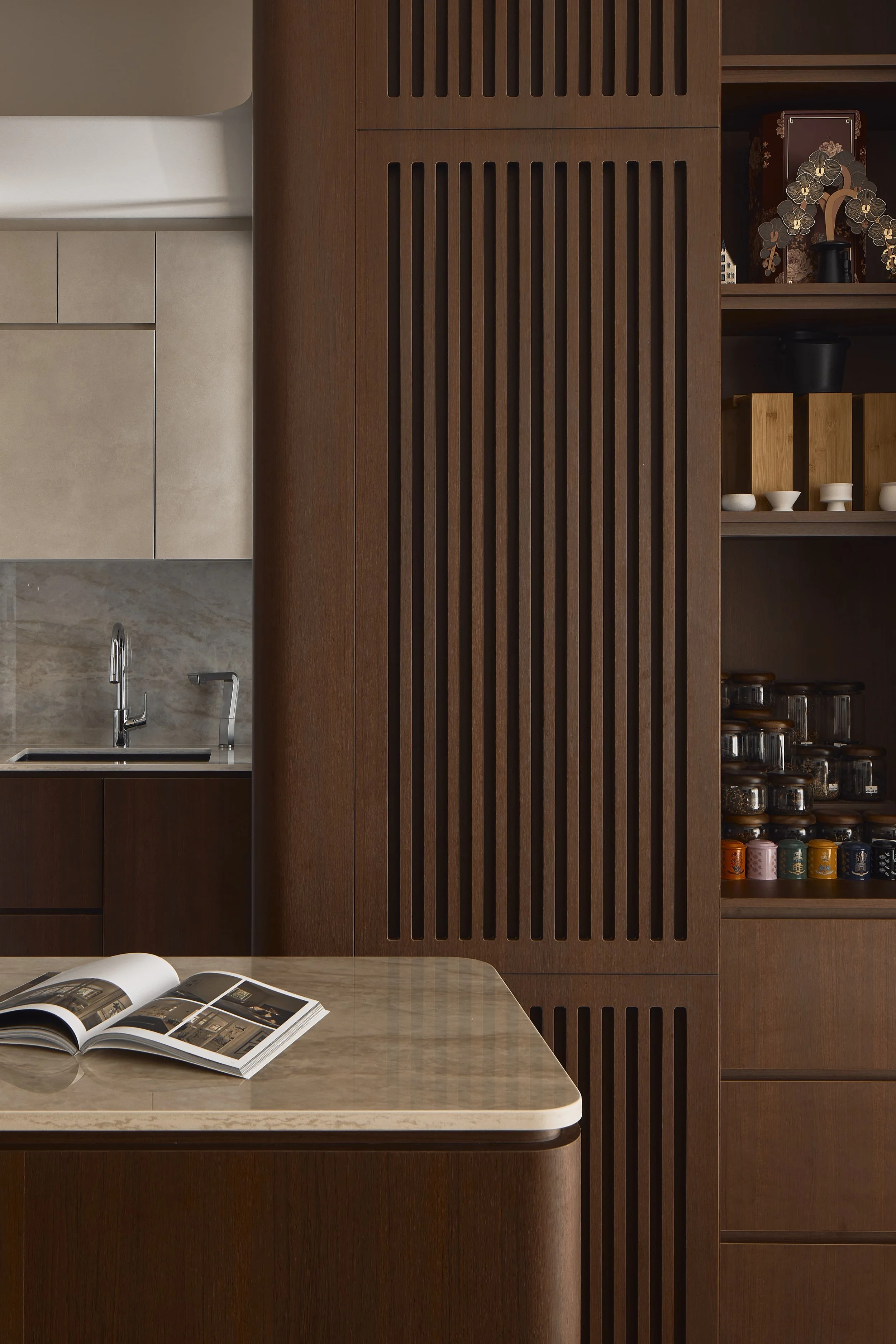
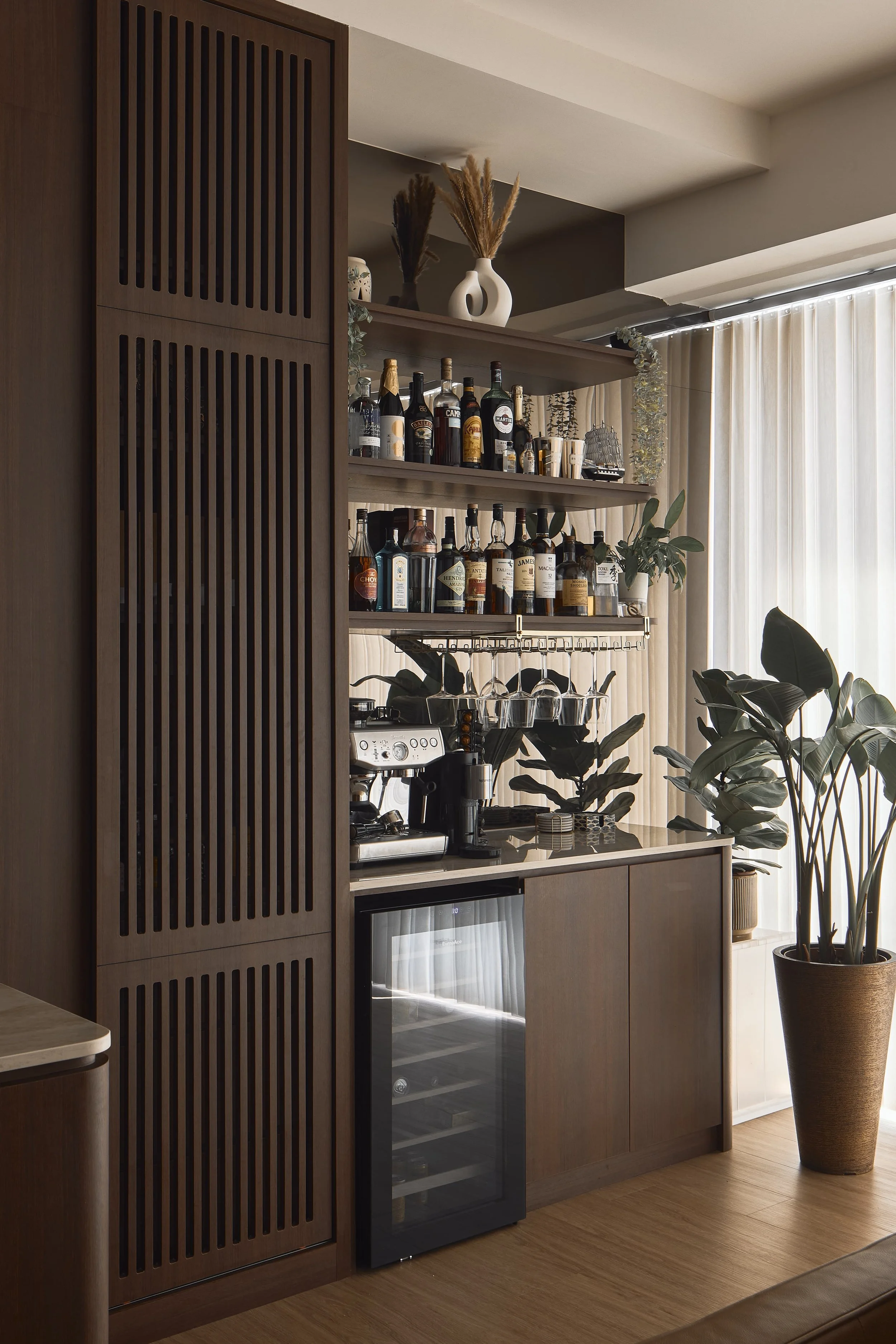
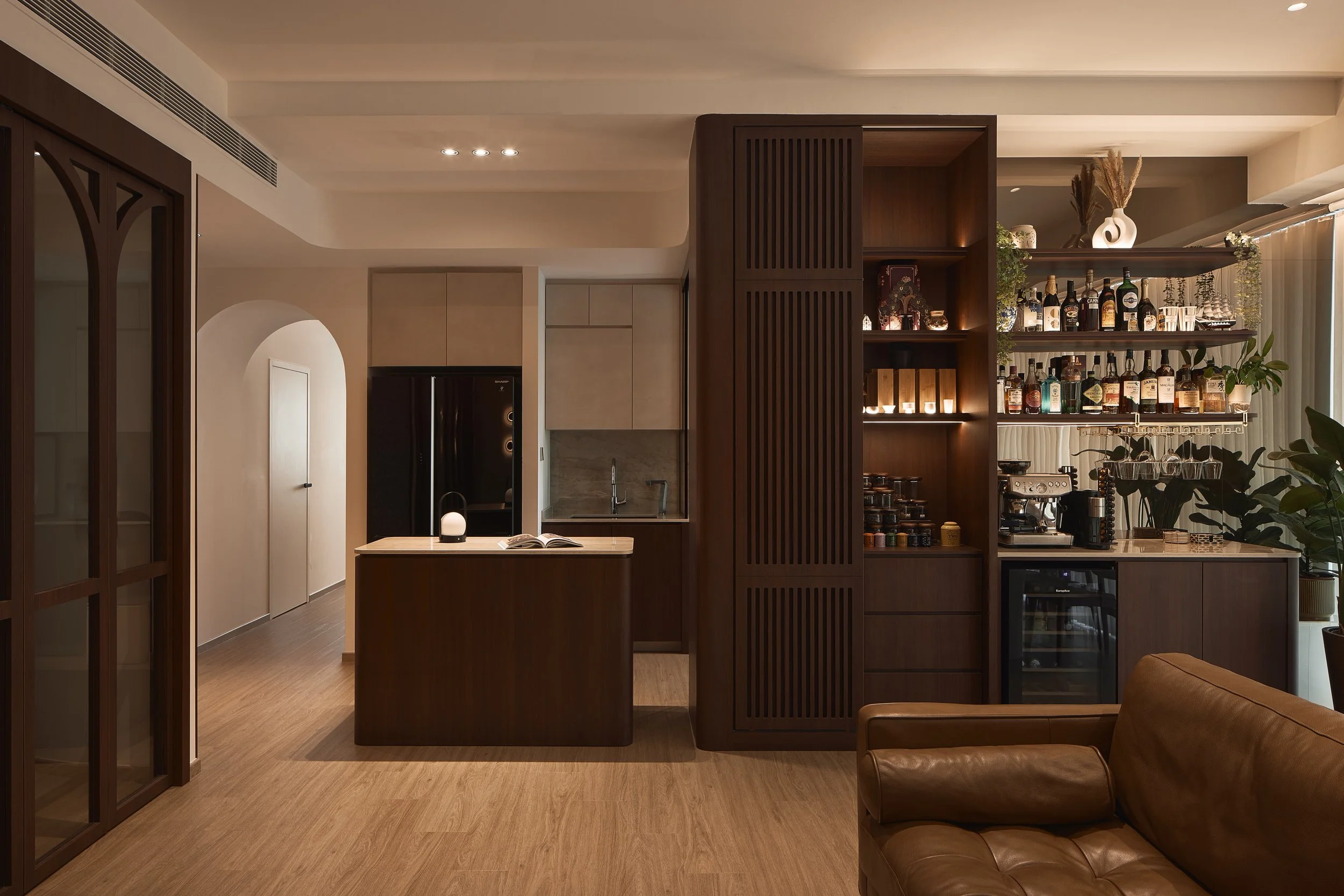
This connection between personal rituals and the natural environment gives the home its resort-like character without relying on overt gestures. The atmosphere comes through in the details, from the objects collected during travel to the changing light across the interiors.
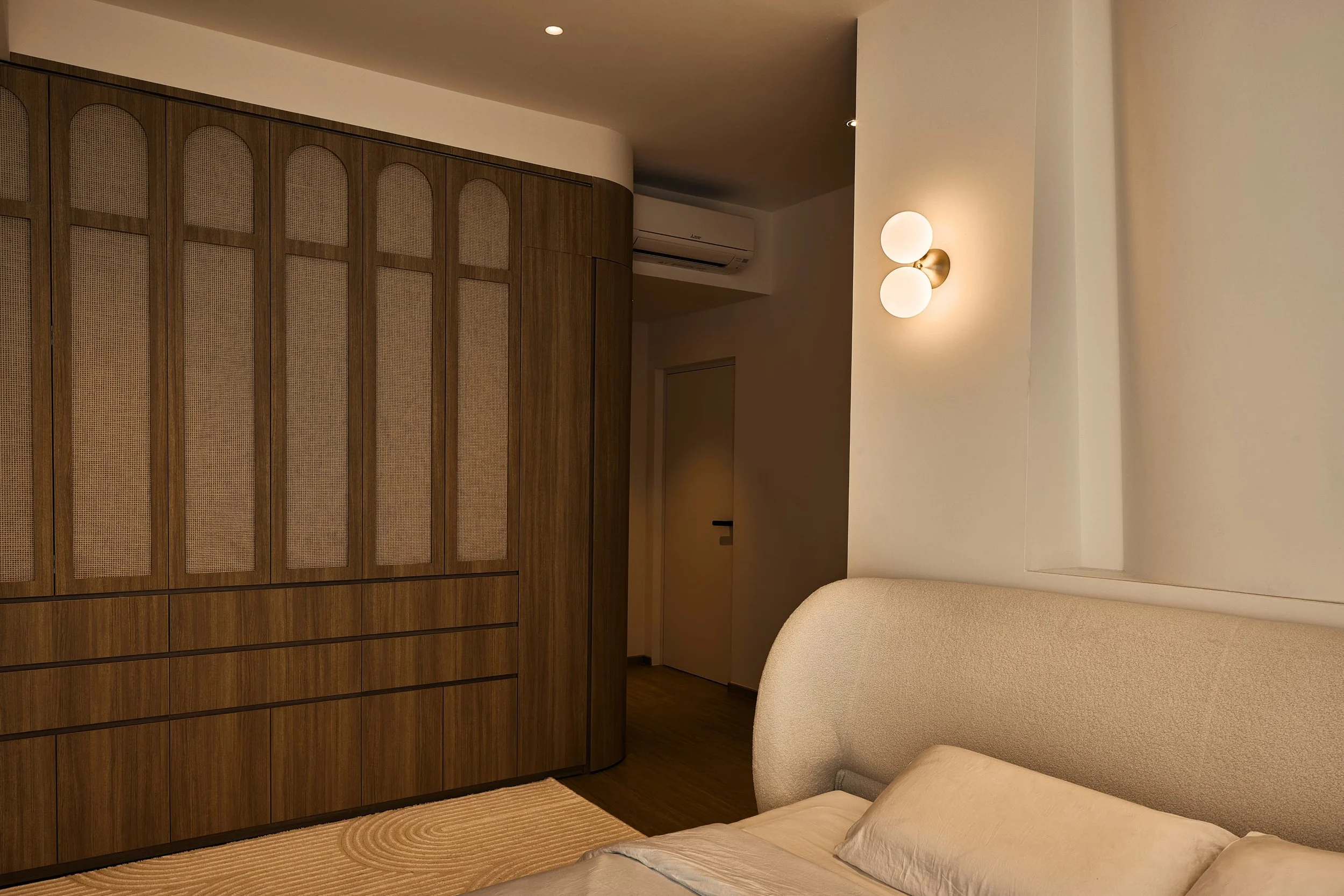
The resort sensibility continues into the master bedroom, where the idea of a handmade rattan canopy became a reference for the room. Warm illumination, woven textures and views towards greenery inform a palette of light-coloured timber and rattan.
The wardrobe doors use woven rattan bi-fold panels, bringing a tactile quality to the room while keeping the overall atmosphere light and organic. Storage was planned around the couple’s individual routines, with separate wardrobe areas giving each person room to move through their morning preparations with ease.
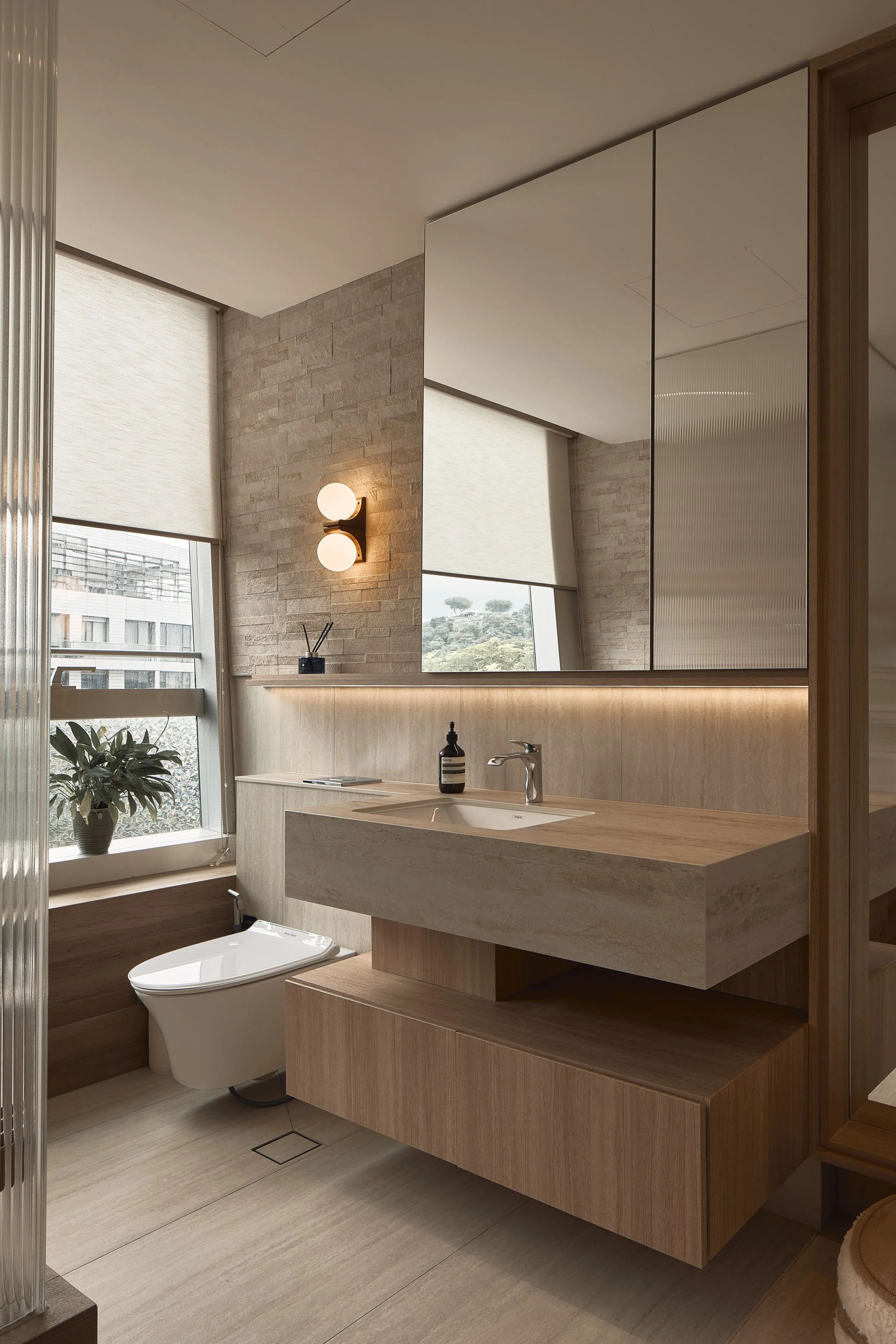
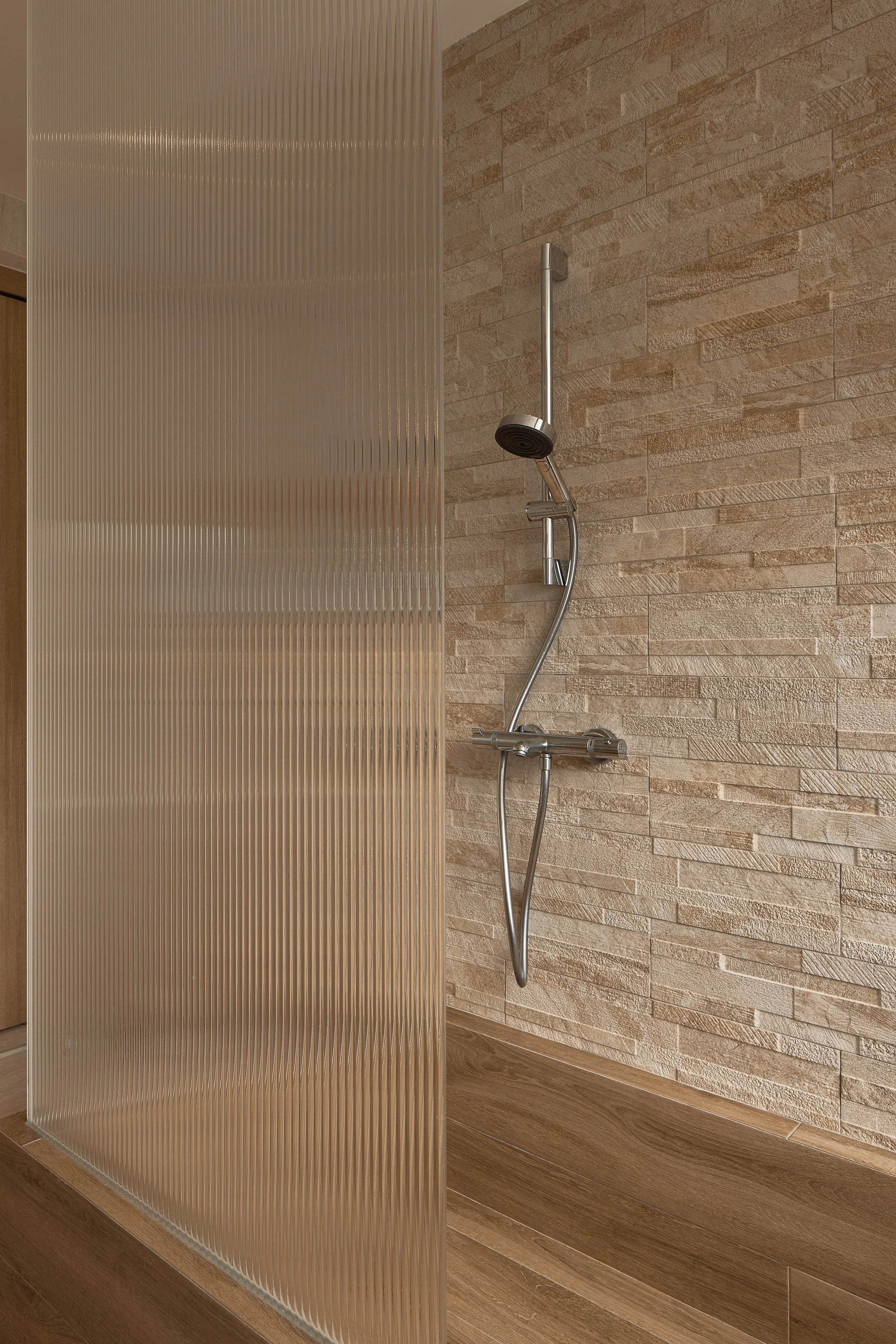
The bathroom takes the holiday-inspired concept further through an onsen-inspired shower. Wrapped in tactile stone and tiles with the appearance of light timber, the bathroom draws on the quiet atmosphere of a traditional Japanese bathhouse. Steam settles across the raw, earthy surfaces, while the material palette changes the temperature and acoustics of the room to create a distinctly immersive experience.
Across the home, the design is guided by an understanding that retreat is not necessarily about escaping somewhere else. It can be created through the way light enters a room, the presence of greenery, the texture of natural materials, or a familiar ritual shared at the end of a long day.