Soma by House & Beyond
In Gurugram, India, Soma is a 7,500 sq ft residence designed for a family of six, where architecture is shaped around shared rituals, private retreat, and the quiet intimacy of daily life, bringing together the parents, their two sons, and their spouses within a home planned for connection, comfort, and long-term adaptability.
Created by House & Beyond, a Gurugram based architectural design studio founded by Ar. Pushpender Arora, the project reflects the studio’s integrated approach to residential architecture and interior design, where spatial planning, functionality, environmental awareness, and emotional sensitivity are considered as part of one cohesive design process.
Known for crafting voluminous, light filled homes that respond to the evolving needs of modern Indian families, House & Beyond approached Soma through the family’s desire for spaces to live, to be, and to grow, translating this brief into a home that allows collective life, personal retreat, and leisure to exist with equal clarity.
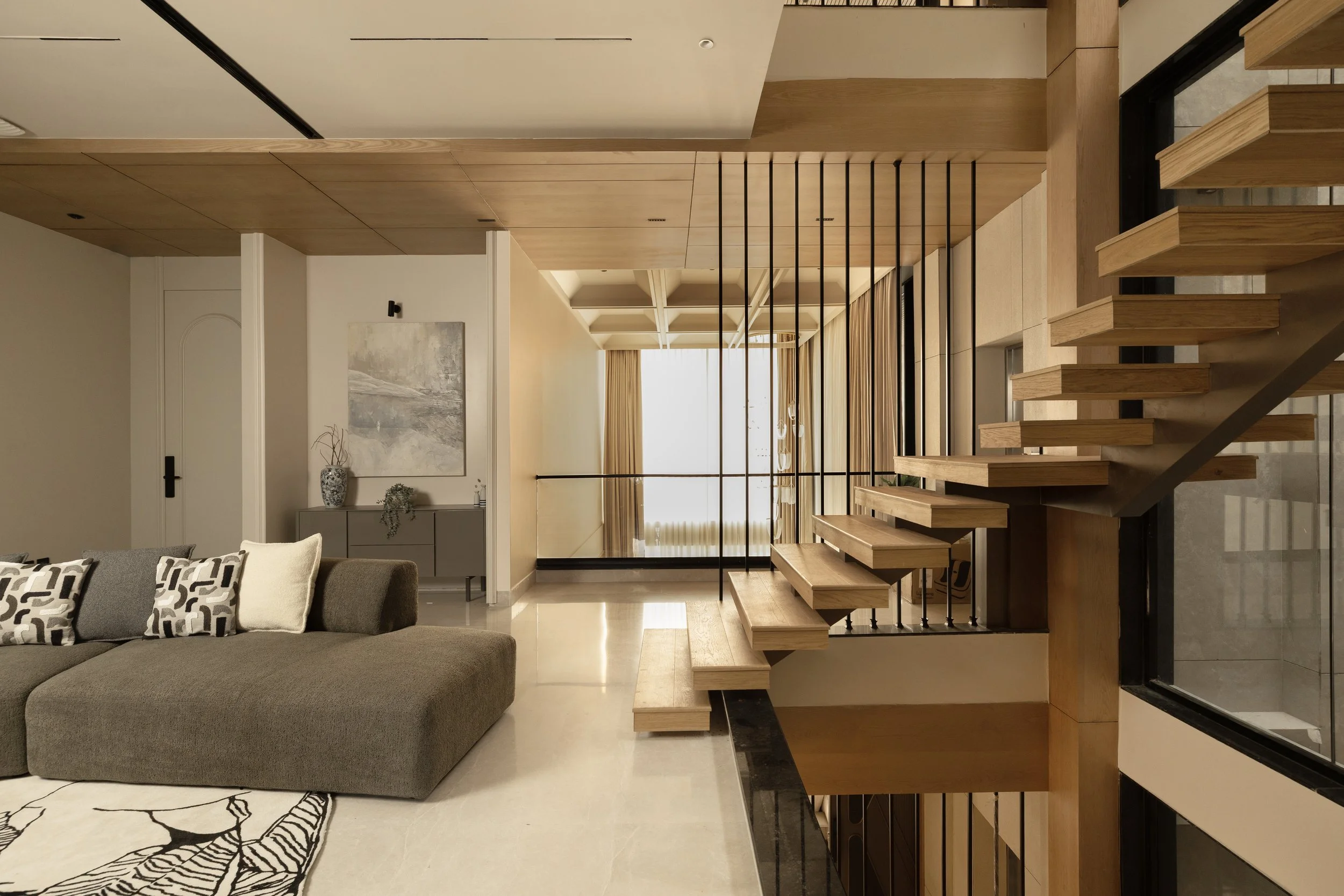
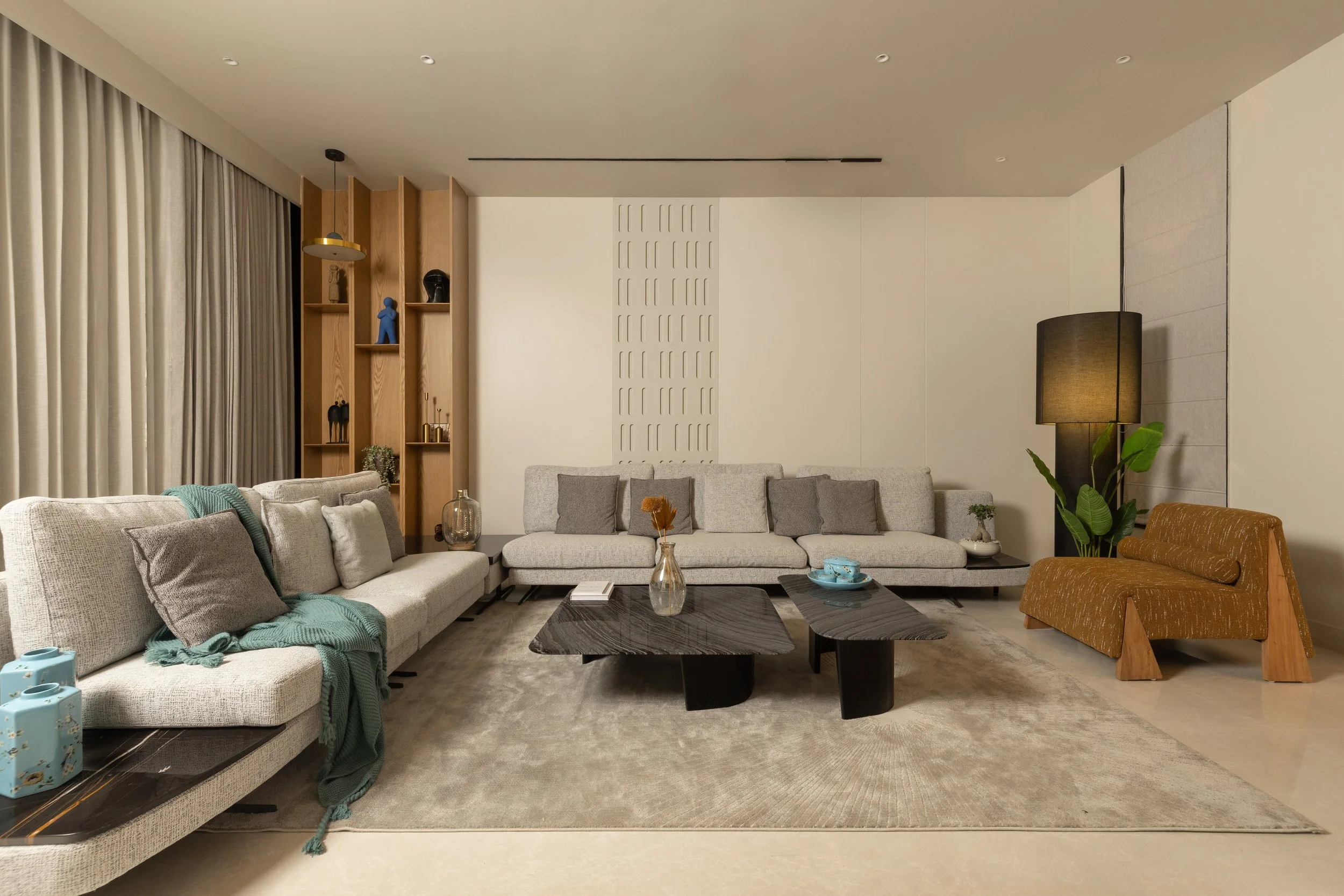
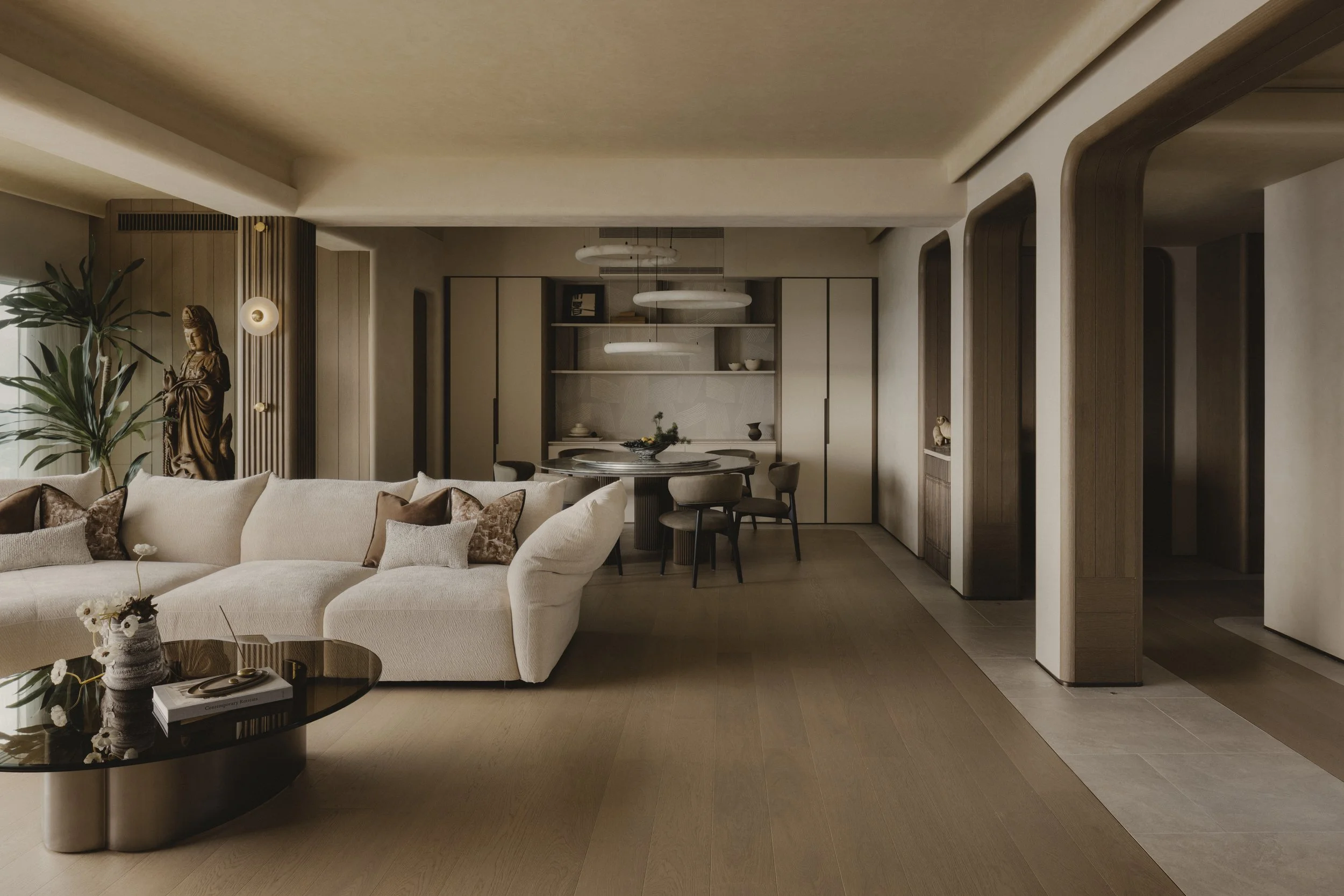
The residence is organised through a disciplined grid based system, planned across both horizontal and vertical planes to create a clear progression through the house. The ground floor is dedicated to shared life, bringing together the formal drawing room, family lounge, dining area, and kitchen as connected social spaces that support conversation, hospitality, and everyday rituals. The first floor moves into a calmer private realm, where bedrooms and personal areas are designed for rest and reflection, while the upper level introduces leisure and recreation, allowing the home to continue serving the family as needs change over time.
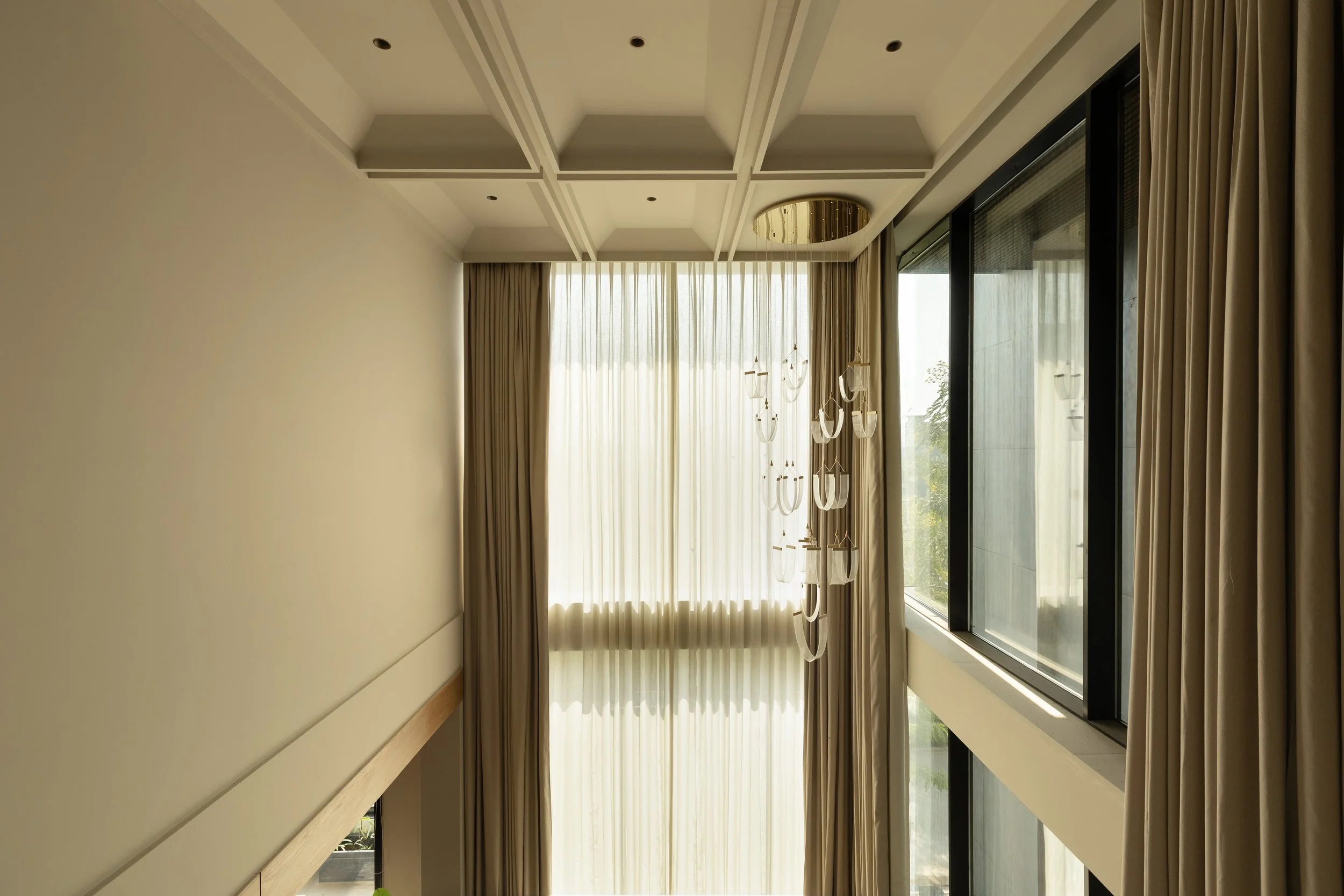
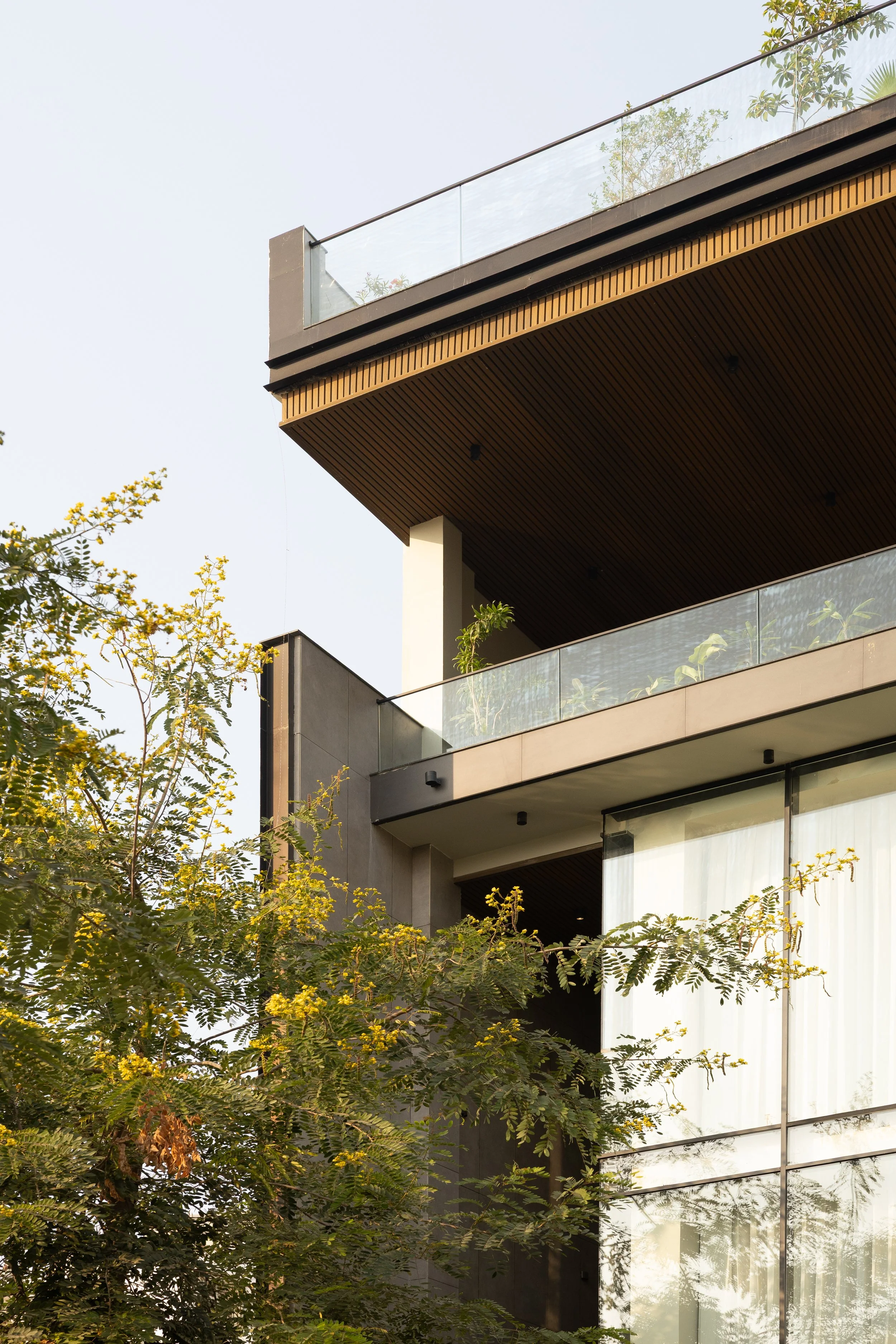
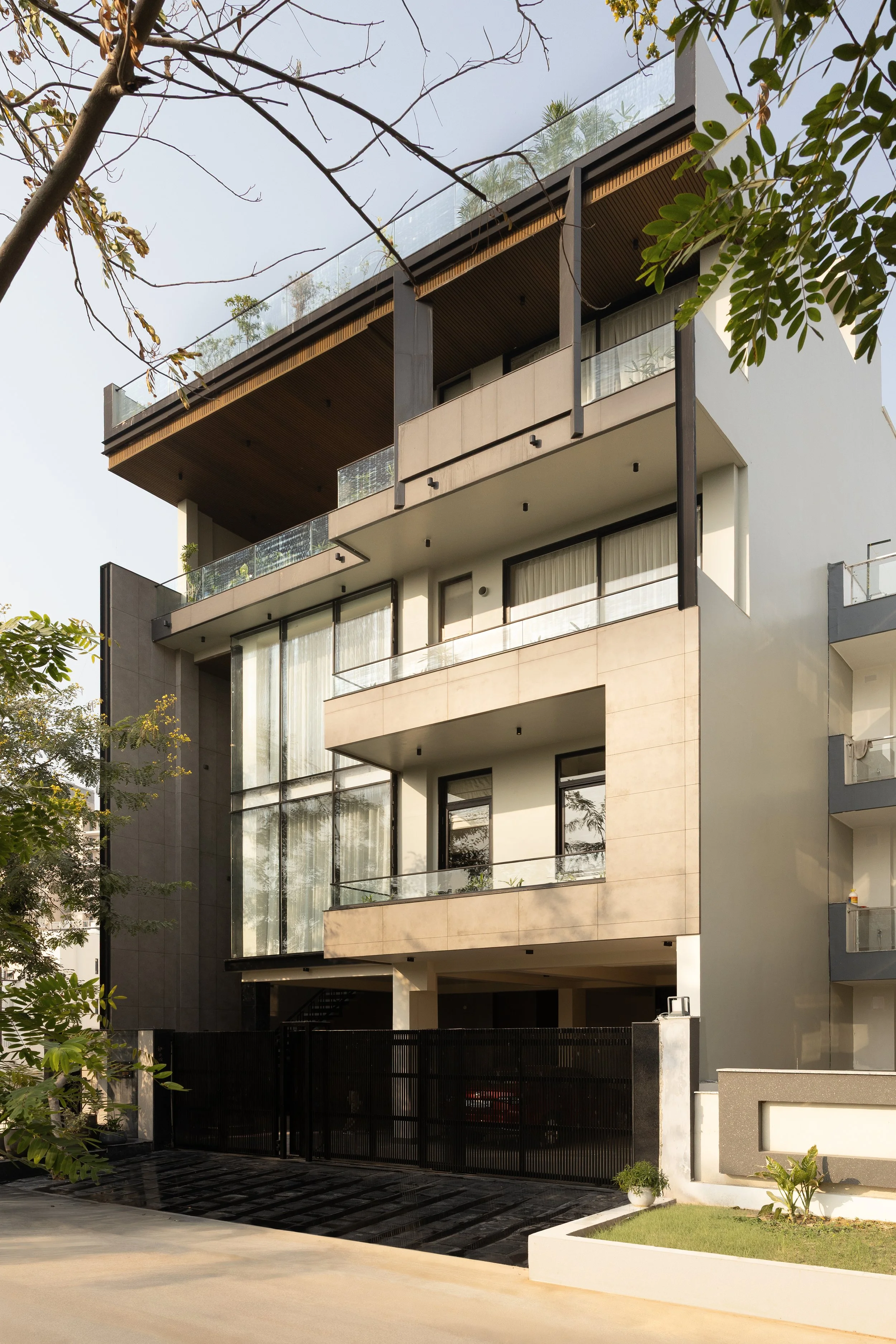
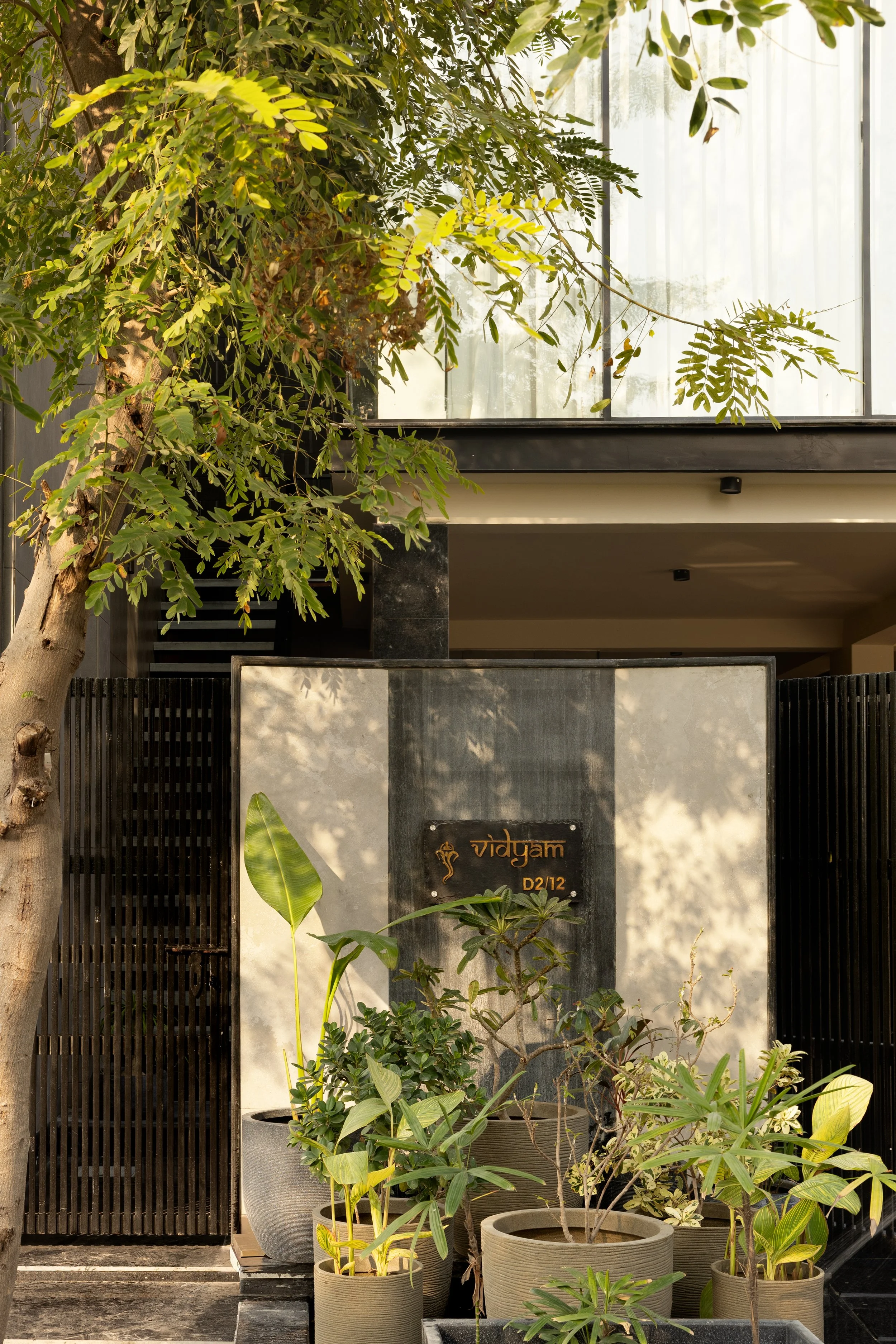
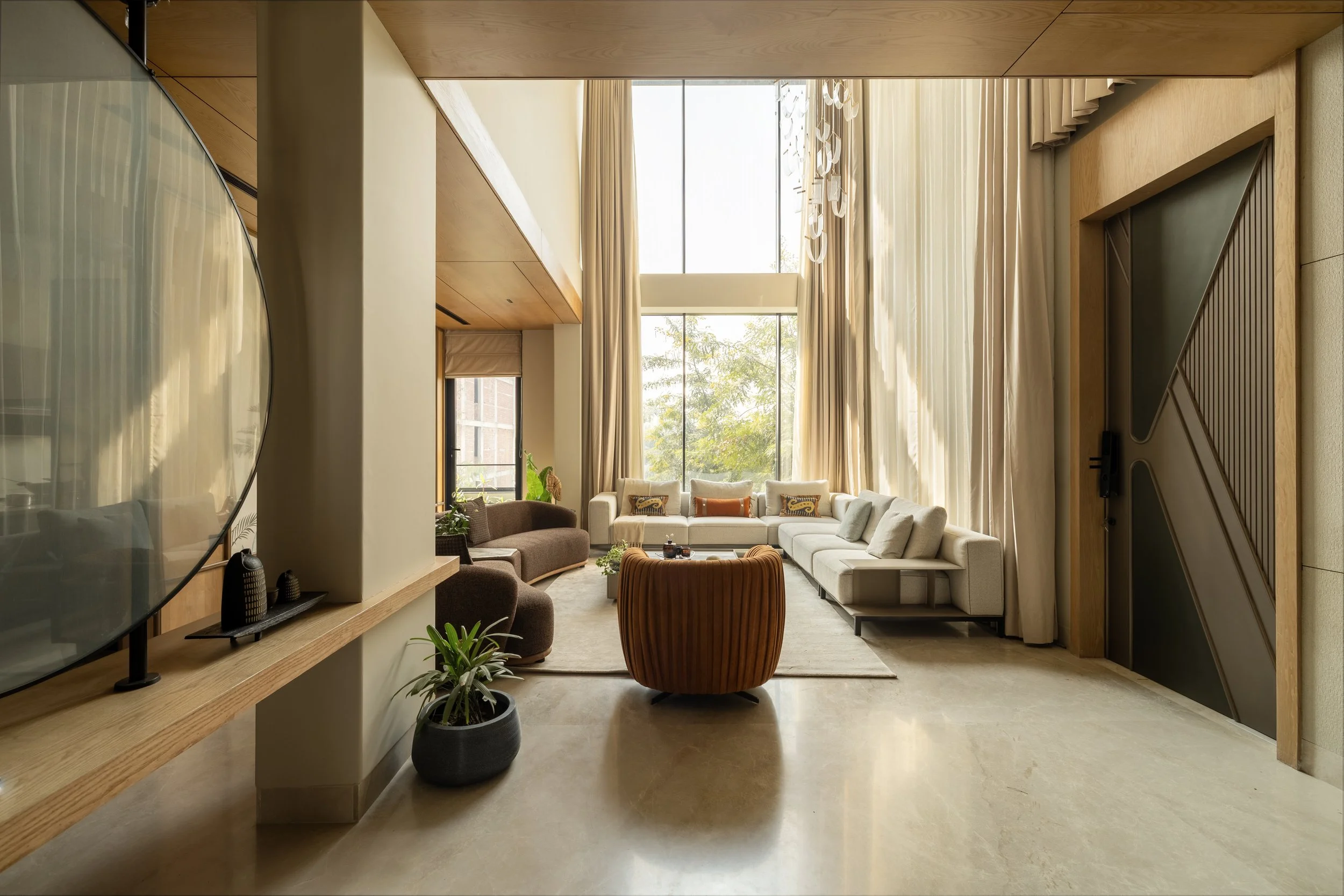
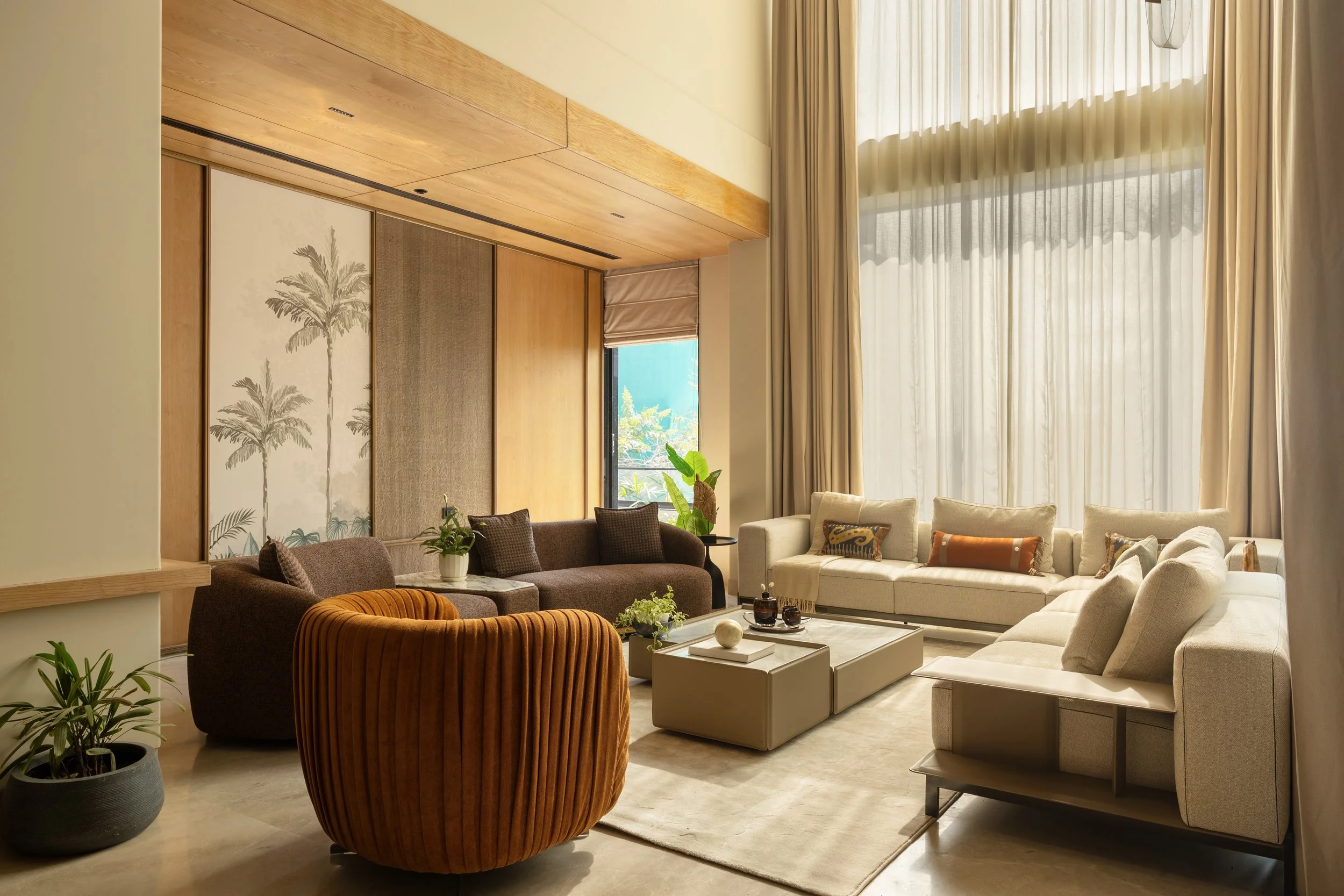
On the ground floor, the double height living area establishes a sense of openness without excess, giving the home a generous spatial presence while keeping the atmosphere warm and grounded. A full height glazed frontage rises across two levels and draws daylight into the interiors, yet its exposure to the Delhi NCR climate is softened by the existing Kassod tree on site, whose canopy filters sunlight through the seasons and helps protect the home from harsh heat.
As the tree remains green for much of the year and turns yellow in late summer and autumn, it brings a changing natural presence into the interiors, allowing light, shade, and seasonal colour to become part of the family’s daily experience. This relationship between glazing and landscape gives the living area a quiet grandeur, where scale is balanced by softness and daylight is moderated through nature.
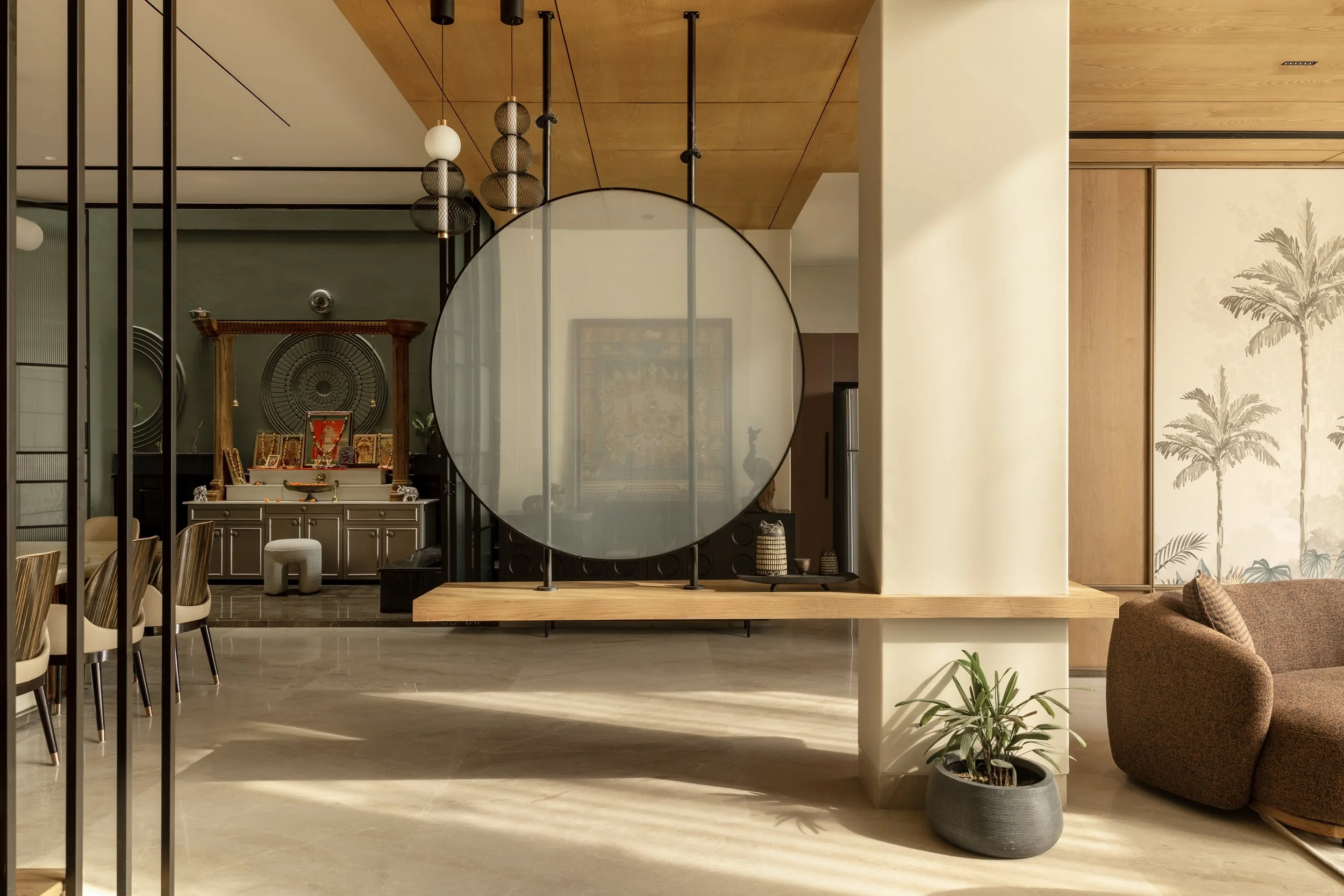
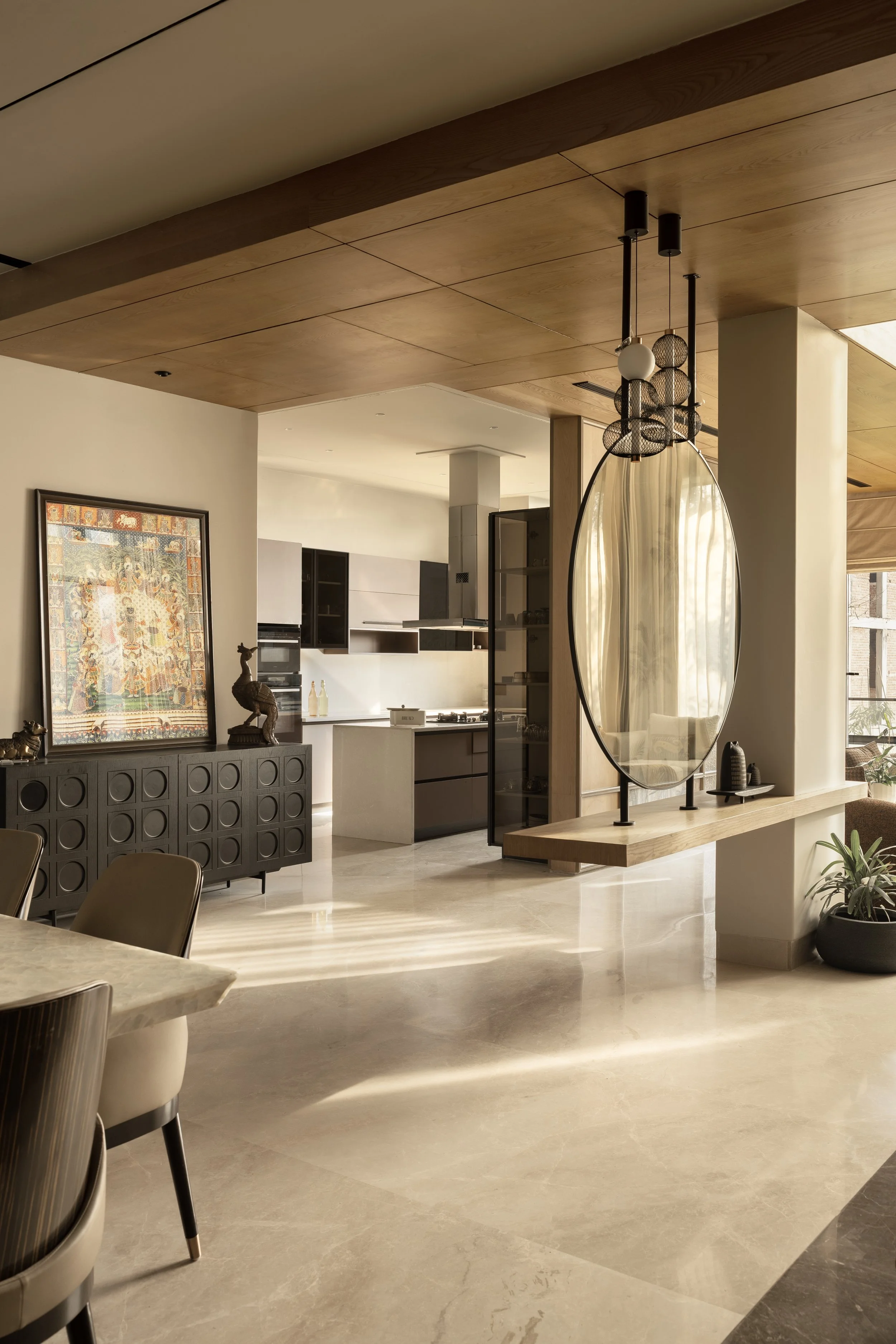
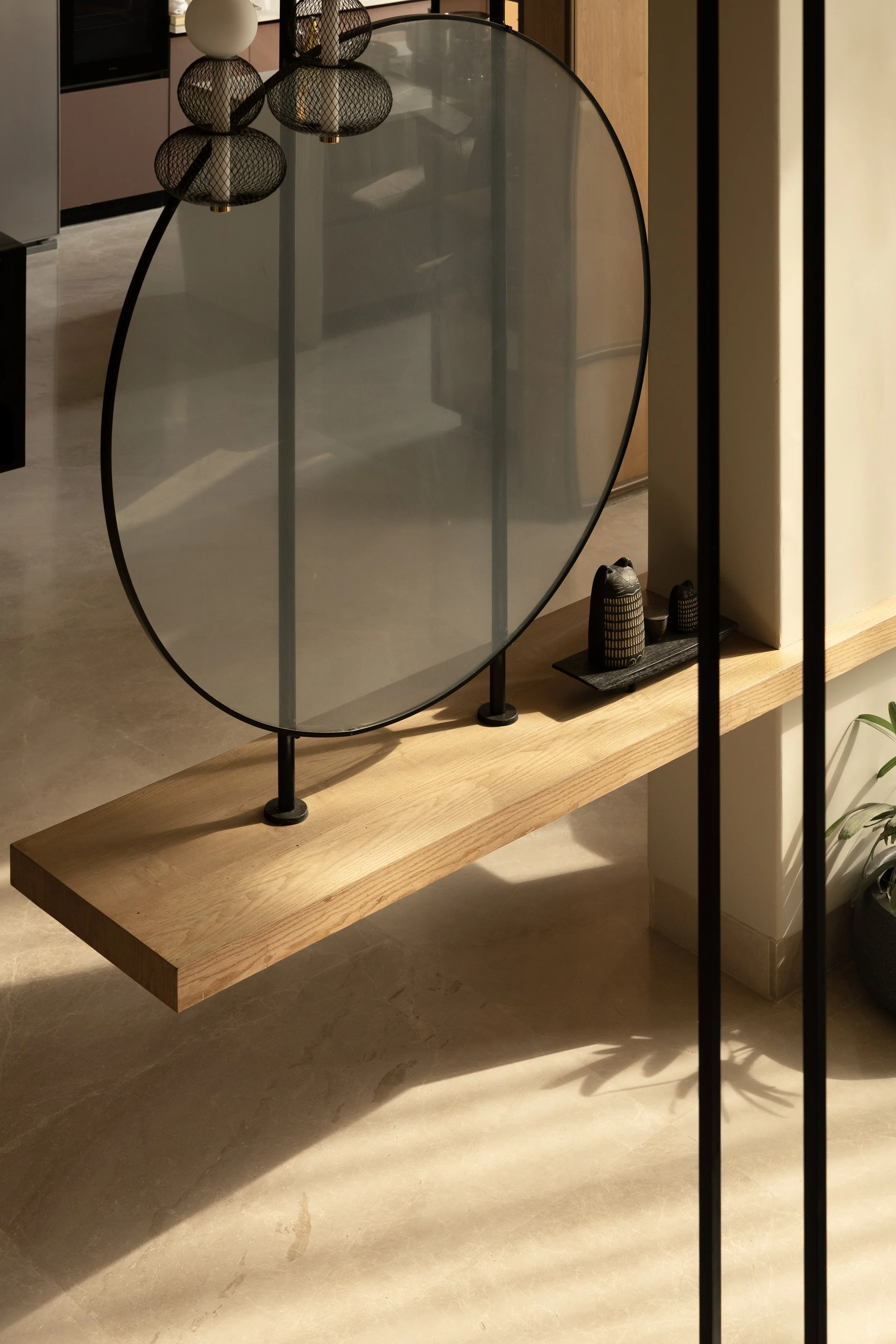
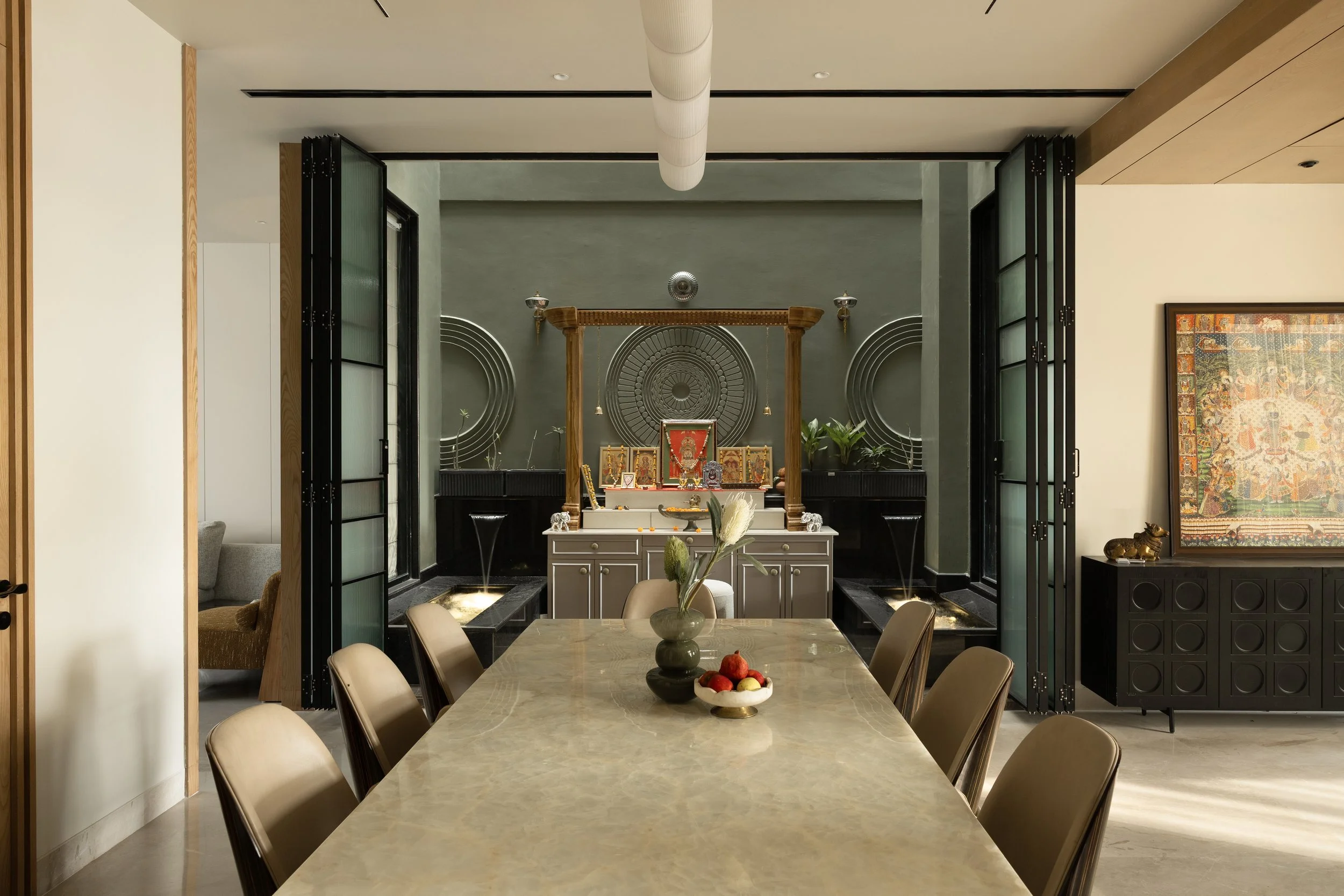
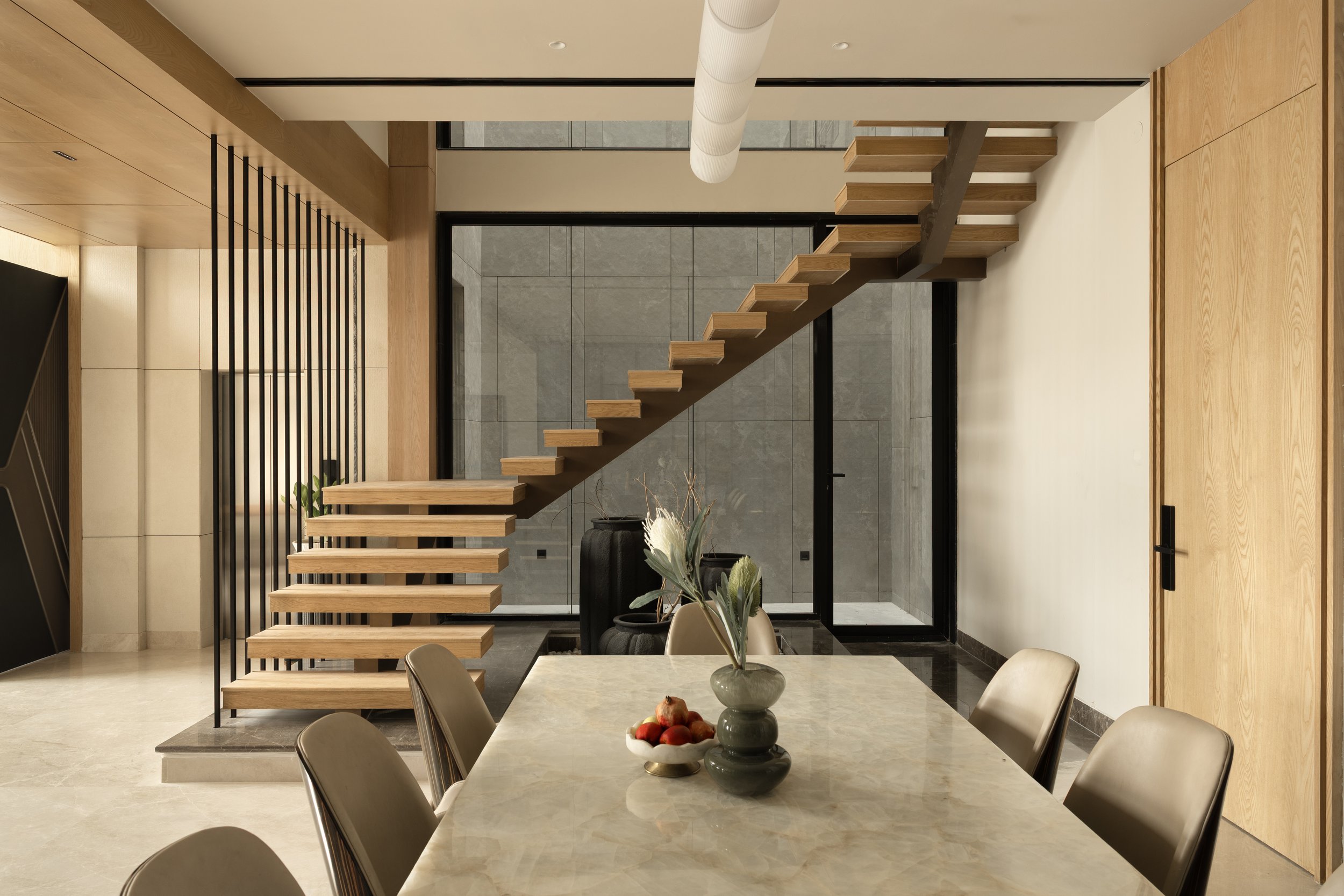
A simple partition helps organise the open plan while preserving visual continuity across the ground floor, allowing the social spaces to feel connected without losing their individual purpose. As the ceiling height lowers, the dining area sits between two courtyards and becomes the everyday anchor of family life, while the kitchen, planned with an island counter, is placed behind the partition wall to maintain practical separation while staying visually linked to the rest of the floor.
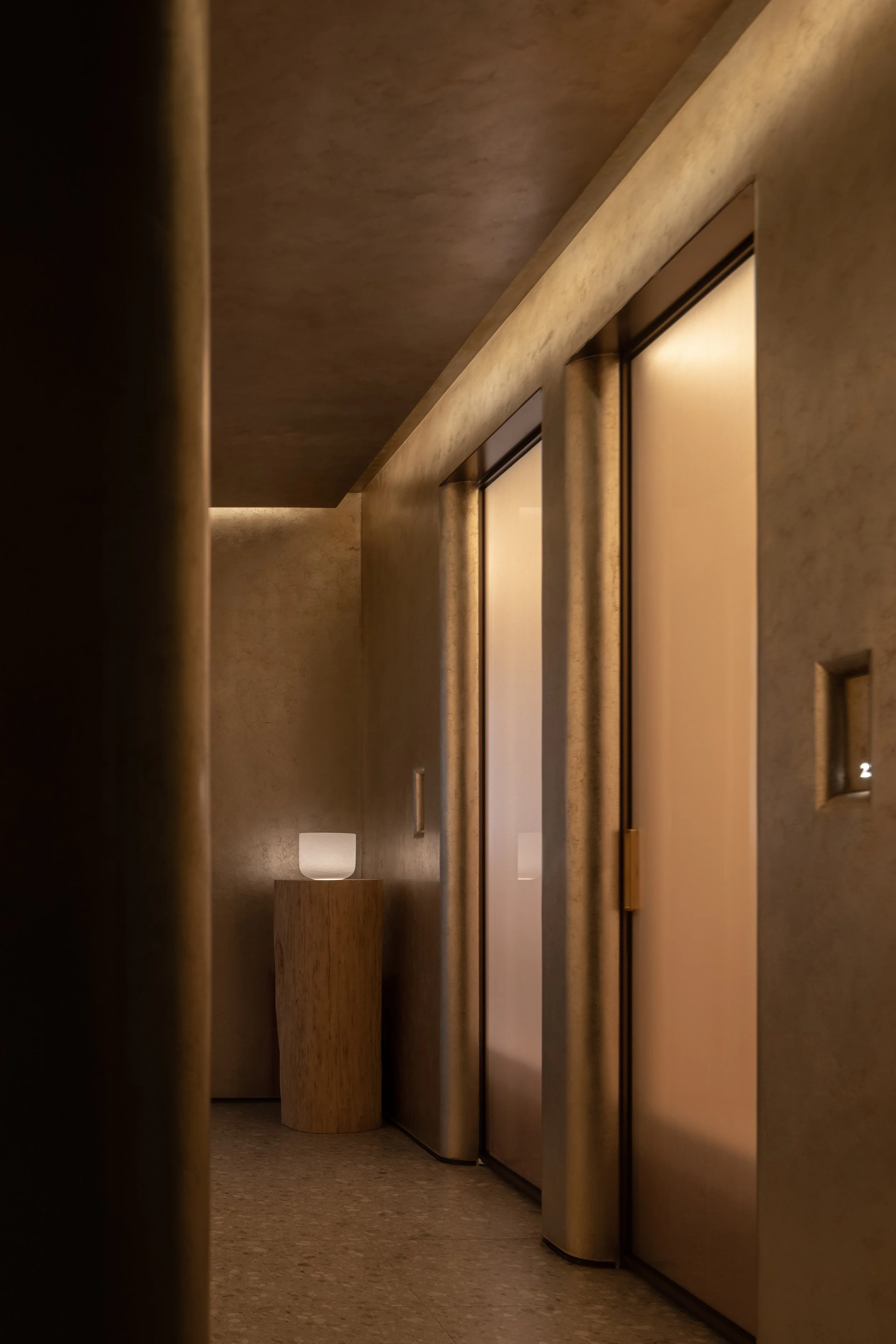
One of the courtyards holds the family temple, creating a serene spiritual pause within the home and placing prayer within the fabric of daily living. Designed with symmetry, tranquillity, and contemporary restraint, the mandir is framed by water features on both sides, allowing the sound of water, the presence of daylight, and the openness of the courtyard to shape a contemplative setting for reflection and ritual.
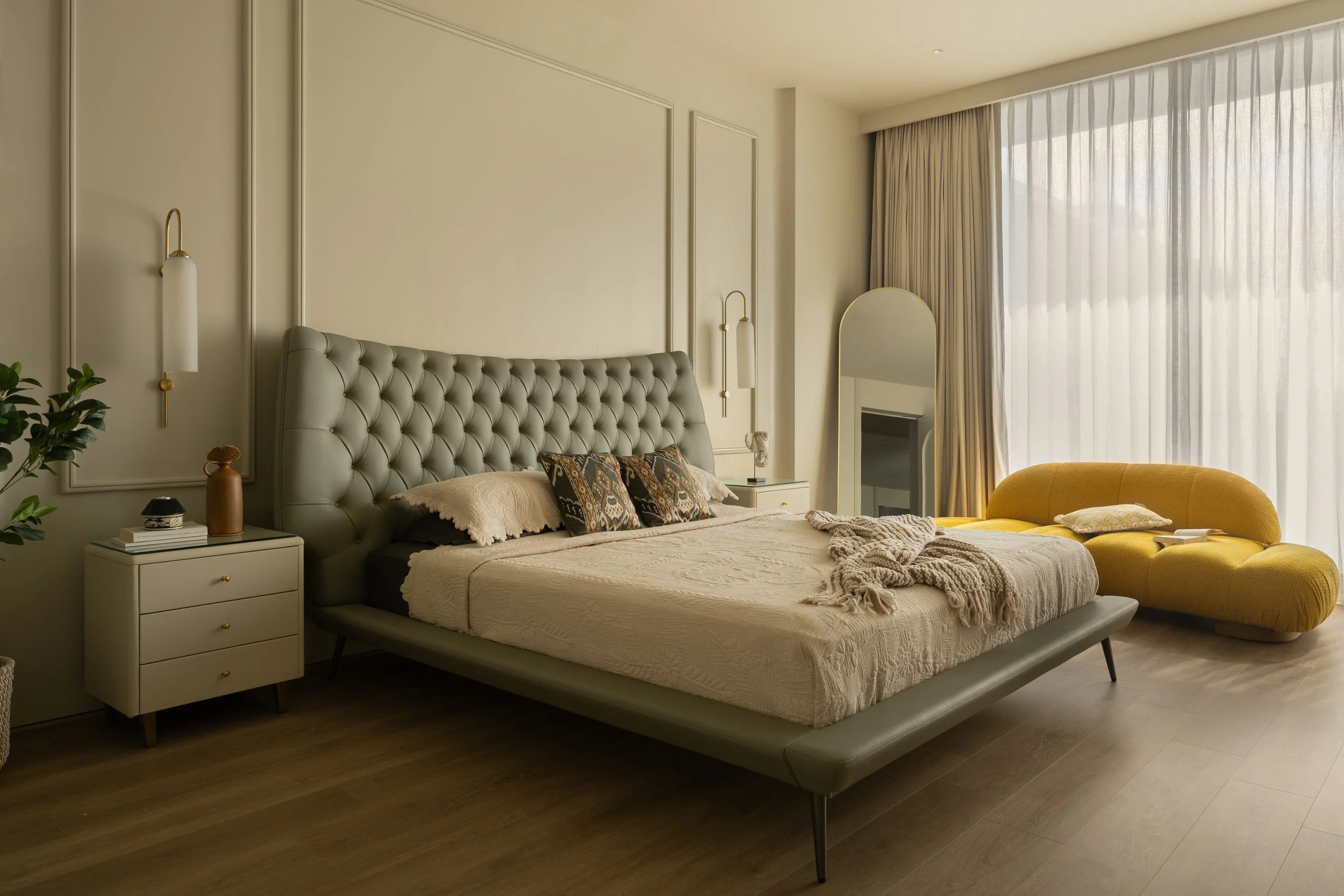
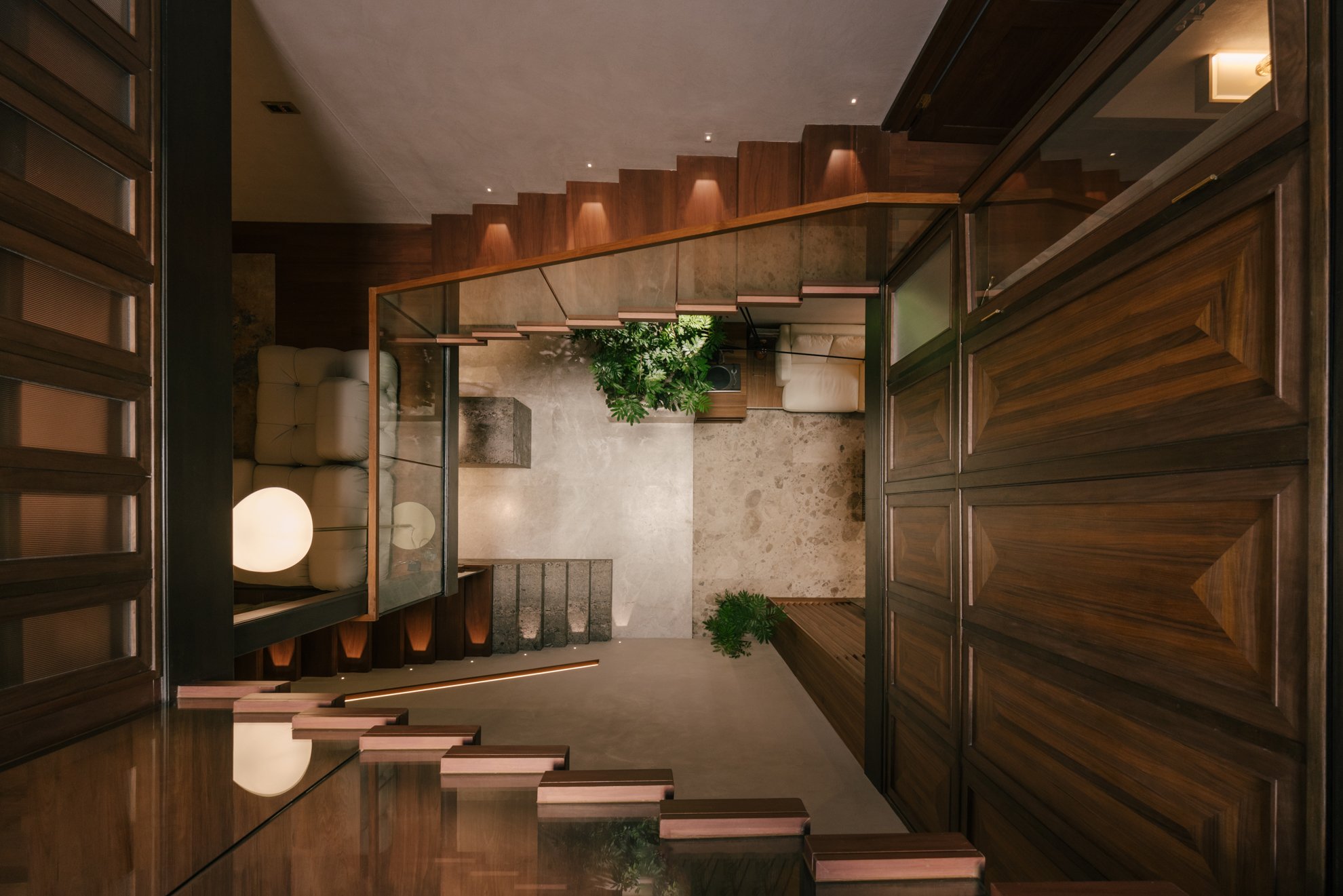
The first and second floors continue the home’s layered planning, with each level organised around a central lounge that creates an informal gathering space within the more private zones. On the first floor, the bedrooms are paired with a study room, while the second floor combines bedrooms with a recreational room and a semi open terrace facing the street, giving the family a range of spaces for work, retreat, leisure, and shared time.
Across these upper levels, courtyards and balconies remain constant architectural elements, drawing in light and air while softening the movement between rooms. Their presence prevents the private floors from feeling enclosed, allowing the house to remain visually open and naturally connected even as it moves into quieter areas of the plan.
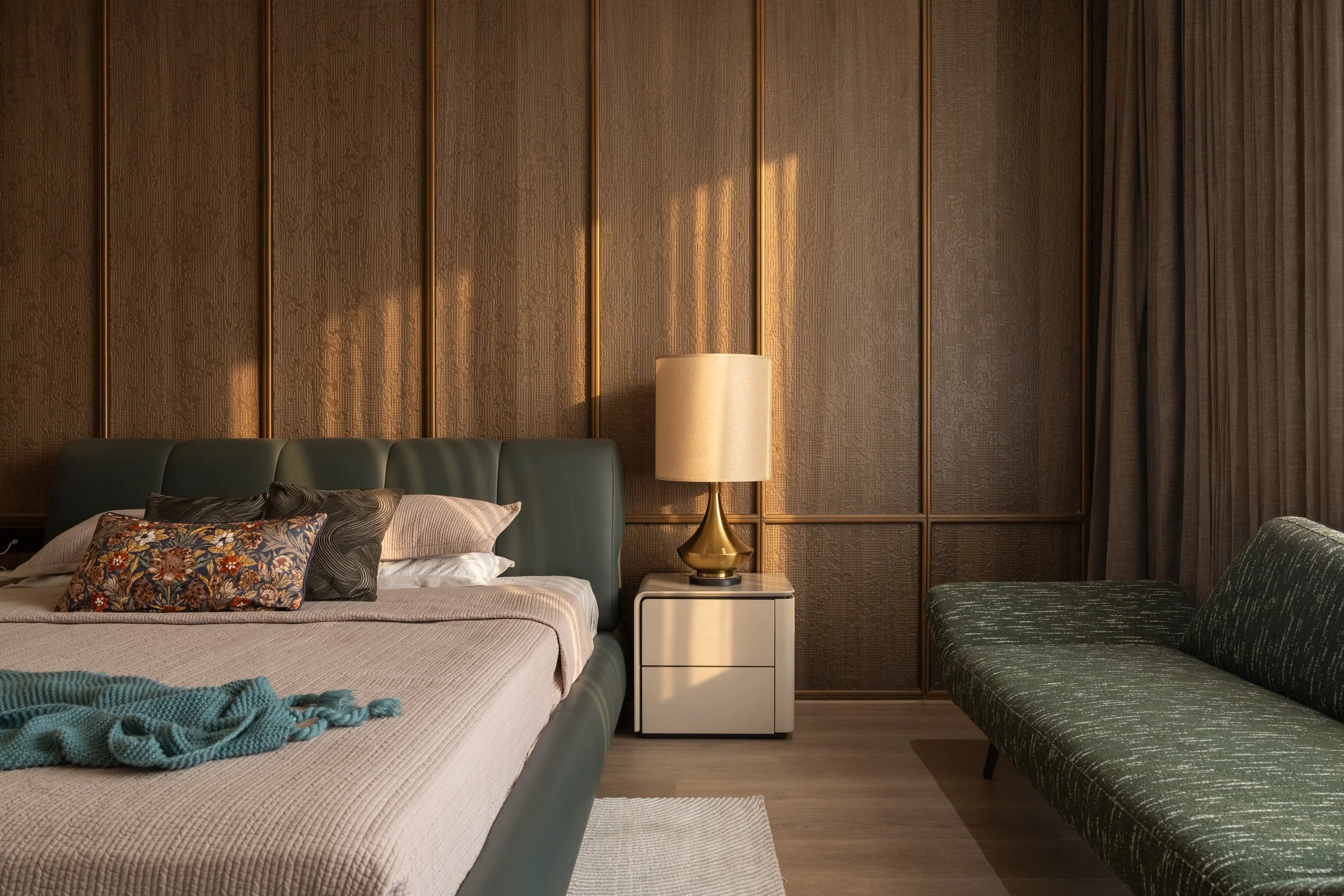
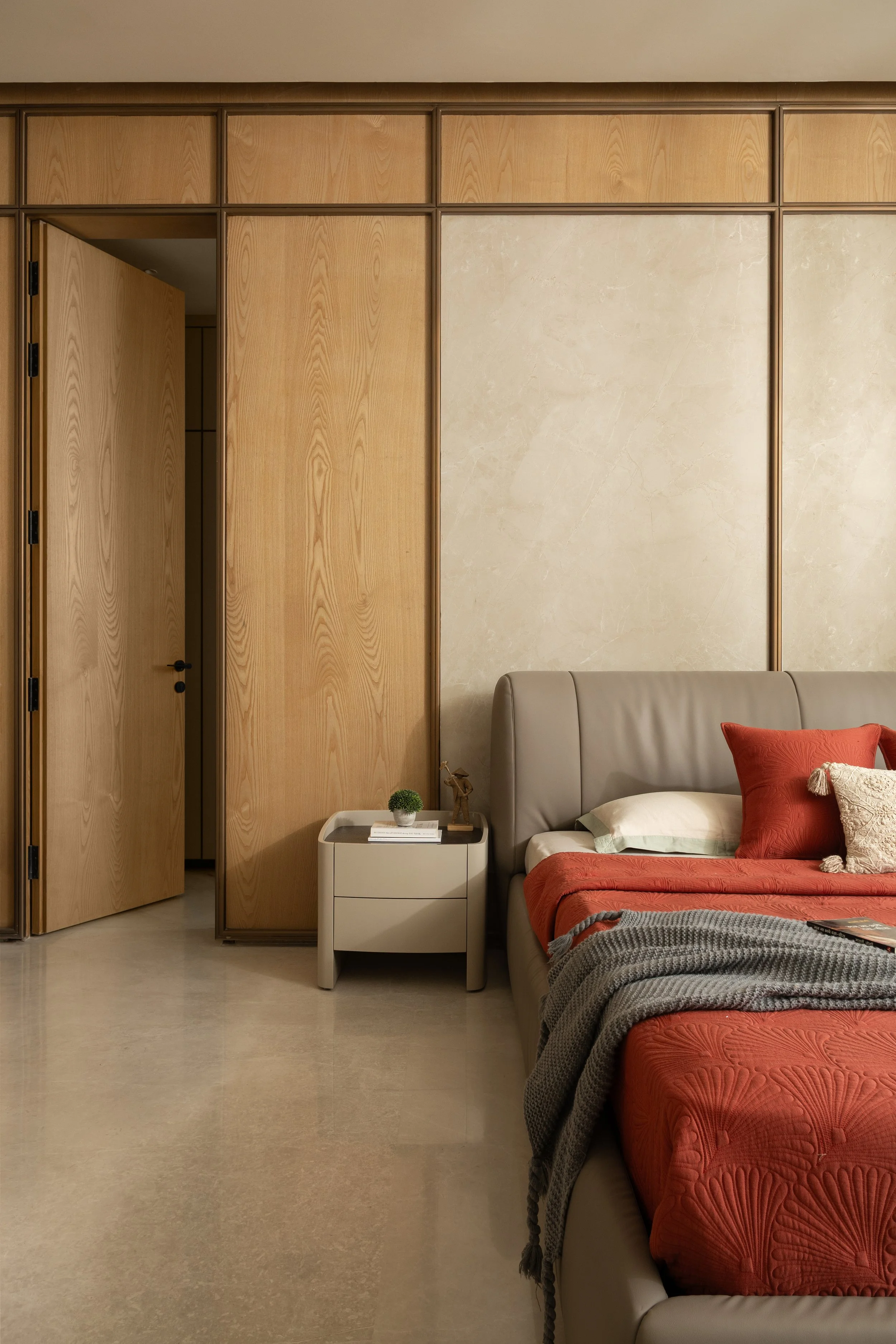
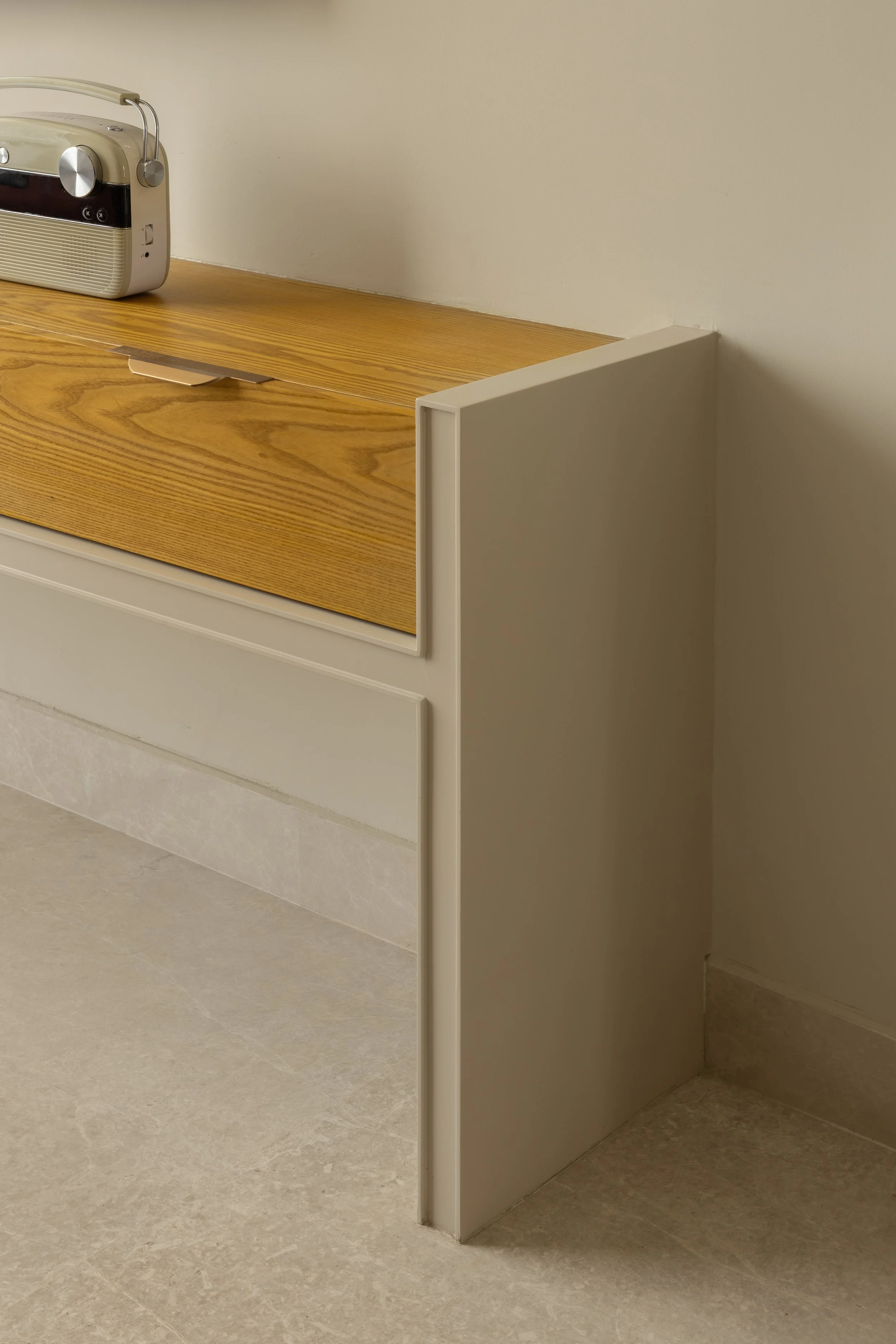
The interiors are held together by a honey oak wood toned veneer, chosen for its ability to feel classic and contemporary at the same time, warm without nostalgia and modern without severity. This material becomes the central anchor of the home, creating continuity across the residence while giving each room enough freedom to carry its own mood, maturity, and relationship to the people who use it.
Around this warm timber language, shades of green, rust orange, and citrus yellow appear with restraint, adding character and freshness without overpowering the calm spatial composition. These accents bring life into the rooms in measured moments, allowing colour to support the atmosphere of the home while keeping the larger design language composed and enduring.