Quiet Distinction by Degree Design
Distinction exists not to divide, but to allow different states of living to settle naturally into their own places. The most meaningful distinctions are not asserted through form, but quietly understood within the flow of everyday life.
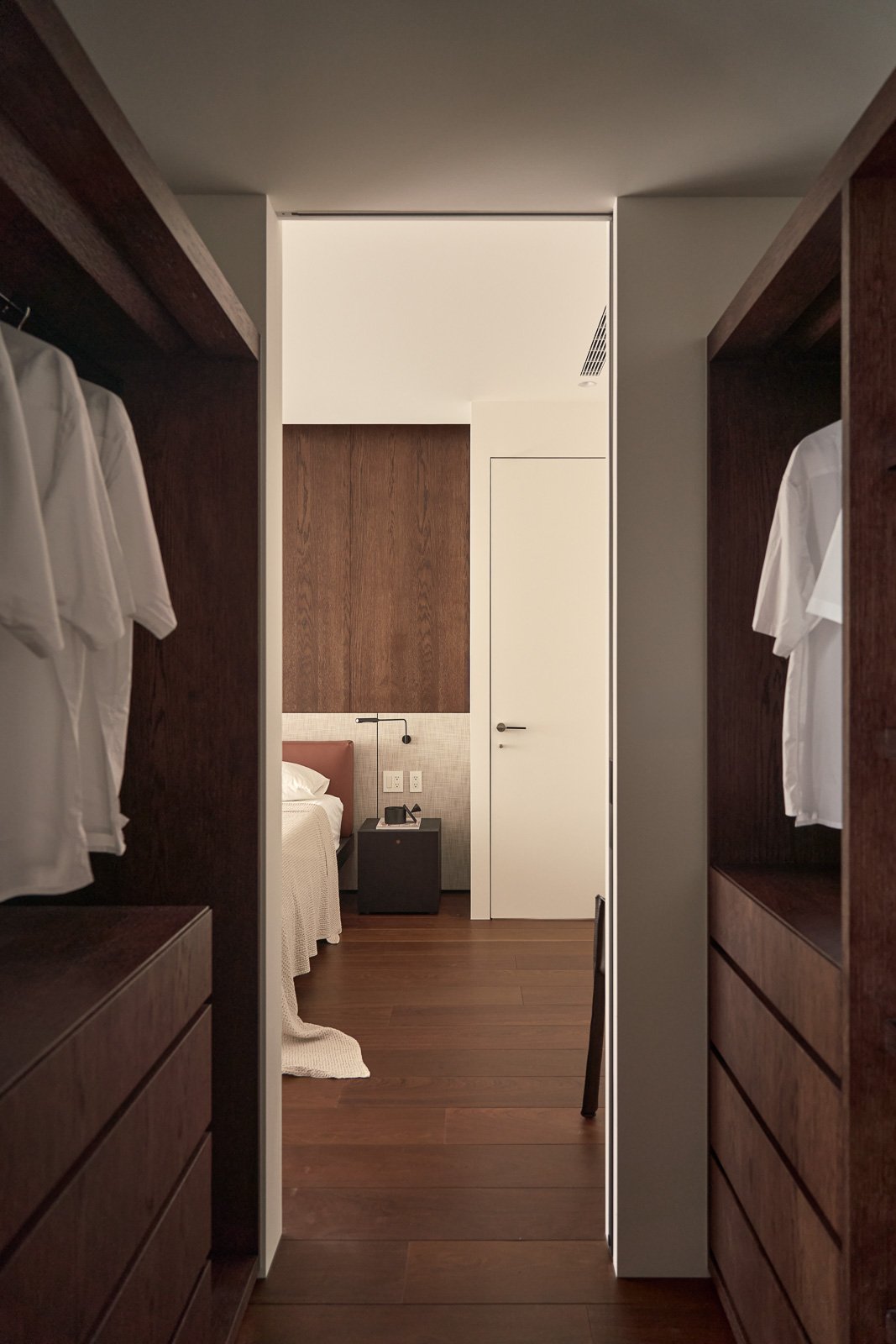
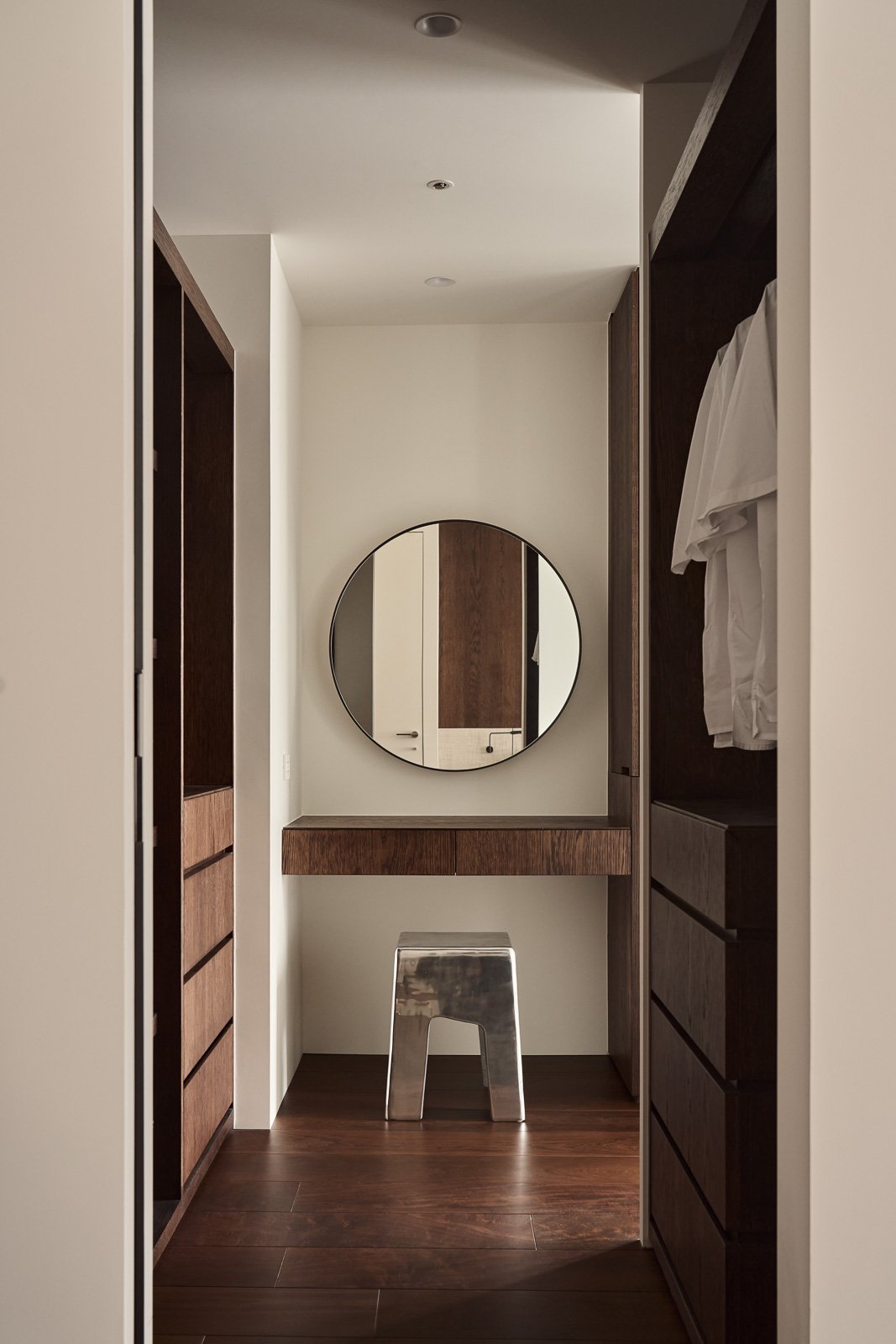
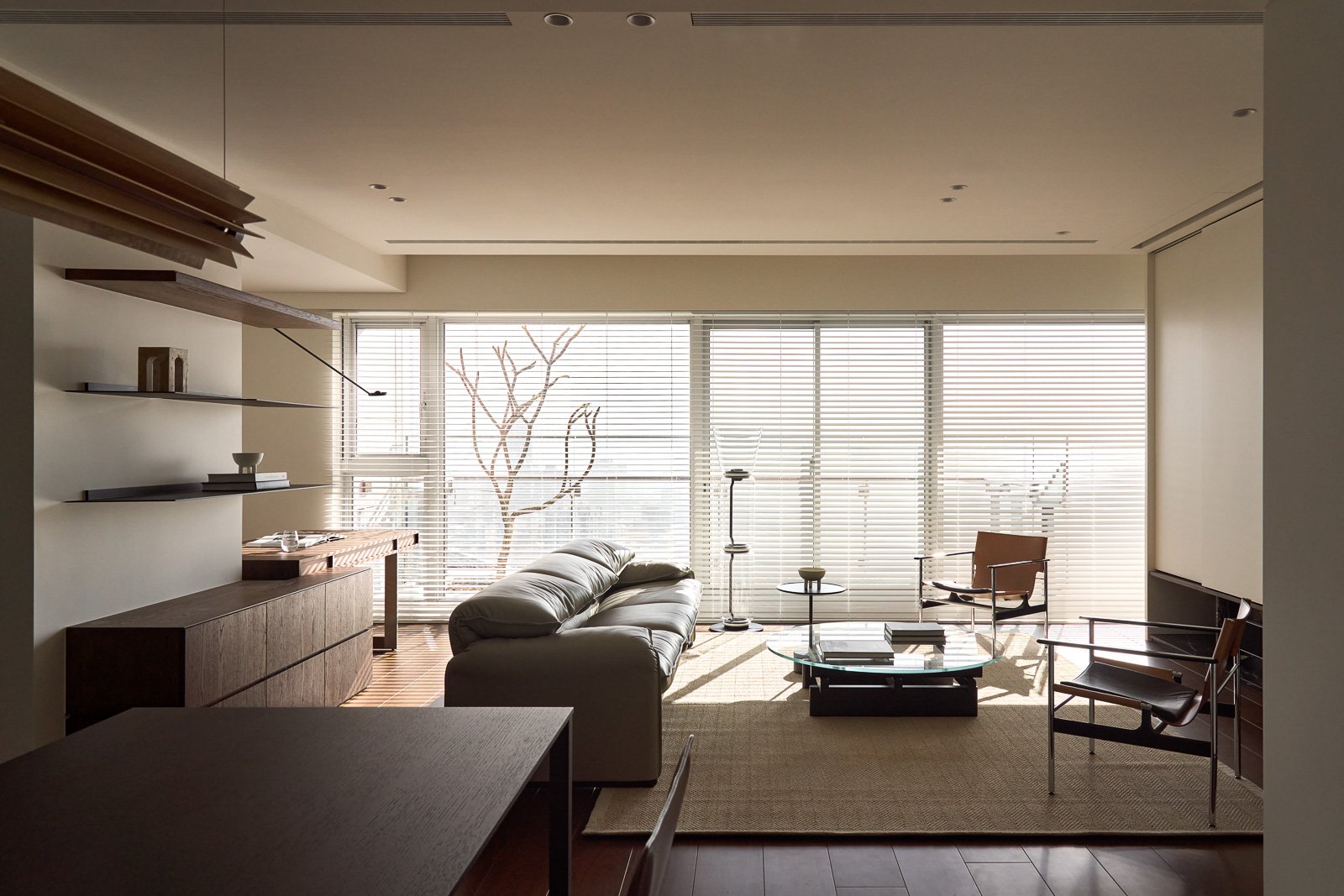
This residence was designed for two people whose schedules rarely align. The brief asked for a home in which each occupant could move through the day without disturbing the other, while still sharing the warmth of a common centre. Degree Design responded with a plan that places the two private rooms at opposite ends of the layout, leaving the living and dining areas joined as a single open volume at the heart of the home. A storage room, two dressing rooms, three bathrooms, and the kitchen are arranged to support this distribution, giving every function a clearly considered place.
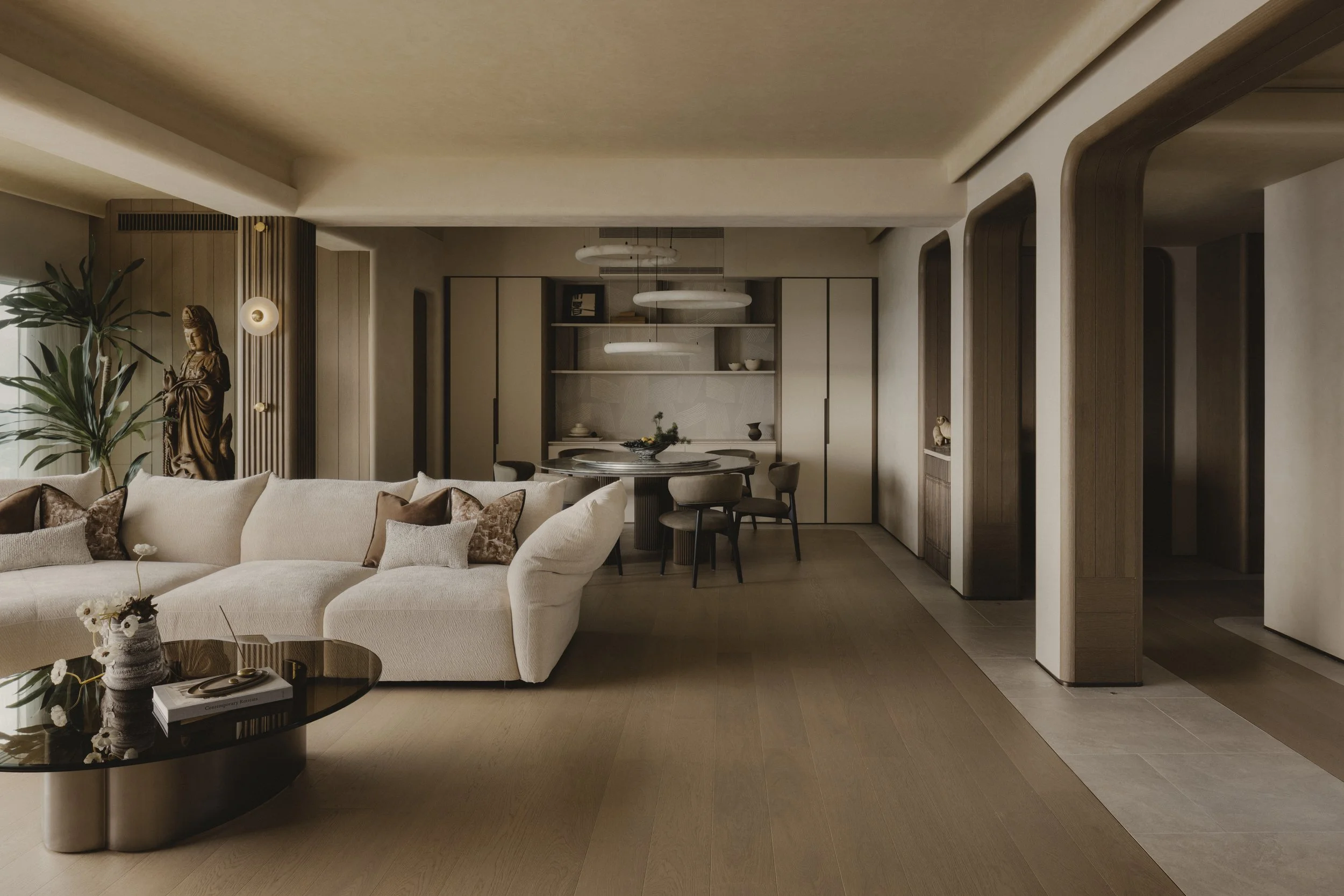
By combining the living and dining areas, the designers created a generous shared zone that remains open and adaptable. Flexibility was treated as a structural quality of the space, not a feature added afterward. Each area was shaped to receive abundant natural light, to hold a strong visual presence, and to perform its intended function with ease.
At the entry, a sliding door links the foyer to the dining area, allowing the threshold to expand or close depending on the moment. A shoe cabinet fitted with a mirrored sliding panel sits alongside, lengthening the line of sight and offering more than one use within a compact footprint. Because the residents seldom watch television and prefer a calm visual field, the television wall was fitted with a sliding panel that conceals or reveals the screen, giving the room a quieter face when the device is not in use.
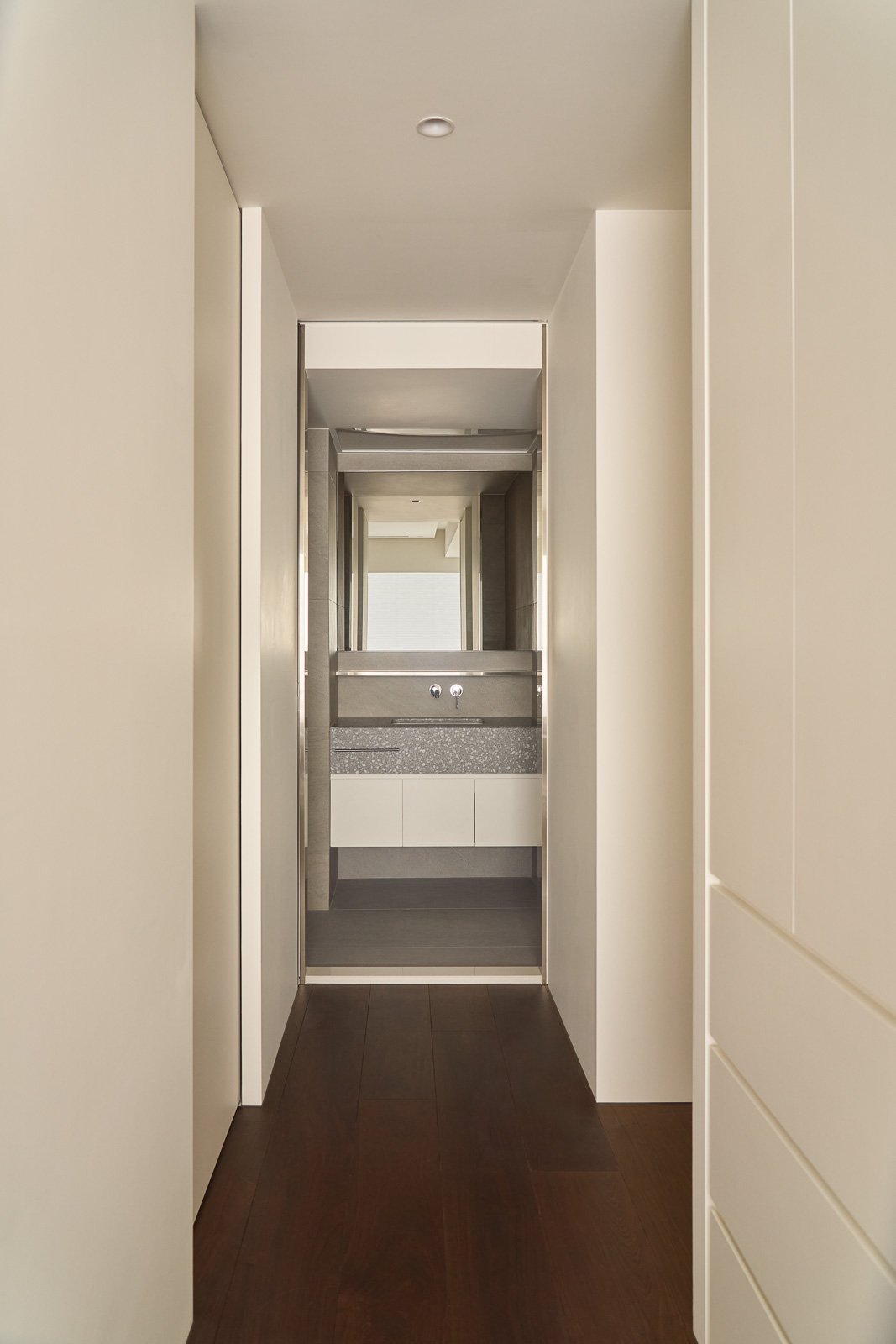
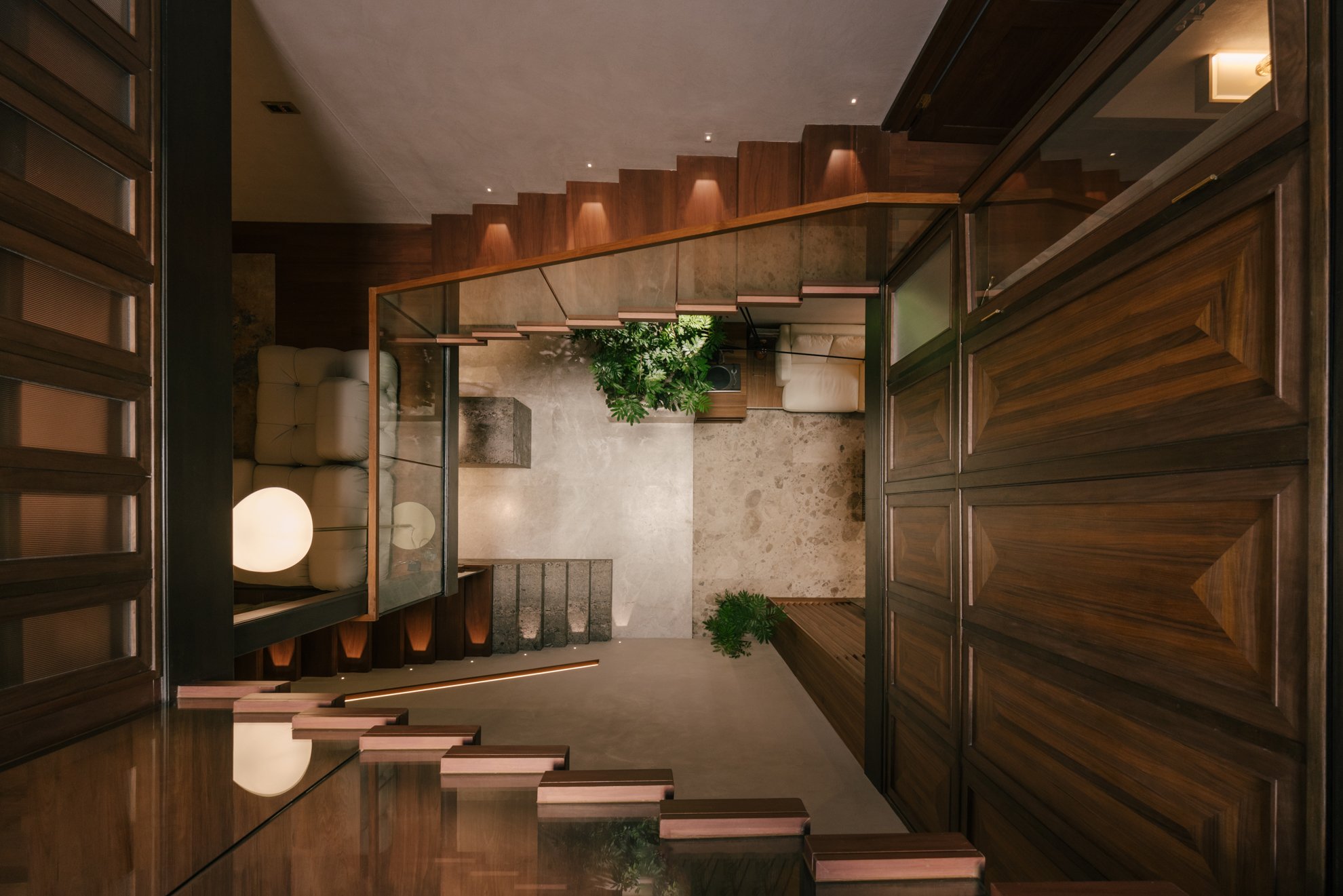
Movement through the home is guided by subtle shifts in flooring material between the dining area and the living area, marking a soft transition without imposing a hard line. Vertical and horizontal circulation are coordinated so that passage from one zone to another feels continuous. Sliding panels and mirrored surfaces soften every boundary, turning fixed divisions into adjustable arrangements. Rooms may open or withdraw, moving between togetherness and independence while preserving choice for the people who live there.
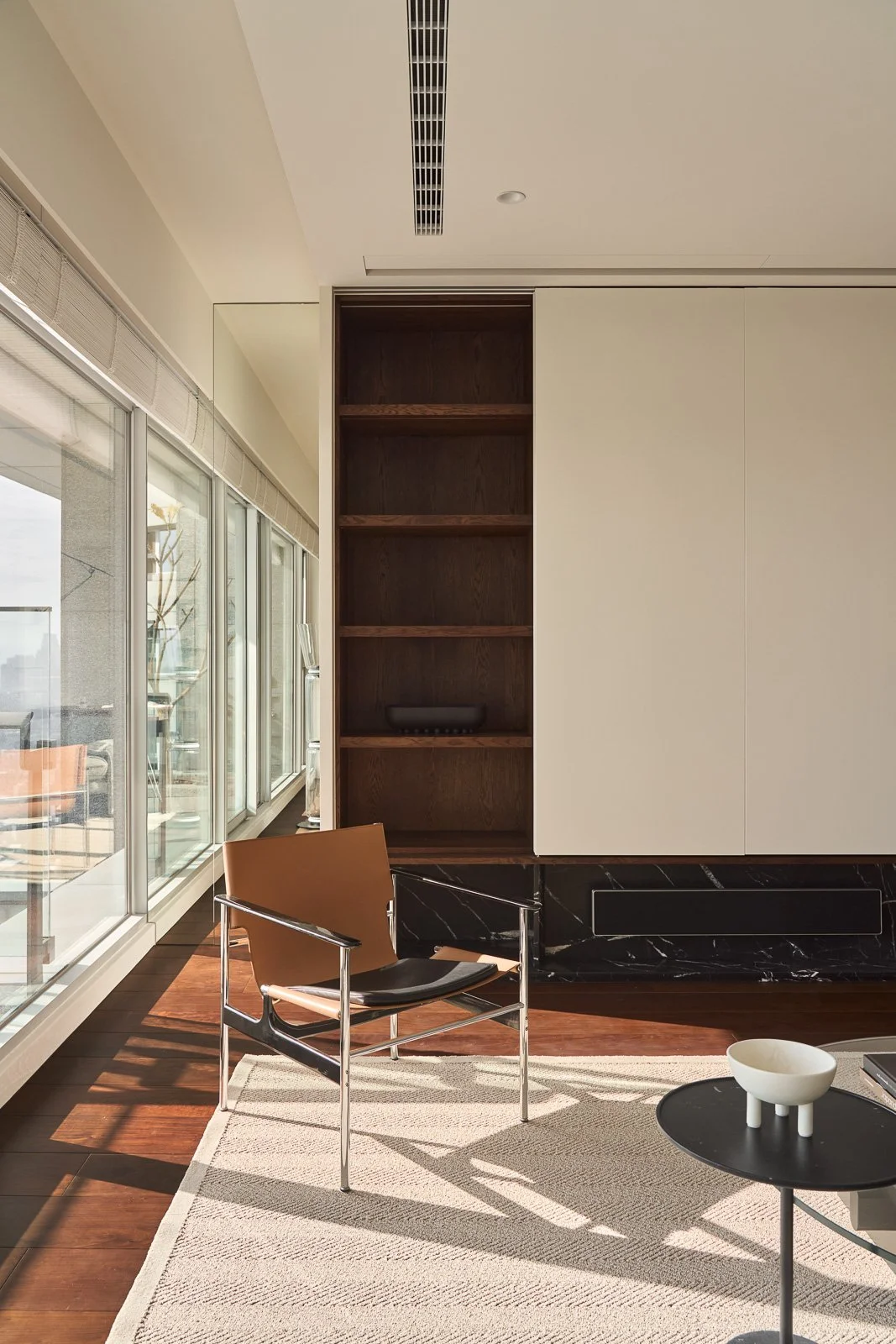
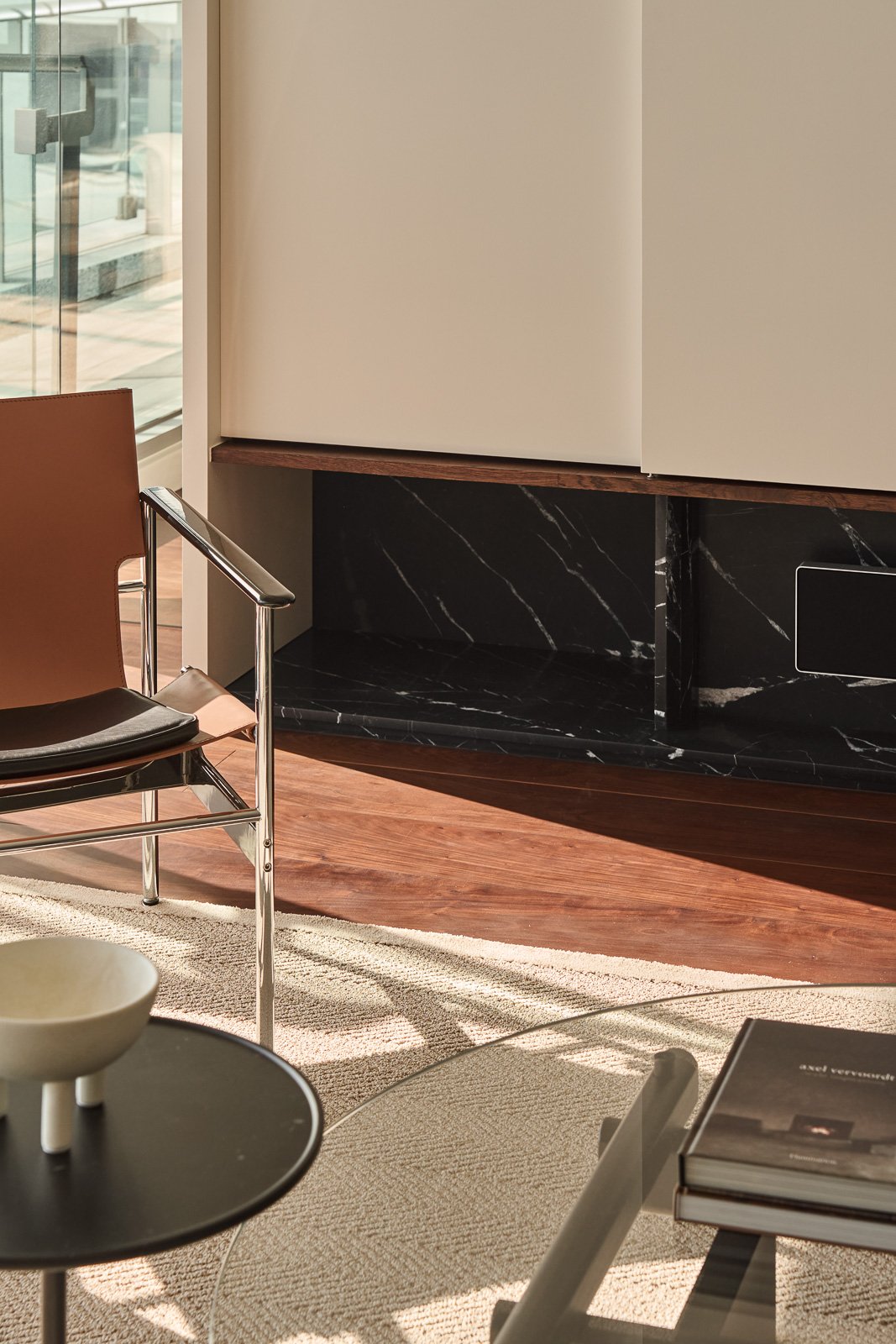
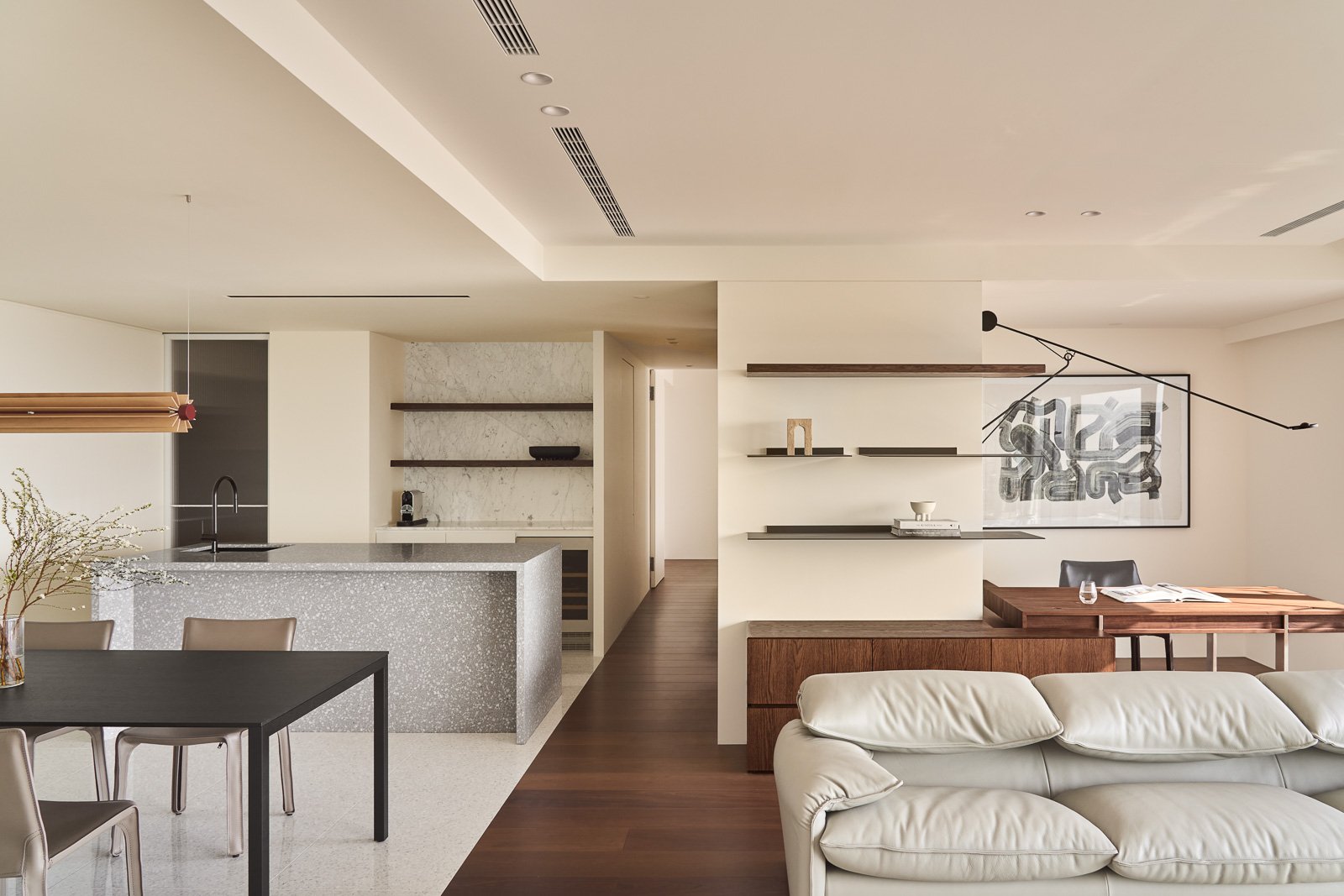
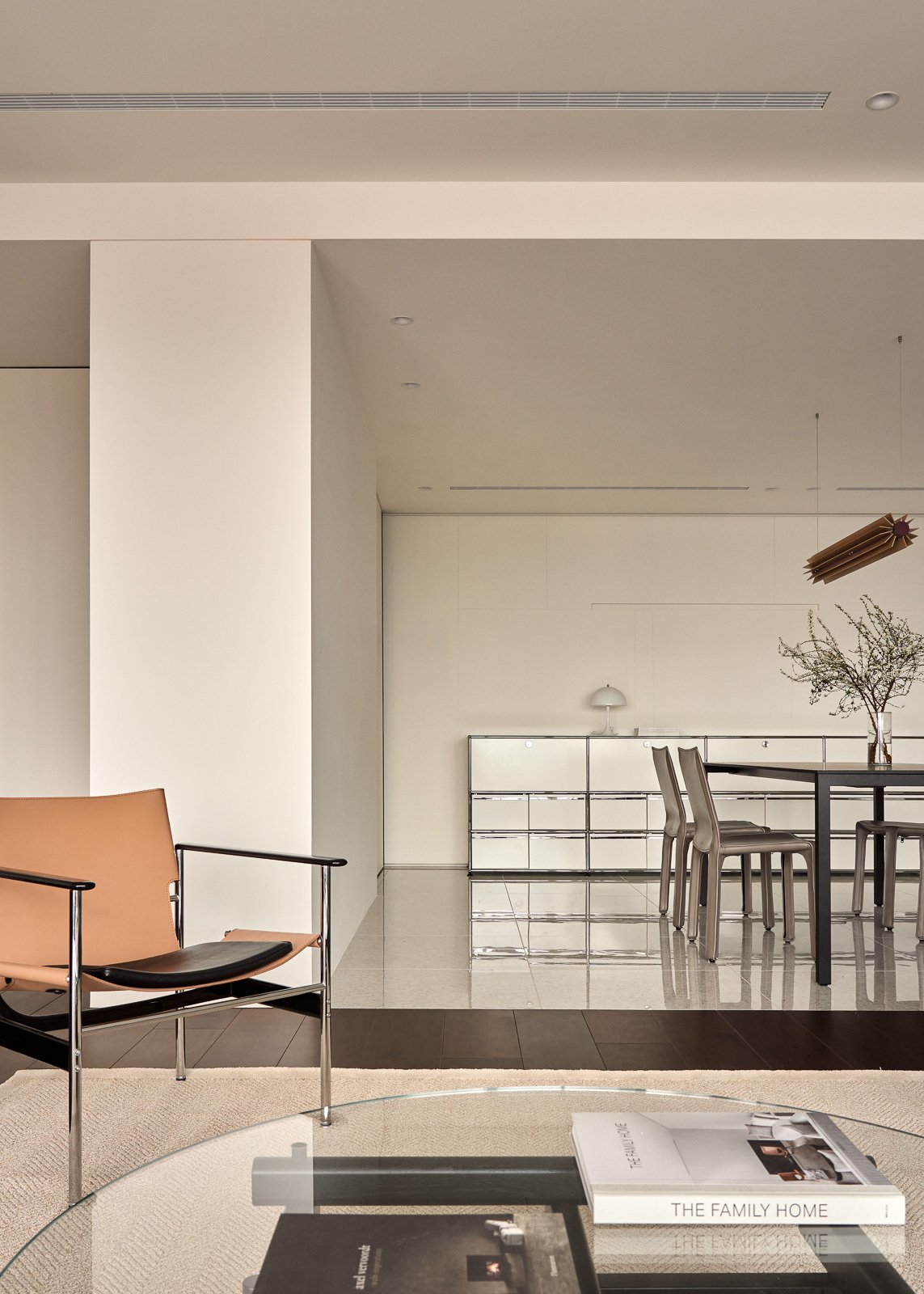
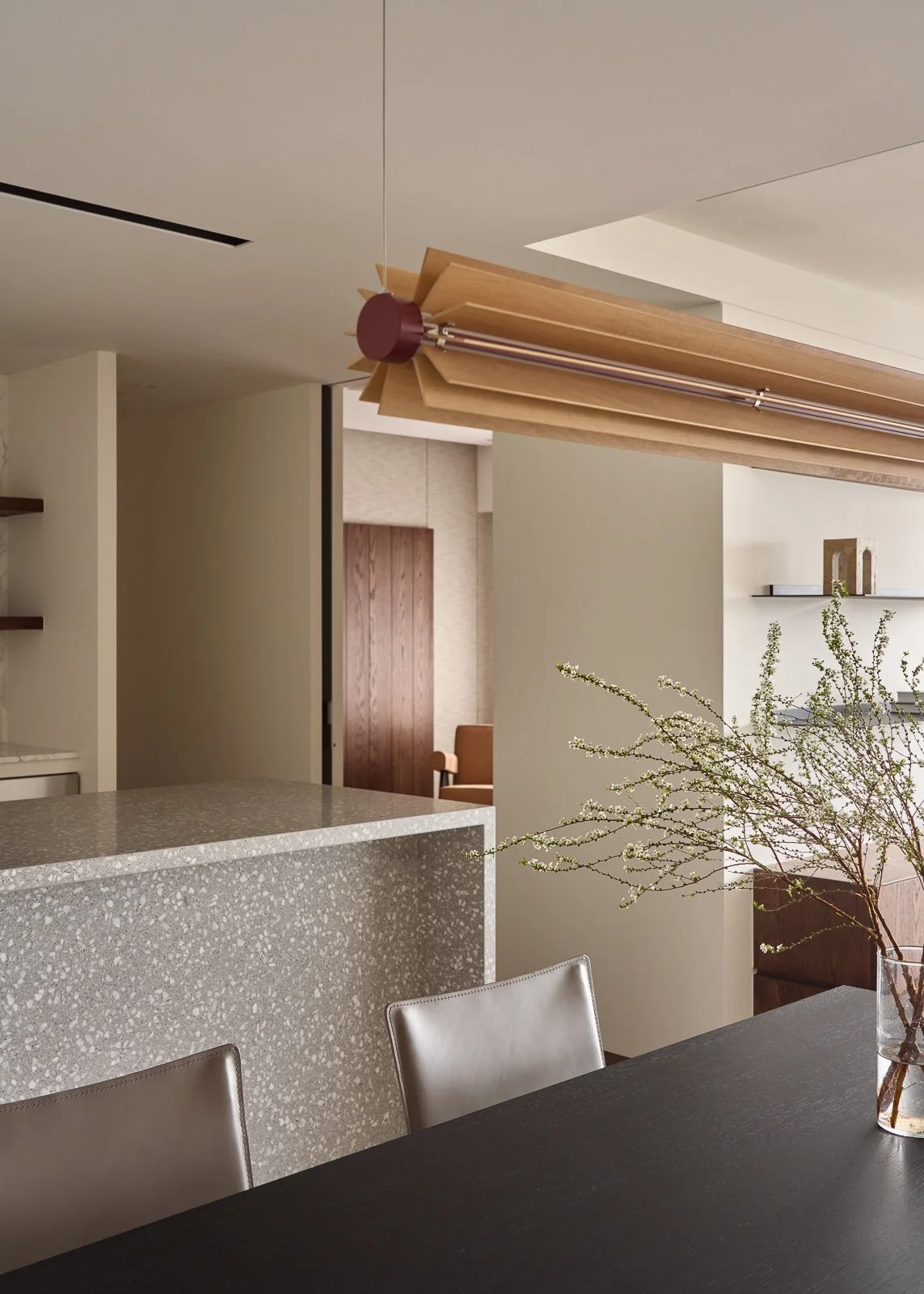
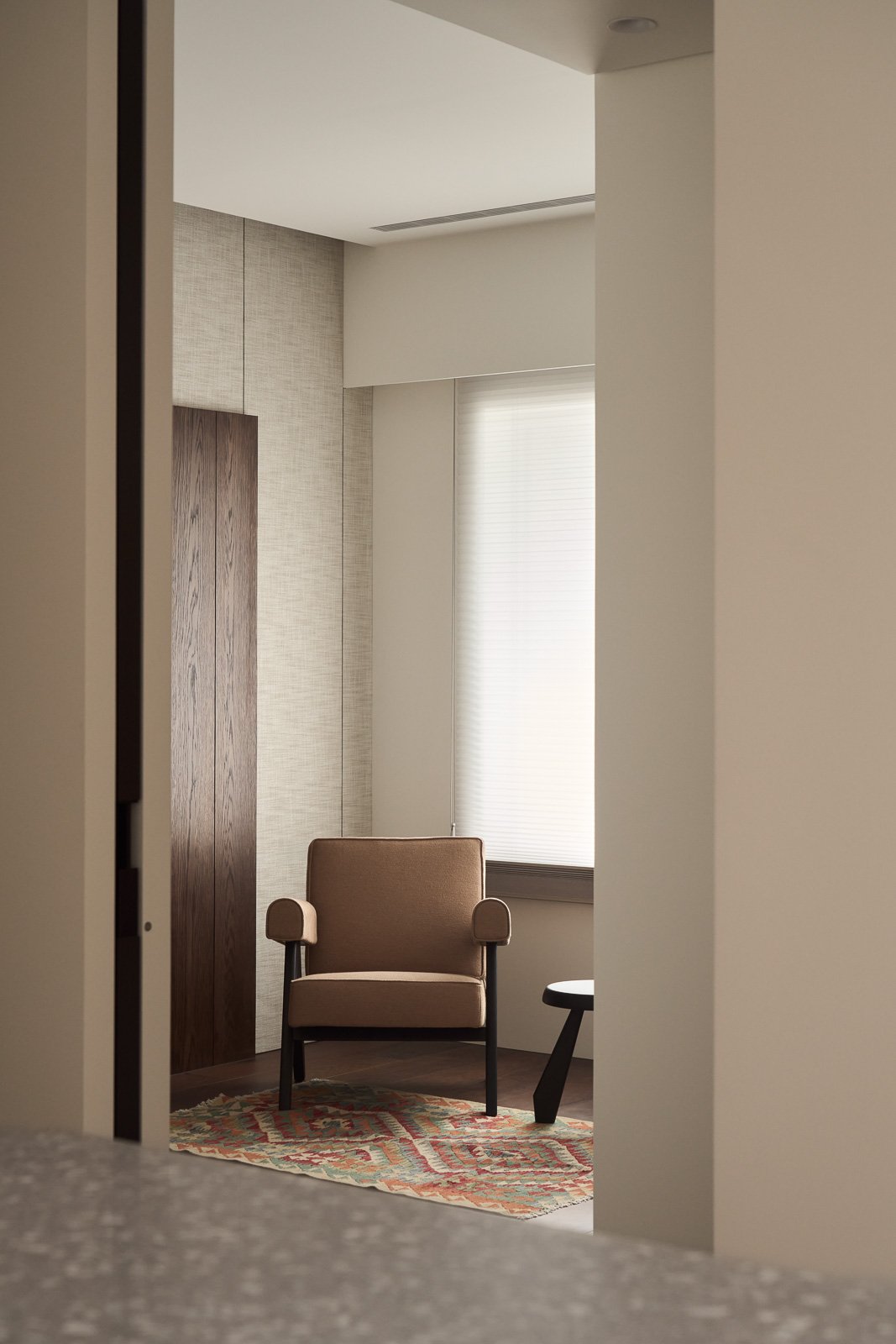
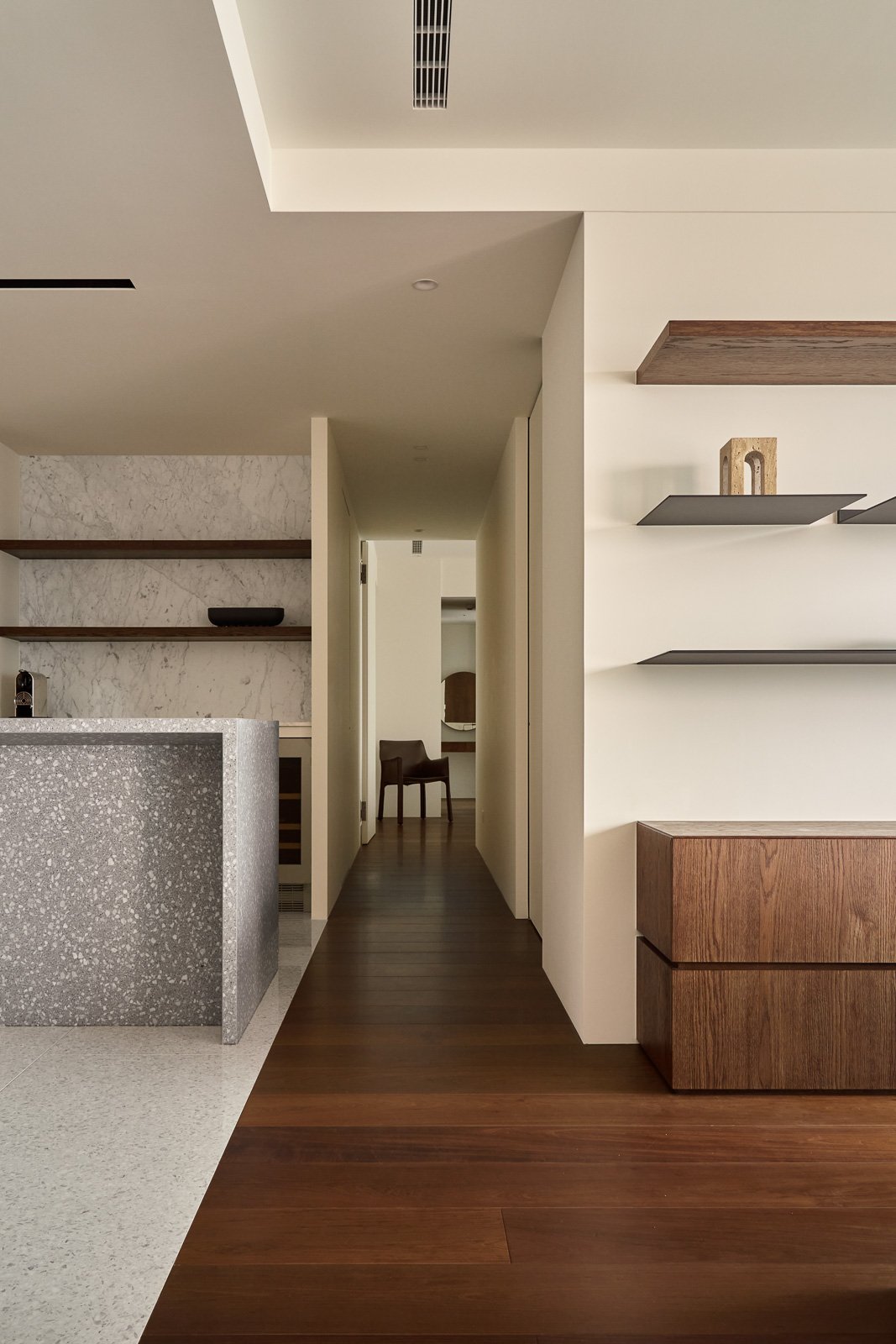
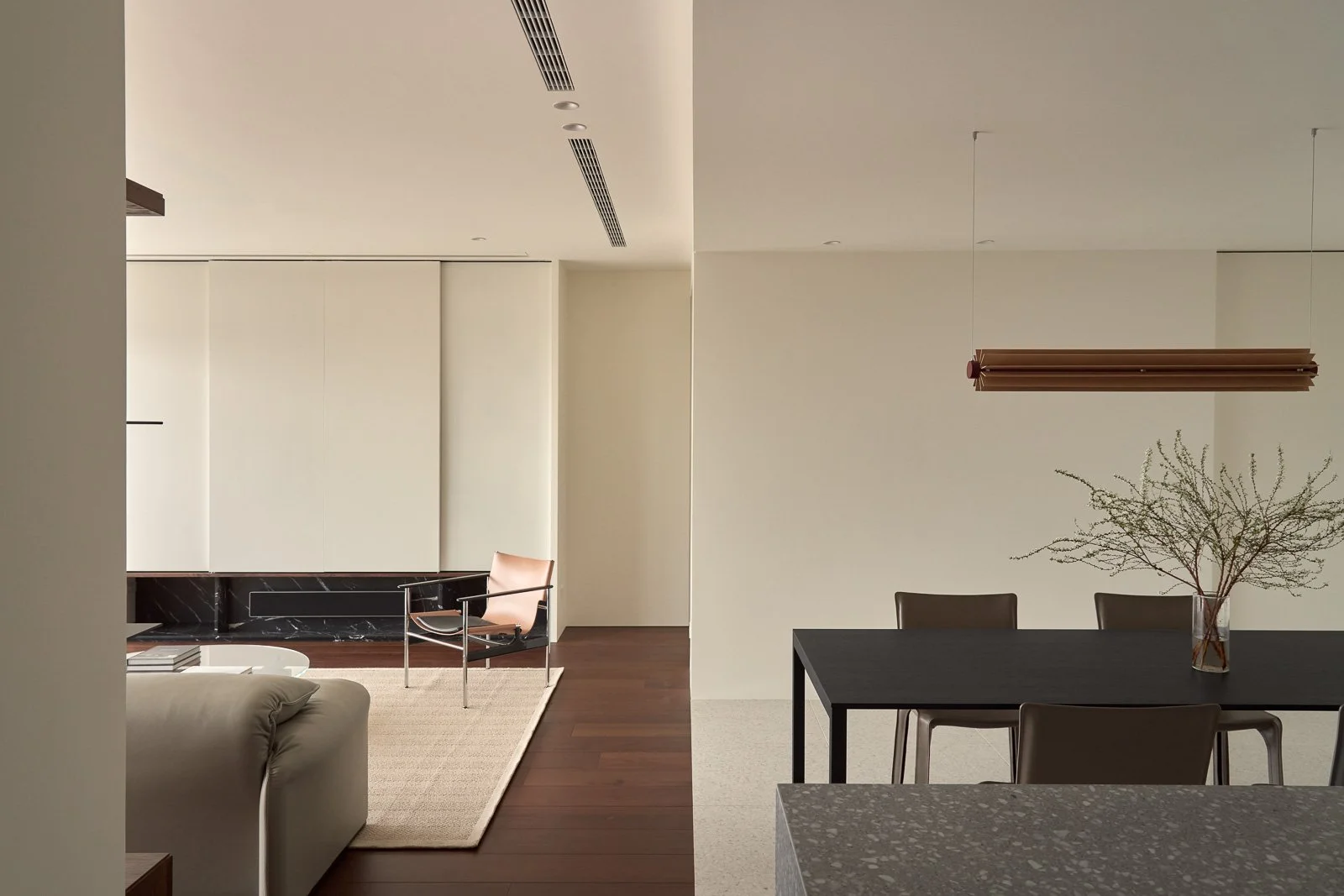
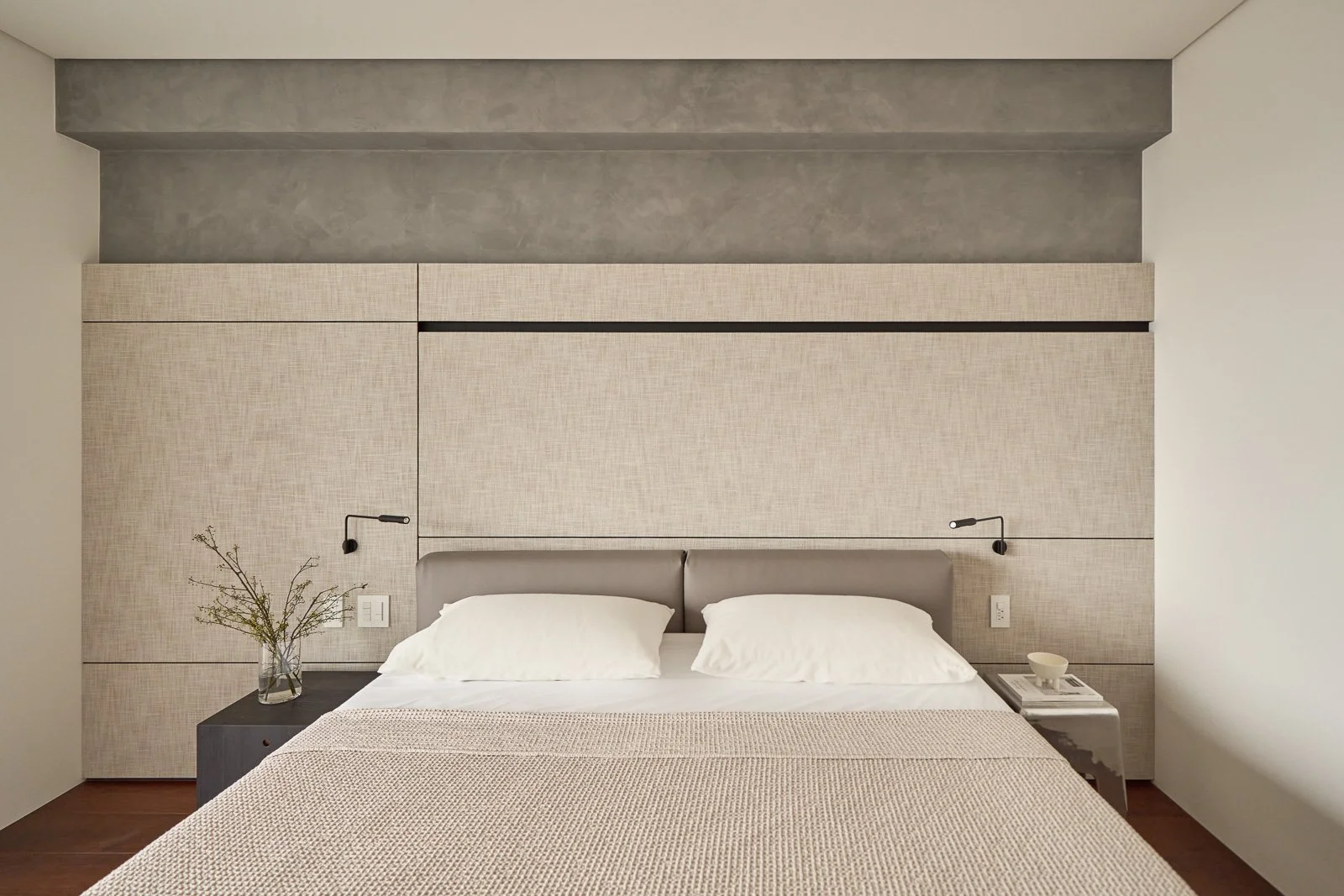
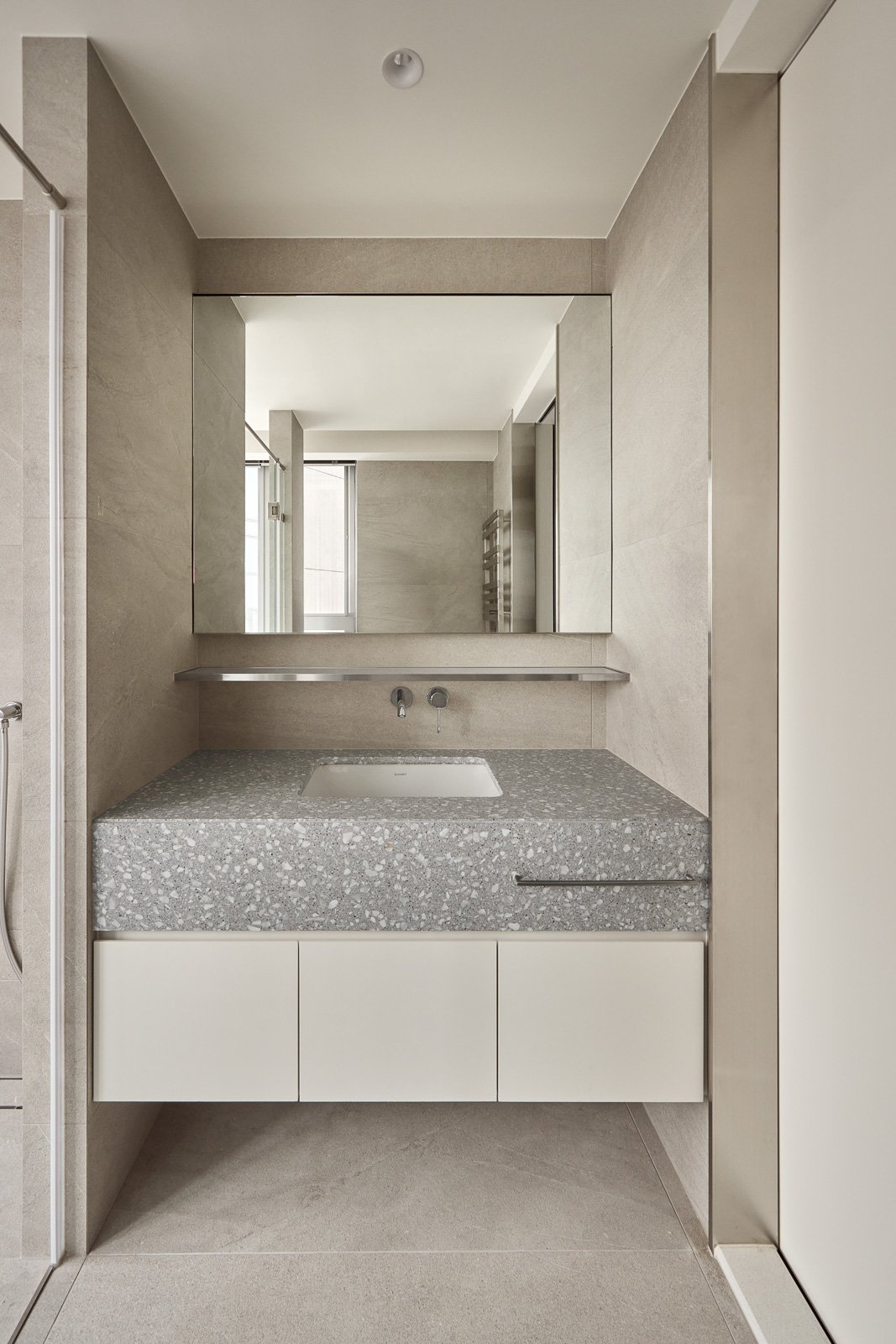
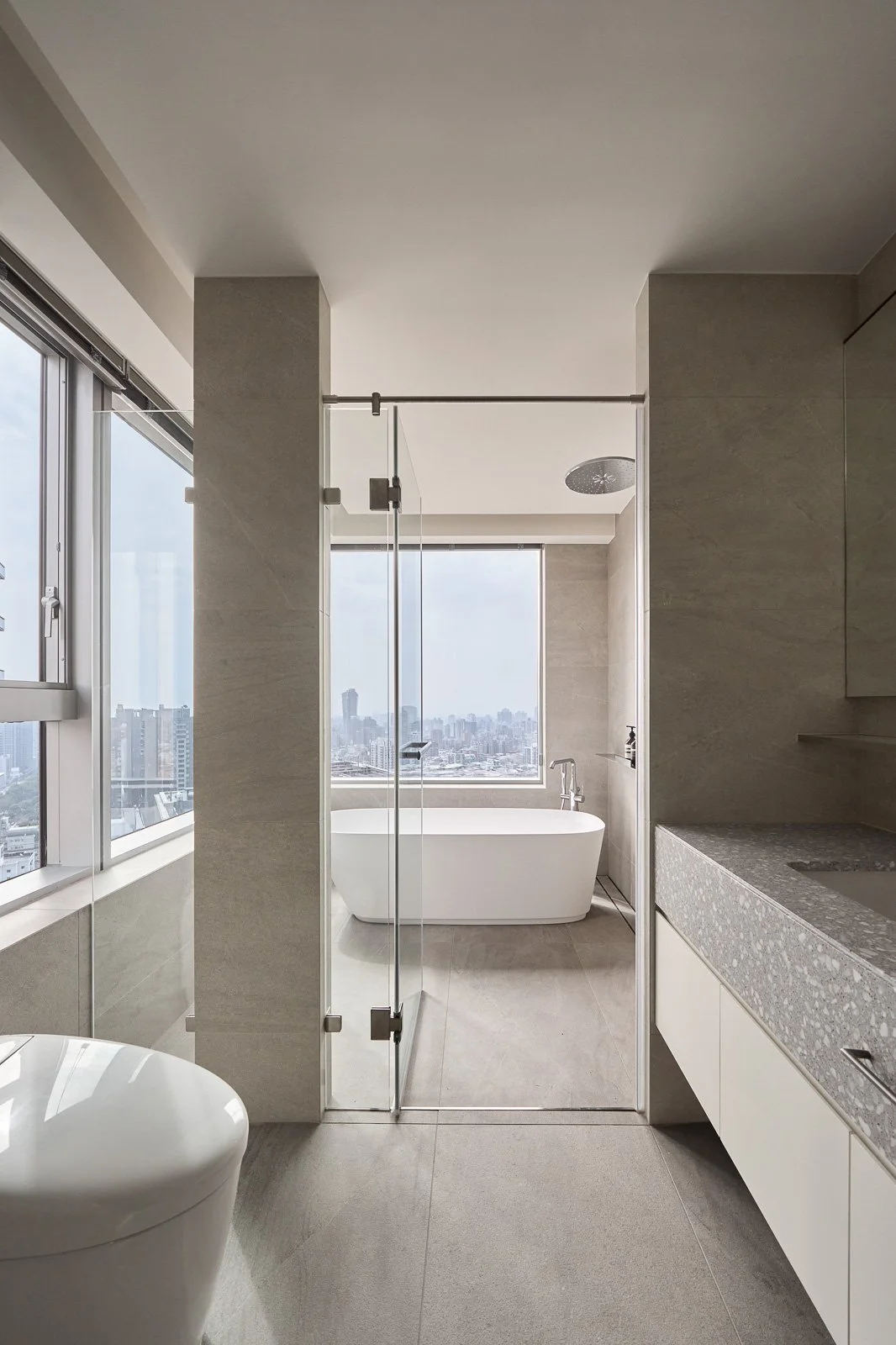
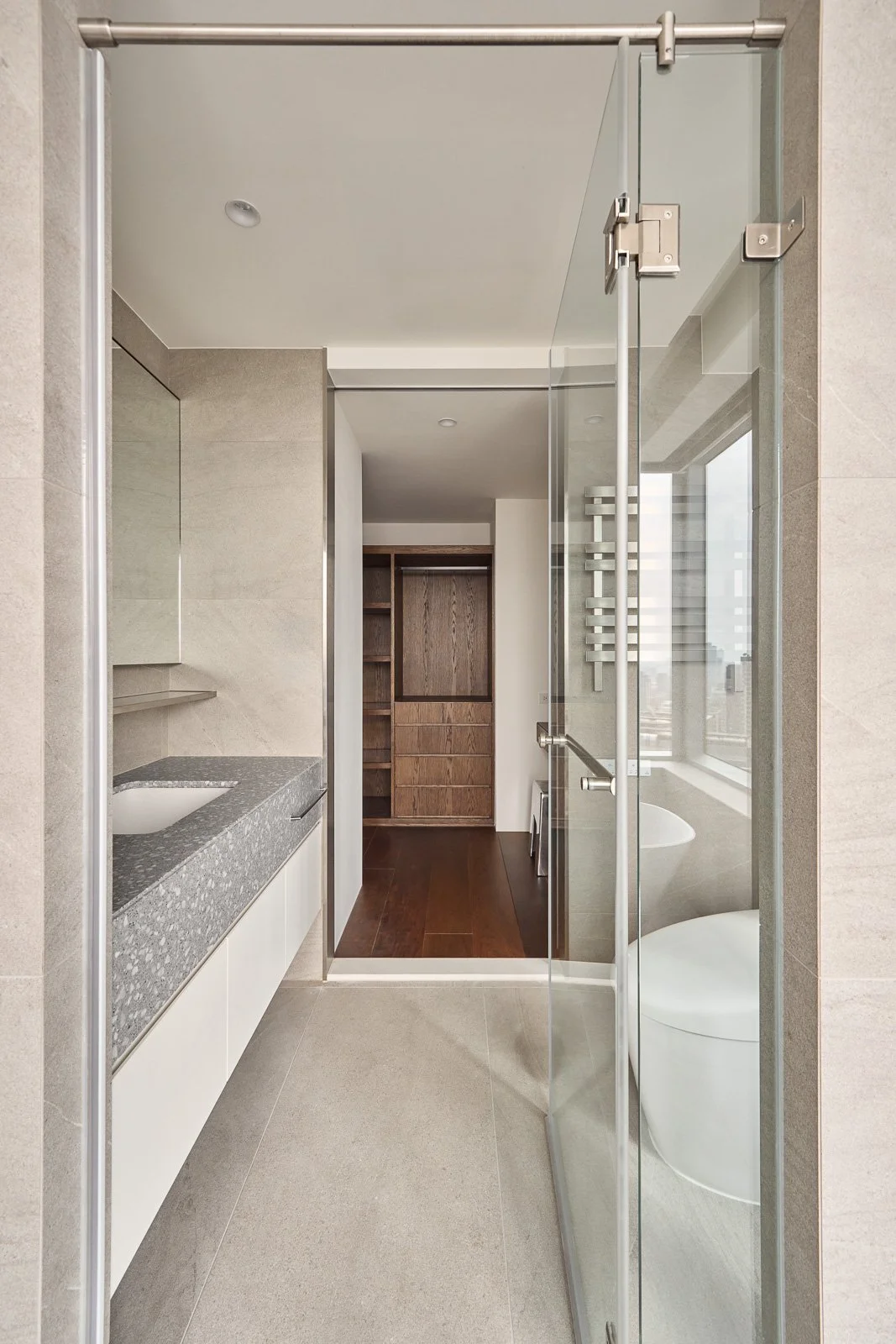
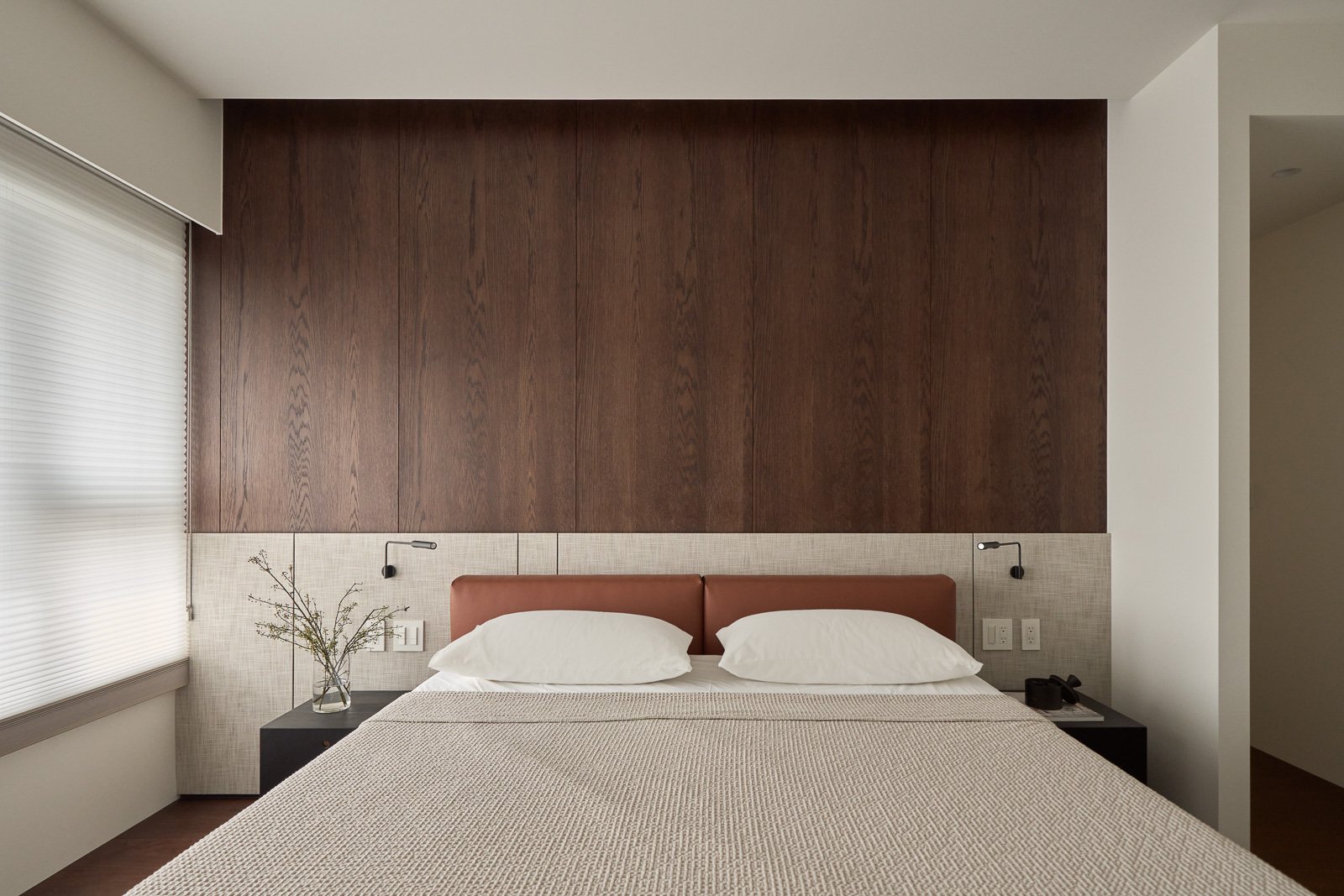
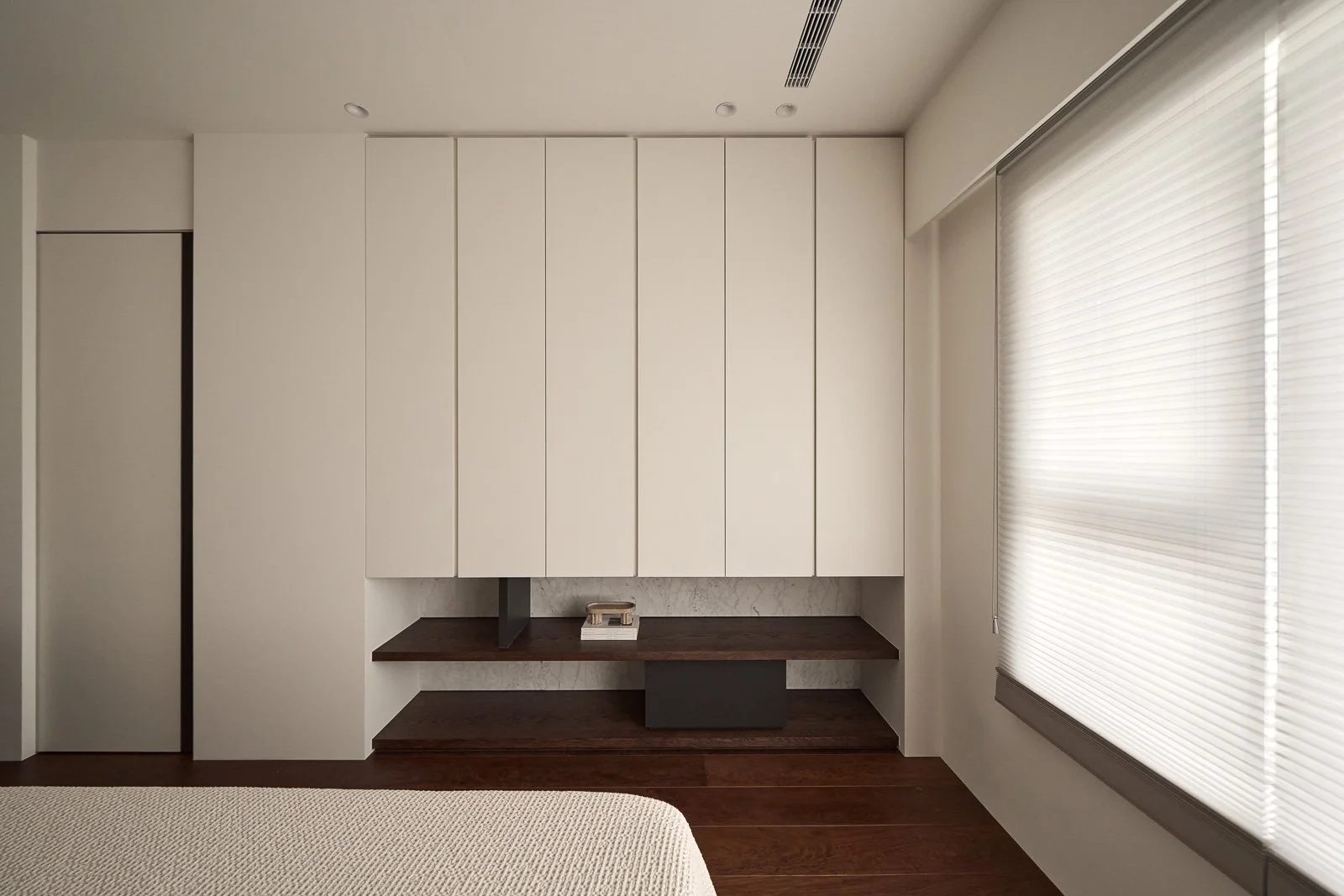
The material palette returns to composed restraint. Dark oak and rosewood set the spatial tone and carry a sense of time and depth. Metal, terrazzo, and fabric wall finishes arrive with contemporary clarity, forming a measured contrast that holds the composition steady. Wood flooring extends from the communal areas into the bedrooms, maintaining emotional continuity across the home. Within the private rooms, wood veneer and upholstered surfaces shape a clearer structural identity while returning the atmosphere to quiet introspection.
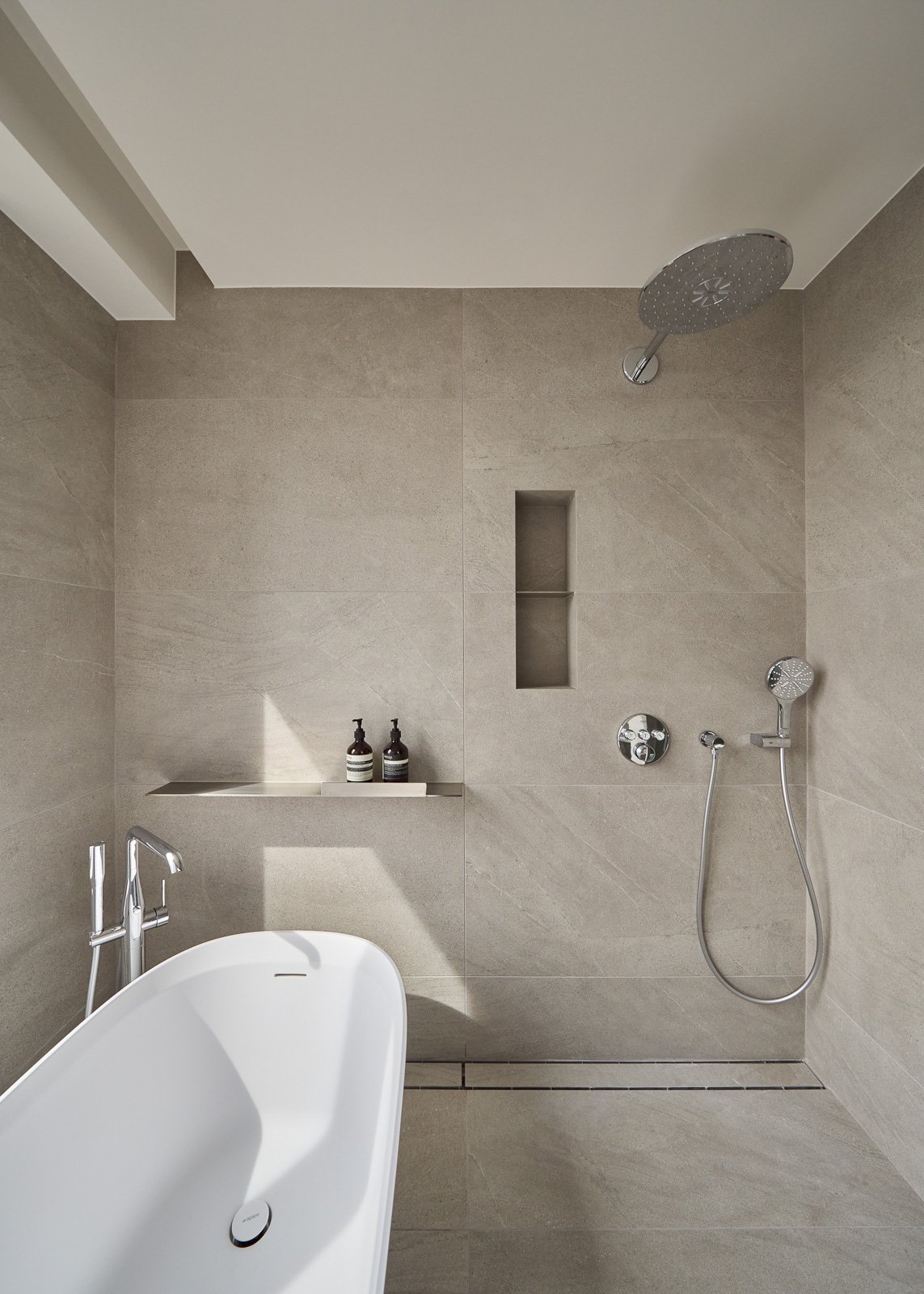
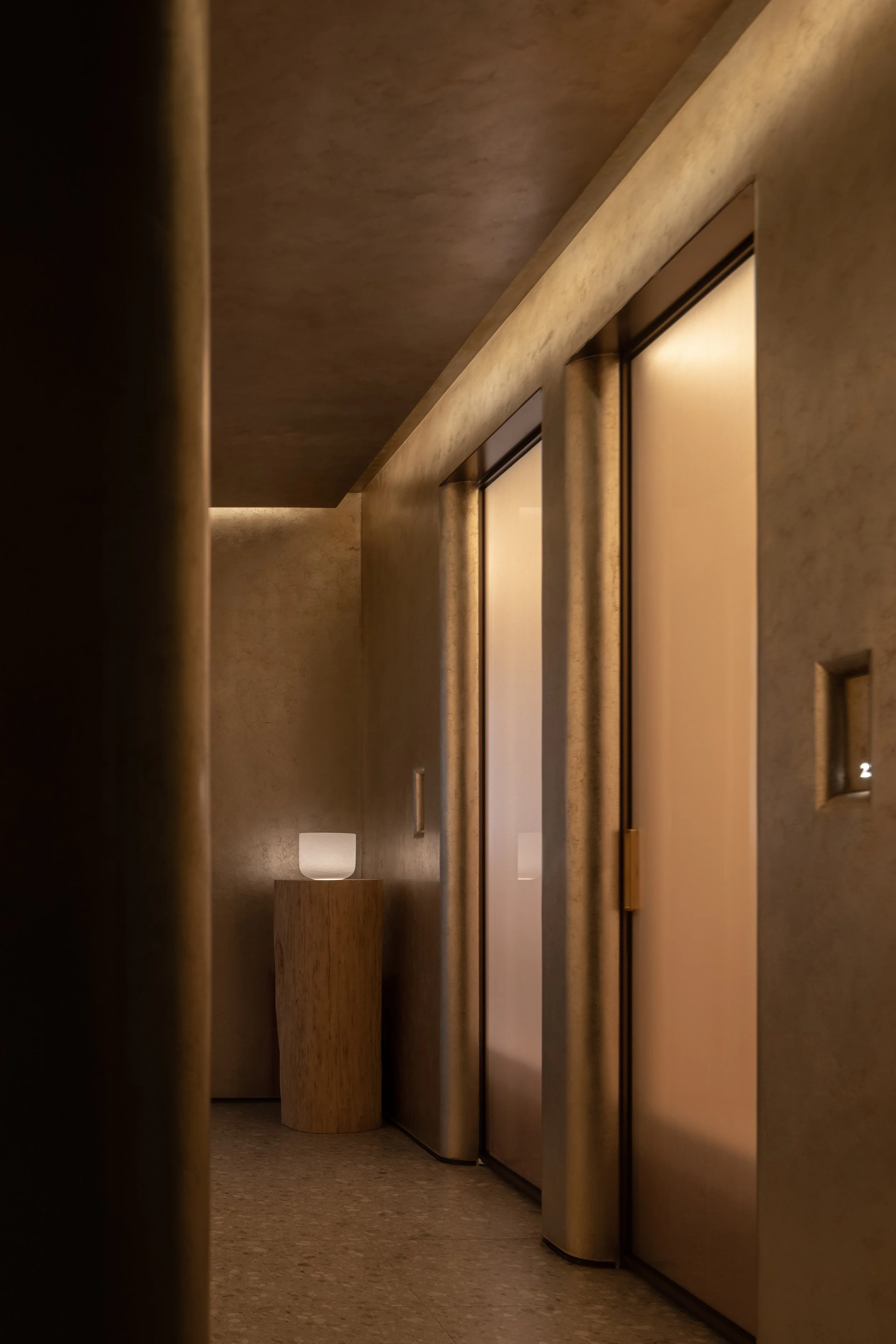
Because the residents are older and asked for a setting that feels calming yet never sombre, the darker timbers were chosen for the sense of stability they bring. Ironwork appears sparingly as shelving on selected walls and in the bathroom, lifting the overall feel. Mirrors placed in the entryway and behind sliding doors visually extend the space, while wallpaper and stone introduce natural and crafted textures that keep the surfaces alive to the touch and the eye.
Custom design carries through the more intimate moments of the project. Decorative wallpaper sits behind the headboards in three of the rooms, marking each as its own quiet retreat. In the bathroom, stainless steel decorative shelves and handles add precision to the joinery and a soft glint to the predominantly warm palette.