Olia & Mimi by Ste Marie
In the city’s central core, Ste Marie has shaped a sequence of hospitality venues at the base of a new residential tower, turning the ground floor into a shared threshold between private living and public life.
Commissioned by Corso 32 Group’s chef, Daniel Costa, Olia & Mimi present two distinct interiors connected by a common sensibility: ease, pleasure, and a sense of ritual that carries guests from morning into late night.
The project is organised around access and pace. Residents arrive through a discreet internal entry, while the street-facing doors welcome the neighbourhood in. This dual approach allows the venues to serve as an everyday extension of home for those upstairs, while operating as a destination in their own right for the public. Across the day, the spaces support different kinds of interaction, from quick espresso stops to longer dinners and after-hours lounging, with the design tuned to match each shift.
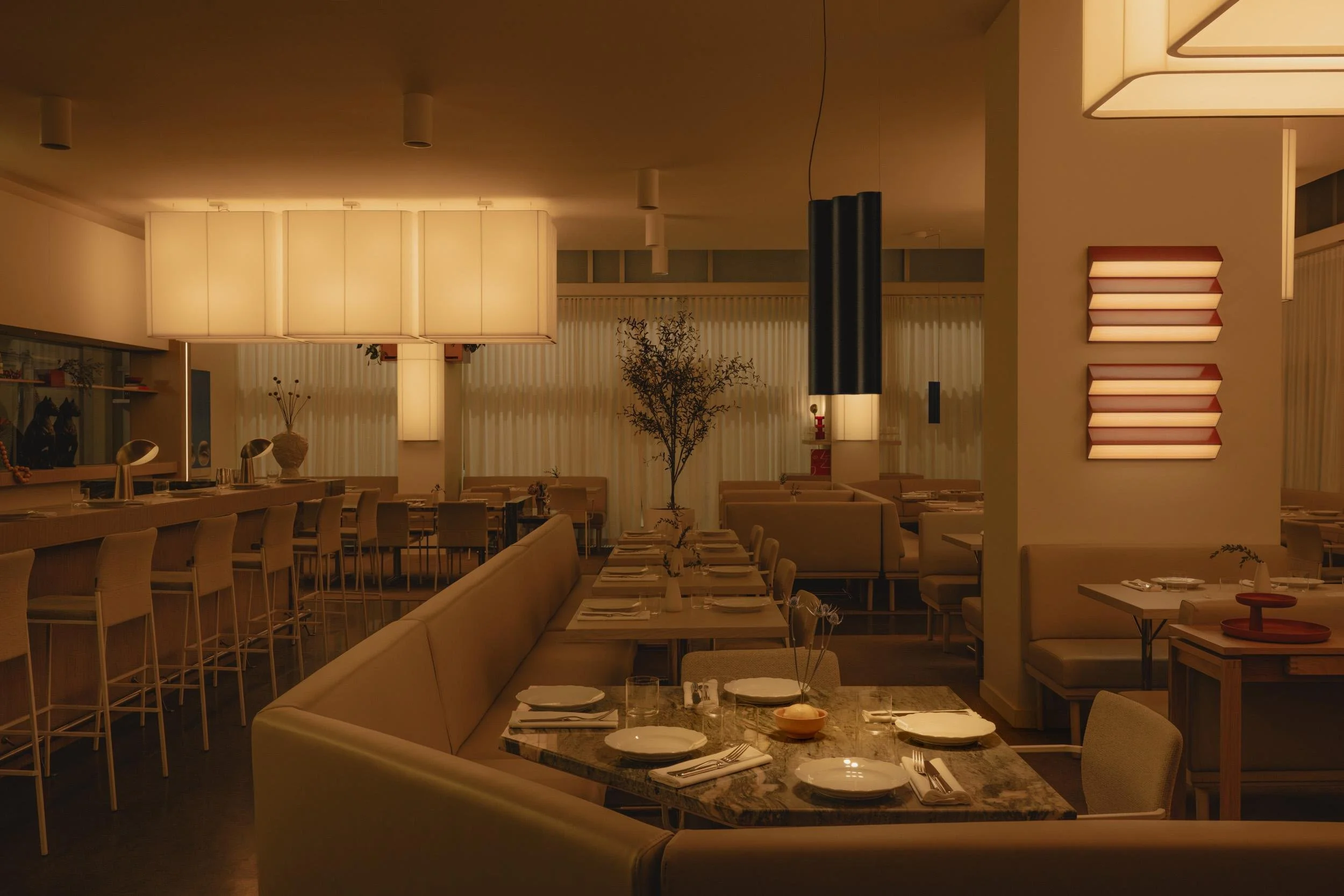
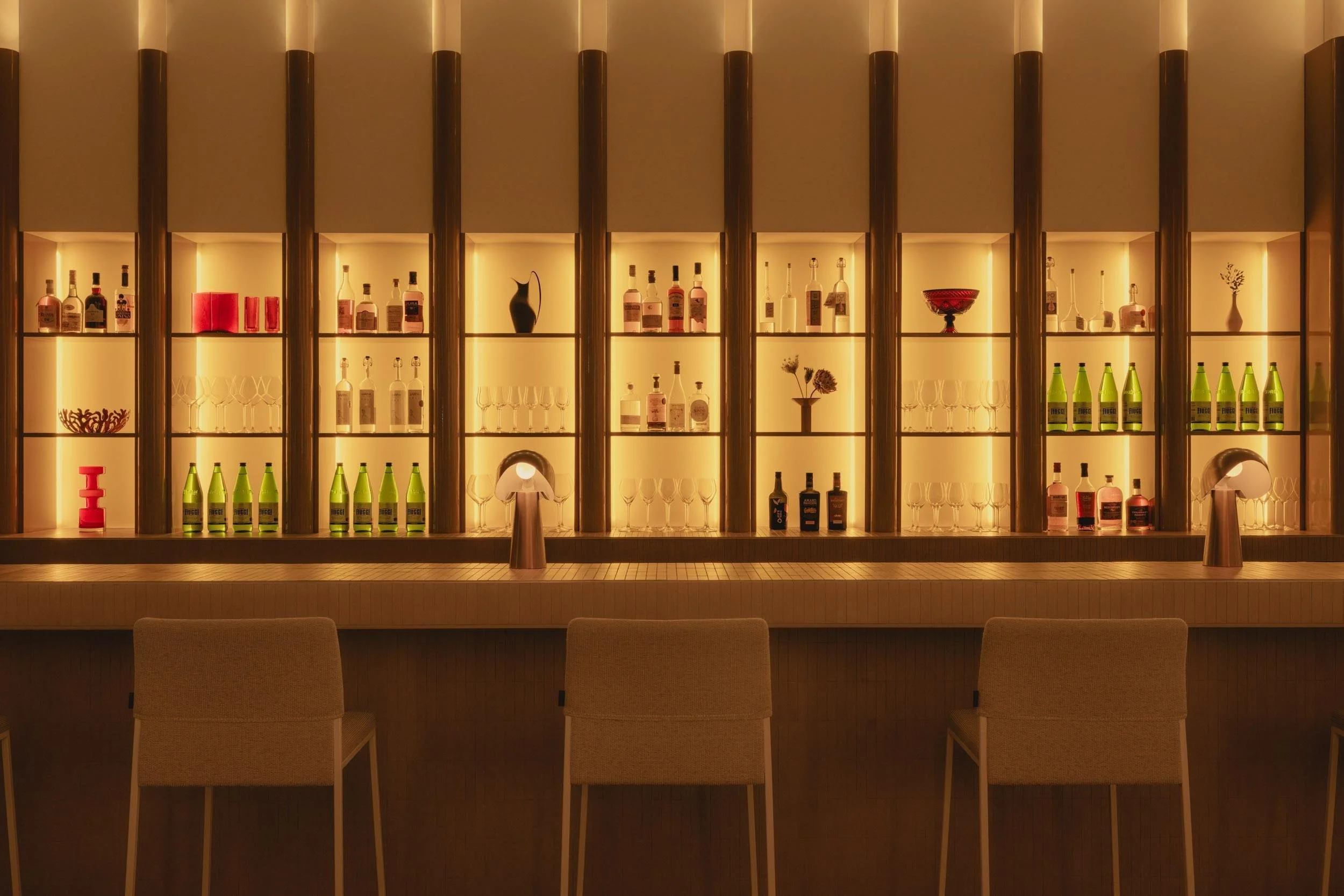
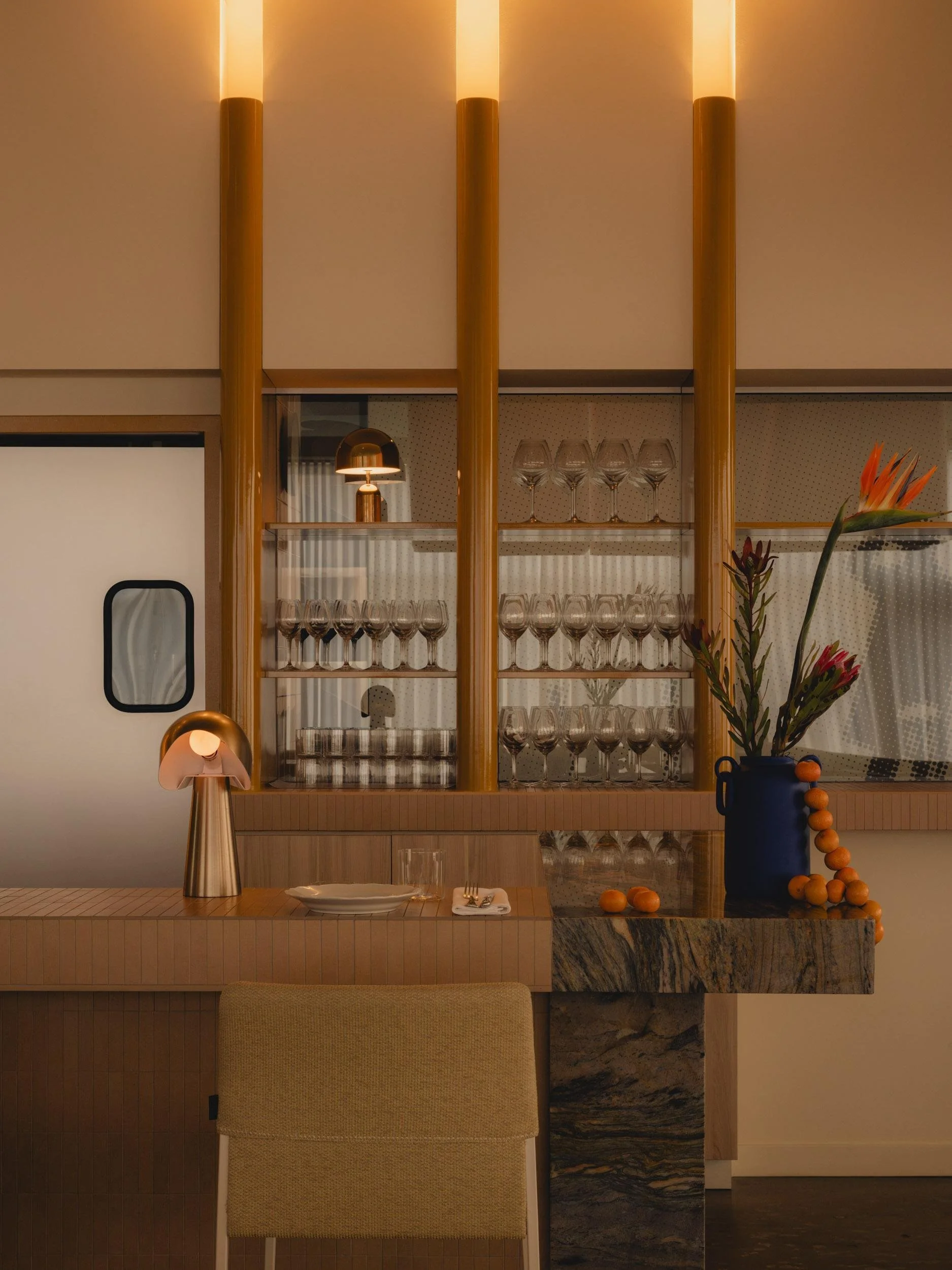
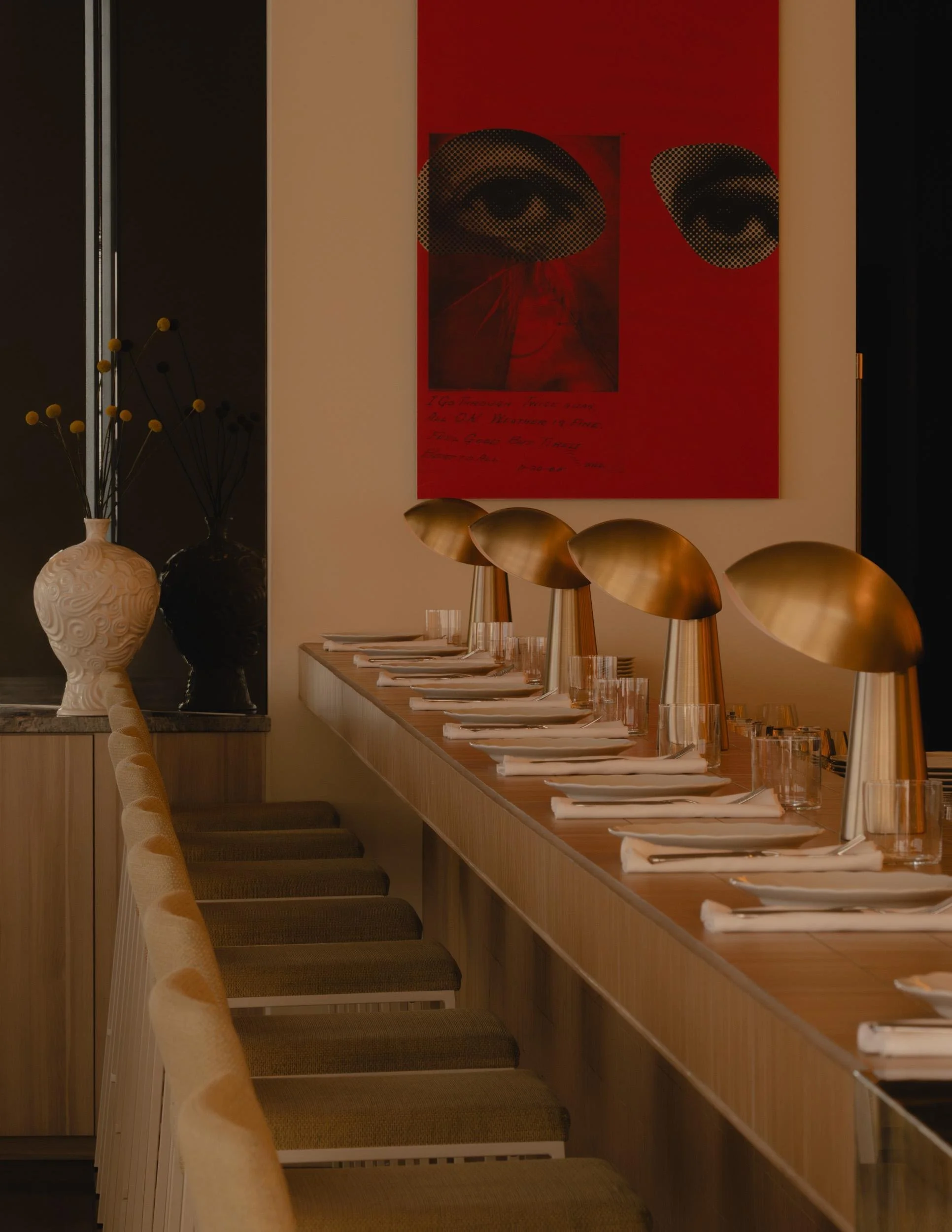
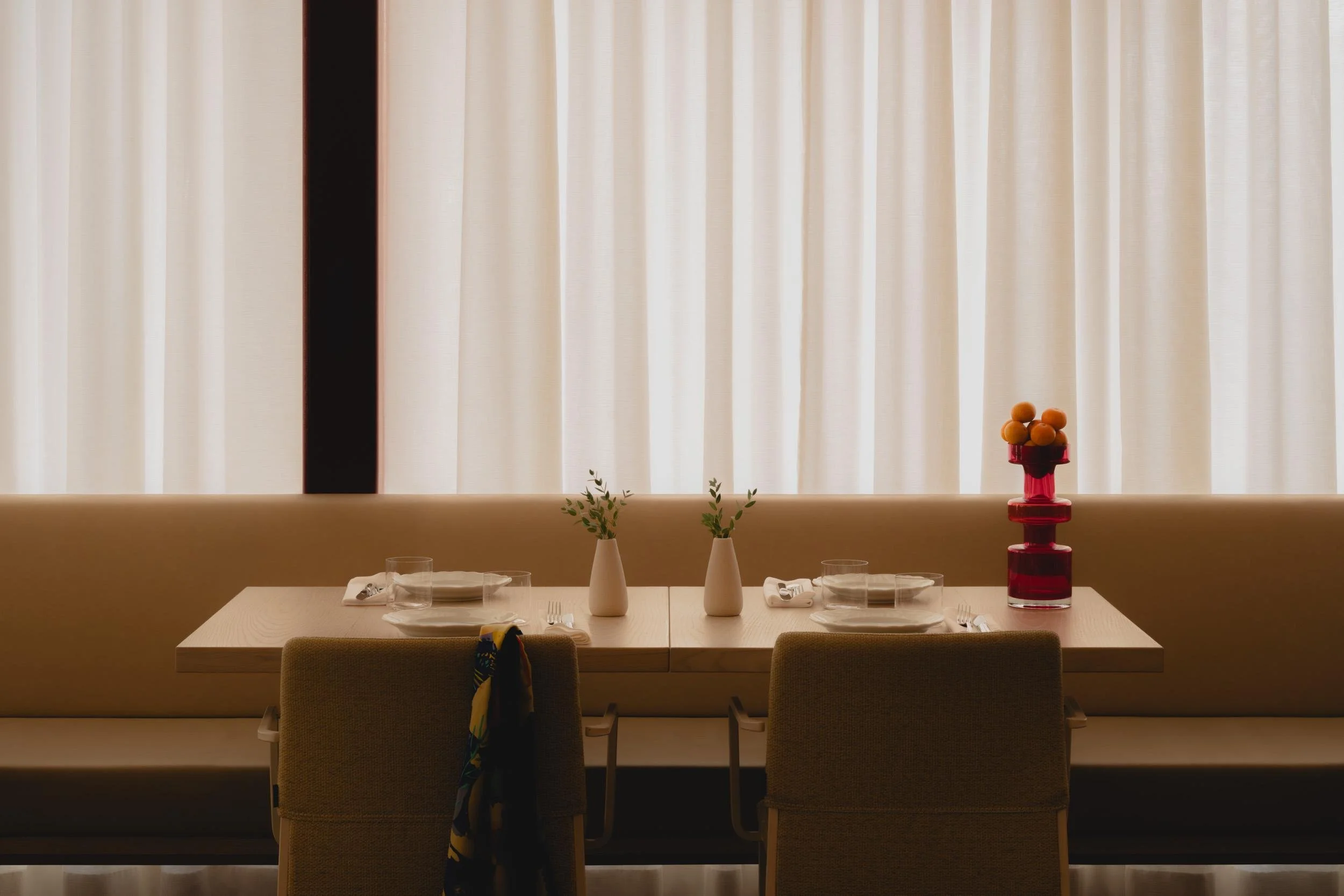
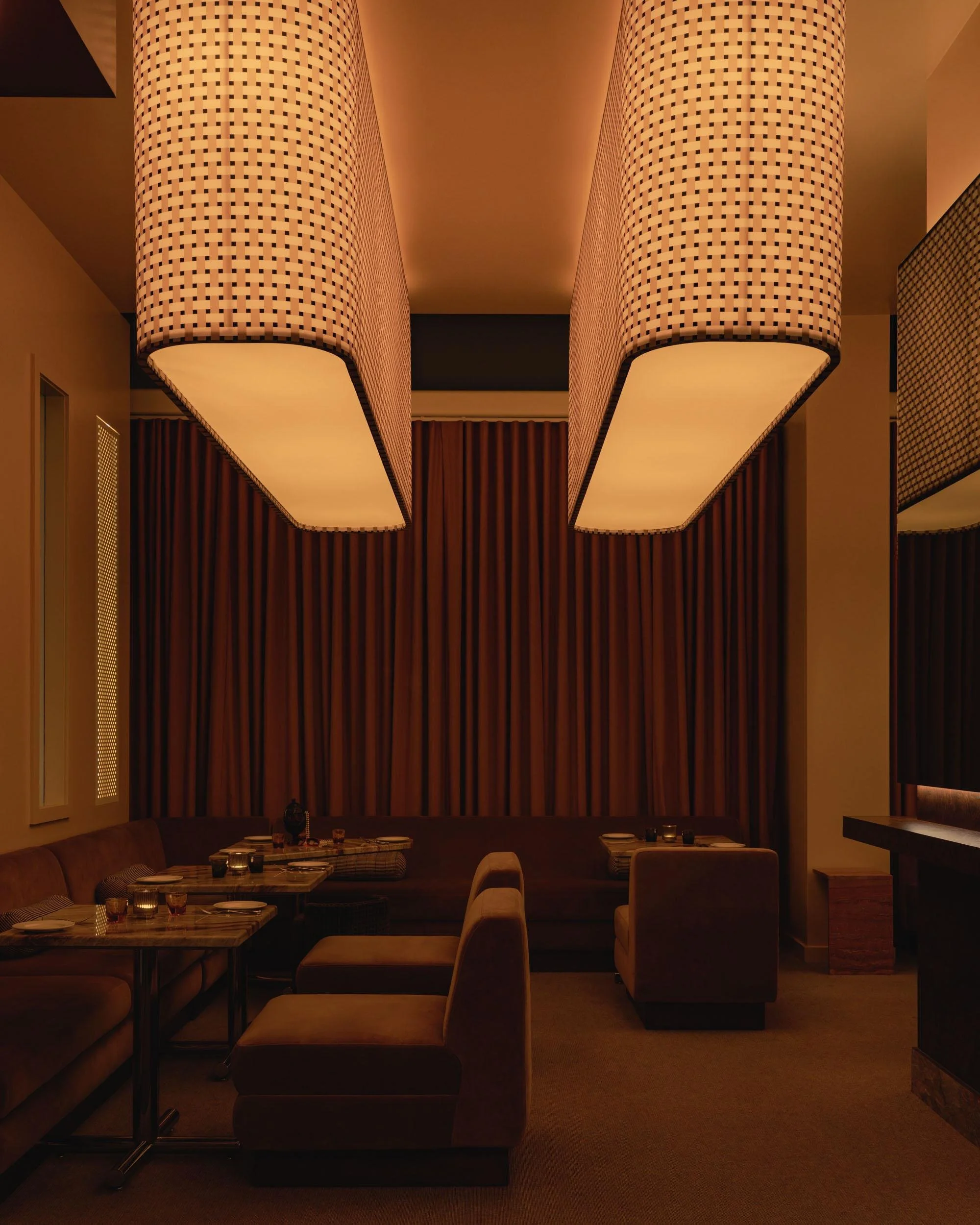
Olia sets a slower tempo with a warm, inviting palette and an atmosphere that encourages lingering. Referencing the refined intimacy of a private members’ club, the room is built from custom Portuguese walnut tables and supple ecru leather banquettes, set against creamy polished marble and tawny-toned high-gloss cabinetry. At the centre, a backlit fluted-glass bar provides a soft focal point, casting a quiet glow that draws the space together.
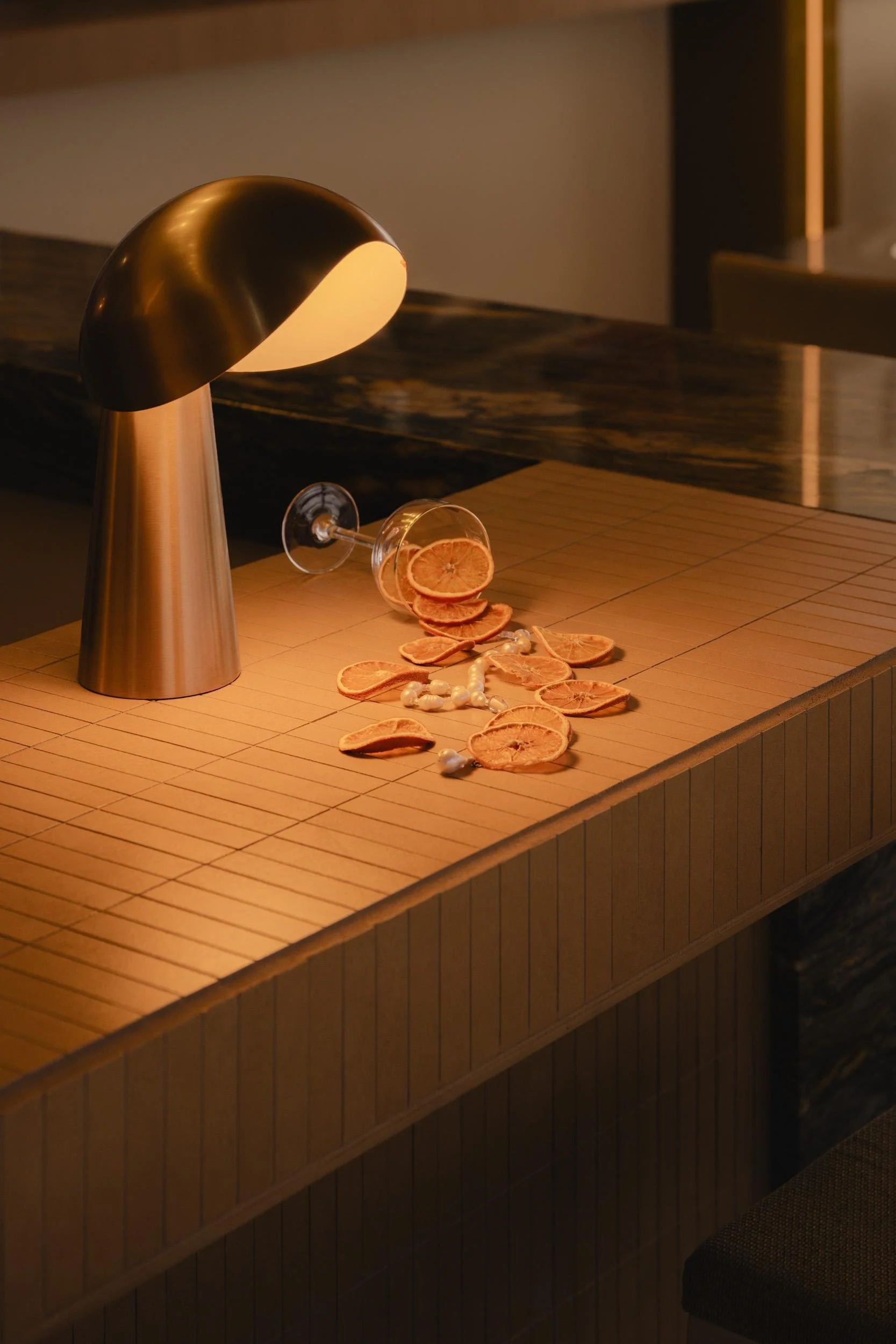
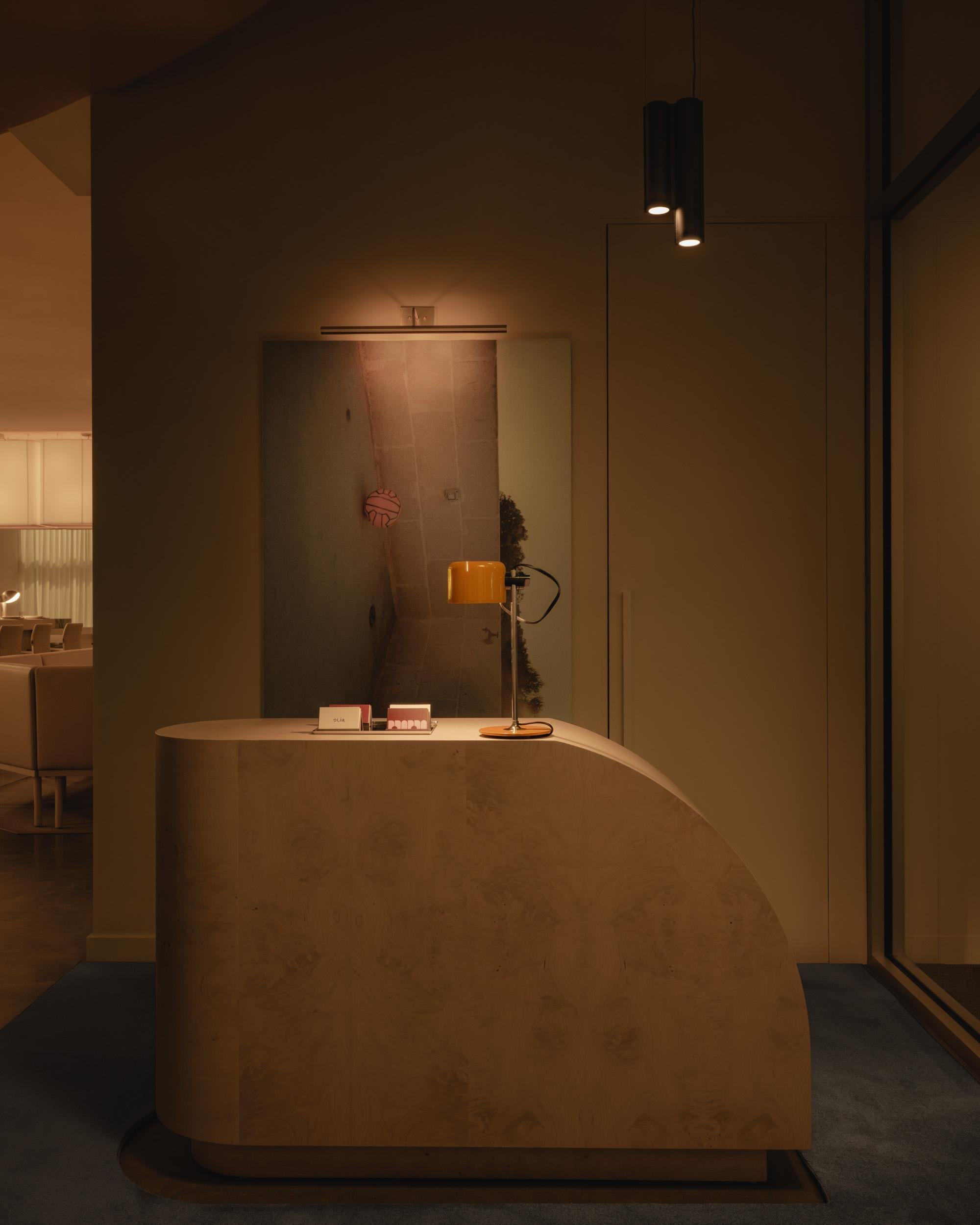
Lighting plays a decisive role in how Olia changes through the day. Diffused oversized pendant lights sit overhead, while daylight filters through sheer drapery before giving way to a buttery yellow ambient tone as evening approaches. As dusk arrives, light skims across reflective surfaces and into corners, adjusting the mood with subtlety rather than spectacle. Sculptural accents and custom artwork introduce moments of colour and texture, deepening the room’s layered composition without disrupting its calm.
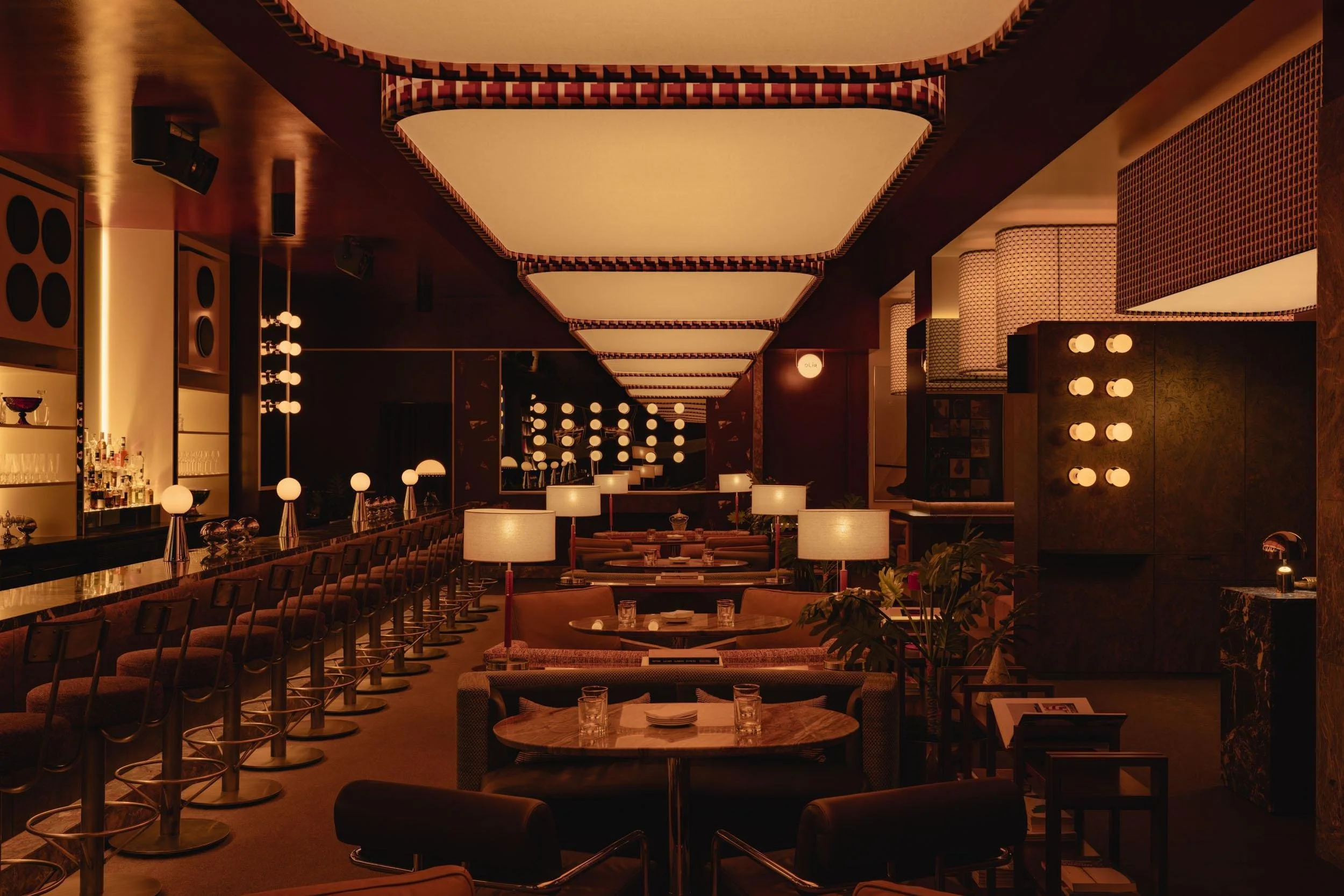
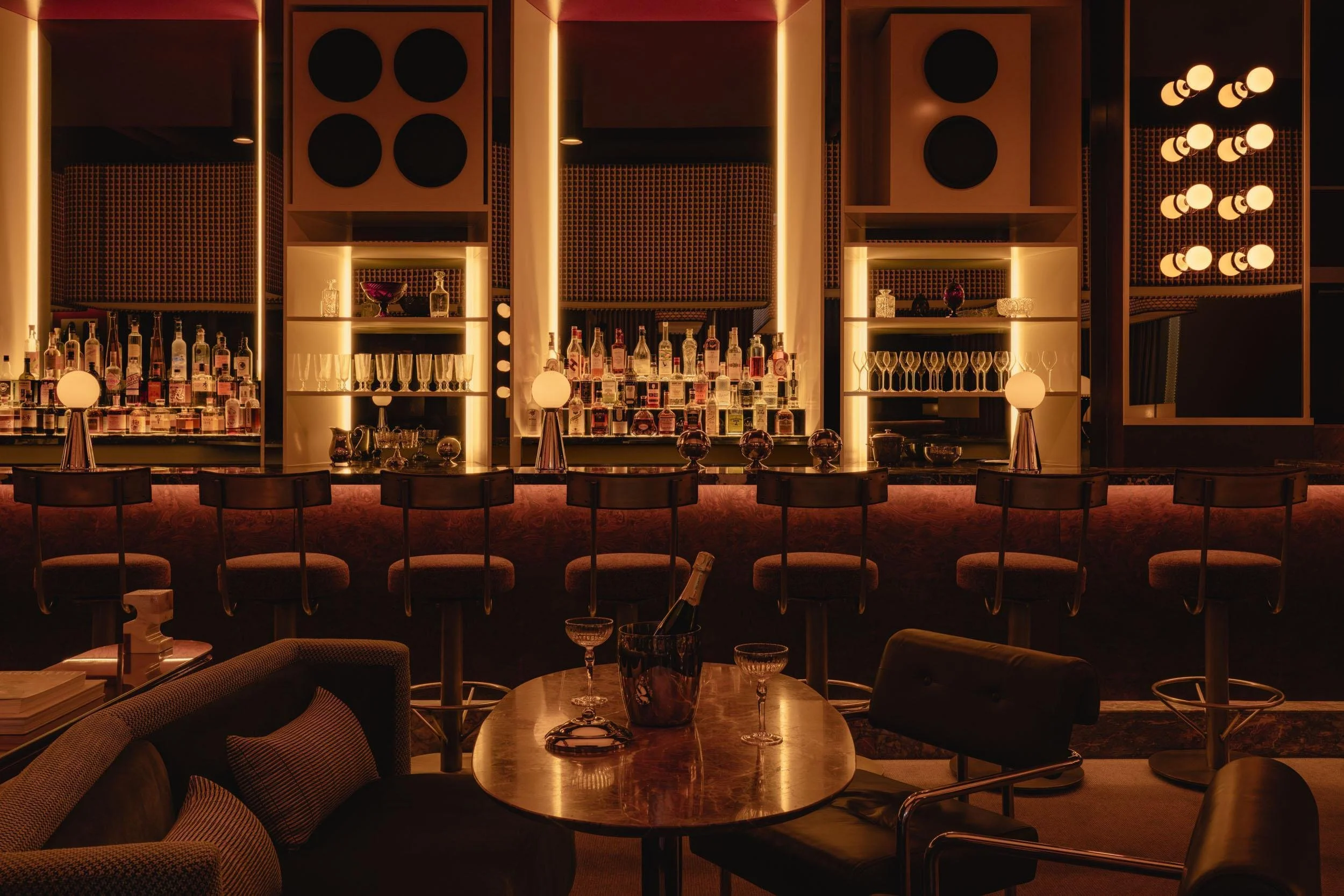
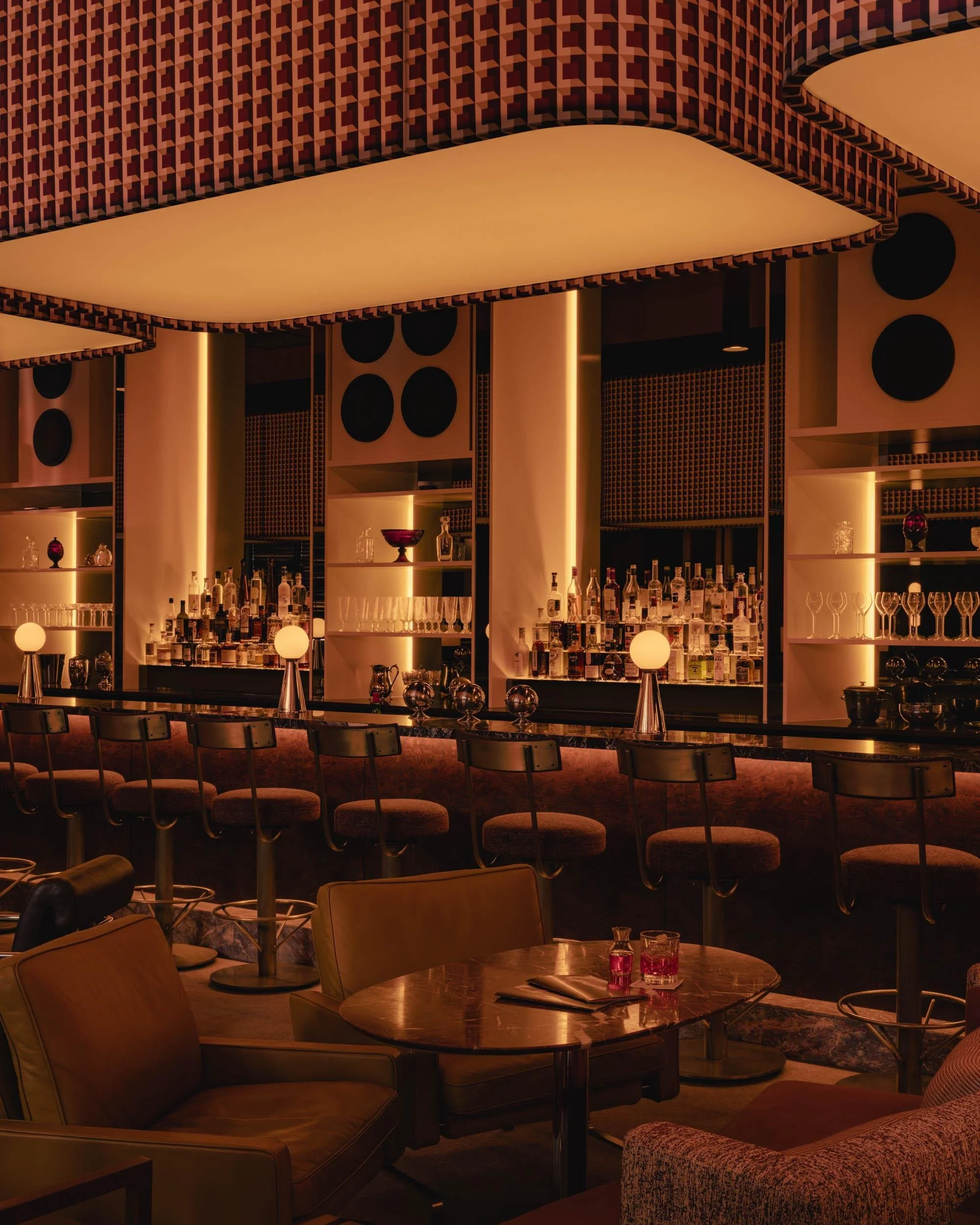
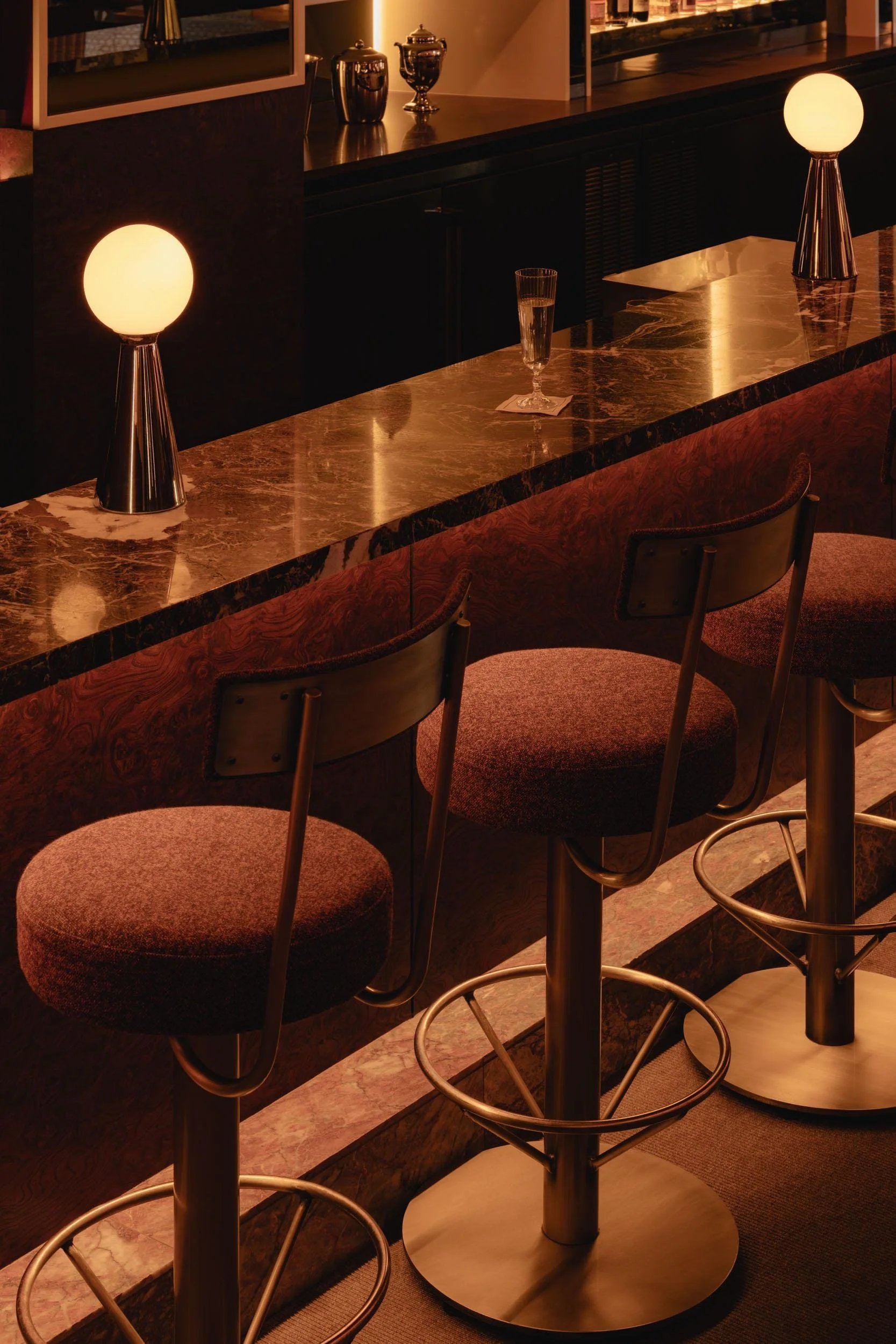
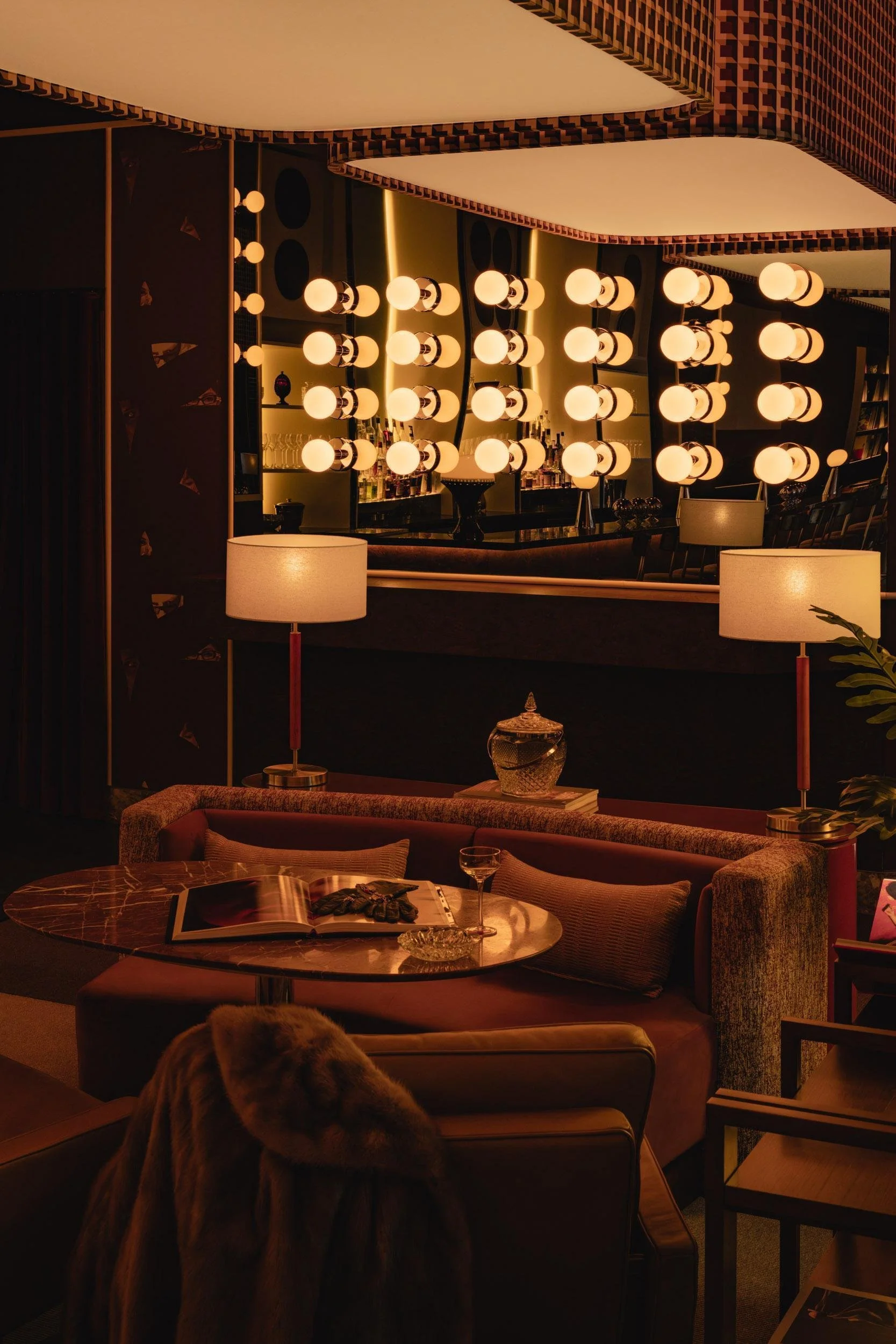
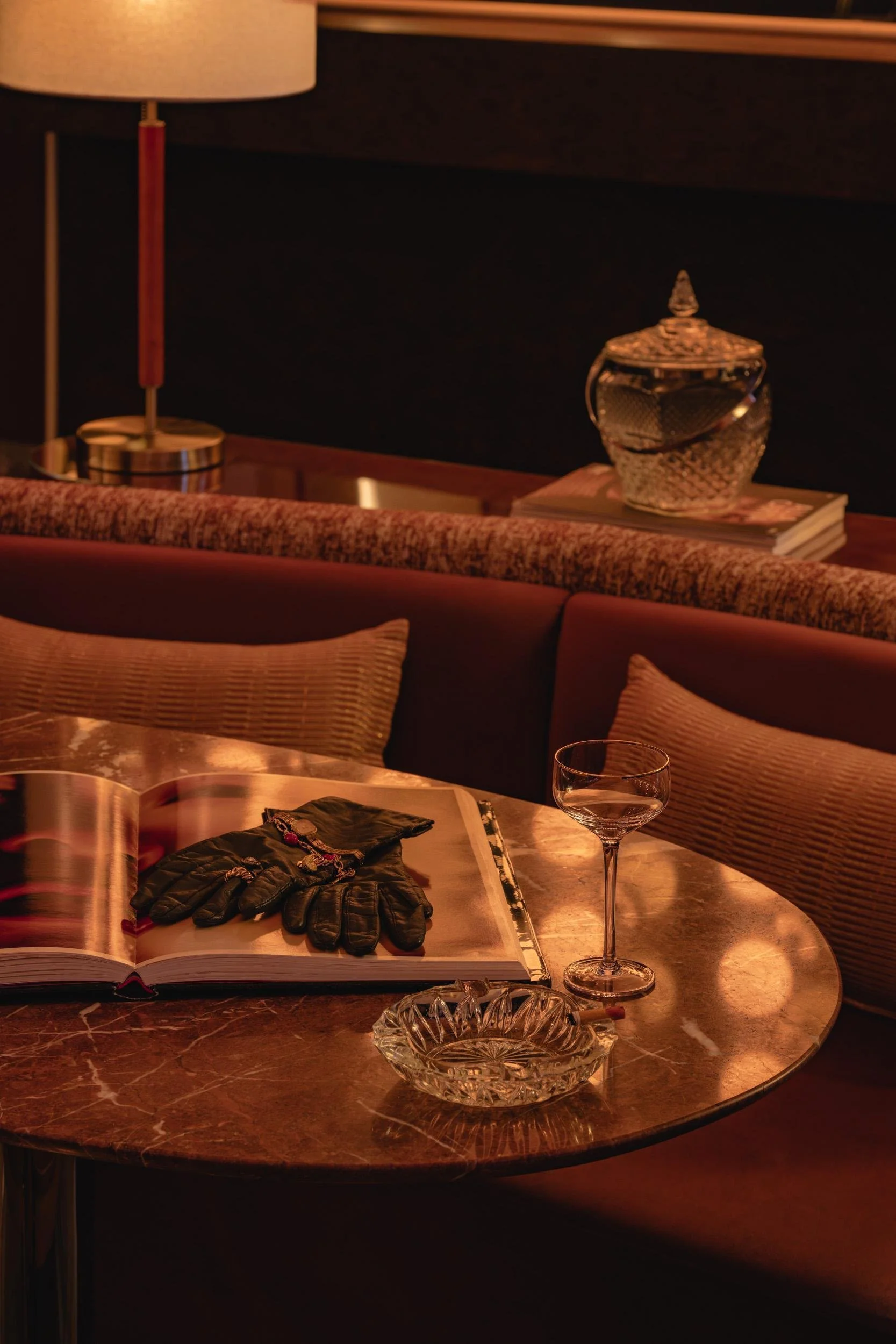
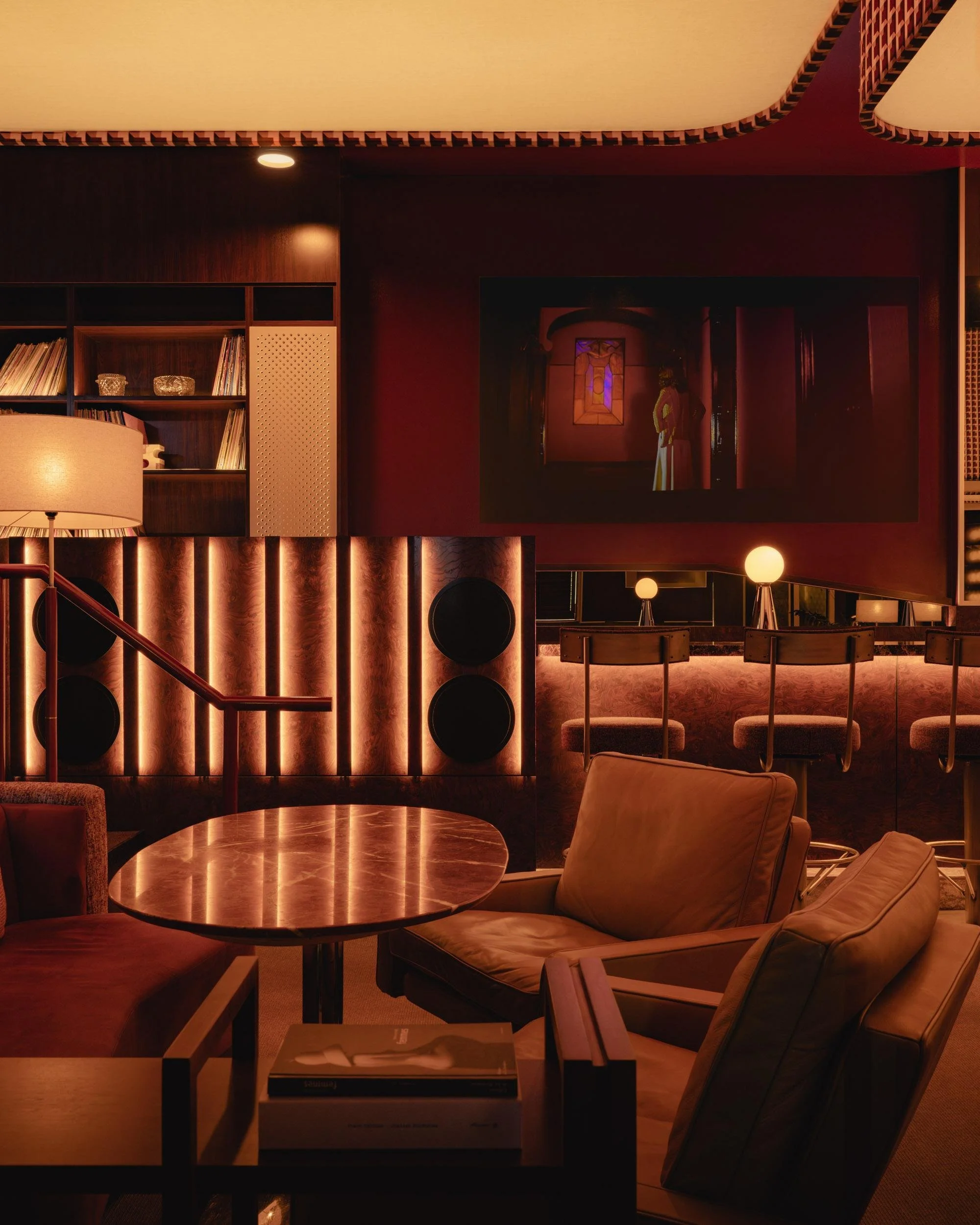
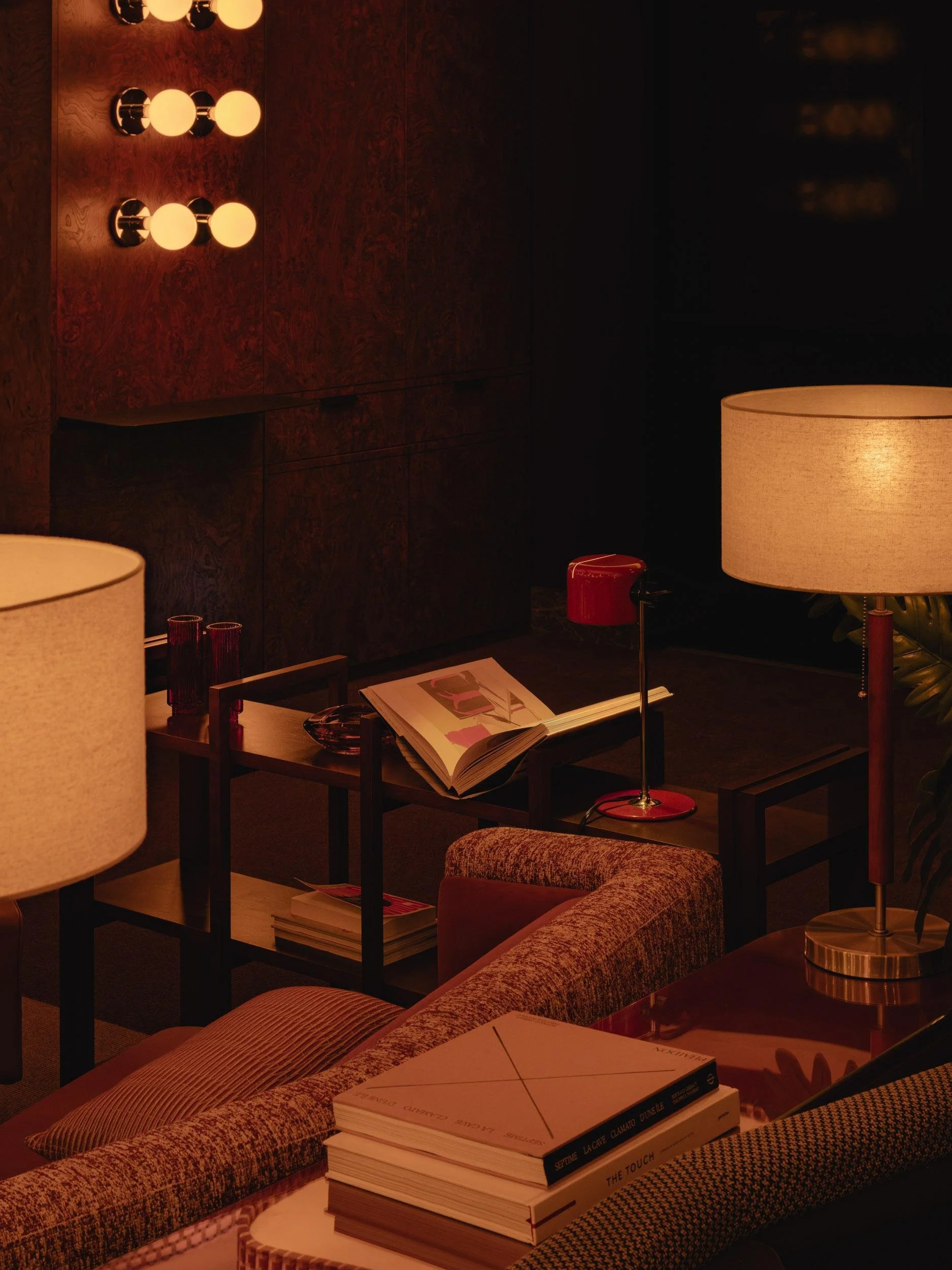
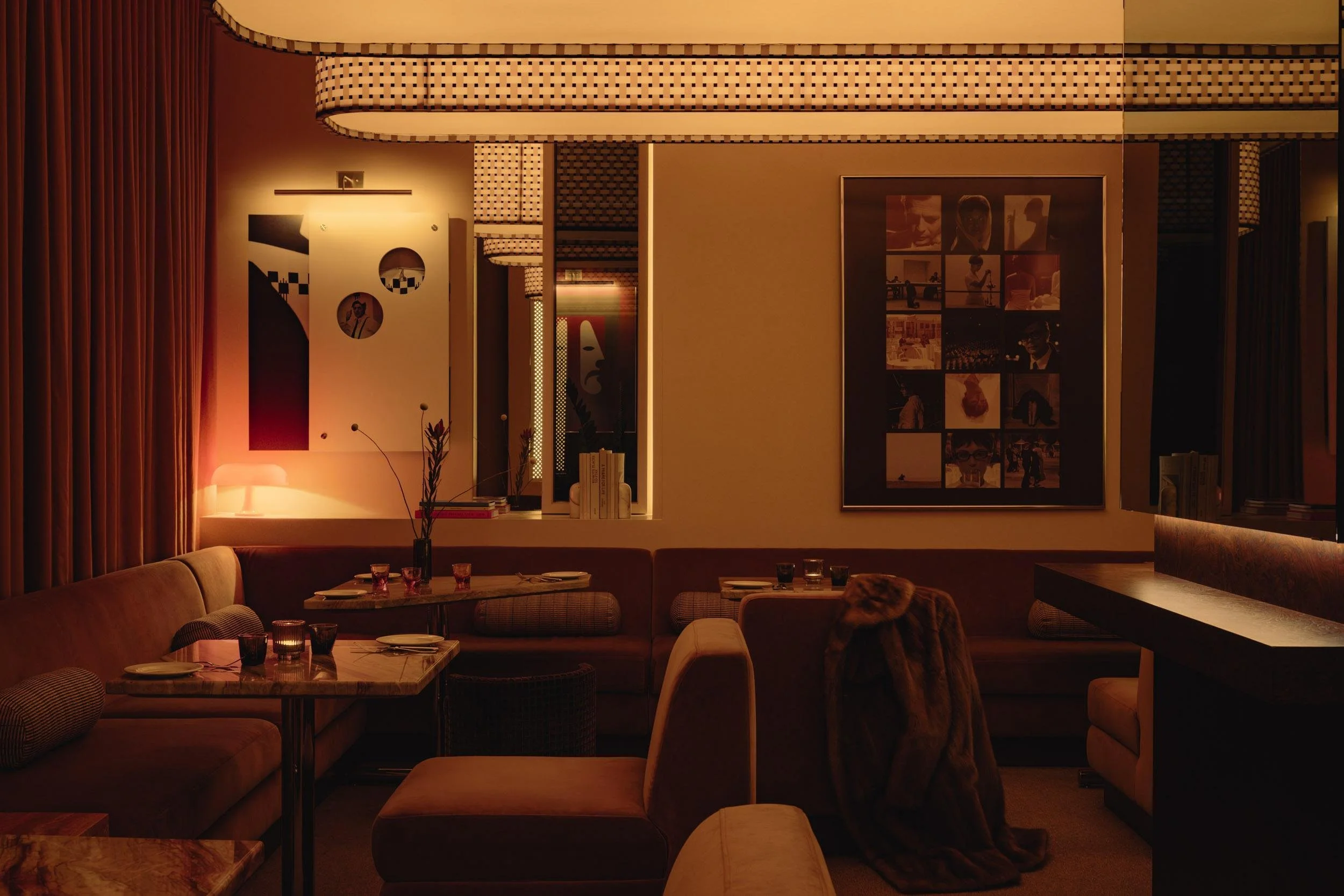
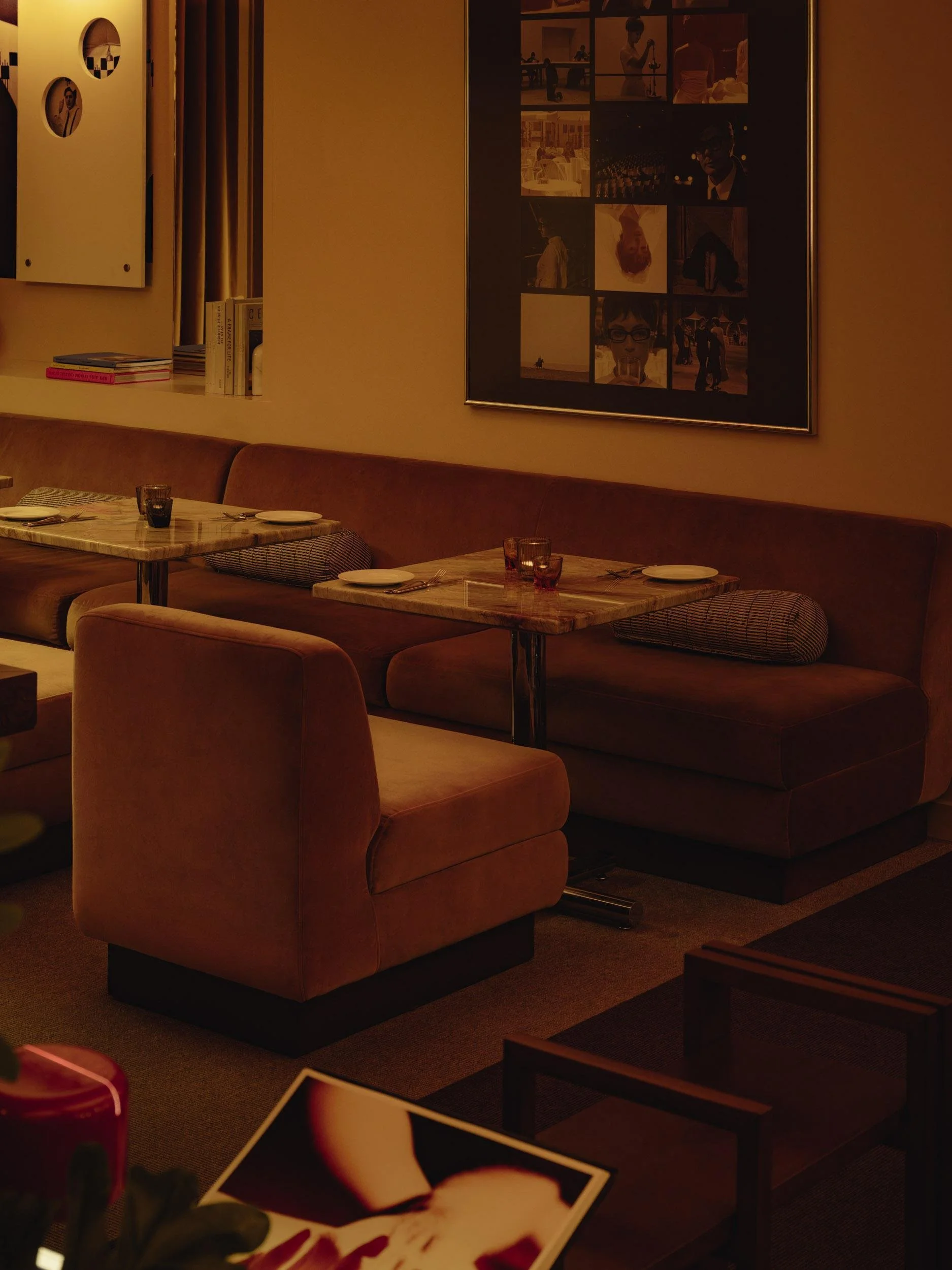
Mimi takes the project into later hours with a more cinematic energy and an up-tempo ambience. Its palette leans into deep browns, glossy reds, and amber tones, with Rosso Rubino marble and chrome details catching and amplifying the low light. Burnt orange velvet sofas, reminiscent of 1960s sunken lounges, sit alongside monolithic burled walnut panels, giving the interior a denser, more nocturnal character.
A repeated series of large capsule pendants establishes an even, consistent glow across Mimi, keeping the atmosphere intimate while supporting movement through the space. Artwork references Italo disco and iconic cinema, and an L-Acoustics sound system fills the room with a curated soundtrack spanning vintage soul, jazz, and deep disco. On occasion, the chef steps in for an impromptu set, reinforcing Mimi’s identity as both lounge and informal performance setting. Cocktails and late-night snacks extend service well into the evening, allowing the venue to shift between bar, lounge, and after-hours destination within one continuous footprint.
Olia and Mimi forms a day-to-night narrative built from material contrasts, lighting transitions, and carefully calibrated mood. Rather than functioning as fixed, singular destinations, the venues support fluid movement between brief encounters and long stays, between street-facing sociability and resident intimacy. In doing so, Ste Marie turns a tower’s ground plane into a lived-in civic interior: a place where hospitality becomes part of the building’s daily habits, and part of the neighbourhood’s ongoing life.