Lost Profile Gallery by Nickolas Gurtler Office
Nickolas Gurtler Office approached Lost Profile Gallery as an atmospheric interior where architecture, light and collectible design could exist as one composition.
Located within a weathered warehouse in Brunswick, Melbourne’s inner north, the gallery was conceived as an immersive environment for Lost Profile Studio’s lighting, furniture, objects and selection of vintage pieces. The intention was to create an interior that felt closer to a place of contemplation than a conventional retail setting, allowing each work to be encountered as sculpture.
The commission grew from a longstanding creative relationship between Nickolas Gurtler and Lost Profile founder Oliver Wilcox. The pair first crossed paths at Denfair nearly seven years ago, developing a shared sensibility around raw materiality, sculptural form and atmosphere. Lost Profile’s lighting has since appeared regularly in Gurtler’s interiors, its metallic surfaces and precise forms naturally complementing the studio’s architectural language. The gallery offered an opportunity to extend this dialogue into a complete environment.
Founded by Wilcox, Lost Profile Studio takes its name from profil perdu, the French painting technique, and works across lighting, furniture and objects. Material curiosity sits at the heart of the Melbourne studio’s practice, with each piece conceived to carry a sense of presence and poetic weight. Represented across the U.S., Europe and the Middle East, and with multiple exhibitions at Salone del Mobile in Milan, Lost Profile has developed a distinct international profile while retaining its Melbourne roots.
The idea for a dedicated gallery had been forming quietly for several years. Wilcox wanted a place that could accommodate the wider expression of the studio, bringing together lighting, furniture, objects and selected pieces from his evolving vintage collection. The discovery of the Brunswick warehouse provided an opportunity to create an environment with its own architectural character, while retaining a connection to the building’s existing material qualities.
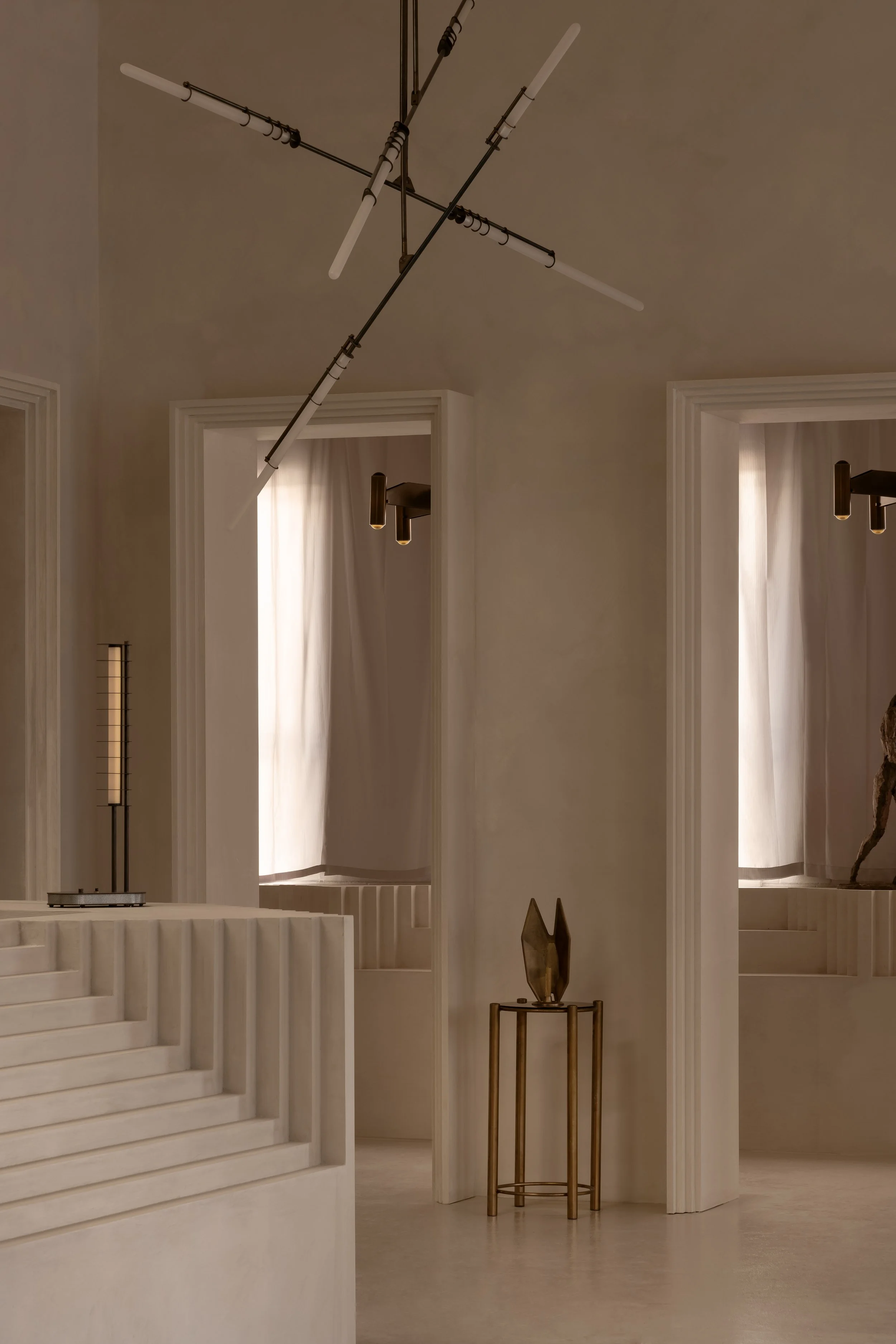
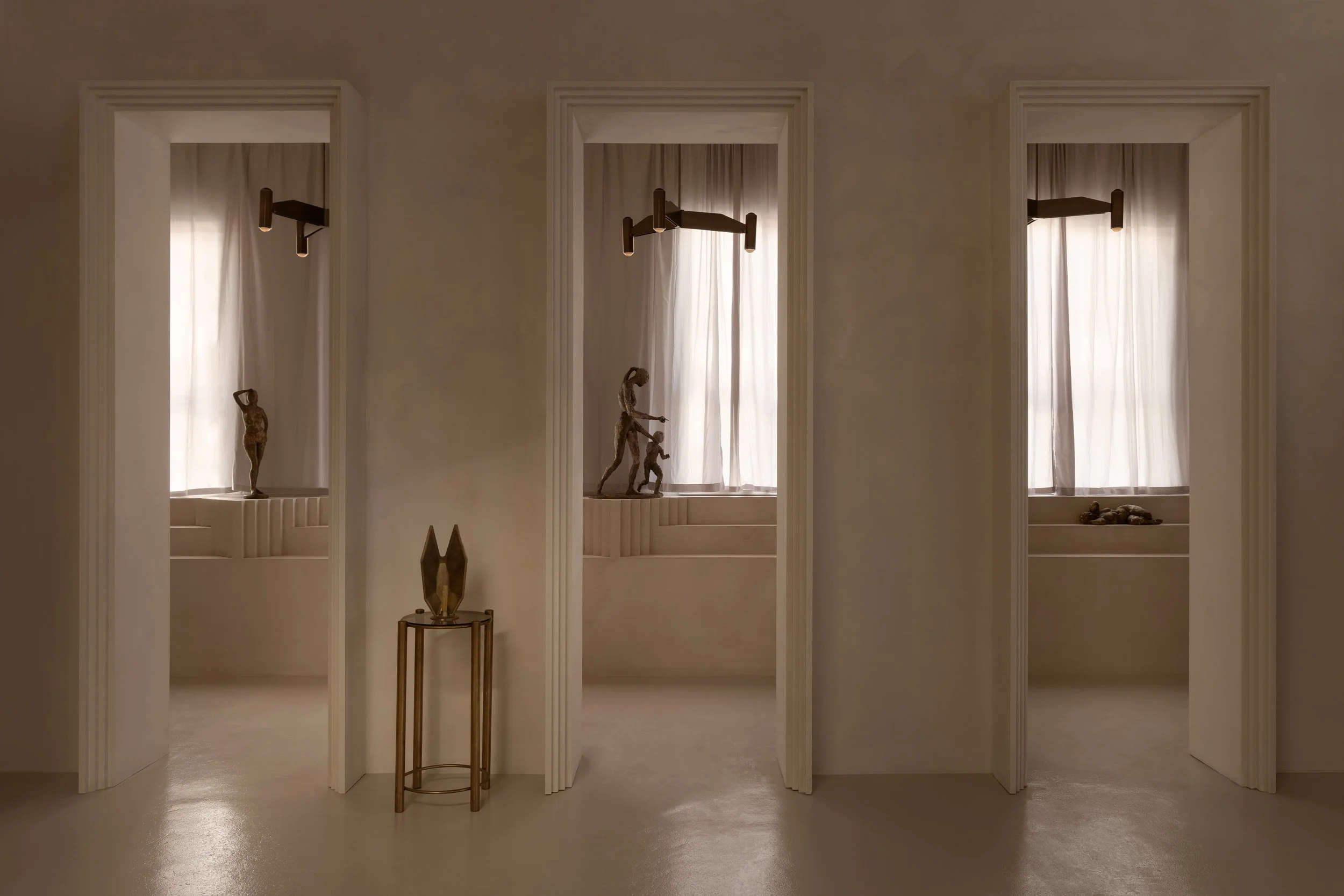
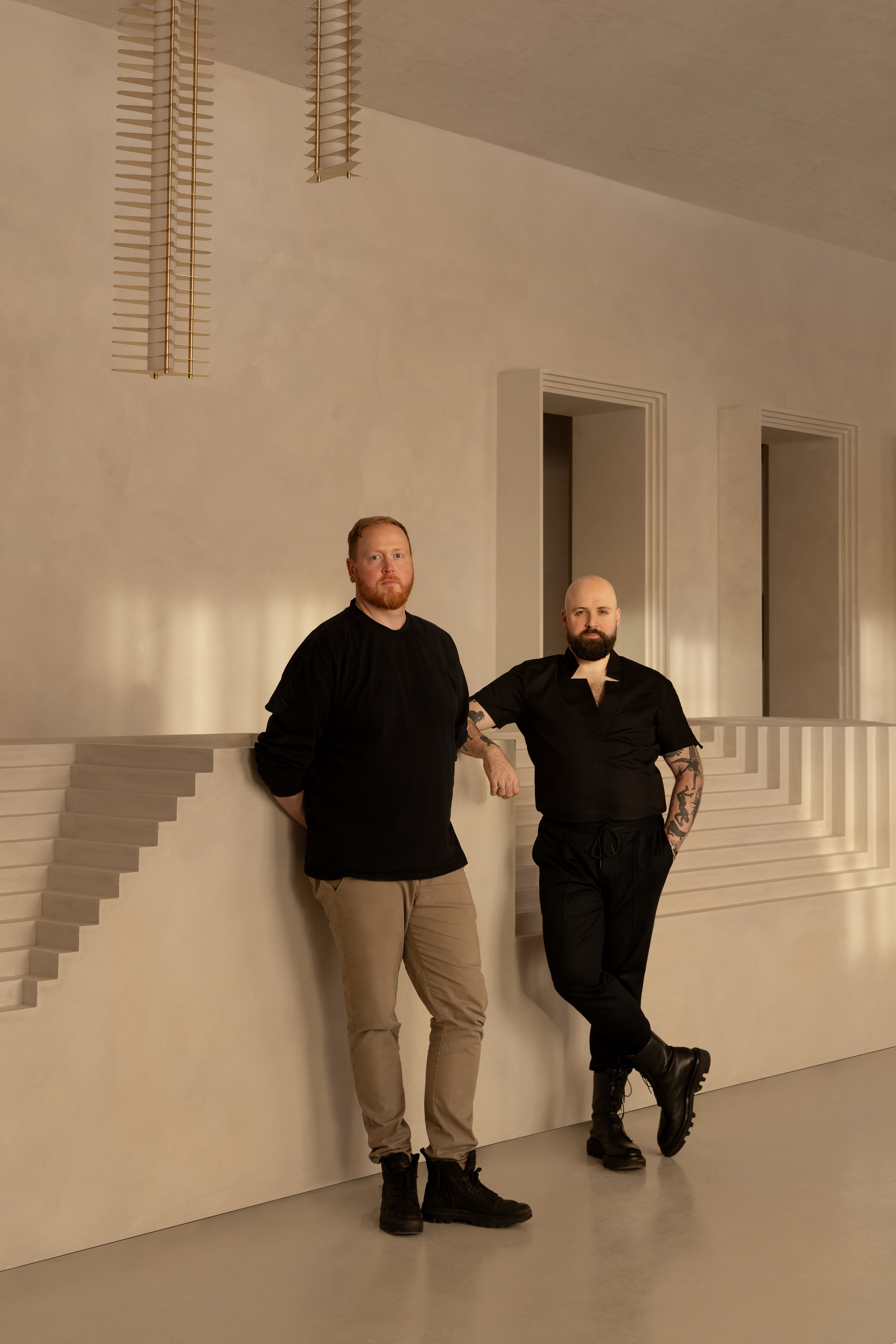
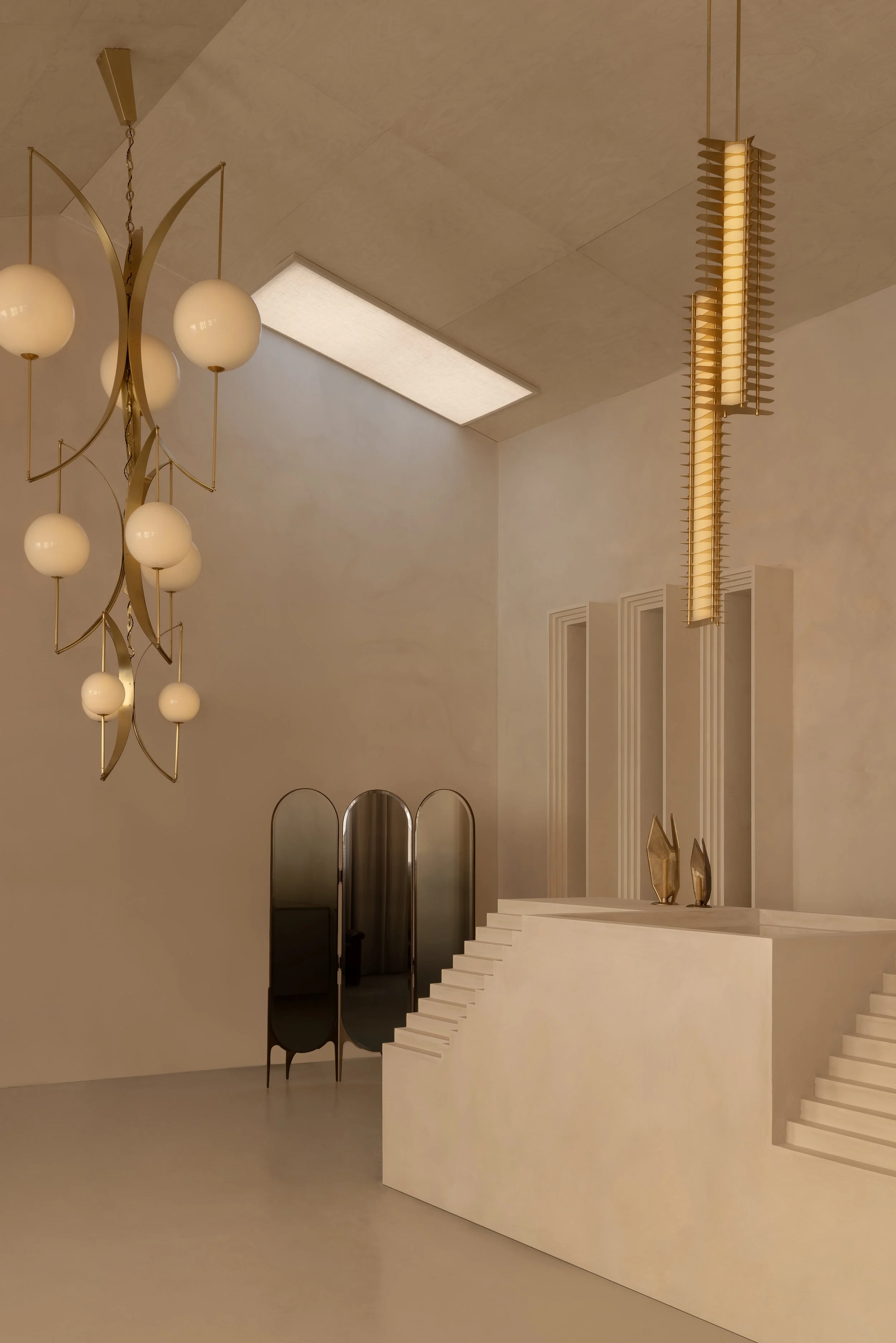
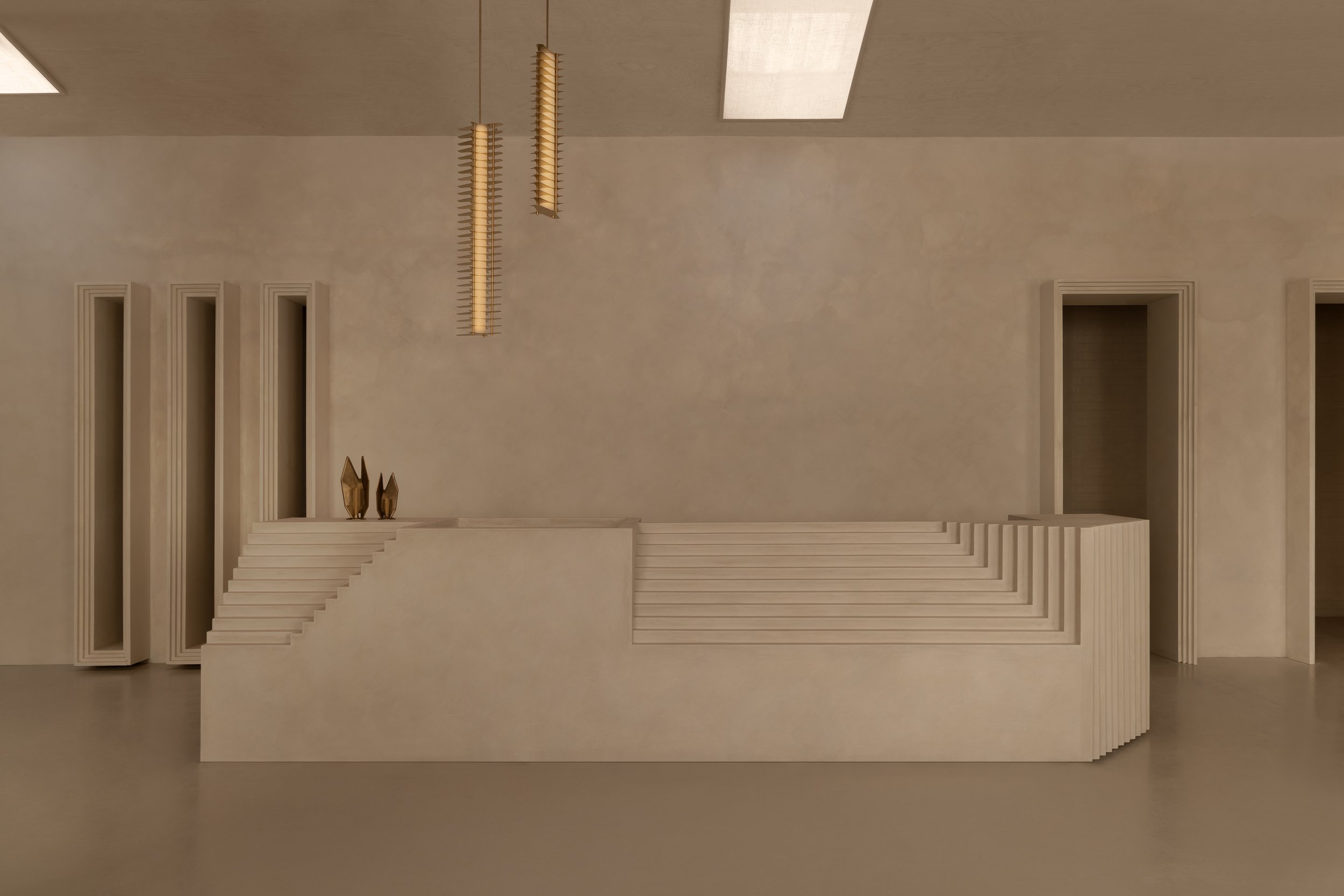
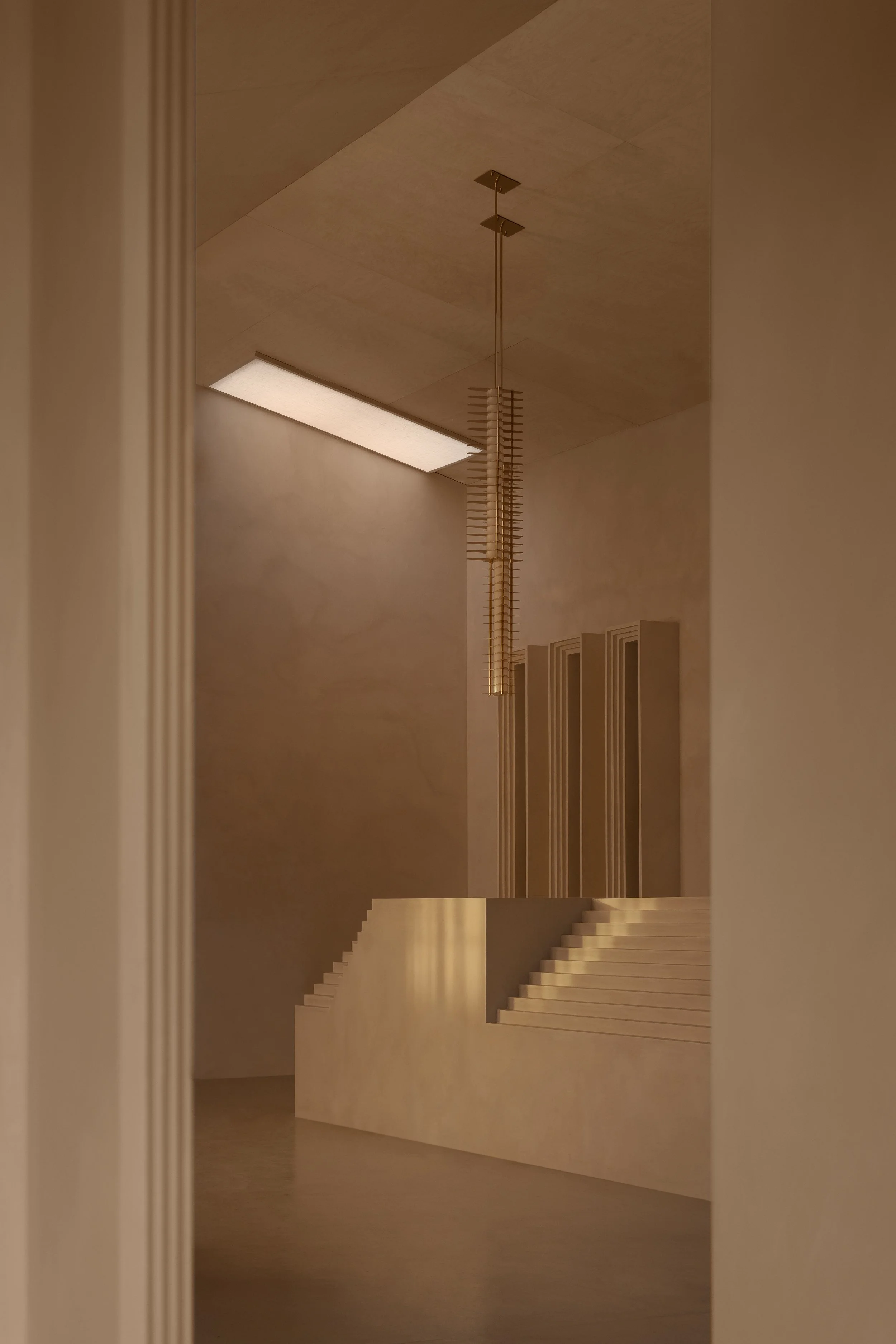
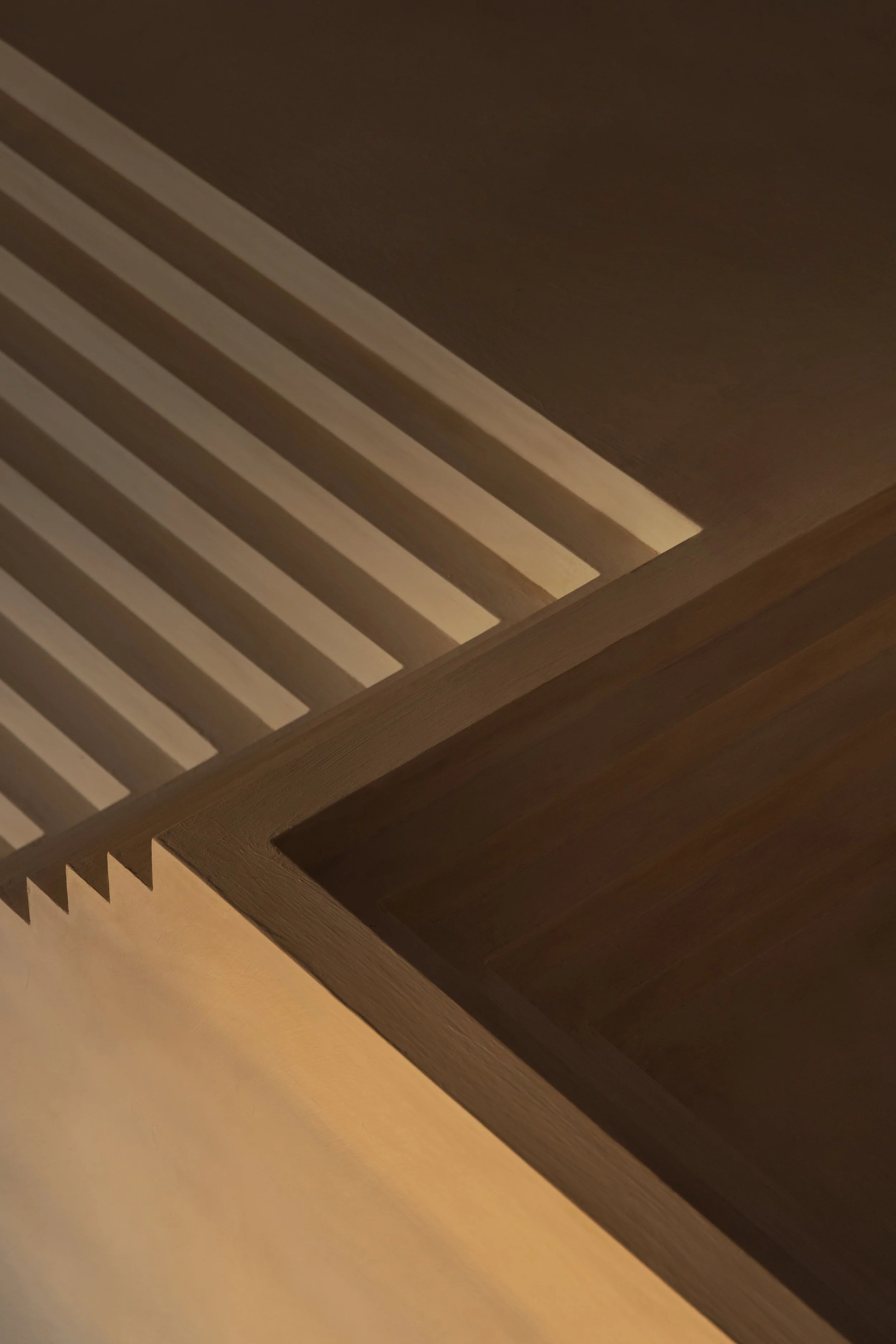
For Nickolas Gurtler Office, the response centred on atmosphere, procession and emotional resonance. The interior was conceived with the restraint and reverence of a temple, where the collection could be experienced slowly and with a heightened awareness of material, shadow and form. Architecture was developed around the objects from the outset, allowing the furniture and lighting to become integral to the spatial composition.
Two key references informed the conceptual direction. Carlo Scarpa’s Tomba Brion offered a language of geometry, shadow and material precision, while the screen adaptation of Isaac Asimov’s Foundation provided a conceptual framework for exploring light and perception. From these references emerged the idea of Dawn, Day and Dusk, with each state informing a distinct treatment of colour, illumination and atmosphere.
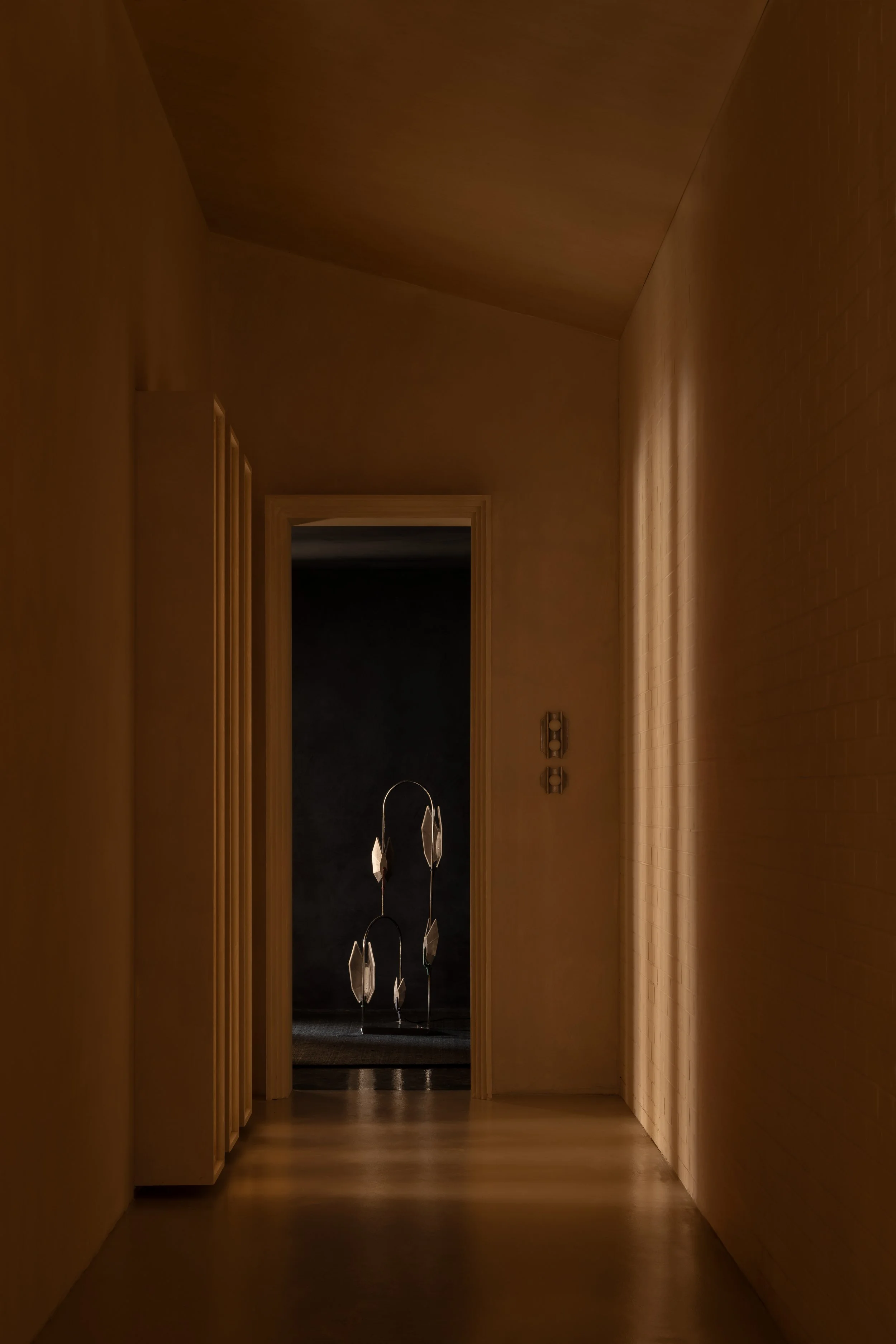
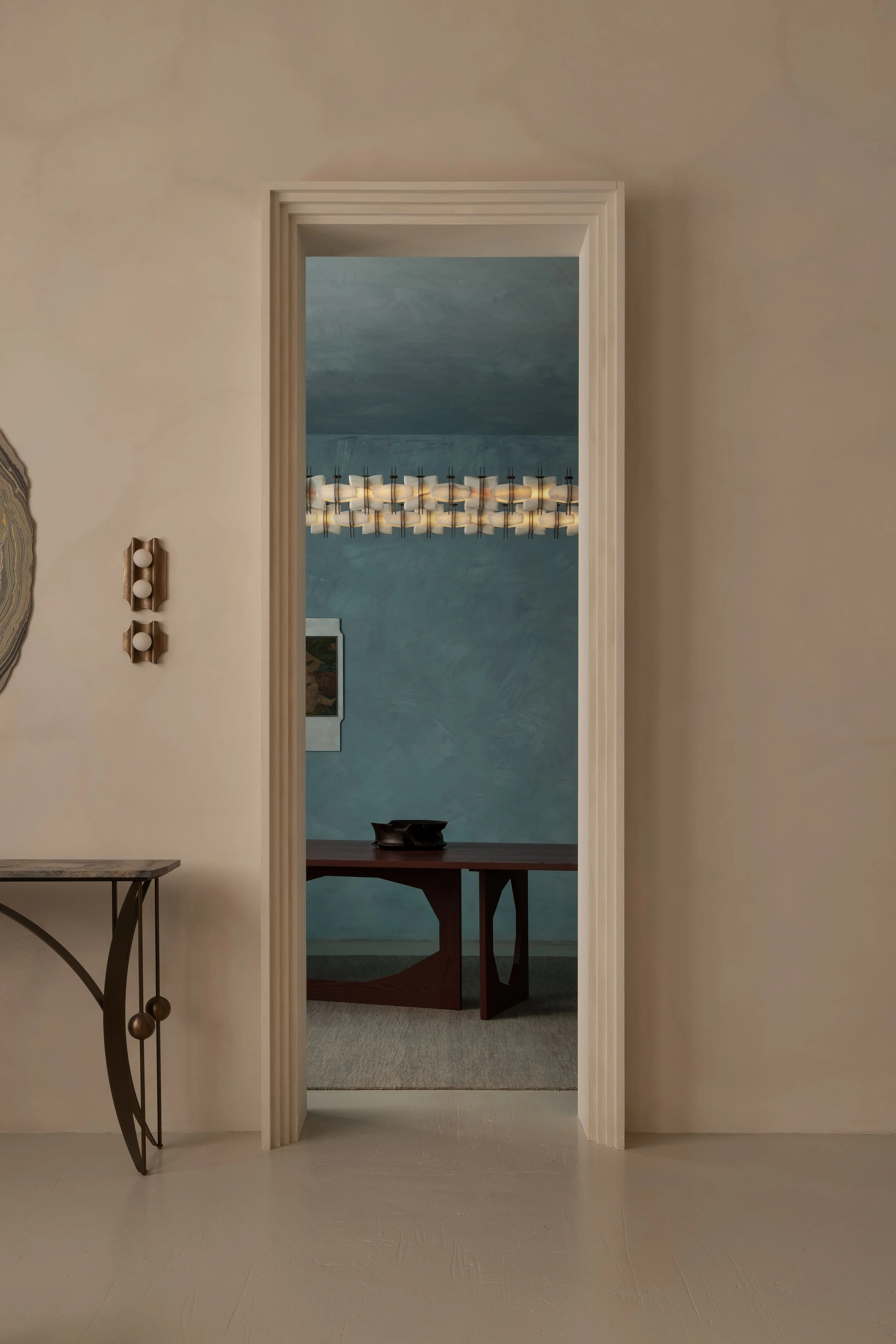
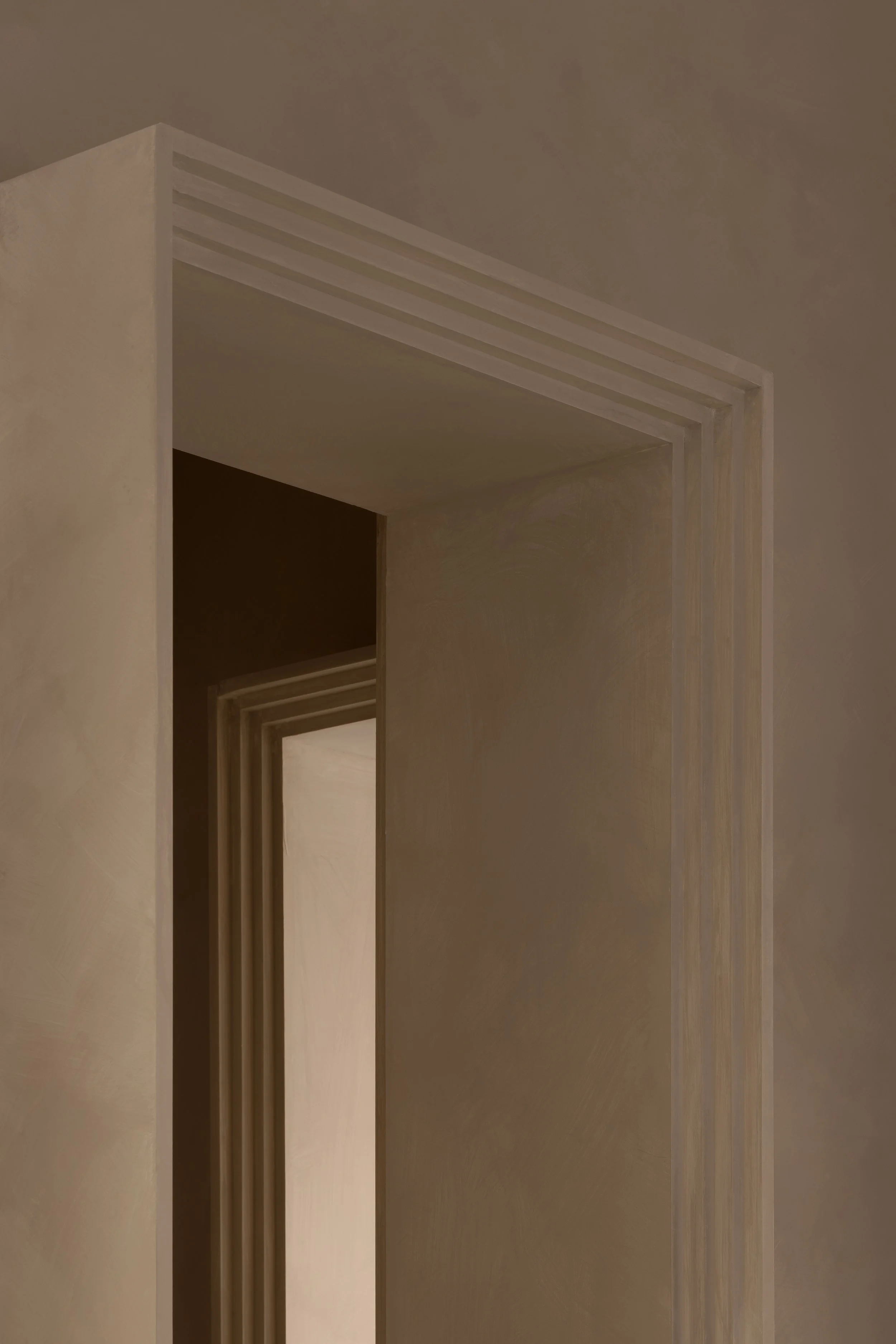
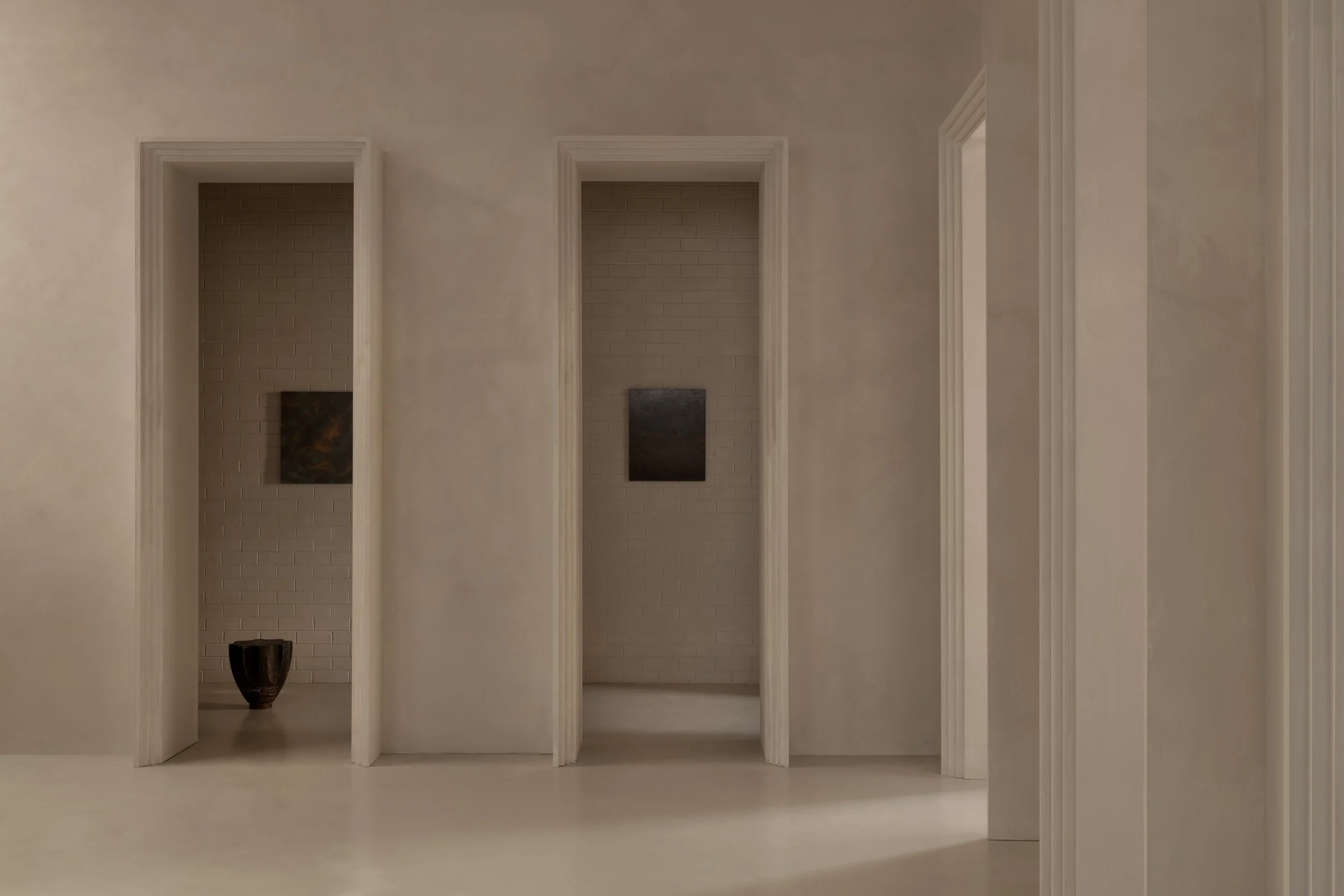
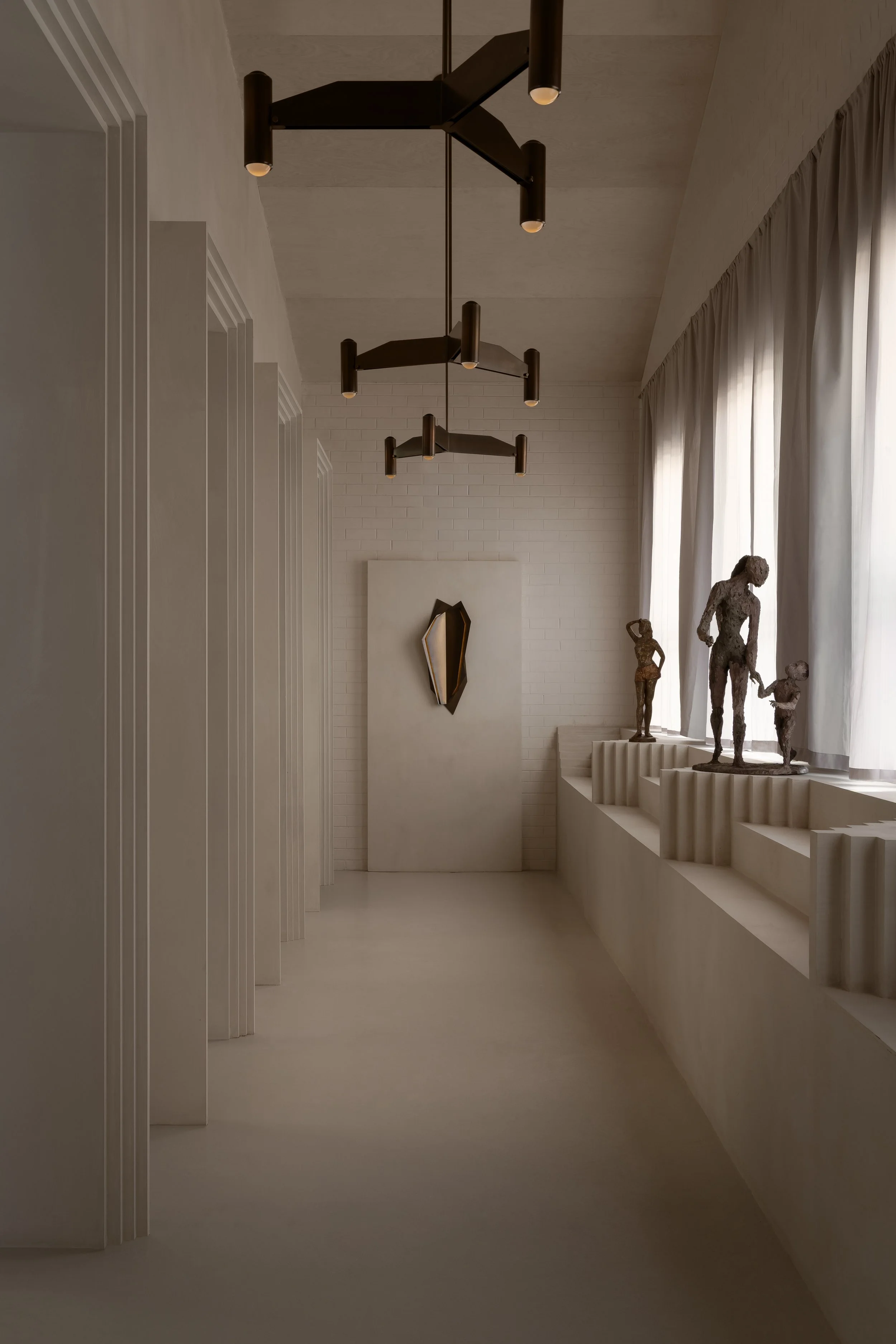
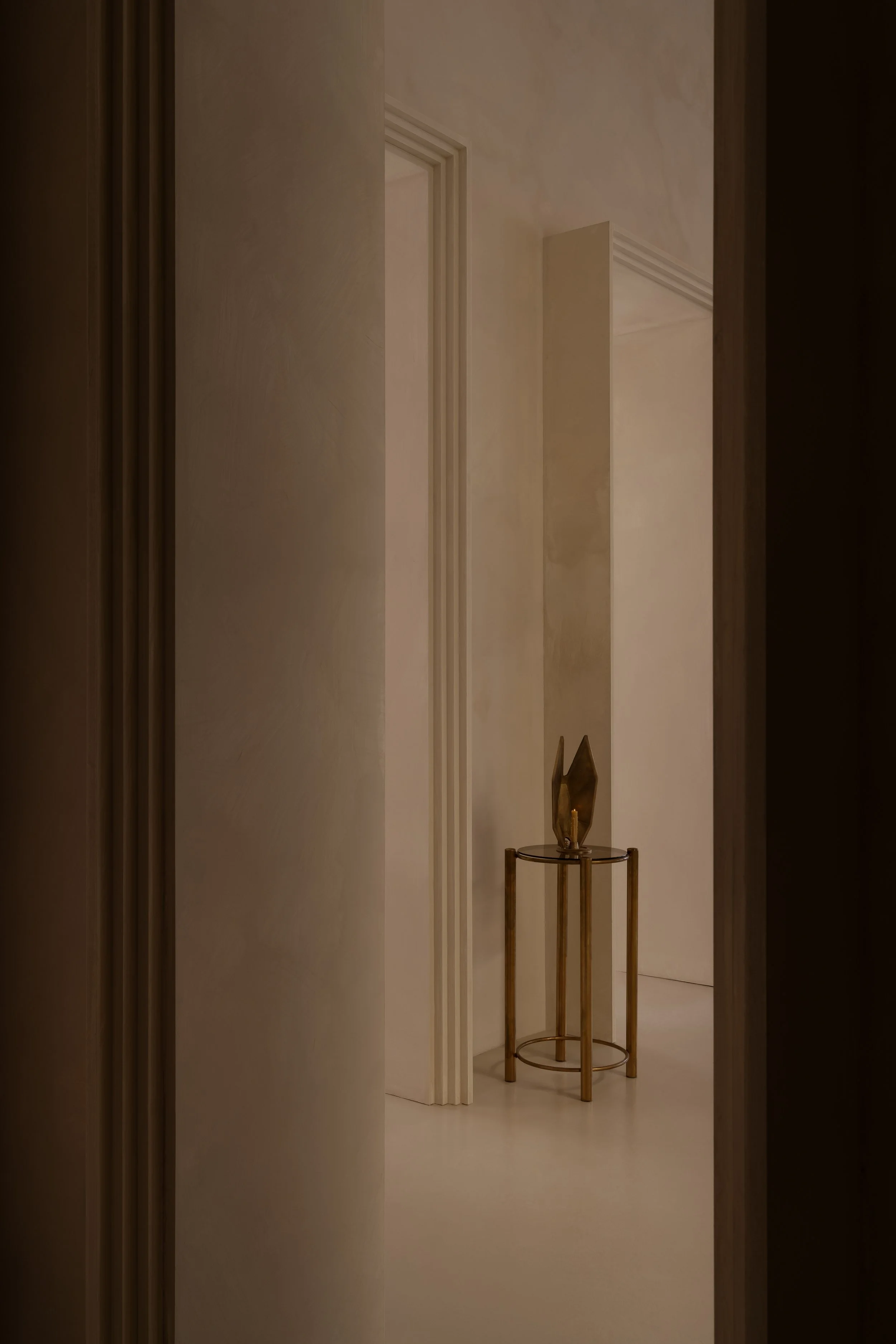
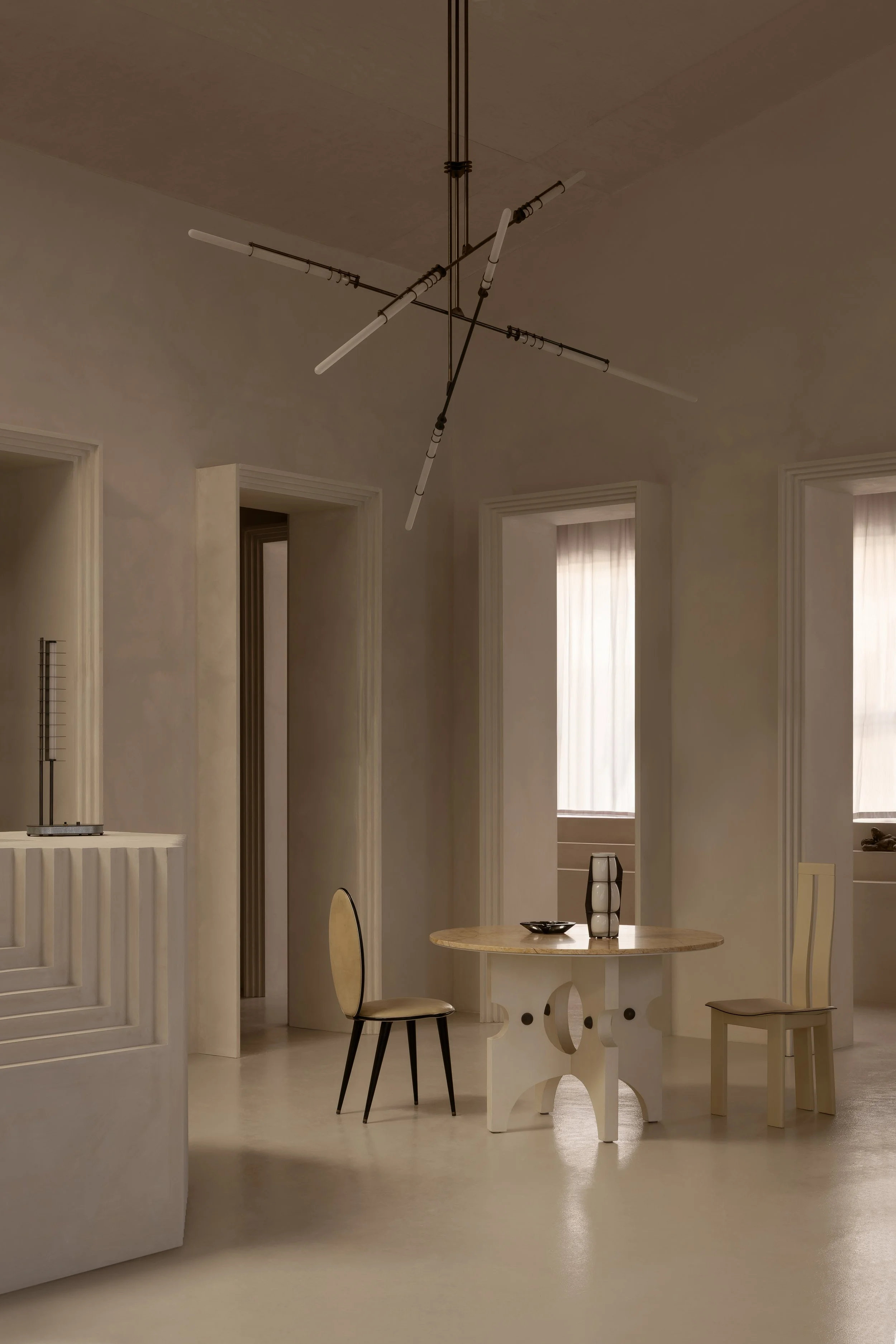
The gallery is wrapped in creamy limewashed surfaces, their soft matte finish creating a warm and tactile backdrop for the collection. At its centre, a vaulted main chamber forms the heart of the interior, connected to surrounding rooms through a series of portals. These openings frame views between spaces while controlling the movement of light, creating moments of compression, release and anticipation.
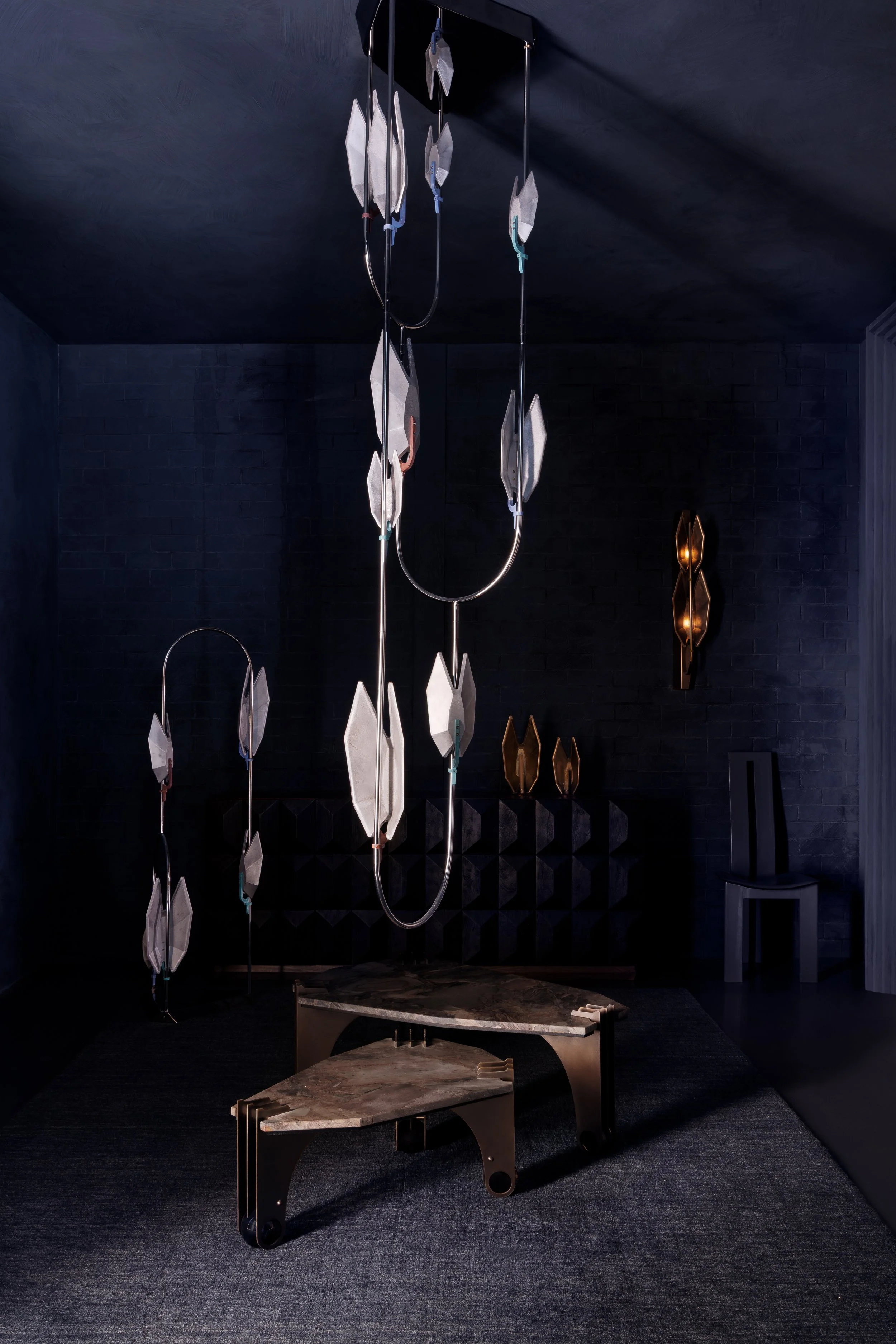
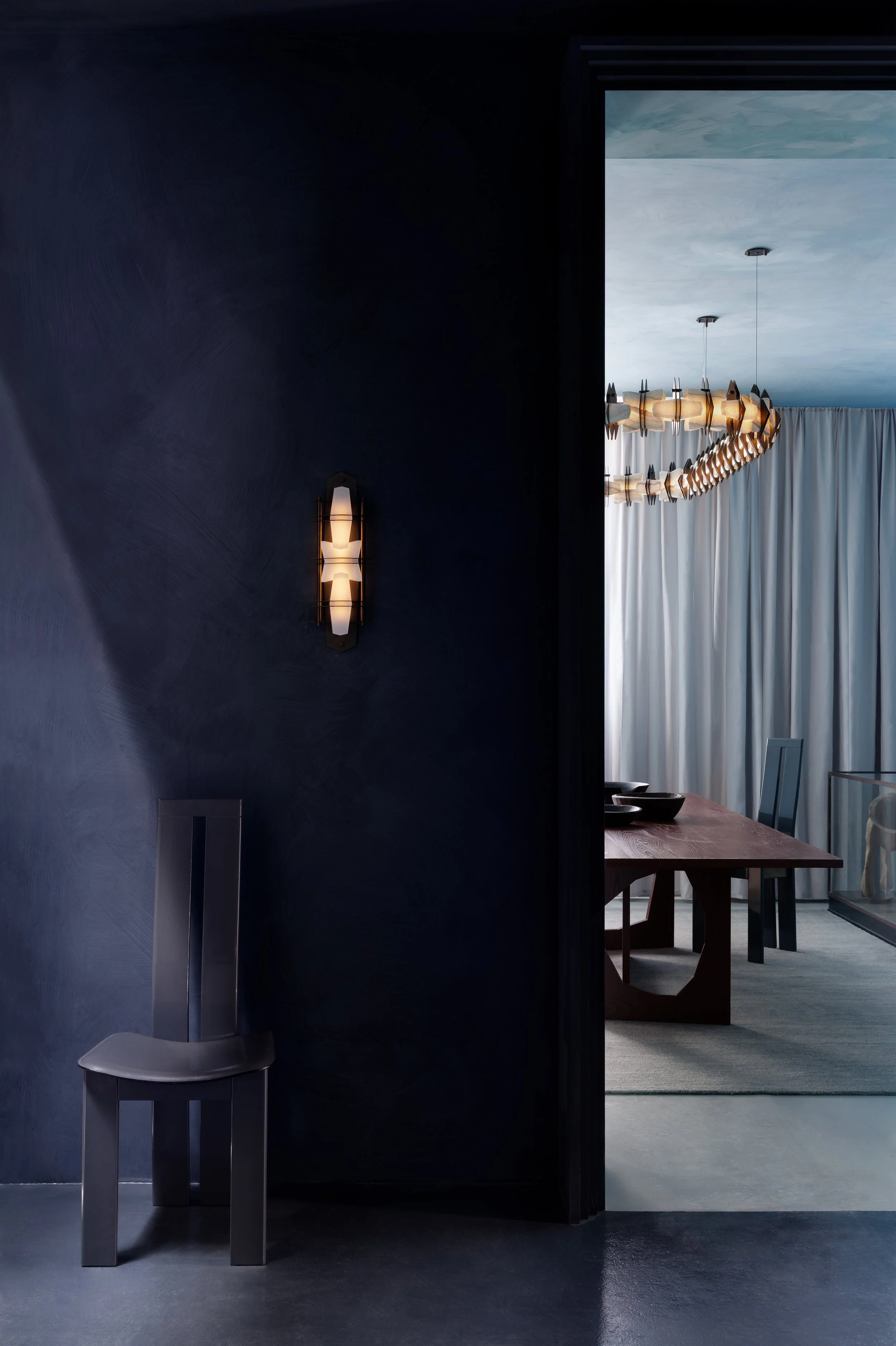
Two coloured rooms punctuate the otherwise pale interior. A deep midnight blue room evokes dusk through its darker, more enveloping atmosphere, while a pale blue room introduces the cooler stillness of dawn. Both are first encountered through the portals before being fully revealed, creating moments of contrast within the restrained palette.
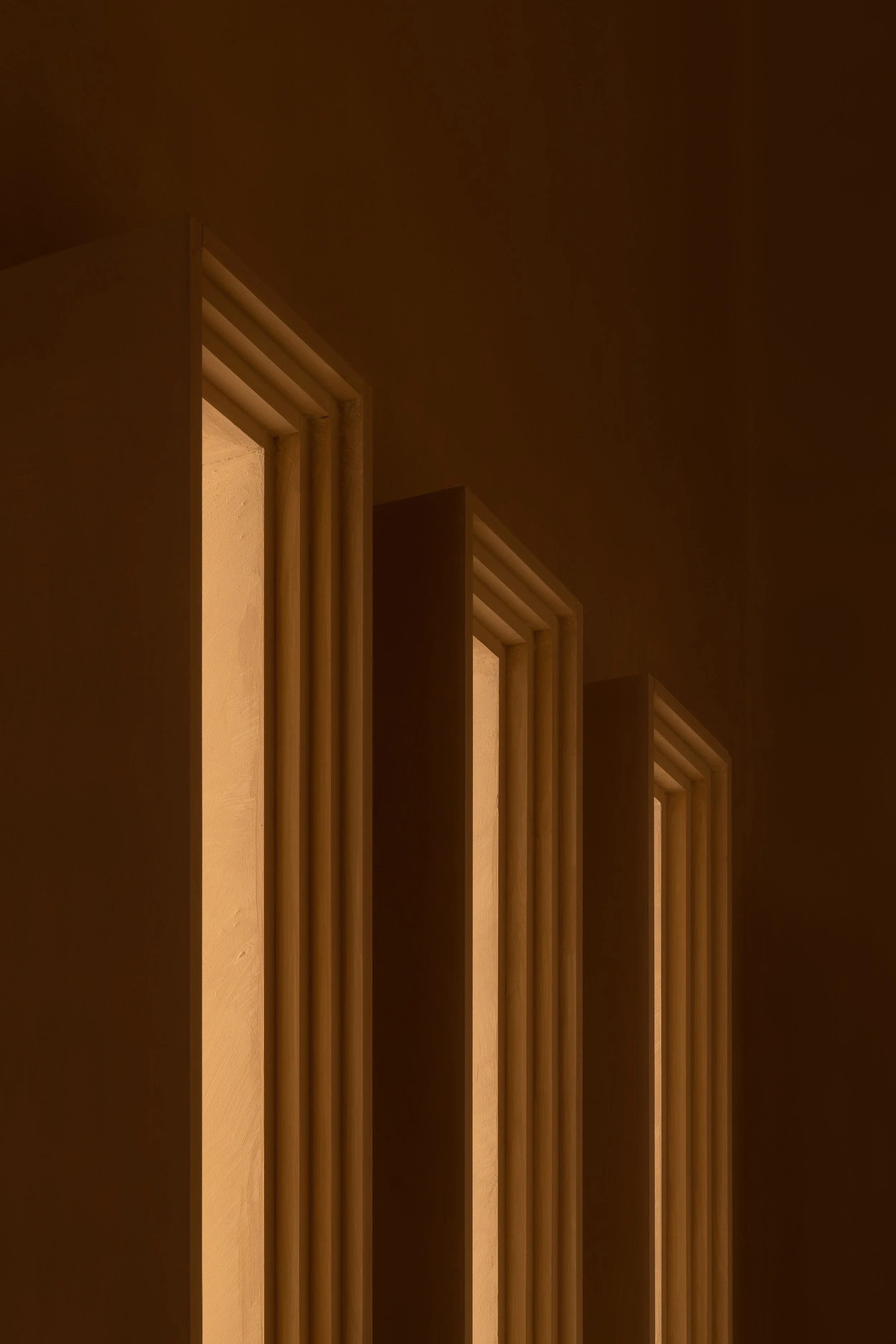
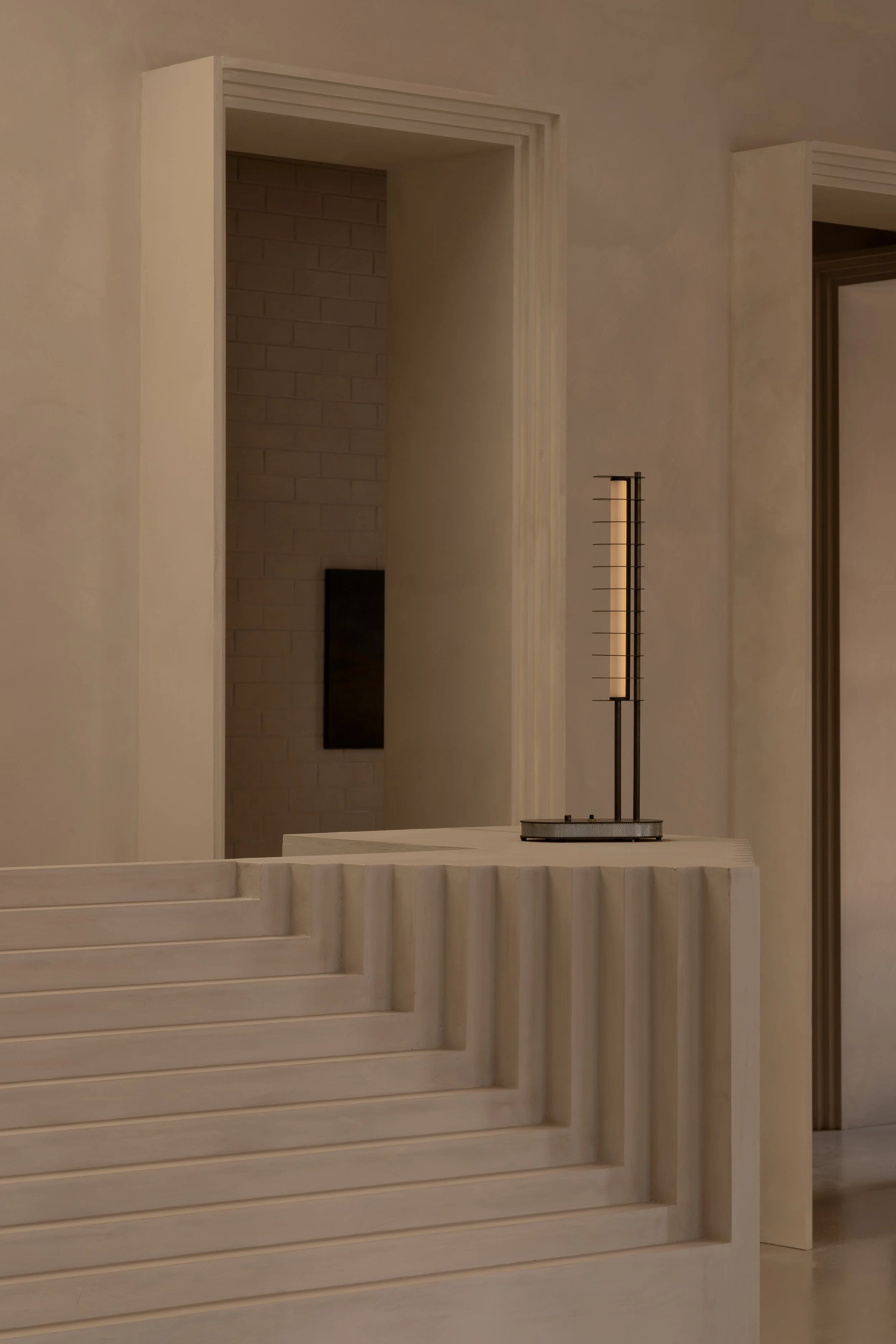
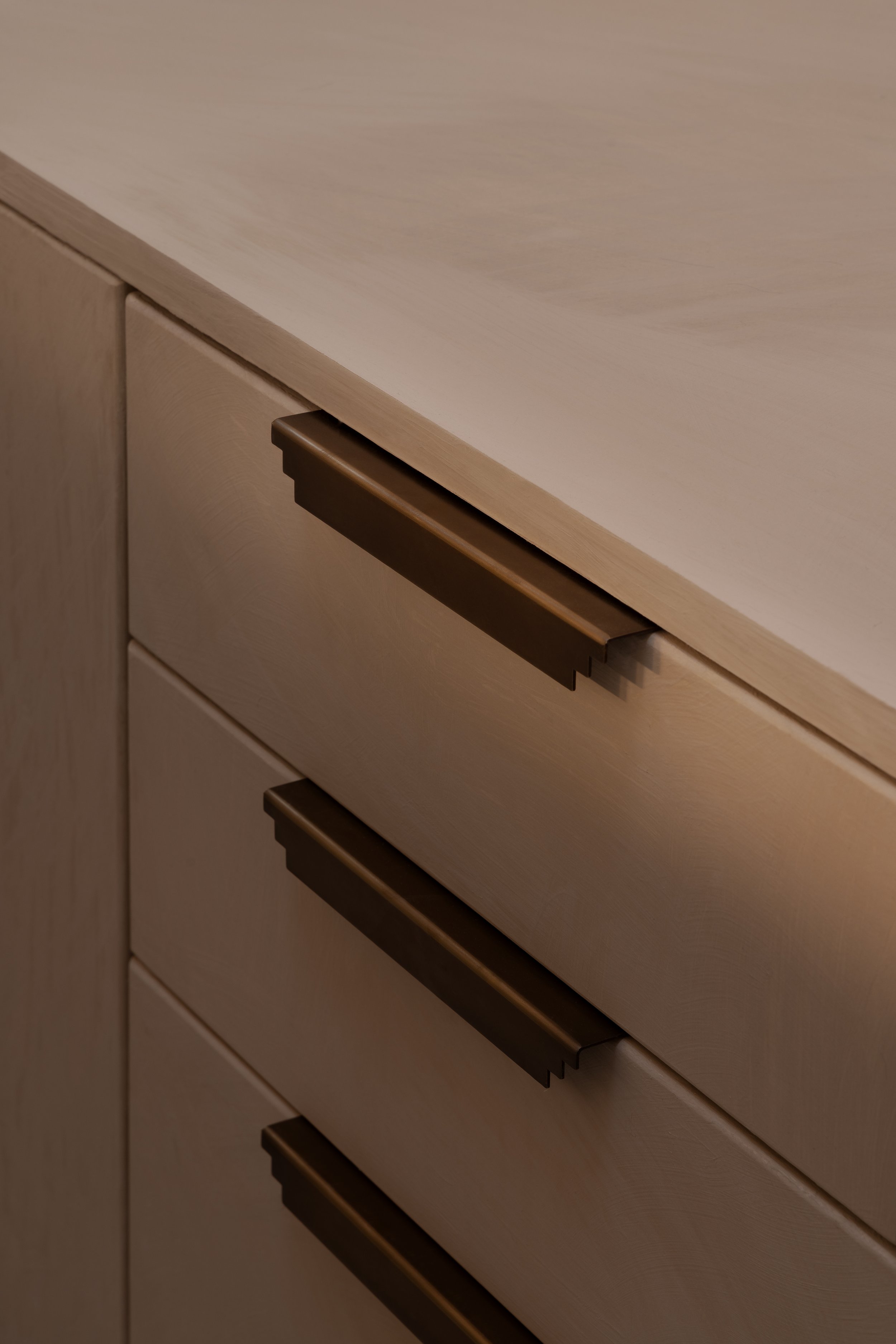
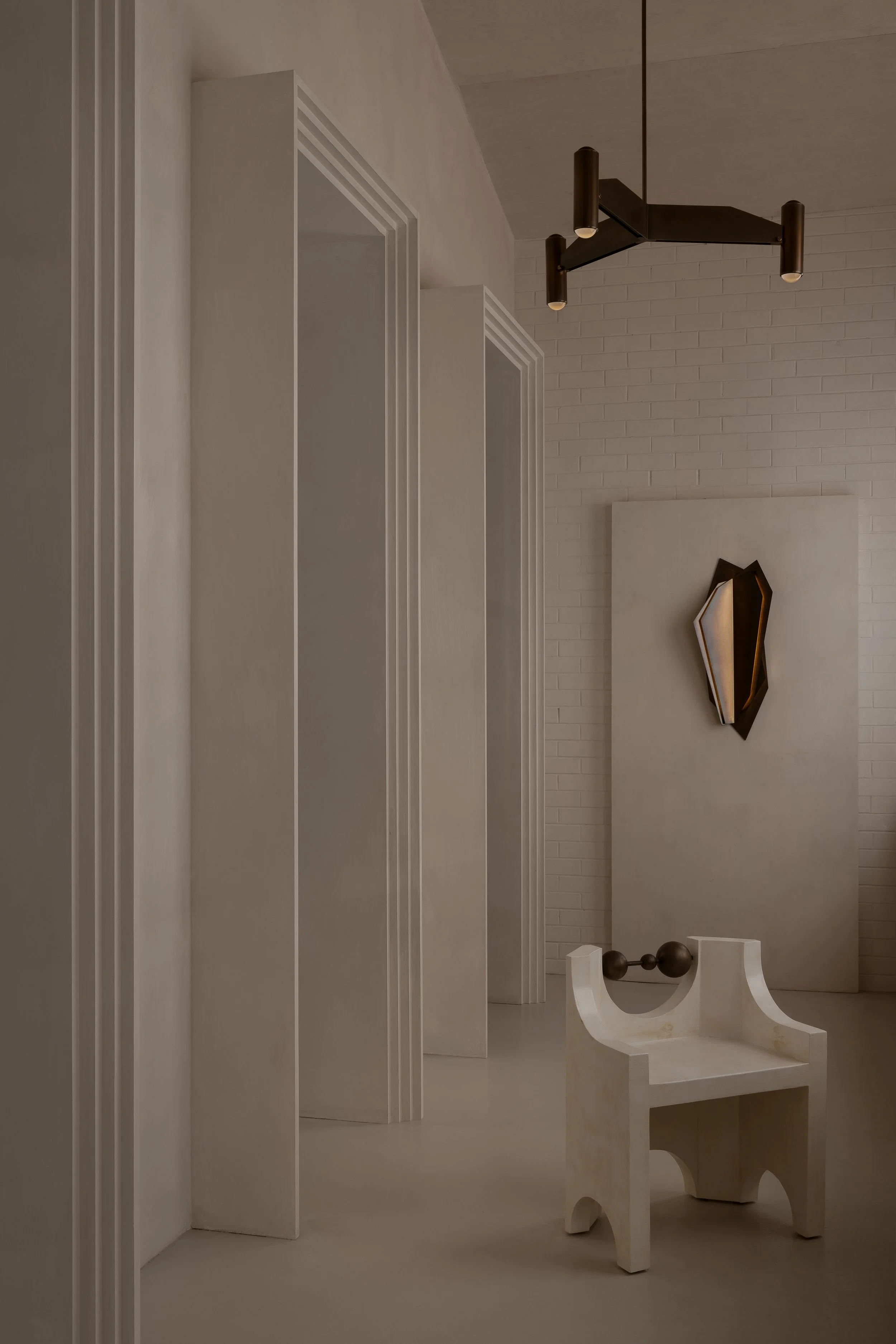
Stepped details recur throughout the gallery, appearing across the portals, displays and monolithic central desk. Referencing Scarpa’s layered architectural language, these elements introduce subtle shifts in depth and scale while reinforcing the sense of ceremony. Within the vaulted chamber, the stepped desk acts as a sculptural focal point, occupying the room with the quiet authority of an altar or plinth.
Light plays an equally important architectural role. Filtered through portals and shaped by shadow, colour and gradation, it becomes a material that changes the perception of the collection throughout the gallery. Dawn, Day and Dusk are expressed through these variations, allowing light to influence not only visibility but also mood and spatial perception.
Against this restrained architectural setting, Lost Profile’s lighting, furniture and objects take on a heightened presence. Pieces are integrated into built elements and considered displays, creating a close relationship between the works and their surroundings. The architecture provides more than a backdrop for the collection, with each informing the placement, scale and perception of the other.