Lady Duneed by Pip Johnson Studio
Designed for a young family, Lady Duneed by Pip Johnson Studio balances warmth, durability and thoughtful functionality within a carefully restored period home.
Originally built in 1919, the residence had fallen into significant disrepair when it was purchased, with deteriorating finishes, mismatched heritage details, lowered door heights and vividly coloured interiors obscuring the character that lay beneath.
While many would have considered demolition, the home's underlying qualities revealed an opportunity for renewal. Its distinguished period façade, generous proportions, original fireplaces and soaring ceilings offered a strong foundation for transformation. Equally compelling was the existing floorplan, which featured four substantial rooms at the front of the home, providing a clear framework for preserving and enhancing the property's heritage character while introducing contemporary family living to the rear.
Given the scale of the project and the evolving needs of a growing family, the renovation was approached in two carefully considered stages. The first focused on restoring the home's original architectural features and establishing a cohesive plan for the future extension. Bringing the period frontage back to life involved restoring heritage elements and introducing a refined external palette that elevated the home's street presence while remaining respectful of its history.
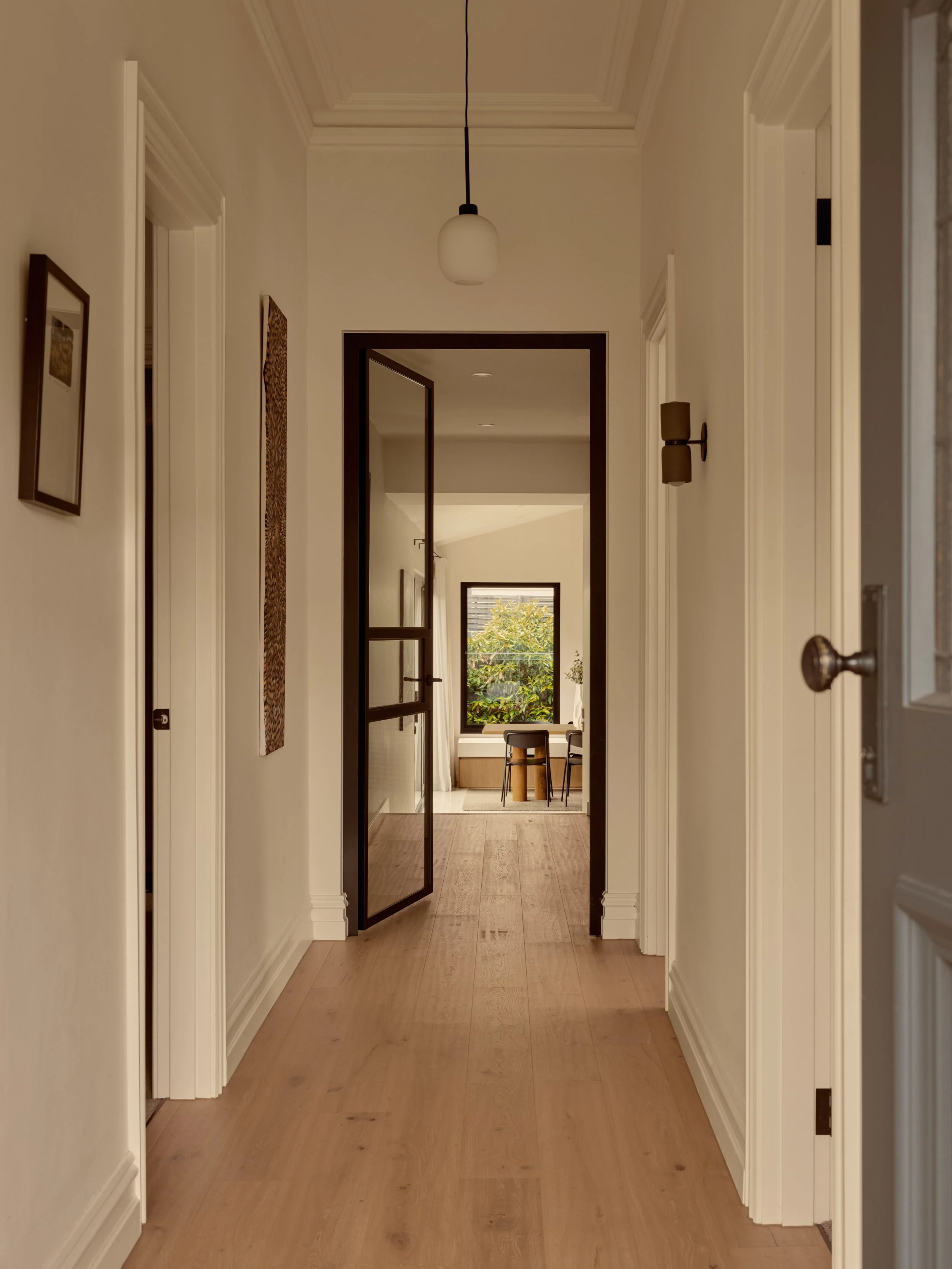
Inside, much of the work centred on revealing the home's original proportions. Period cornices and ceiling roses were reinstated, while door openings were extended to expose the full ceiling heights concealed by previous alterations. These interventions strengthened the architectural integrity of the existing rooms and reinforced the sense of generosity that had always been present within the home.
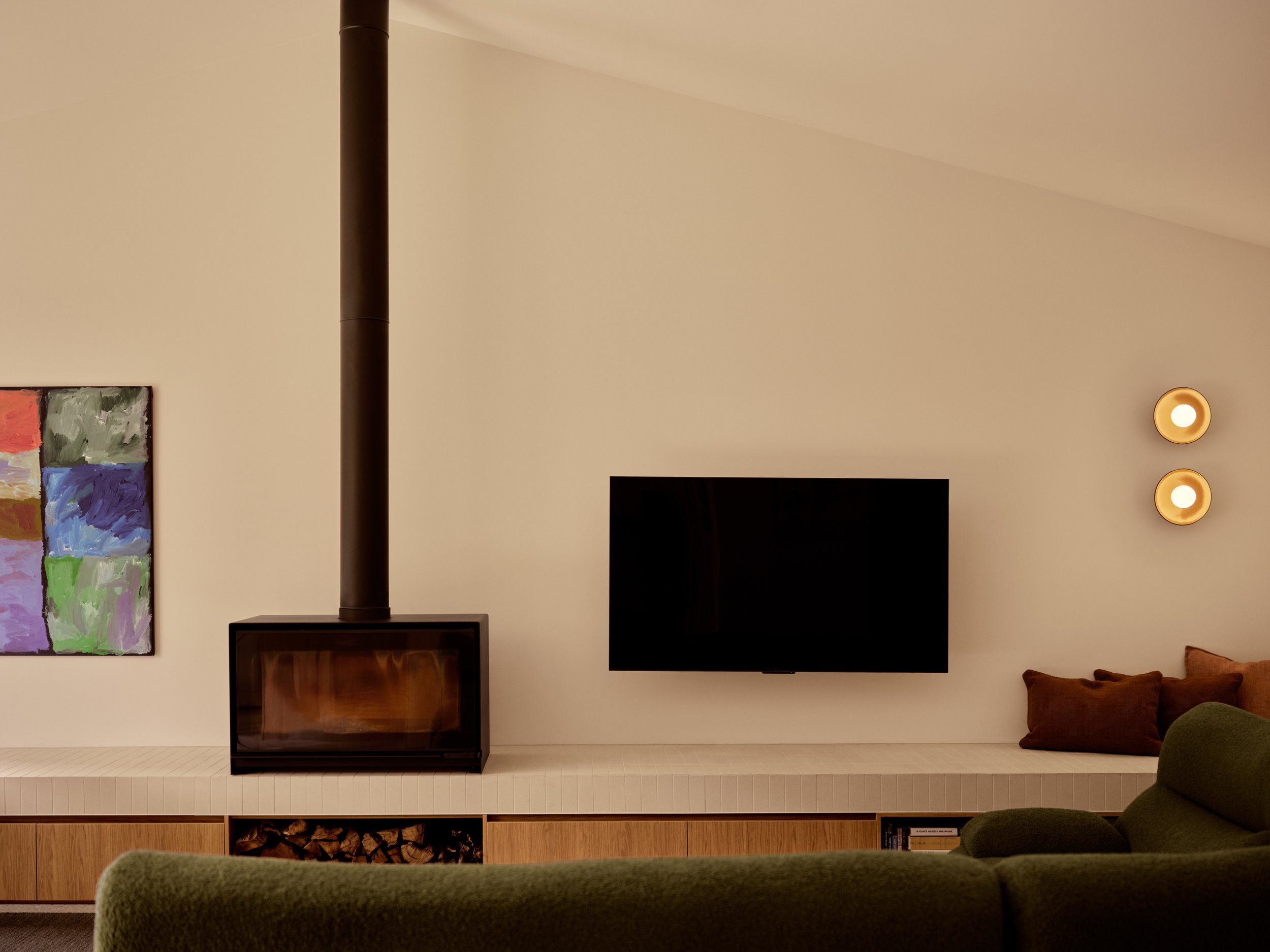
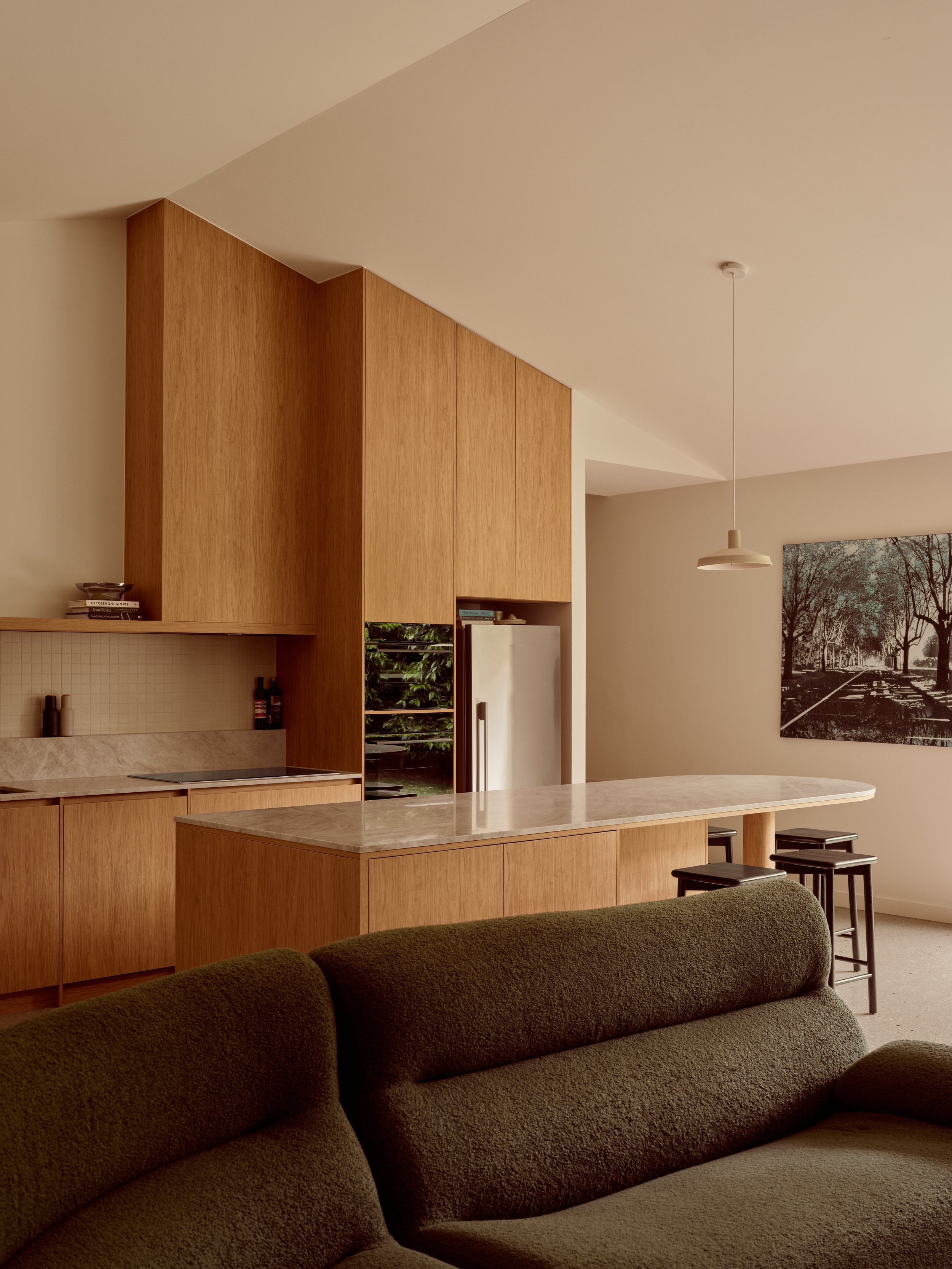
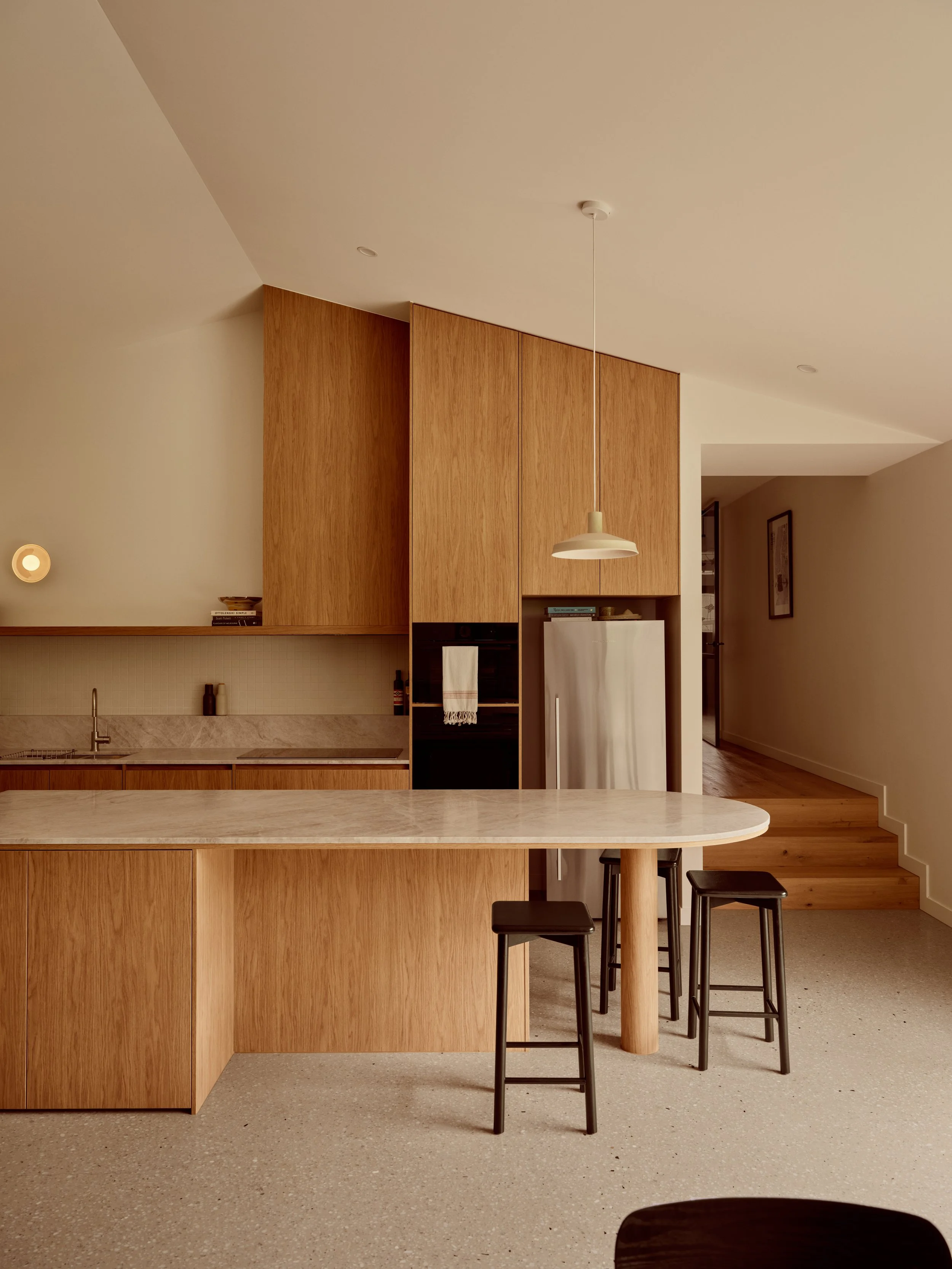
The new extension introduces a contemporary layer that sits comfortably alongside the restored heritage residence. A pitched roof references the steep roof form of the original dwelling, allowing the overall height and silhouette of the building to continue across the exterior. Internally, the generous pitched ceiling enhances the feeling of volume and draws natural light deep into the living areas. Custom joinery and a freestanding wood burner were carefully positioned to reinforce the geometry of the ceiling, with the fireplace acting as both a sculptural focal point and a subtle divider between the living and dining zones.
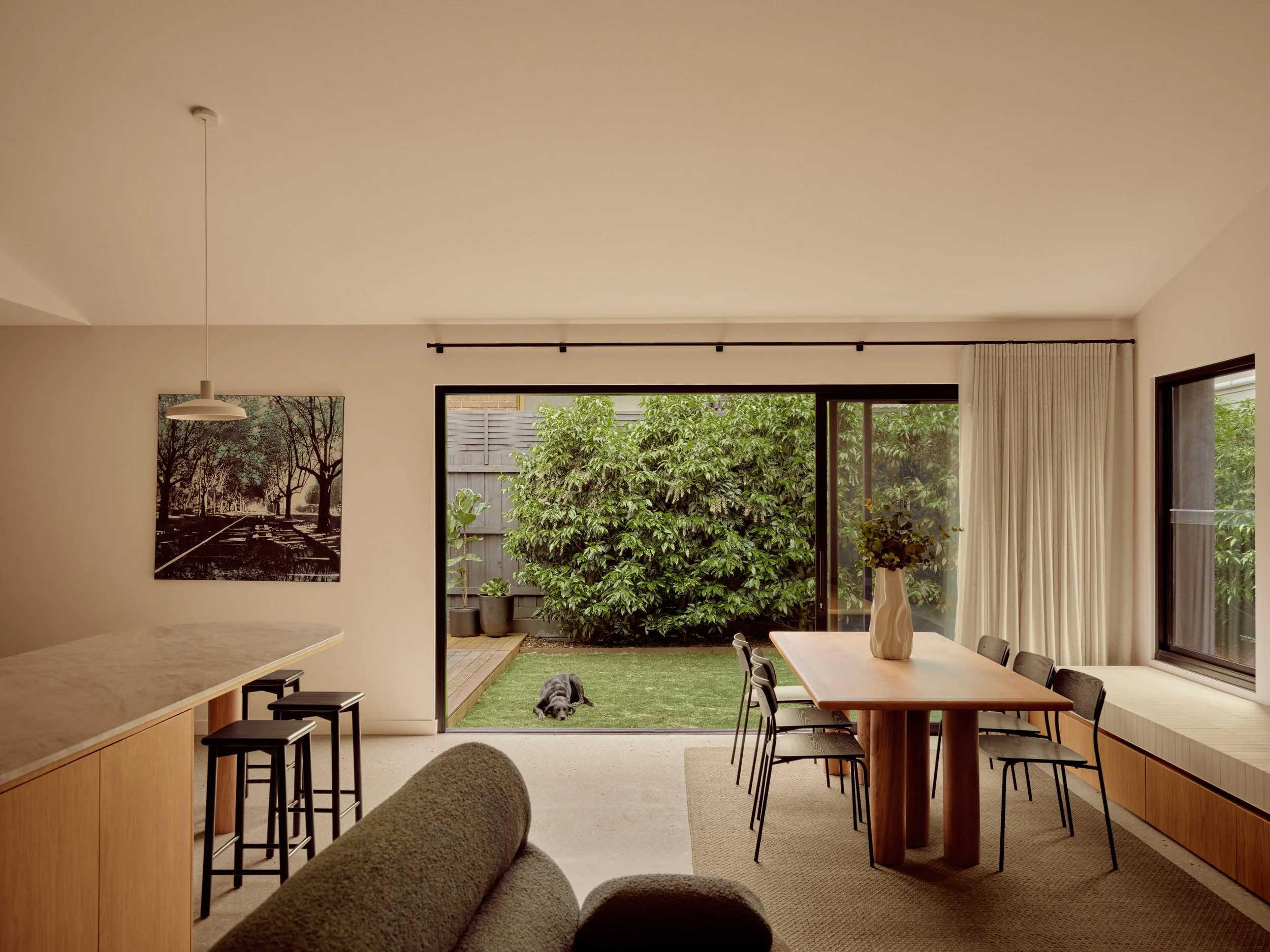
A strong emphasis was placed on light, outlook and connection to the outdoors. Window placement and proportion played a significant role in shaping the experience of the home, creating immediate visual links to the garden upon entry and allowing daylight to move freely through the interiors. Large glazed sliding doors extend the living spaces outward, grounding the home within its landscape while fostering a sense of calm and openness.
Subtle shifts in level and materiality distinguish the heritage and contemporary portions of the residence. A step down into the living area, combined with a transition in flooring finishes, creates a clear distinction between old and new while maximising ceiling heights within the extension. These architectural moves reinforce the character of each zone while maintaining a cohesive experience throughout the home.
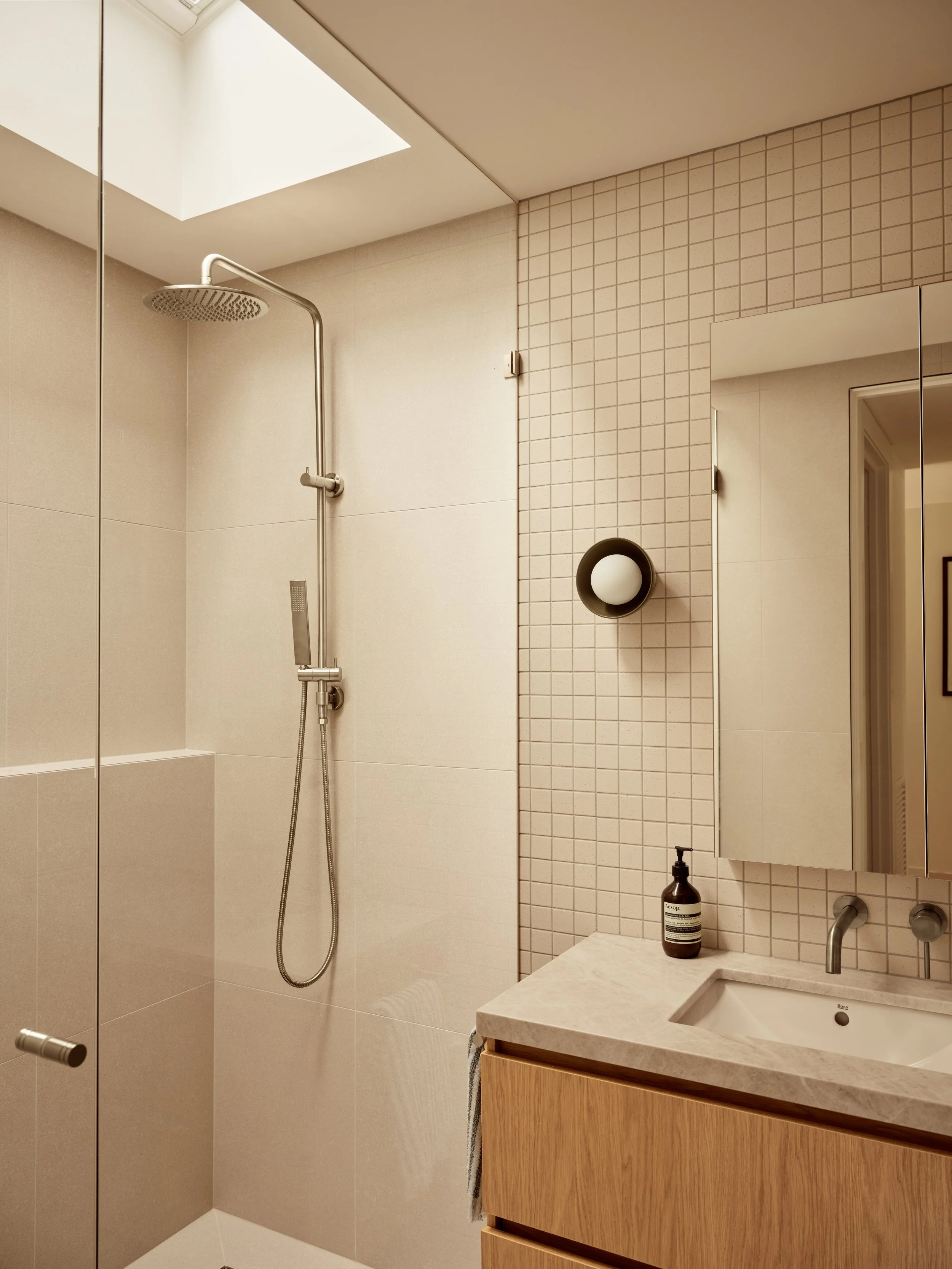
Material selections were guided by the realities of family life. Polished concrete, timber, natural stone and durable tiles provide longevity and ease of maintenance while contributing warmth and texture to the interiors. A soft, restrained palette connects the restored rooms with the contemporary addition, creating continuity across the home and supporting an atmosphere that feels calm, sophisticated and enduring.