Kopa by Ivy Studio
In Montreal’s historic Pointe-Saint-Charles district, Ivy Studio has transformed a freestanding industrial building into Kopa, a 20,000-square-foot destination for indoor racket sports, wellness, and social gathering.
Set within a single-story structure shaped by the neighborhood’s manufacturing past, the project required substantial structural intervention to accommodate the precise dimensions of contemporary athletic courts. The design embraces the building’s raw scale, pairing a bright, expansive sports hall with a sequence of deeply saturated hospitality spaces.
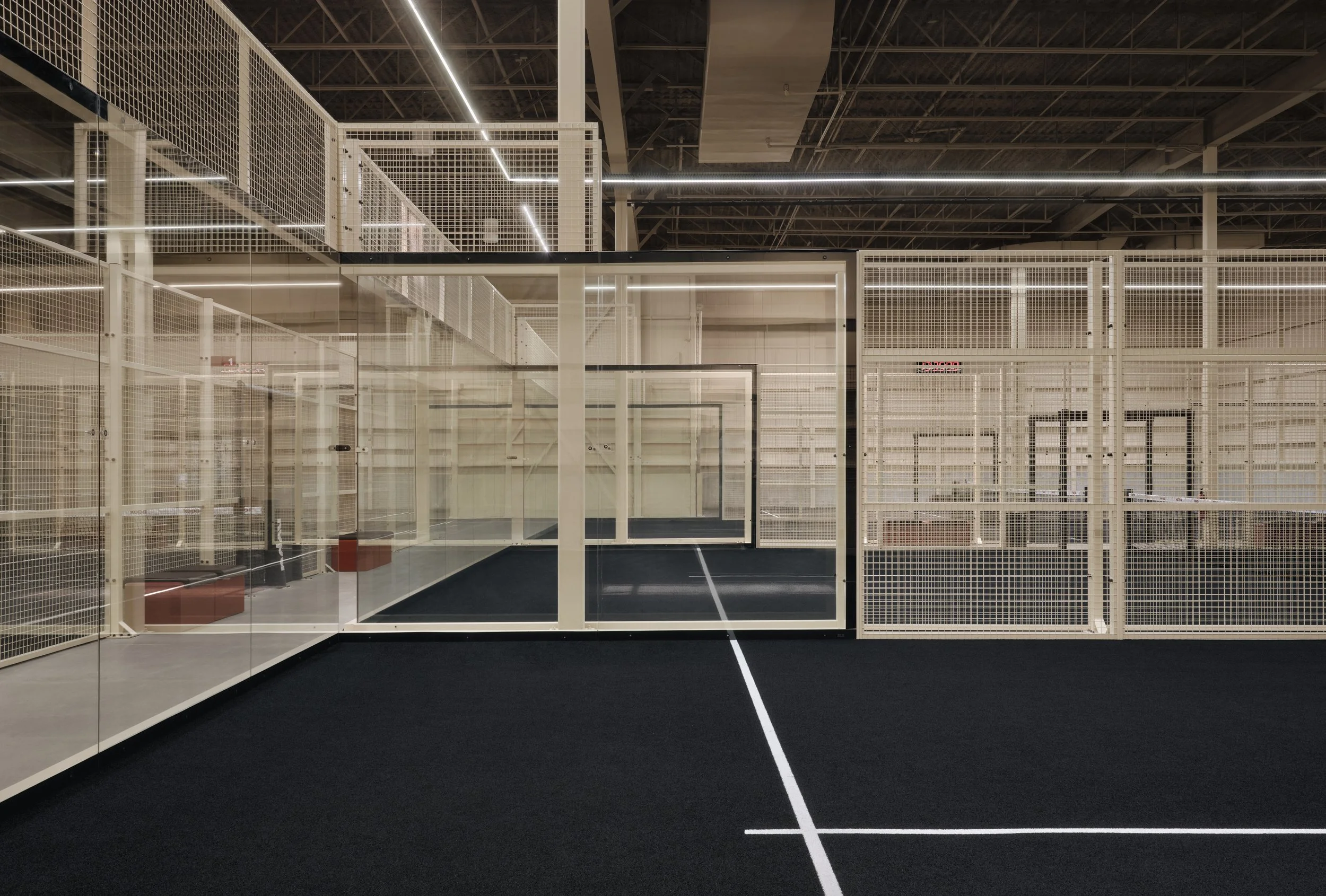
The plan is organized around the building’s two ceiling heights. Beneath the lower 12-foot volume, Ivy Studio placed the reception, pro shop, cloakroom, washrooms, showers, and lounge. The taller 24-foot volume is dedicated to play, holding four professional padel courts, a compact pickleball court, and a glass-enclosed wellness area. This division gives the project a clear spatial logic, with service and social programs concentrated in the more compressed zone and athletic activity occupying the full height of the industrial shell.
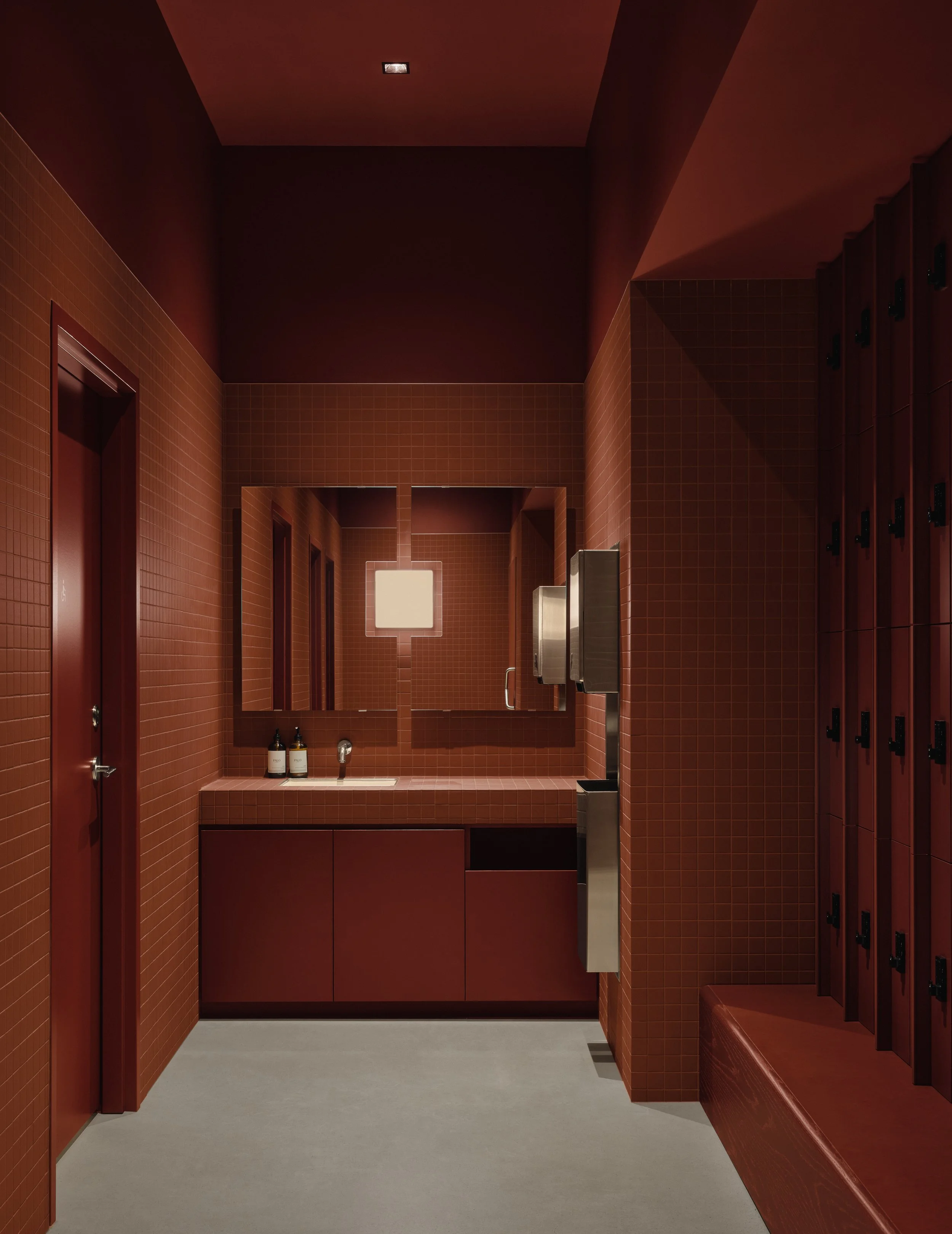
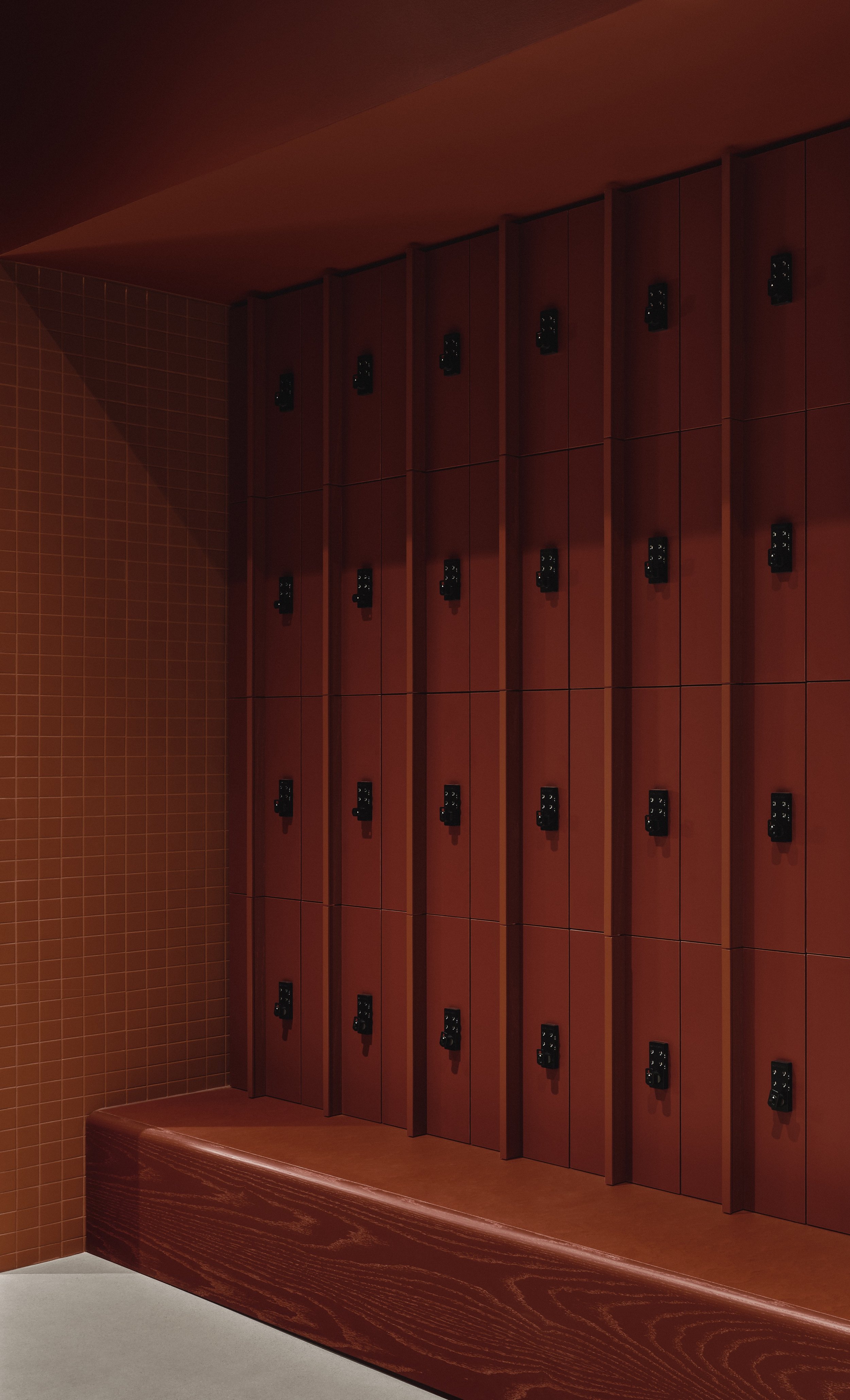
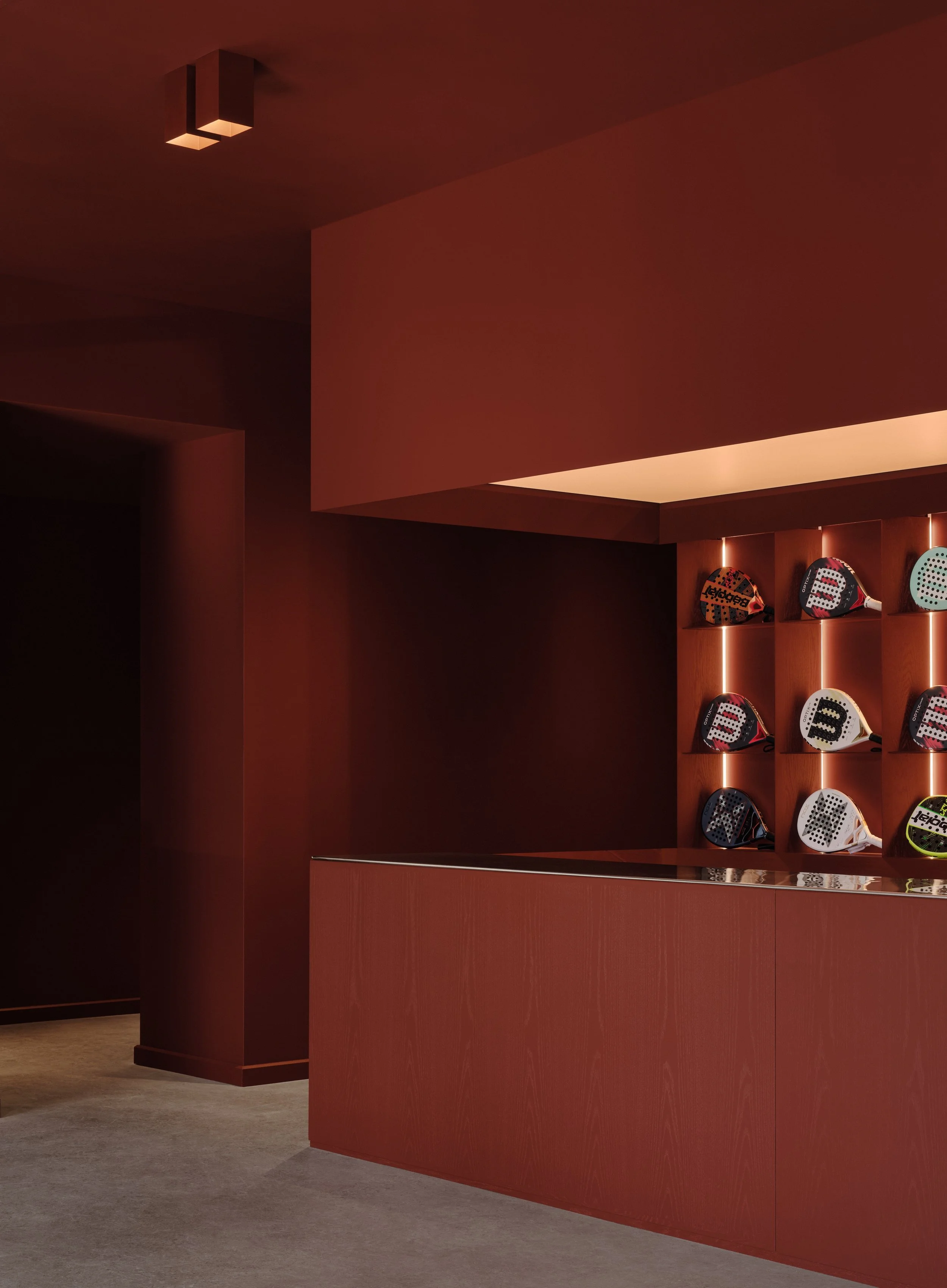
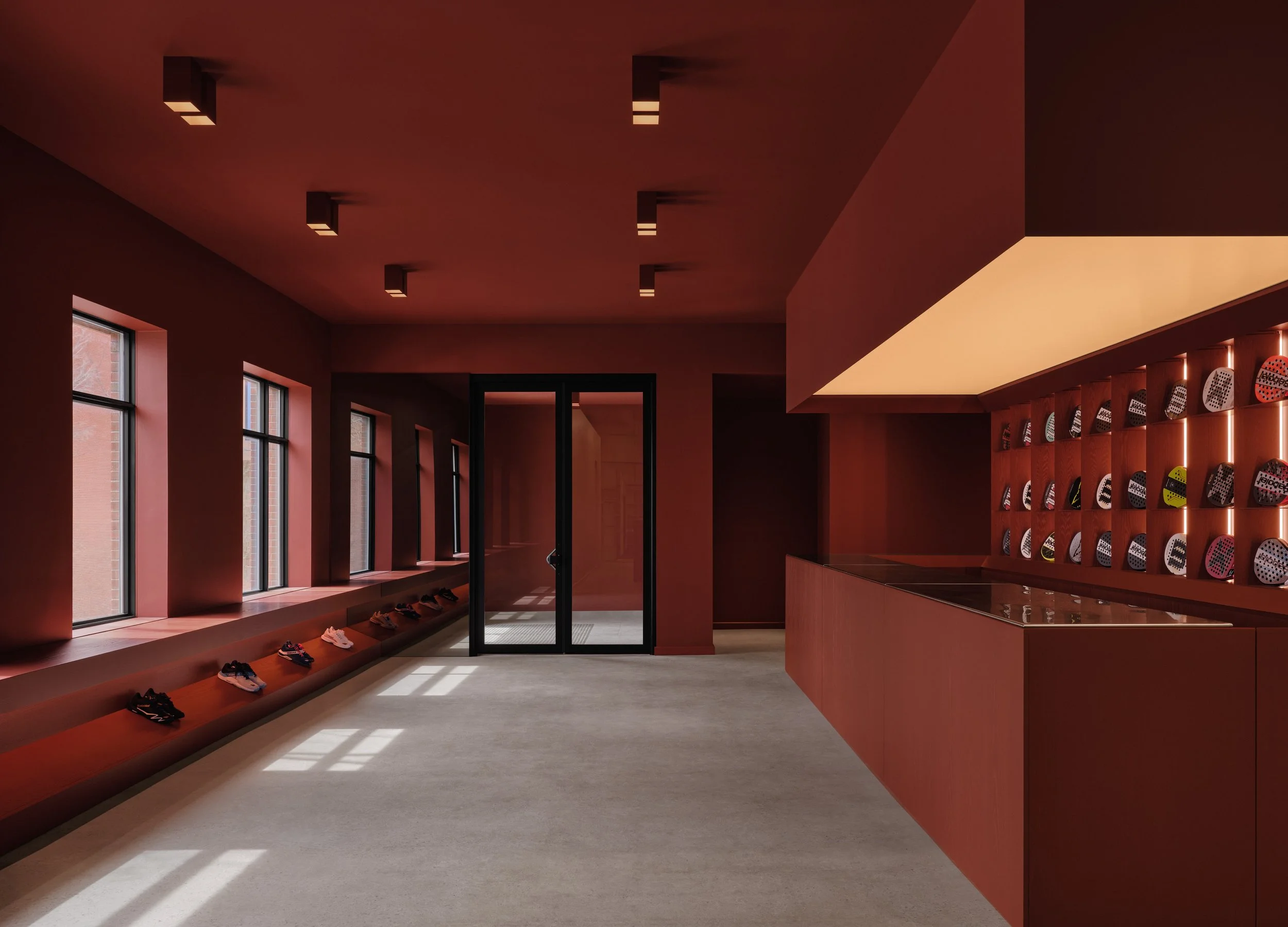
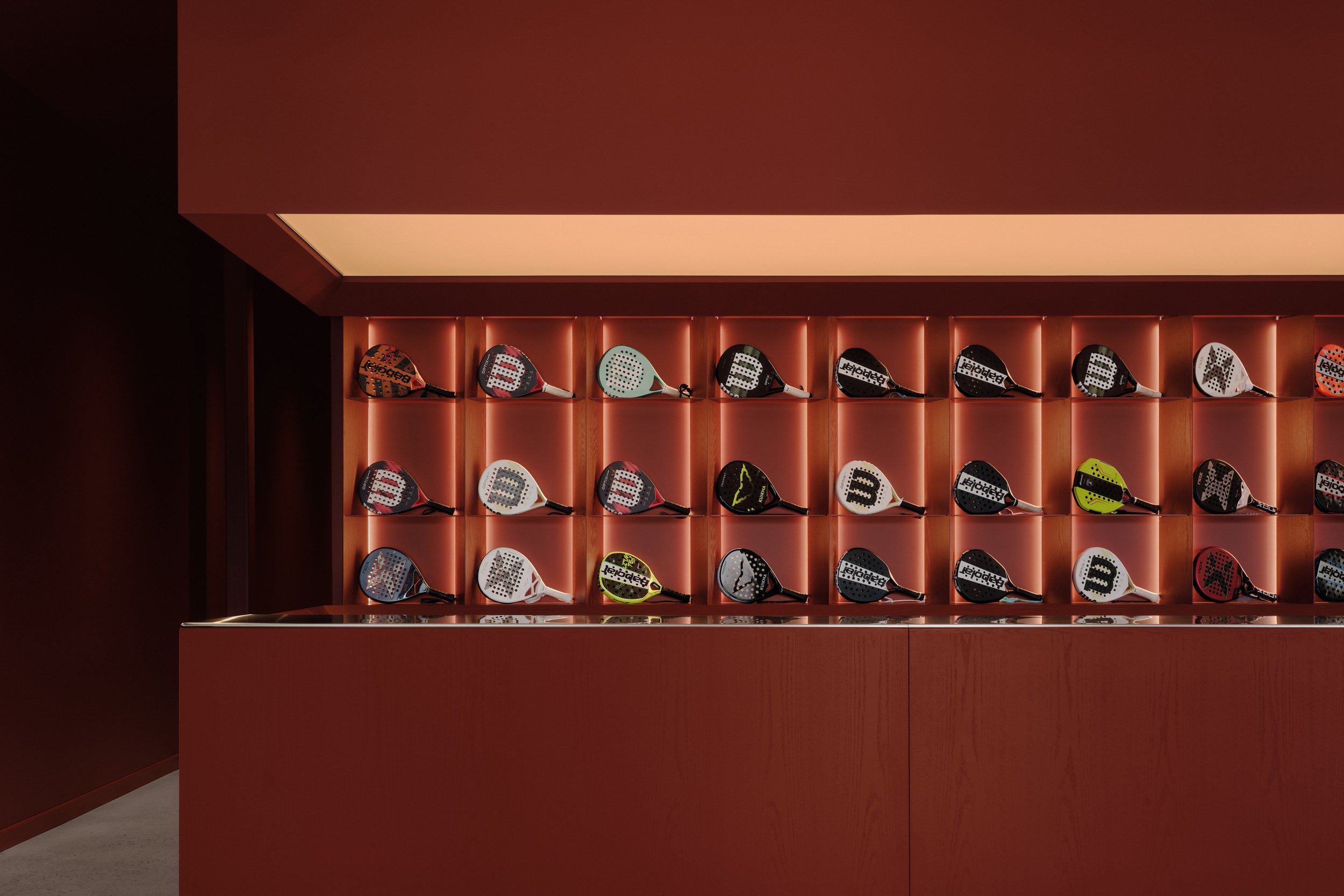
Visitors enter through a minimalist reception and pro shop designed for check-ins, rentals, and retail display. A long red-stained oak counter topped with stainless steel anchors the space, set beneath a monolithic lightbox. Behind it, custom cabinetry incorporates backlit arched openings that present rackets as sculptural objects. Nearby, a discreet cloakroom leads toward the central sanitary block, where two mixed-gender zones contain five private washrooms and three shower cabins with integrated lockers.
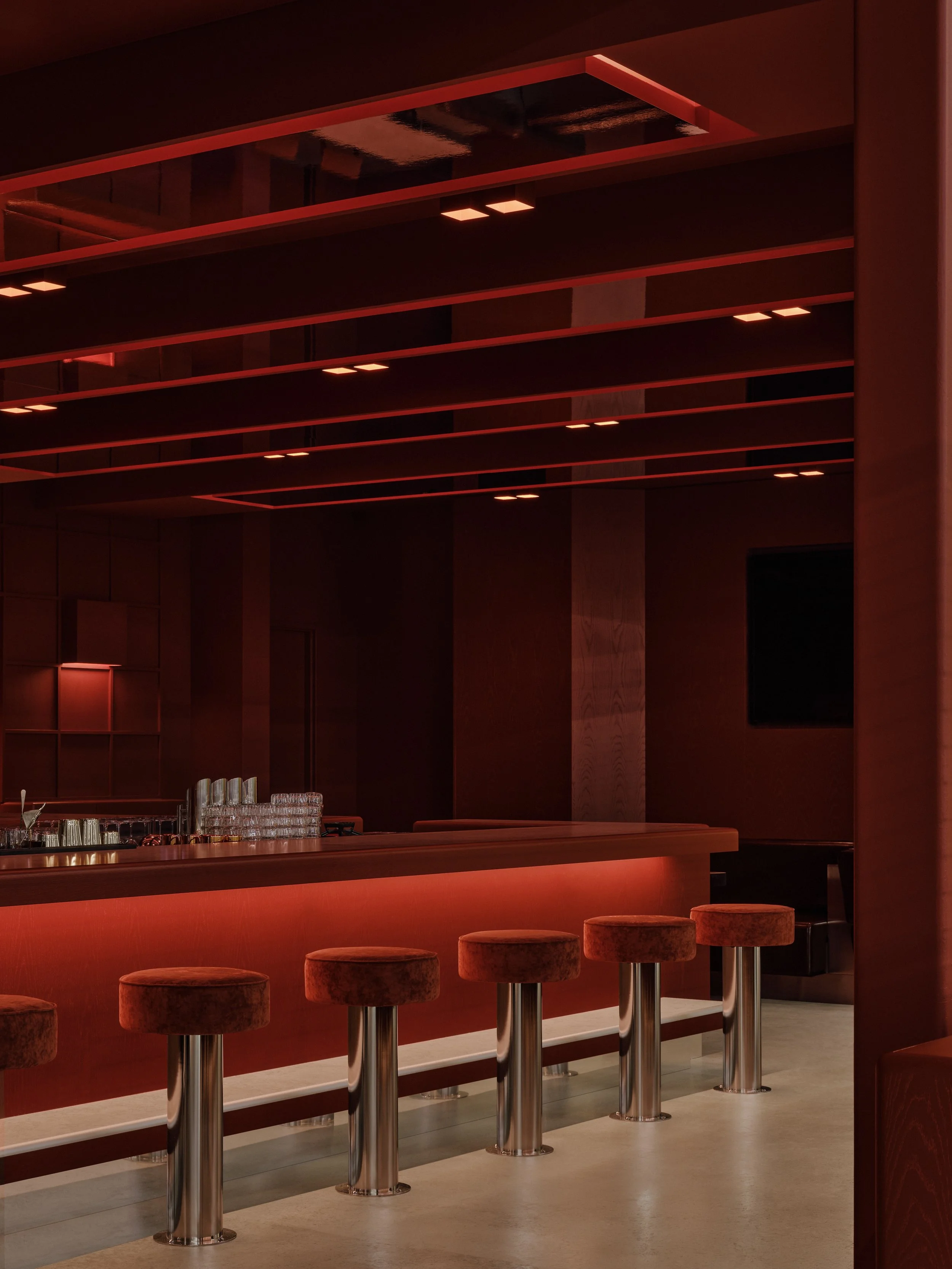
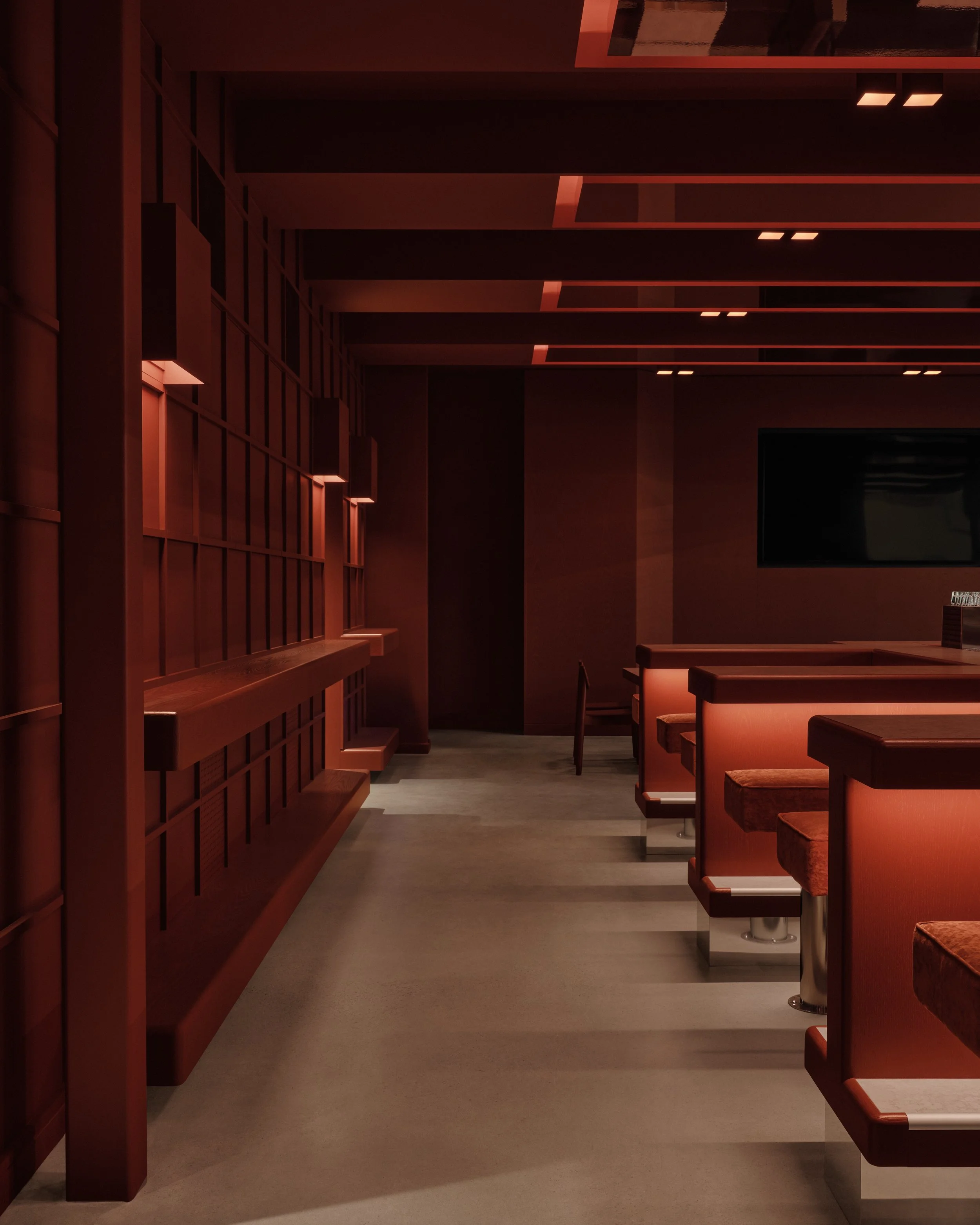
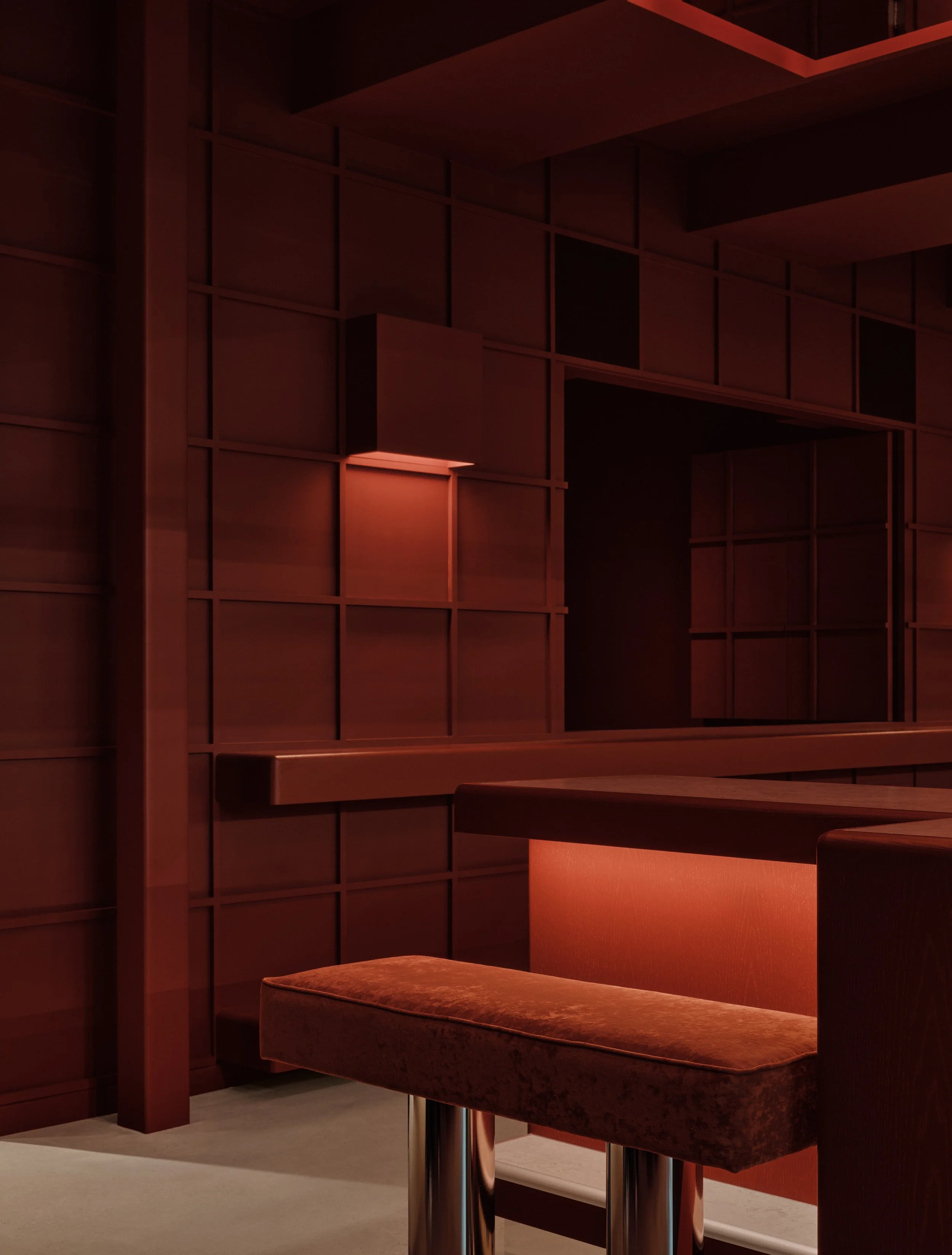
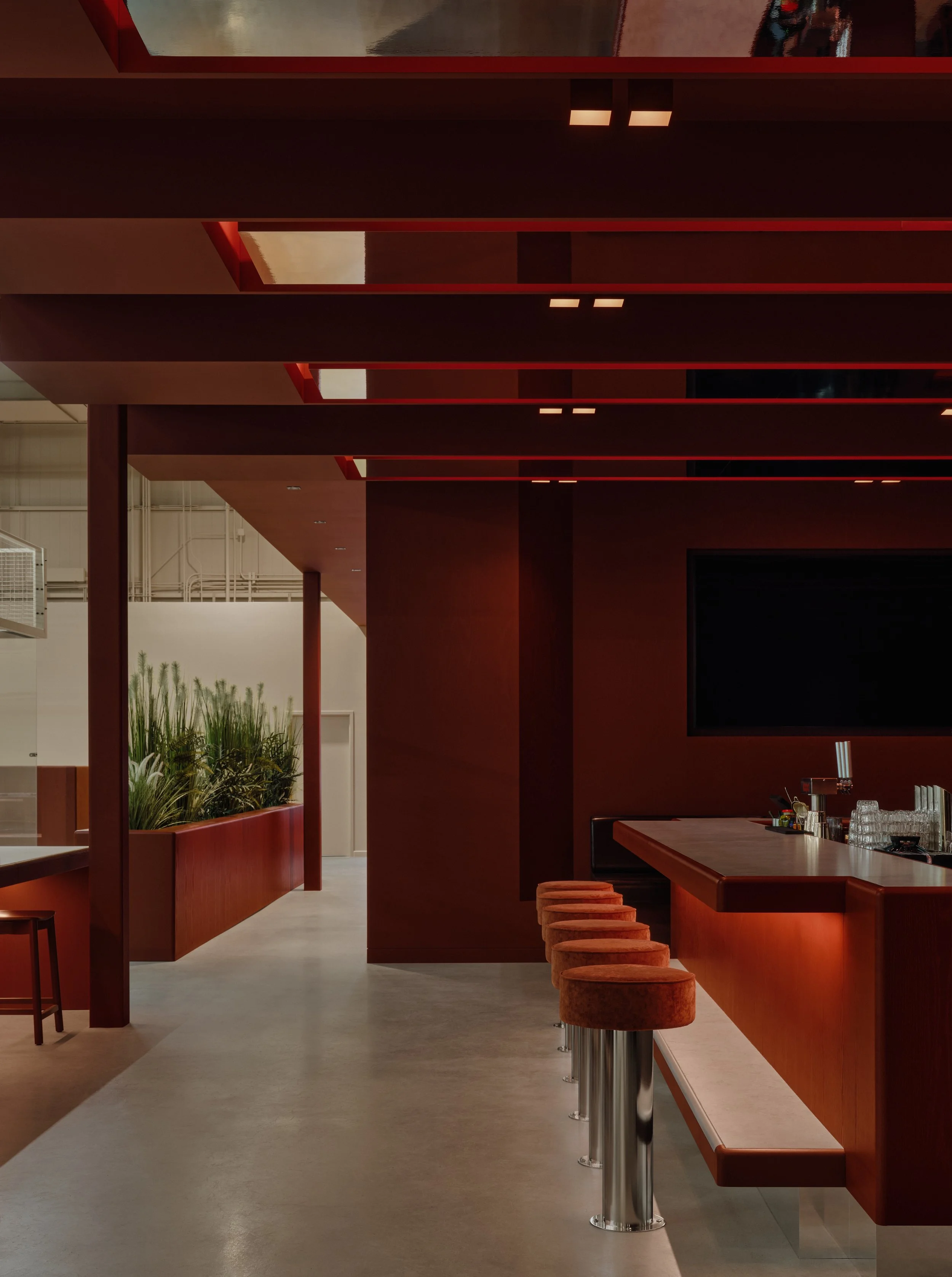
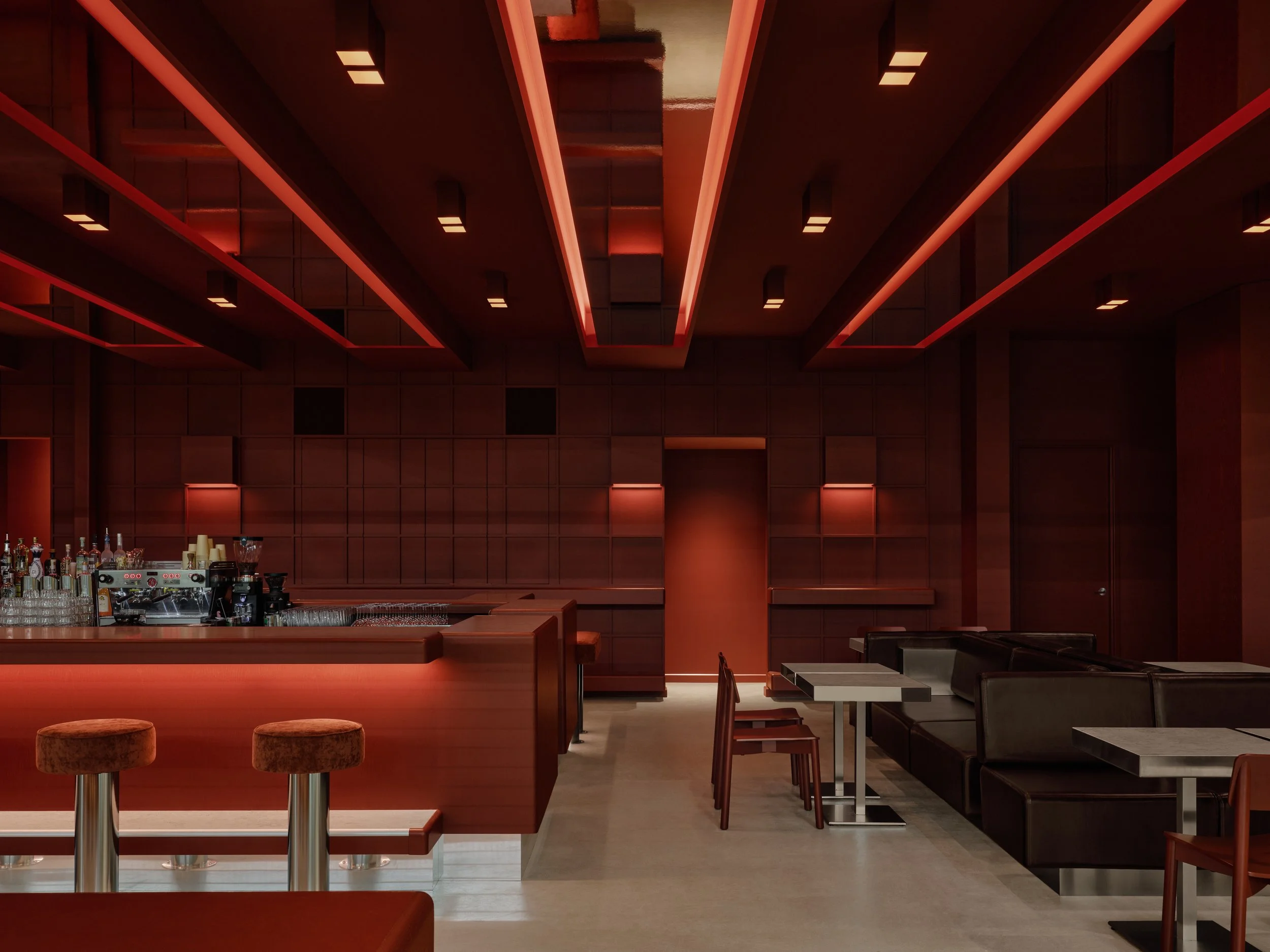
Beyond this core, the space opens into a generous social lounge centered on a low island bar. Positioned along the axis of the courts, the bar creates a direct visual connection between the hospitality area and the action beyond. High stools face the athletic zone, with integrated high-top tables for pairs on the opposite side. Deep banquettes mark the ends of the lounge, paired with media screens for tournament viewing and post-game gathering.
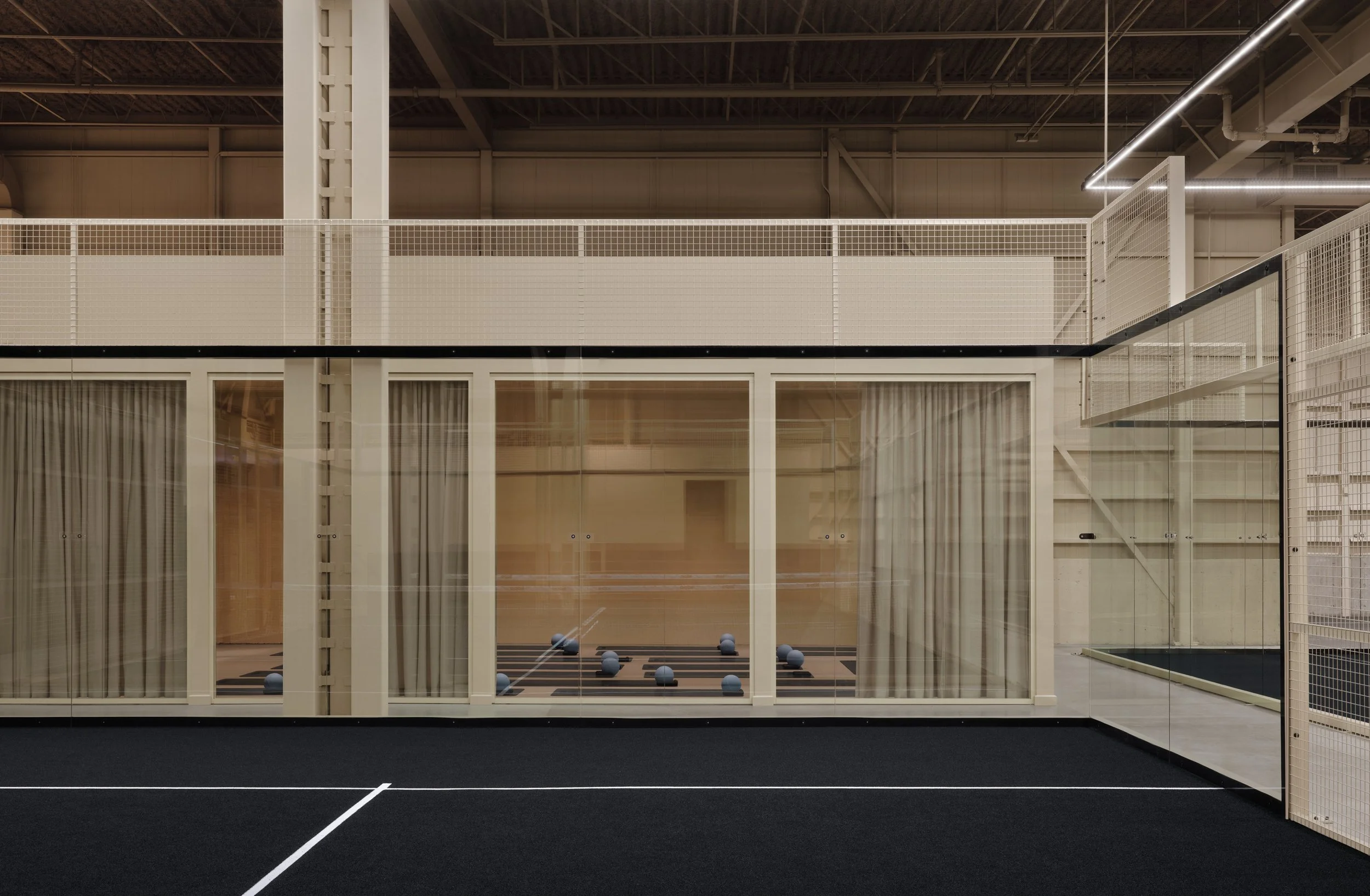
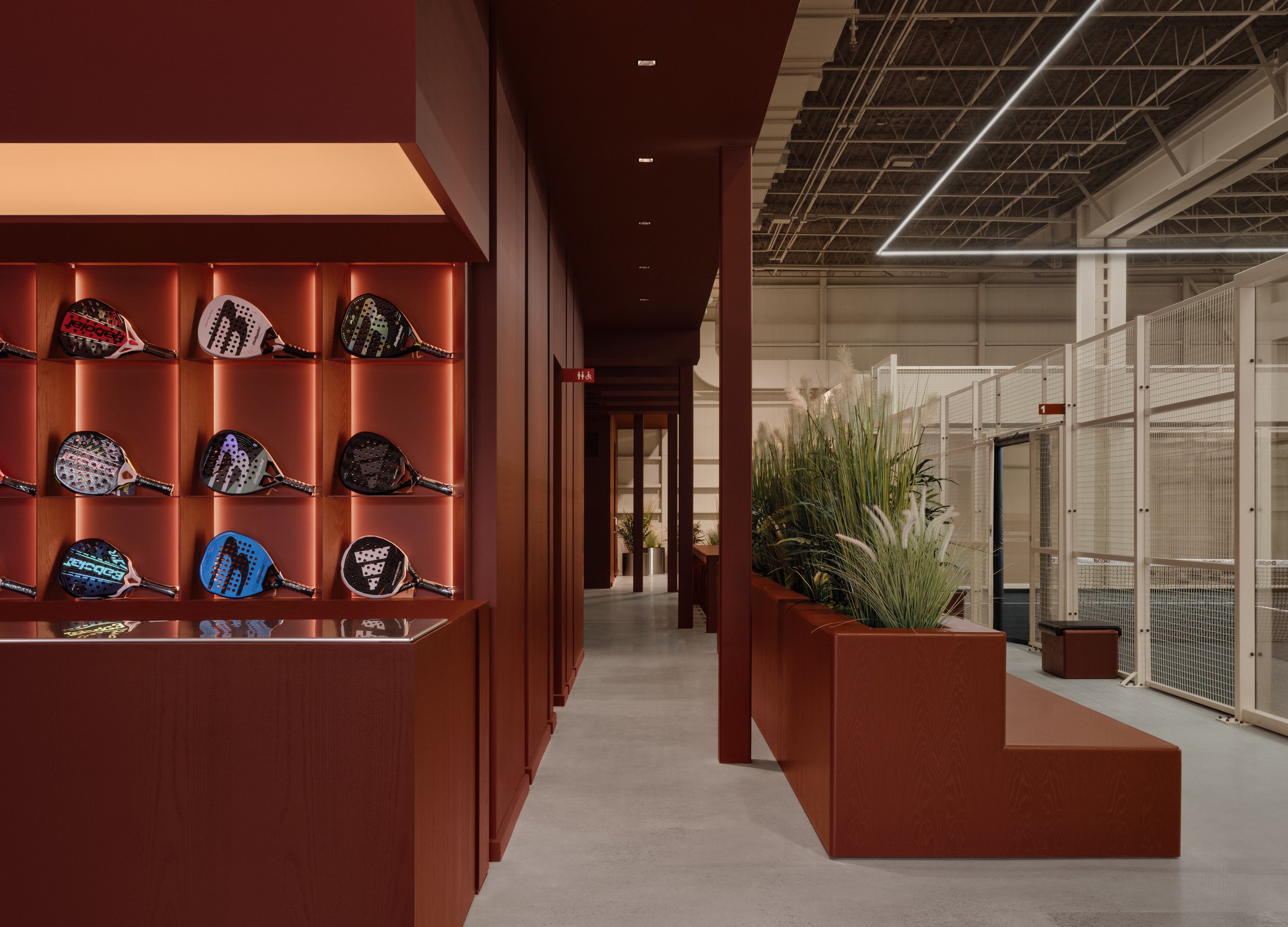
The sports hall extends from this social threshold into the full-height volume. Four padel courts occupy the main field, with the central court aligned directly with the lounge to maintain visibility from the entrance and bar. A pickleball court is tucked into the far corner, adding another layer of programming within the large footprint. Spectator seating is built into the architecture through custom millwork, including a long two-tier bleacher between the lounge and courts and a larger three-tier grandstand along the southern edge. At the rear, a glass-enclosed wellness hub contains a mat pilates and yoga studio, a reformer pilates room, and a small private lounge placed between the two workout spaces.
Color is the project’s defining architectural device. Ivy Studio uses a precise color-blocking strategy to distinguish the public and athletic zones. In the sports hall, the existing shell is treated in a warm monochromatic beige, covering the exposed metal framing, wall panels, court structures, and open acoustic ceiling. The tonal treatment amplifies natural brightness and softens the scale of the industrial volume, while the rugged beige ceiling finish helps reduce the acoustic impact of racket sports.
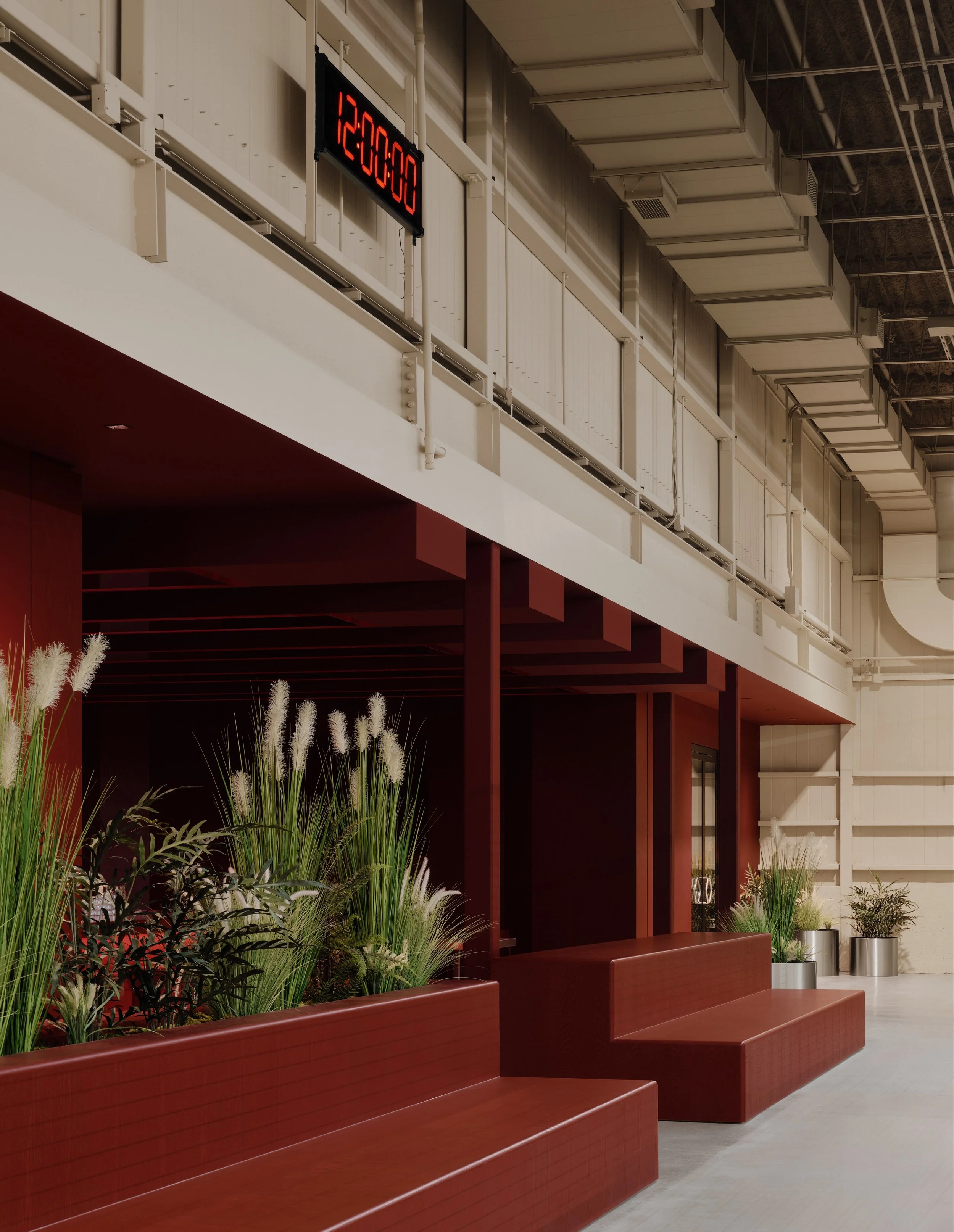
The original concrete floor slab was preserved and polished throughout, maintaining a direct connection to the building’s past. Along the perimeter, the four-foot-high concrete foundation wall remains raw and unpainted. This exposed base grounds the new sports surfaces in the structure’s industrial history, offering a tactile counterpoint to the carefully coated walls and court frames. Against this beige envelope, the black performance flooring and crisp white court markings create sharp graphic clarity.
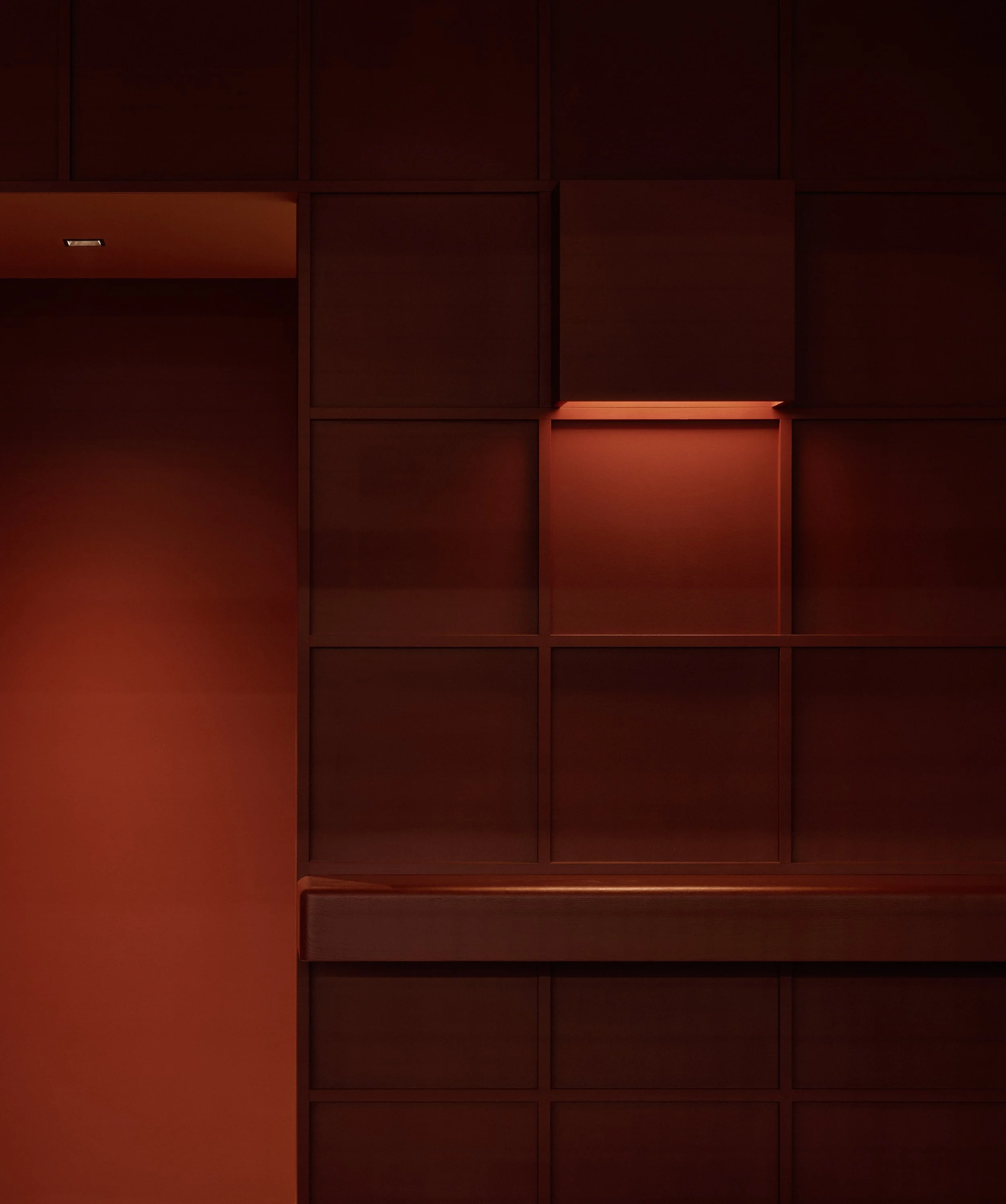
In the lower hospitality areas, the palette shifts dramatically to deep burgundy red. Reception, sanitary spaces, and lounge are enveloped from floor to ceiling in the saturated tone, intensifying the intimacy of the 12-foot volume. The red treatment compresses the space visually, giving the social areas the atmosphere of a boutique club within the larger sports facility.
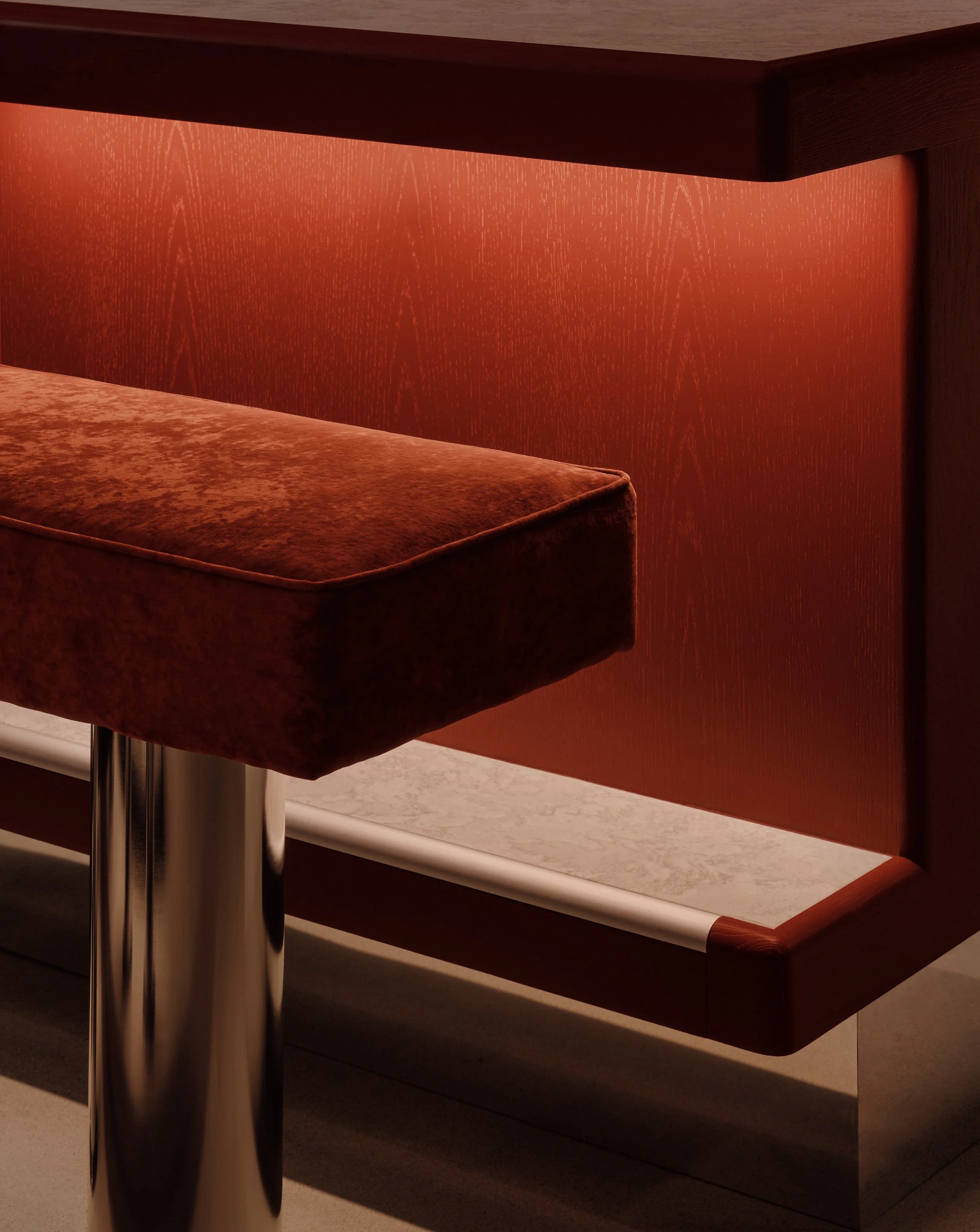
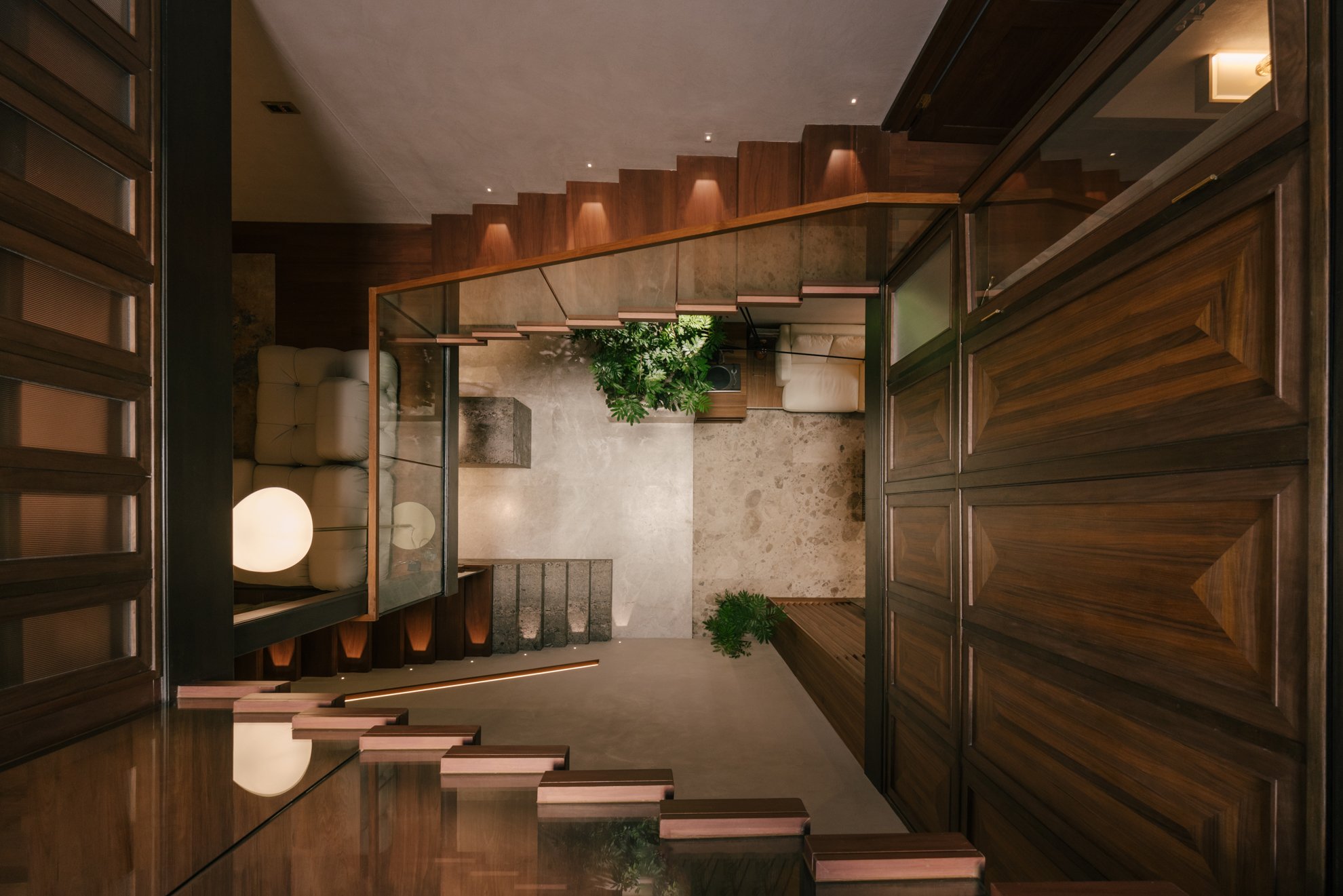
Custom furniture reinforces this immersive approach. The lounge bar is built as a monolithic block of red-stained wood with rounded edges and integrated storage, kept deliberately low to preserve sightlines toward the padel courts. Banquettes are upholstered in dark burgundy leather and detailed with stainless steel, paired with grey stone tabletops and stainless steel bases. Red velvet bar stools and matching stained wood dining chairs extend the palette across seating elements. In the sports hall, red-stained wood bleachers with rubber tops and integrated planters introduce warmth and greenery into the athletic environment.
Lighting strengthens the contrast between the two worlds. The sports hall is illuminated for high, even visibility across the playing areas, supporting the functional demands of competitive racket sports. The wellness rooms introduce a softer atmosphere, especially in the glass-enclosed pilates studio, where a heavy pleated beige curtain can wrap the room and turn the glazed box into a cocoon for movement and recovery.
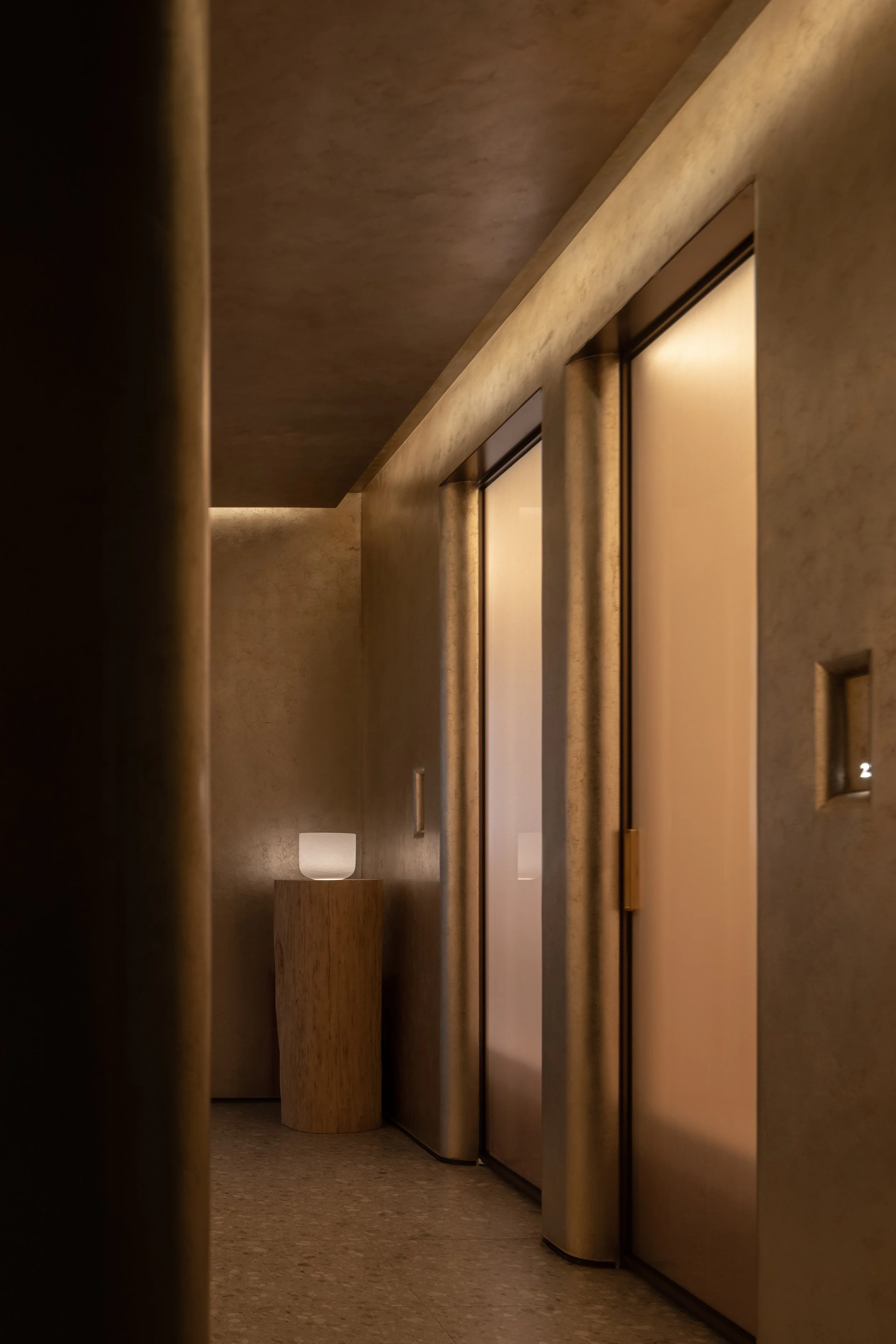
The lounge and service areas take on a much dimmer, hospitality-driven glow. Long recessed rectangular light boxes finished in red wood conceal dimmed LED arrays, balanced by square surface-mounted fixtures for functional illumination. In the washrooms, square red ceramic tiles wrap the walls and vanity counters, accented by stainless steel details. Custom cutout mirrors with integrated backlighting give the sanitary spaces a polished, club-like character.