Kehai House by HW Studio
Kehai House by HW Studio is the architect’s own home, conceived as a deeply personal exploration of interior life shaped by Zen philosophy and Japanese spatial principles.
The project centers on the idea of the void as an active presence. At the heart of the house lies a stone garden that serves not as ornament, but as the gravitational core around which daily life is arranged.
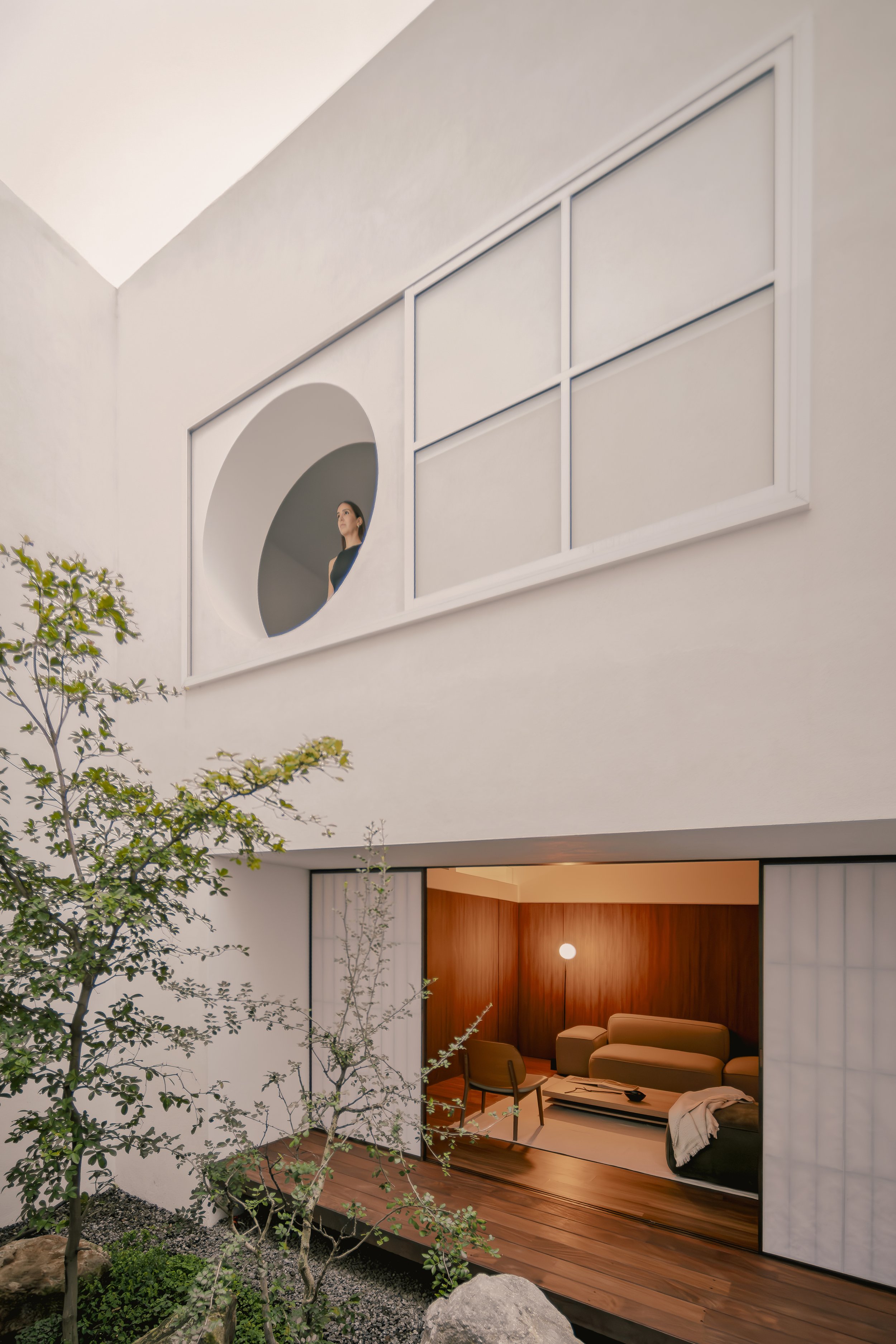
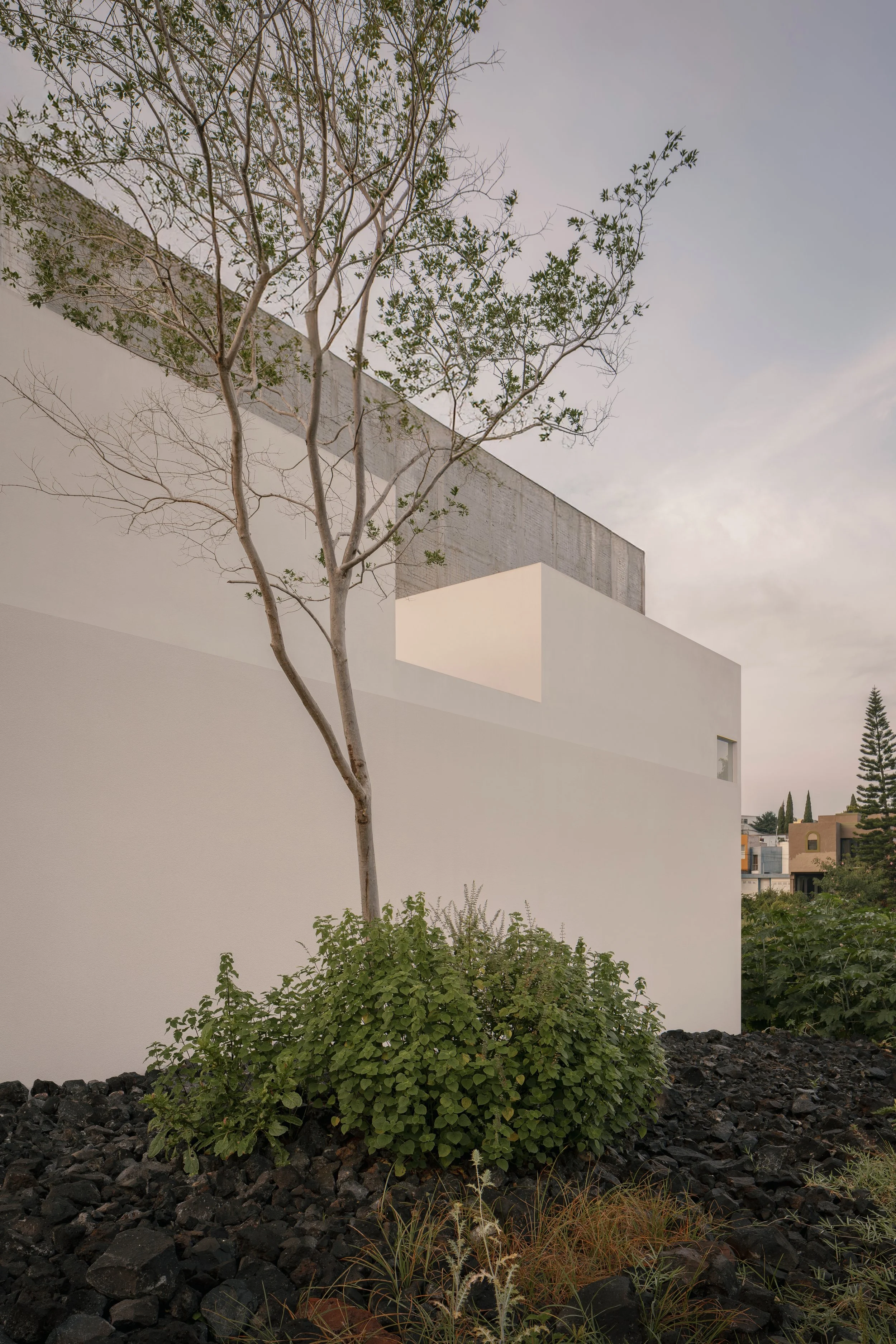
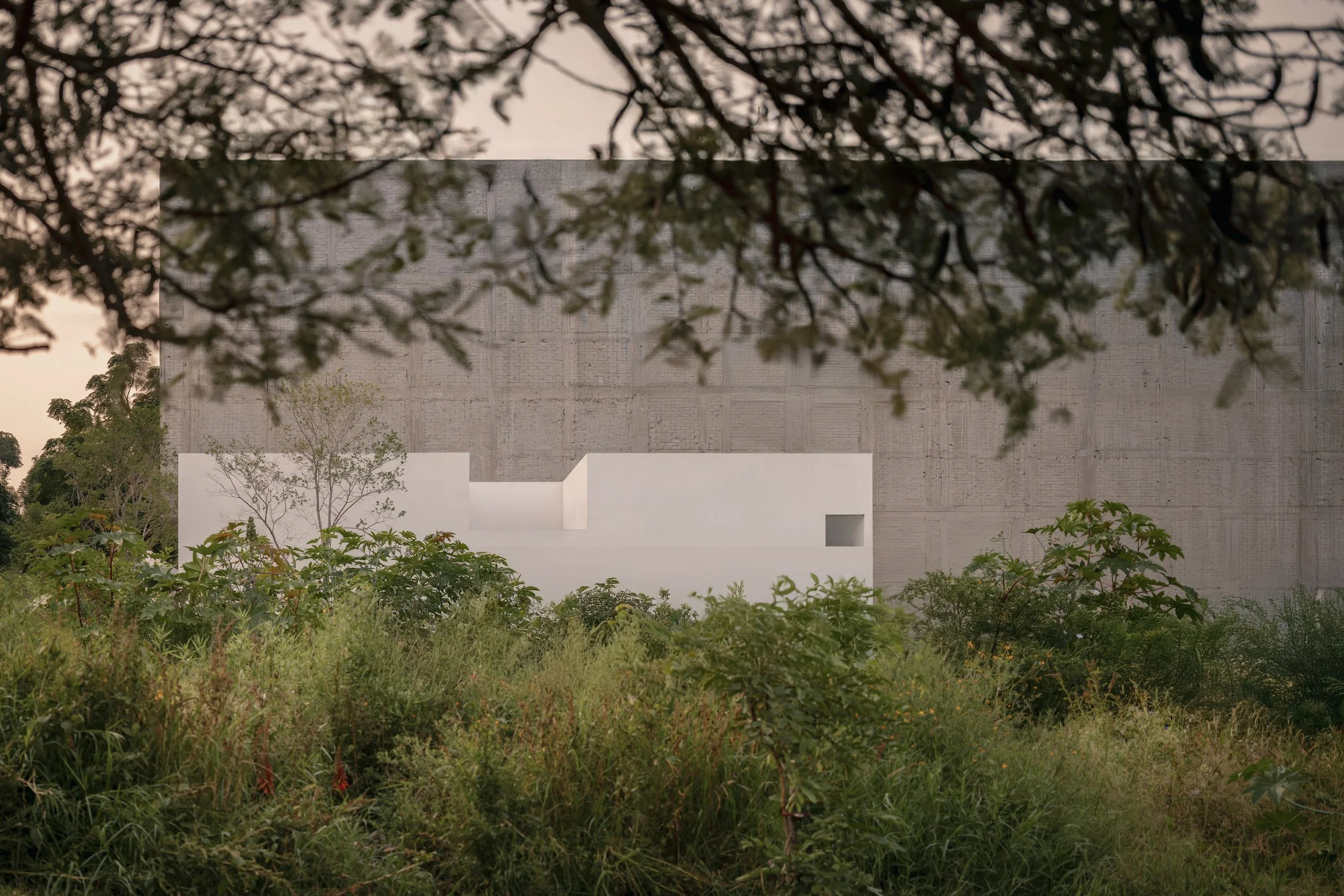
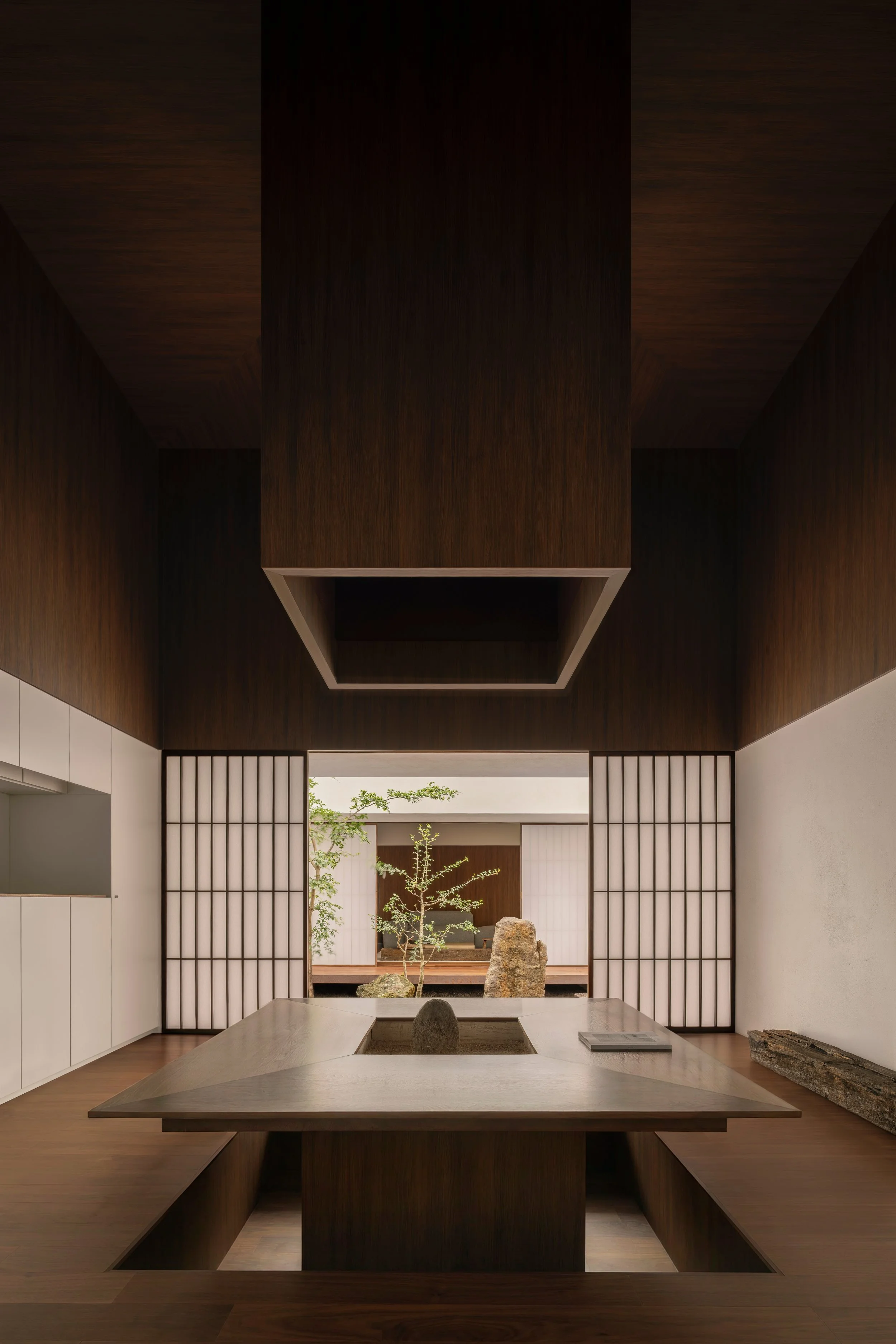
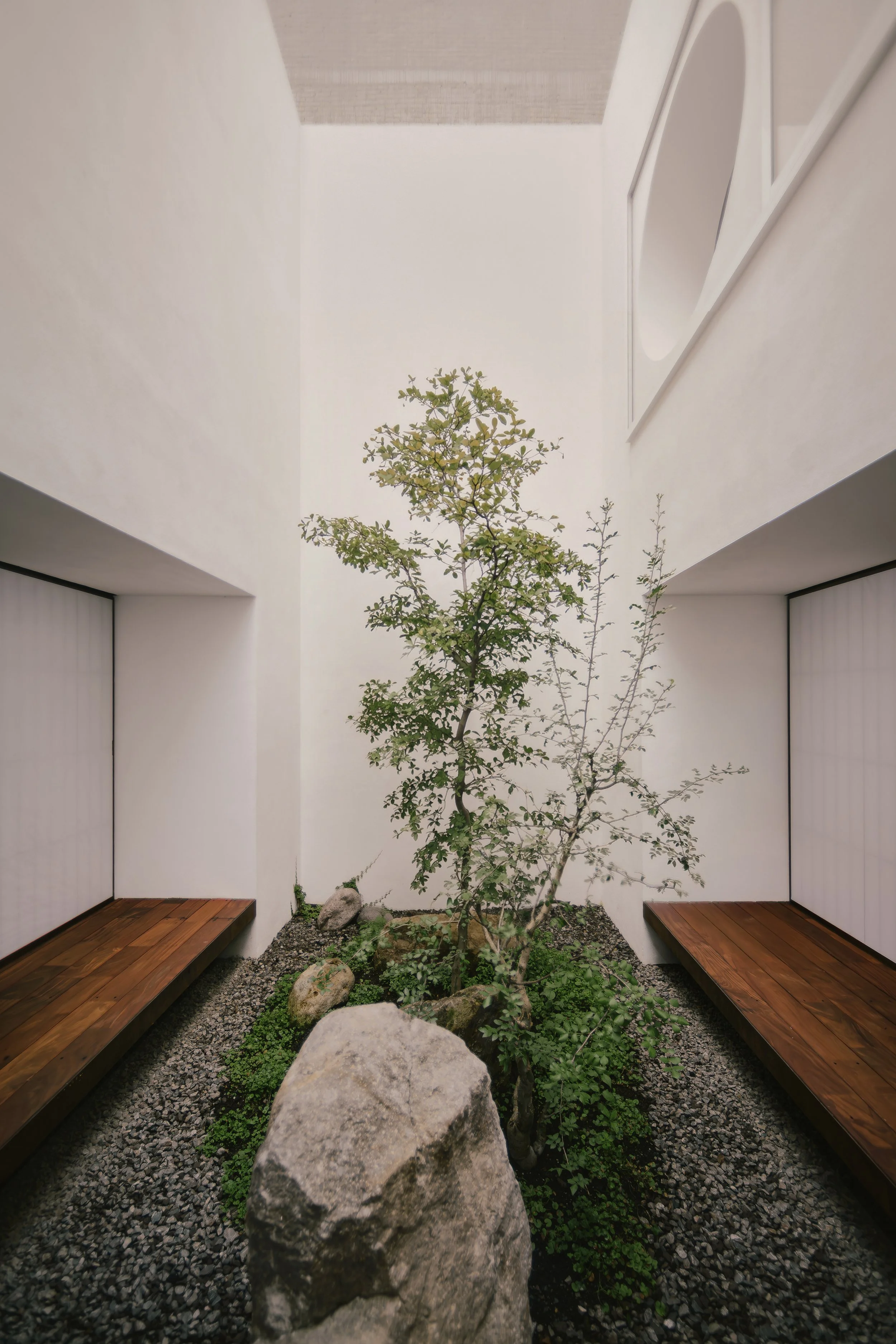
From the street, the dwelling appears as a quiet, almost reticent box set within the urban fabric. Its exterior is solid and contained. Upon entering, the interior reveals a protected world organized around a carefully composed garden of stones resting on grey gravel. Two wooden platforms hover above this surface, conceived as places for stillness and observation. They are not conventional floor planes but elevated zones that encourage pause. The garden anchors the plan, allowing every adjacent area to orient itself toward a shared center.
The kitchen and dining area occupy one side of the garden, rising through a double-height volume that brings generosity to communal gatherings. A sculptural element above collects smoke from an open fire, acknowledging both memory and the practical possibility of self-reliance. Across the garden, the living room forms a contemplative interior where large stones echo the landscape at the center. There is no enclosed passage linking these two areas. Moving between them requires stepping outdoors, heightening awareness of rain, air, and changing weather. The house does not seal itself off from its surroundings; it cultivates attentiveness to them.
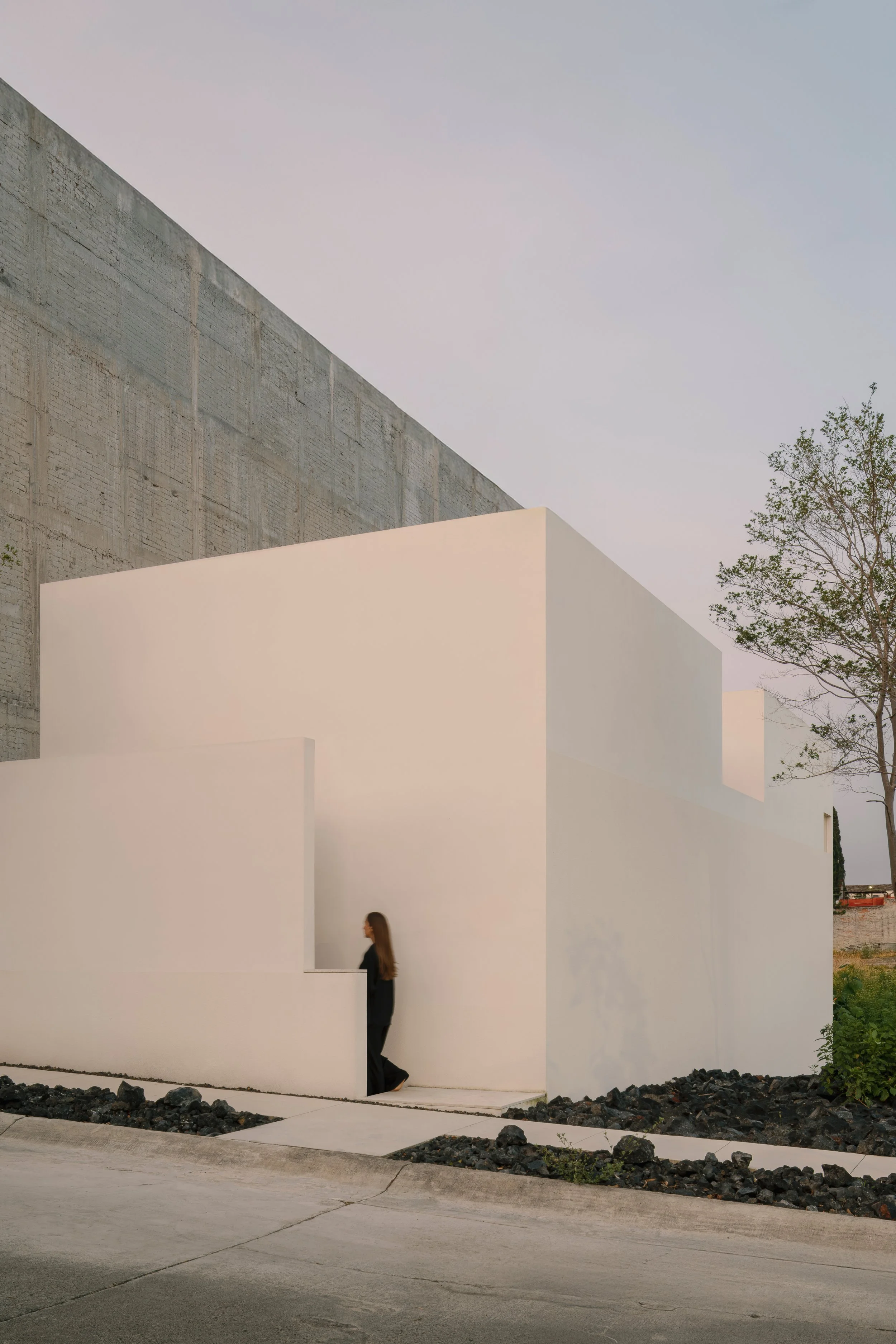
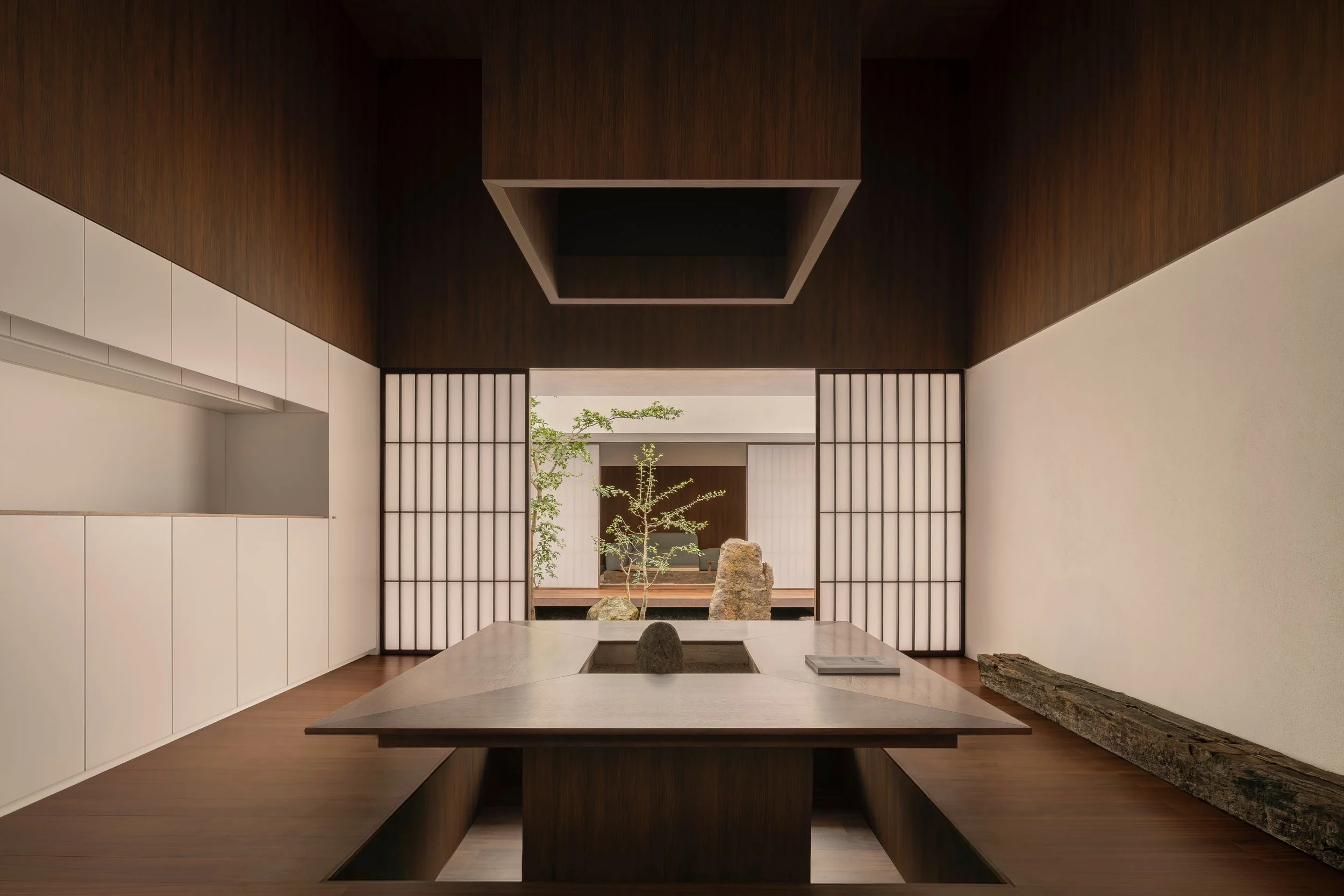
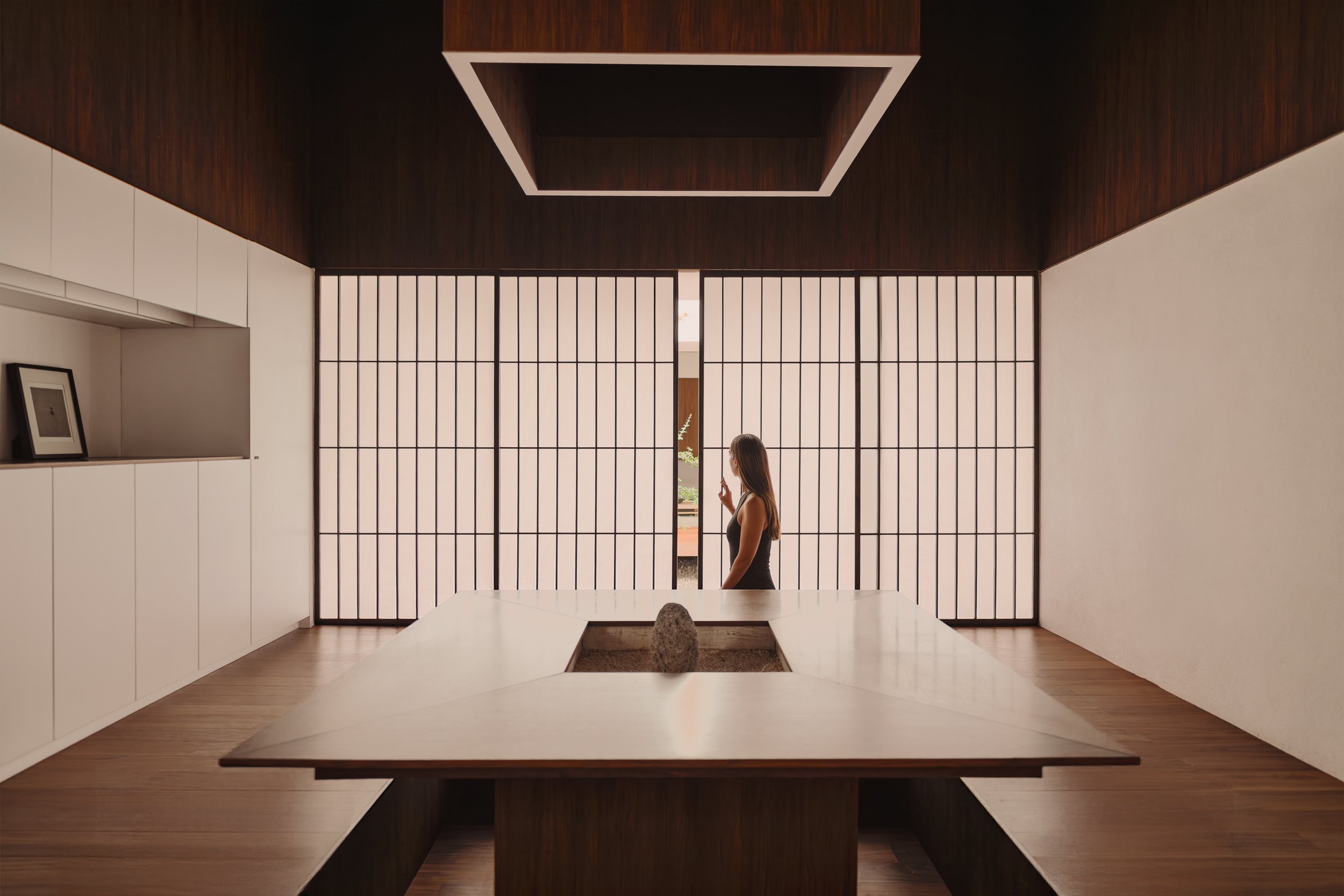
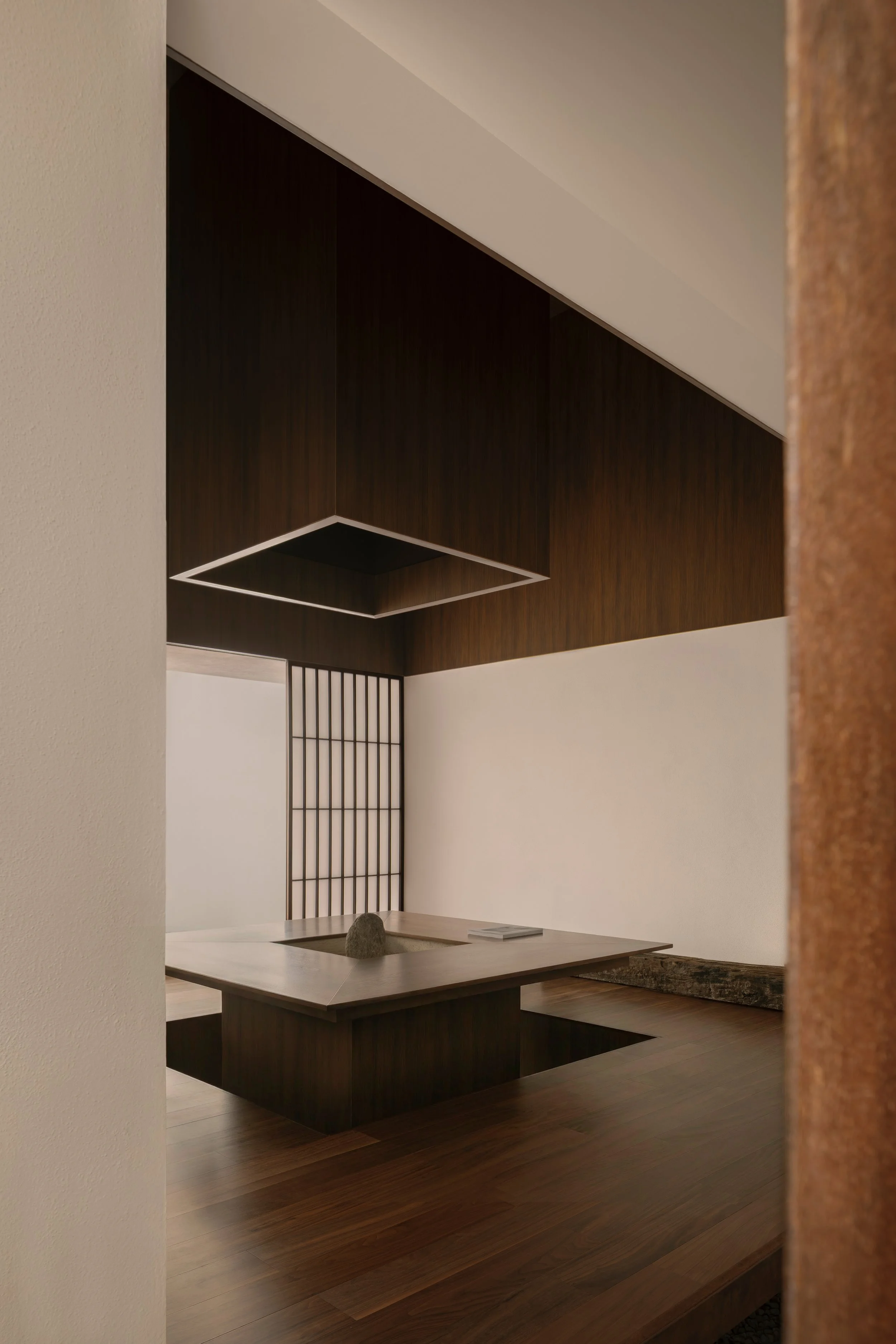
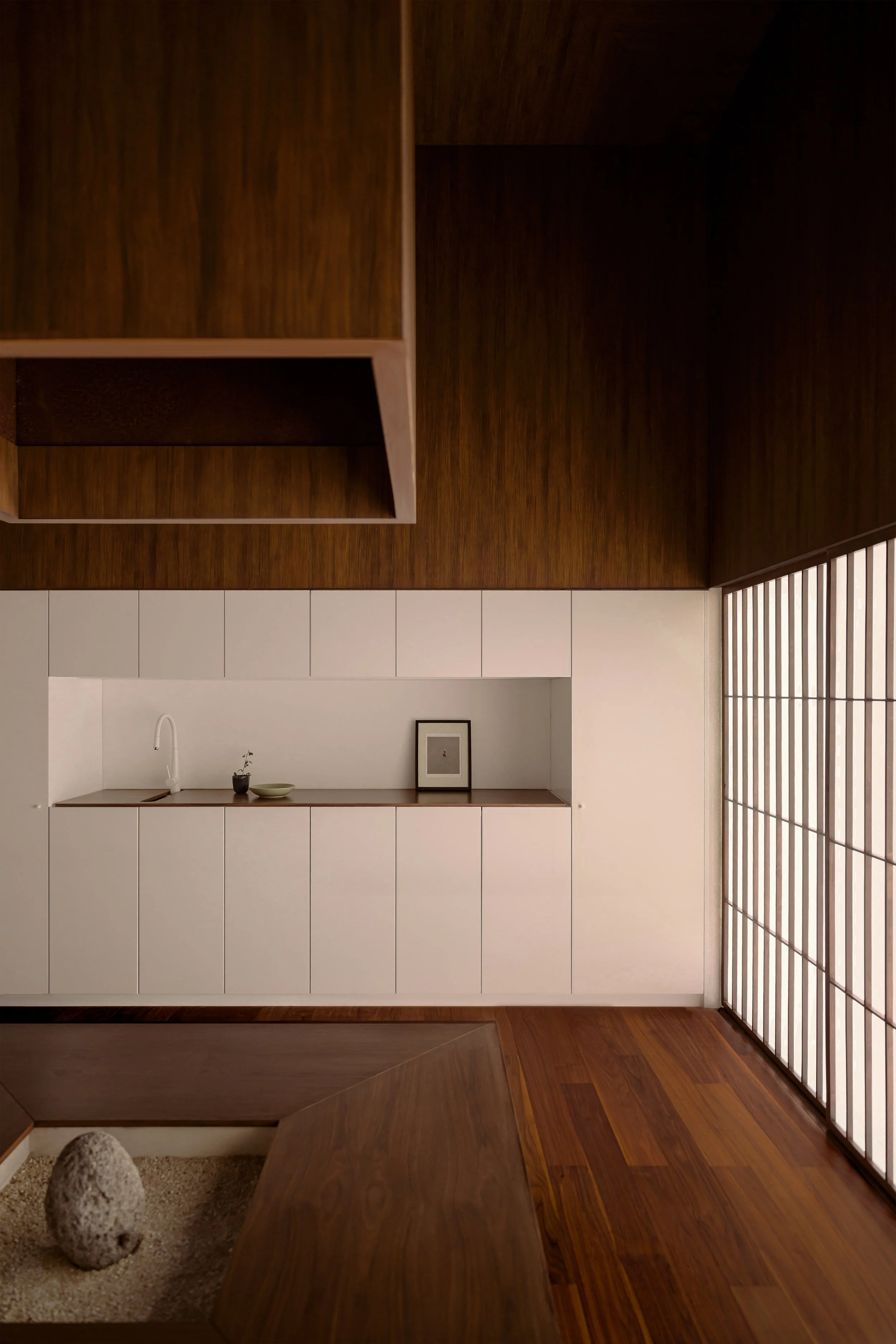
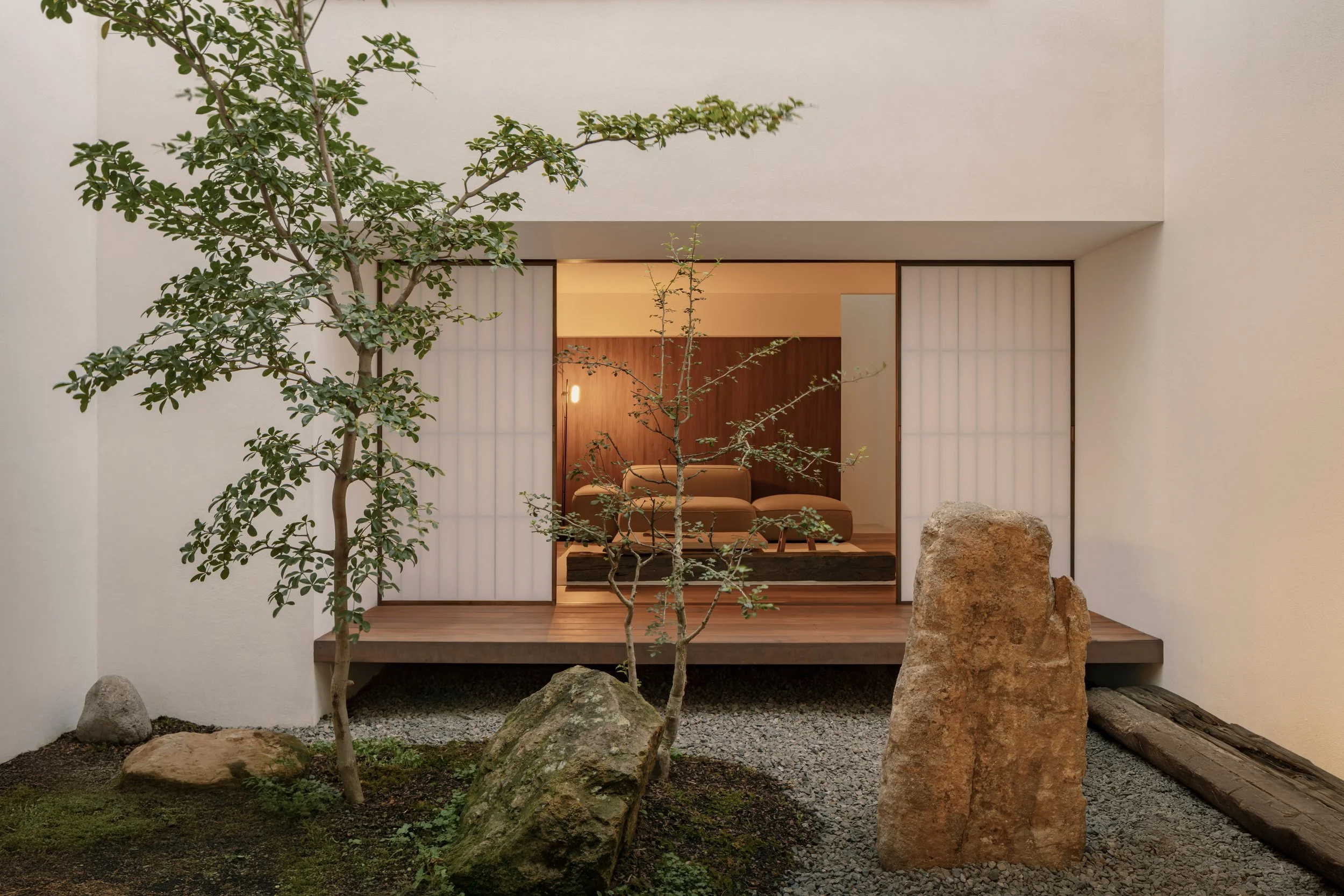
Light is filtered through shōji screens crafted with rice paper, producing a soft luminosity that evolves throughout the day. Illumination becomes gradual and tactile, while shadow deepens surfaces with quiet intensity. Glass is used sparingly. Only three small openings frame what the architect considers worthy of attention—a distant mountain, a neighboring pine, and the tree planted within the garden. The home turns inward, concentrating focus and preserving calm.
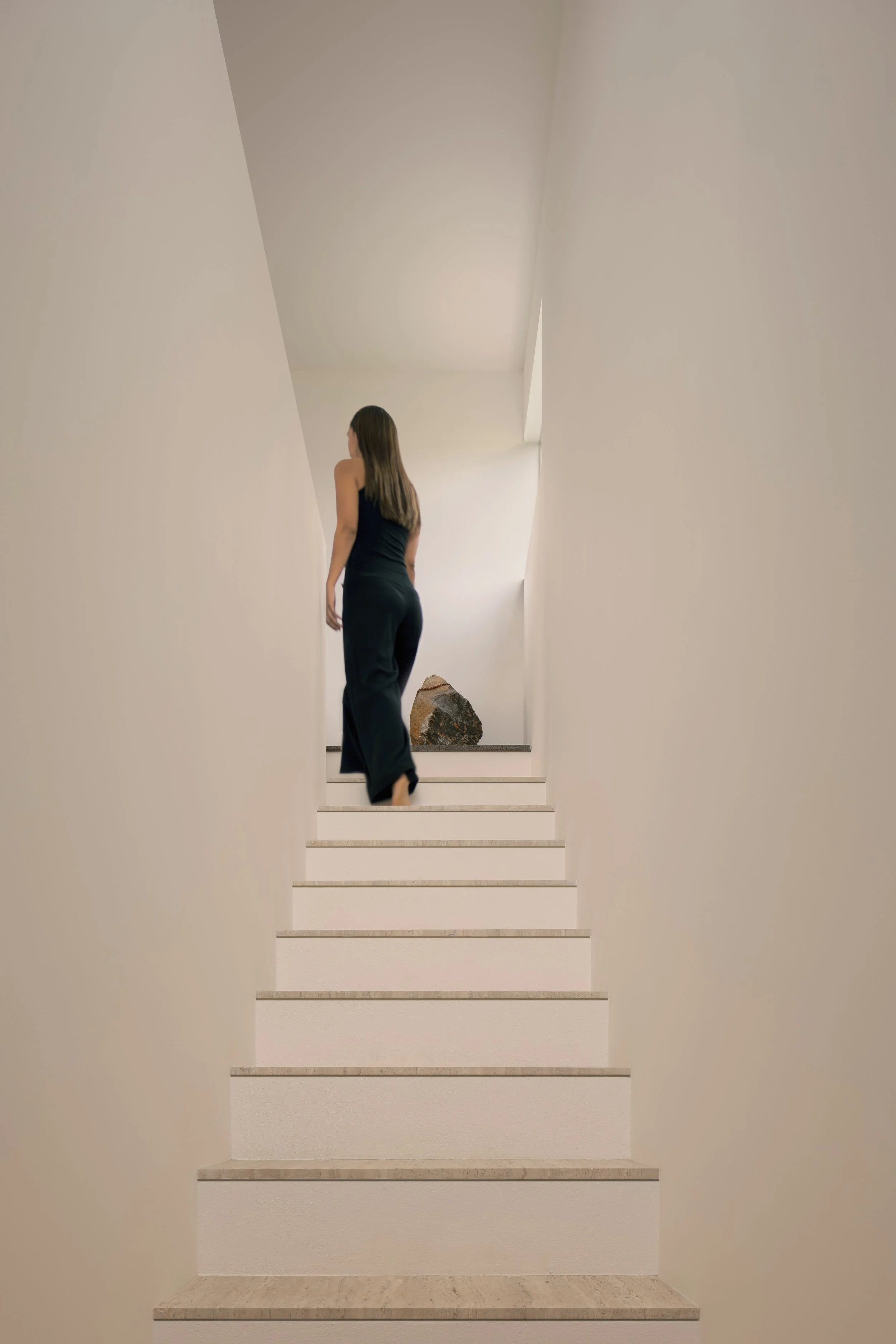
The entrance sequence reinforces this inward orientation. Visitors descend to enter, meeting stable ground while performing a subtle gesture of humility. The act of stepping down establishes a reflective tone from the outset.
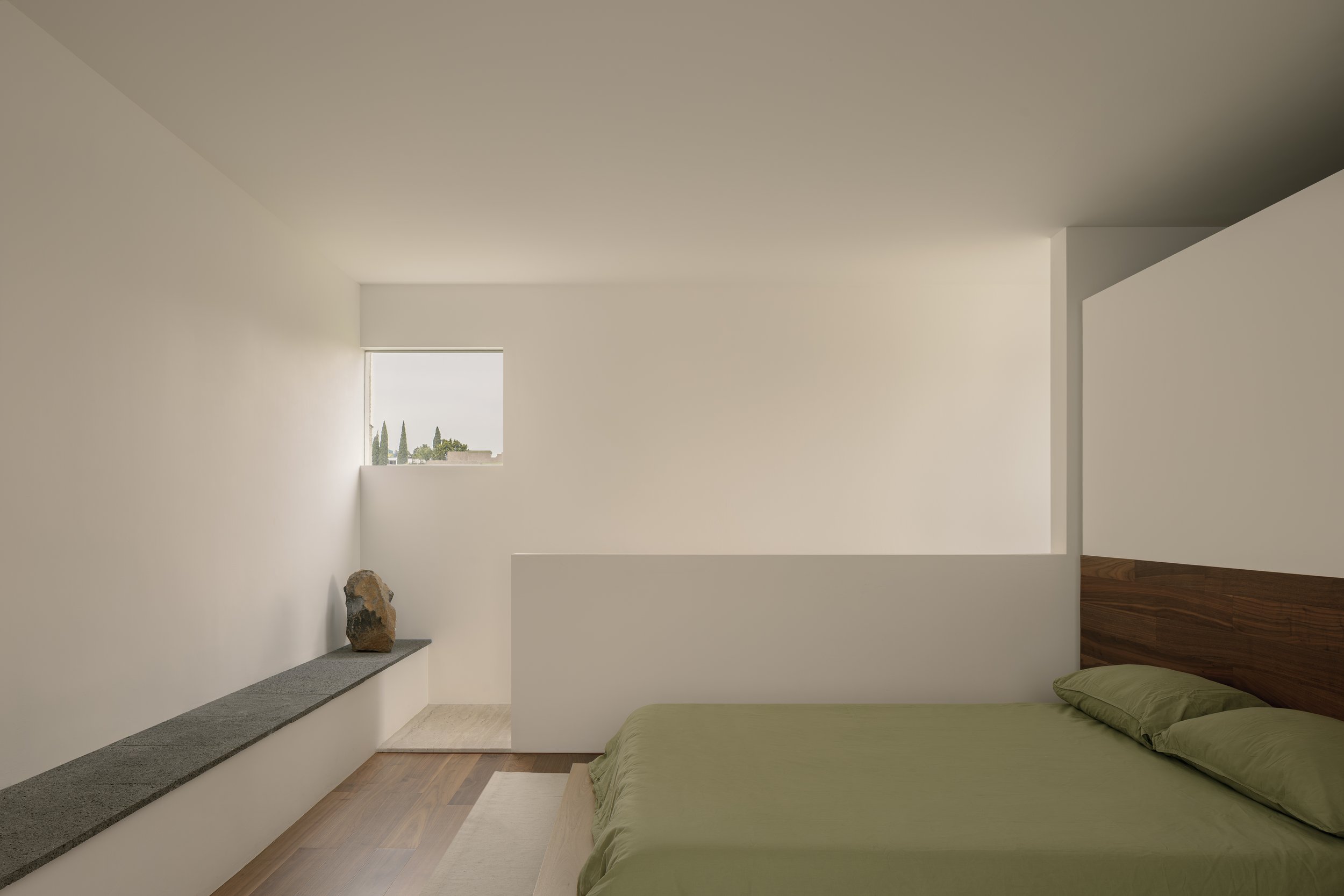
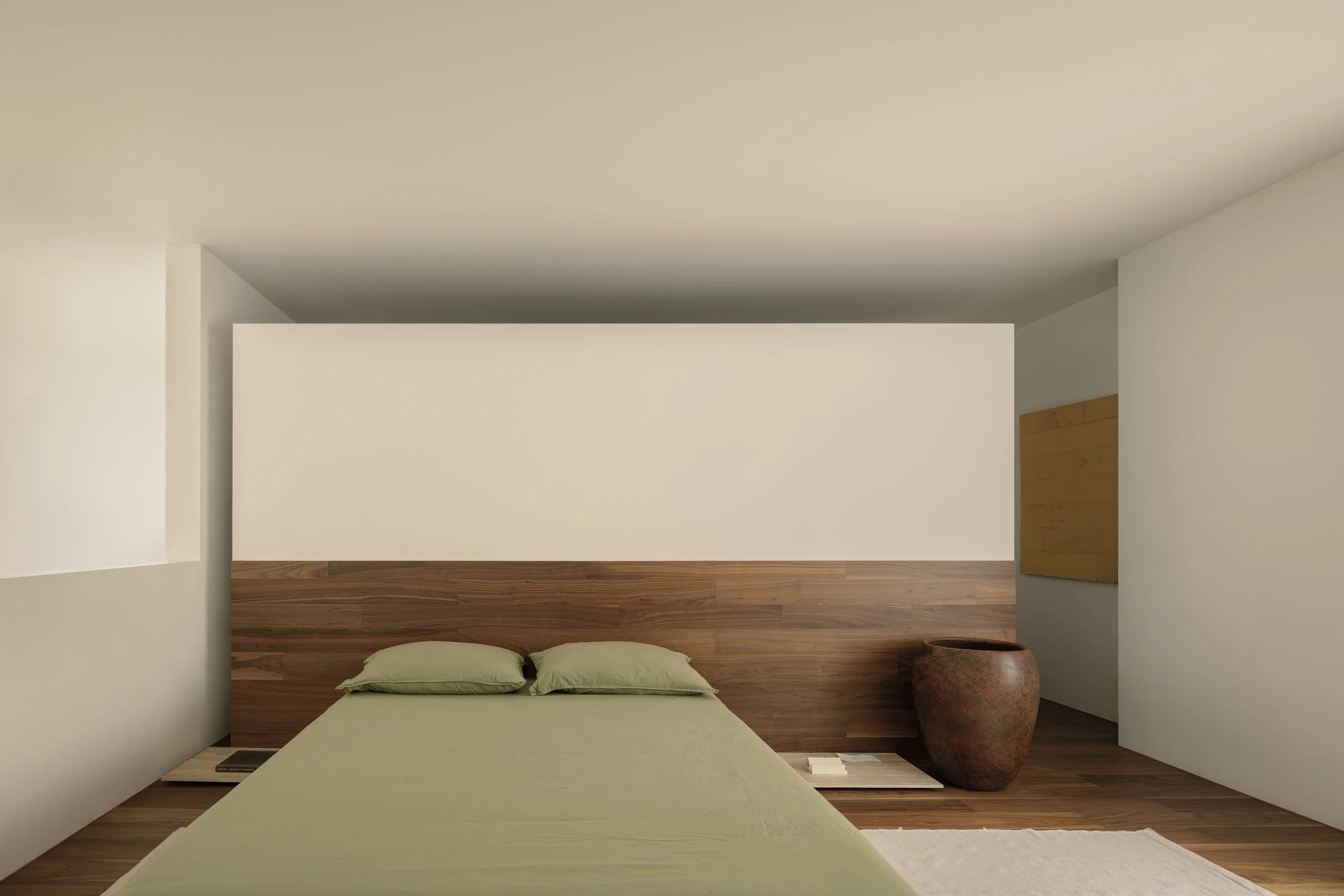
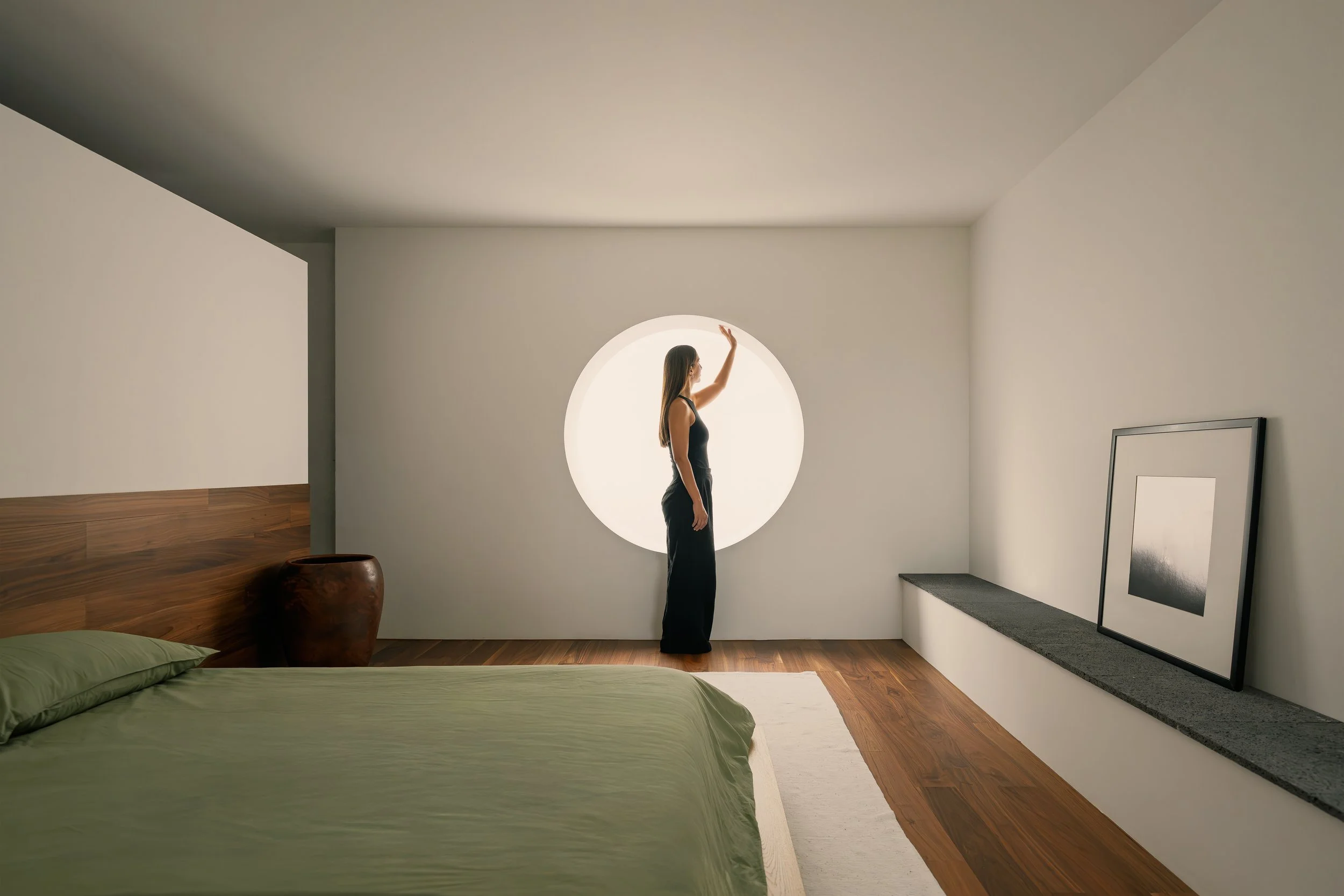
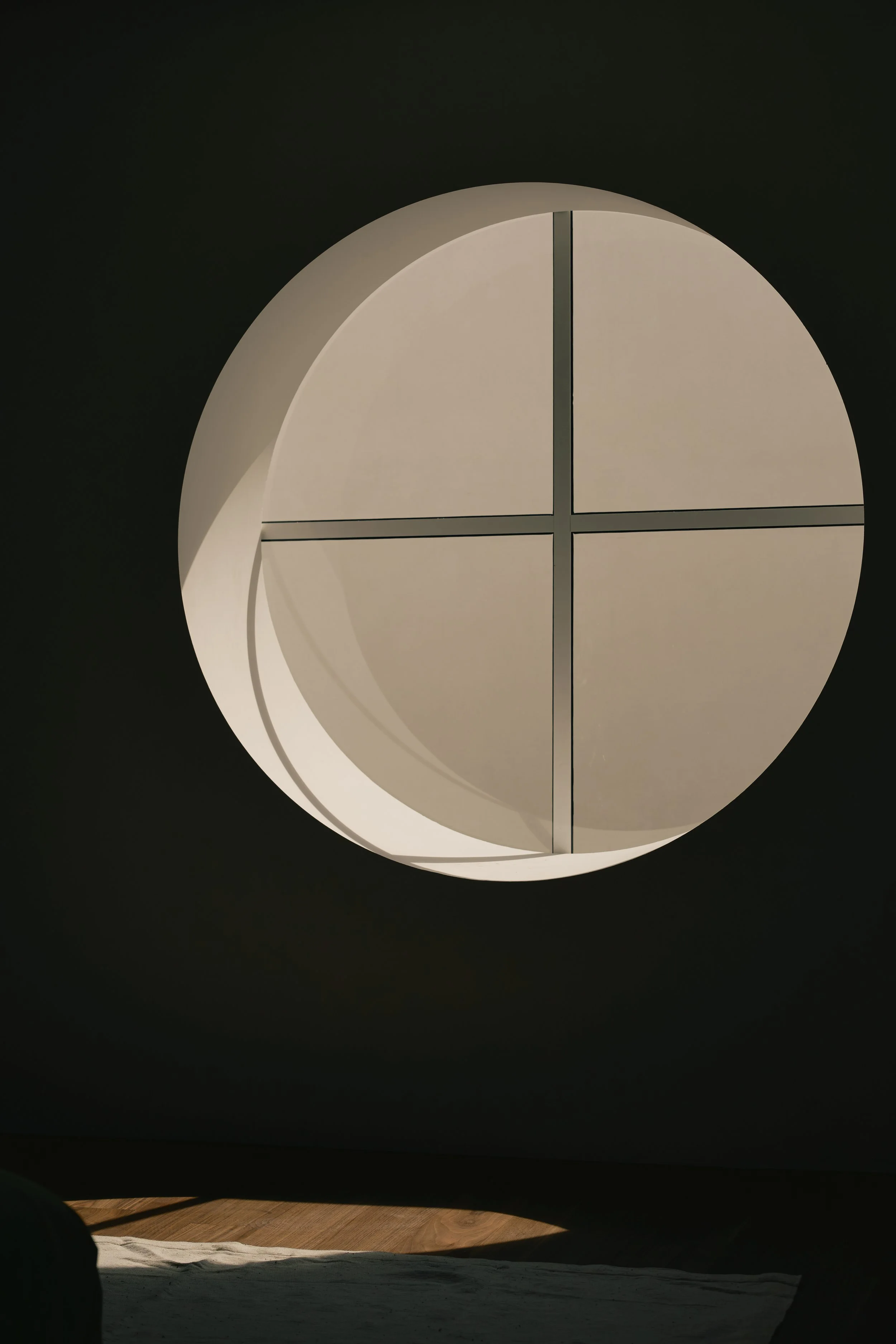
Above the central garden, the bedroom occupies a minimal, intimate volume. A circular window frames the foliage of the tree below, forming a precise visual connection between rest and contemplation. This single aperture operates as an eye, directing attention toward growth and seasonality.
The program is spare and direct, free from unnecessary circulation or expressive excess. Every material decision reflects clarity of intention. Informed by an appreciation for imperfection and transience, Kehai House sustains a quiet continuity between belief and habitation, shaping an interior life grounded in stillness and care.