In Good Time by Intheory Design
In Singapore's Choa Chu Kang, Intheory Design shapes a family home around the quiet material of memory.
Some homes are designed around a style. This one is designed around memories.
The clients came to Intheory Design with a brief that had less to do with aesthetics than inheritance. Both had grown up close to their grandparents, and the homes of their childhood — the familiar colours, the timber, the old tiles, a warm and slightly imperfect character — had left a quiet imprint. None of it was remarkable at the time. It was simply part of being there. Years on, those ordinary details had become memories, and the couple wanted to bring some of that feeling into a home of their own, not by recreating the past, but by giving the fragments that stayed with them a new life.
"There are things you remember without really knowing why you remember them," the designer reflects. "Sometimes it is just a colour, a material or the feeling of being in a certain room."
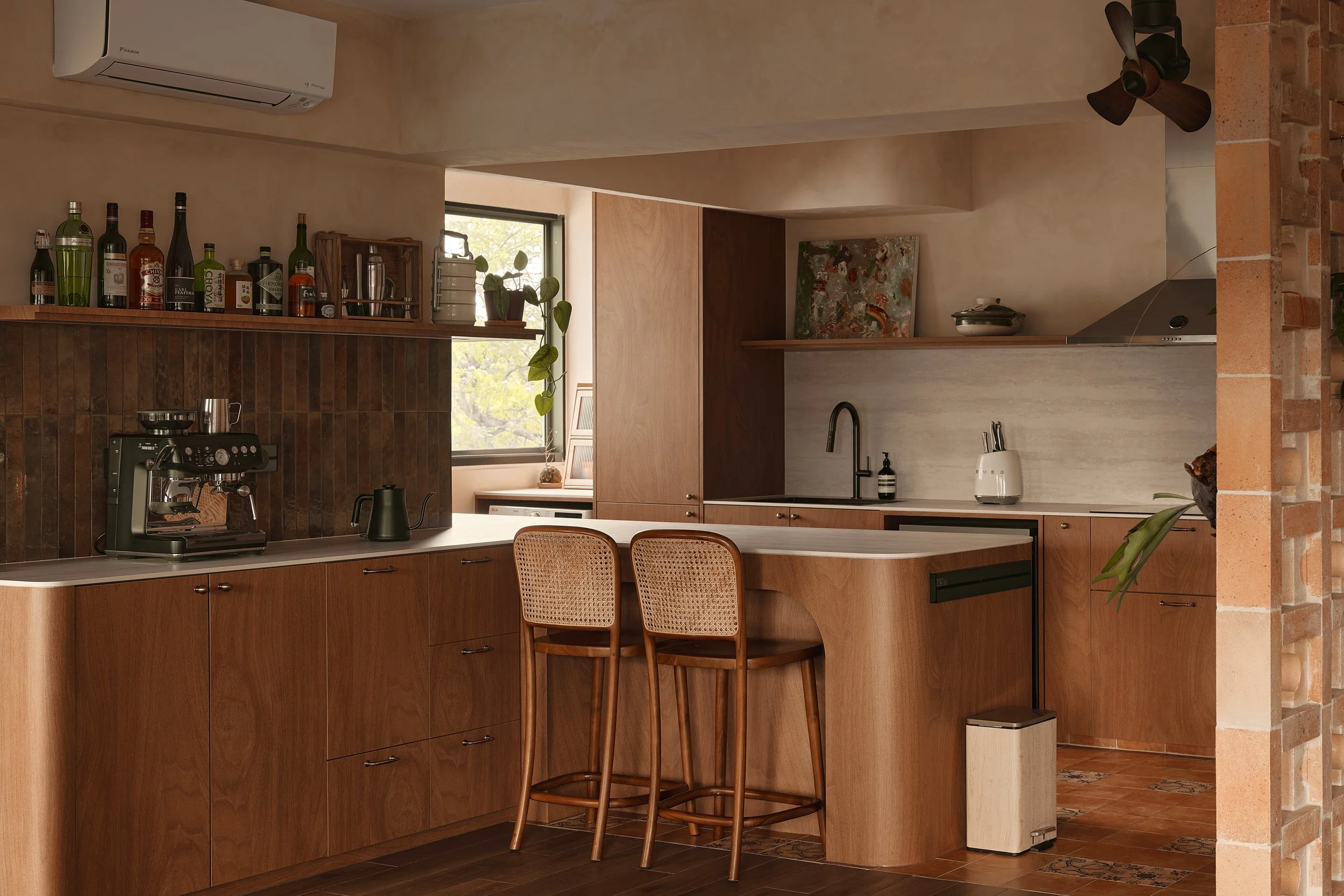
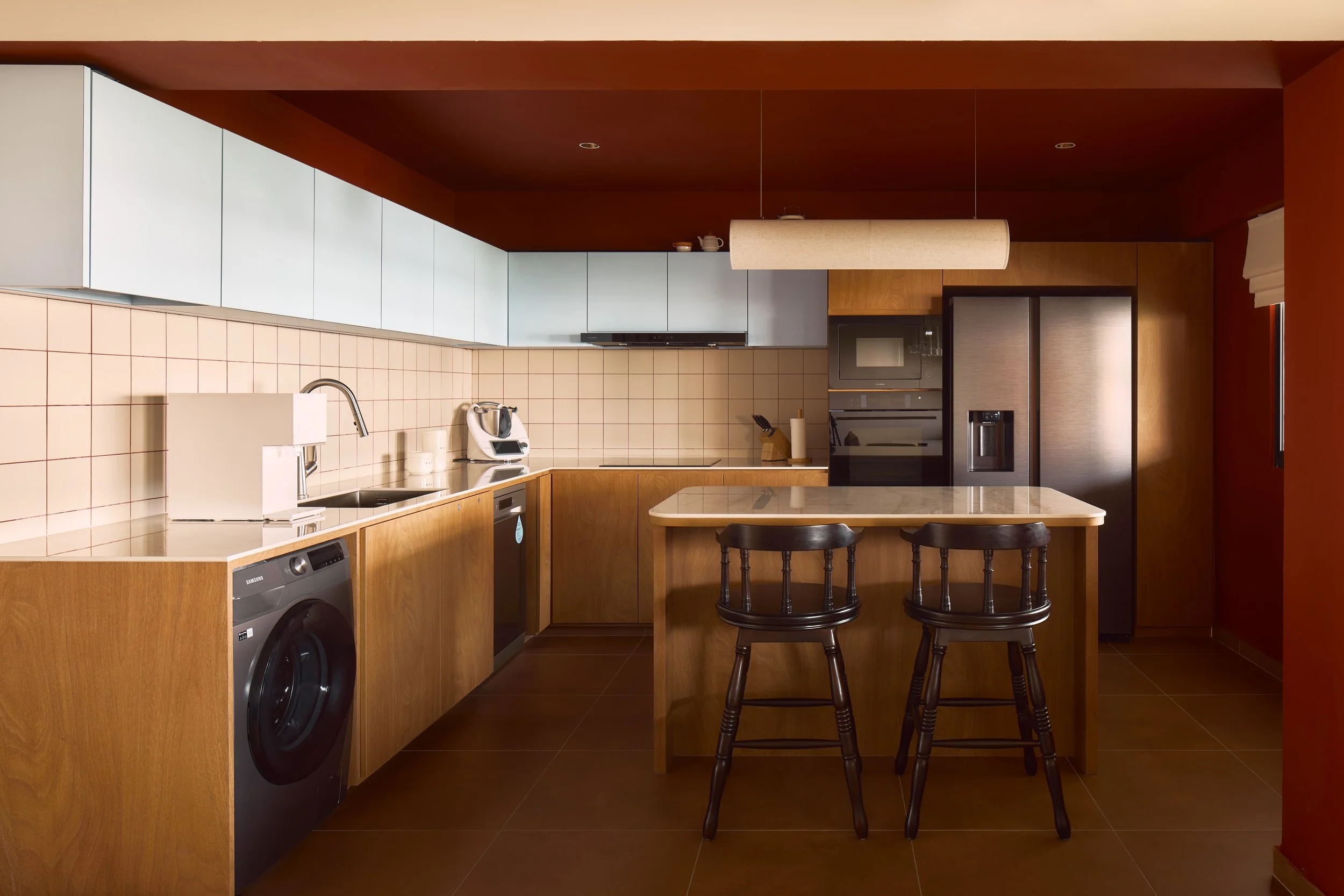
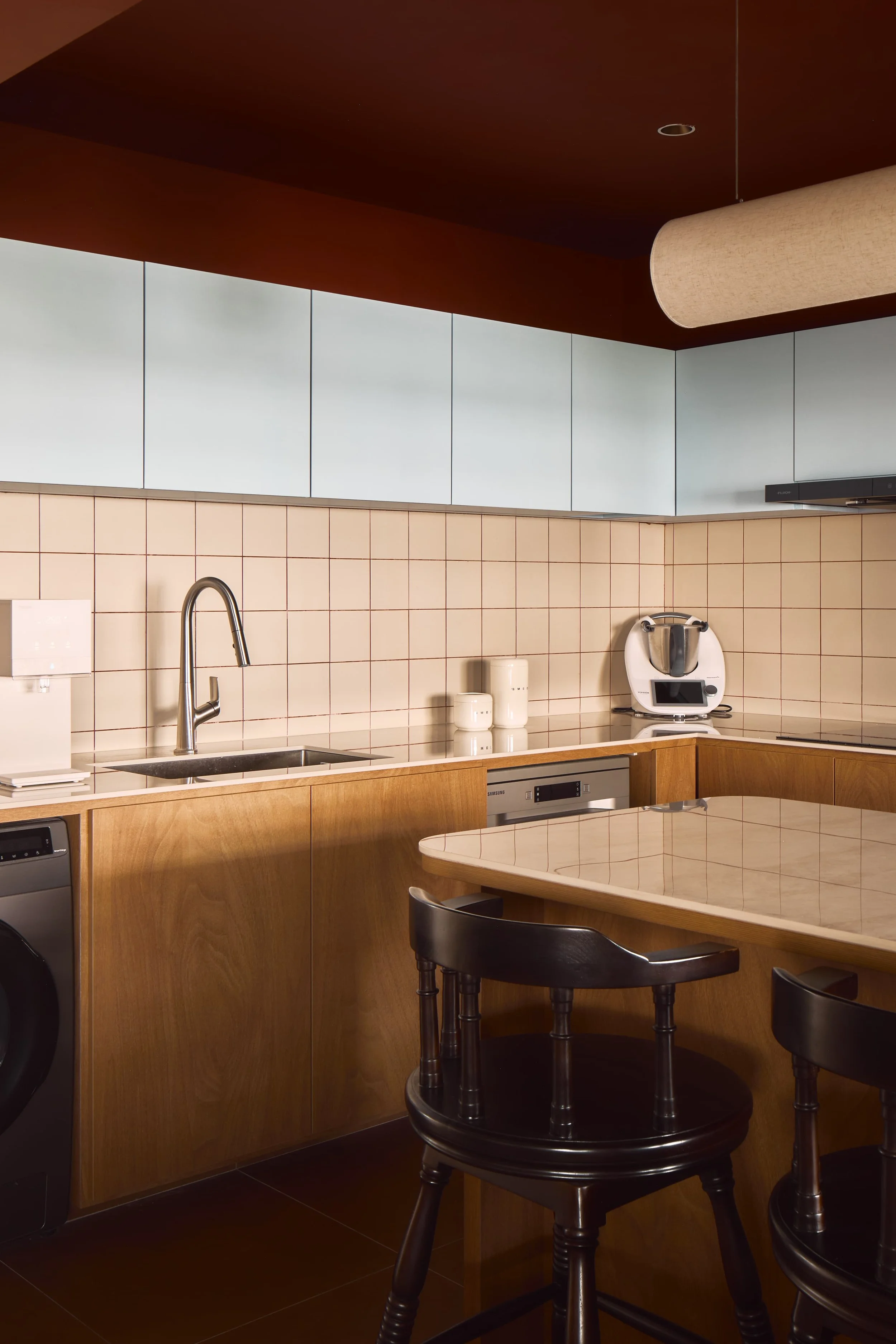
The response is a Modern Eclectic interior, a fitting language for a household that is itself a collection of memories, experiences and influences. Nothing is overly matched. Timber sits alongside tile, familiar details beside contemporary forms, and warm earthy tones are balanced by a cooler blue chosen by the children.
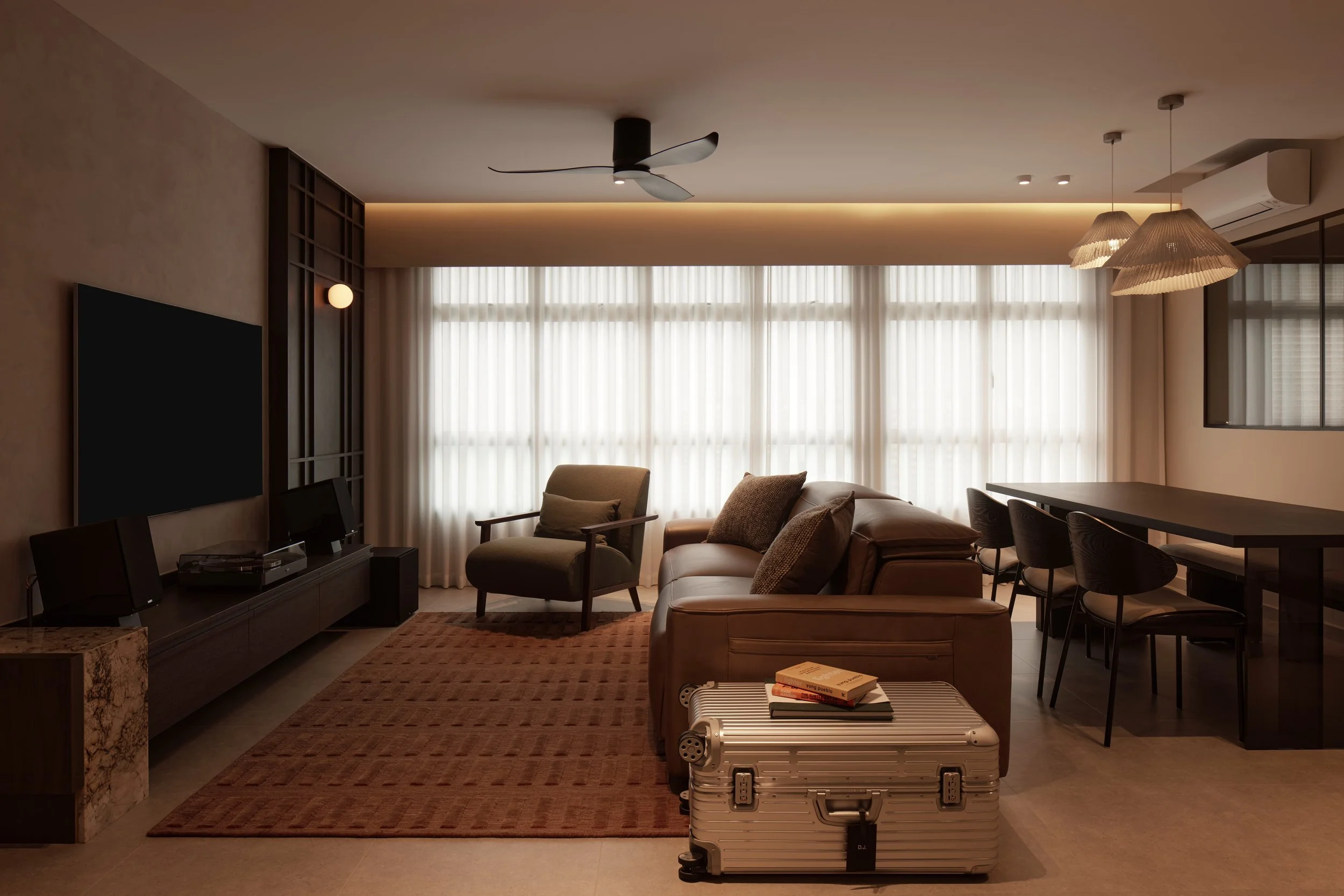
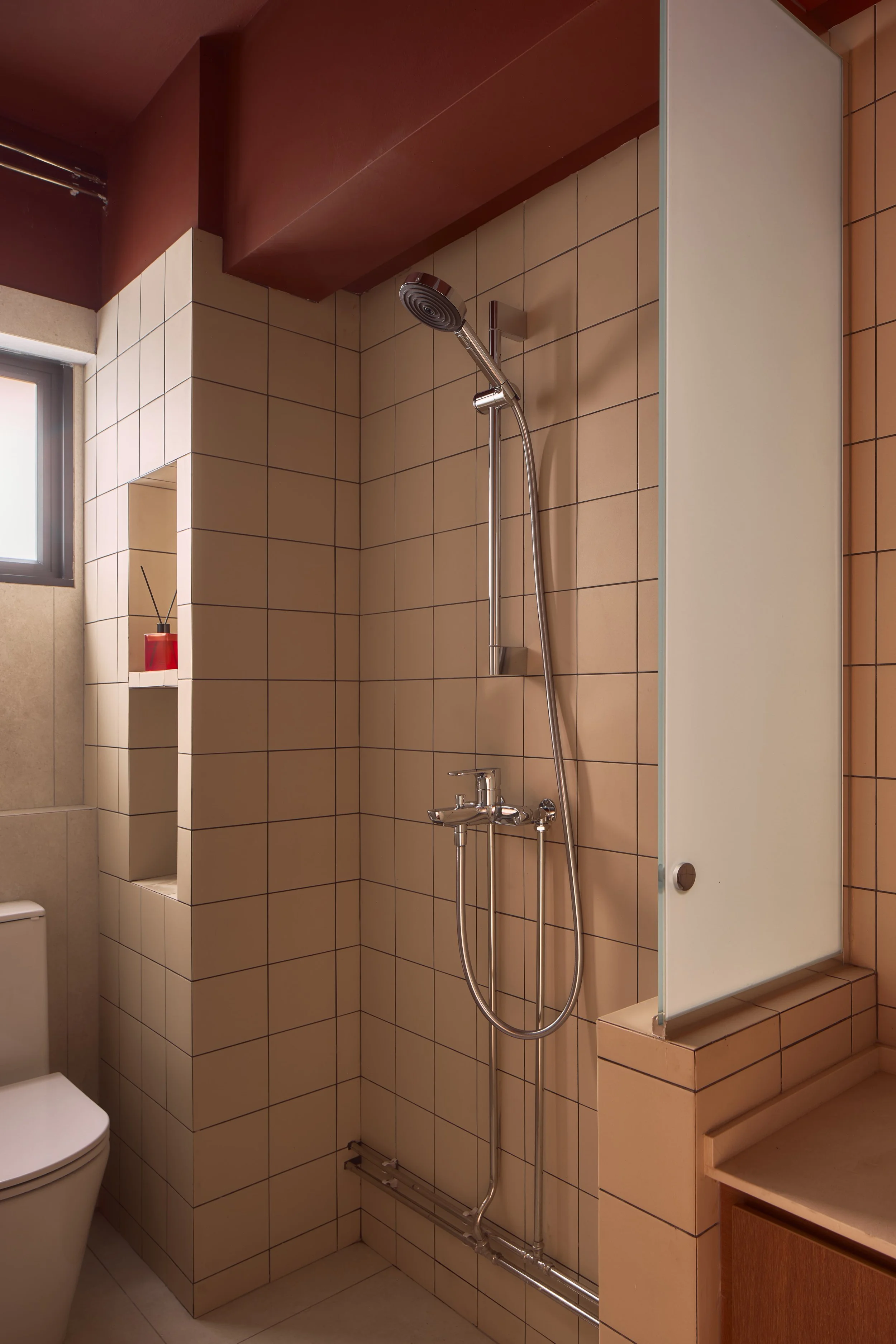
In the bathrooms and utility area, warm brown tiles carry a deliberate humility. Neither precious nor showy, they recall the homes the owners knew growing up — the kind of material that feels as though it has been there for years, quietly absorbed into daily life. On the ground floor, timber, deep brown tones and warm lighting draw the kitchen and living spaces close, while an arched opening and a timber staircase nod to an older domestic architecture without turning the home into a recreation of it.



"We wanted the home to feel as though it had a history, even though it was newly made," the designer explains.
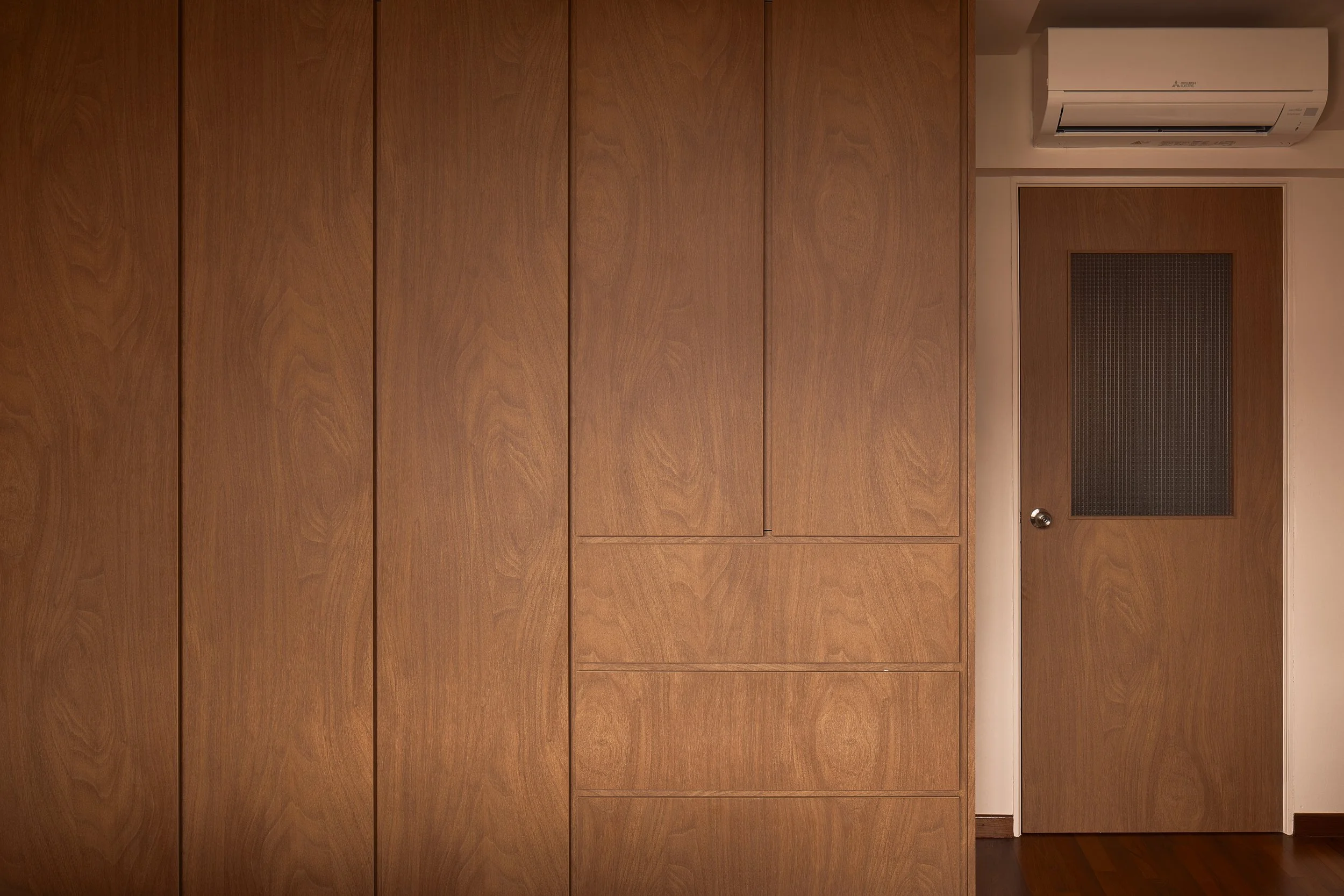
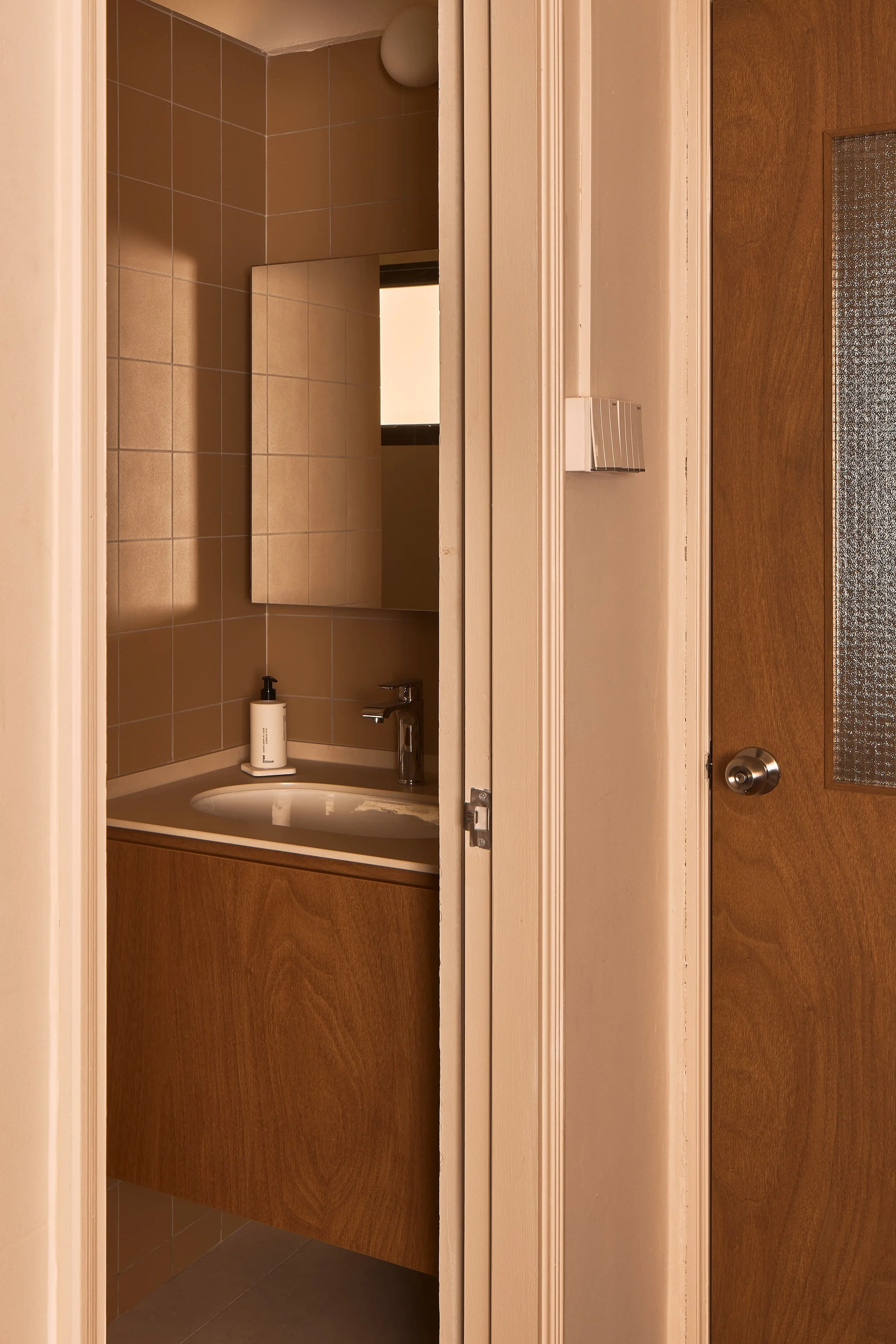
Above, the plan grows more personal. Three bedrooms connect through an intermediate space formed by opening up part of one room, with a hallway sink woven into the shared territory. The bedroom doors are fitted with wired glass, filtering daylight through the floor and carrying a memory of the glass the owners knew in their school days — a small inheritance they hope will pass, in time, to their children.
These details are modest, and that is precisely why they matter. Homes are rarely remembered as grand gestures. We remember the colour of a wall, the light coming through a door, the tiles in a bathroom we could never have explained. In that sense, the home becomes a bridge between generations — a place where the parents recognise fragments of the houses they grew up in, while their children begin making memories that will one day become their own.
Already, before it has had the chance to age, the home feels lived in. Years from now, the children may not recall the name of the design style. They will remember the brown tiles, the warmth of the timber, the glow of the kitchen at night, the blue bathroom that belonged to them, the old-fashioned glass in the bedroom doors — being upstairs together, washing their hands at the hallway sink, running from one bedroom to another.
Perhaps that is the real measure of a home. Not how perfectly it was designed, but how much of a life it manages to hold.