House in Jinseki by RID
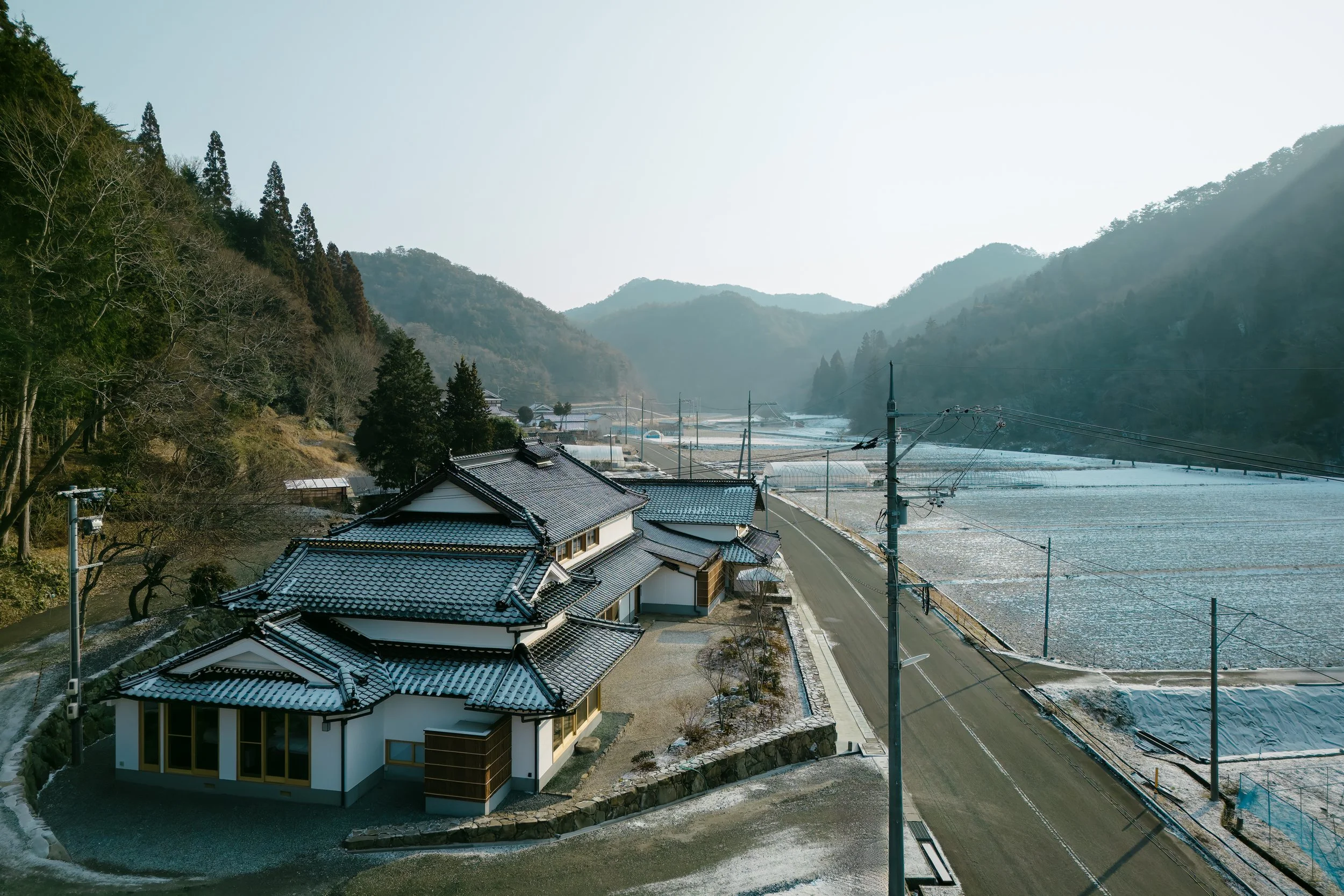
Set within the plateau landscapes of Jinseki in Hiroshima Prefecture, House in Jinseki by RID is a quiet interior transformation shaped by place, craft and time.
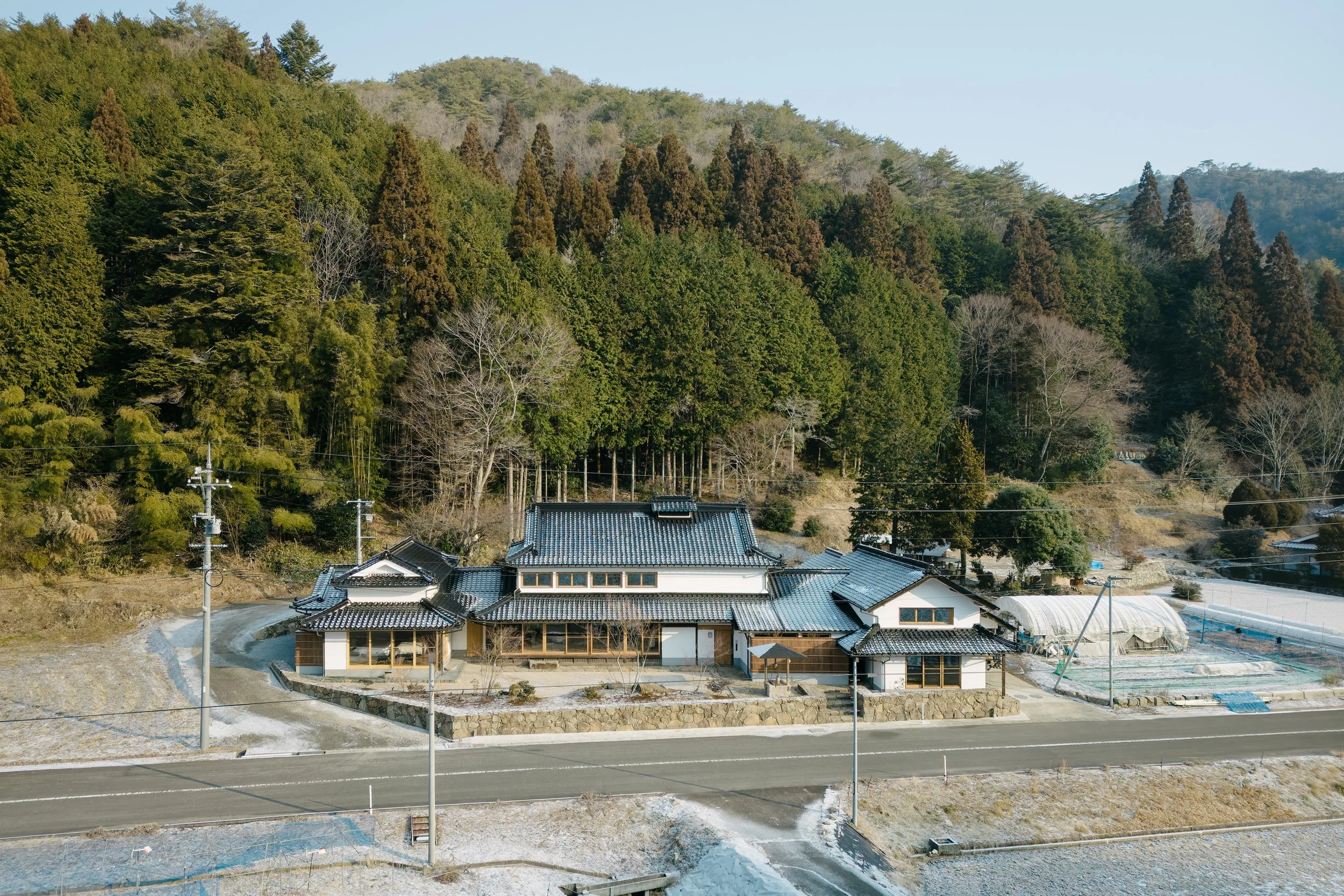
Located around 1.5 hours north of Fukuyama City at an elevation of 400 to 700 metres, the property looks out across expansive mountain scenery that shifts dramatically with the seasons.
The site comprises a main building, an annex and a barn arranged in a linear east–west formation. Following the renovation of the main building and barn as the first phase of works beginning in 2021, attention turned to the annex as part of the second phase. Intended to function as guest accommodation, the detached wooden structure was accompanied by the gradual formation of a main garden and well positioned to take in views of the surrounding mountains, timed with the thaw of winter snow and the arrival of spring.
Unlike the older main house and barn, the annex did not require structural reinforcement due to its relatively recent construction. Its newer appearance, however, sat at odds with the weathered character of the rest of the property. To restore a sense of continuity, aluminum window frames were replaced with timber ones, bringing warmth and visual coherence to the interiors and aligning the annex more closely with its neighbouring buildings.
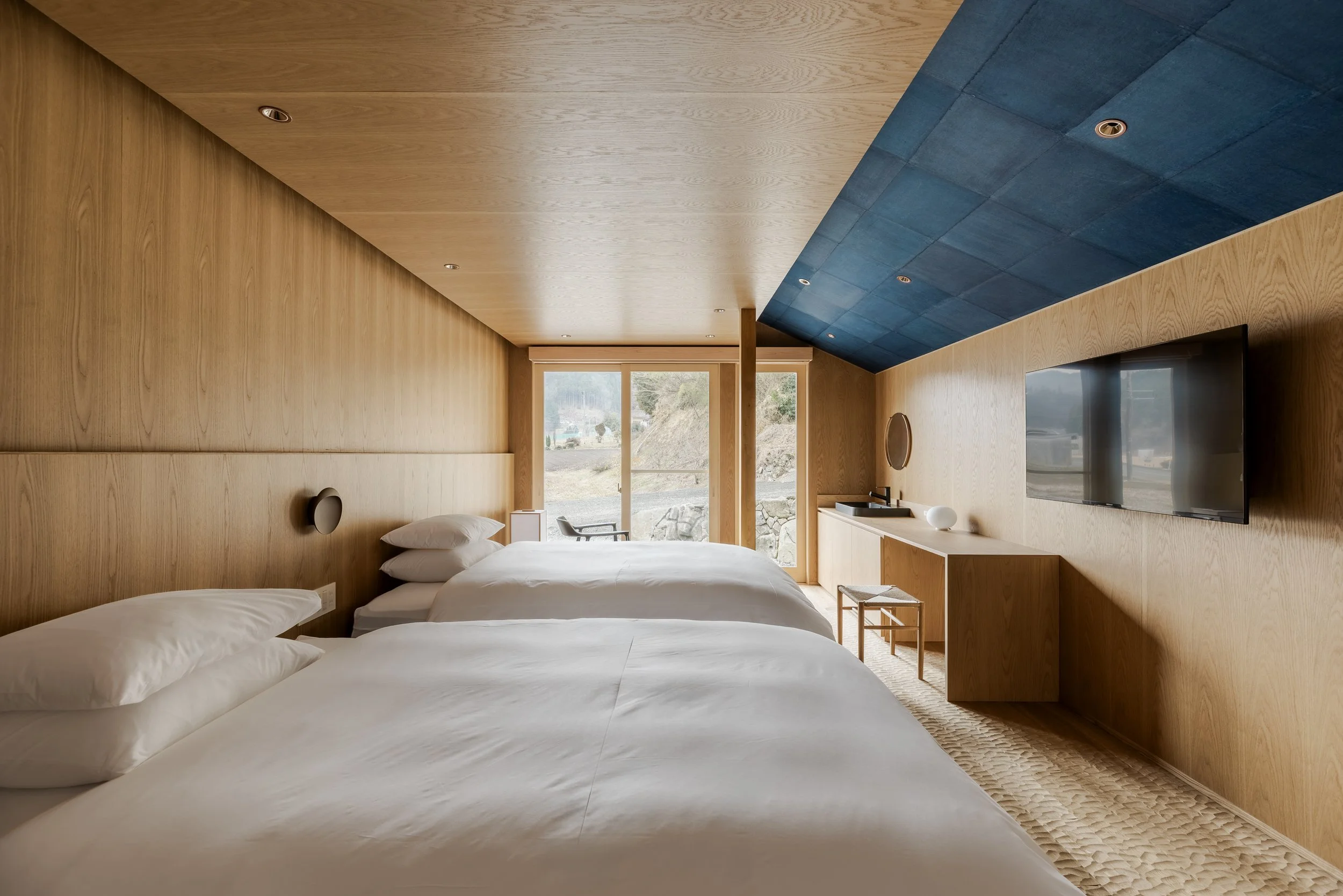
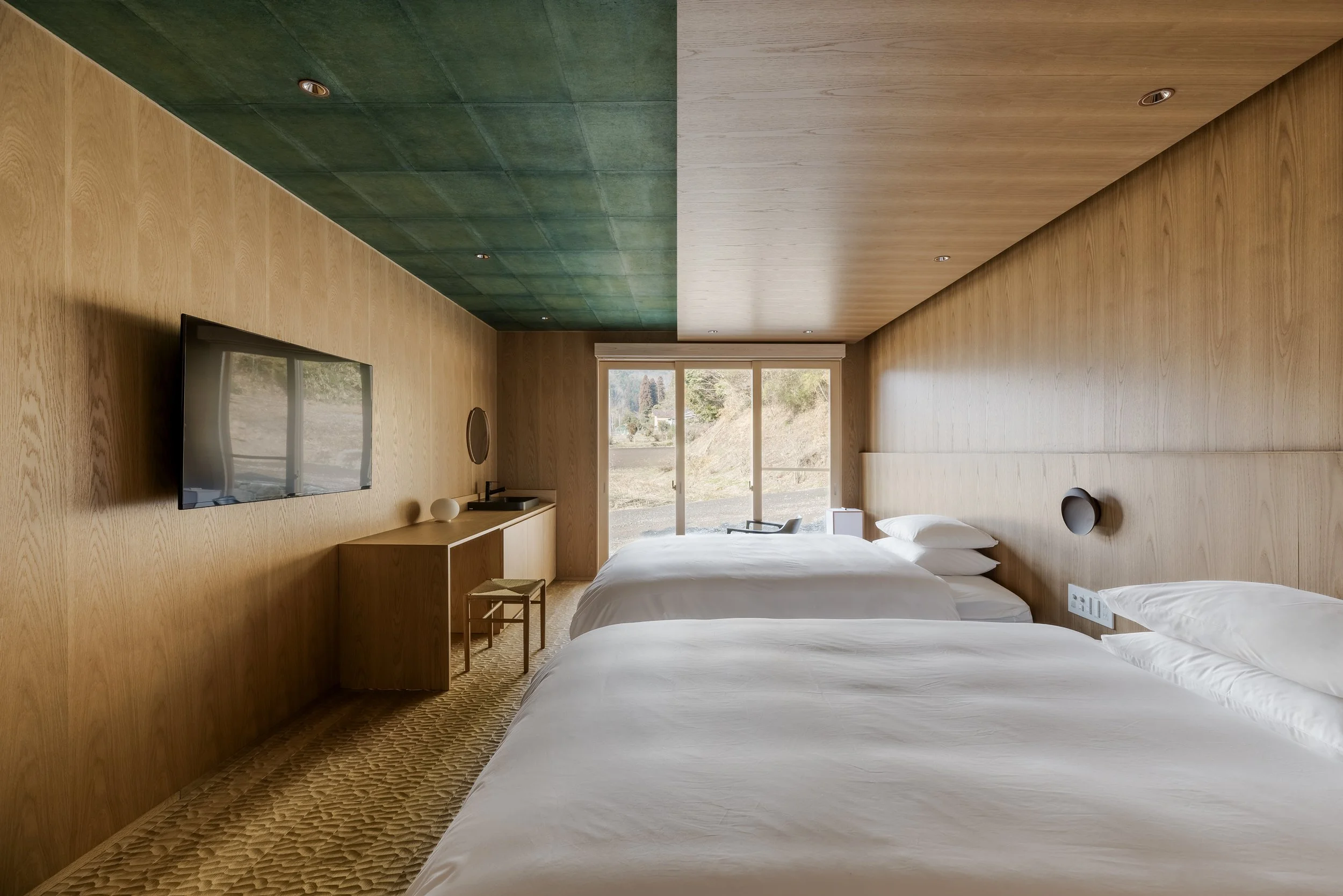
Inside, the renovation draws from the traditional IGURA-TSUKURI house style of the Kamo region in Hiroshima. This approach, typically expressed through a two-tiered roof with distinct upper and lower forms, informed the interior proportions and ceiling volumes. The first floor accommodates three guest rooms alongside cleaning areas, with the largest guest room making use of the original atrium structure to achieve a generous five-metre ceiling height, lending the room an airy, open quality despite its modest footprint.

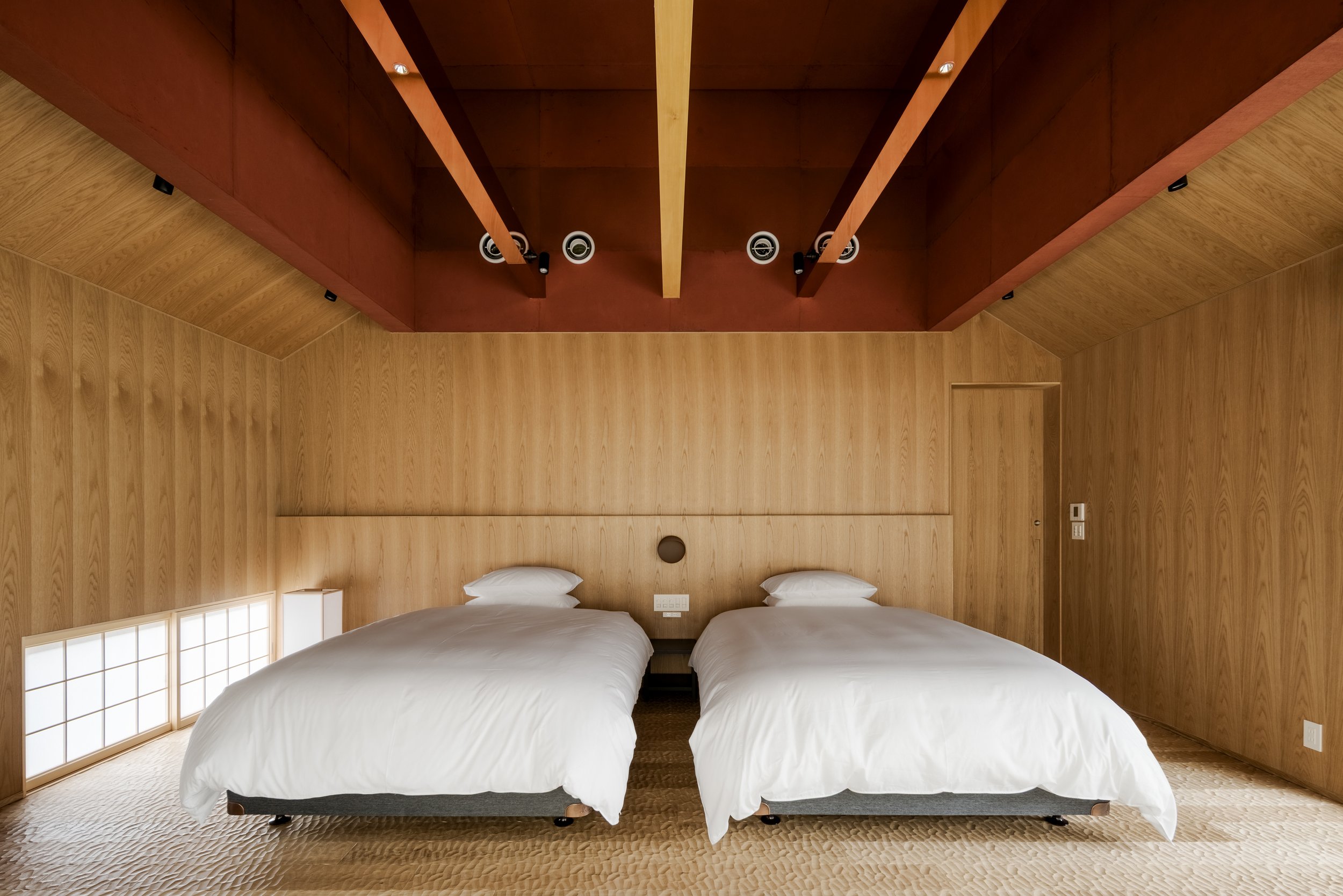
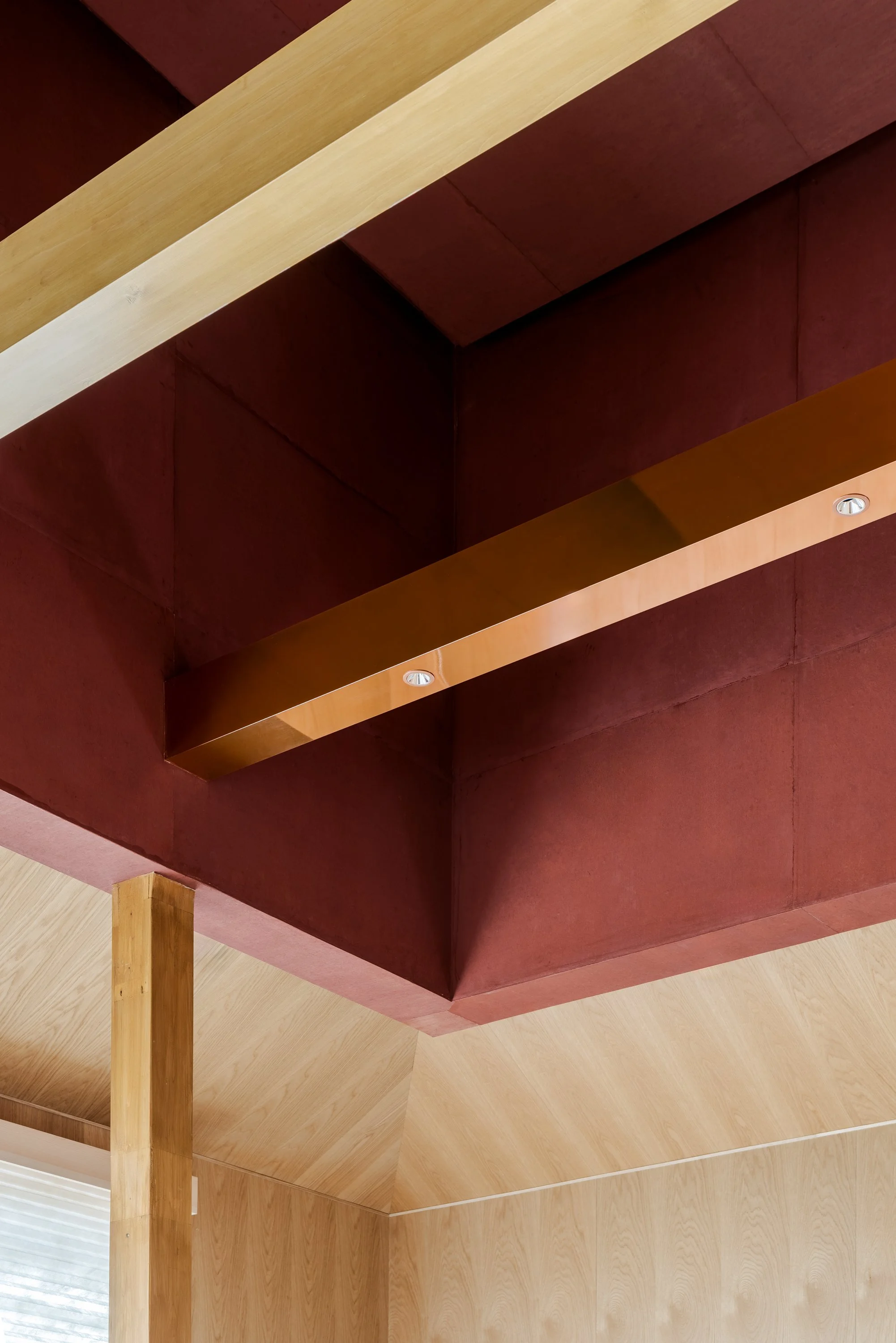
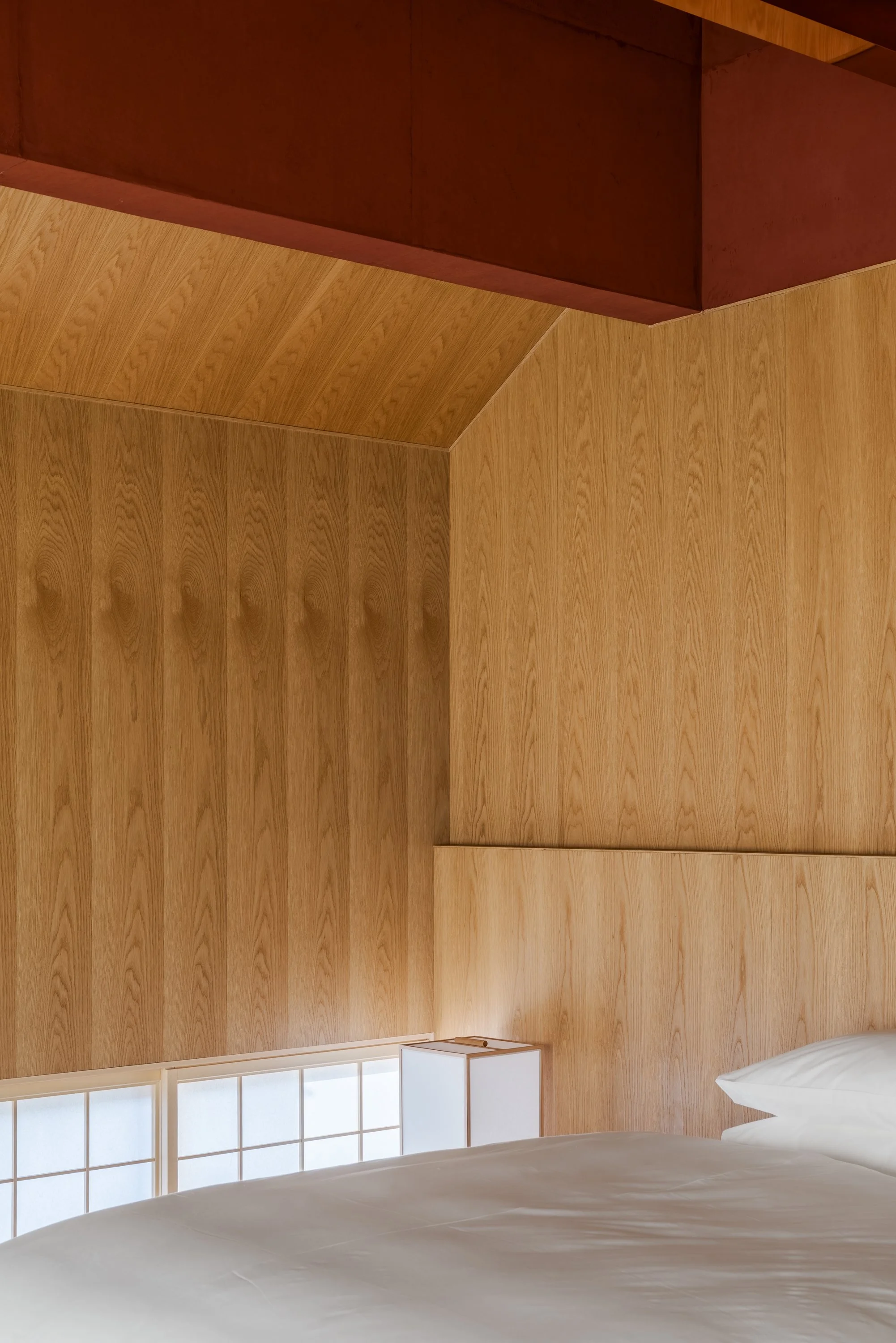
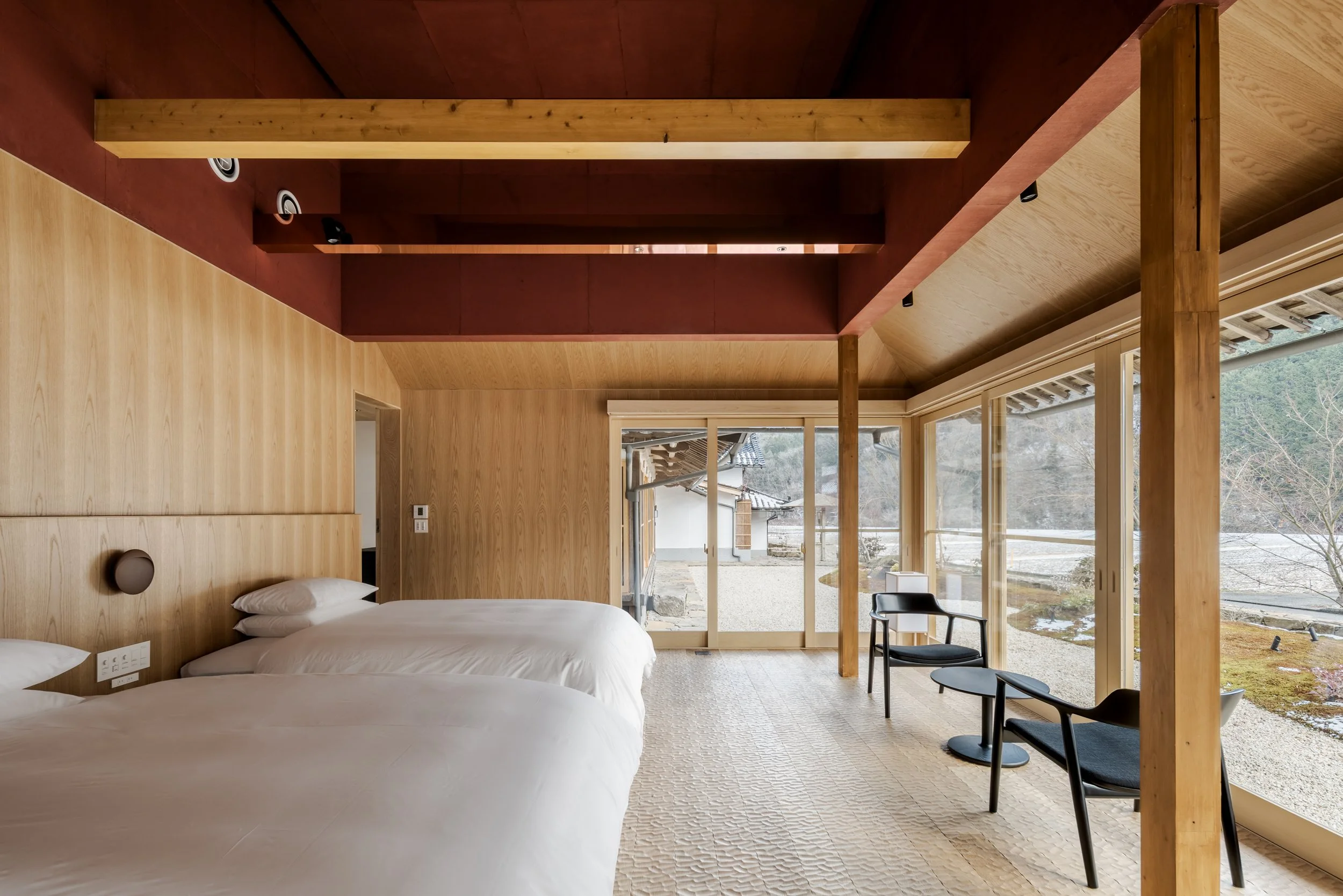
Materiality plays a central role throughout the project. Building on ideas explored during the earlier phase, the interiors were refined through a collaborative, dialogue-driven process with the client, using coloured Washi paper tailored to each room. The hues were interpreted by Wataru Hatano, a Kurotani Washi papermaker, and applied in ways that allow each interior to carry its own mood and identity. Subtle variations in tone, texture and light give every guest room a distinct presence while remaining grounded in a shared sensibility.
House in Jinseki demonstrates a careful balance between preservation and renewal. By addressing visual harmony, regional tradition and artisanal collaboration, the project brings a measured sense of calm to the interiors, allowing them to sit naturally within their rural setting while offering guests a deeply considered and quietly immersive experience.