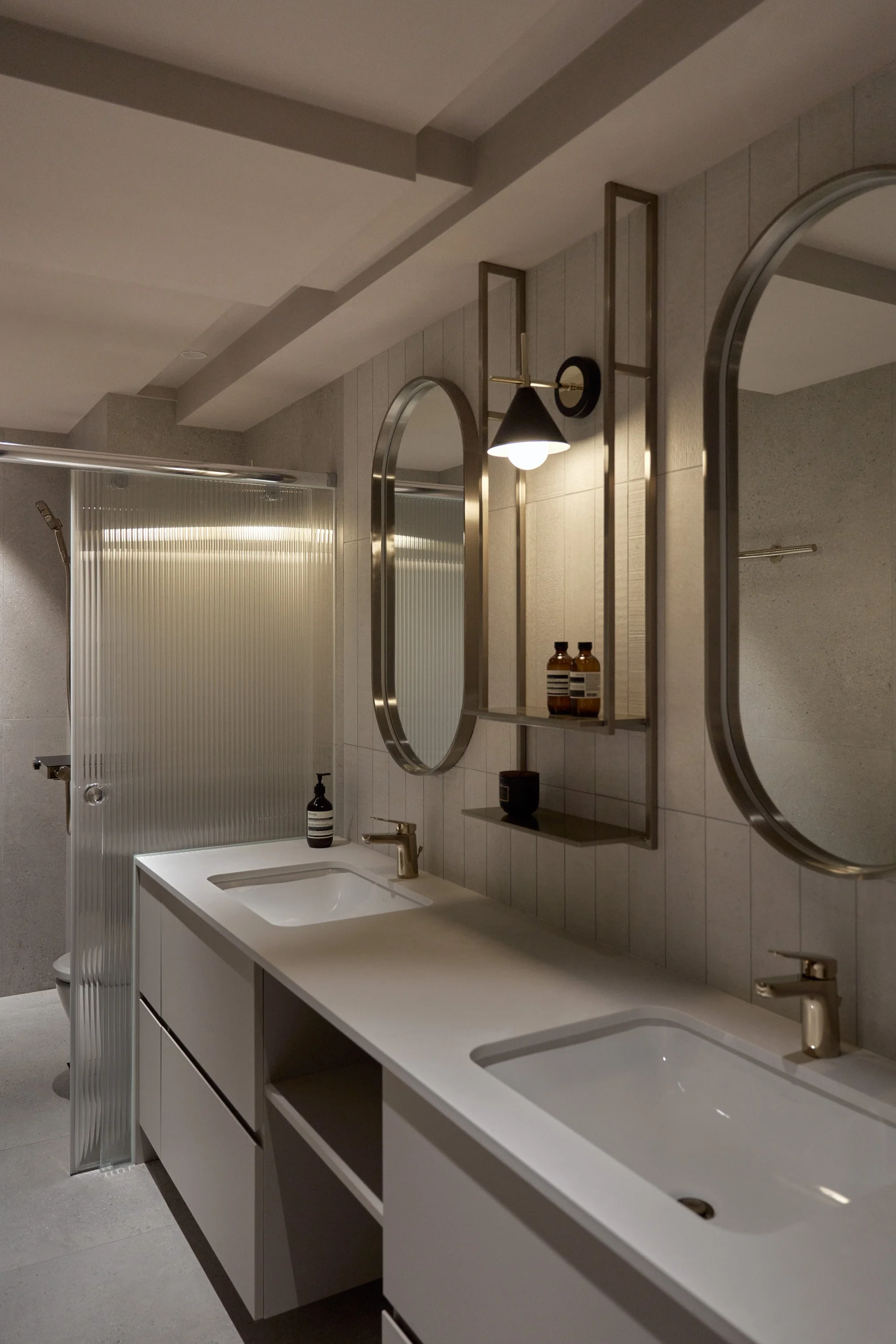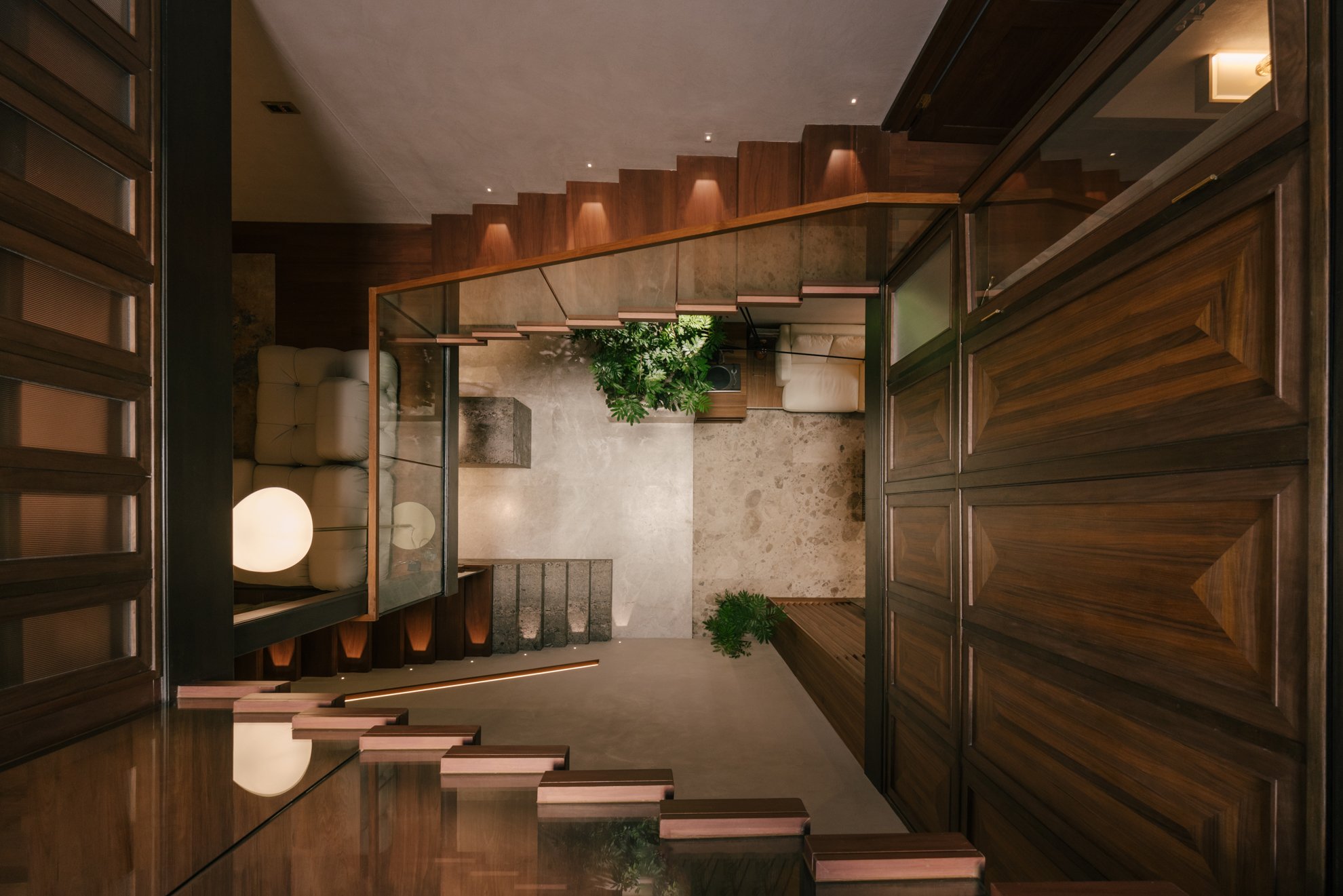
Echoes by NestSpace Design
Can togetherness be designed without erasing individuality? In Taipei, NestSpace Design answers this question through Echoes, a 200 square metre residence created by merging two adjoining apartments into one open, L shaped home.
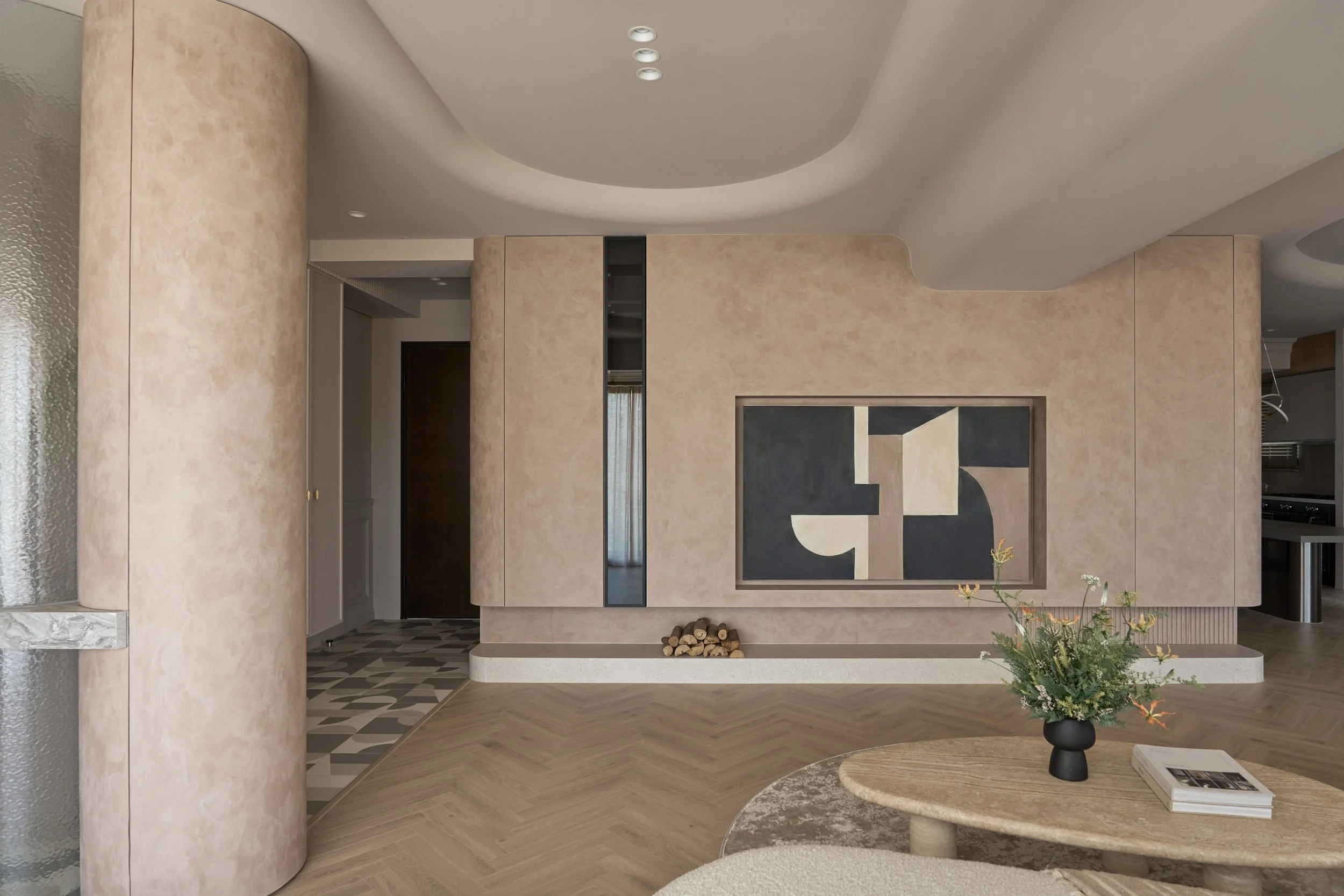
The project began with a condition that was both generous and difficult. Combining the two apartments produced a larger domestic shell, yet it also left behind a dense grid of beams and columns. Structural elements appeared at nearly every threshold, interrupting what might otherwise have become a straightforward open plan. NestSpace Design treated this inherited complexity as the foundation of the project, developing a continuous curvilinear system that draws the ceiling, walls, columns, and cabinetry into one fluid spatial language.
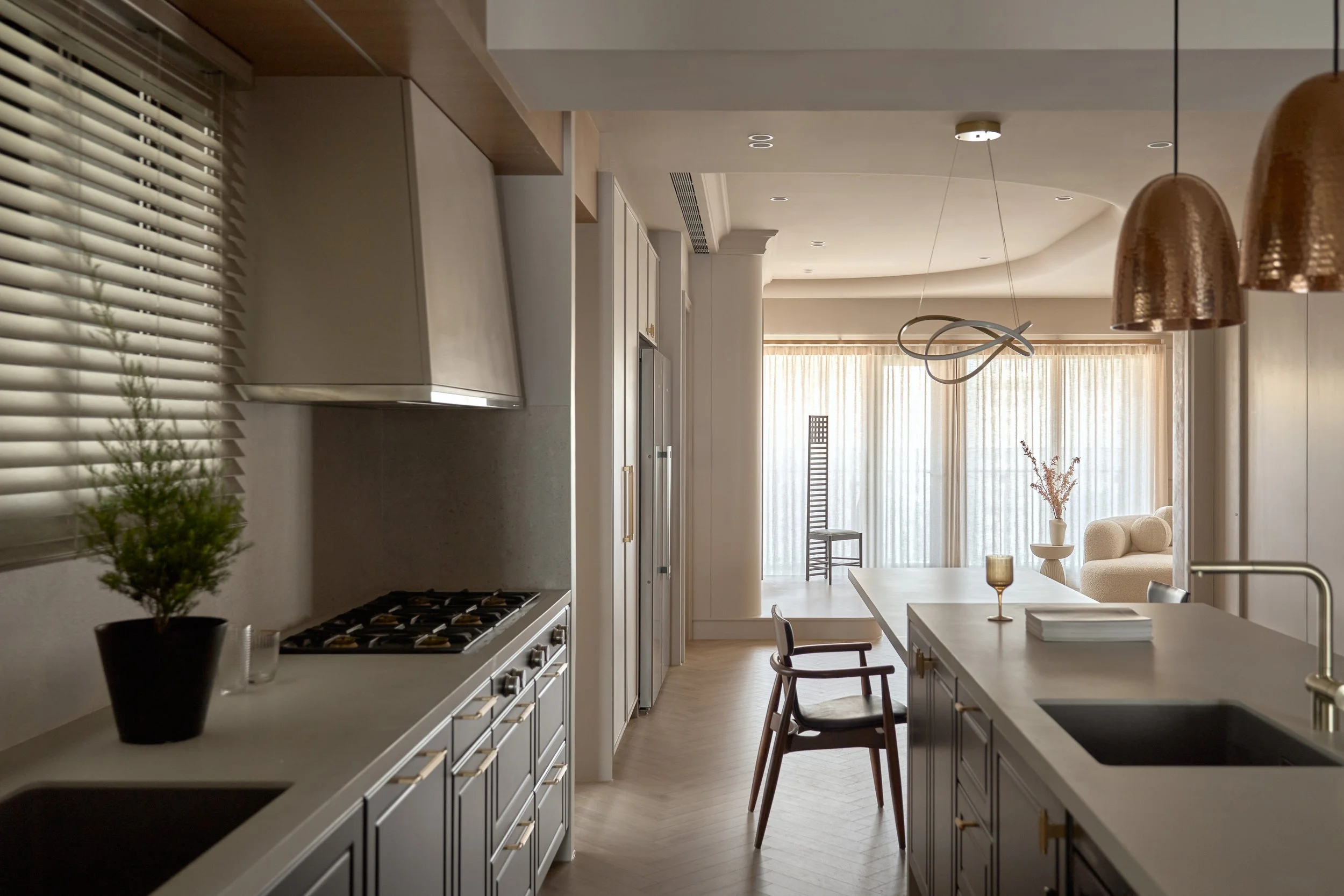
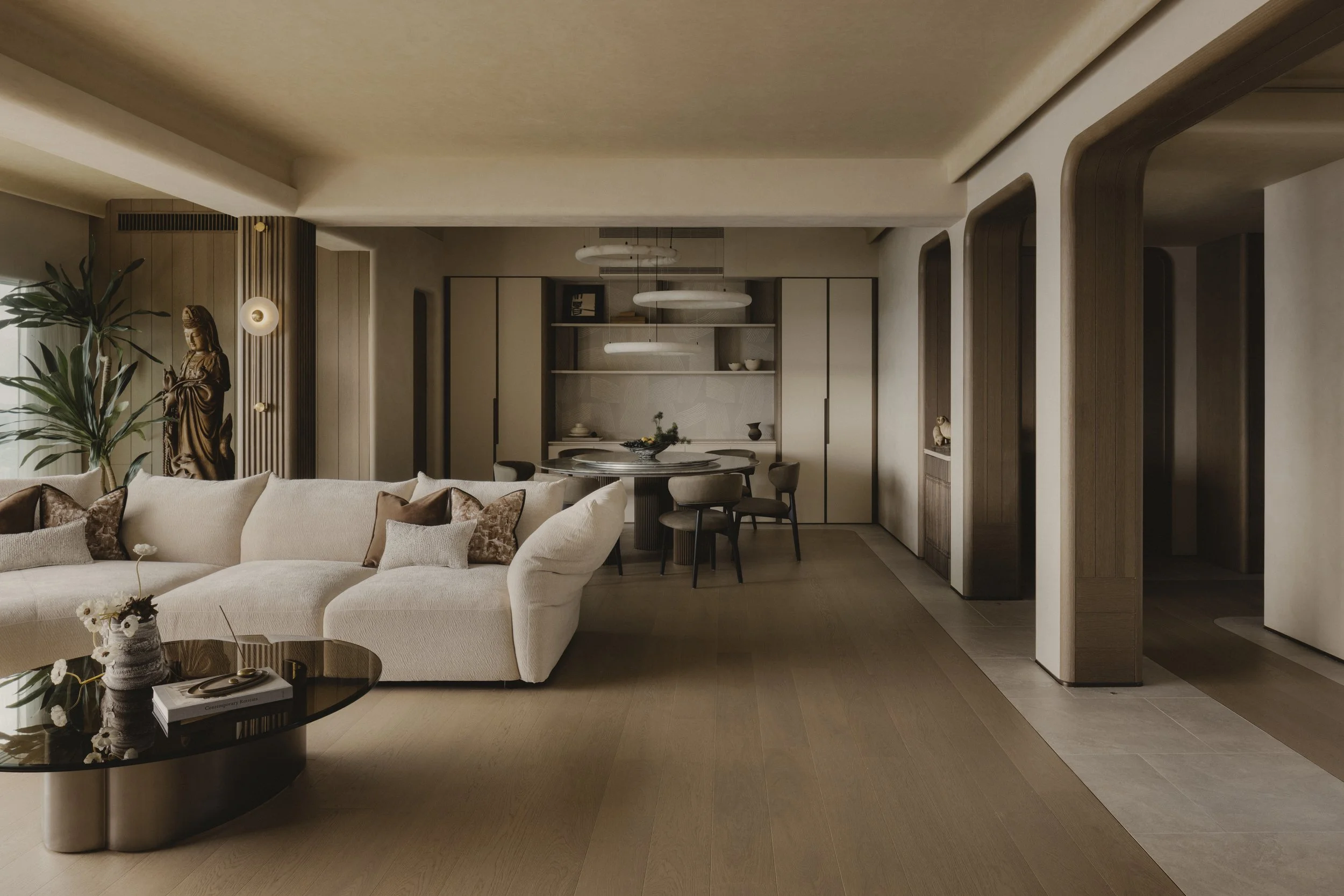
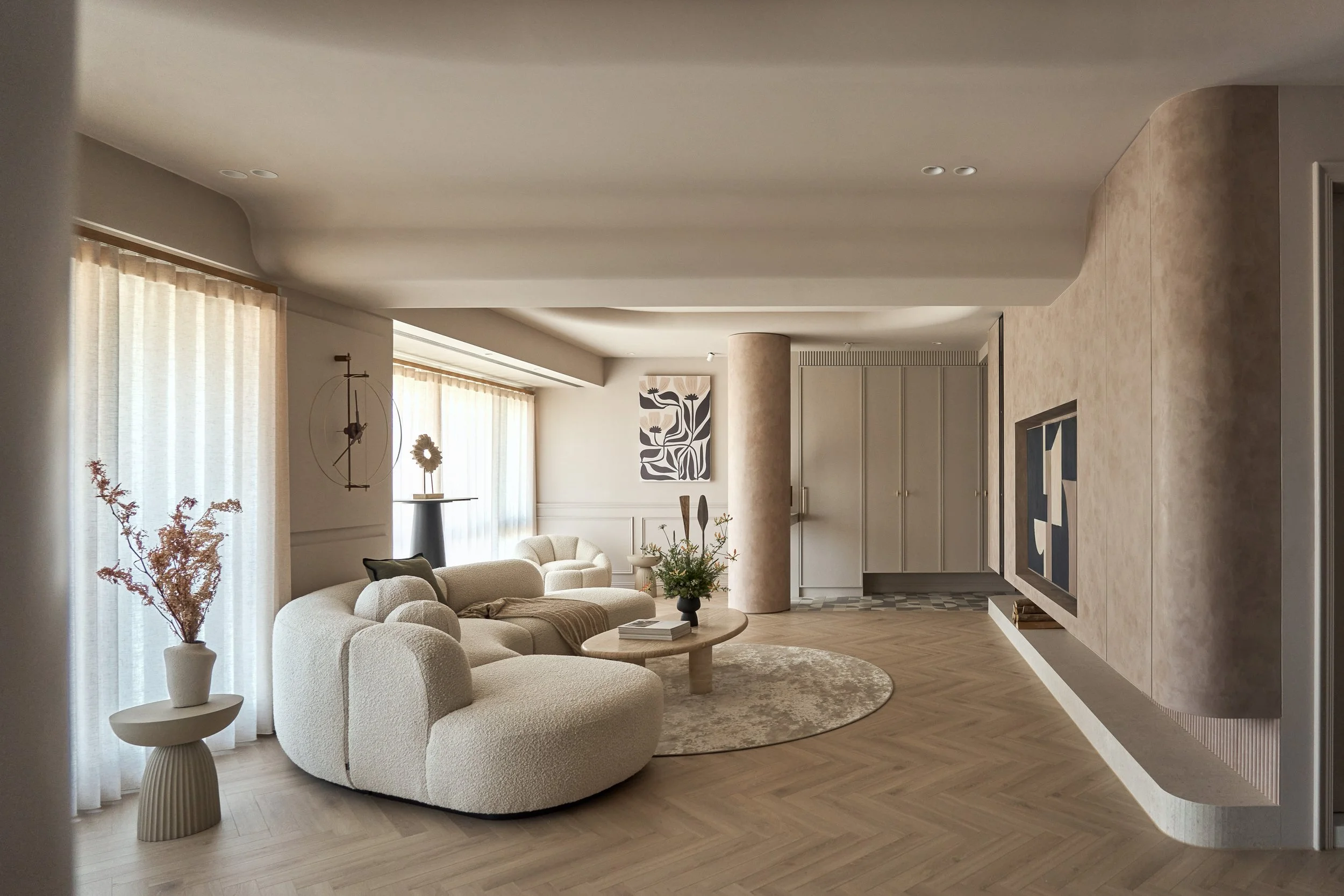
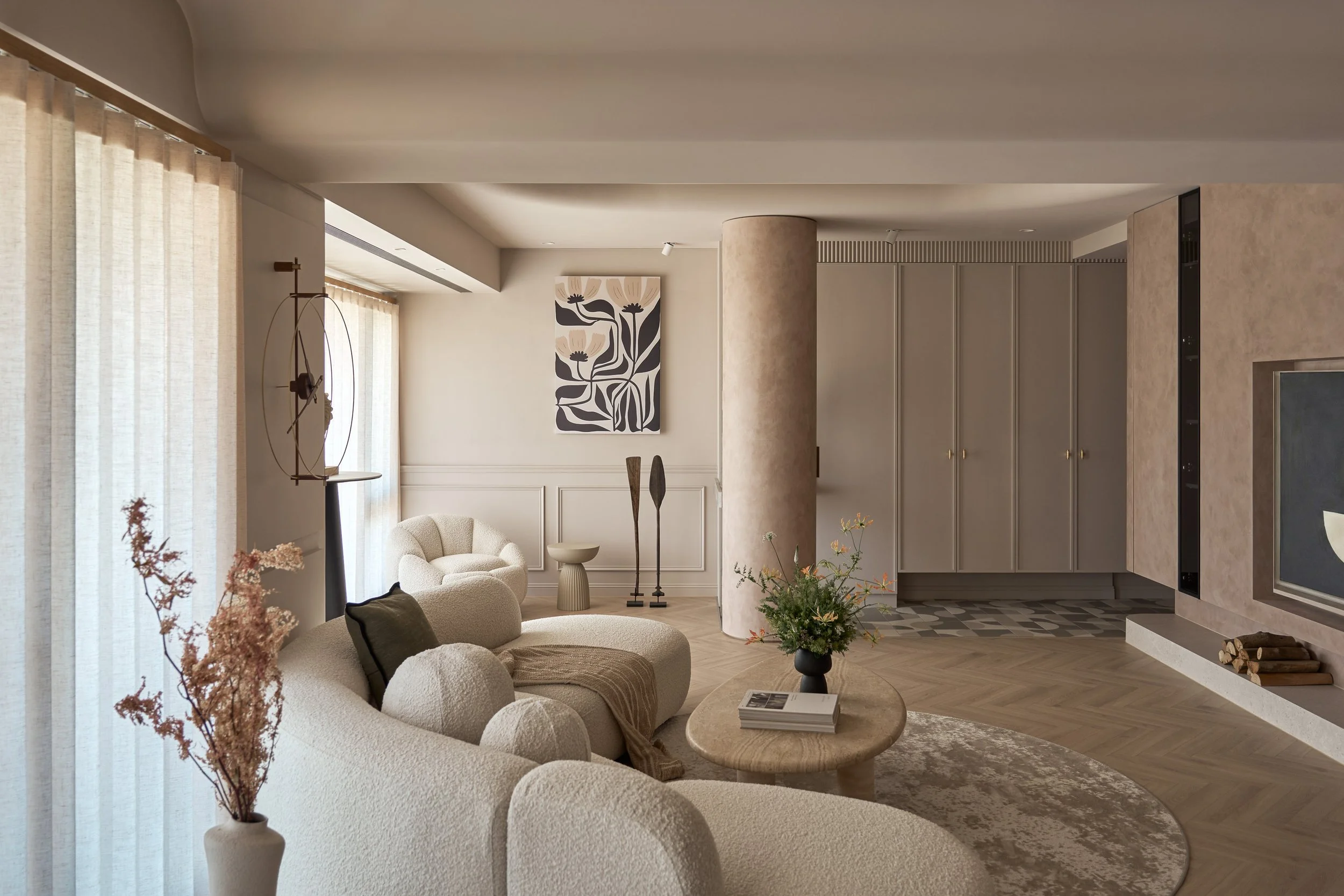
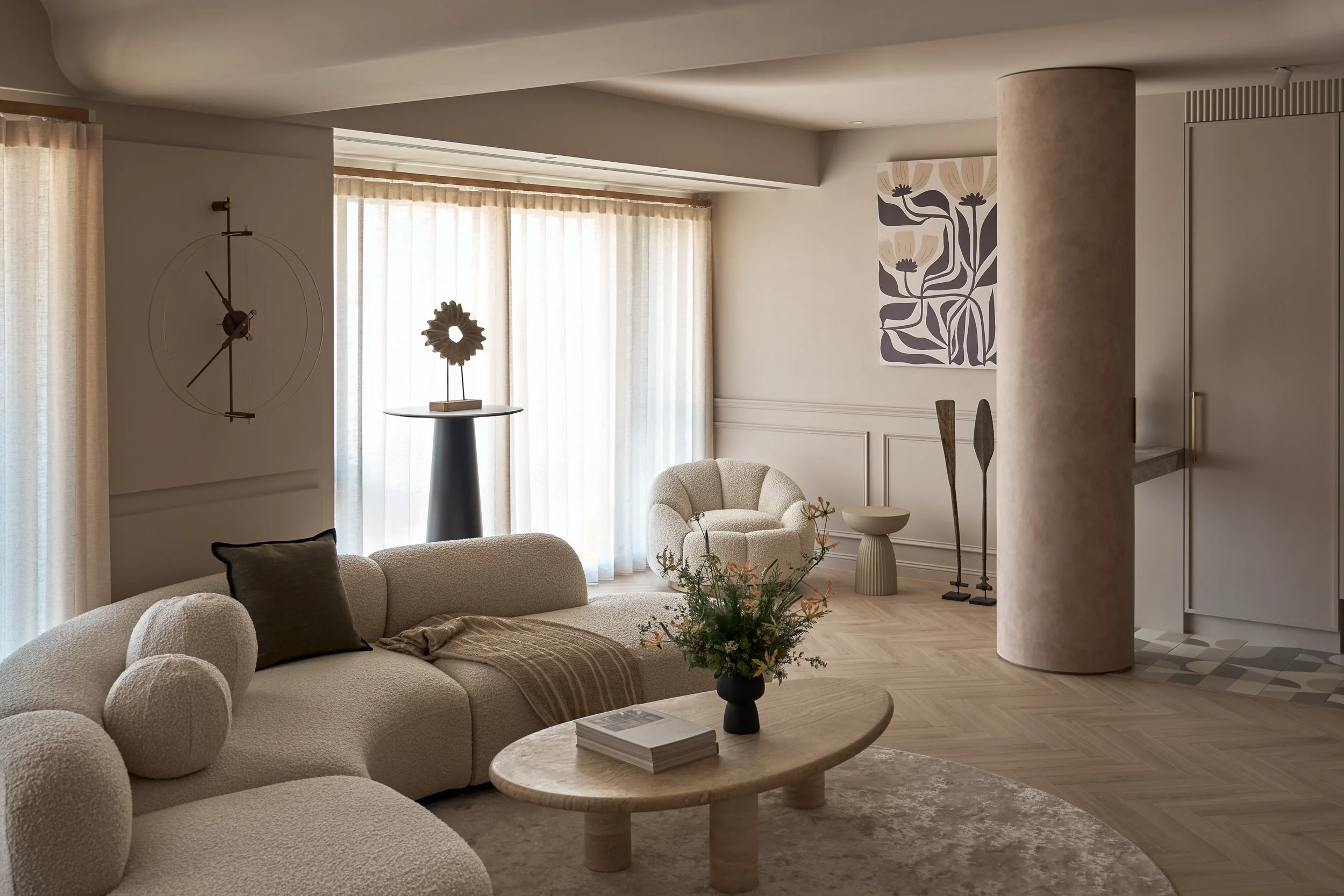
The home is organised around family life. The living room occupies the side with the strongest natural light, while a coffee corner, reading nook, and lounge are placed across the public zone. Each family member is given a place to retreat to, while the plan remains visually and physically connected. At the centre, the kitchen and dining area form the heart of the residence. For this family, cooking together and gathering over meals are essential daily rituals, so the kitchen becomes the natural crossing point of the home, a place passed through, paused in, and returned to throughout the day.
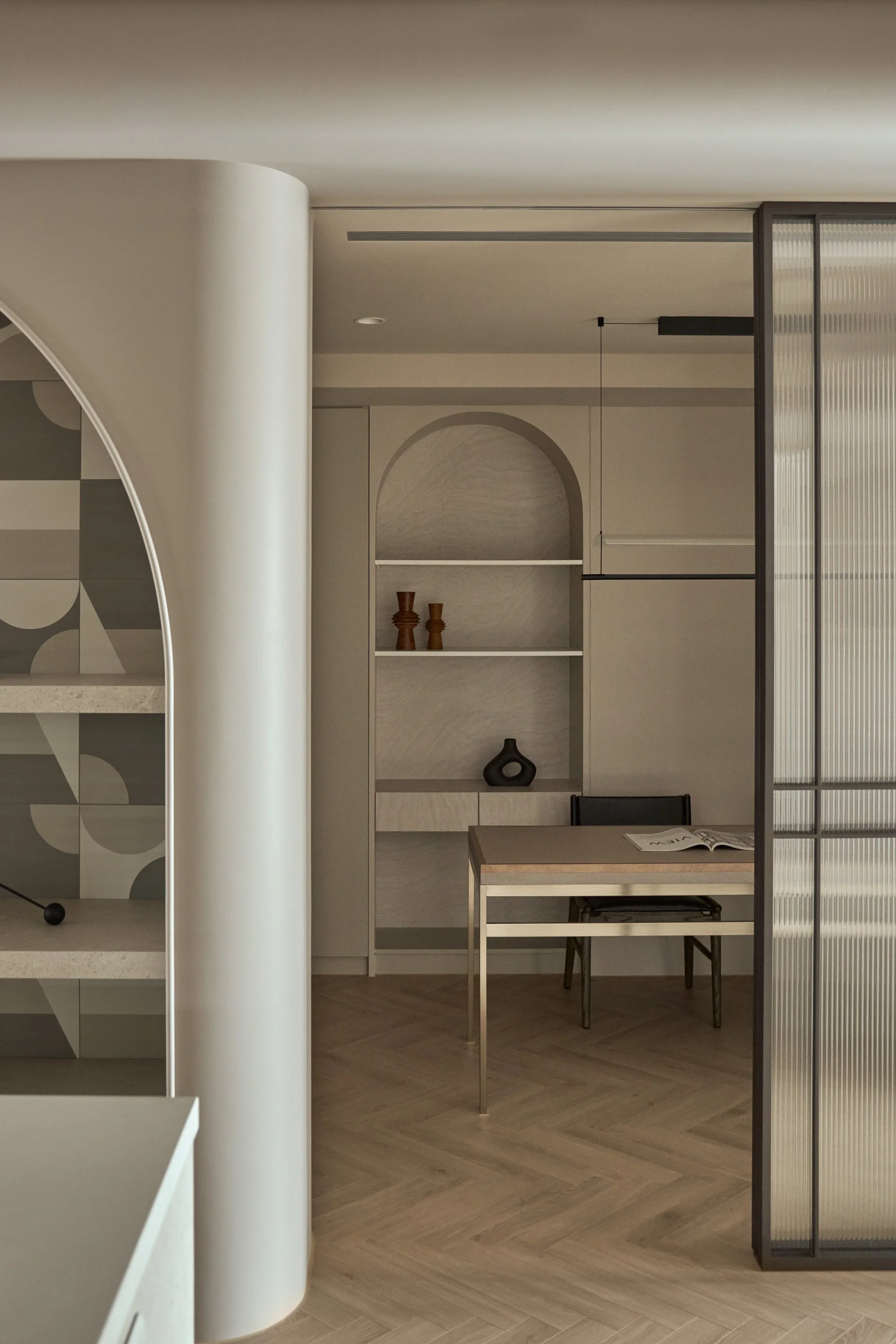
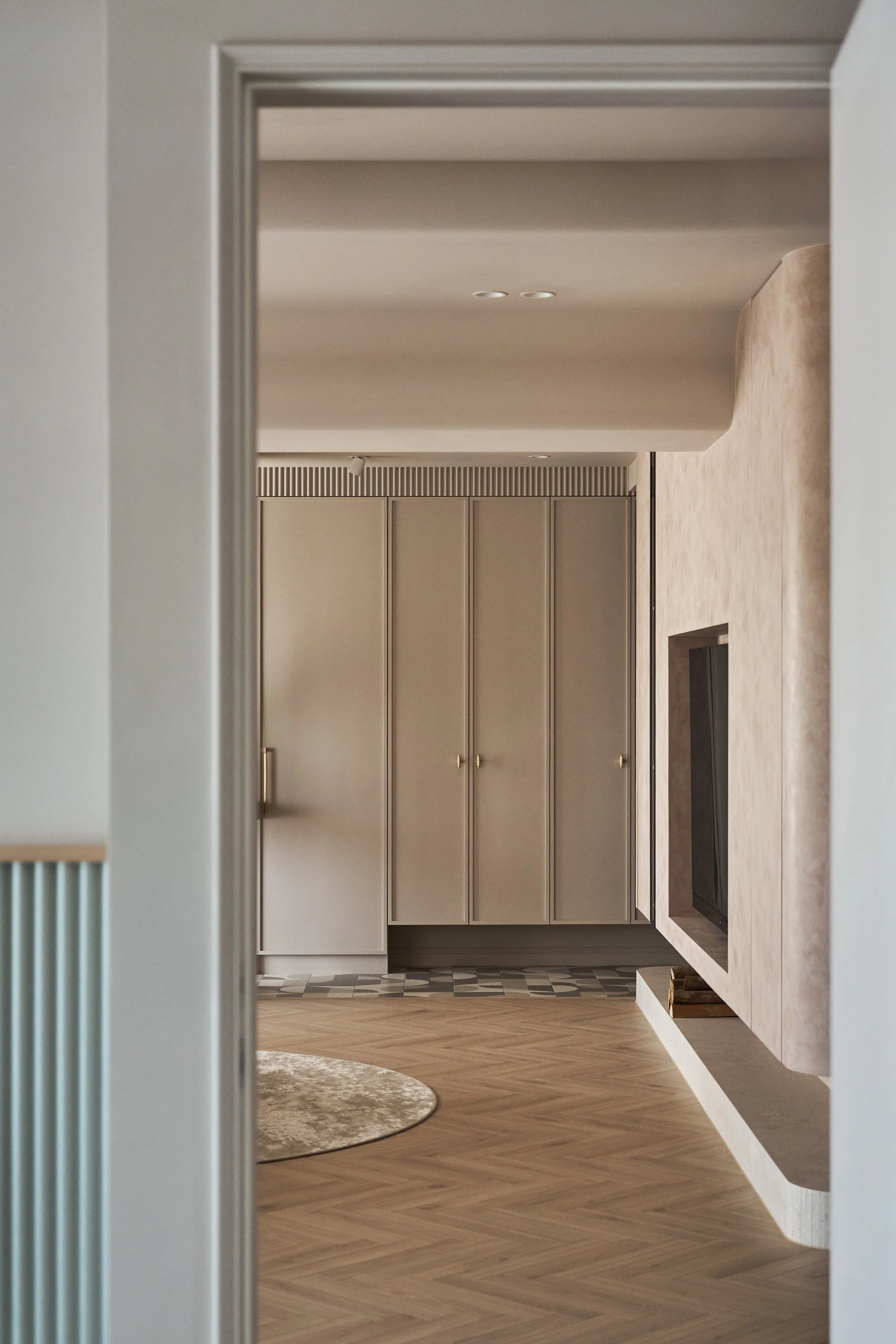
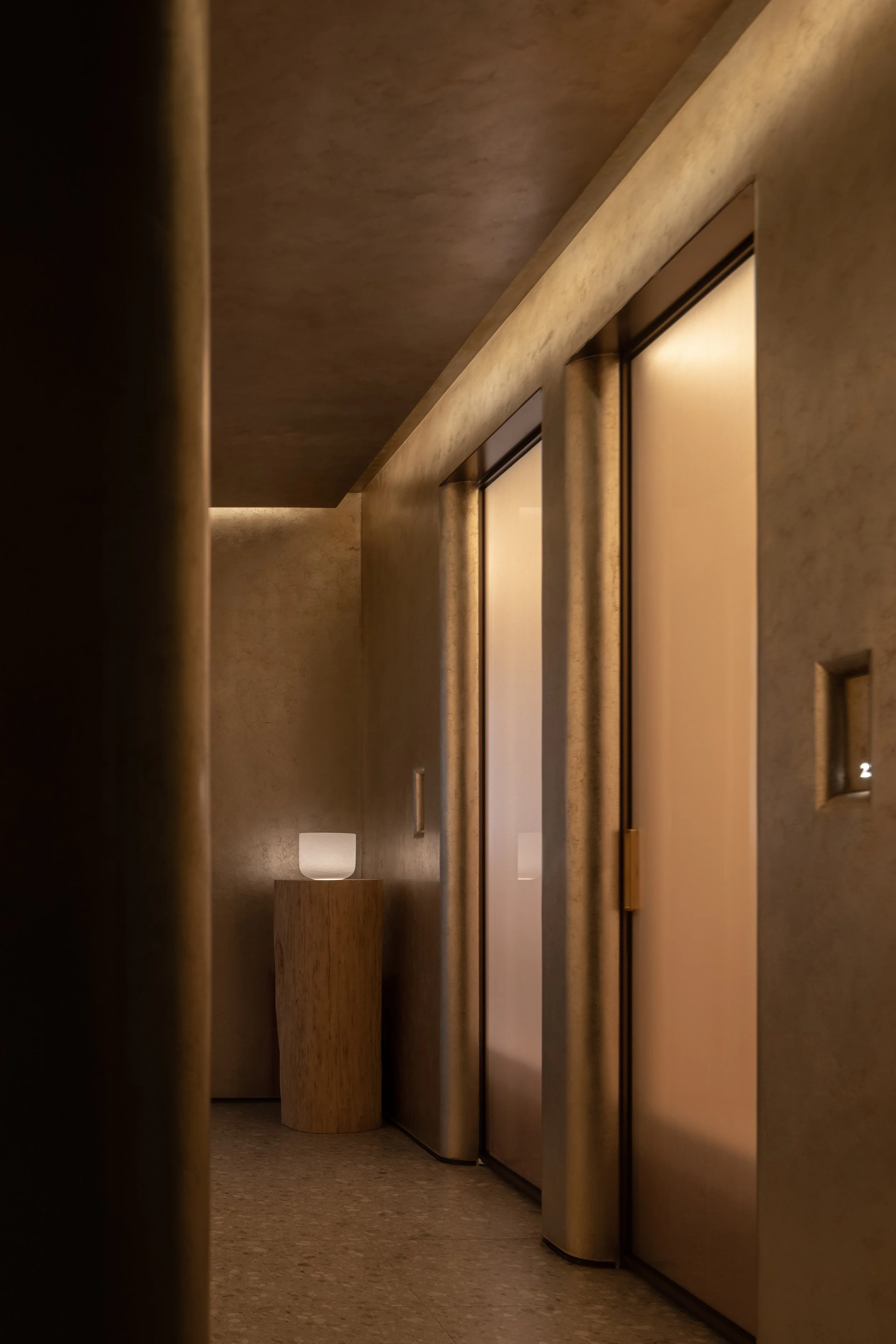
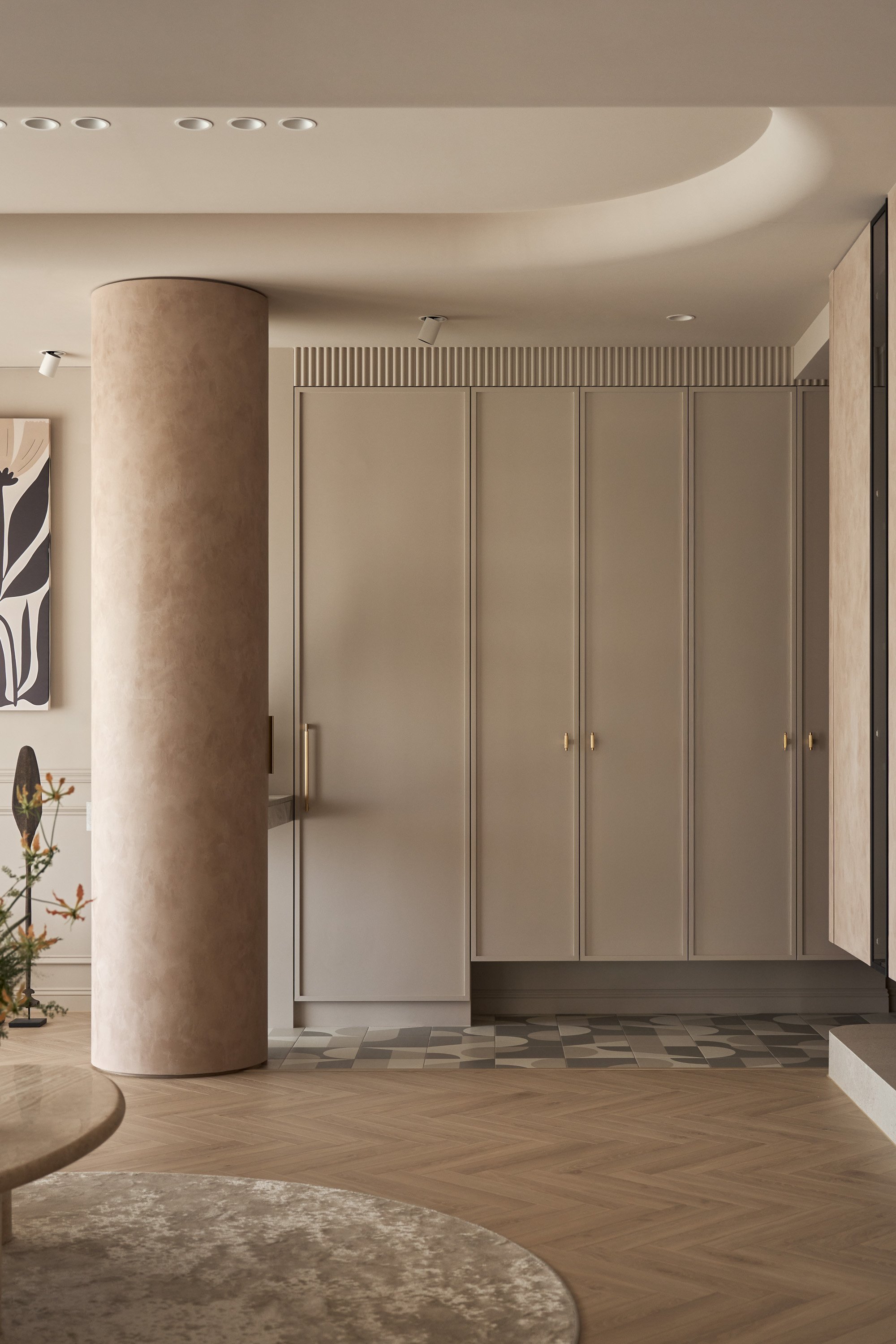
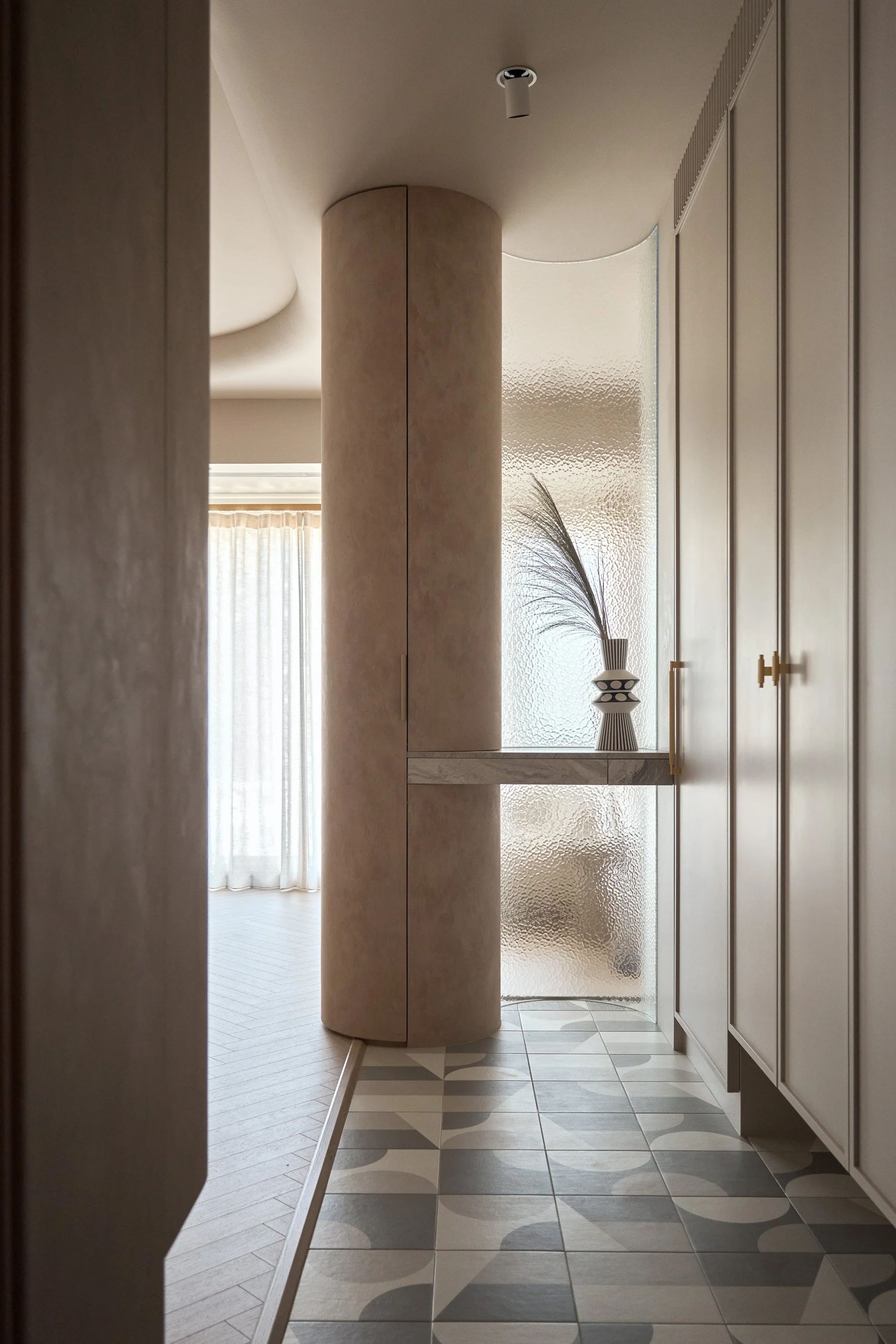
The curved architectural system gives this openness its coherence. At the entrance, a floor to ceiling cylindrical volume introduces a sense of ceremony on arrival. Finished in decorative plaster and silvered ripple glass, it conceals storage and a mid height display shelf within its rounded form. The glass allows light and partial views to pass between the foyer and the public area, softening the transition into the home.
This language continues deeper into the apartment. A freestanding television wall volume, also wrapped in decorative plaster, marks the boundary between the living room and kitchen. Its curved edges echo the entrance column, linking the two ends of the home through a shared tactile quality. What might have been a series of structural interruptions becomes a sequence of softened architectural gestures, guiding movement from one zone to the next.
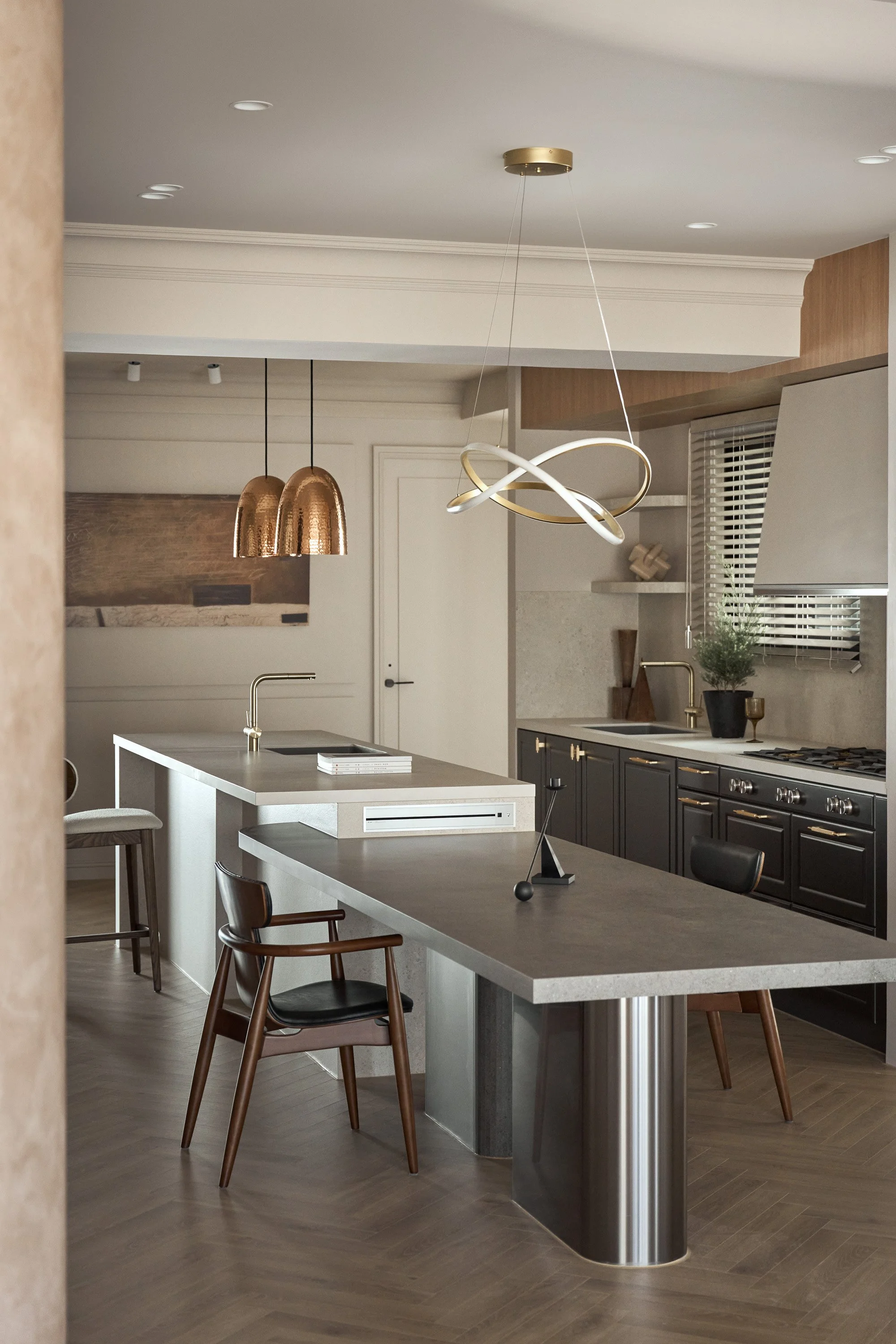
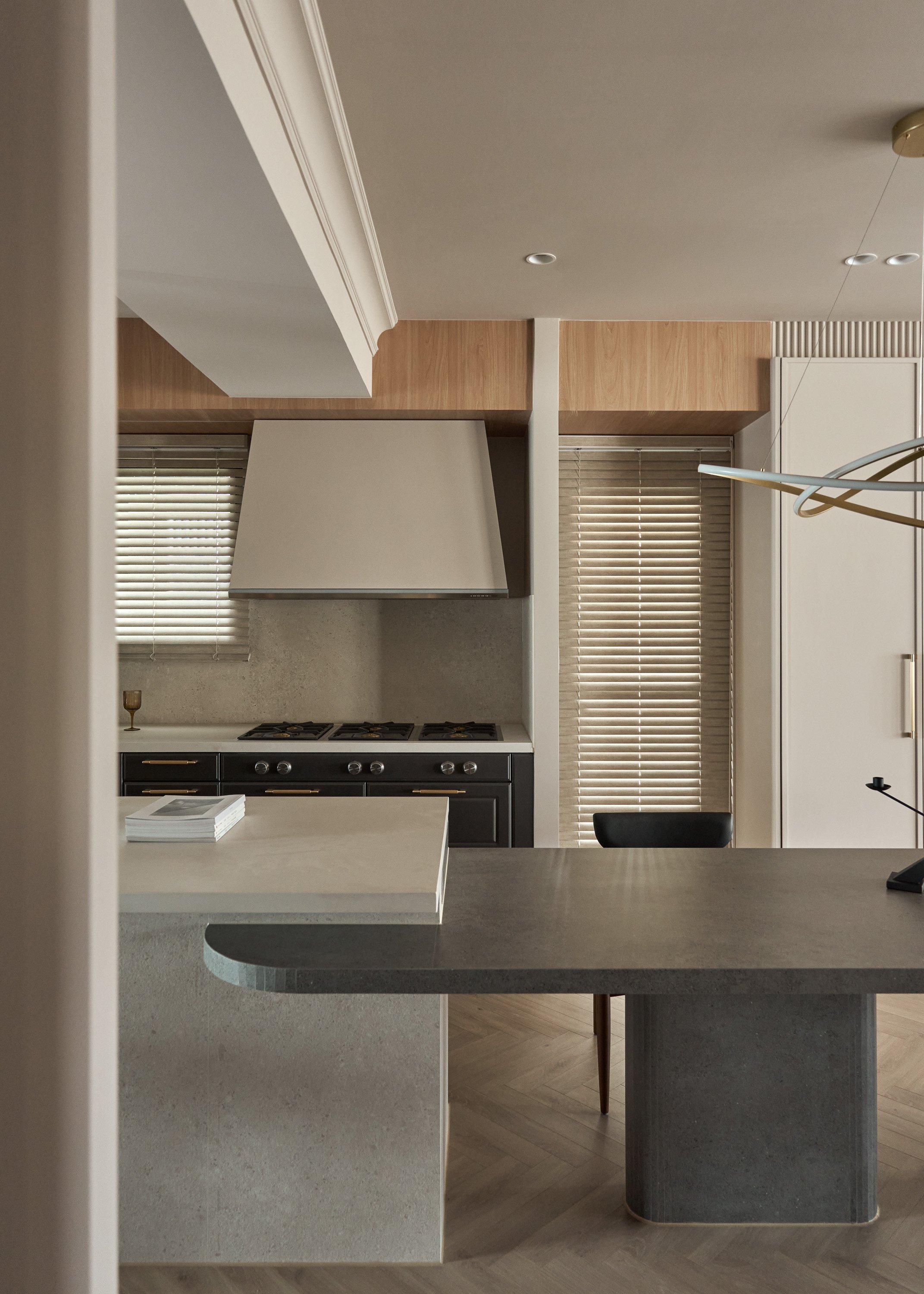
At the centre of the plan, a five metre island combines preparation counter and dining surface in a single monolithic piece. Natural stone in contrasting textures meets mirrored stainless steel, setting matte against polished, weight against reflection. The island carries the presence of a sculptural object, yet remains deeply practical, supporting the family’s most important shared activity.
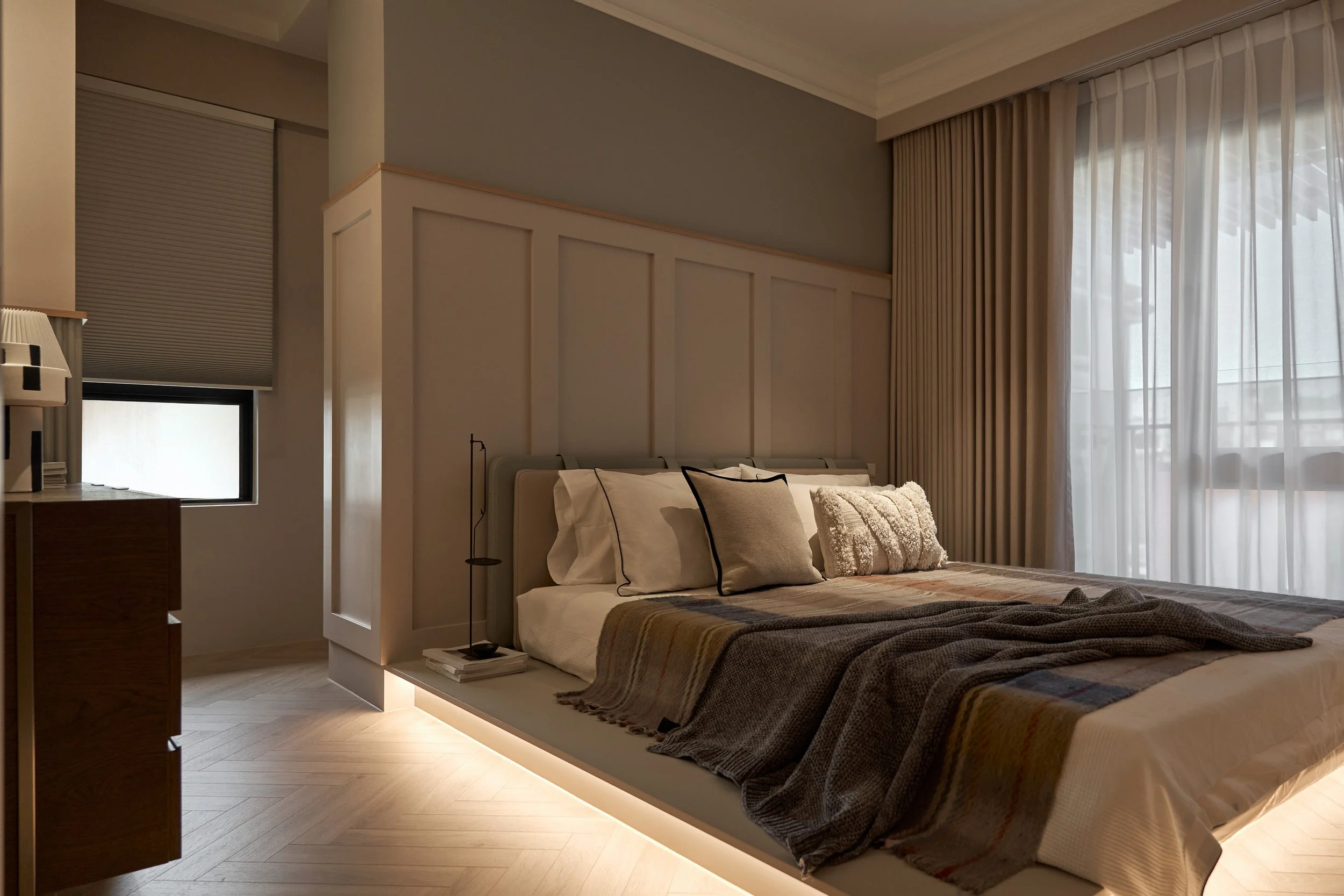
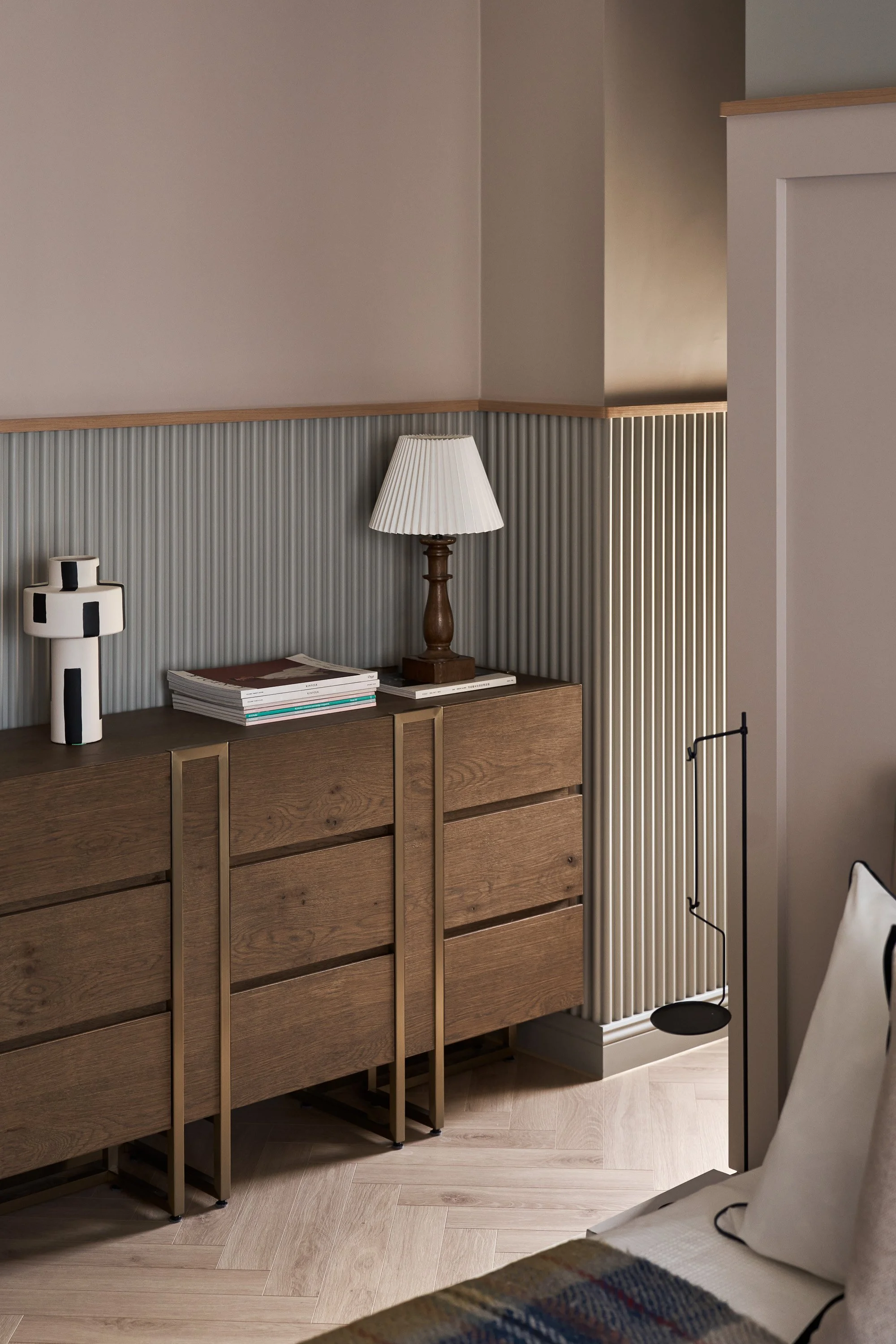
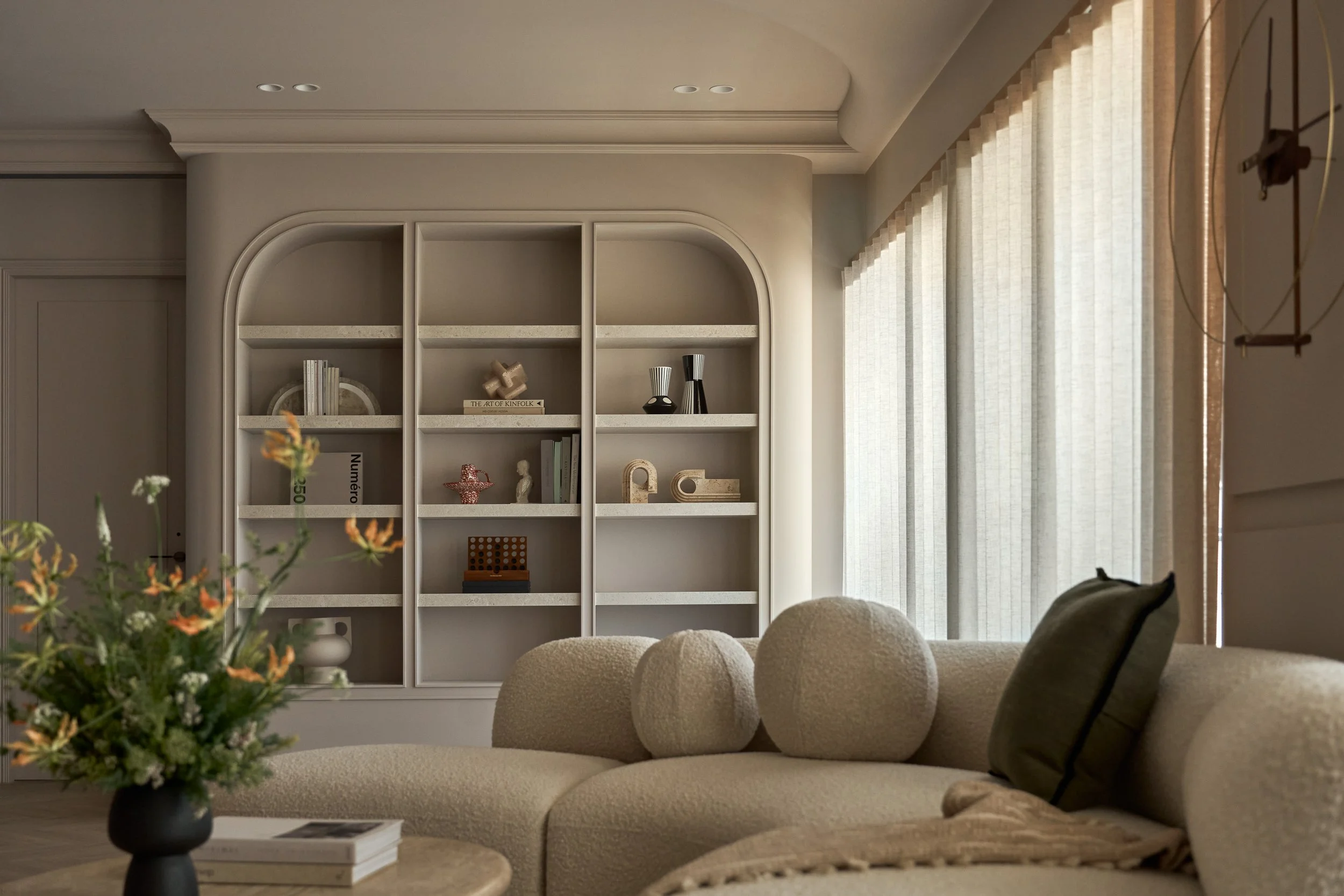
The material palette is restrained, but not minimal in feeling. Apricot and dusted rose tones create a low chroma base that allows the space to recede gently around daily life. Within this quiet foundation, materiality brings depth. Hand applied decorative plaster, natural stone, soft textiles, stainless steel, hammered copper pendants, and herringbone timber flooring each contribute a distinct sensory quality. The palette stays consistent, while texture gives the home its richness.
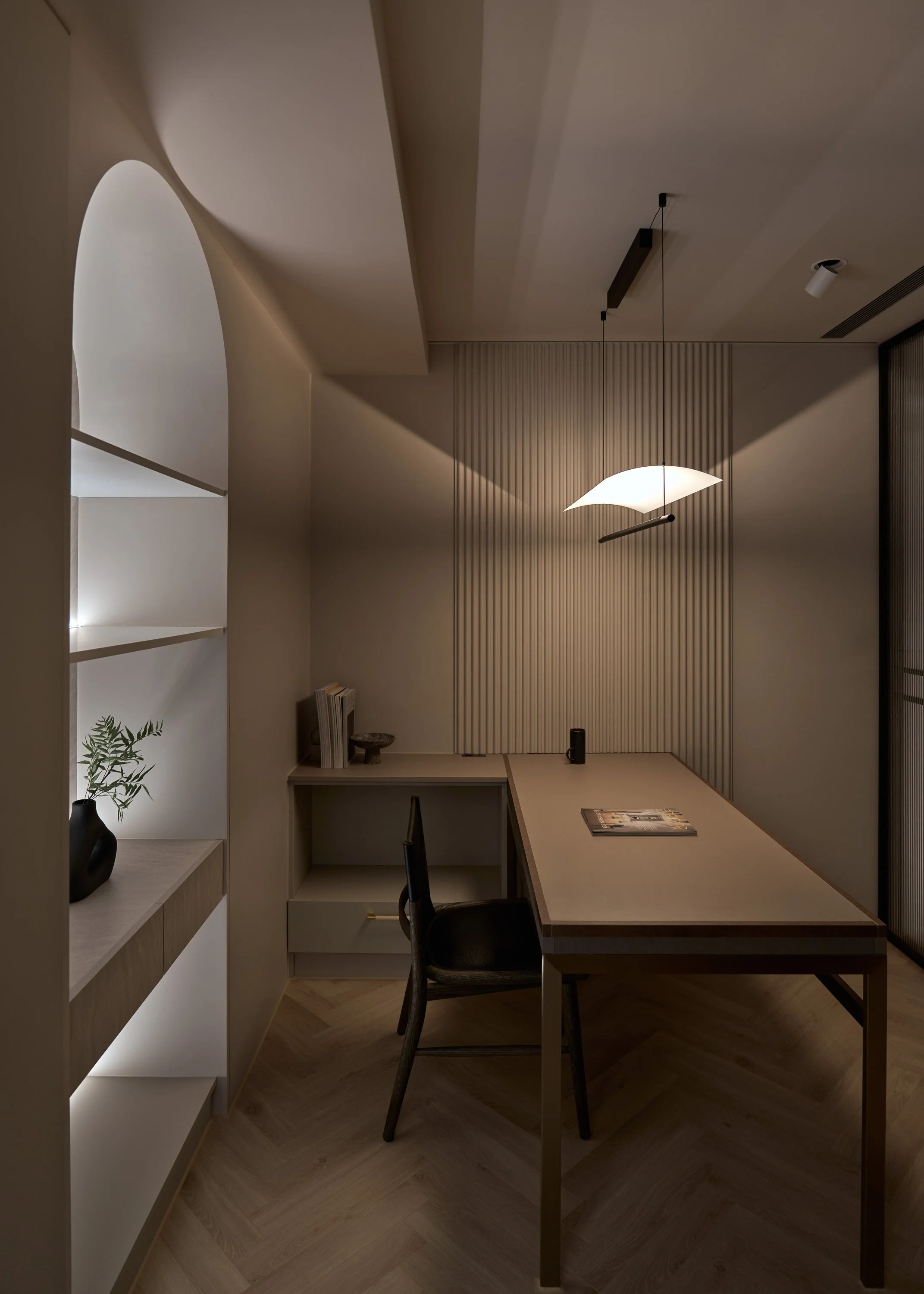
Across the residence, repeated motifs create a quiet exchange between spaces. Geometric patterned tiles mark the foyer entry zone, then reappear as the shelf backing inside the arched display cabinet near the kitchen. The study, when opened through its steel framed sliding doors, reveals an arched bookcase that mirrors the arched display cabinet beside the dining area. These details do not announce themselves loudly. They connect the home through recognition, memory, and visual resonance.
Light adds another layer to the experience of the plan. During the day, different corners of the L shaped layout are touched by sunlight in turn, then return to softness. At night, artificial lighting draws the openness inward, giving the home a more intimate scale. The residence shifts with use, time, and presence, allowing individual activities to coexist within a shared domestic field.