Conceived by Cotemp by ONOAA STUDIO
In Shanghai, ONOAA STUDIO turns a childhood keepsake into a tactile fashion boutique shaped by reuse, handwork and the passage of time.
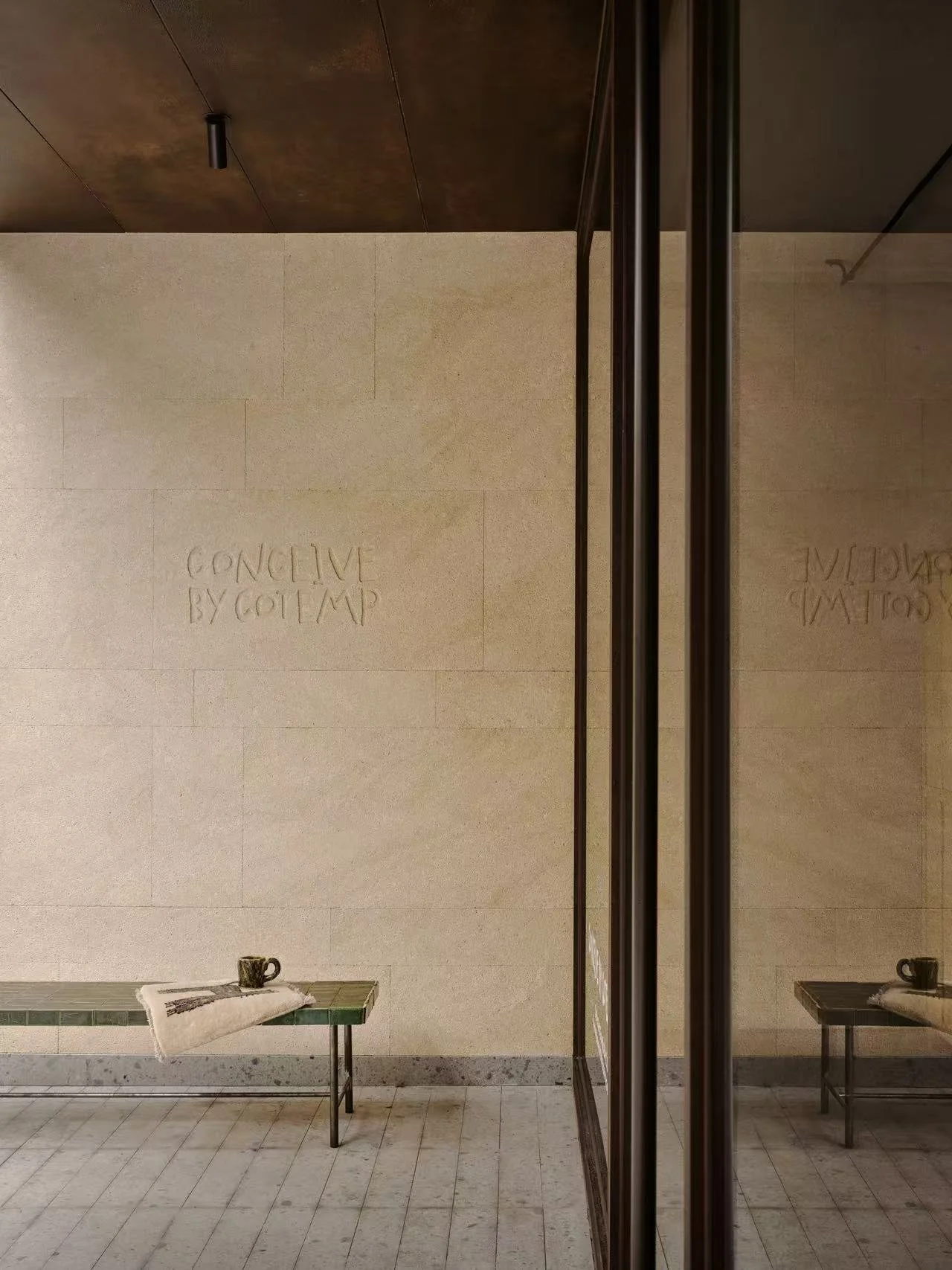
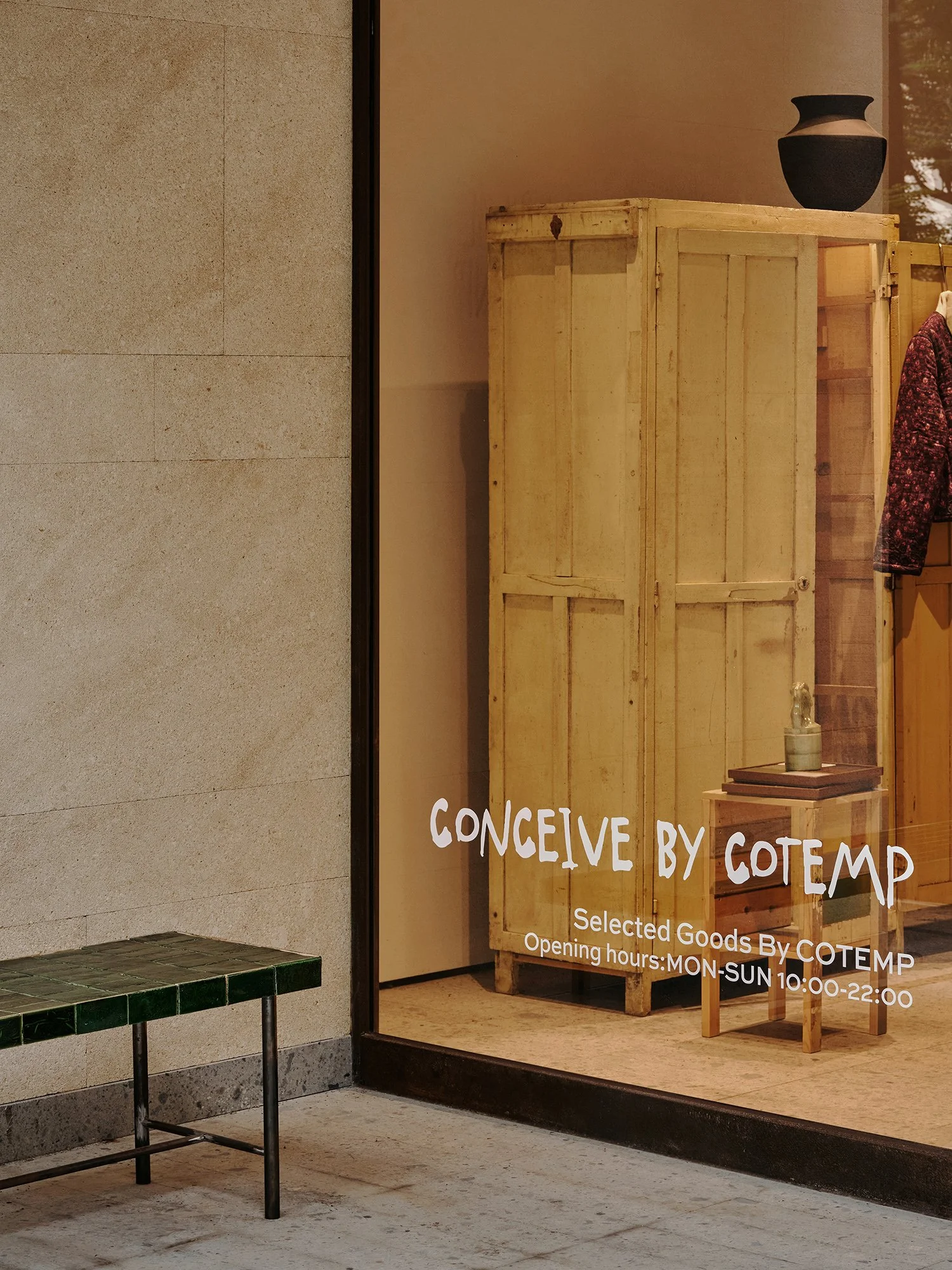
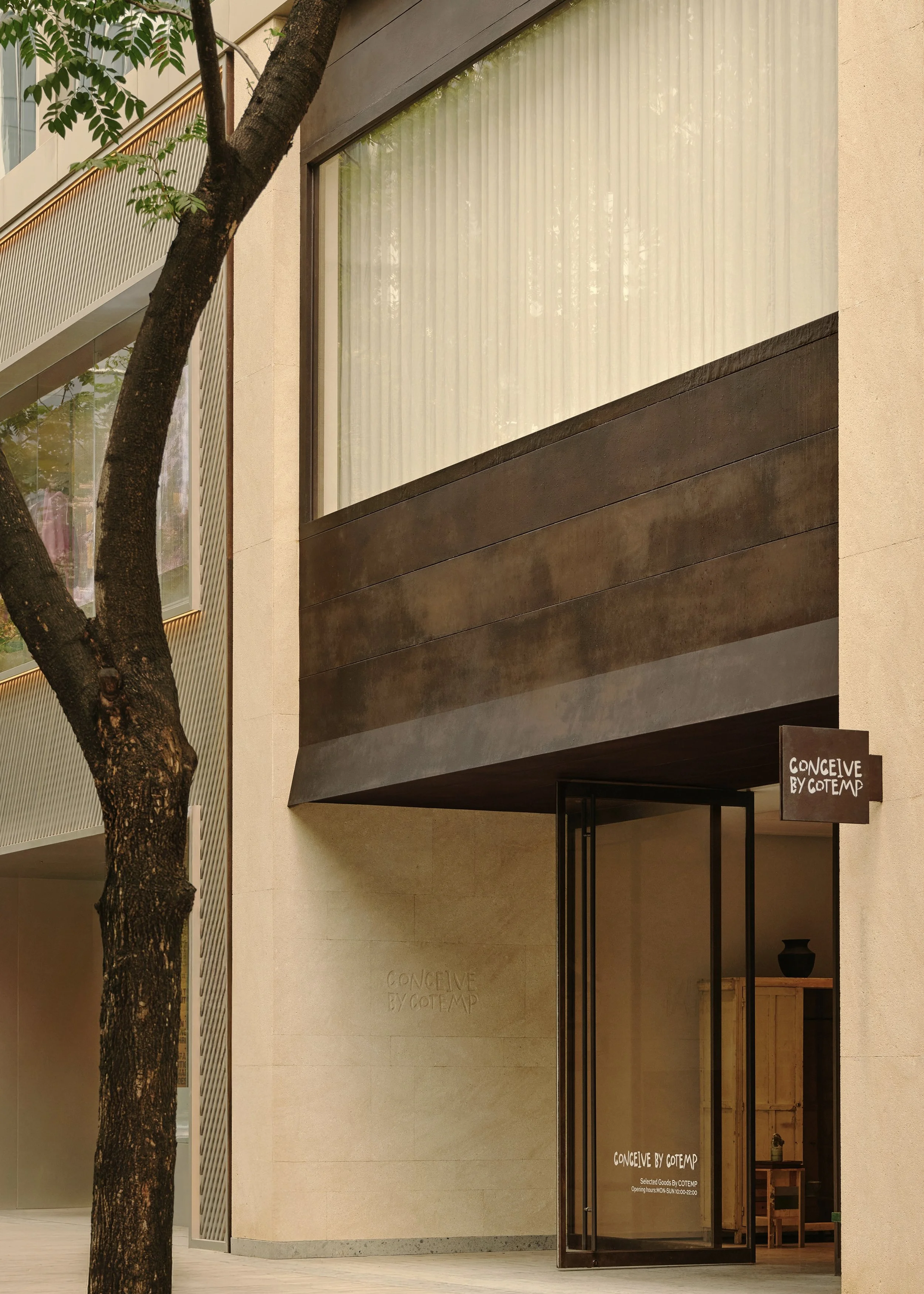
On a quiet stretch of Yongyuan Road in Shanghai, a compact volume of rusted iron keeps a low profile. It has none of the sheen expected of a new fashion boutique. Weathered and almost mute, the facade resembles an object with a previous life, inviting closer inspection without making a spectacle of itself.
Behind this outer shell is Conceived by Cotemp, the first permanent store and headquarters of fashion label Cotemp. The 160-square-metre project by Shanghai-based ONOAA STUDIO is divided across two levels, with retail on the ground floor and offices above. Its identity begins not with commerce, but with a childhood recollection.
Cotemp’s founder once kept her treasured possessions in a small iron box. That private object became the project’s central reference, informing both the building’s material character and the experience of moving through it. The phrase “hidden, then found” captures the guiding idea. Garments and objects are encountered gradually, as though each belonged to a collection assembled over years.
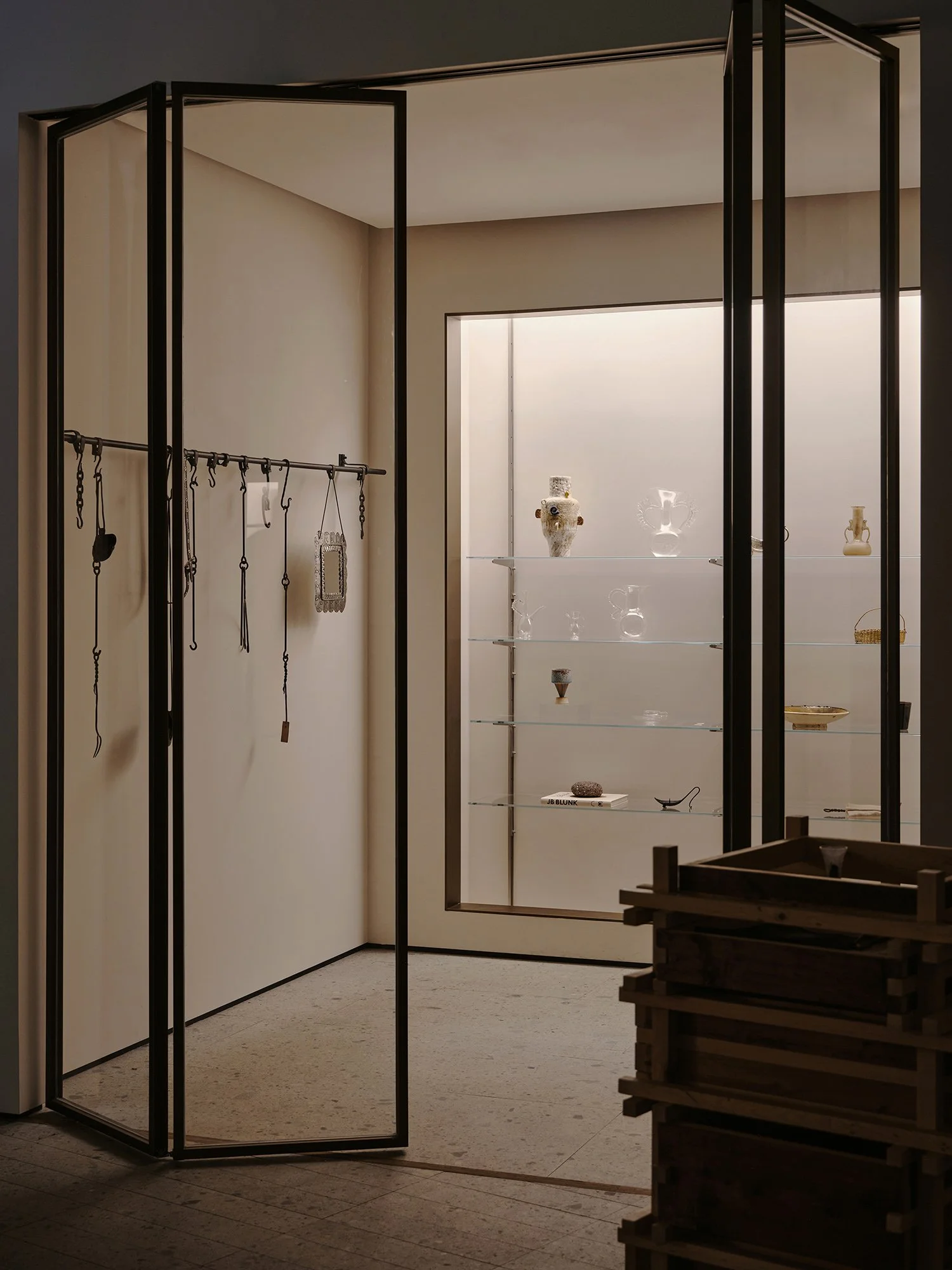
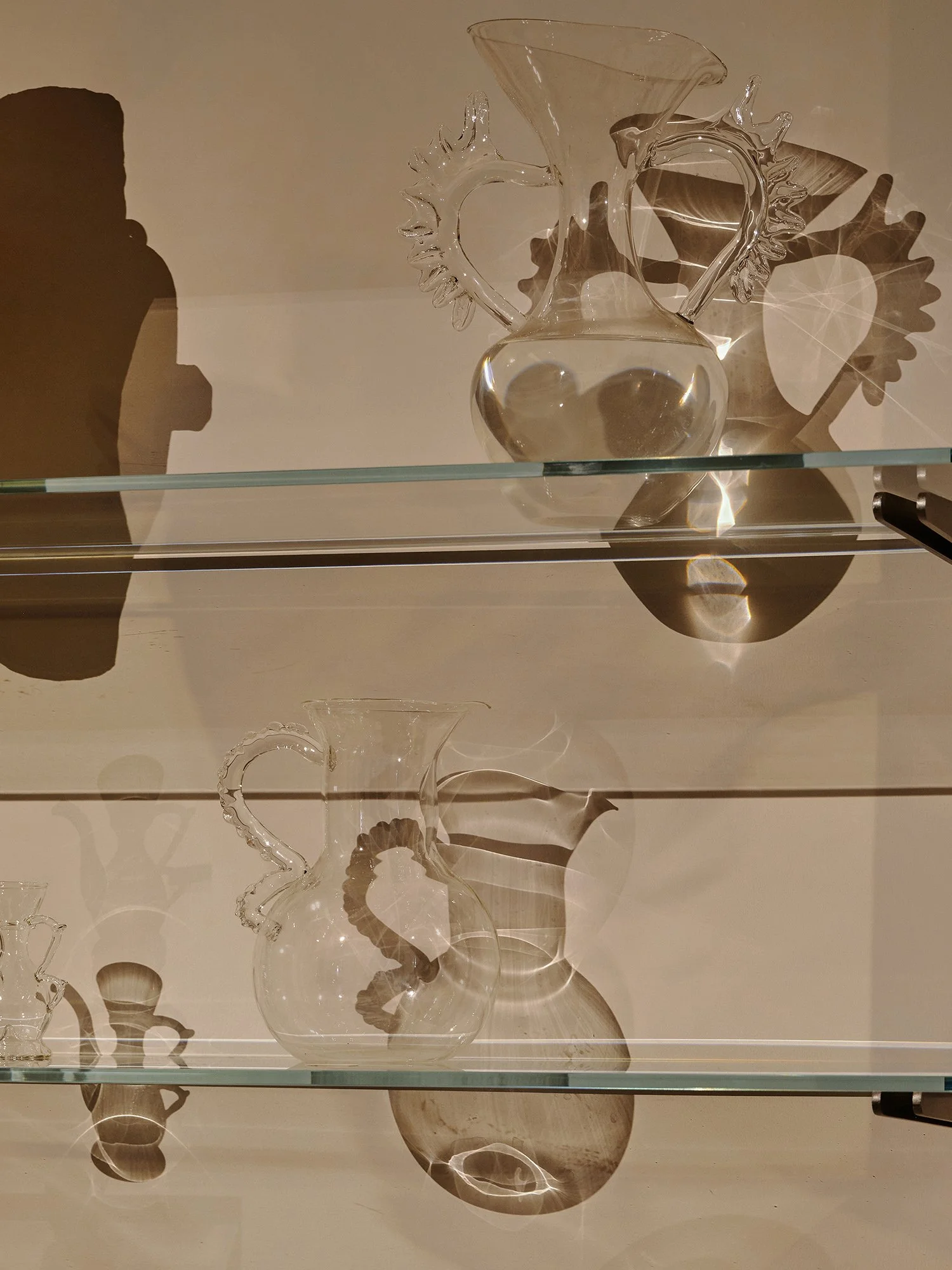
The premise suits Cotemp’s approach to fashion. The label places its own pieces alongside international brands selected for a shared sensitivity to material, longevity and daily use. ONOAA STUDIO treated the store as a home for these objects, allowing the space and collection to speak in the same quiet register.
From the street, the rusted cladding forms the shell of the remembered box. Passing through it brings a change in scale and atmosphere. Display elements do not compete for attention, and the palette remains deliberately spare. The interior gains depth through an accumulation of tactile surfaces, imperfections and traces of making.
The studio describes its approach as “no over-construction”. Only the interventions needed to support the building’s use and structure were introduced. Materials were minimally processed and many finishes were left incomplete, preserving their inherent qualities. Handwork remains visible, variations are accepted and wear is anticipated as part of the space’s continuing life.
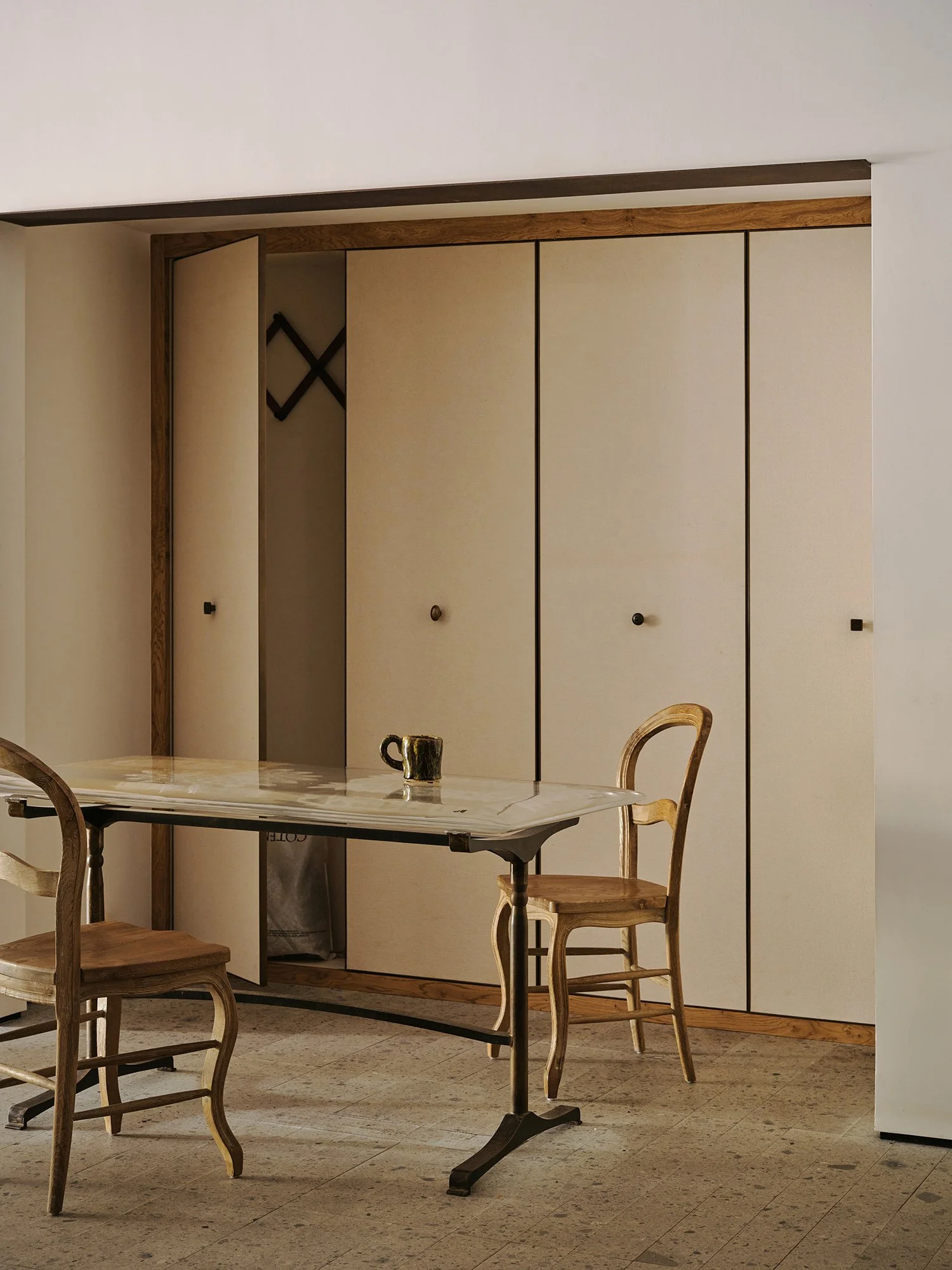
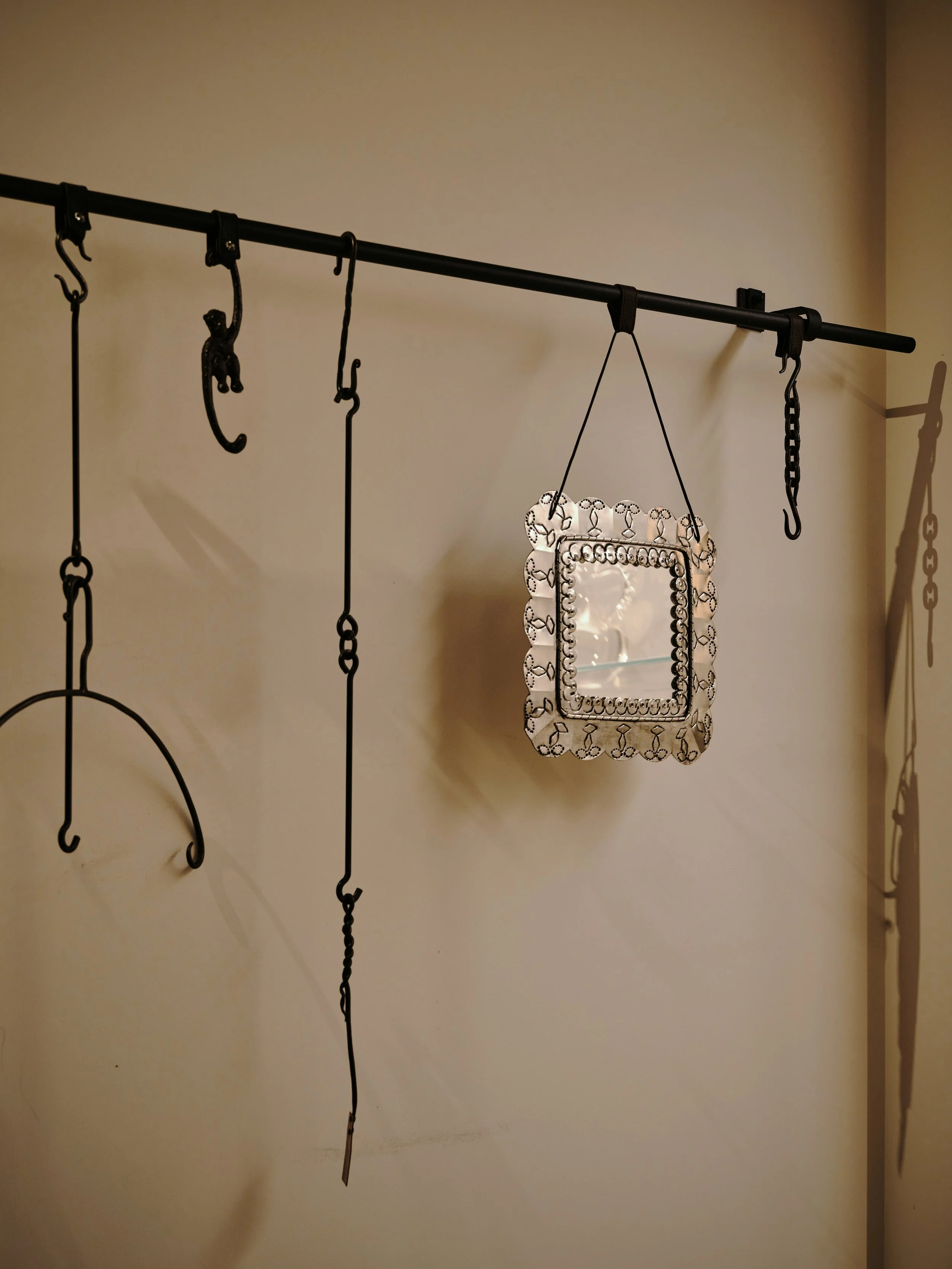
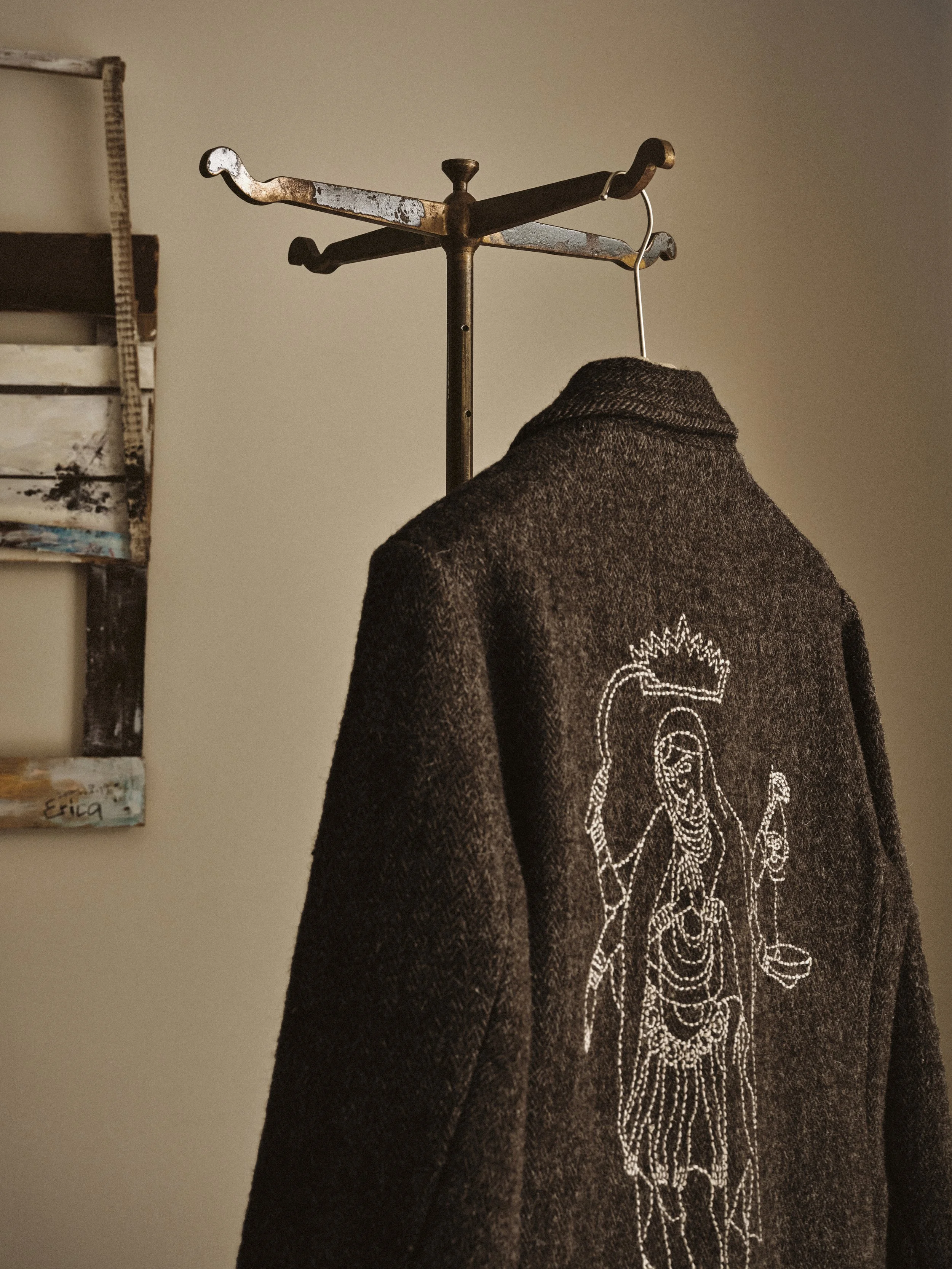
This ethic can be read throughout. Refurbished furniture has been adapted for display, while small stools made from reclaimed timber retain their original grain and marks. Fabric offcuts from Cotemp’s production return as interior elements, connecting the making of clothes with the making of their setting. These gestures create a sense of continuity between what has been used, what is being used and what may be kept.
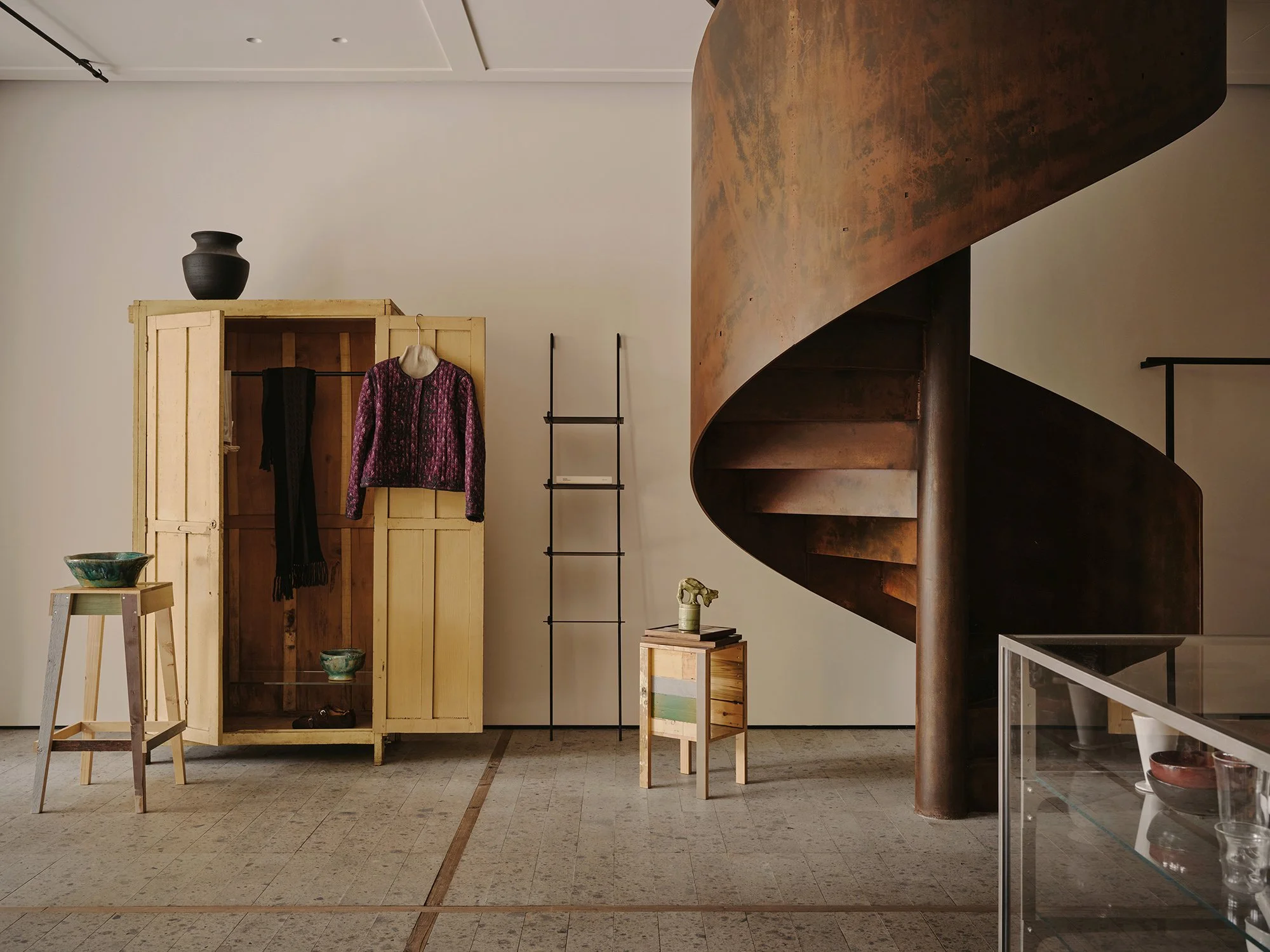
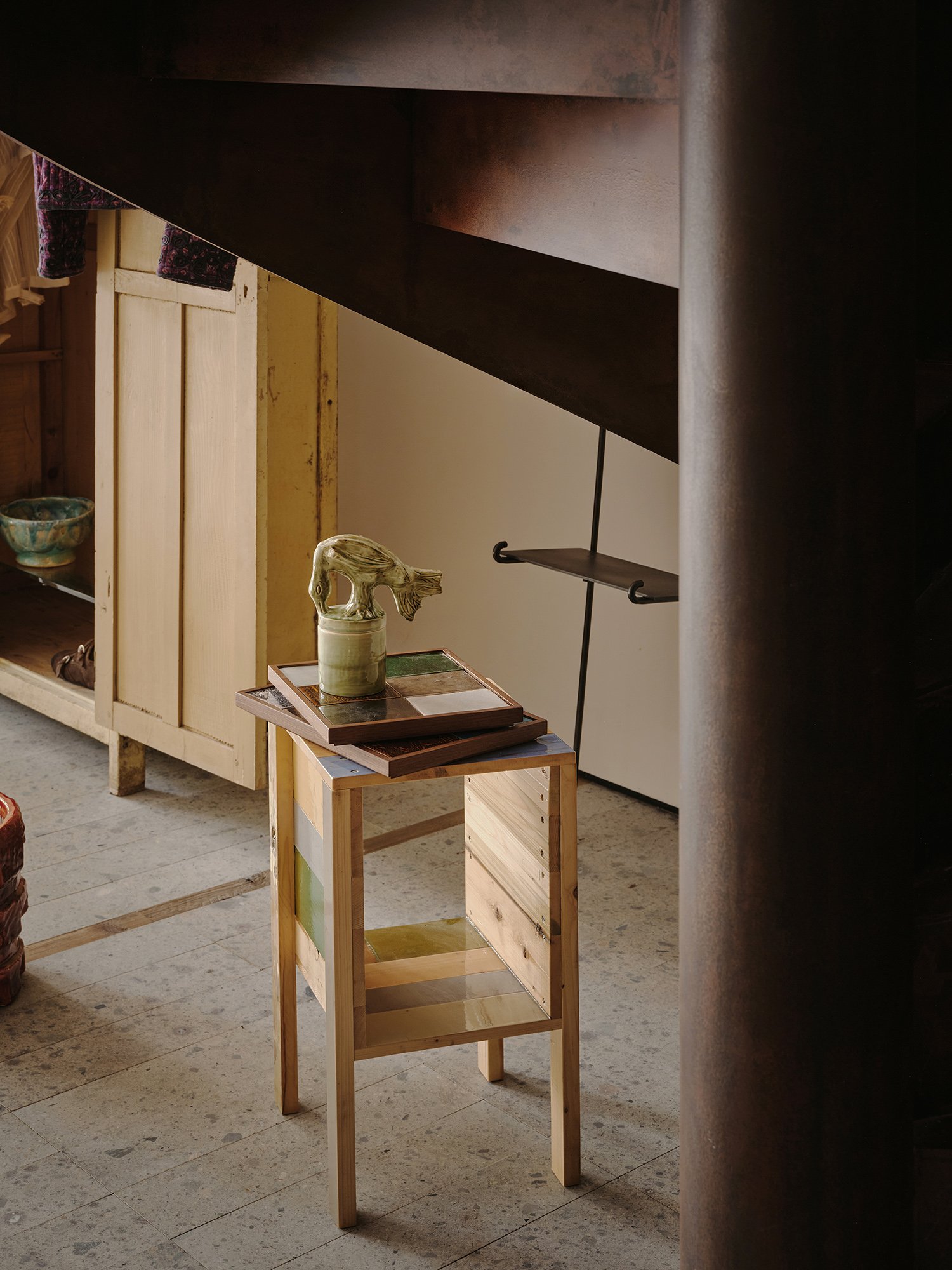
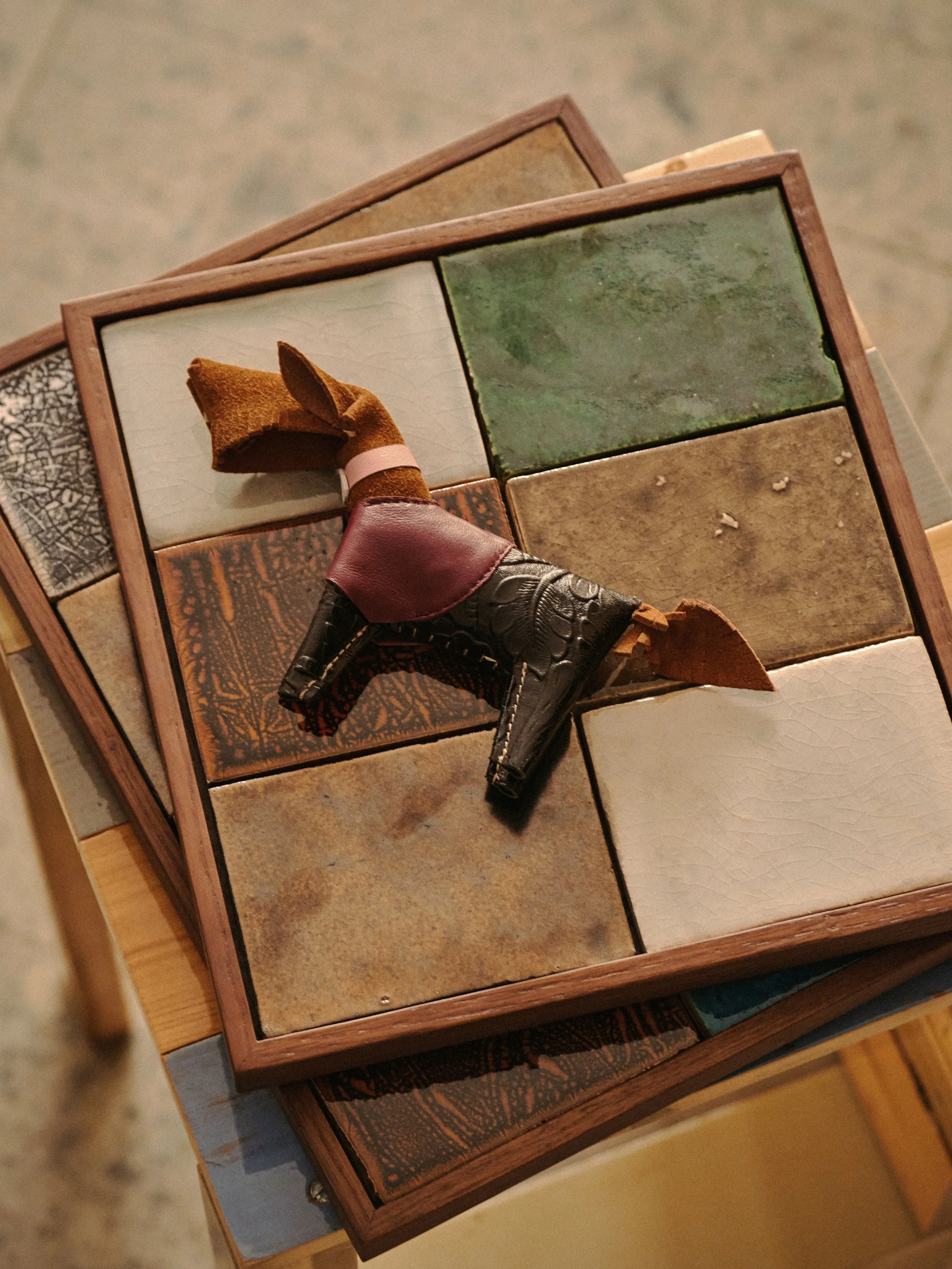
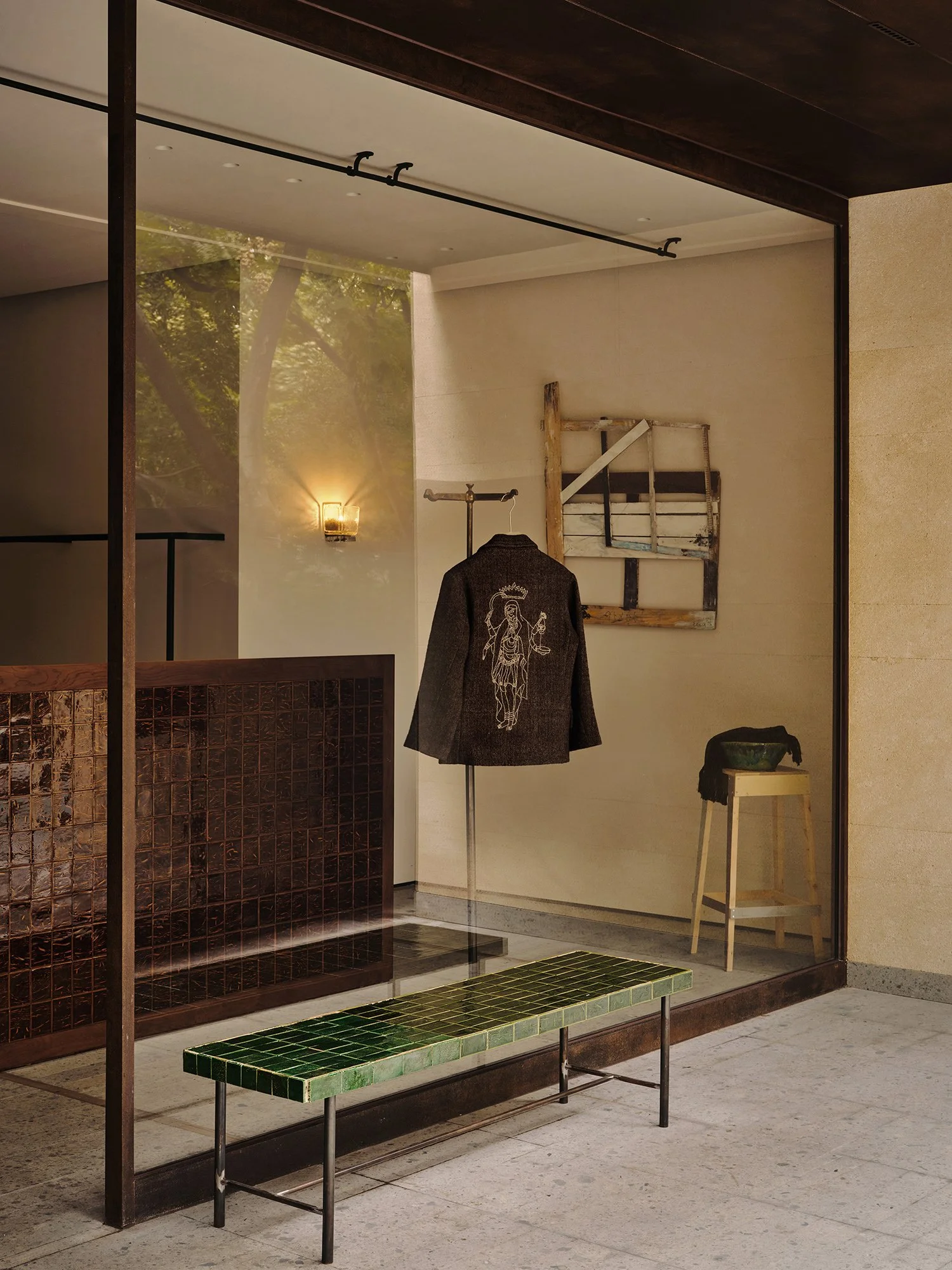
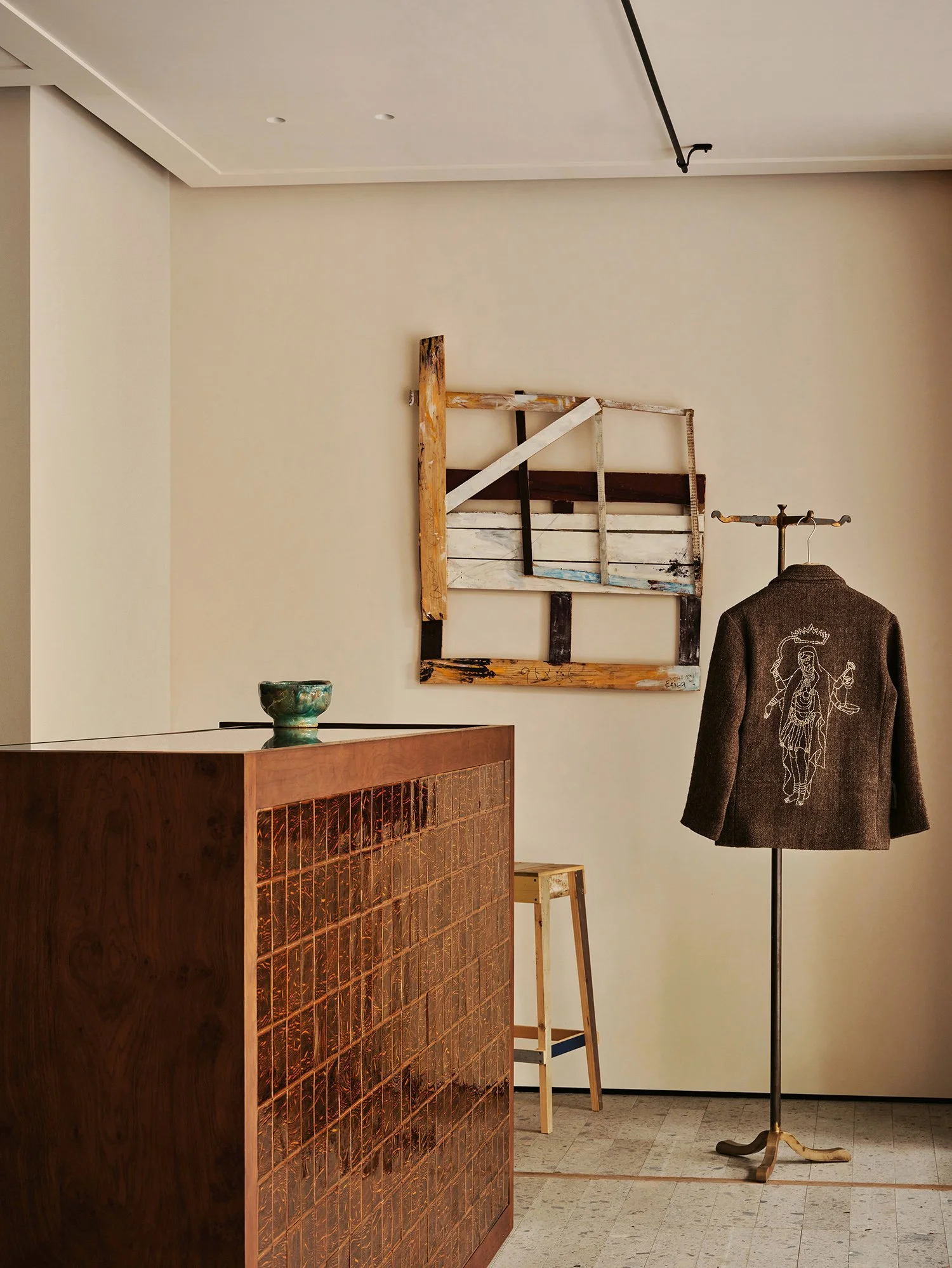
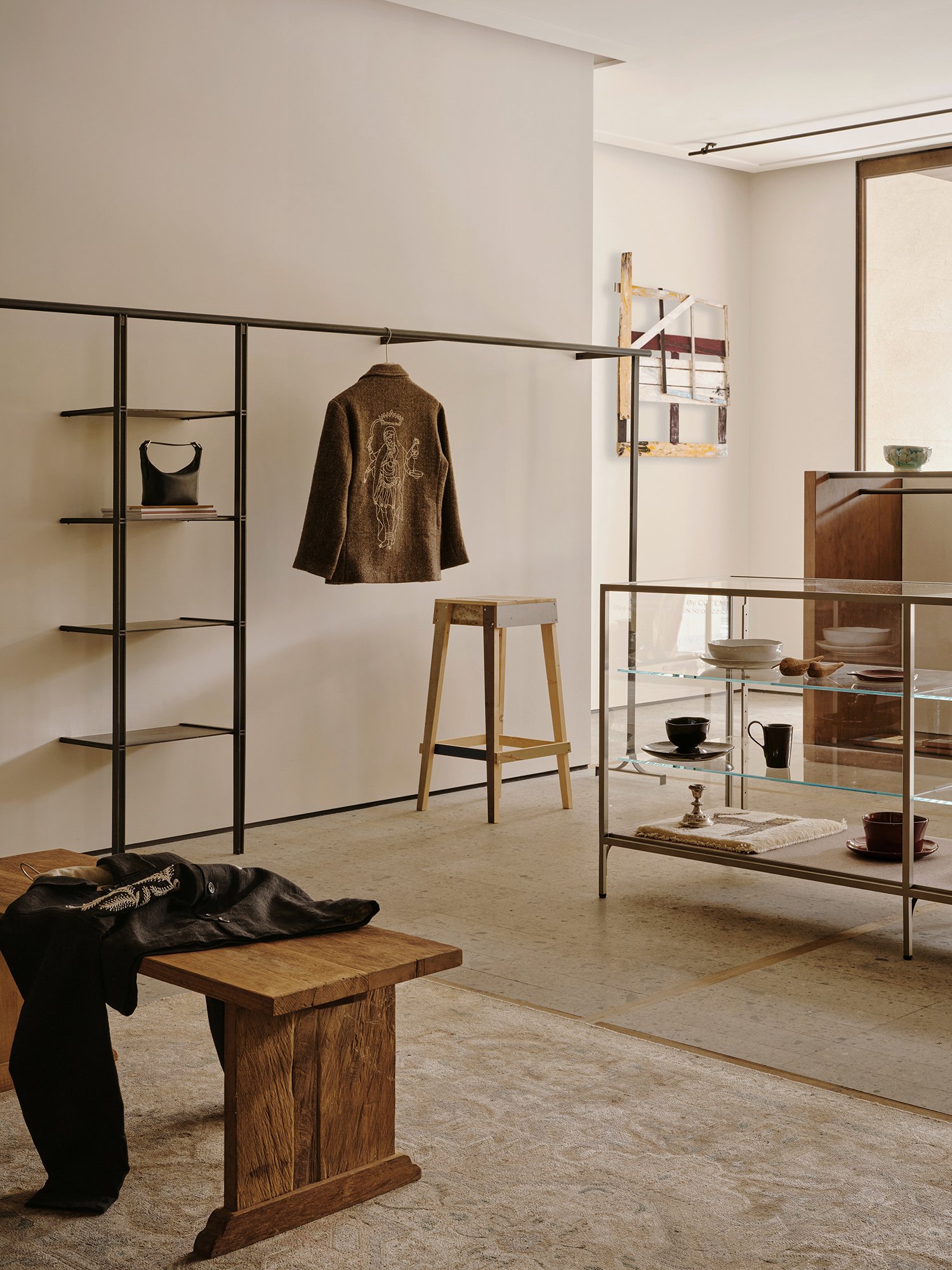
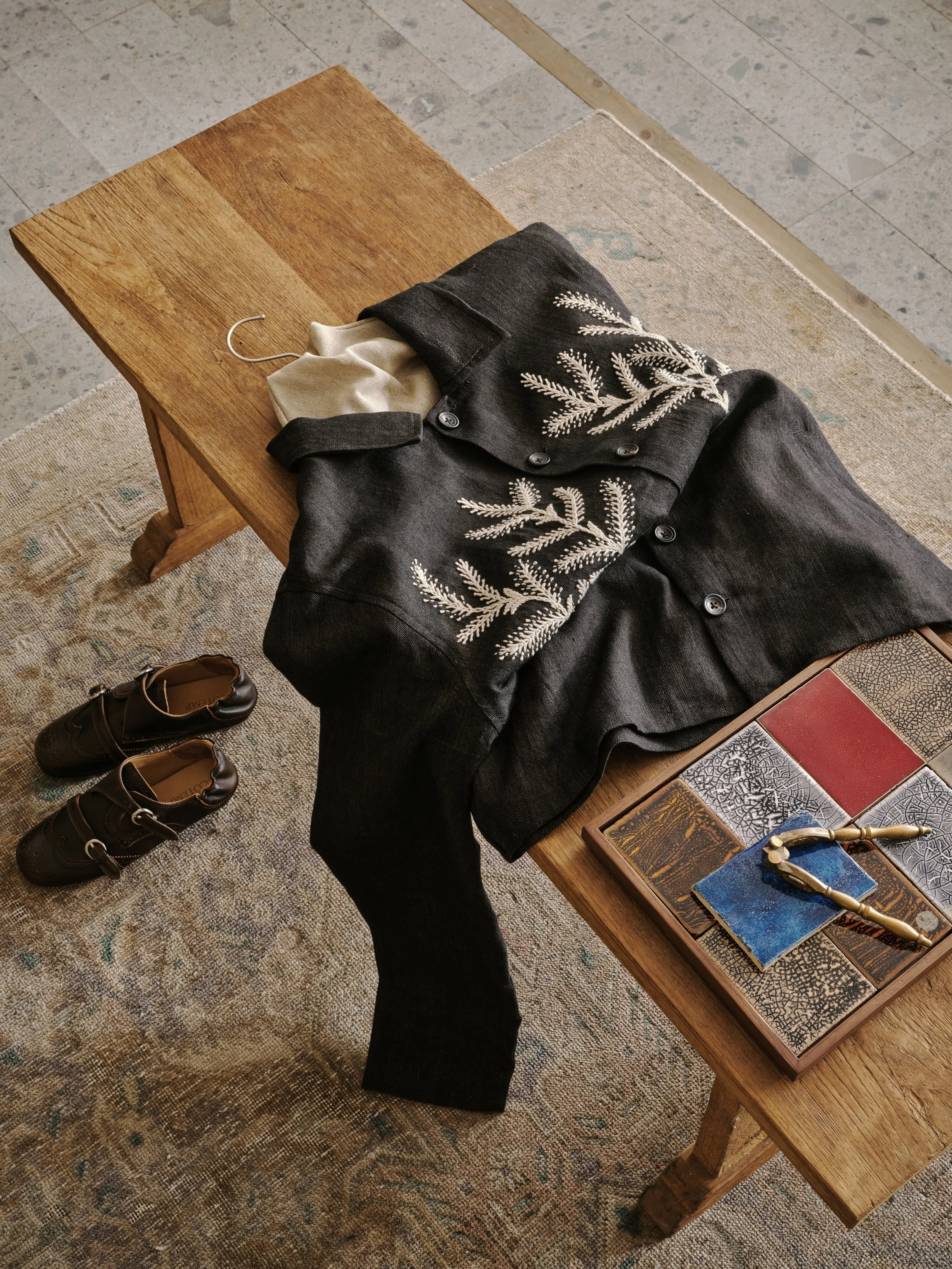
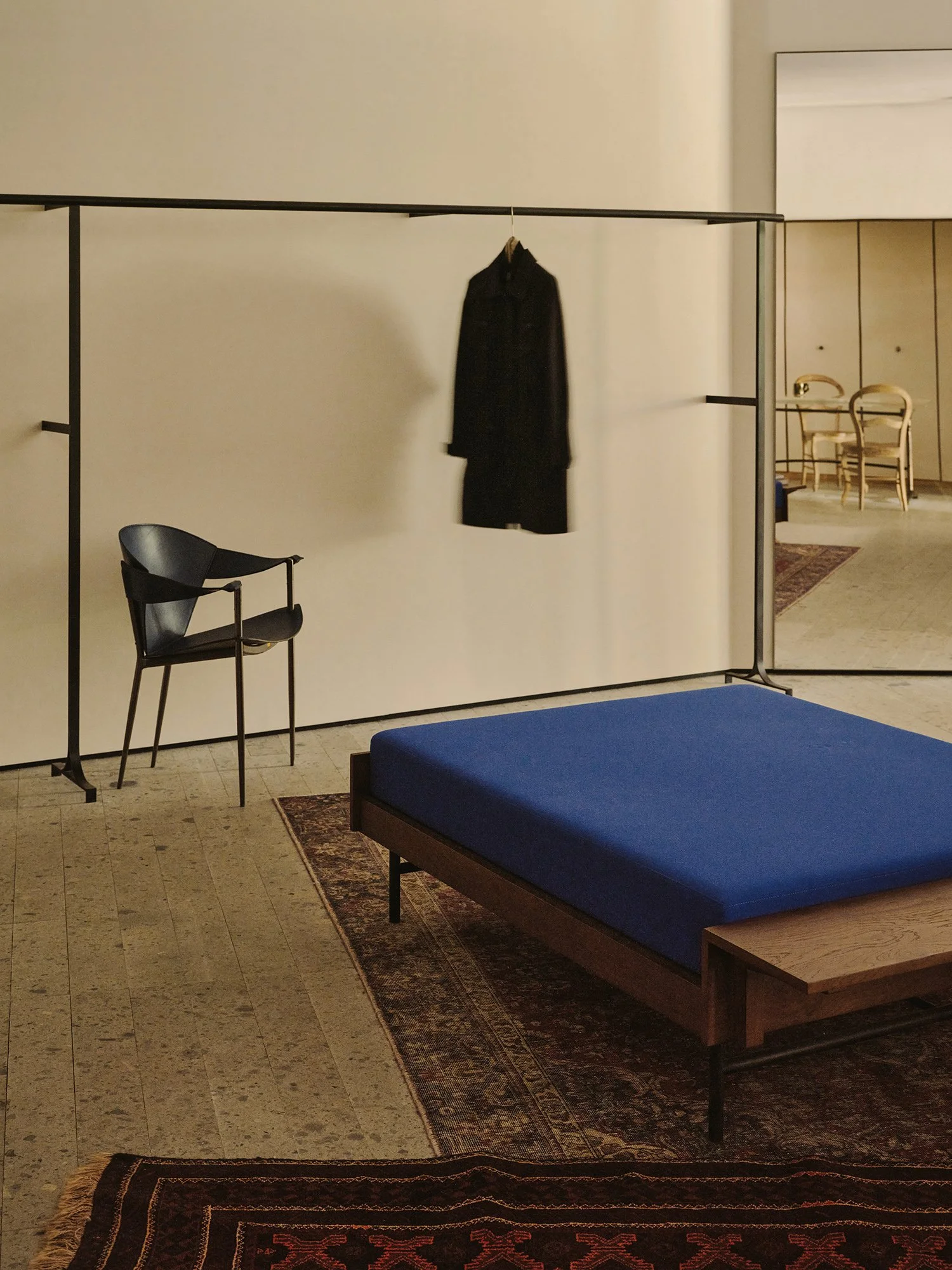
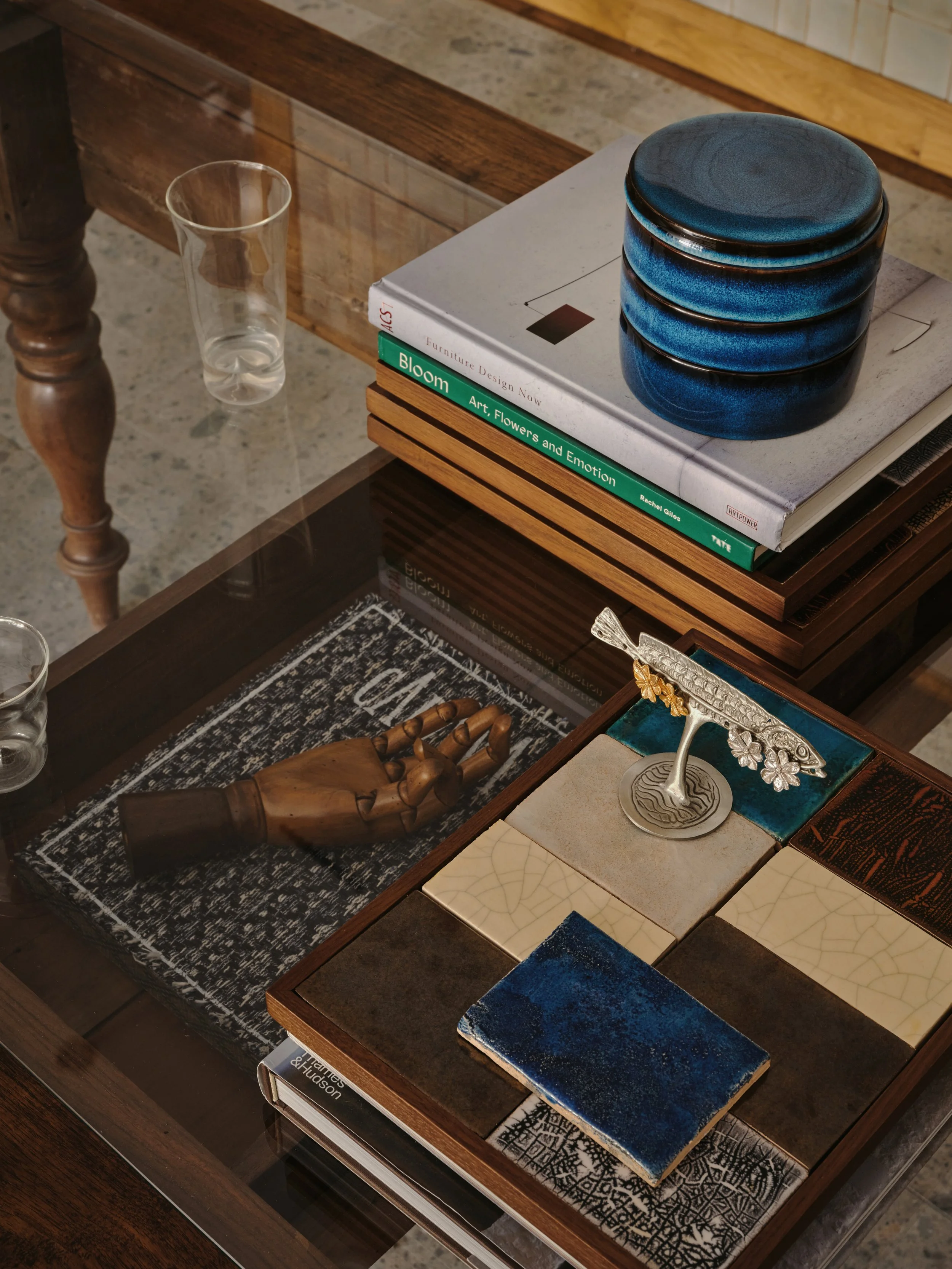
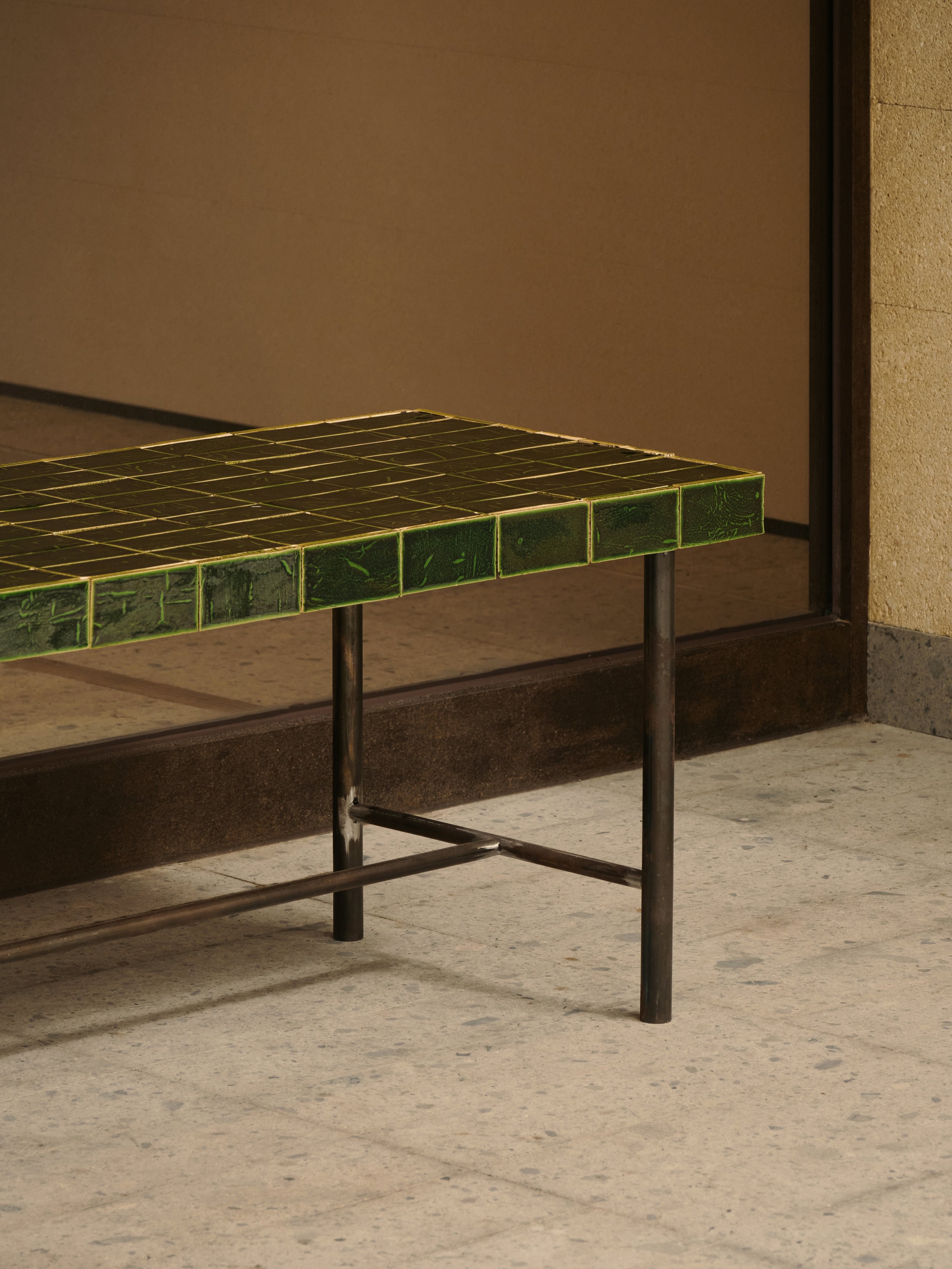
Locally sourced stone was laid by hand, piece by piece, reducing intensive processing and long-distance transport. Custom handmade bricks form wardrobes, benches, fitting rooms and jewellery displays. Slight shifts in colour and dimension reveal the touch of their makers, bringing warmth to an otherwise restrained material palette. Nothing is forced into uniformity.
At the centre of the interior, a spiral staircase provides the project’s strongest architectural gesture. Its raw steel construction was taken only as far as structurally required, then sealed with a transparent protective coating. The oxidised surface echoes the exterior cladding and gives the stair a sculptural presence without added ornament. As it connects the shop with the office, it draws the two parts of Cotemp’s world into a single material language.
Time is an active ingredient here. Steel will deepen in tone, timber will acquire new marks and stone will register the passage of feet. ONOAA STUDIO has made room for these changes, treating age and use as sources of character. The building is not presented as a pristine composition to be preserved at a fixed moment. It is expected to become more particular through occupation.
That position gives the project meaning beyond its resource-conscious construction. In a retail landscape often shaped by seasonal reinvention, Conceived by Cotemp proposes a slower and more personal relationship between clothing, objects and place. Its materials support the brand’s belief in things that can be lived with and kept, while its spaces reward attention without demanding it.
The childhood box has been enlarged into architecture, but its intimacy remains. Conceived by Cotemp holds its contents quietly, leaving enough unsaid for visitors to look, linger and discover.