Avenue Bosquet by Romain Chancel
On Avenue Bosquet, on Paris’s Left Bank with views toward the Eiffel Tower, a rare 1930s Art Deco apartment has been brought back to life through a full restoration led by interior designer Romain Chancel.
Conceived as an elegant pied-à-terre for a Mexican owner, the project centres on a careful return to the apartment’s original character while quietly meeting present-day expectations of comfort.
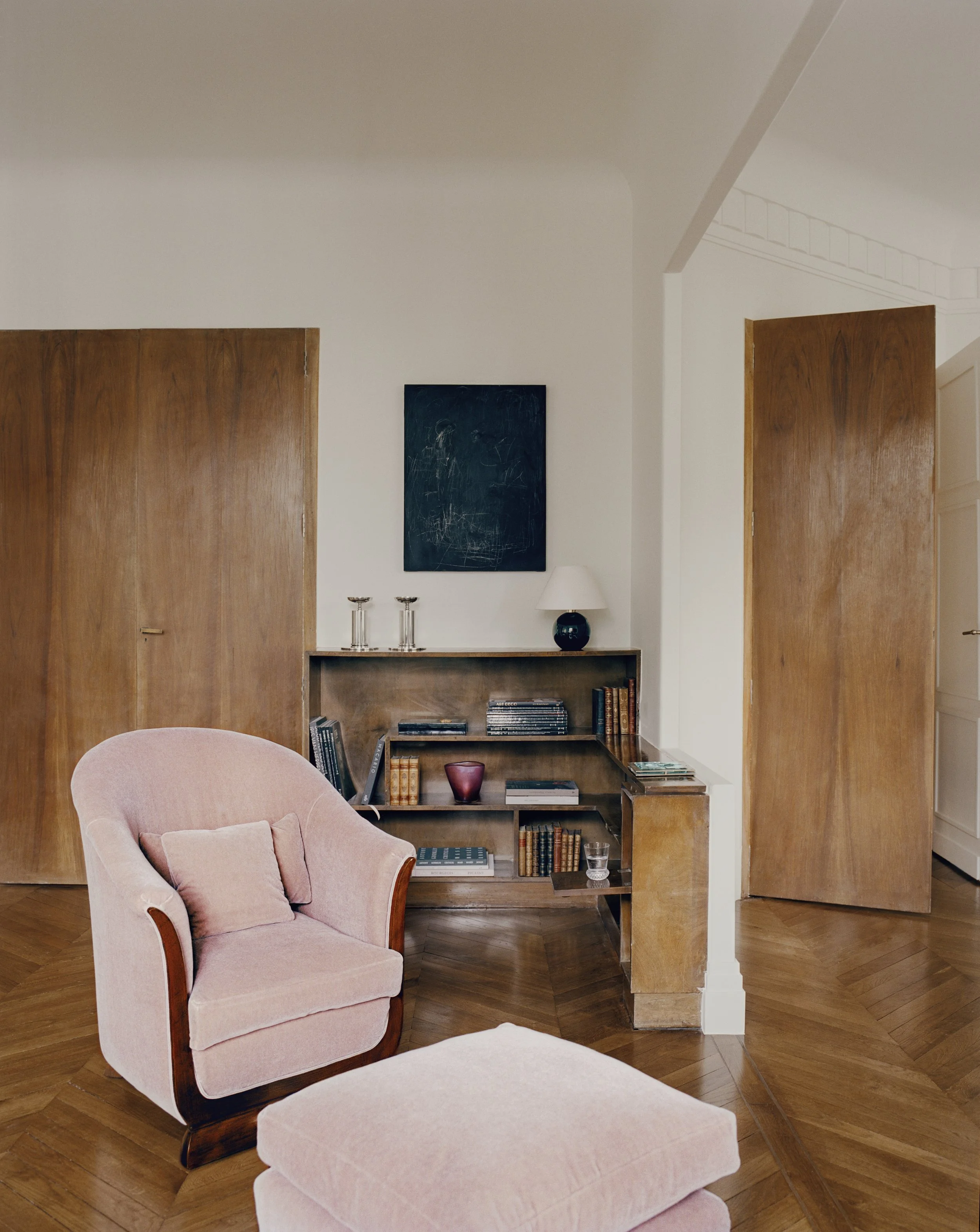
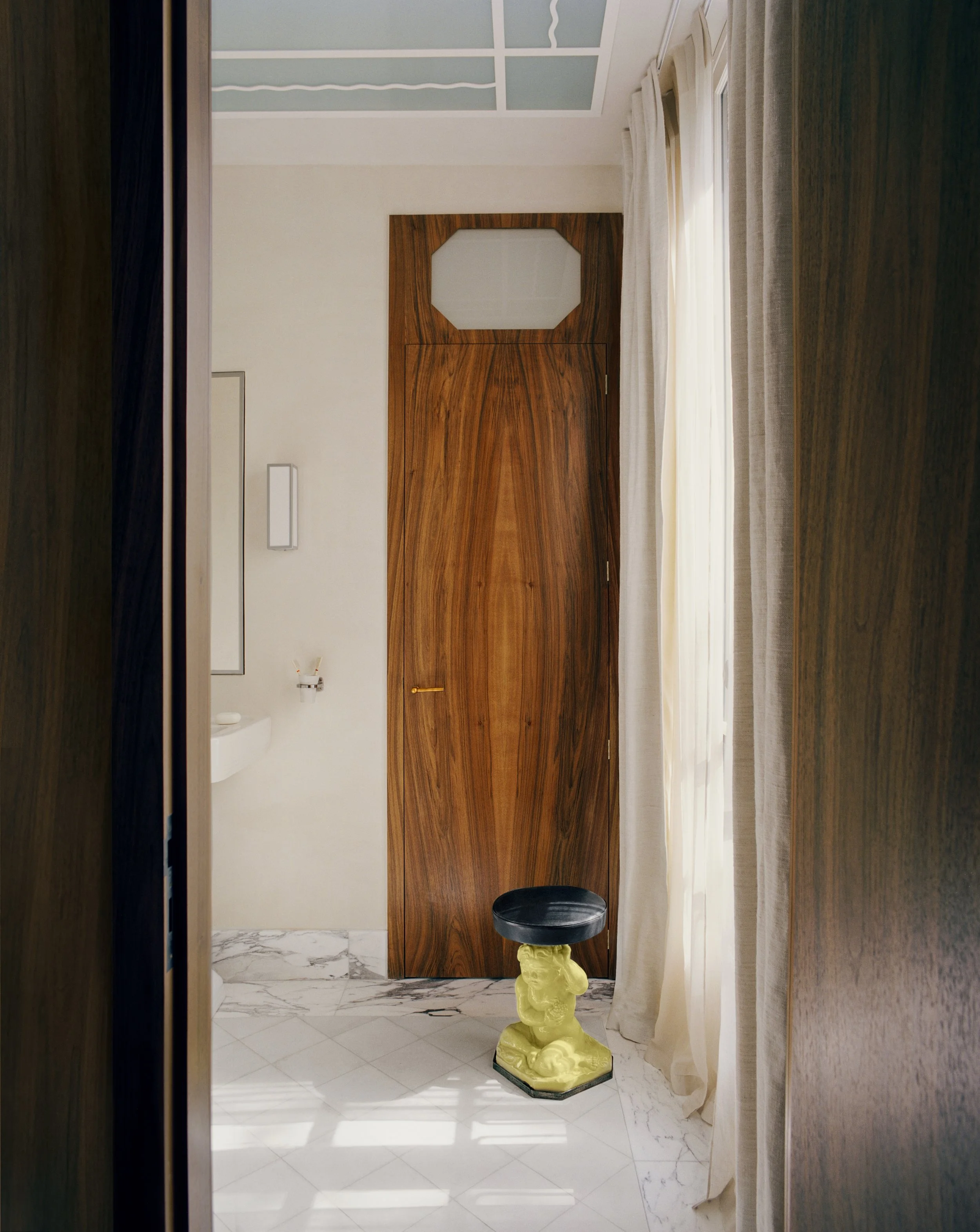
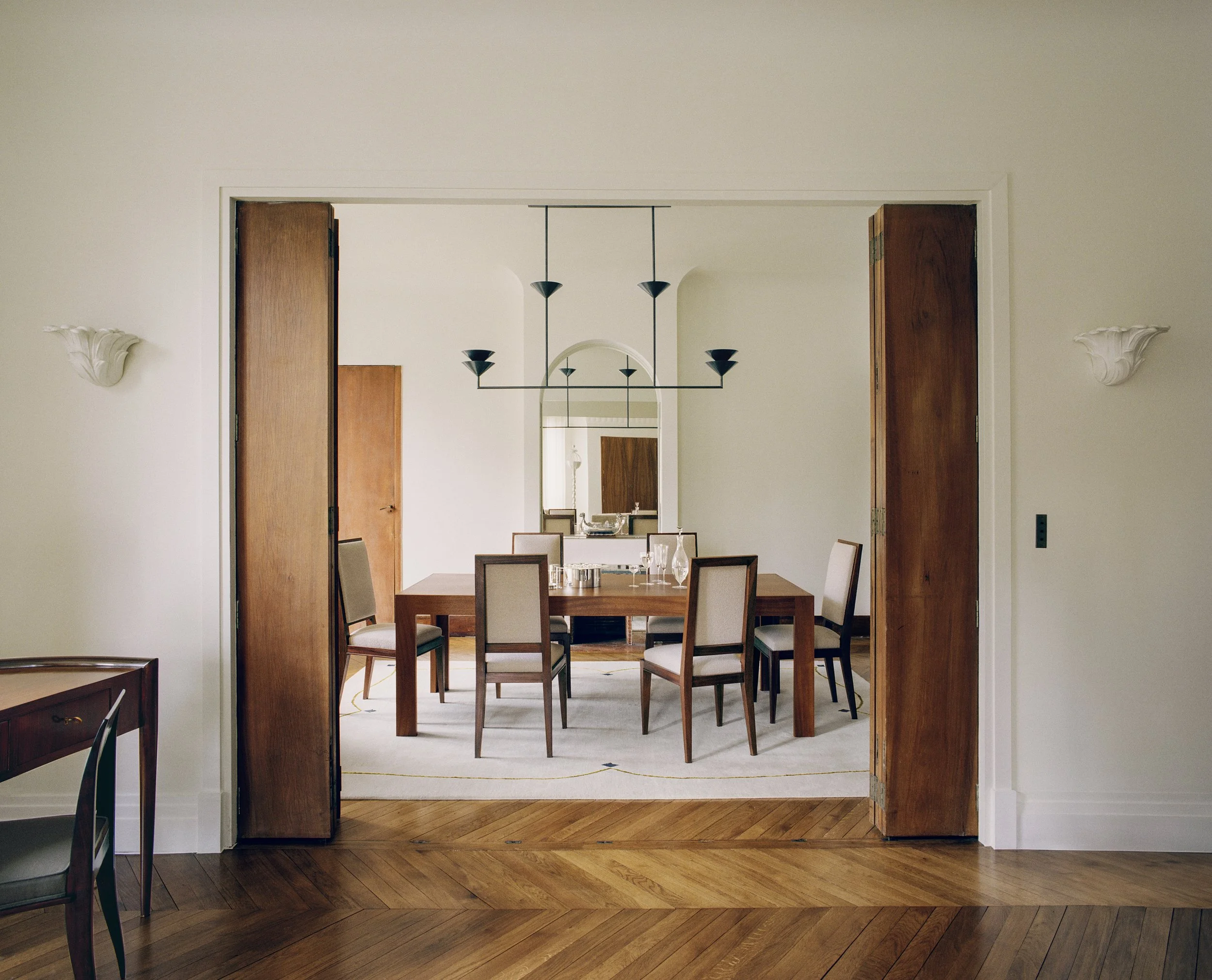
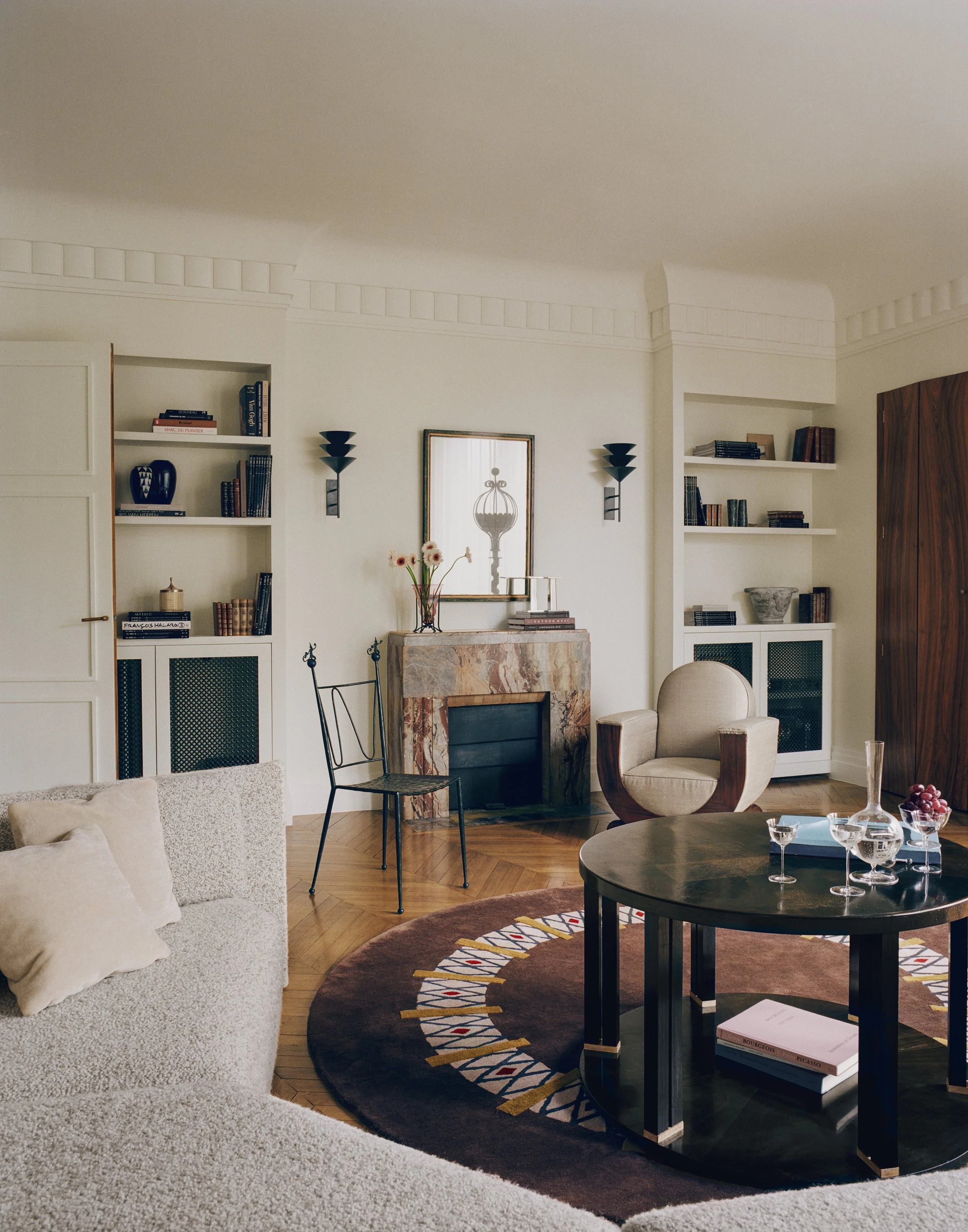
From the outset, the space offered an intact catalogue of period features: walnut accordion doors, mirrored fireplaces, and distinctive corner niches that had remained largely untouched for decades. Chancel approached these elements as both heritage to protect and a framework for new interventions. Existing walnut doors, fireplaces, and architectural details were restored in full, with craftsmanship focused on preserving patina, proportion, and the particular depth of the original timberwork.
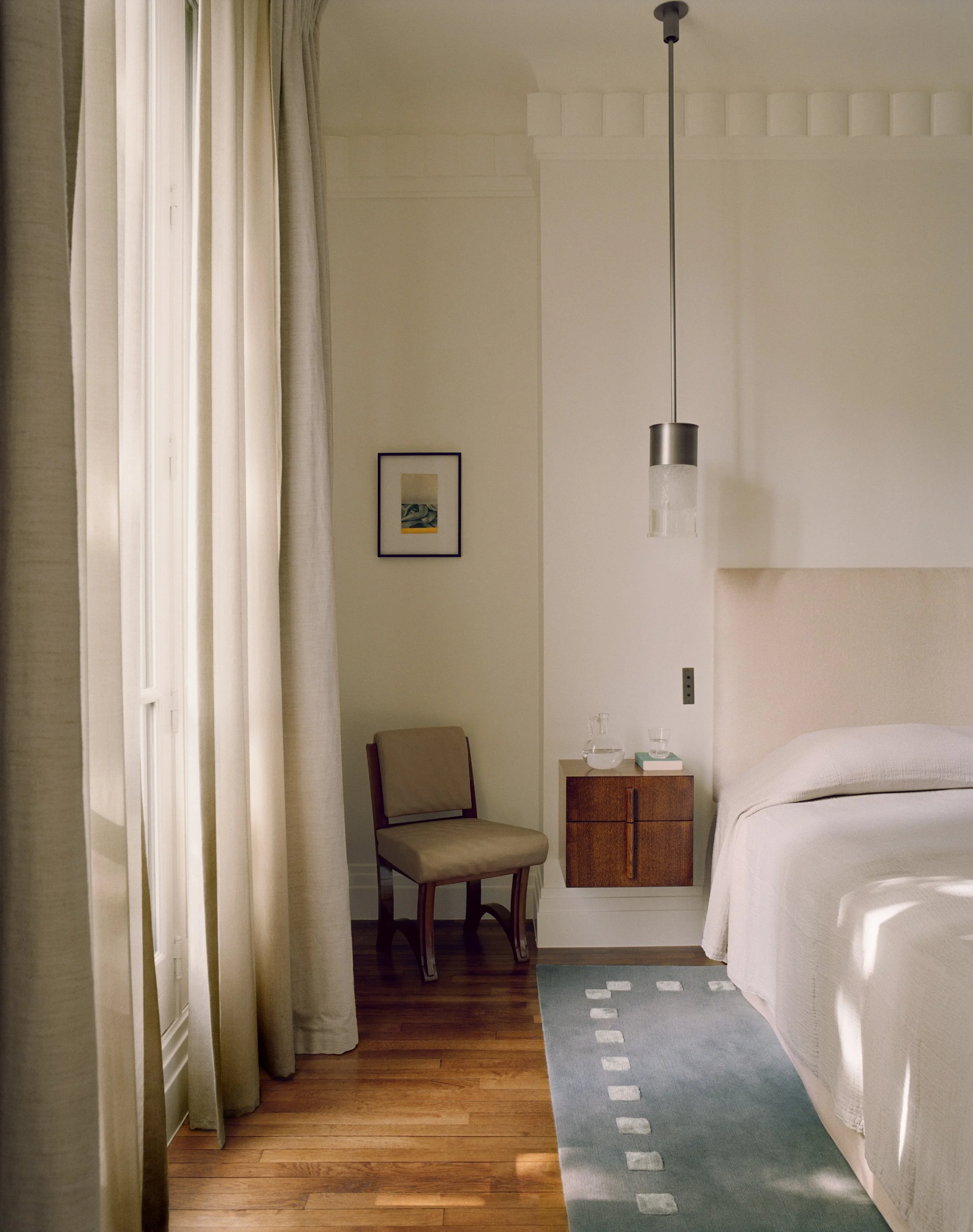
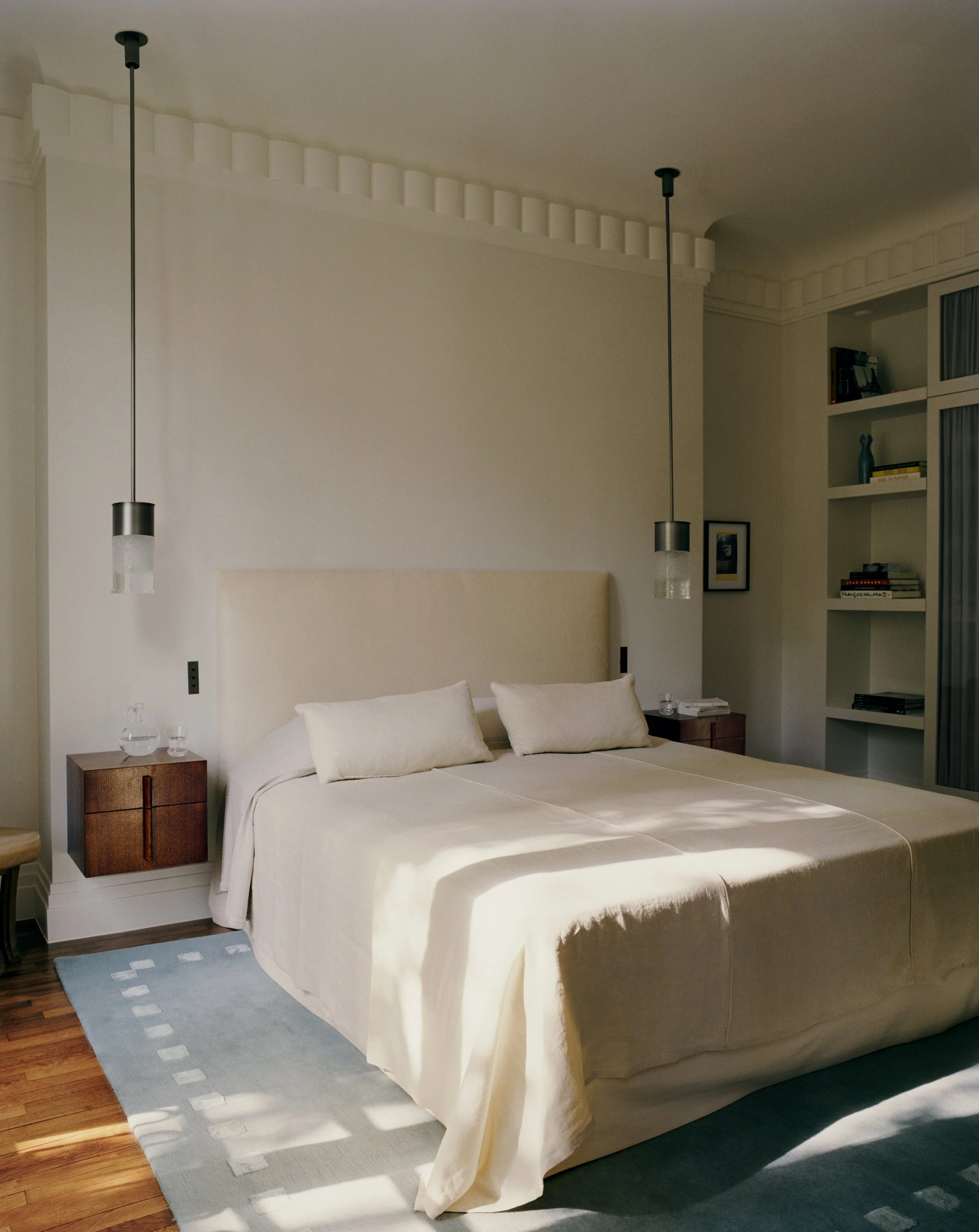
To reinforce the architectural continuity of the interiors, new cornices were introduced, drawing their profiles from the building’s façade. This reference to the exterior brings a sense of coherence across rooms, strengthening the link between the apartment’s envelope and its internal detailing. In collaboration with cabinetmaker Alexandre Jamet, bespoke doors were also produced to sit seamlessly within the existing language, integrating with the original joinery and strengthening the overall composition.
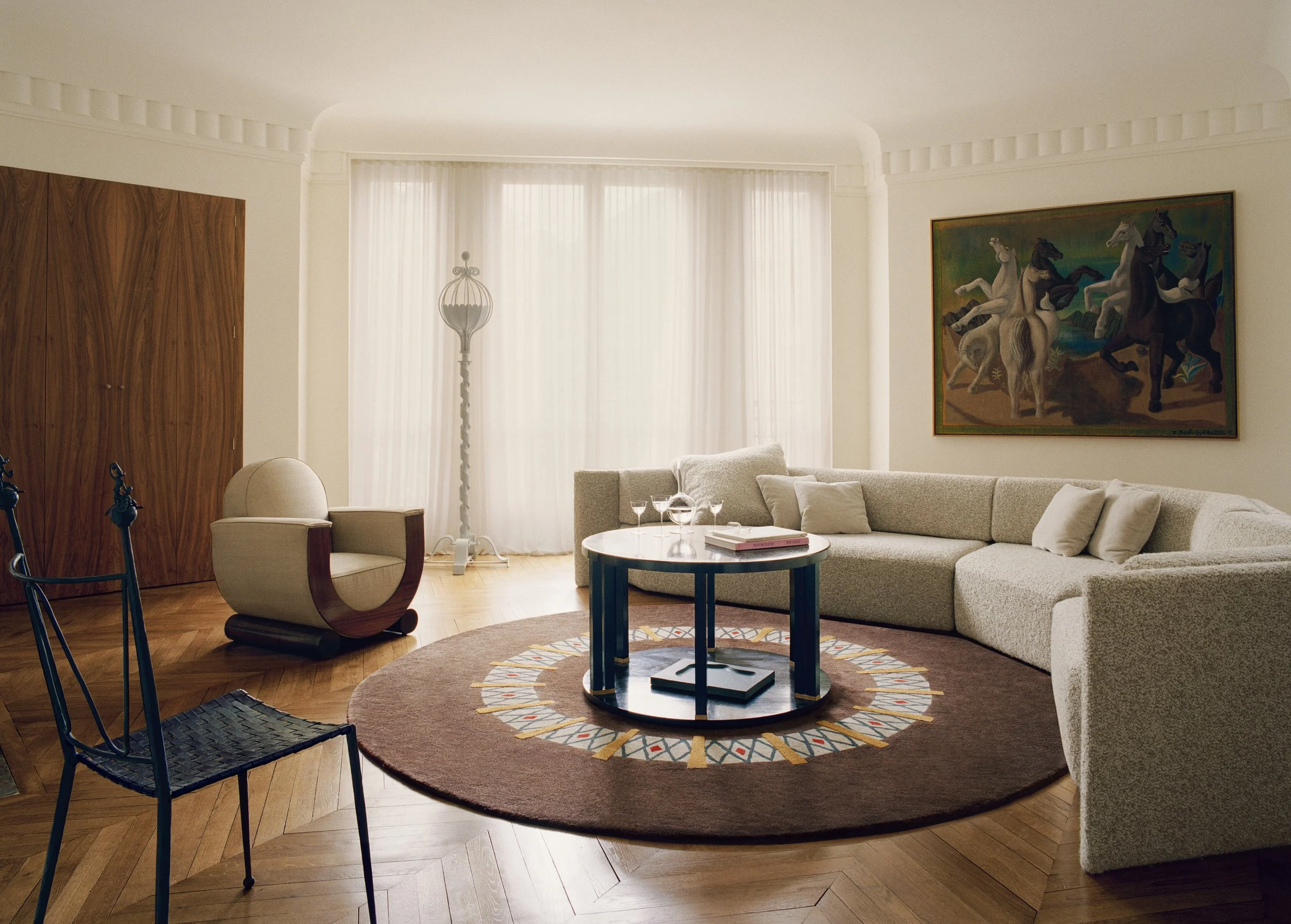
A significant part of the project lies in the furnishing strategy, which commits entirely to authentic Art Deco pieces. Works by Eugène Printz, Jacques-Émile Ruhlmann, Marc du Plantier, and Alfred Porteneuve form a collection selected for its fidelity to the period and the quality of its craftsmanship. These collectible objects give the apartment a distinctive presence, grounding the interiors in the design culture of early twentieth-century France while maintaining a sense of ease and domesticity.
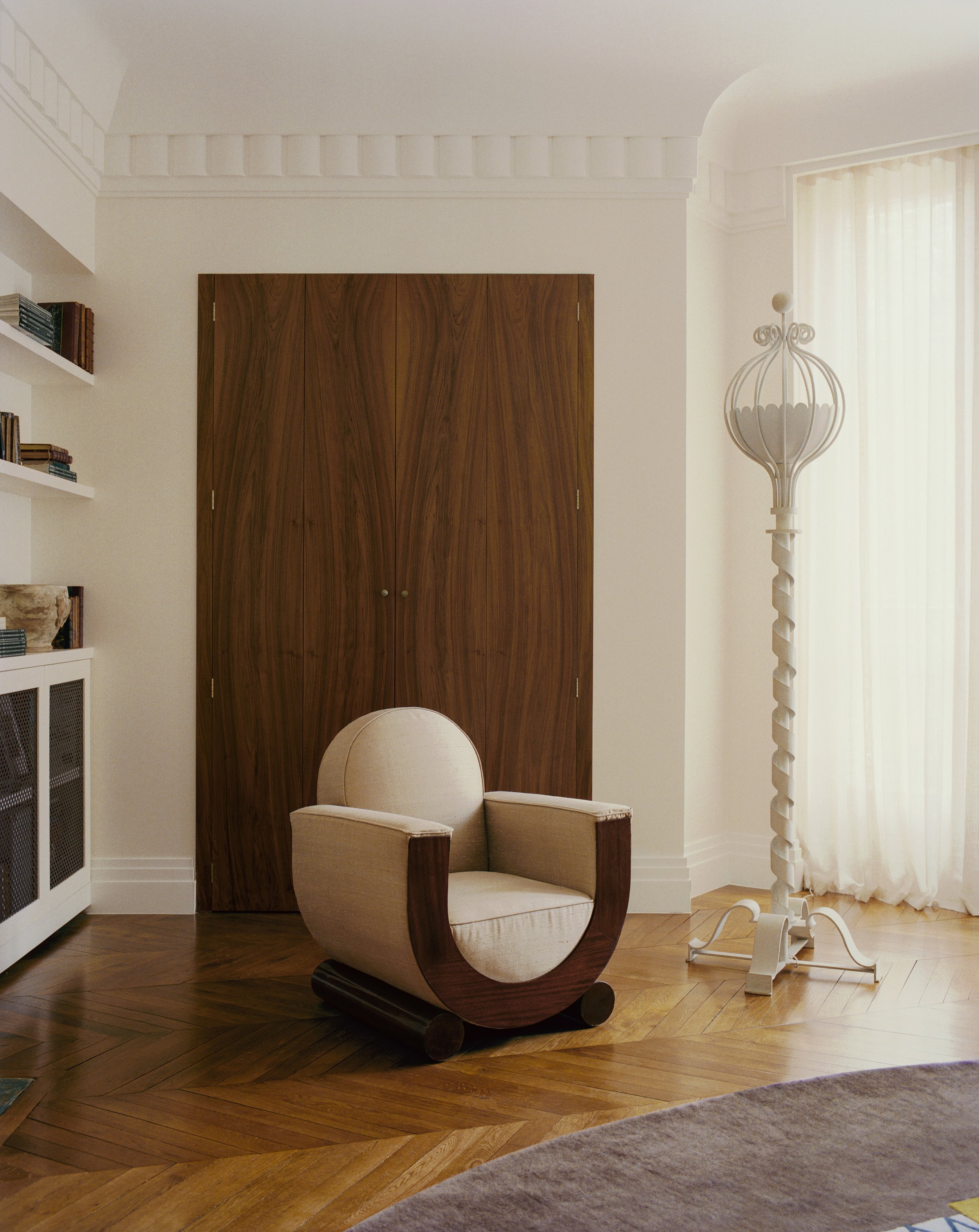
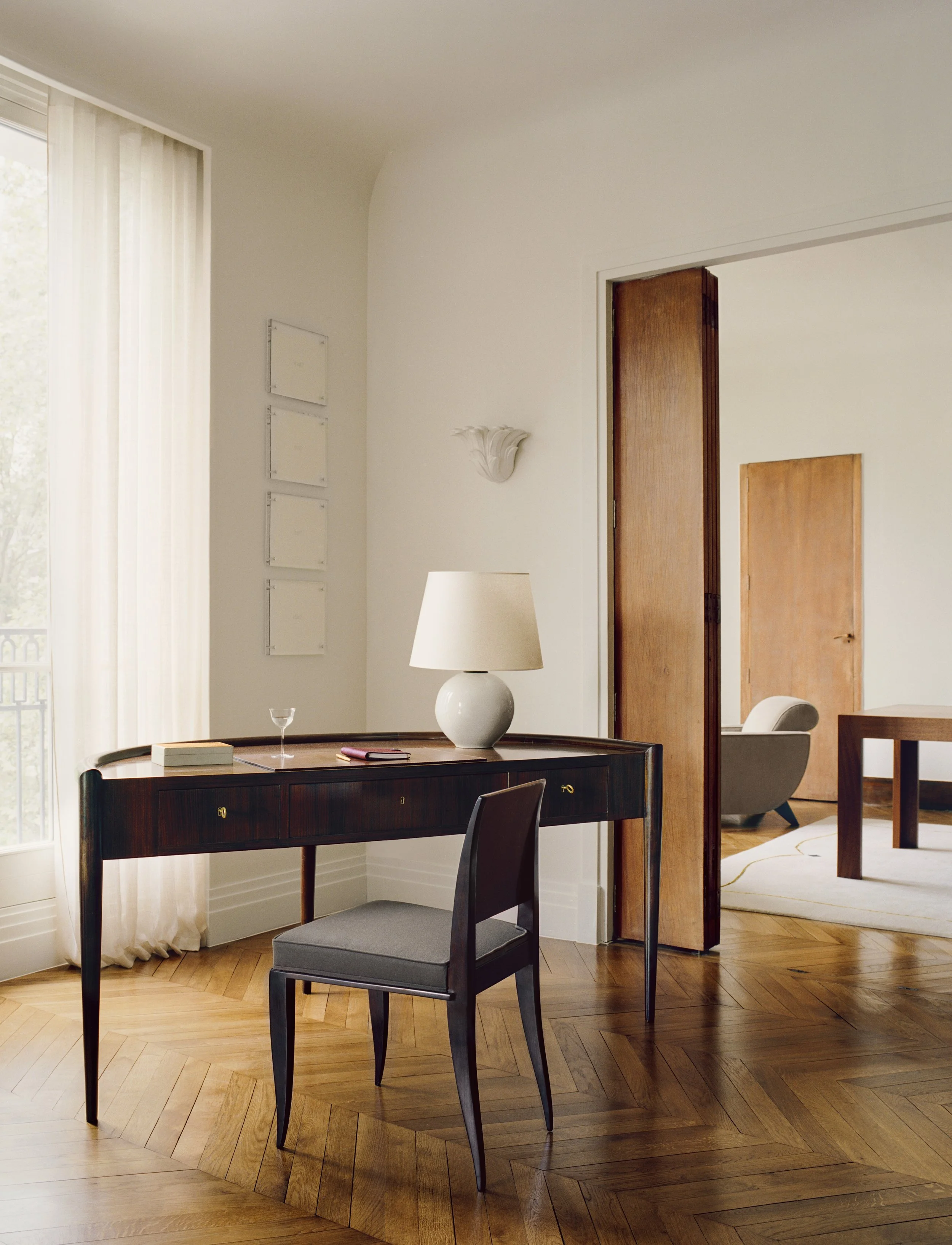
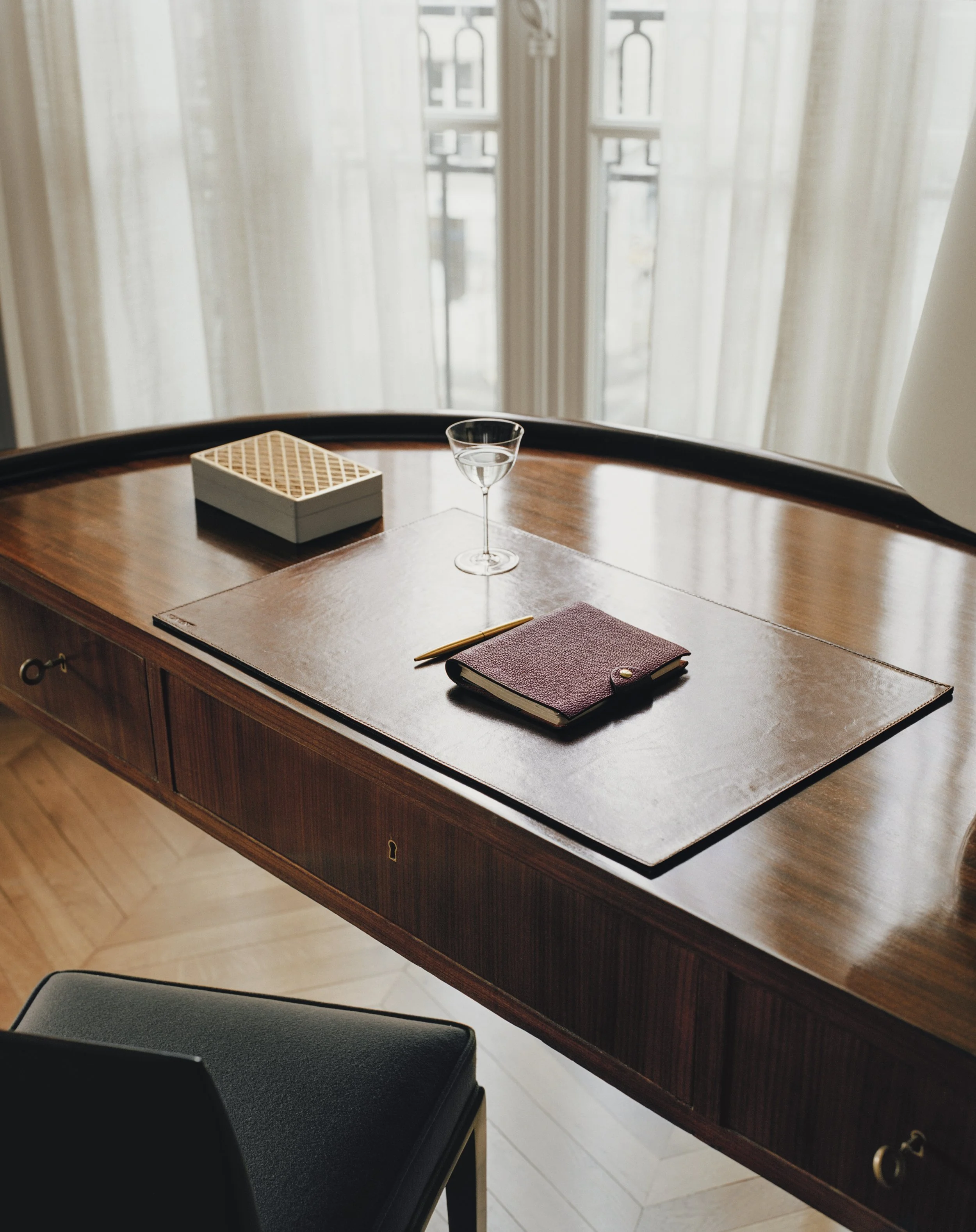
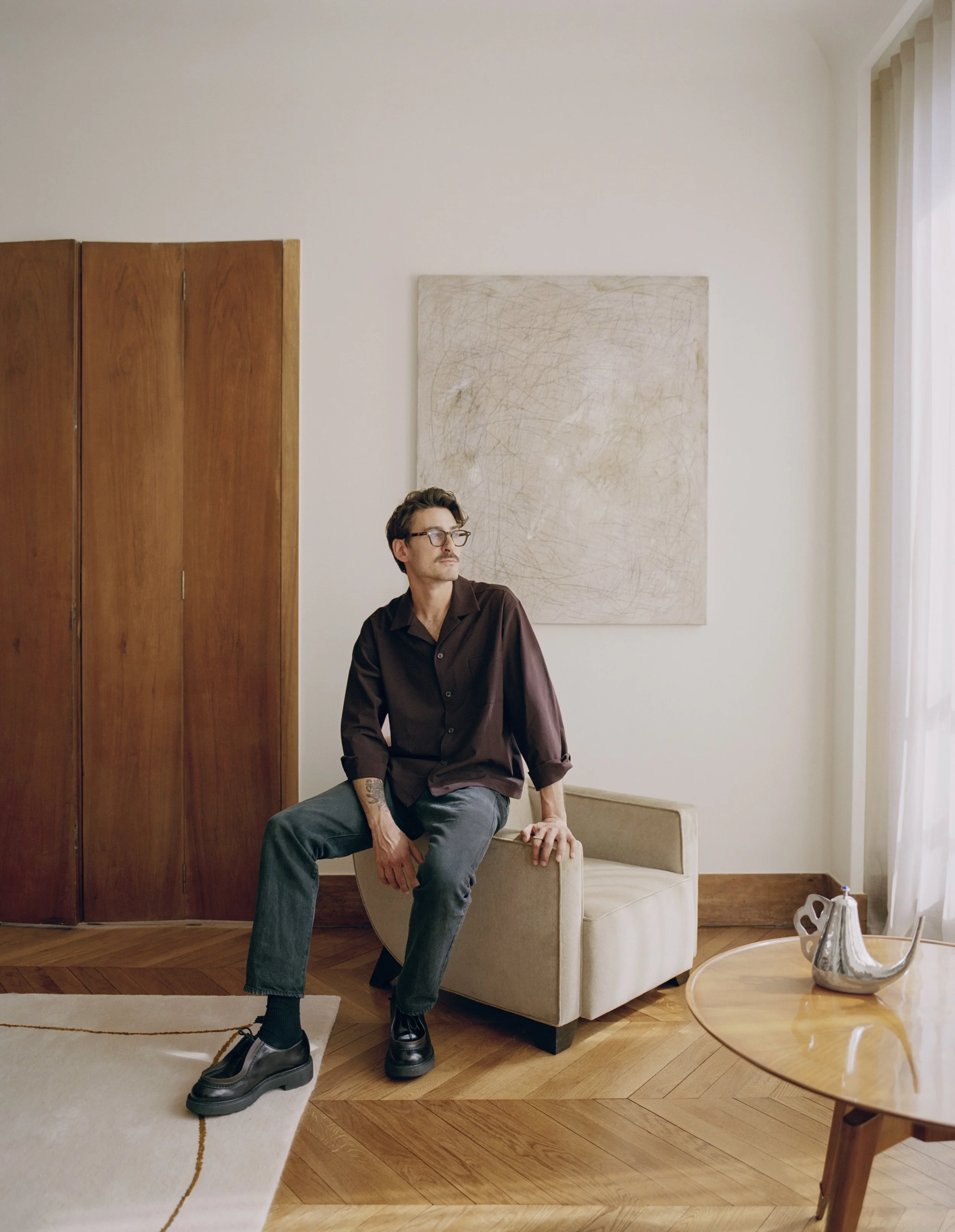
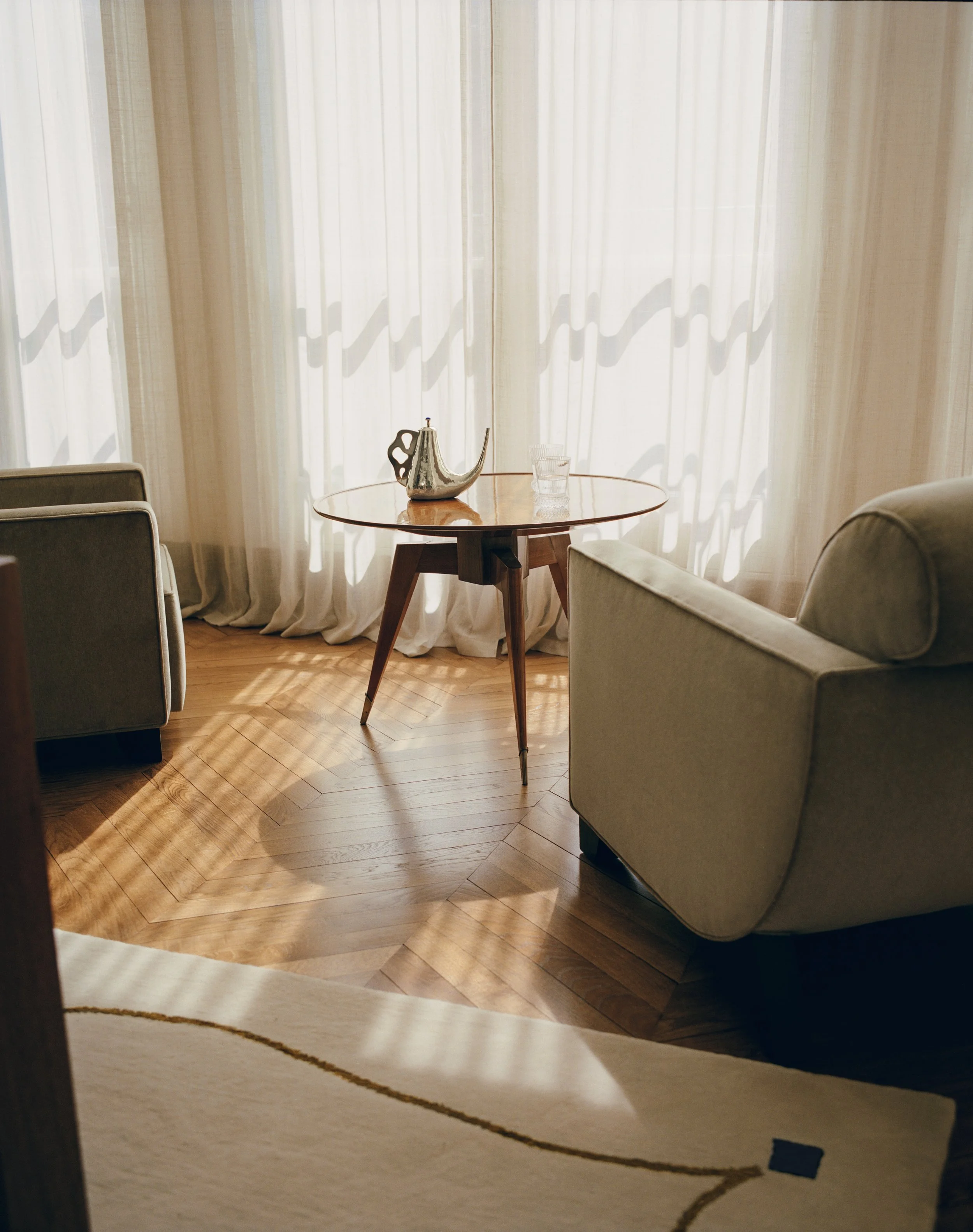
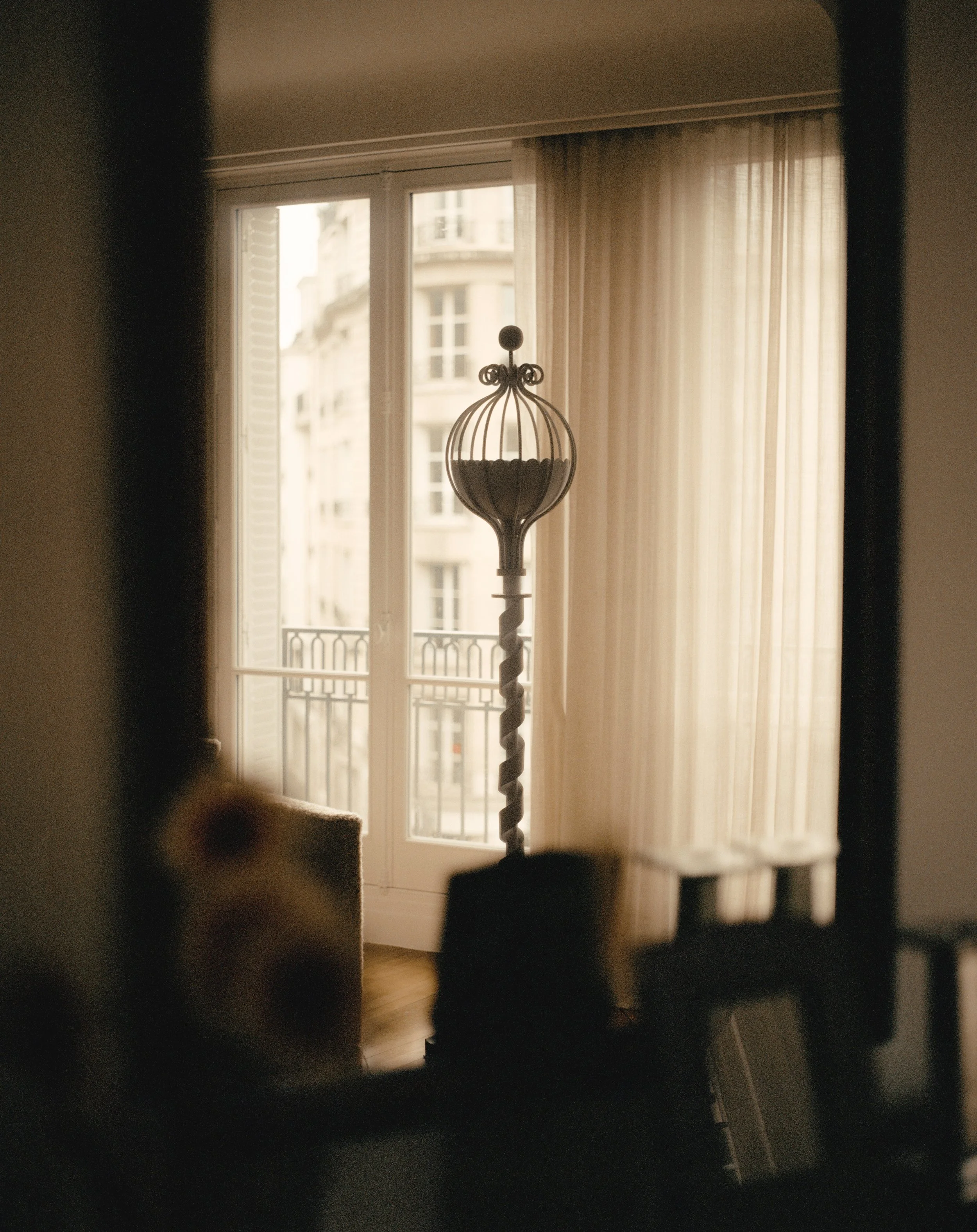
The layout was also refined to suit contemporary living. The original sequence of grand reception rooms, with service areas held back, was adjusted by opening the kitchen to the main living spaces and adding three new bathrooms. These changes support daily use without compromising the apartment’s historic identity, allowing modern functions to sit comfortably within an Art Deco setting.
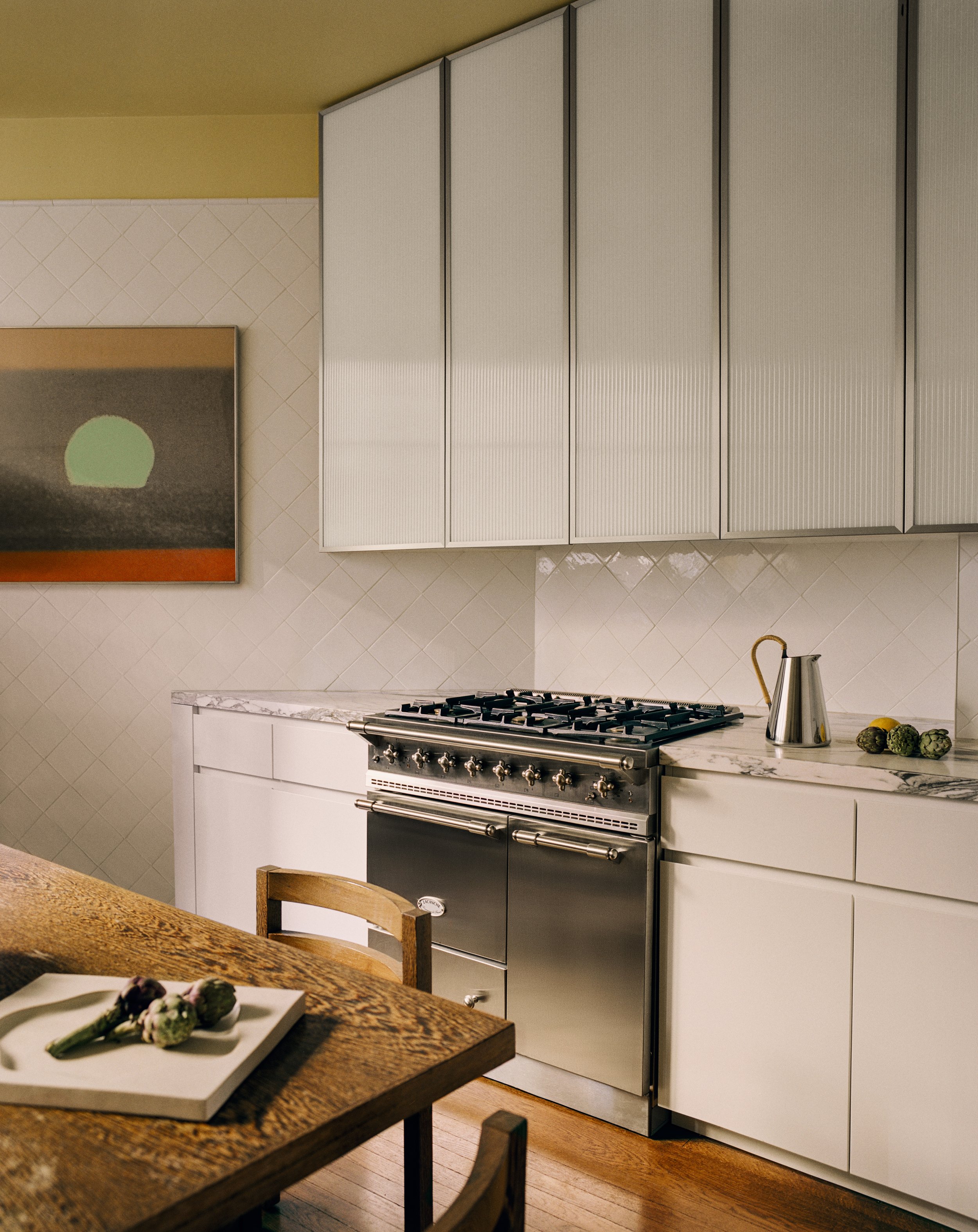
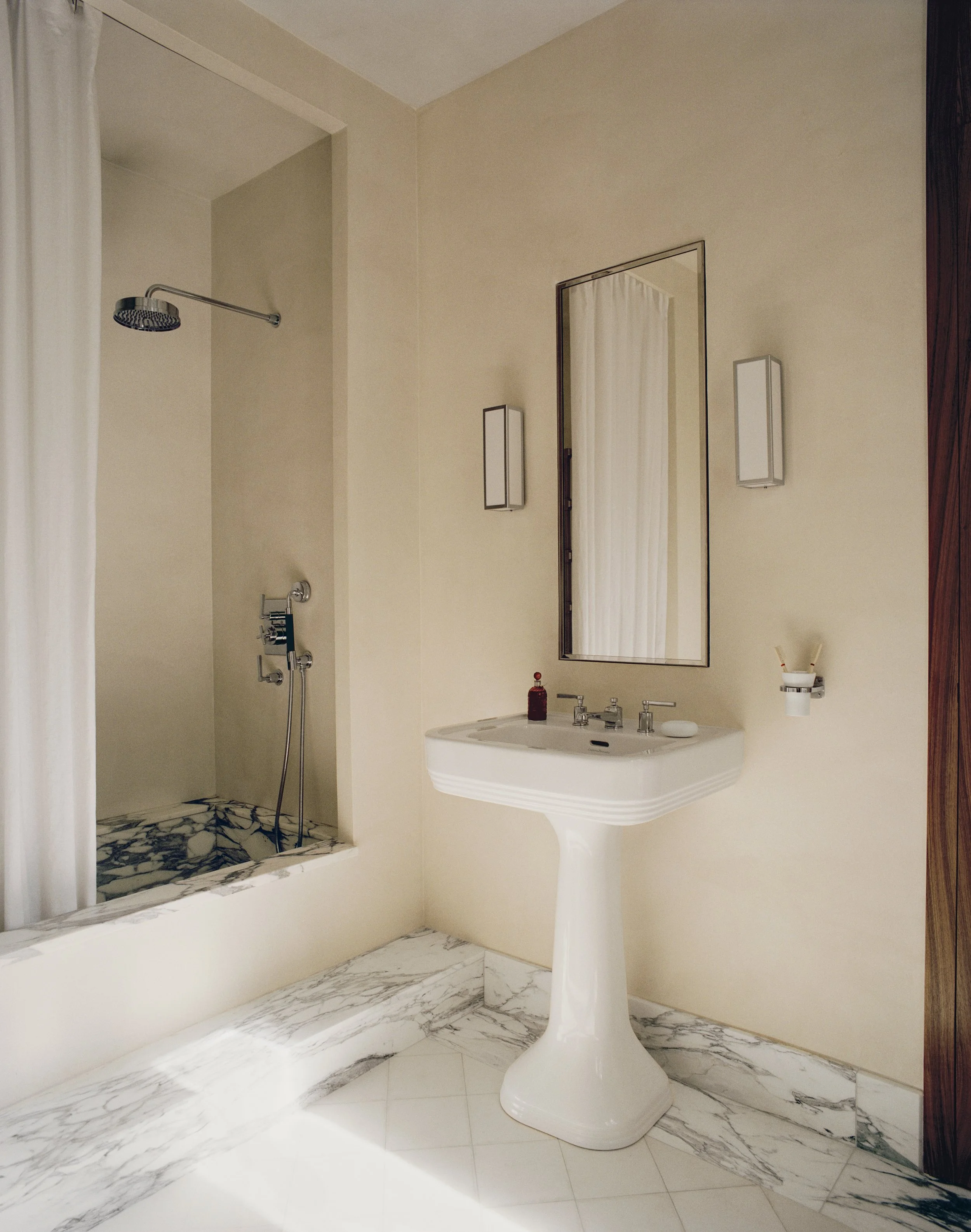
Across the rooms, the palette remains restrained and precise, giving space for singular objects and material decisions to carry the atmosphere. In the primary bedroom, a large backlit glass ceiling references the building’s ironwork, translating an architectural motif into a luminous interior feature. Bathrooms draw on existing cues through graphic black-and-white tiling and classic fittings, while the kitchen nods to the 1930s through extensive tiling and a generous marble sink.
In the dining room, mirrors amplify the Eiffel Tower view and deepen the sense of volume, while carefully placed period pieces sharpen the apartment’s Art Deco identity. Details such as the mirrored fireplace, Porteneuve seating, and concealed bar elements introduce glamour without tipping into theatricality. Even the most iconic objects are balanced by practical considerations, allowing the apartment to function as a lived-in home.
Chancel’s practice is shaped by a sensitivity to historic places and a meticulous eye for detail, with inspiration drawn from gardens, singular architectures, and sites marked by time. That perspective is evident here in a restoration that respects what endured, clarifies what needed repair, and adds what was necessary with discretion. Captured on film by Harry Crowder, the renewed interiors carry a warmth that comes from material authenticity, careful proportion, and a sustained commitment to the spirit of Art Deco Paris.