Anglesea House by Eckersley Architects
Set near Anglesea surf beach with views toward Victoria’s Southern Ocean, Anglesea House by Eckersley Architects reinterprets the coastal modernist beach house through a quiet, contemporary lens.
The project draws from the simple forms of 1950s and 1960s homes once common to the area, while responding to the needs of a family seeking both retreat and connection.
The clients, a couple with adult children and an extended family, wanted a house that could support shared time with family and friends without losing the ease of a beachside escape. Their former home, a 1970s two-storey dwelling on a 720-square-metre site, no longer provided sufficient accommodation. Positioned near the crest of the sloping block, it also raised privacy concerns and missed opportunities to engage more fully with the ocean outlook and rear garden.
In designing the new 350-square-metre home, Eckersley Architects looked to the memory of an earlier beach shack the owners had loved. Simple and informal in character, that house included bedrooms accessed by an outdoor deck, creating a relaxed connection between sleeping areas and the open air. Anglesea House carries forward this sense of coastal ease through a more refined architectural language.
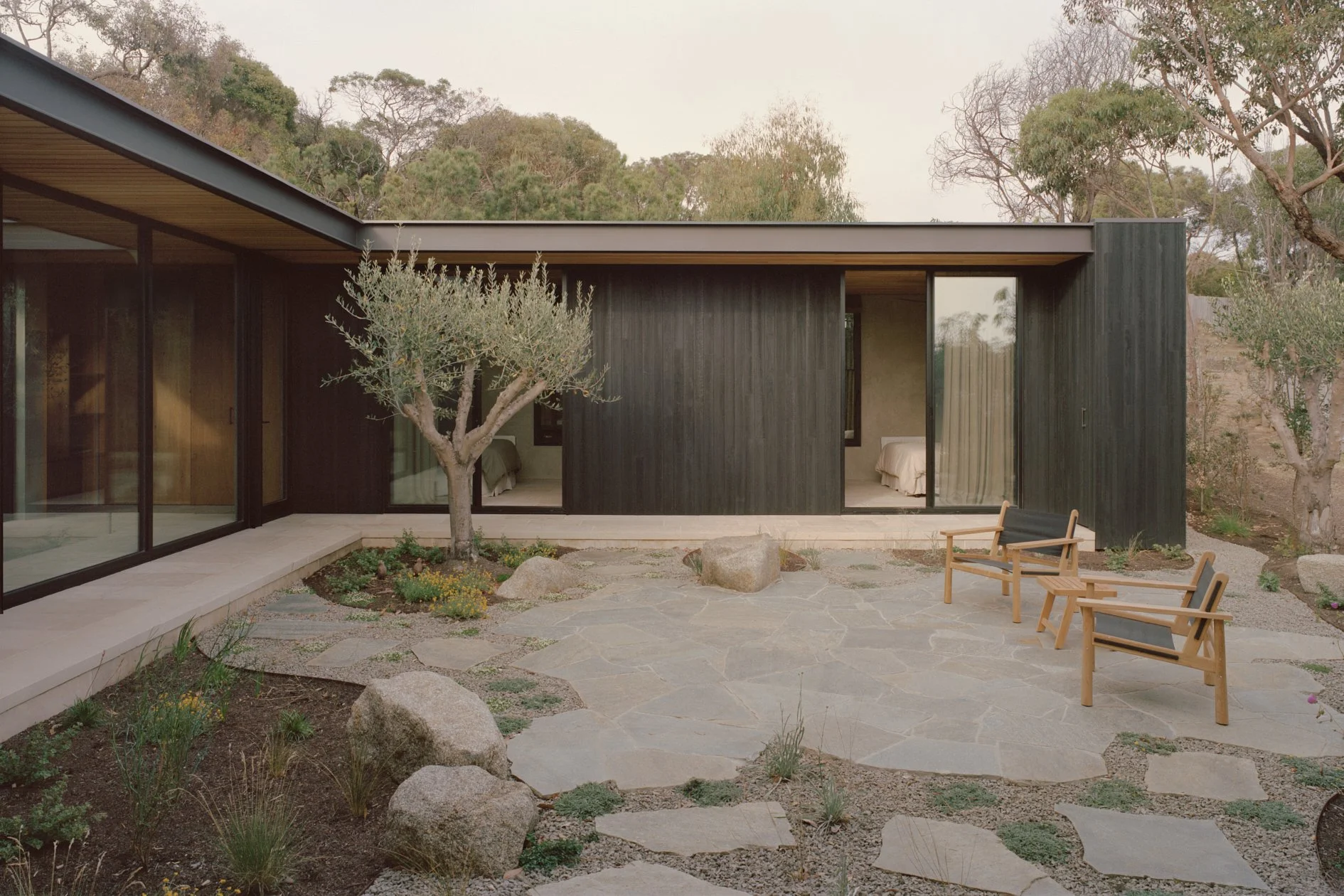
The two-storey residence is arranged as an H-plan, with two courtyards placed on either side of the house. This configuration allows the home to open toward the views while gaining shelter from prevailing winds. The main courtyard becomes an outdoor room at the centre of daily life, drawing light and landscape into the plan while maintaining privacy from the street.
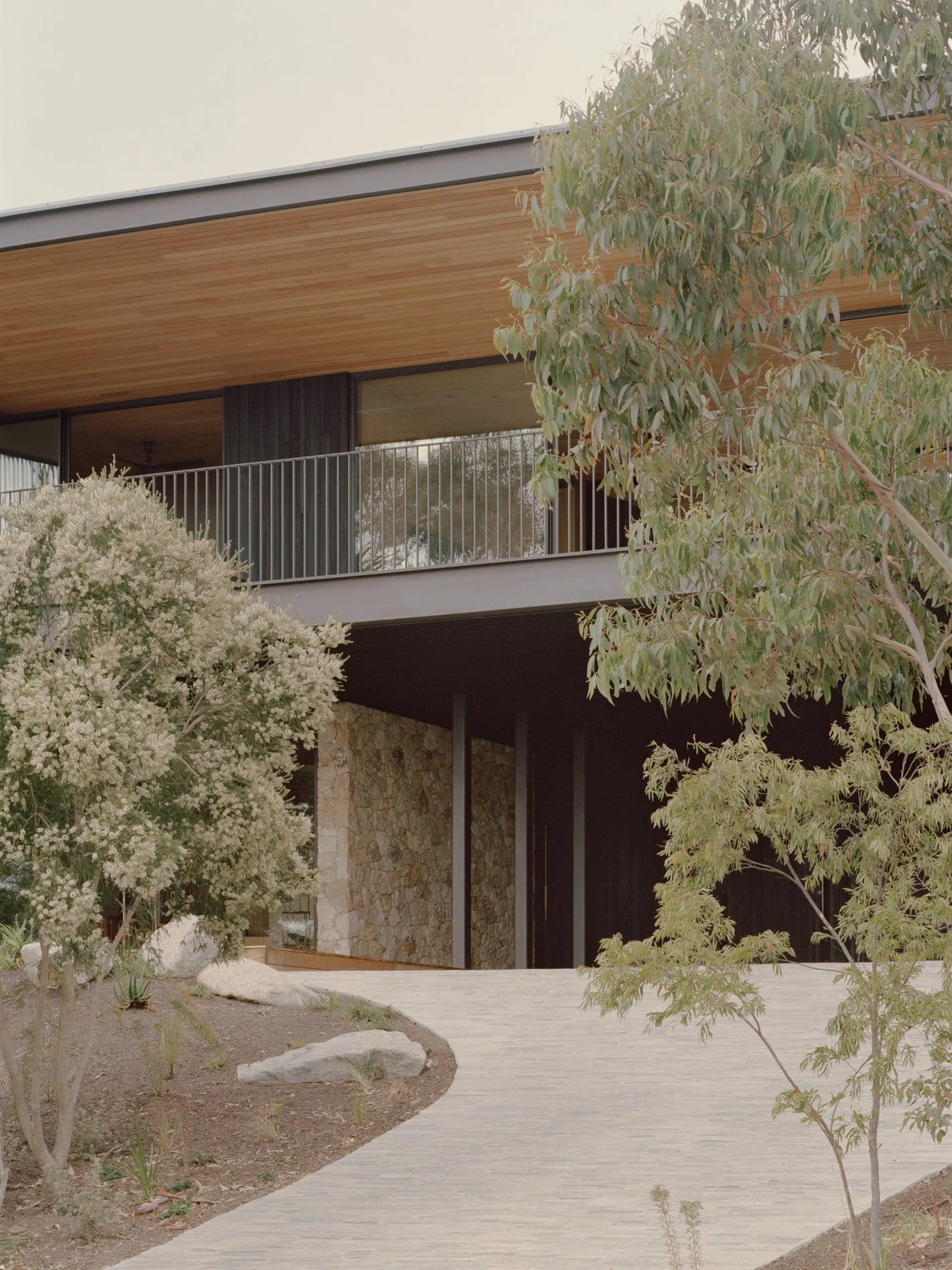
Arrival takes place at ground level, where the entry is paired with a flexible bunk room that can also function as a rumpus room for grandchildren. This lower level supports the changing needs of family life, accommodating play, rest and additional guests within a compact and practical arrangement.
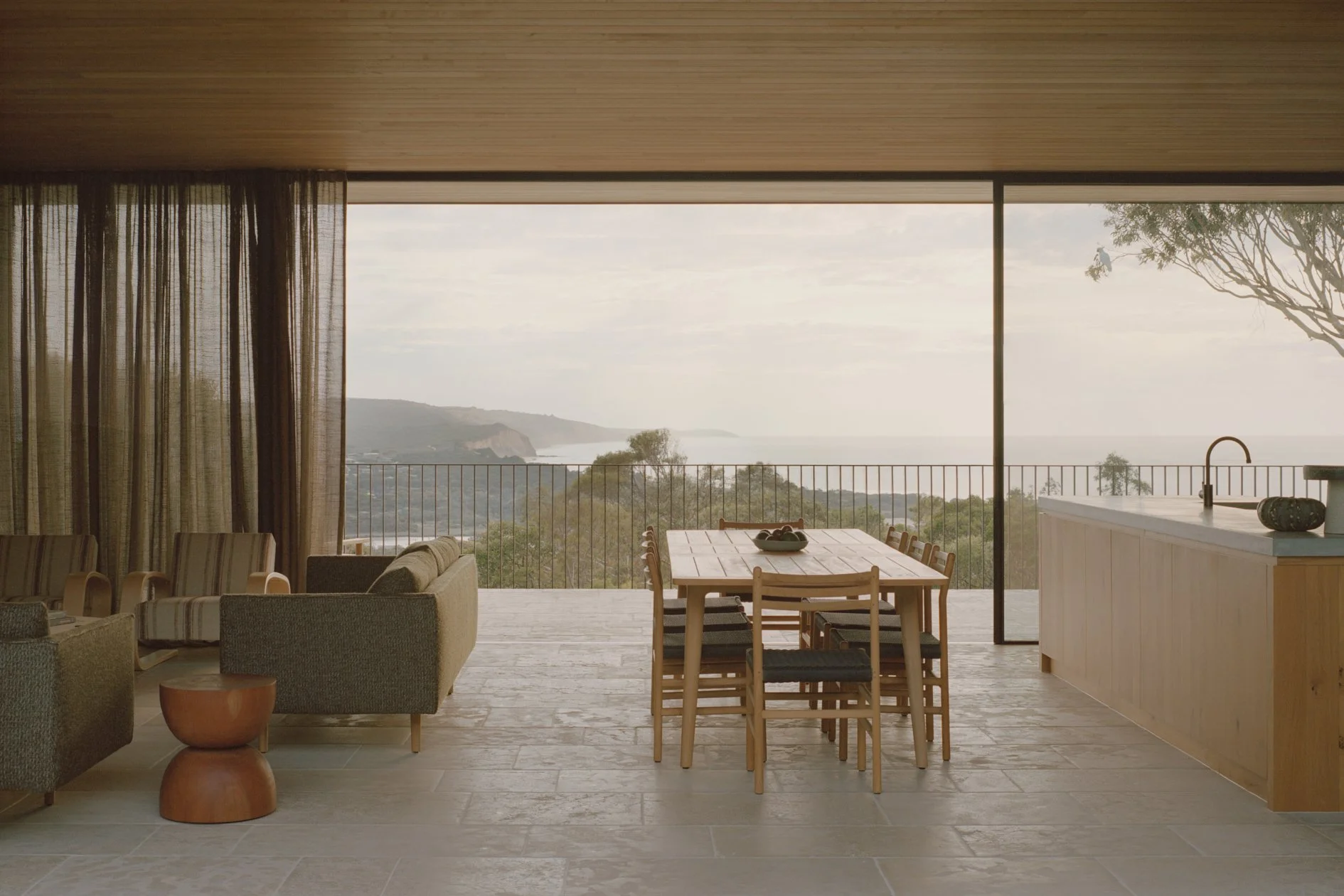
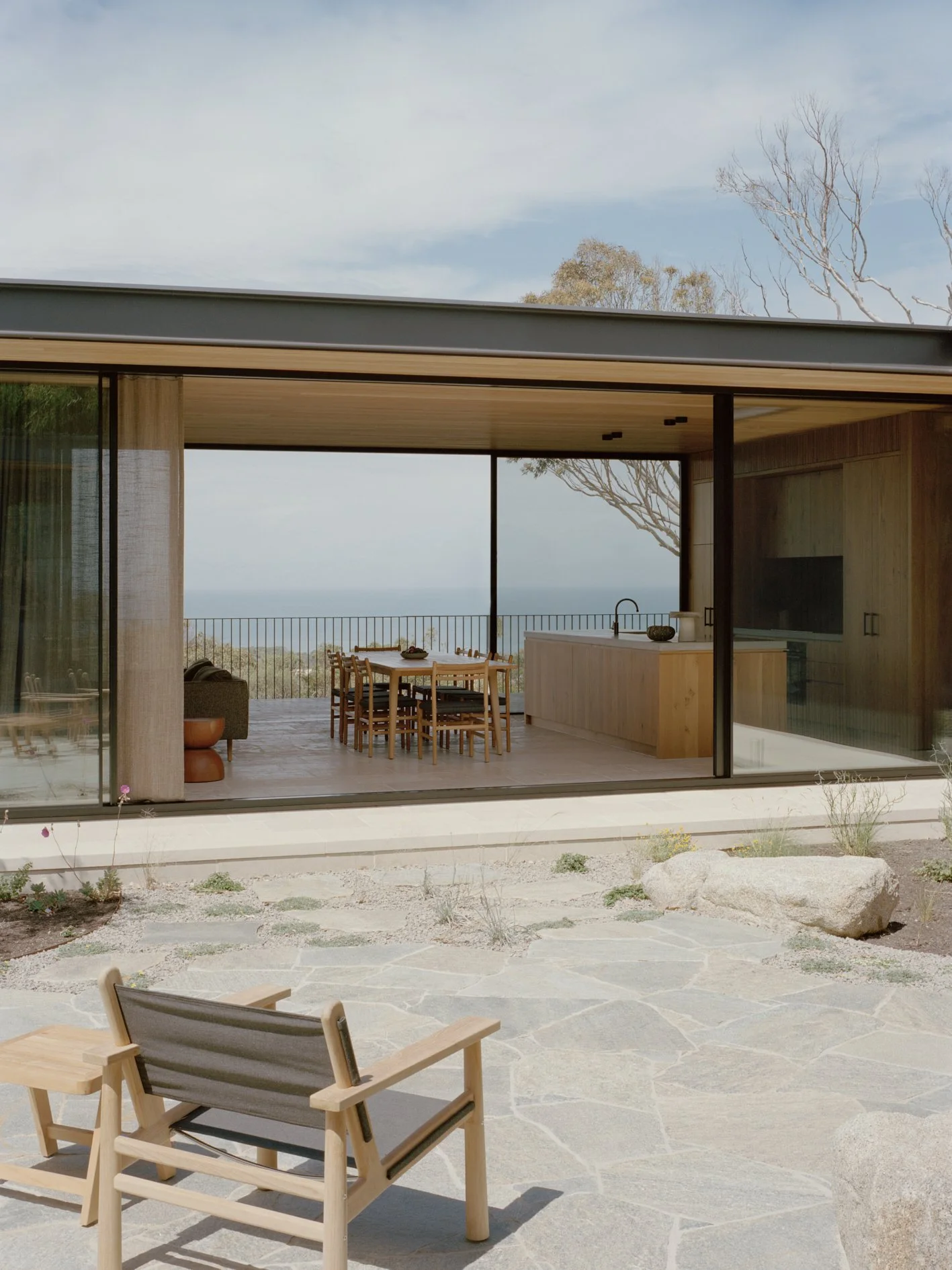
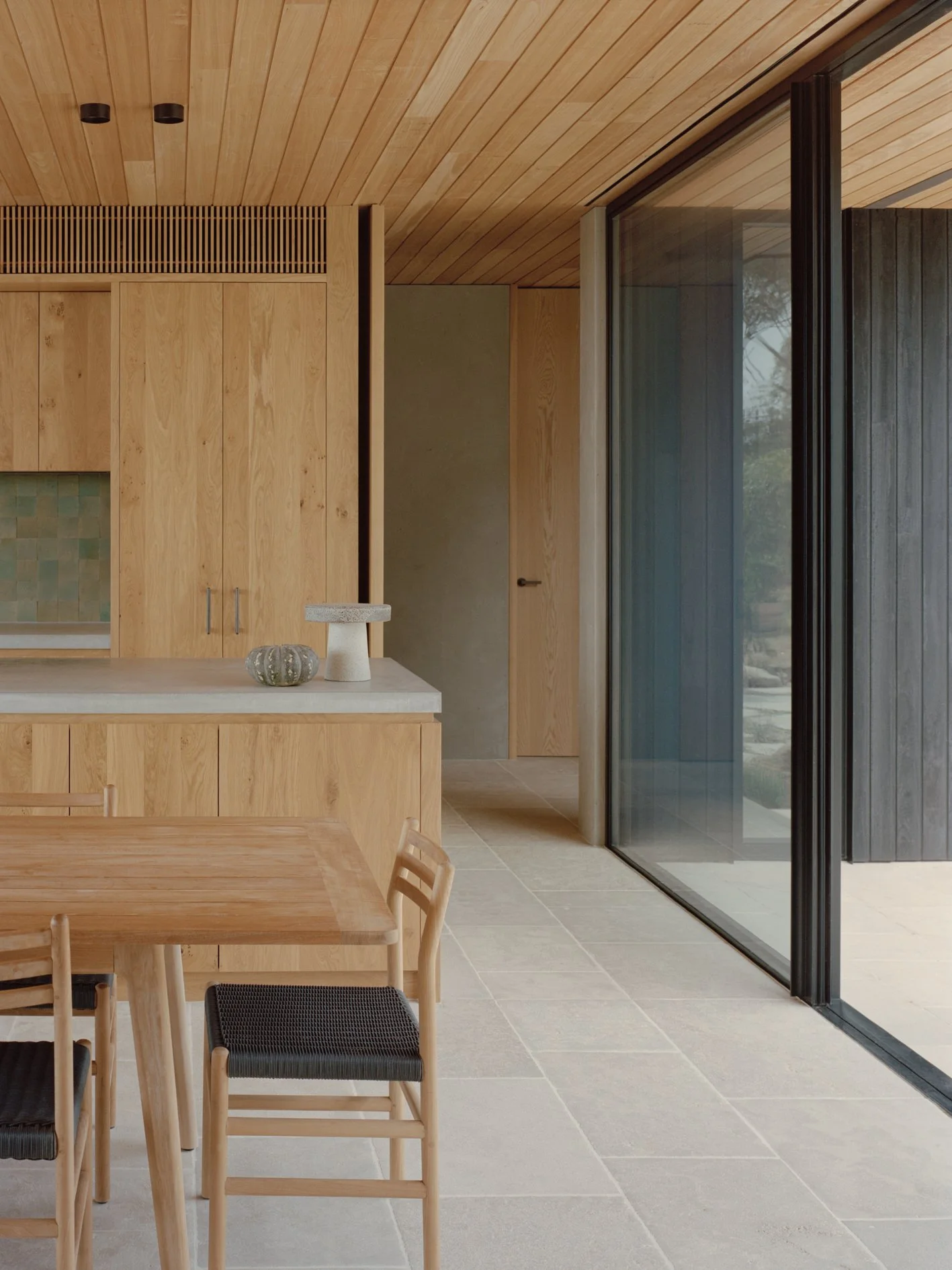
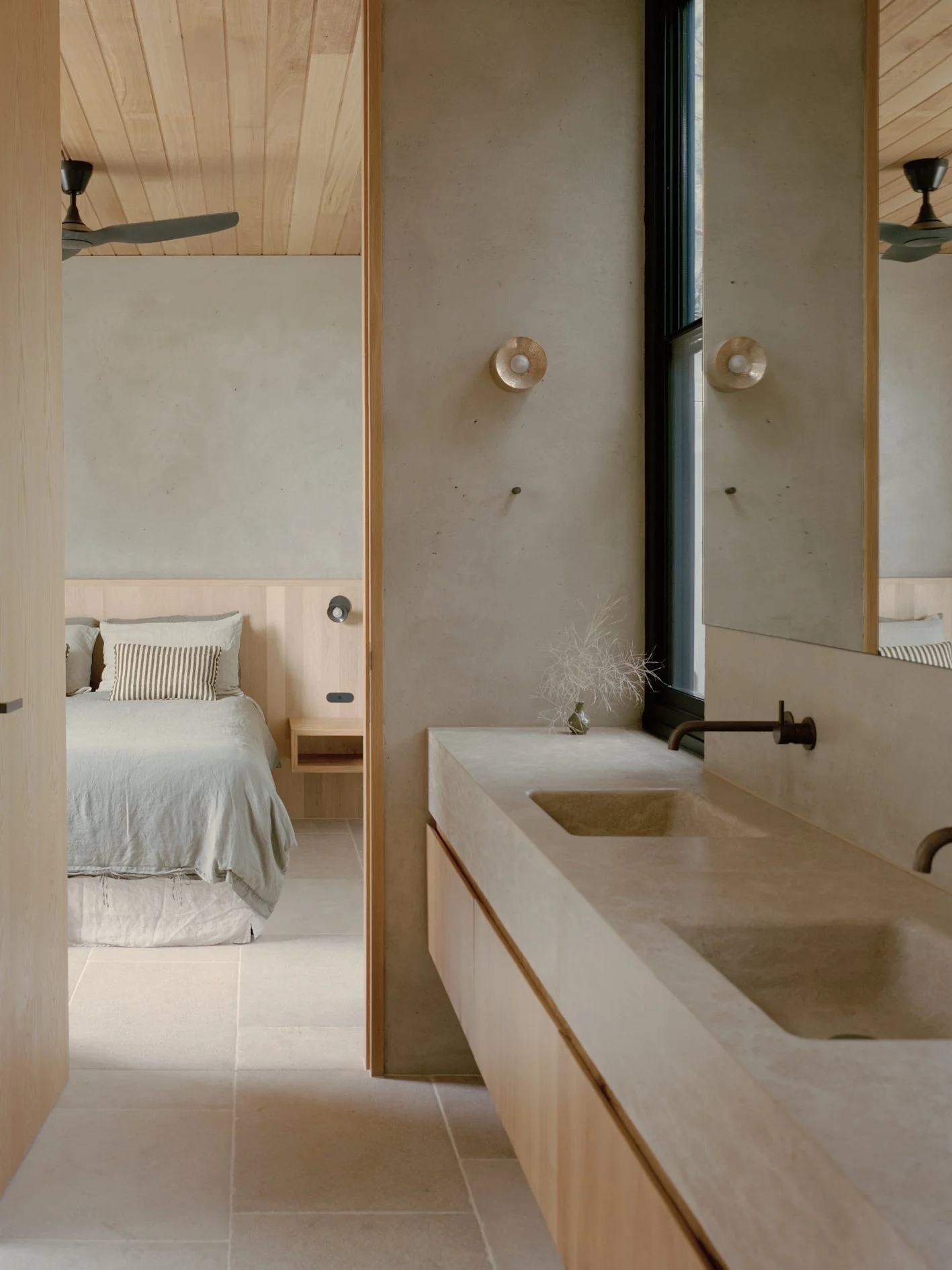
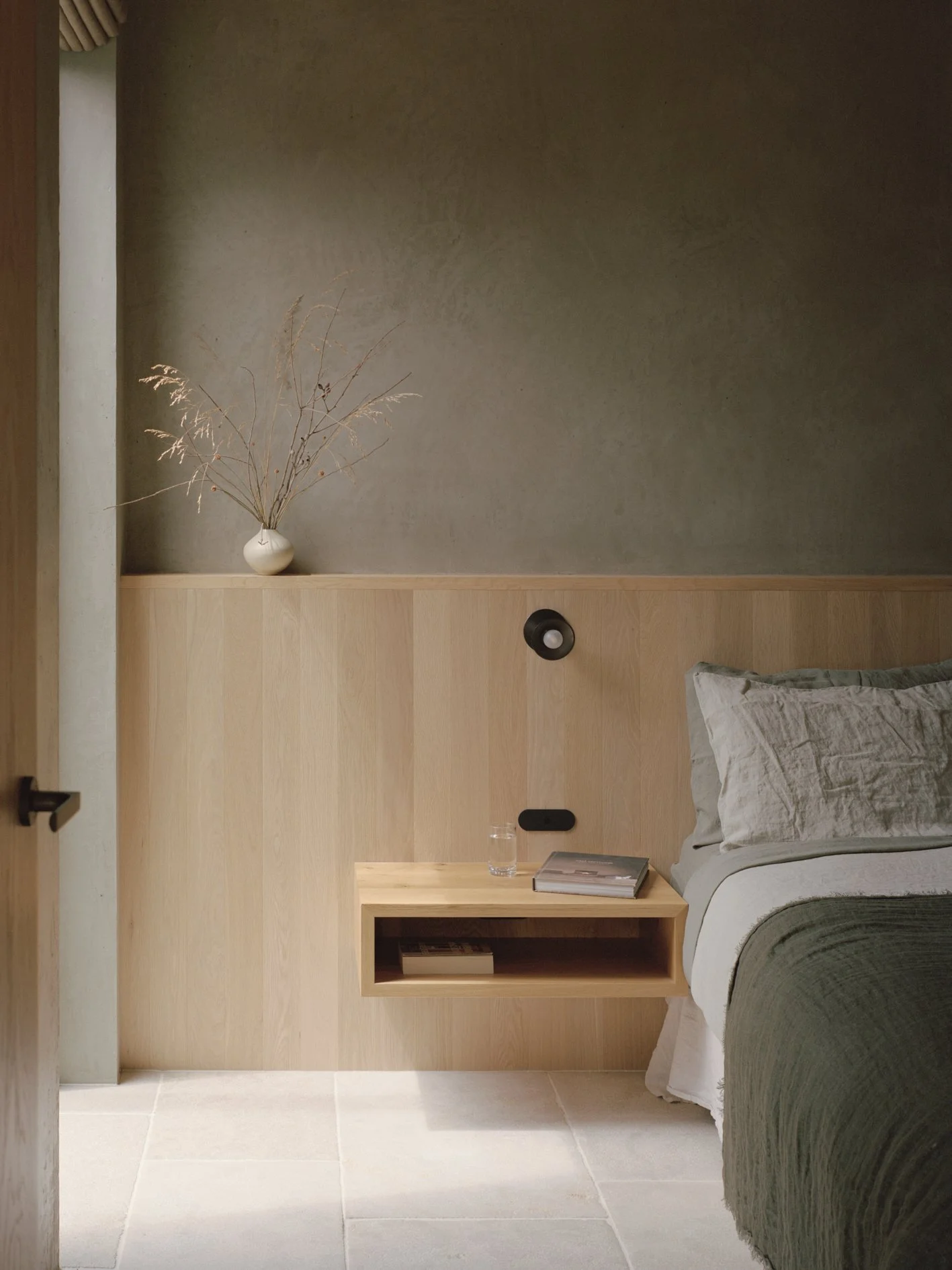
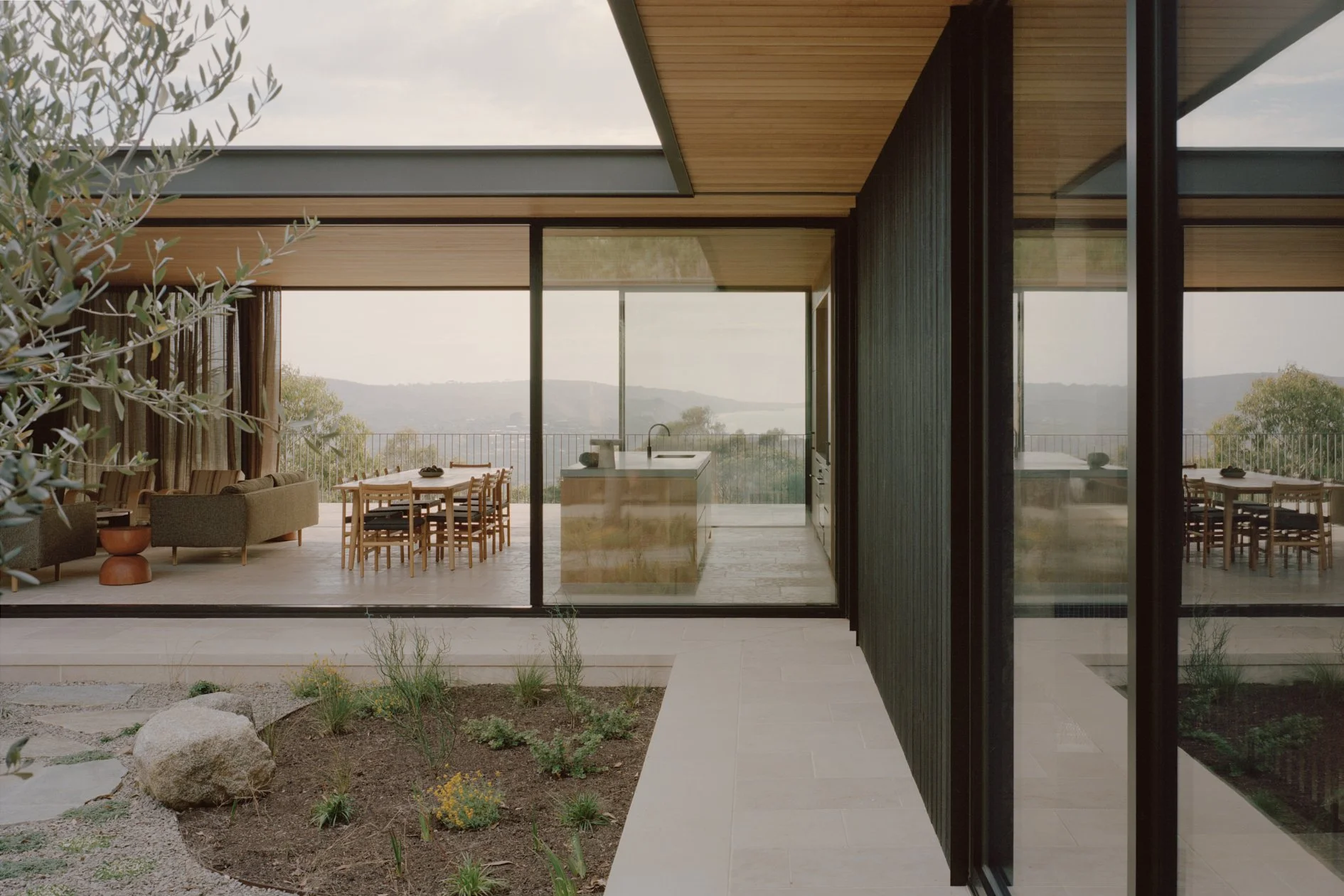
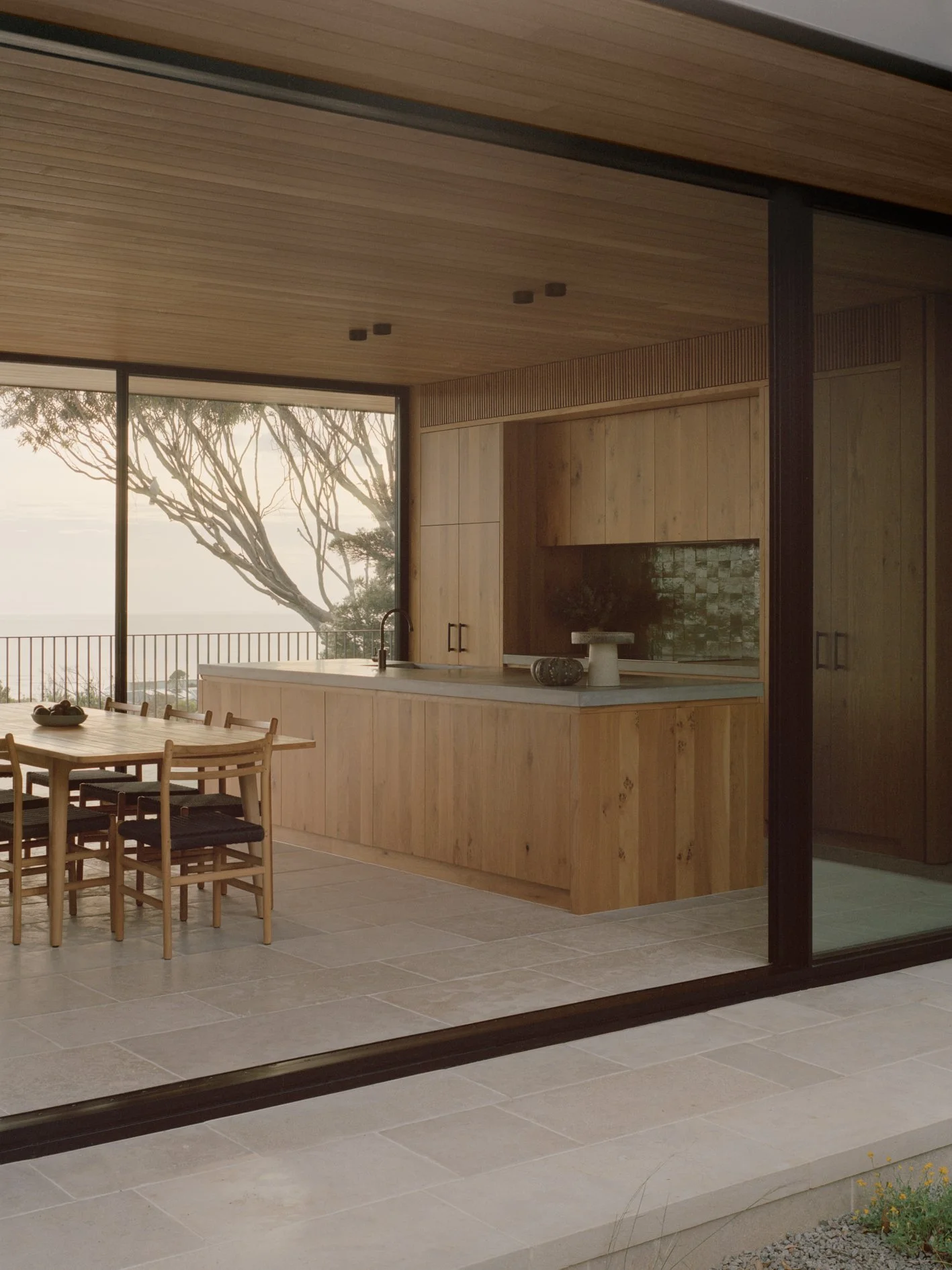
On the first floor, the main living areas are positioned to make the most of the site’s outlook and the home’s connection to the courtyard. The open-plan kitchen, dining and living area forms the social centre of the house, anchored by an in-situ concrete island bench designed for gathering, preparation and informal conversation. Nearby, three bedrooms provide accommodation for family and guests, while the main bedroom and ensuite open directly to the terrace.
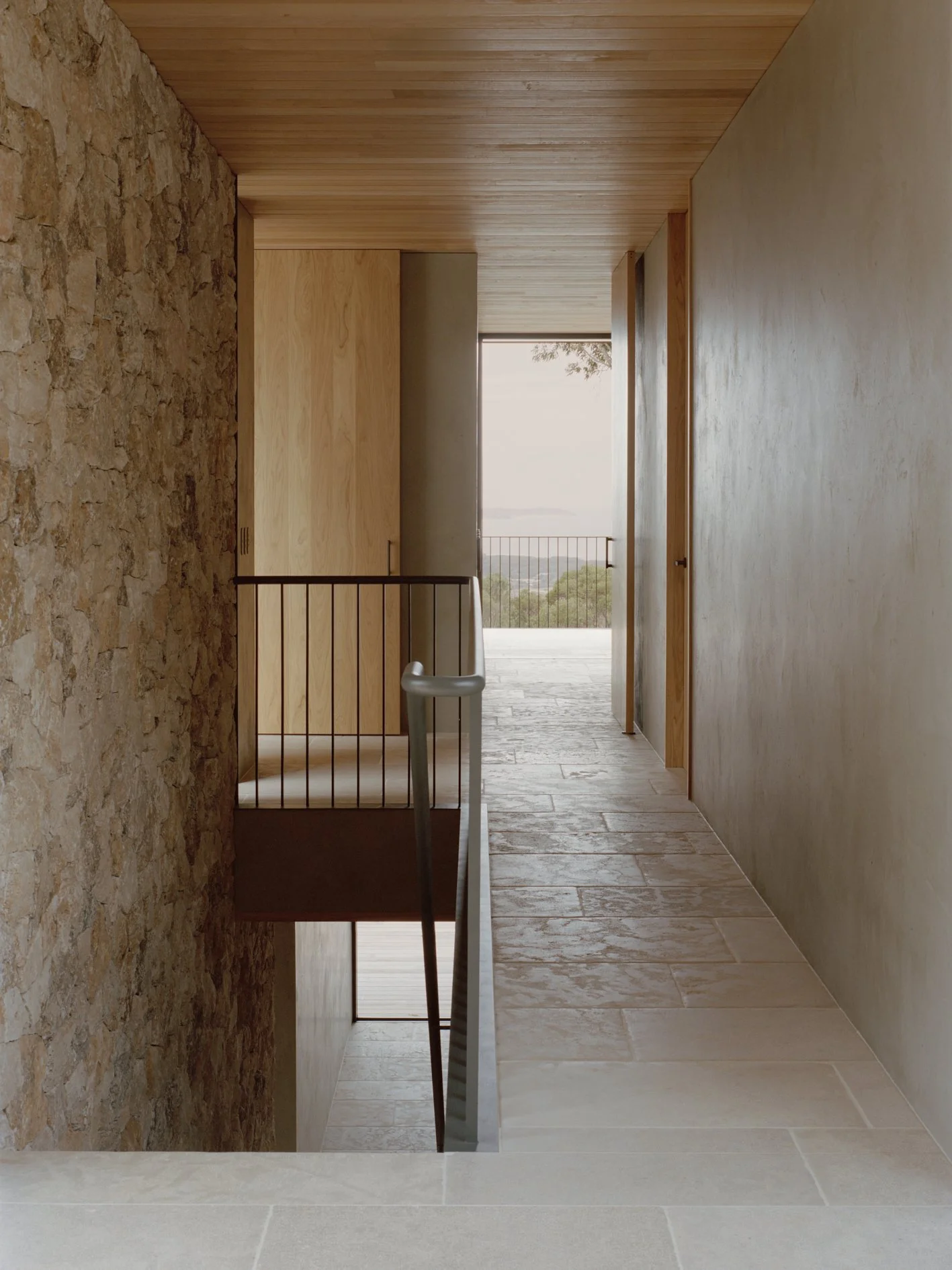
A concise material palette gives the interior its calm and tactile character, allowing texture, light and proportion to shape the atmosphere of the home. Charred timber, glass, sandstone, spotted gum, French oak and limestone are used with restraint, creating continuity across the architecture and interiors. Spotted gum lines the ceilings, adding warmth above the pale stone floors, while solid French oak brings depth to the kitchen joinery.
Limestone extends through the interior and continues outward to the courtyard terraces and connecting walkways, strengthening the relationship between inside and outside. This material continuity is especially clear around the central garden, designed in collaboration with Eckersley Garden Architecture, where natural stone crazy paving introduces a mid-century quality and three mature olive trees bring shade, stillness and a sense of permanence.
The exterior combines charred timber and glass for a streamlined presence, balanced by the weight and texture of sandstone walls. Within the home, the pared-back design allows the materials and coastal setting to remain the focus. Every element supports a sense of ease, from the open living spaces to the sheltered courtyard and the simple movement between rooms, terraces and garden.