The East 72° Residence by Studio Homzstead
Entrusting a home to a designer across continents demands an uncommon degree of faith. For a San Francisco-based family renovating their 1,500-square-foot apartment in Mumbai, that trust was placed entirely in Hormuzd Katrak of Studio Homzstead, with the project conceived, developed, and executed over five months without the clients visiting the site once.
Every decision was navigated through late-night video calls, photographs, and detailed updates exchanged across time zones, guided by a clear directive to eliminate sharp edges and cultivate softness throughout the home.
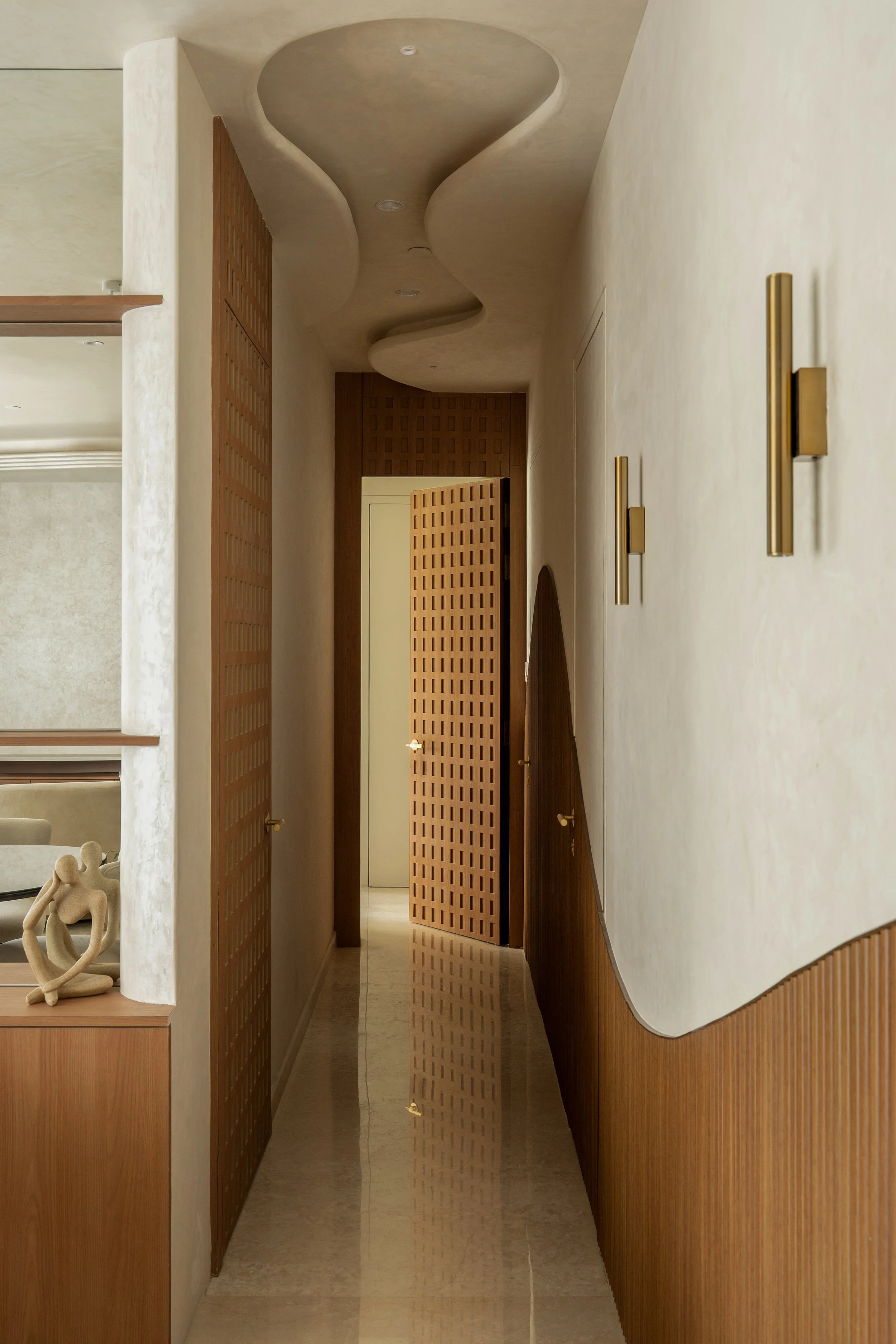
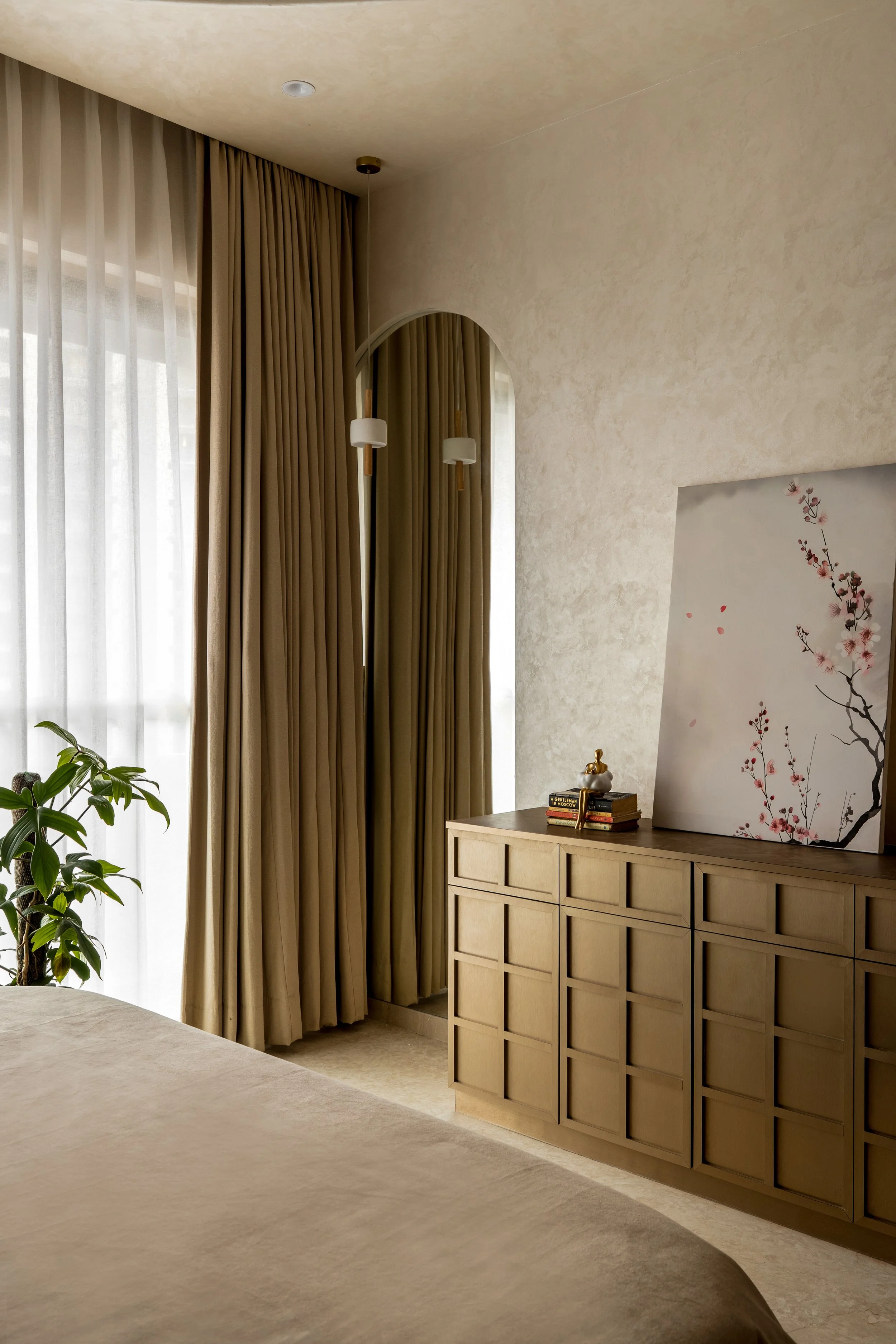
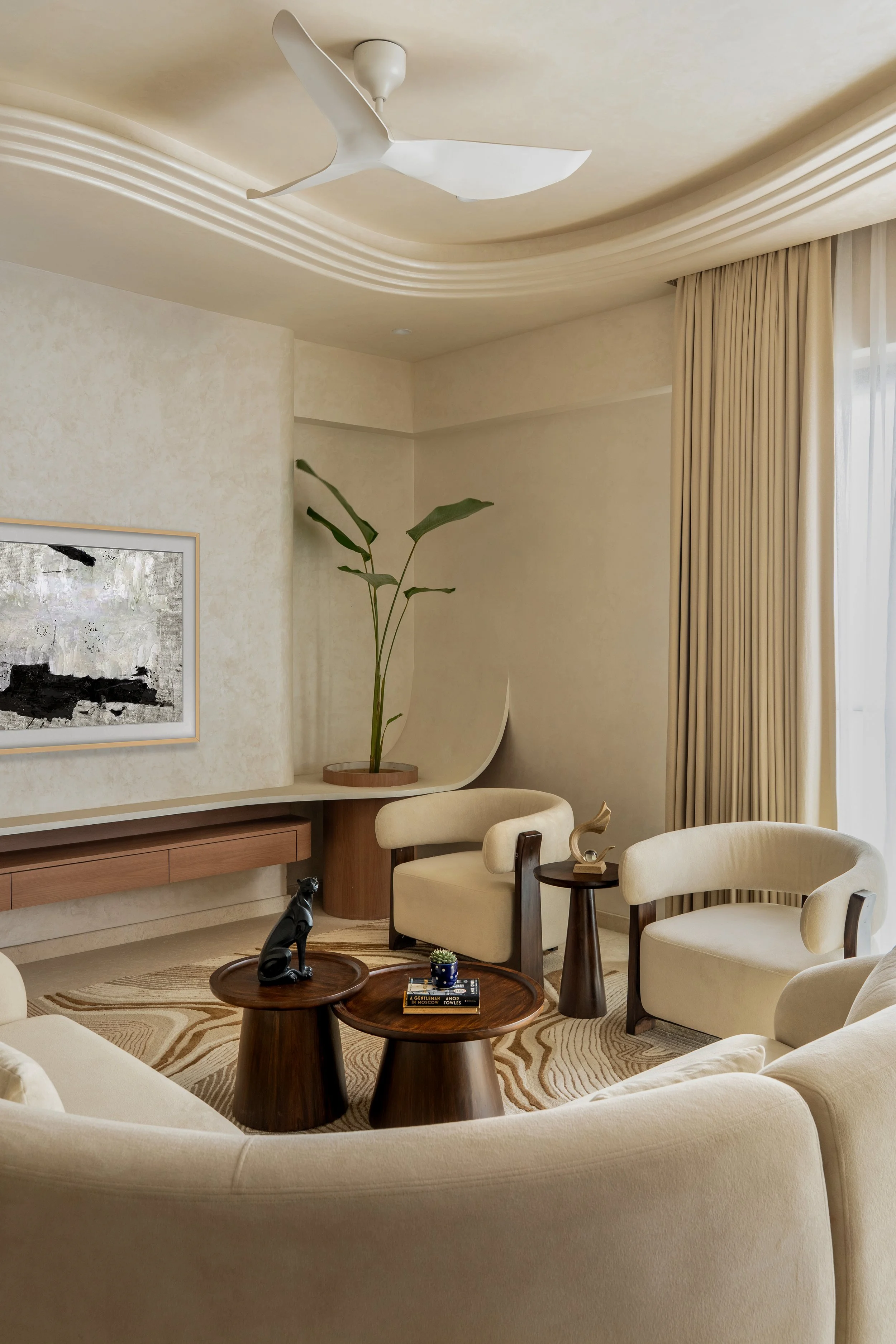
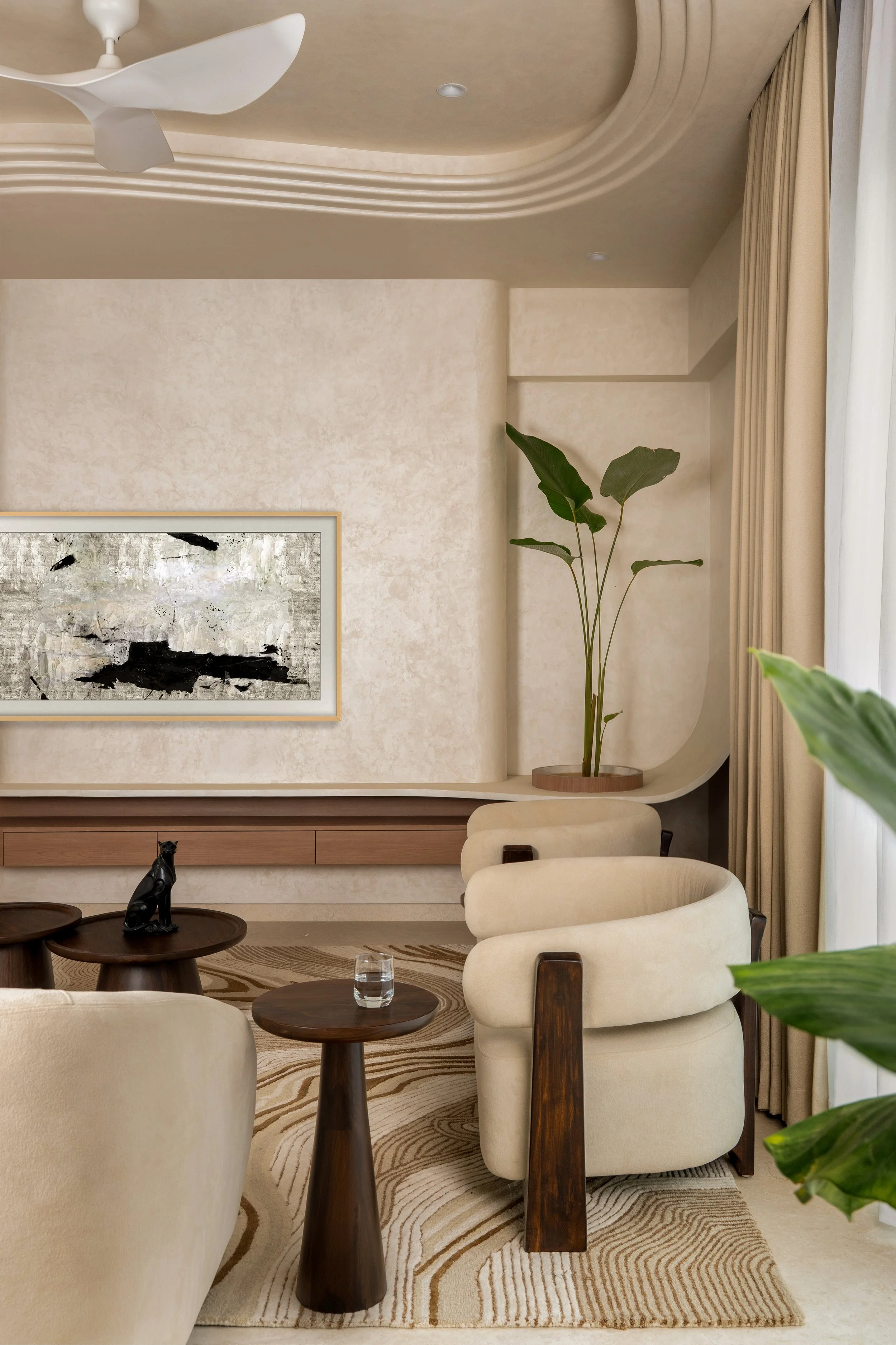
While the aesthetic direction began with references to Japandi sensibilities and a palette of beige neutrals, the apartment moves beyond stylistic imitation. Studio Homzstead translated the restraint and clarity associated with Japandi interiors into a language informed by Indian materials and fully bespoke craftsmanship. Sinuous forms shape the spatial experience, most notably in a four-layered false ceiling composed of meandering lines with integrated cove lighting that steps down in fluid succession, casting a diffused glow that enhances the apartment’s proportions.
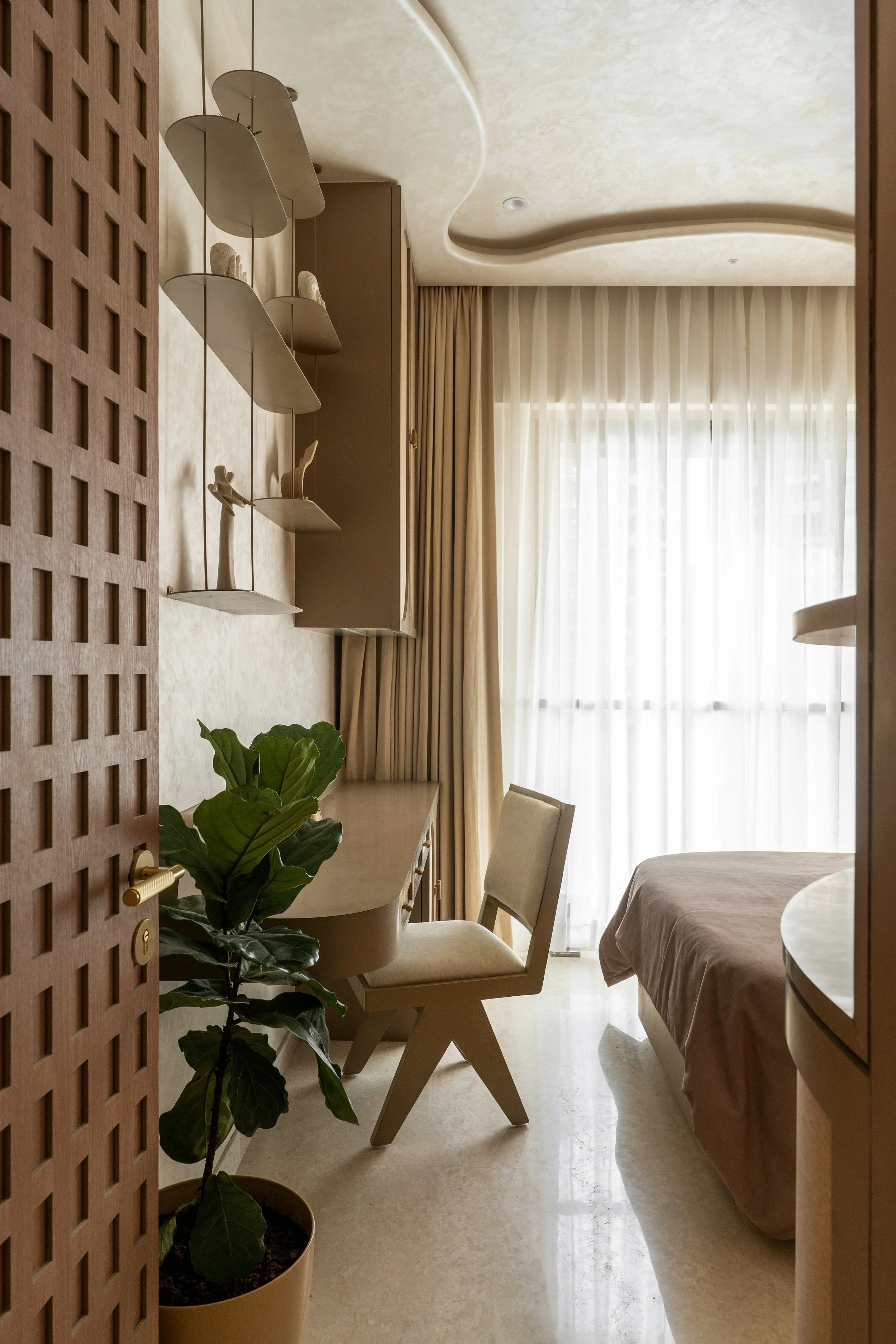
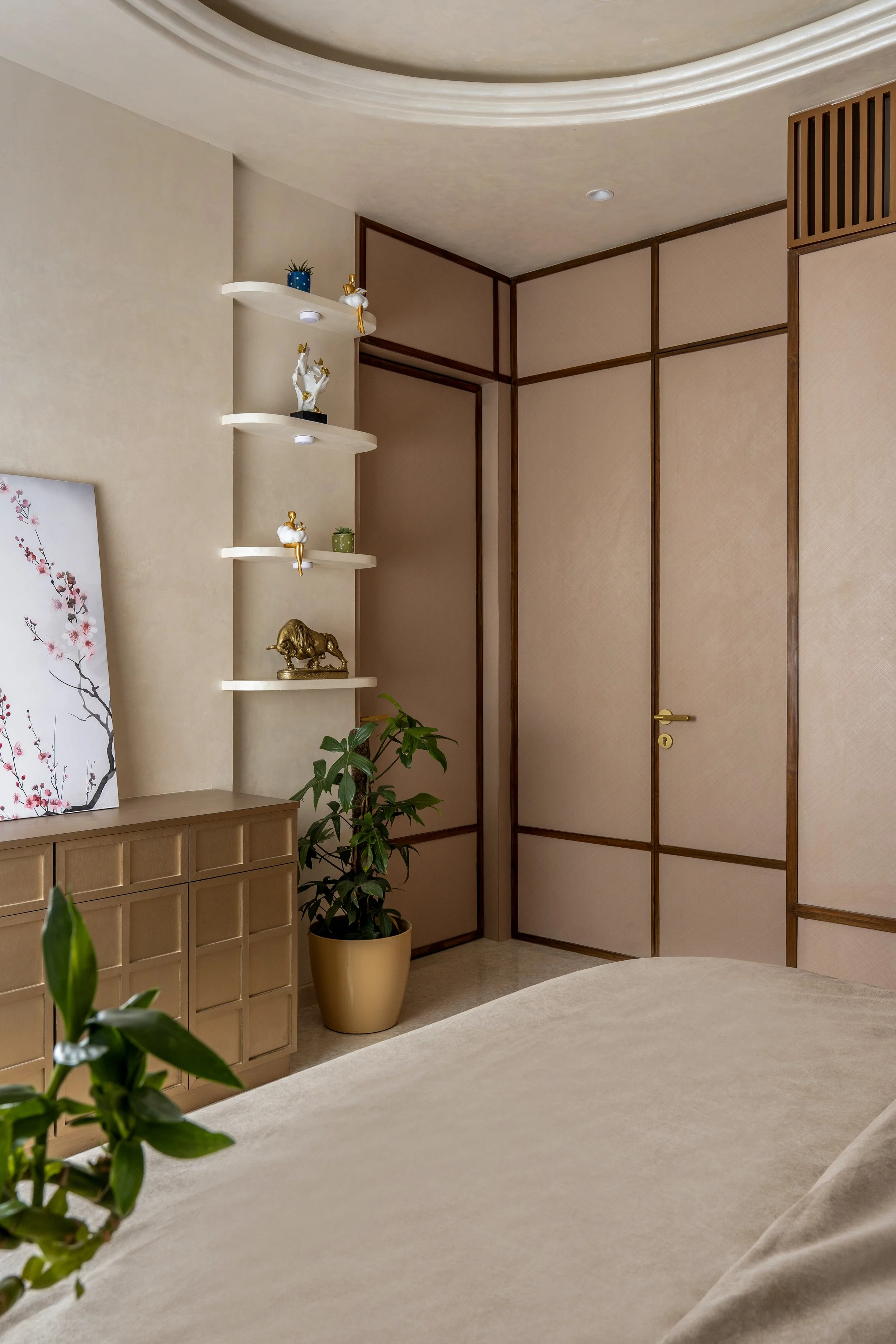
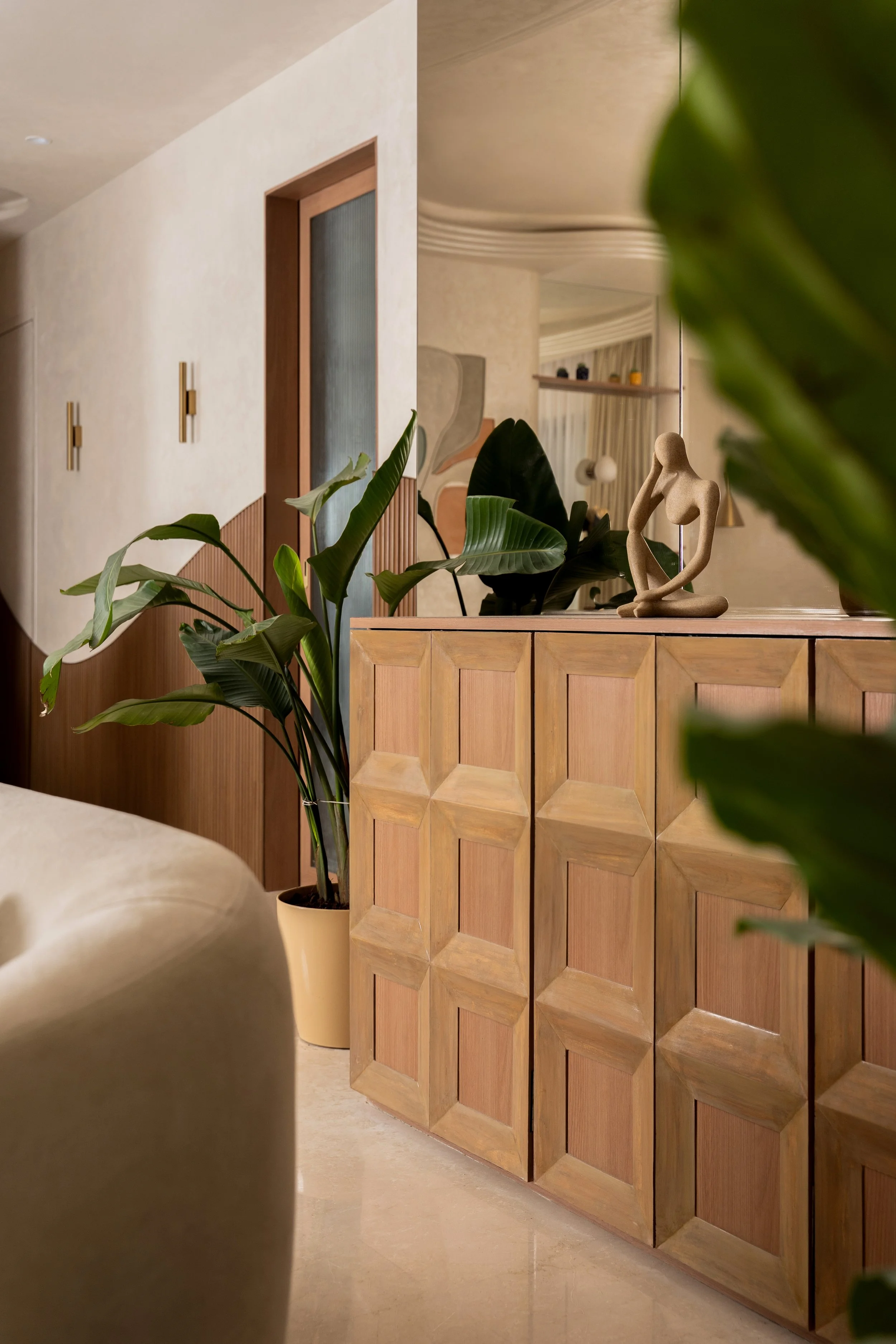
Walls finished in earthy chromatic stucco were carefully calibrated for light reflectivity so that the interiors maintain a luminous quality even during Mumbai’s monsoon season. Teakwood serves as the material anchor, appearing consistently in furniture, door frames, and architectural details, while grid patterns punctuate the curvature through bedroom doors and the living room console, establishing a measured counterpoint to the sweeping lines overhead.
Natural elements are woven into the built framework through planters integrated within dining benches and the living room media unit, allowing greenery to become part of the architectural composition rather than an afterthought. Strategically placed mirrors extend sightlines and amplify daylight, reinforcing a sense of openness within the apartment’s compact footprint.
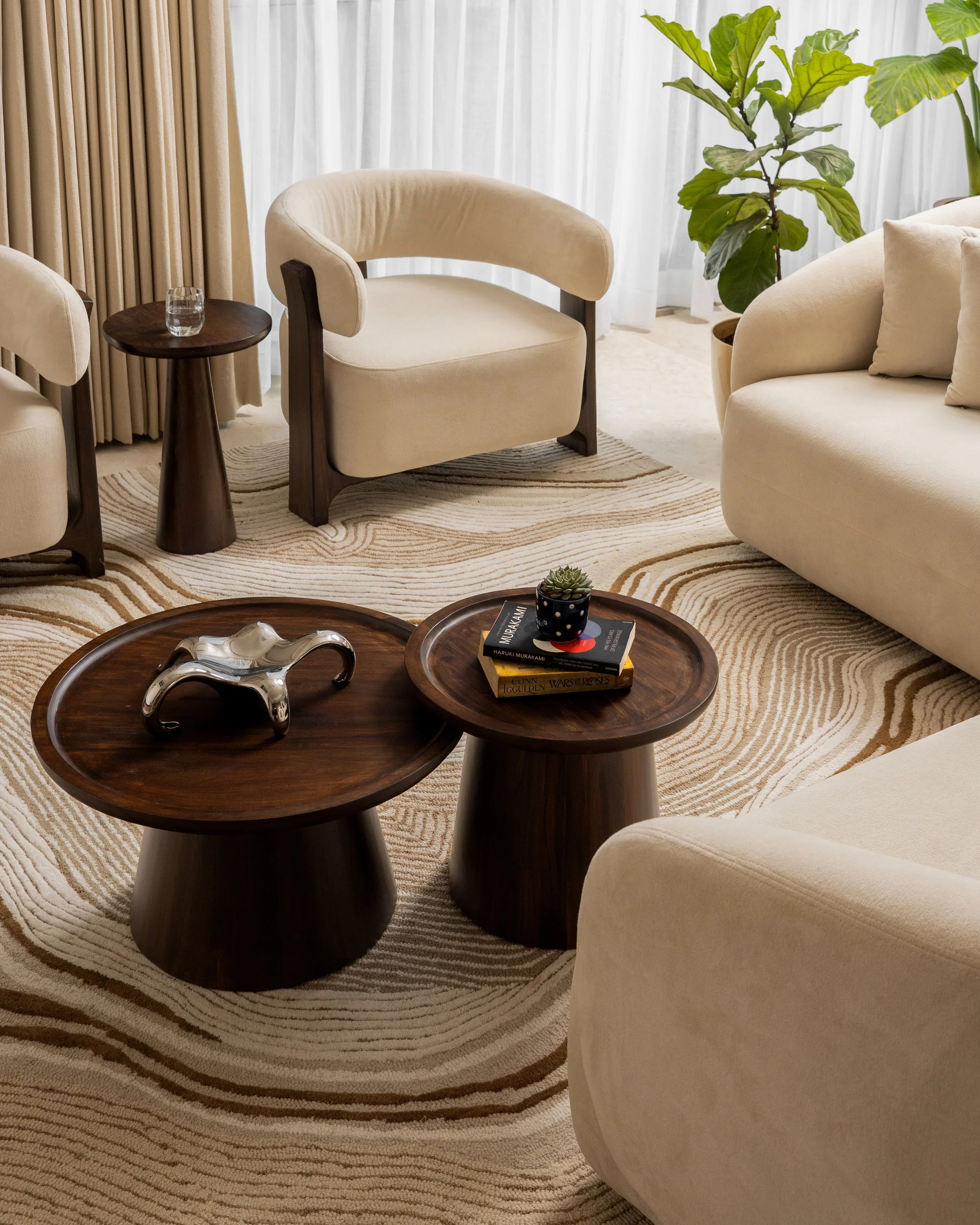
Within the living area, flexibility informs both layout and furniture selection, as an organic sectional is paired with movable armchairs that can be rearranged to accommodate varying social configurations. The television is concealed within a treatment that merges seamlessly into the media console, preserving visual continuity across the wall plane. A handwoven rug sourced from Banaras anchors the seating arrangement, echoing the ceiling’s flowing geometry and creating dialogue between overhead contours and the tactile surface below.
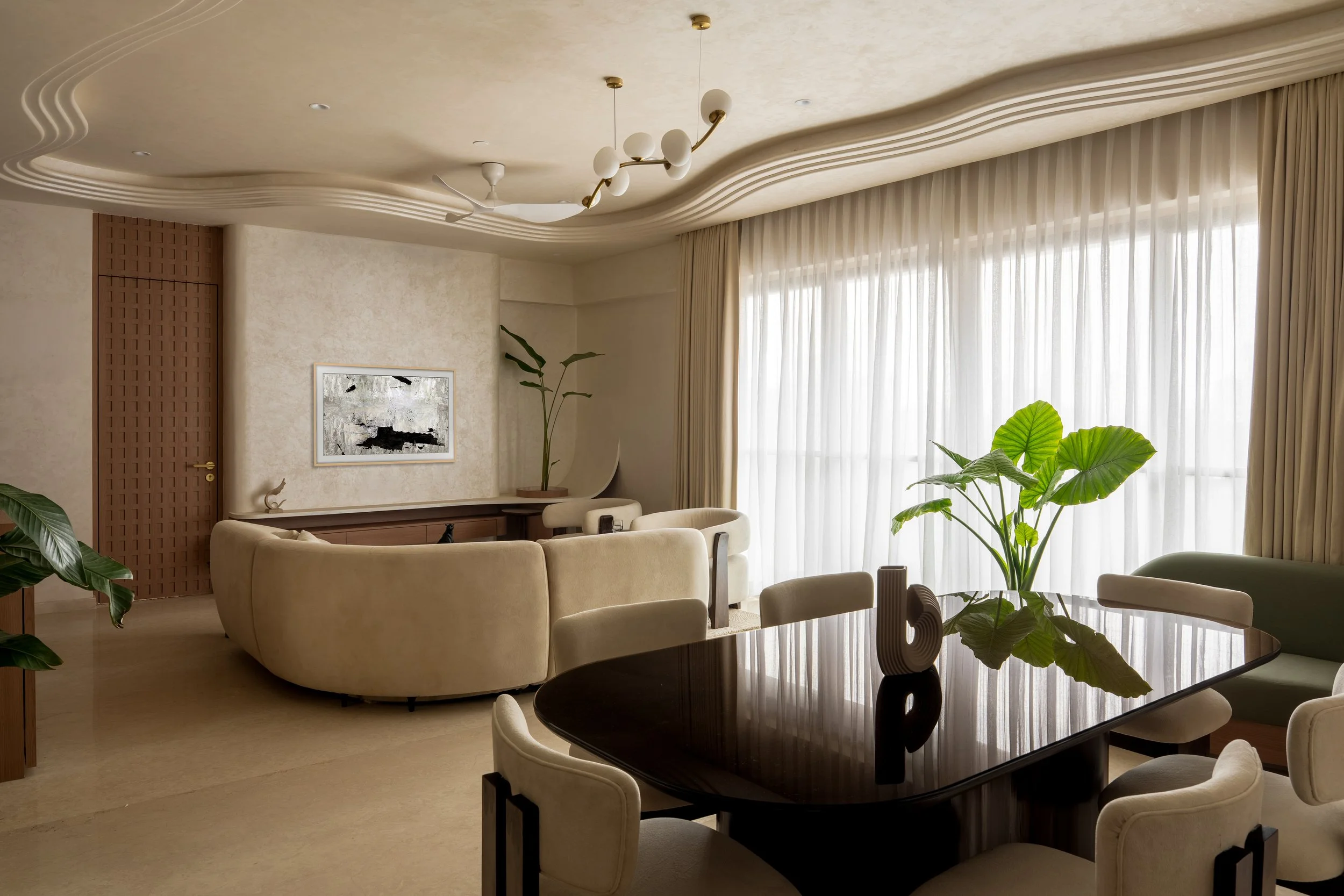
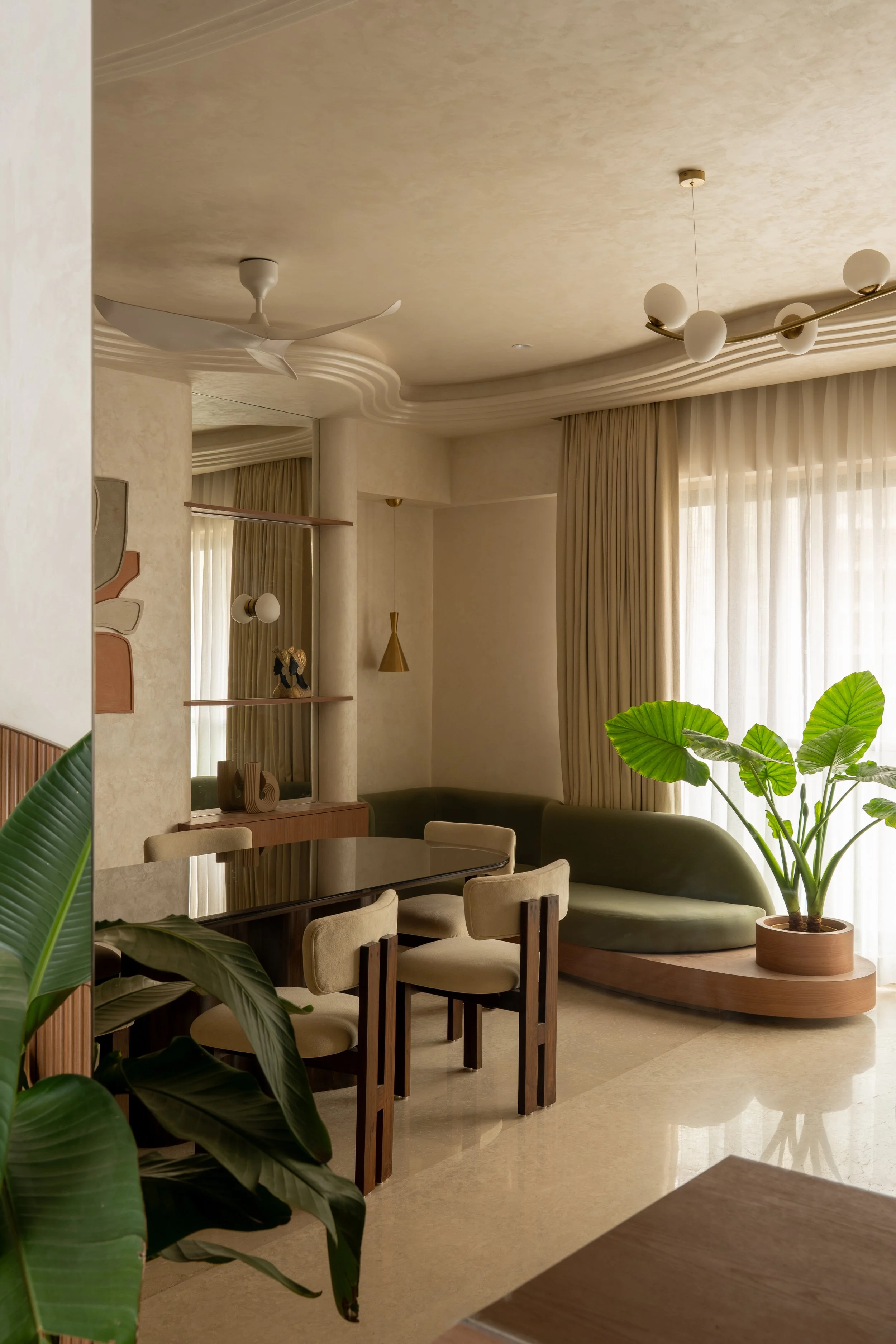
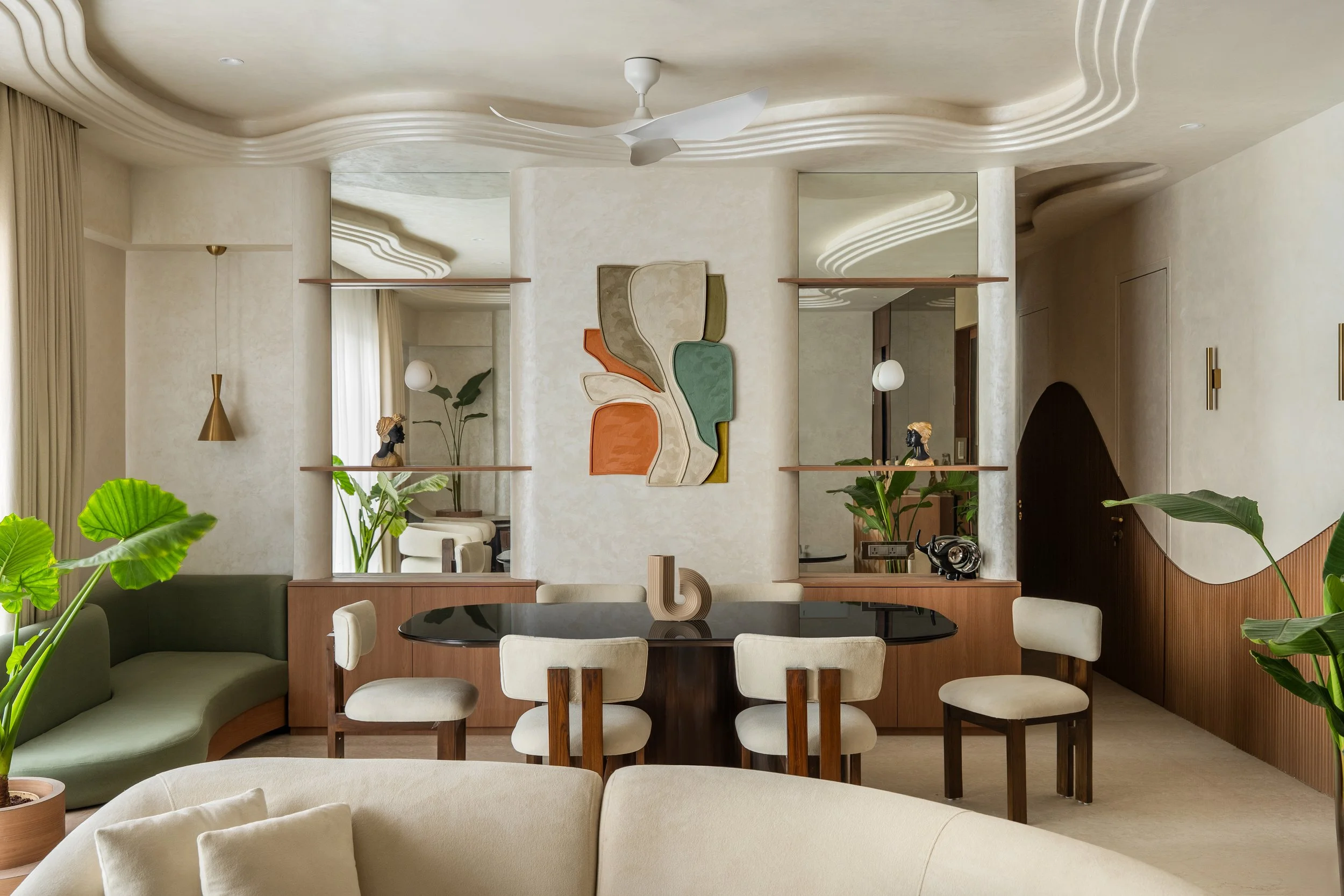
The dining area centers on an eight-seater table featuring a tinted glass top resting on a teakwood base that underwent multiple refinements to ensure ergonomic comfort from every angle. An abstract three-dimensional wall installation anchors the ensemble, complemented by open shelving above and concealed storage below, balancing display with utility. In the adjoining kitchen, a disciplined dichromatic scheme pairs beige cabinetry with black-profile glass shutters, while tandem drawers optimize storage efficiency. The counter and backsplash are finished in the same vitrified tile, strengthening material continuity, and a former staff room has been reconfigured into a dual-access storage area to improve circulation and free up valuable square footage elsewhere in the home.
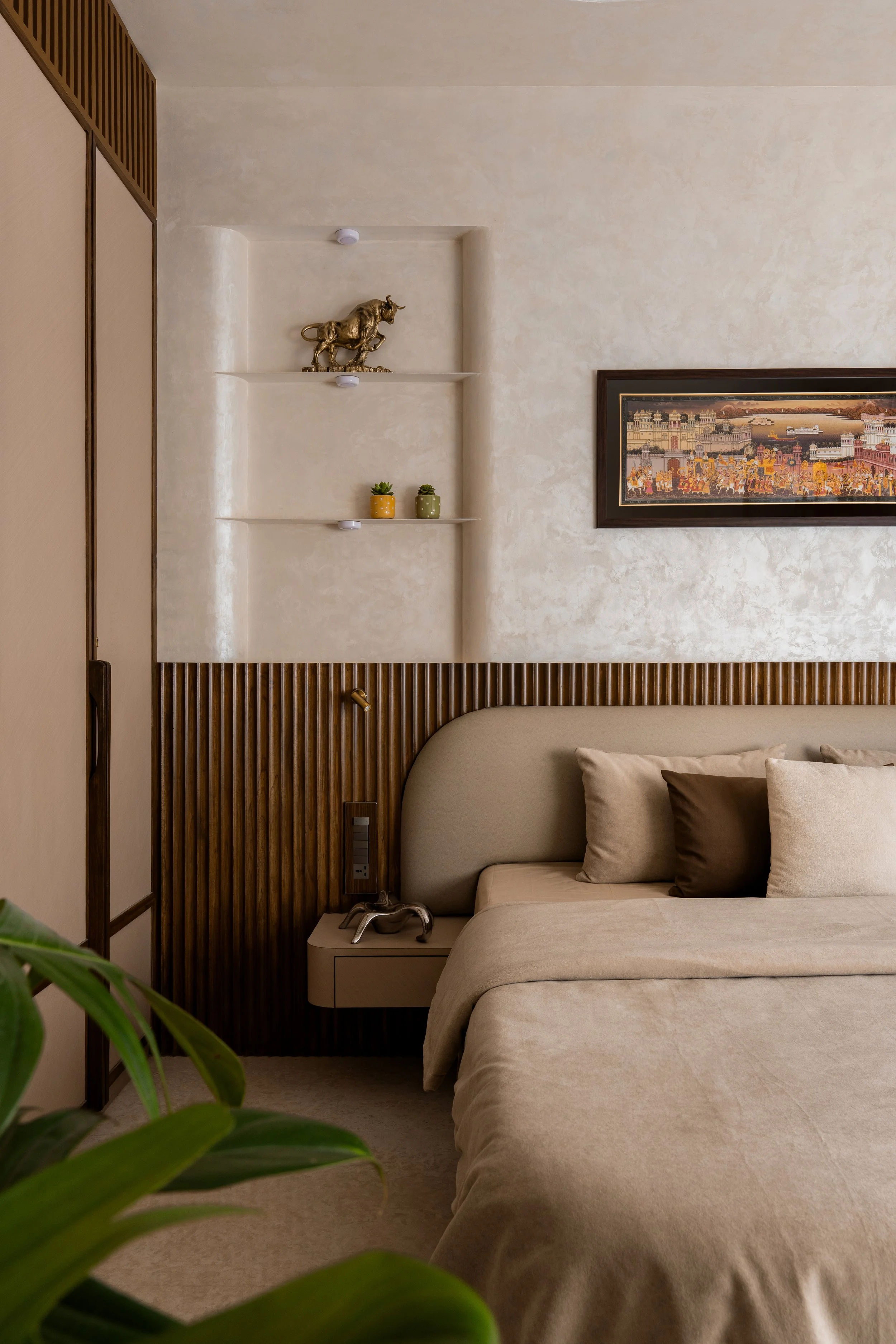
The master bedroom interprets a restrained palette of brown and beige through proportion and layering, with beige surfaces forming the majority, supported by expanses of wood and subtle golden accents. A floating bed with a fluted headboard sits beneath an imperial-style painting sourced from an artisan in Udaipur, reinforcing the project’s commitment to Indian craft traditions while adding tonal warmth.
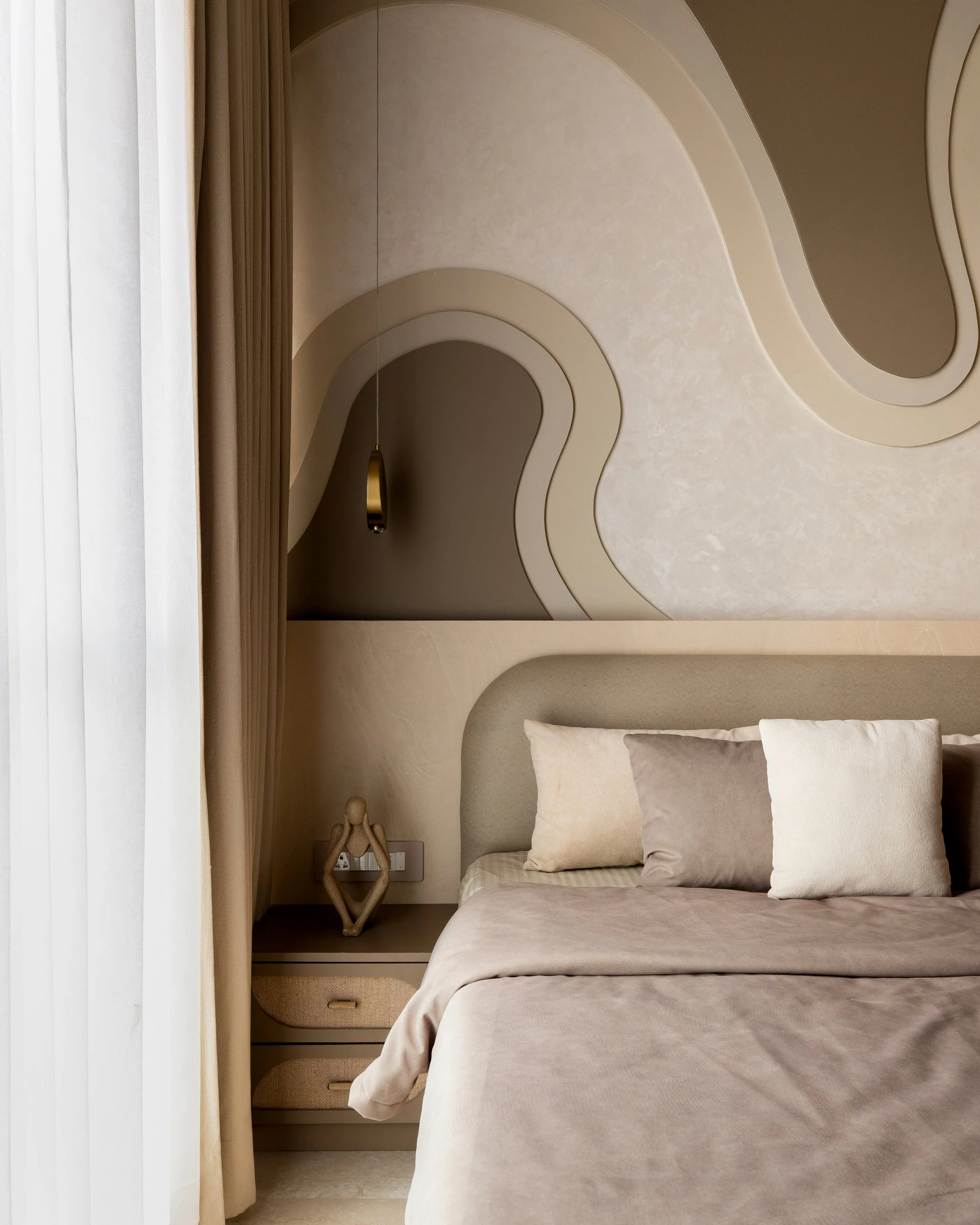
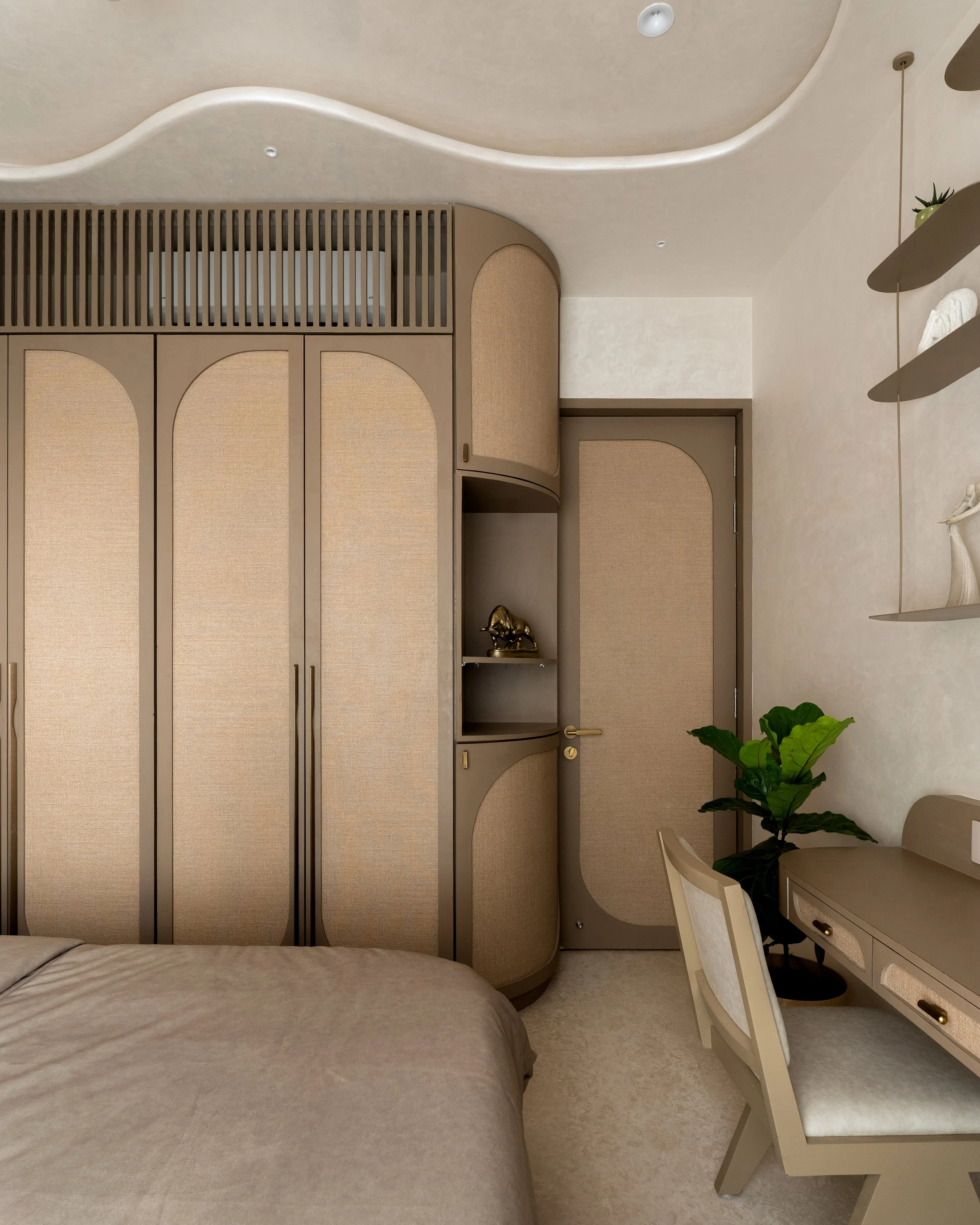
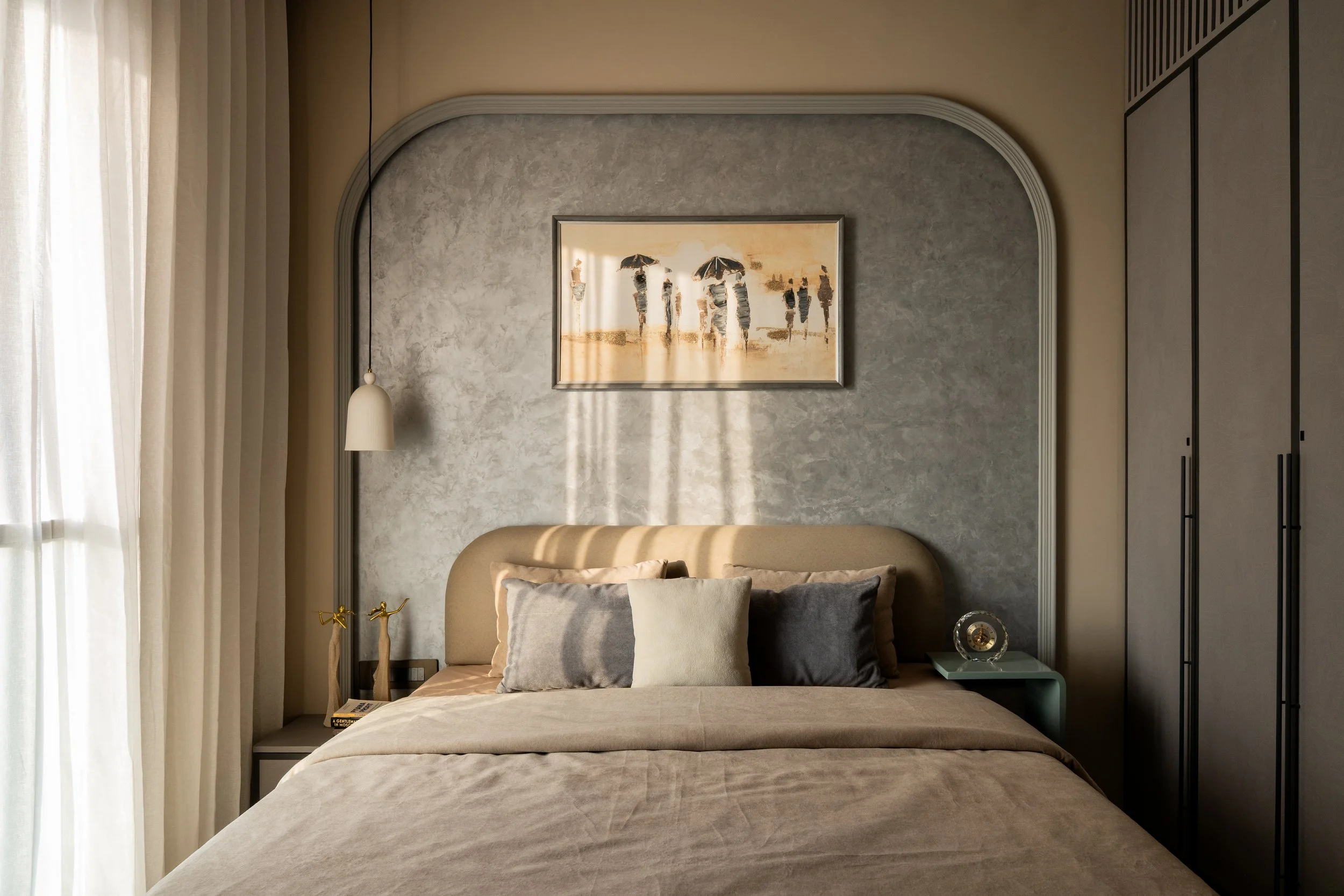
One guest bedroom derives its palette from a two-decade-old artwork created by a friend of the clients, allowing shades of grey and taupe to guide the selection of finishes and textiles. The painting is framed within a shoulder archway that lends architectural emphasis, while textured laminate wardrobes outlined in dark trims introduce depth and contrast. The second guest bedroom embraces a more expressive identity, where PU-finished amorphous panels trace contoured lines from window to ceiling to evoke airflow, and a compact study corner is integrated with careful attention to efficiency and scale.