Studio YC by Formant Studio
In León, Mexico, Formant Studio brings sculptural clarity and a warm material palette to a photographer’s workspace, shaped around the changing qualities of daylight.
Light is both a working tool and a defining presence at Studio YC. Designed by Formant Studio for photographer Yessica Cruz, the space in León, Guanajuato, pairs the practical demands of a photography studio with the intimacy of a personal atelier. Pale curtains, warm plaster and broad steel surfaces create a setting that feels composed yet receptive to change.
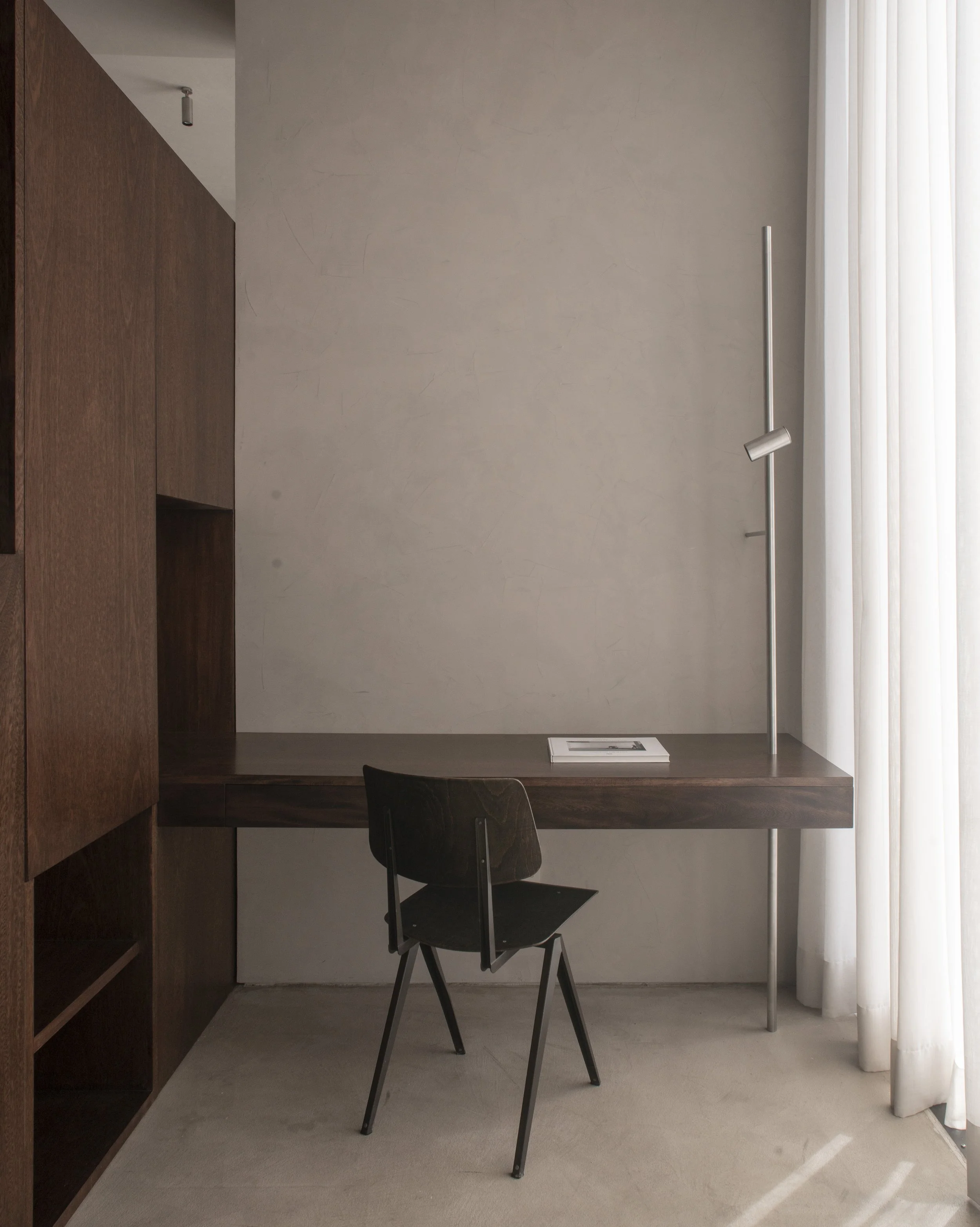
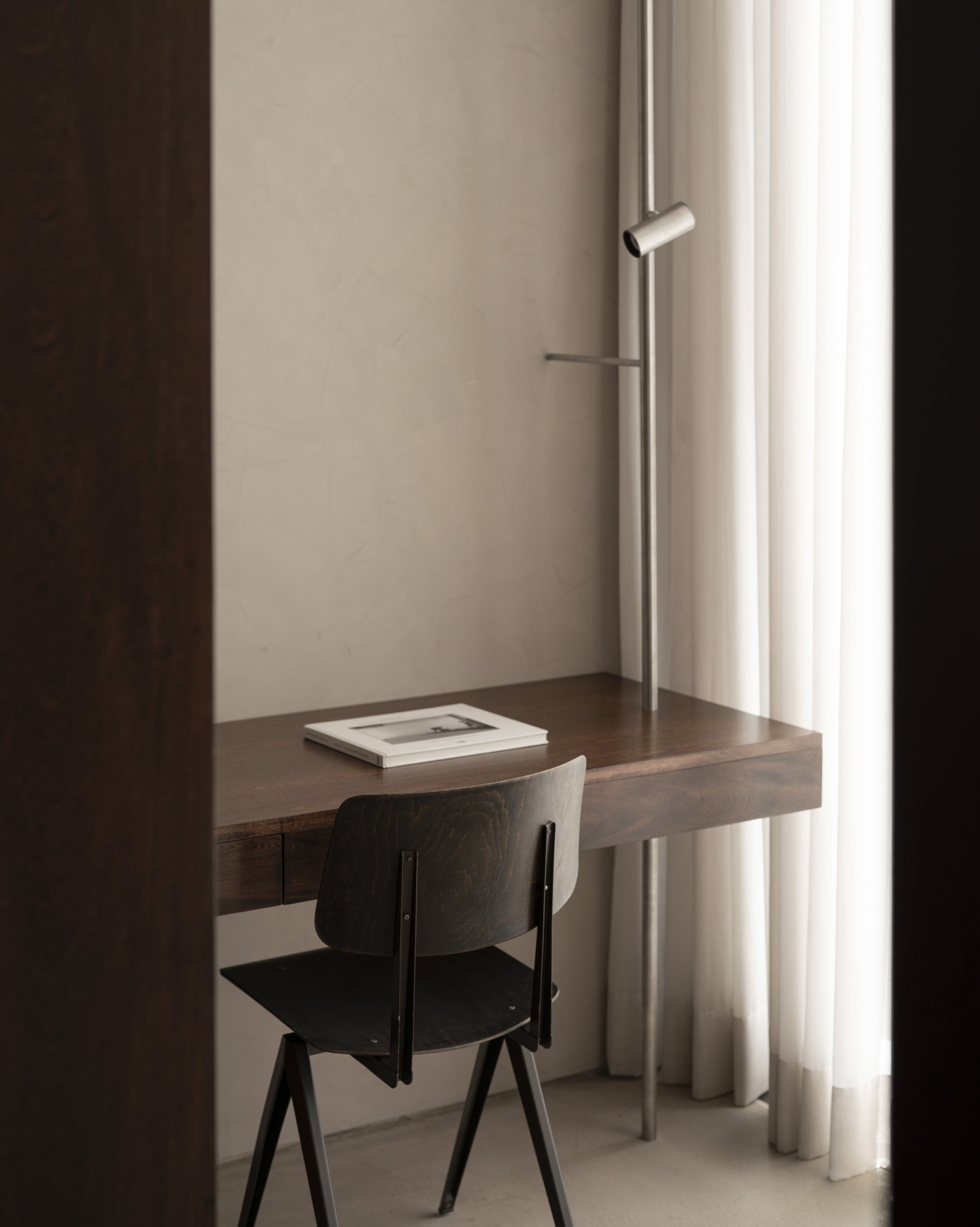
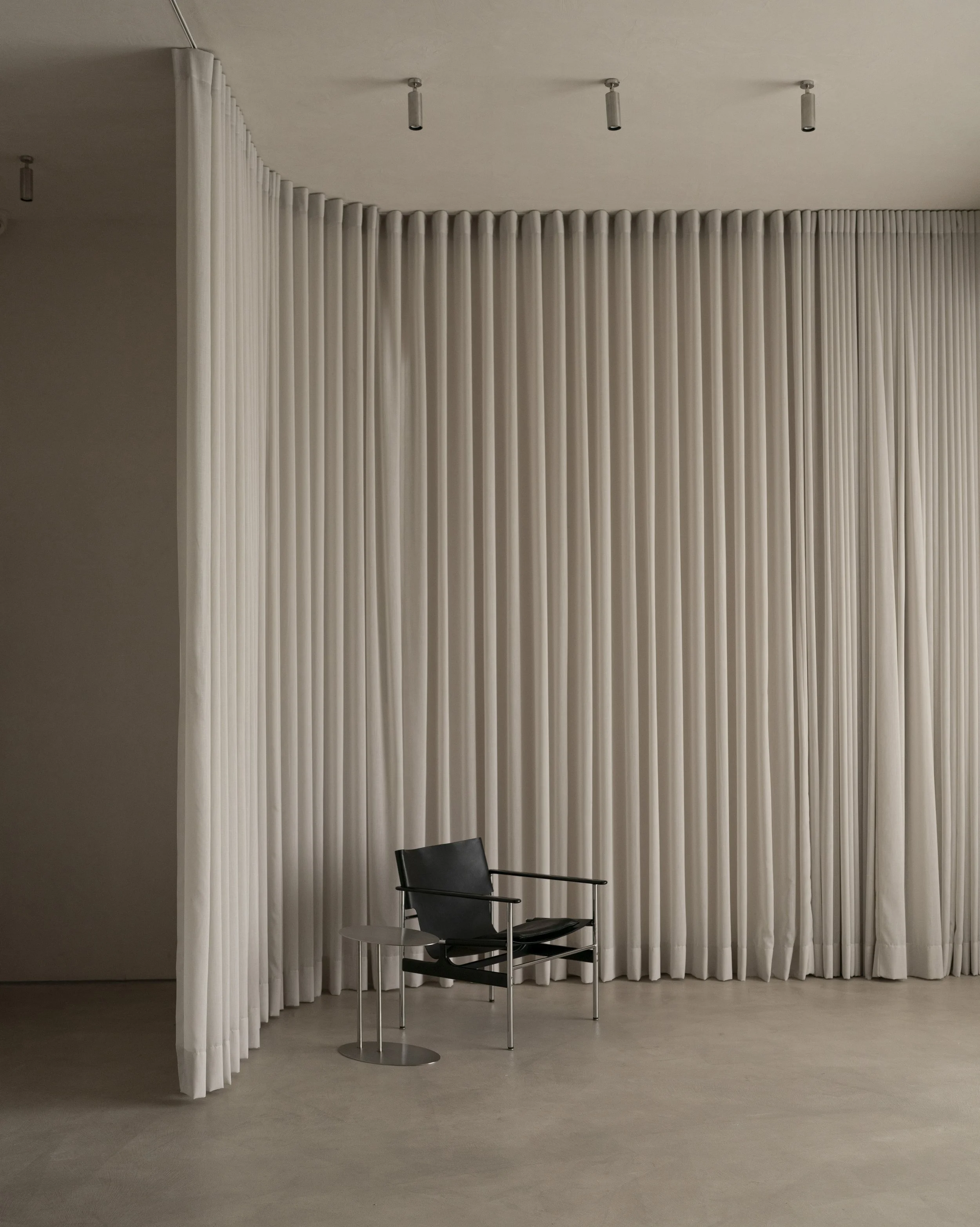
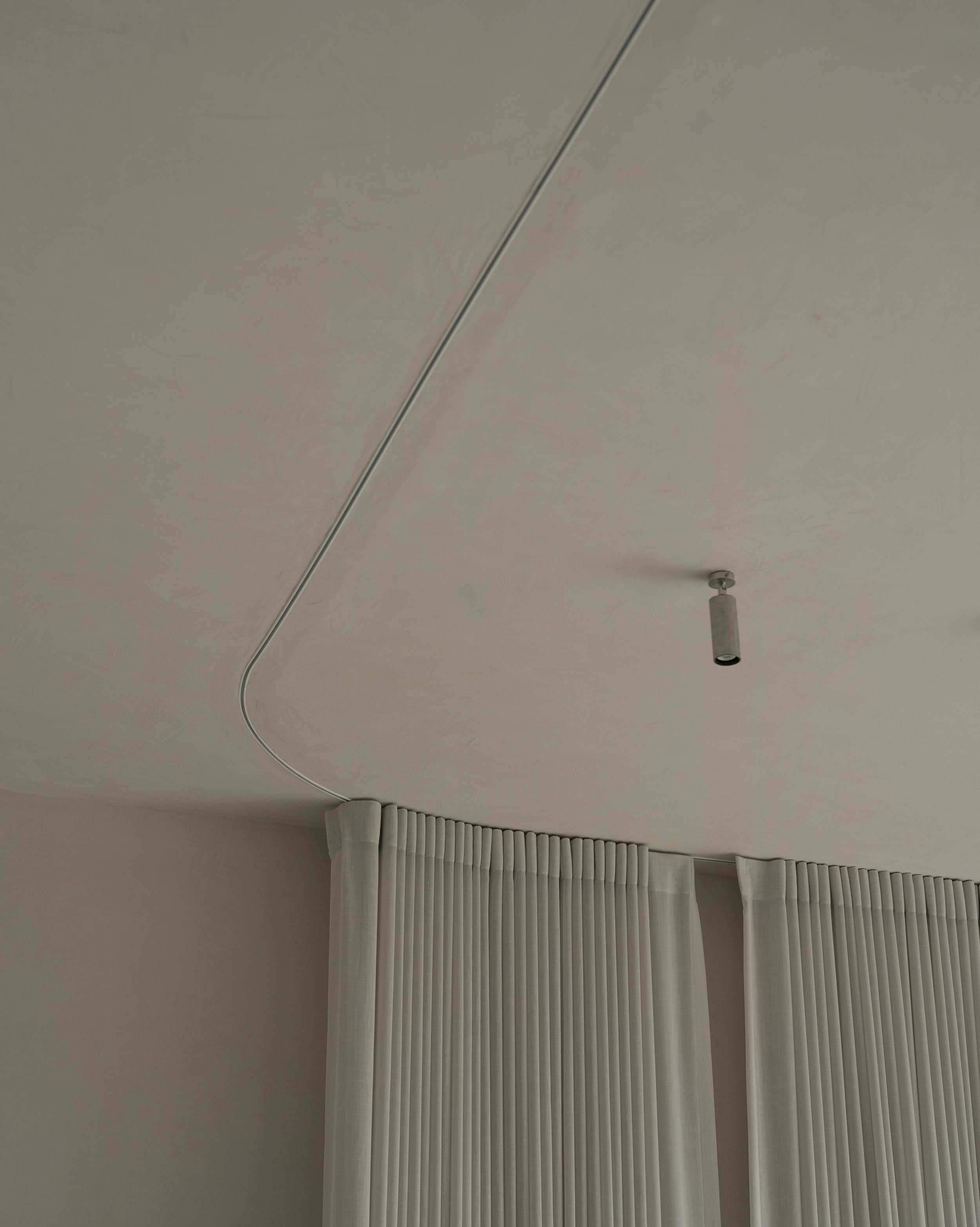
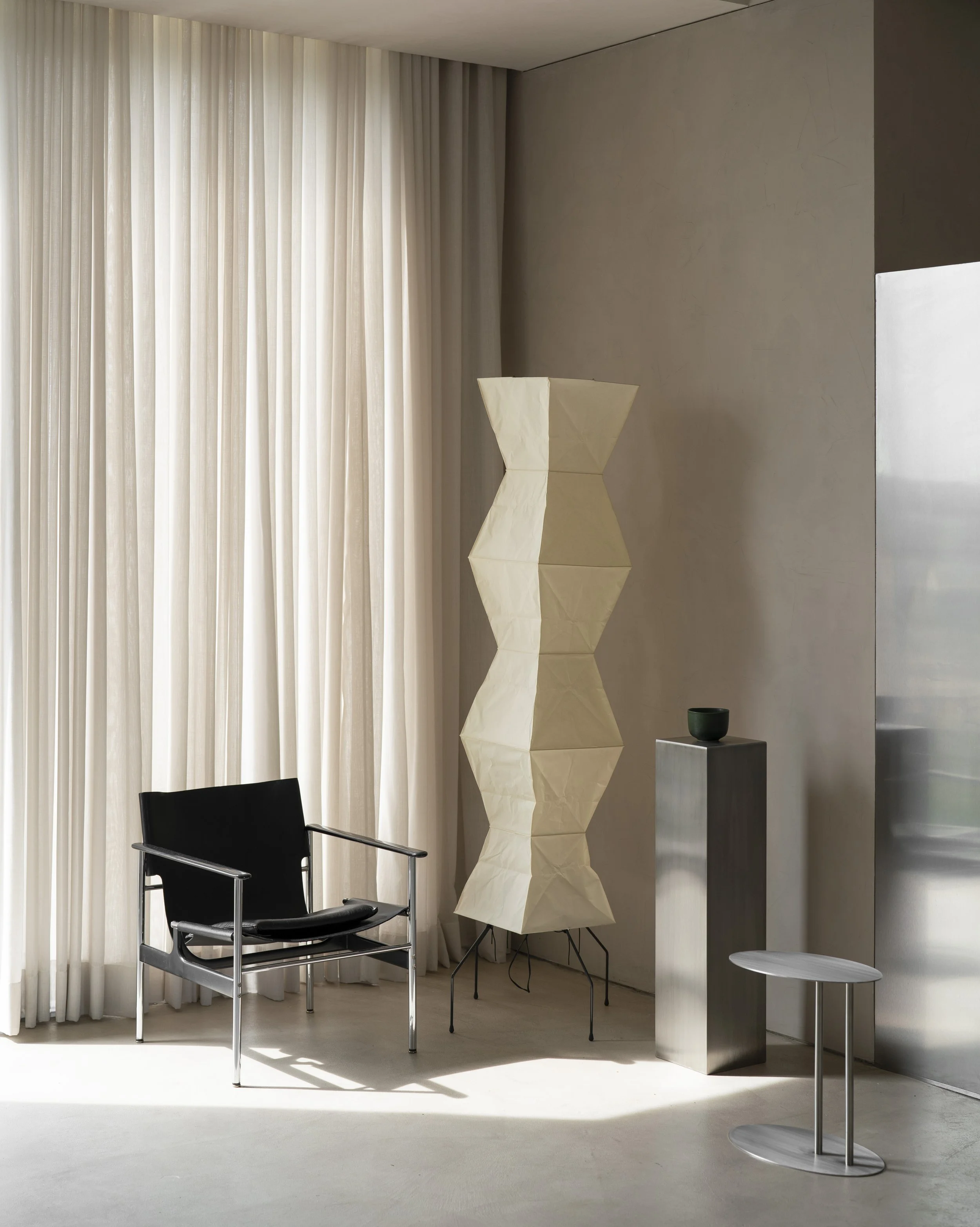
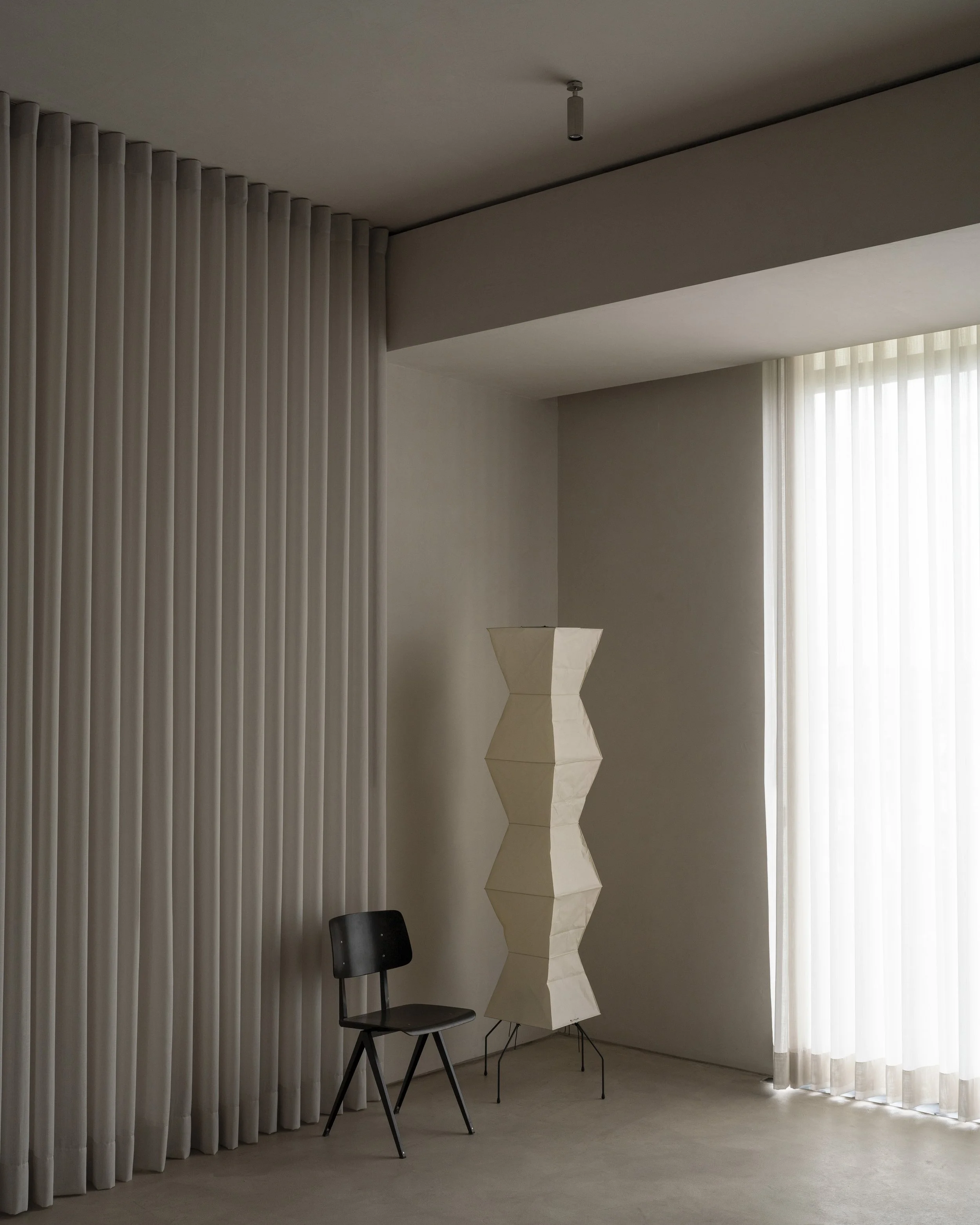
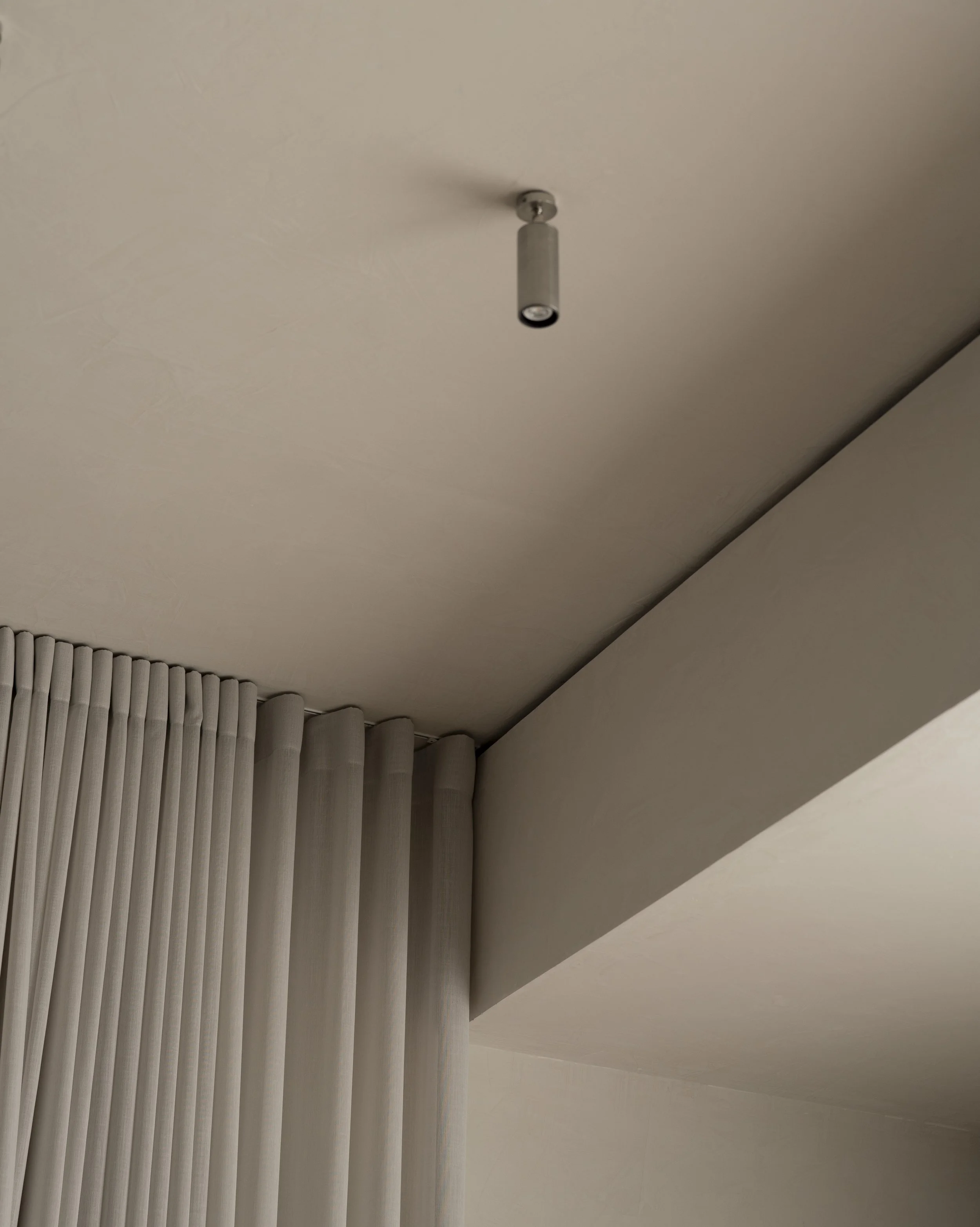
Full-height curtains are central to this approach. Following a gently curving ceiling track, they draw a soft boundary through the interior, their folds tempering its rectilinear forms. The fabric filters daylight throughout the day, allowing Cruz to adjust the atmosphere to suit different photographic requirements. In the process, an essential piece of studio equipment becomes one of the project’s most expressive architectural elements.
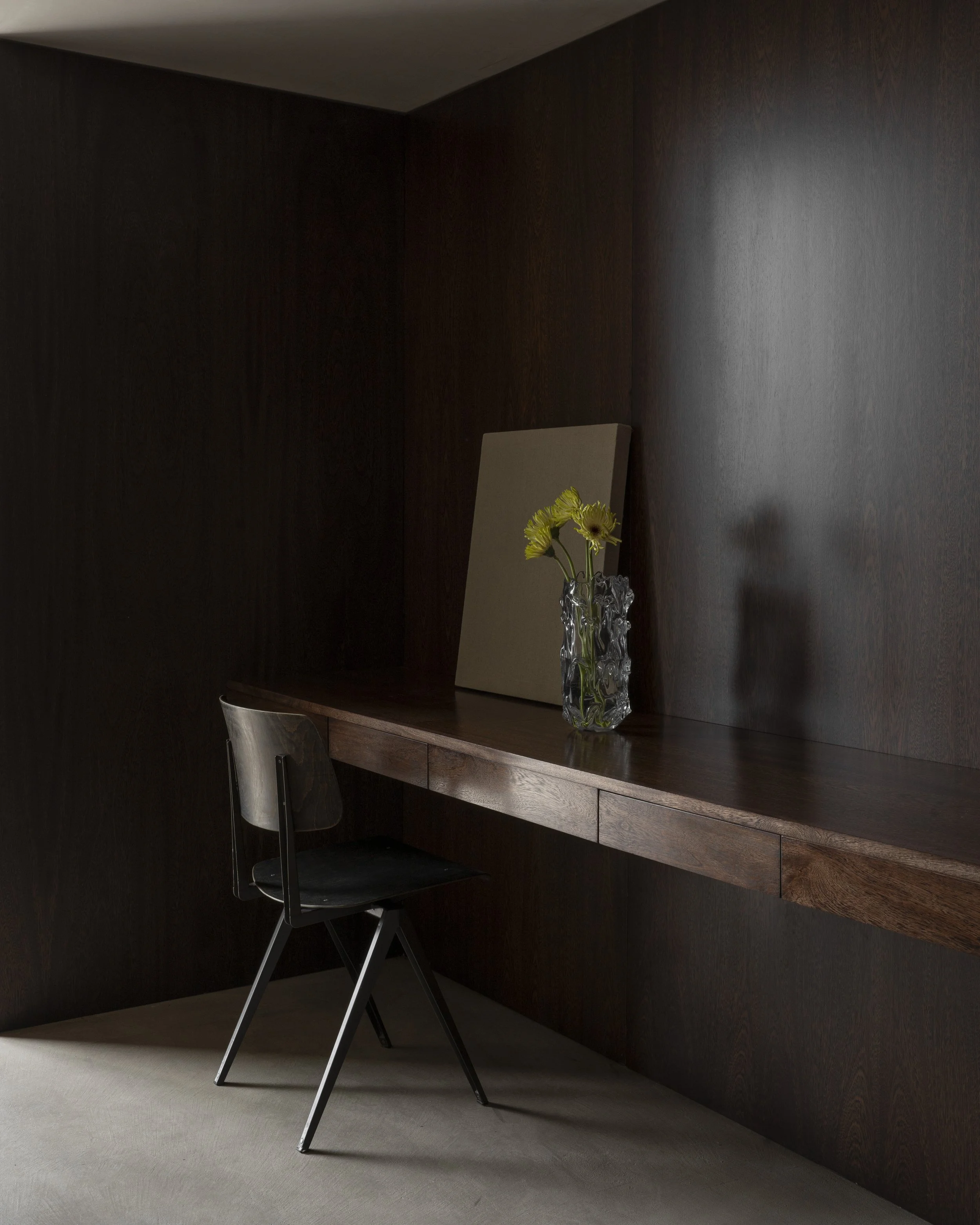
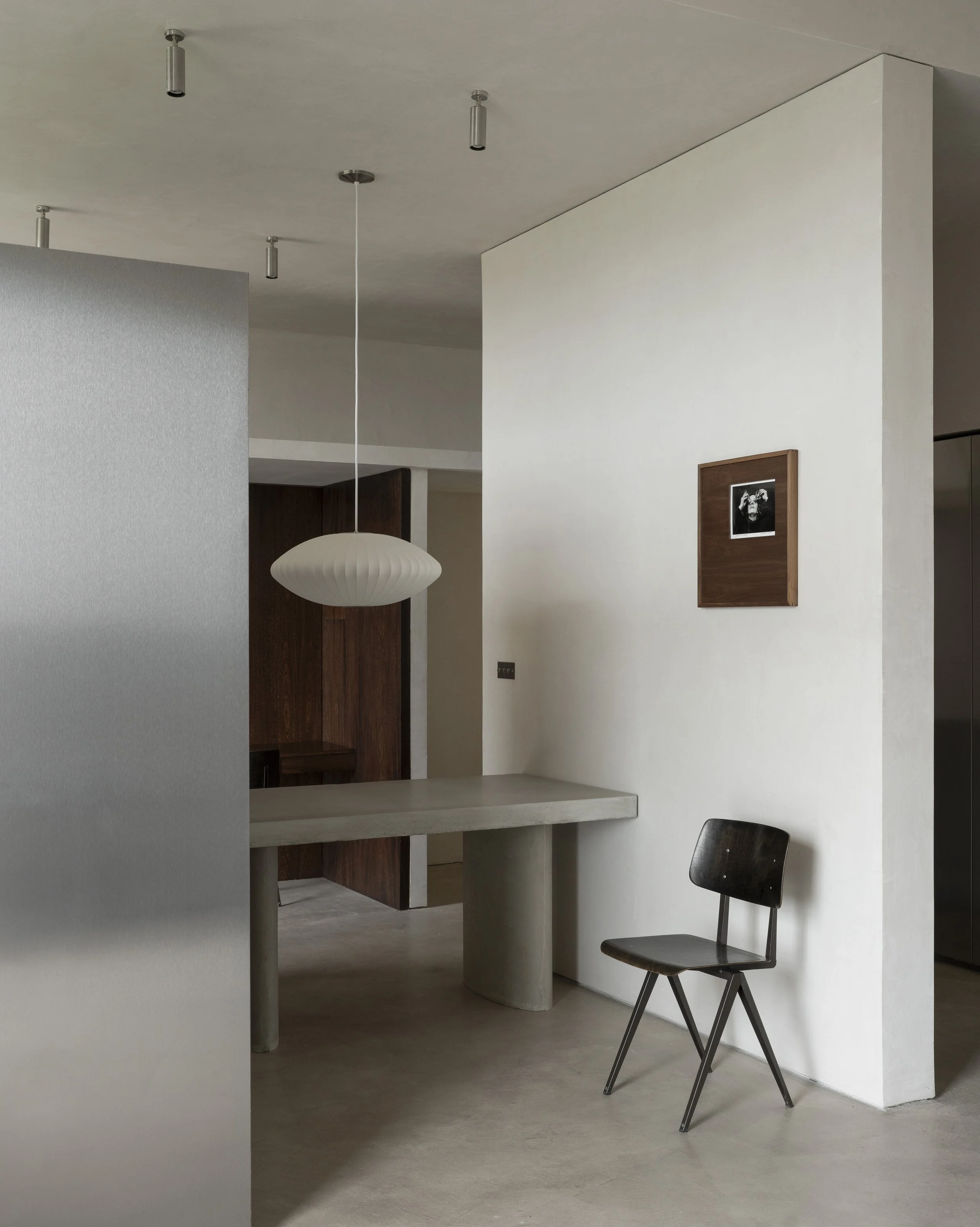
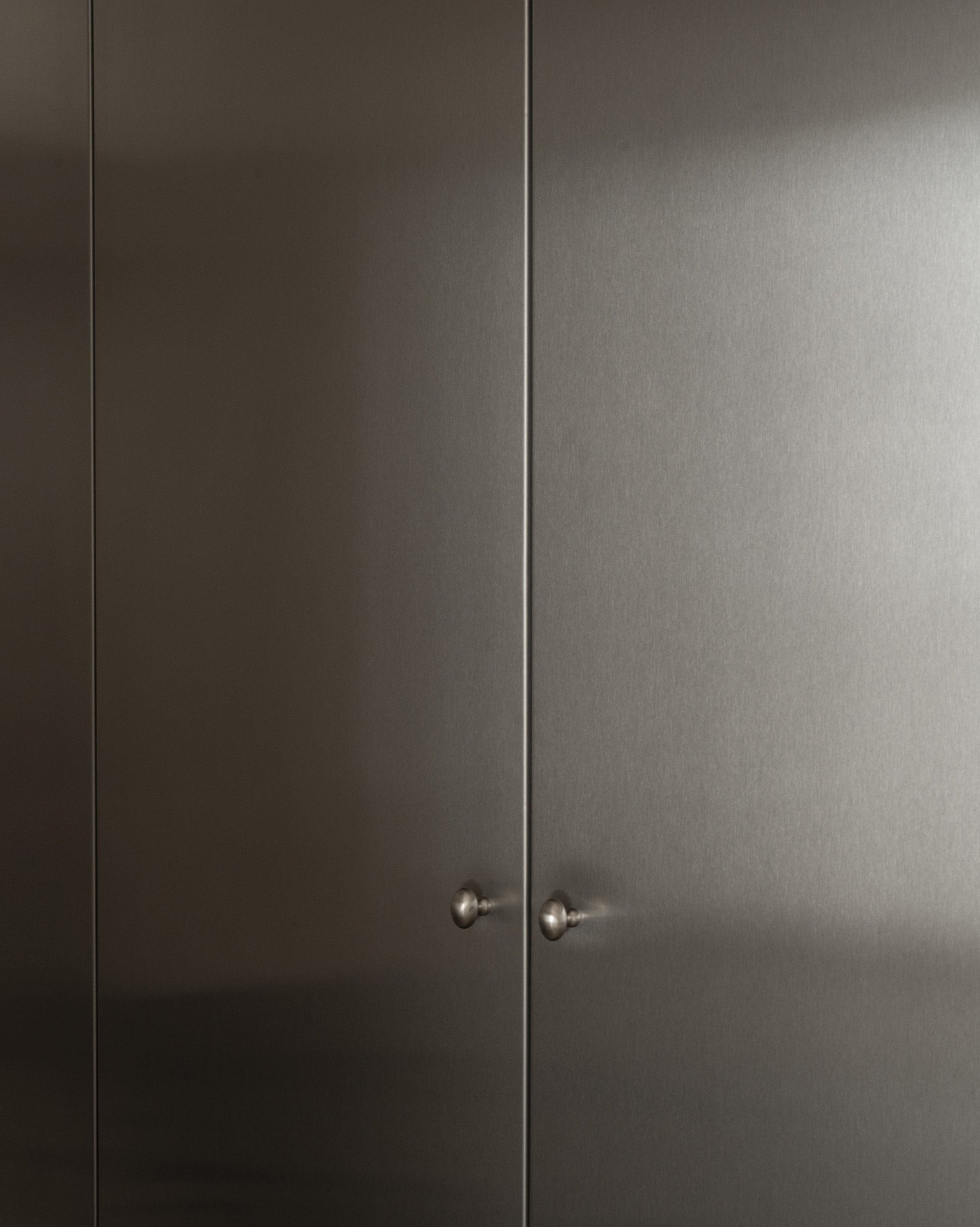
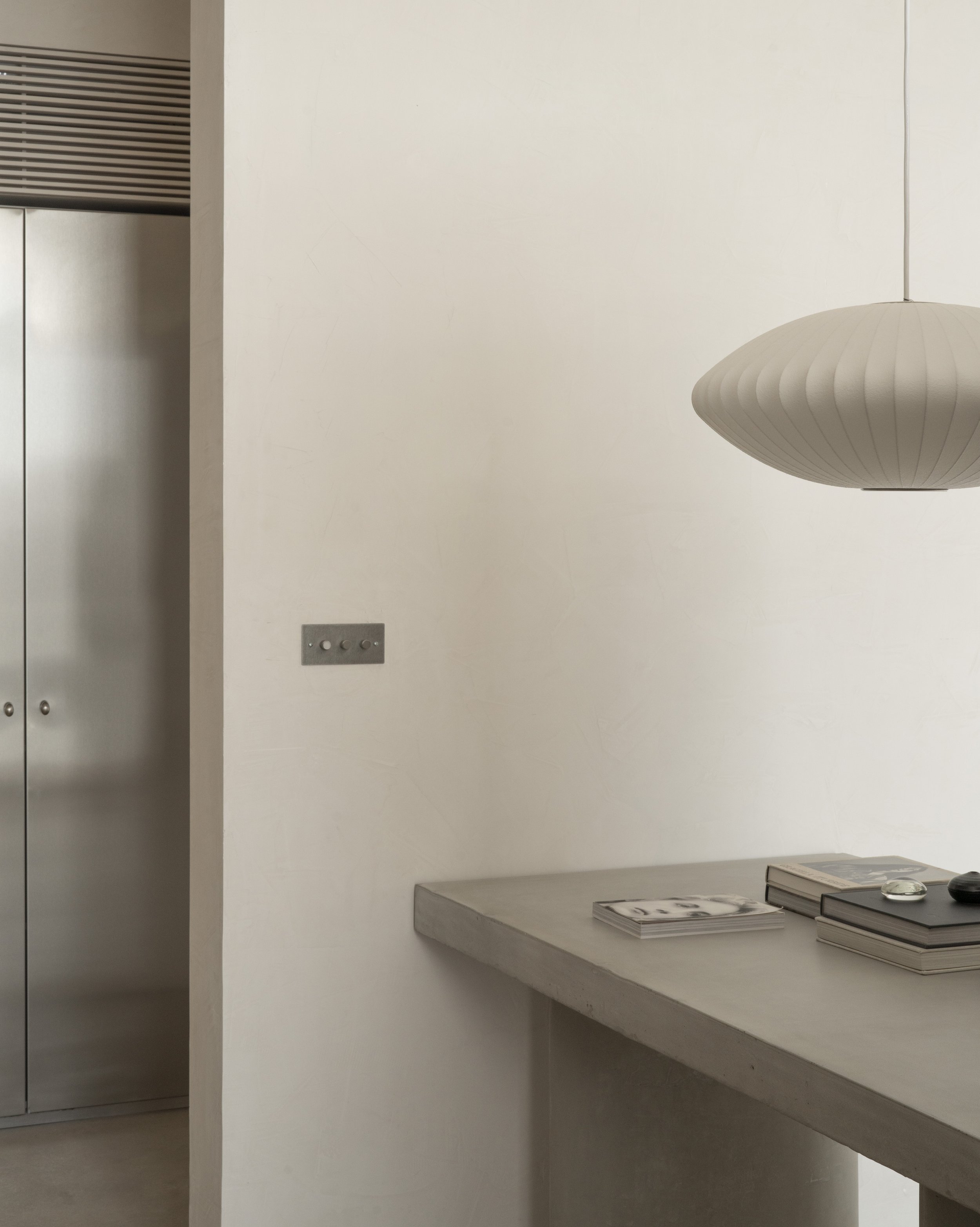
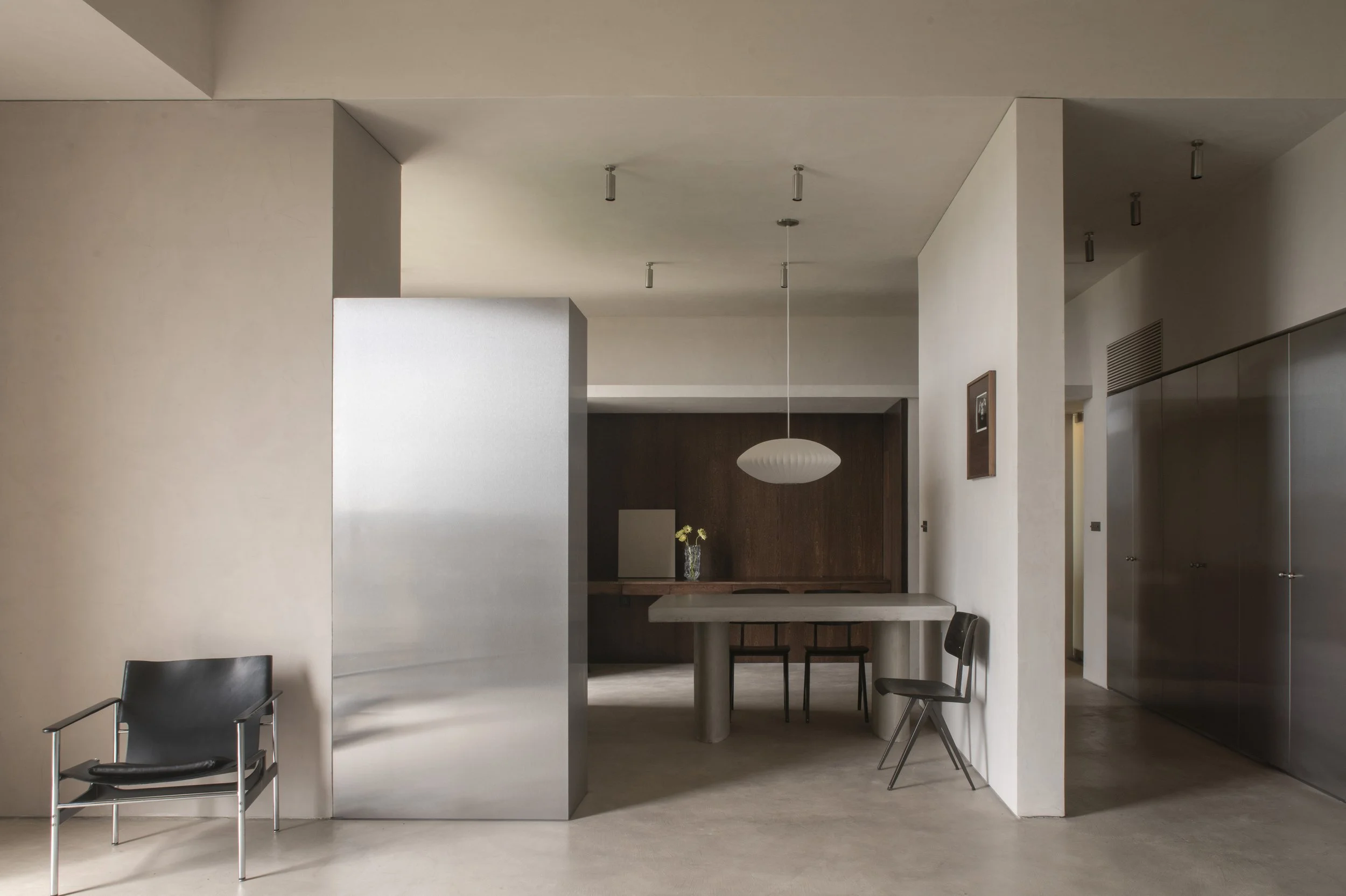
Around this soft enclosure, a series of sculptural volumes organises the programme while preserving an open, adaptable interior. A tall steel-clad form stands alongside pale plaster walls, its surface catching muted reflections of the surrounding space. Dark wood introduces depth, framing recessed work areas and providing a counterpoint to the lighter finishes. The composition gives each zone a distinct character without compromising the sense of continuity.
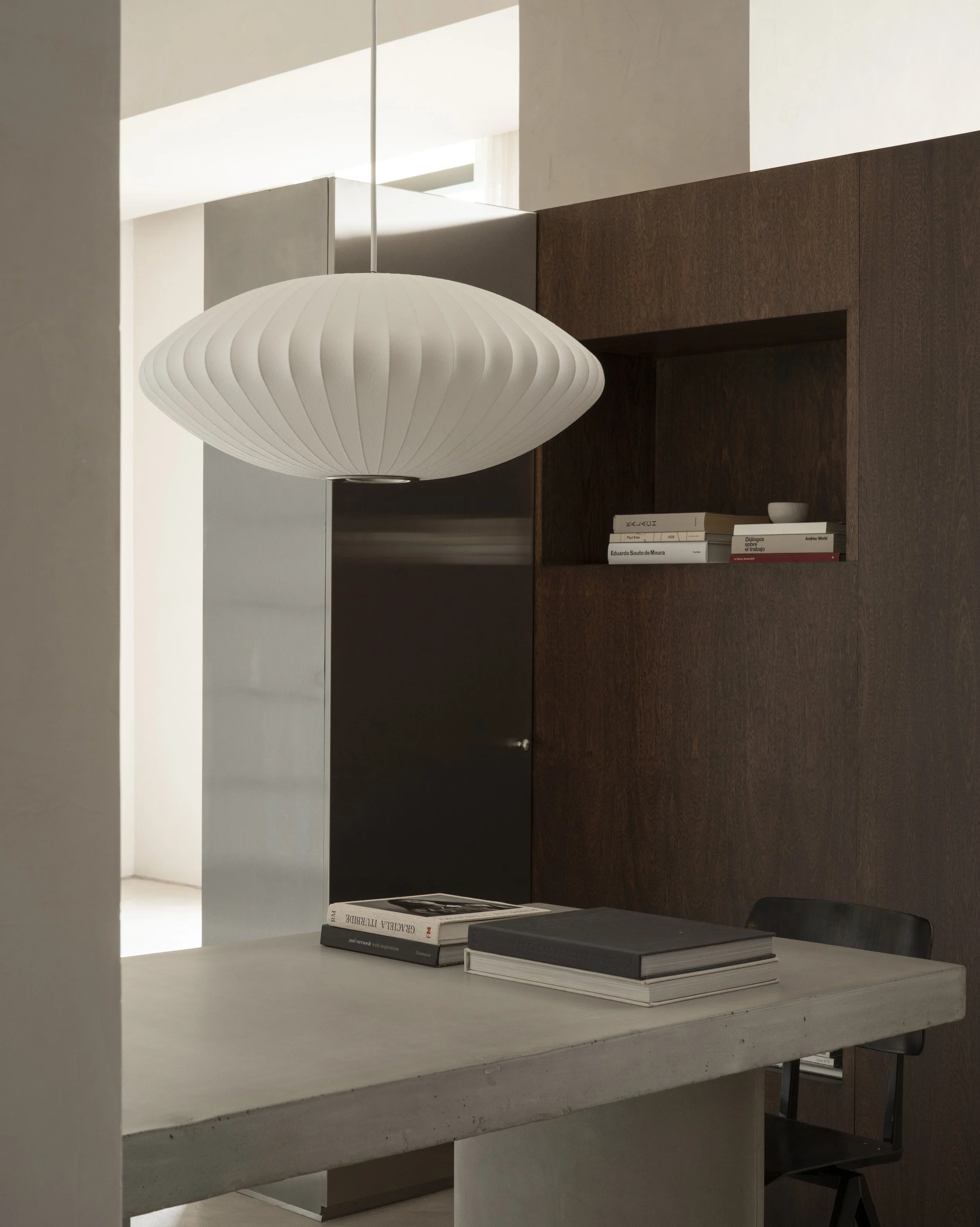
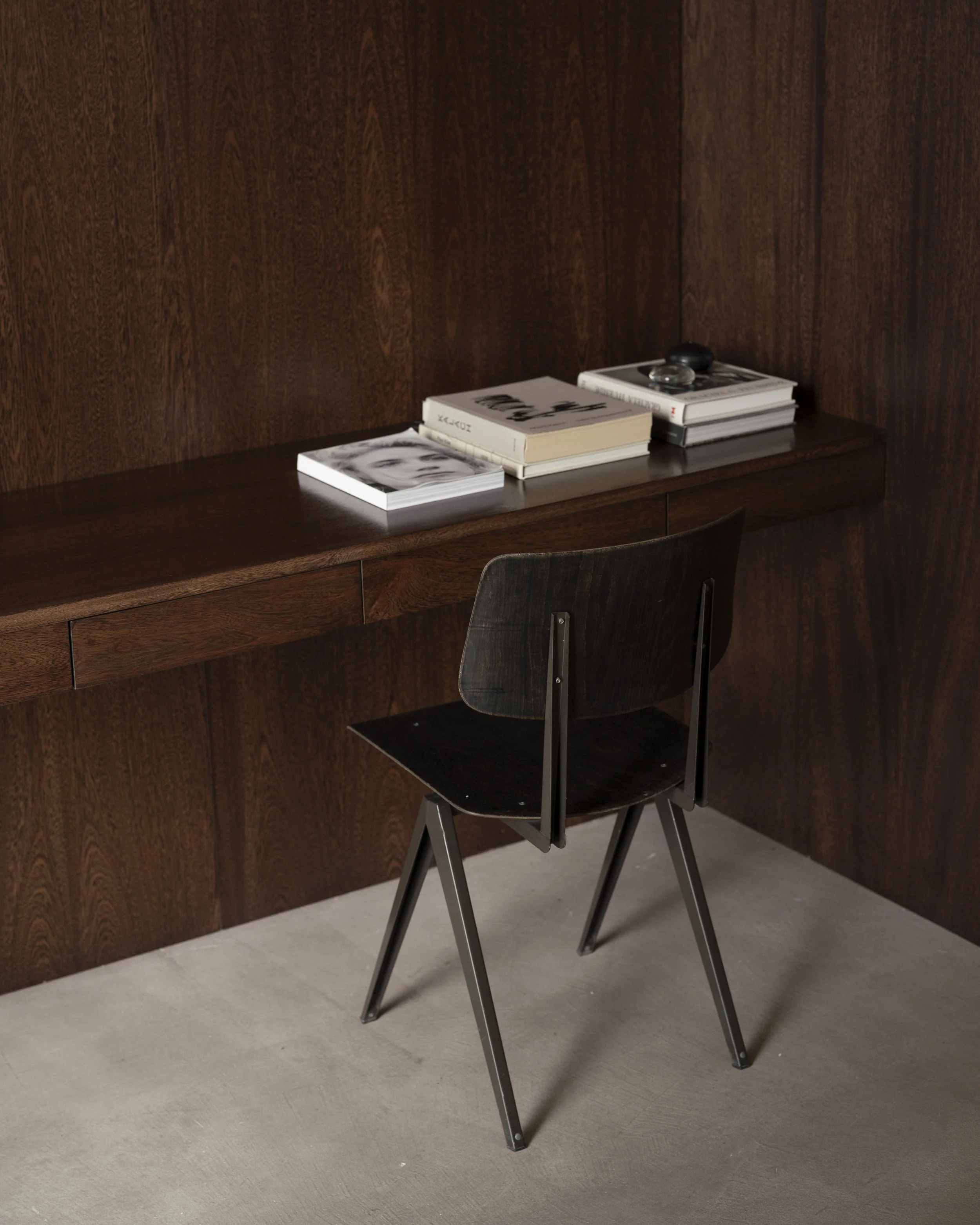
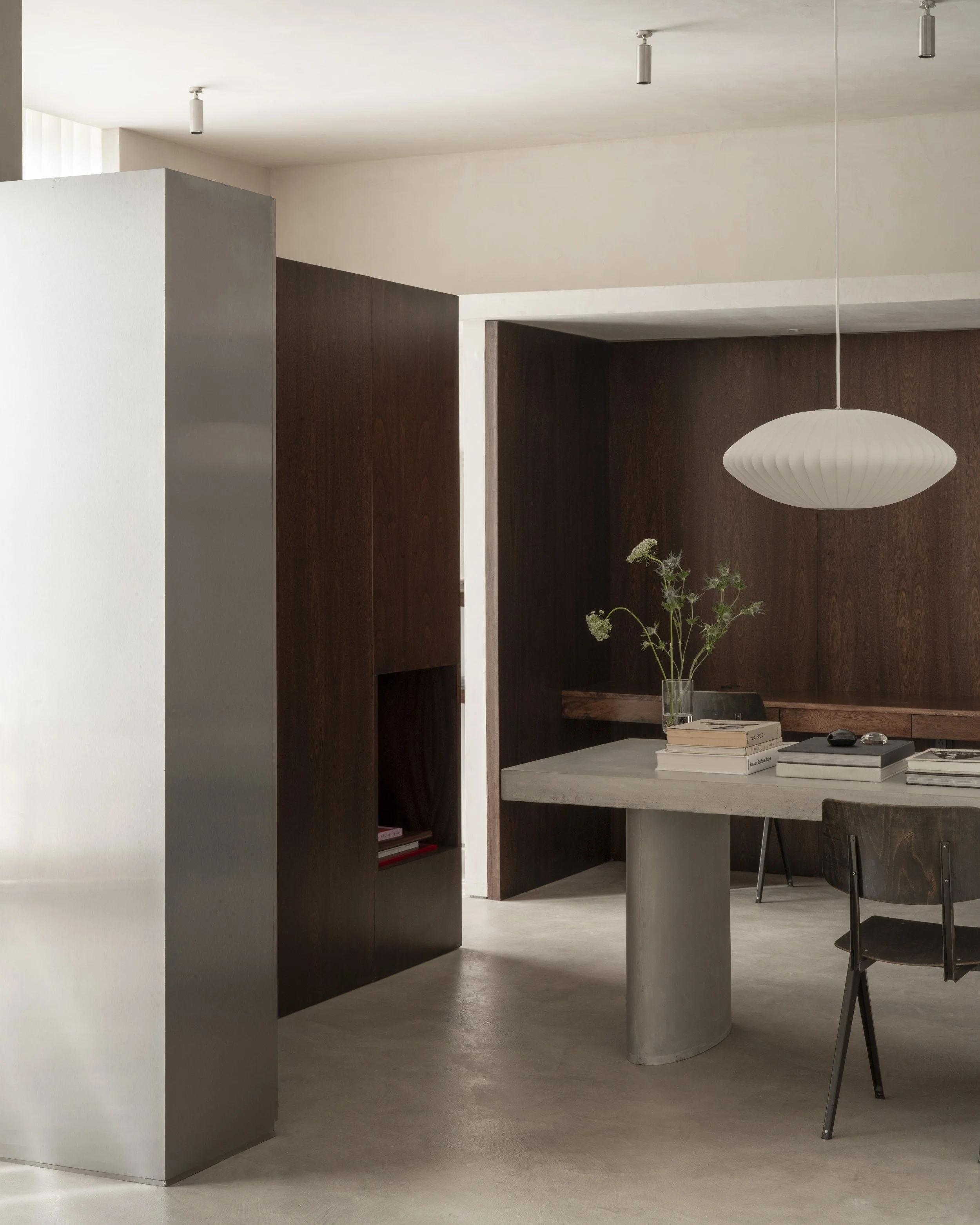
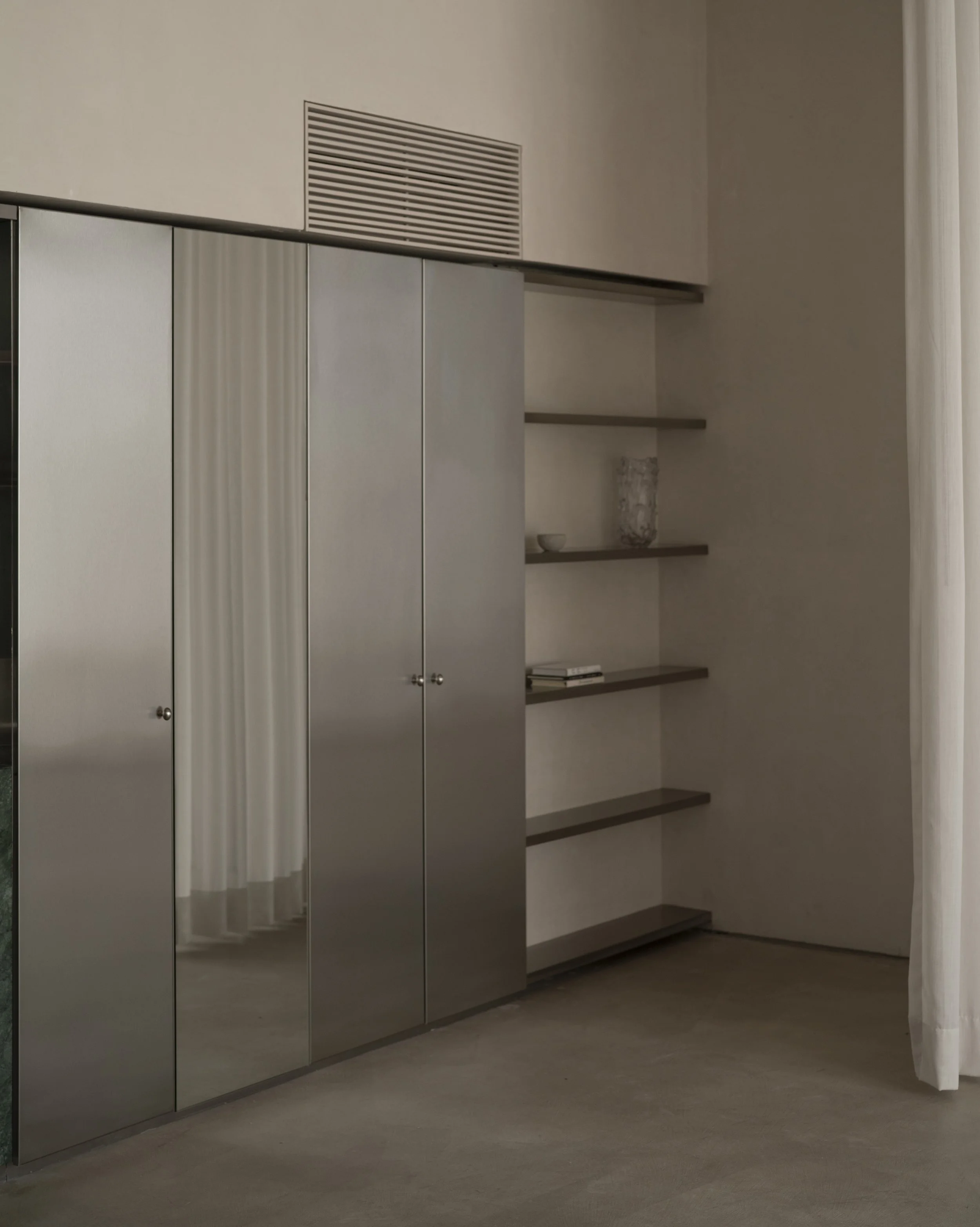
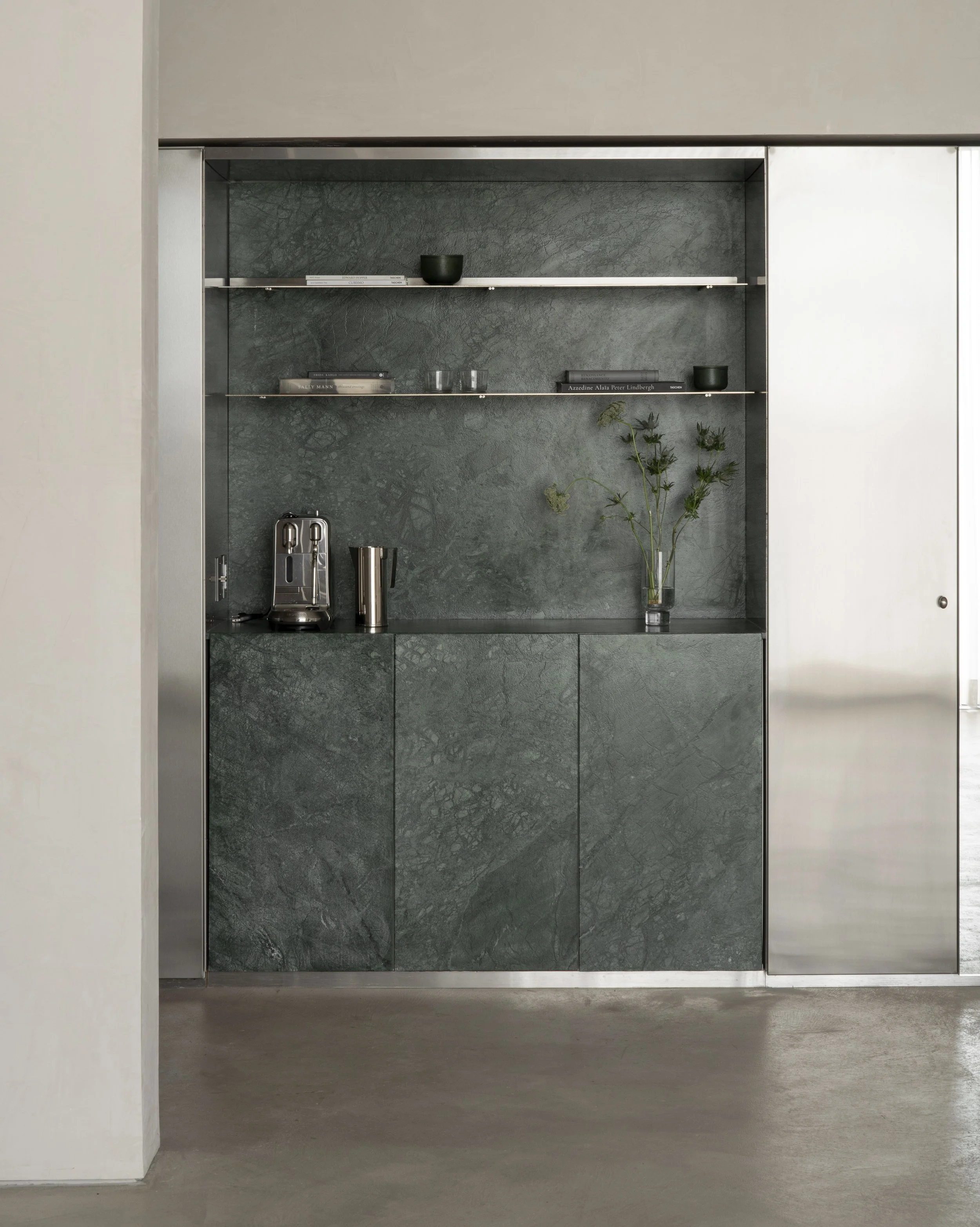
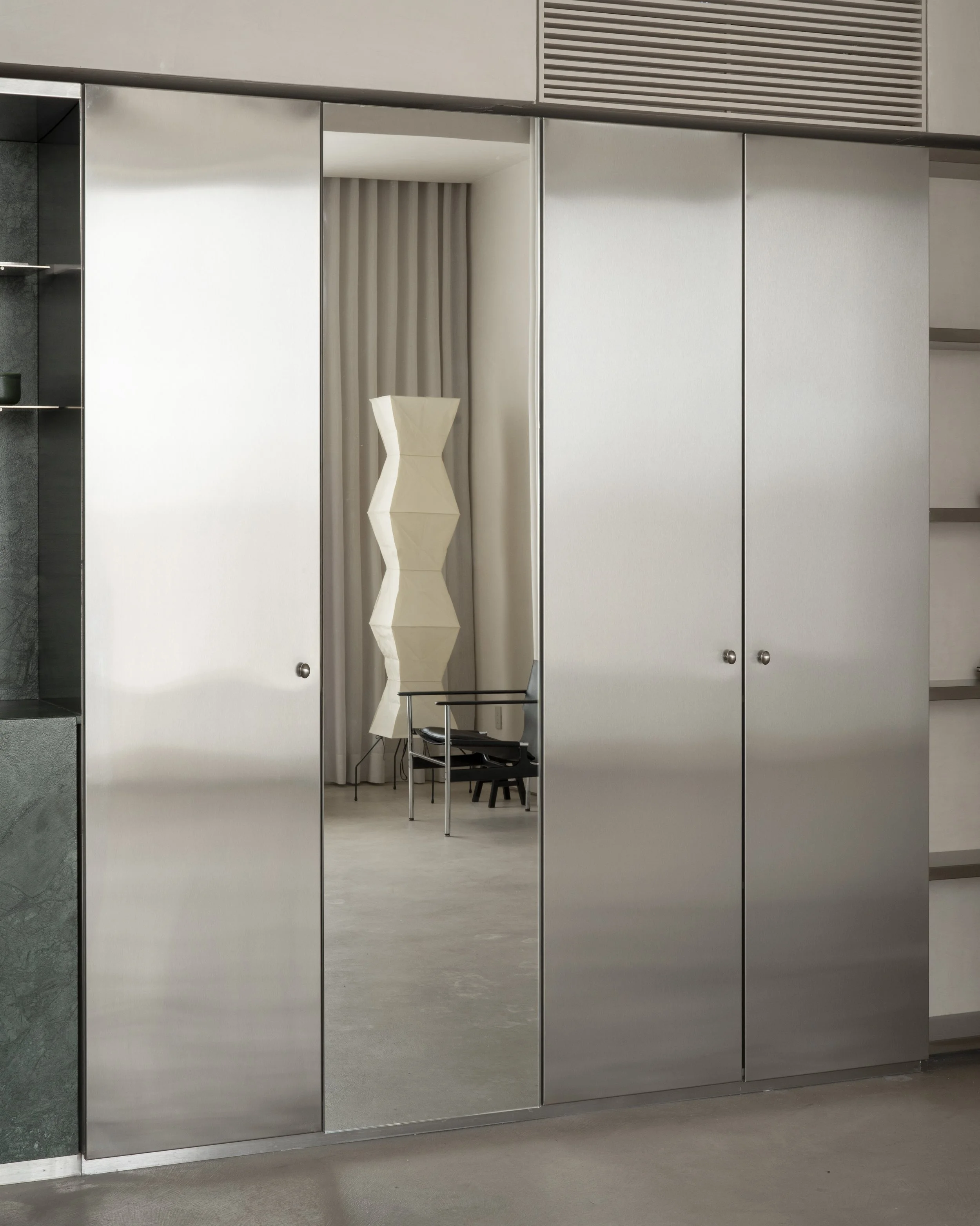
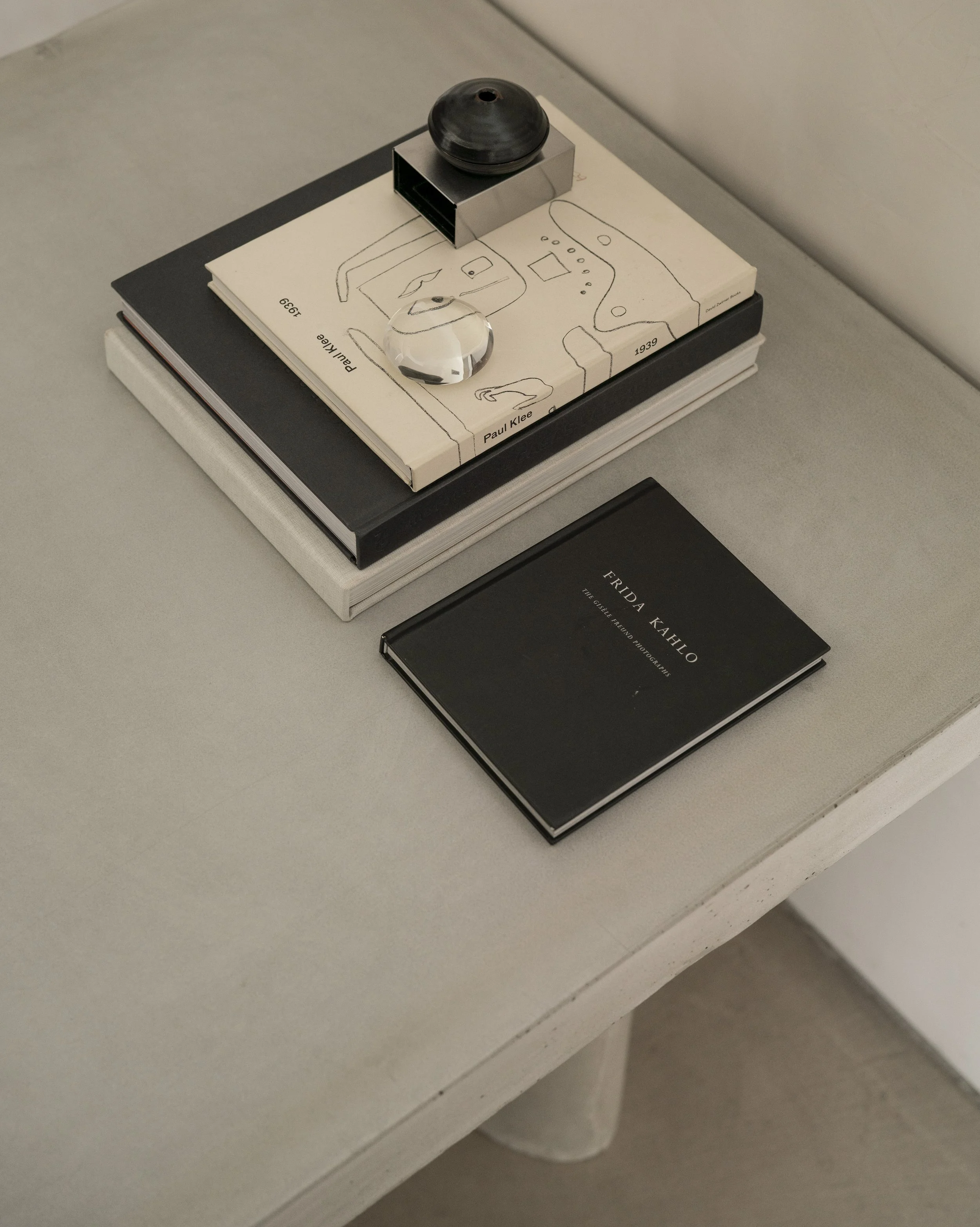
Formant Studio keeps the material vocabulary concise, working with steel, warm-toned plaster, wood and natural stone. Much of the interior’s richness comes from the differences between them. Light grazes the plaster, picks out the grain of the timber and traces the veining of a deep green stone-lined niche. Slender metal shelves cross the niche, where books, vessels and a coffee machine bring everyday activity into the architectural composition.
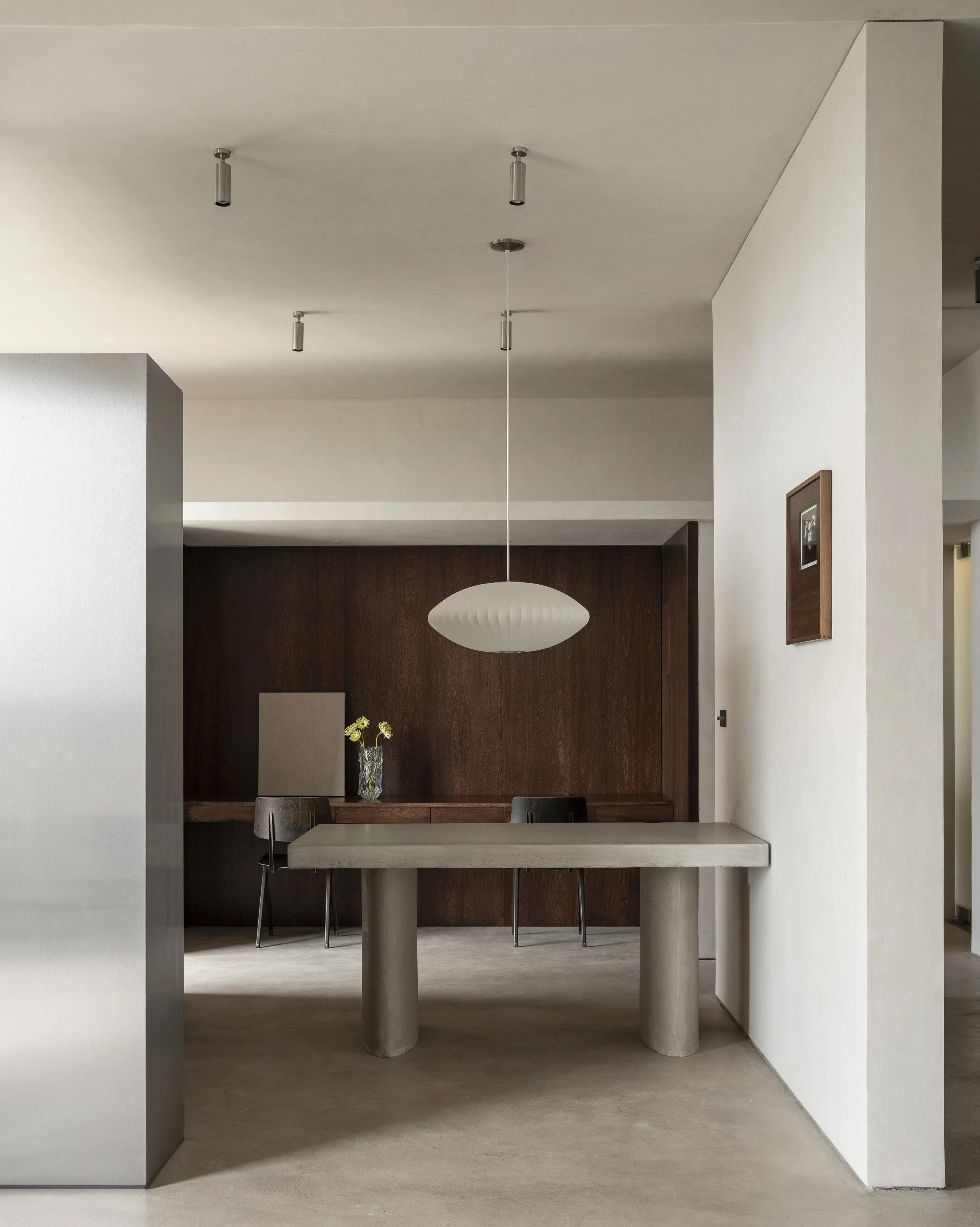
Elsewhere, a substantial pale table on cylindrical supports sits beneath an oval pendant, its generous proportions balanced by the fine profiles of dark chairs. A built-in wooden desk offers a more enclosed place to work, while a nearby armchair and small metal side table establish a quieter corner beside the curtains. These moments lend a domestic ease to the studio, making room for the pauses and routines that accompany image-making.
The architecture maintains a careful balance between presence and discretion. Its volumes give the studio definition, while the restrained palette leaves space for changing subjects, arrangements and light. For Cruz, it is a workplace with its own sensibility, one that supports the creative process through the simple, considered relationships between surface, proportion and daylight.