Rubio y Galí by De la Villa Studio
Set within a top-floor penthouse with a terrace, Rubio y Galí by De la Villa Studio transforms an irregular floor plan into a clear domestic sequence shaped by continuity, concealment, and carefully measured transitions.
With few structural constraints, the apartment uses its broken geometry as a starting point for spatial organisation, allowing the intervention to clarify movement through the home while preserving the character of its angular plan.
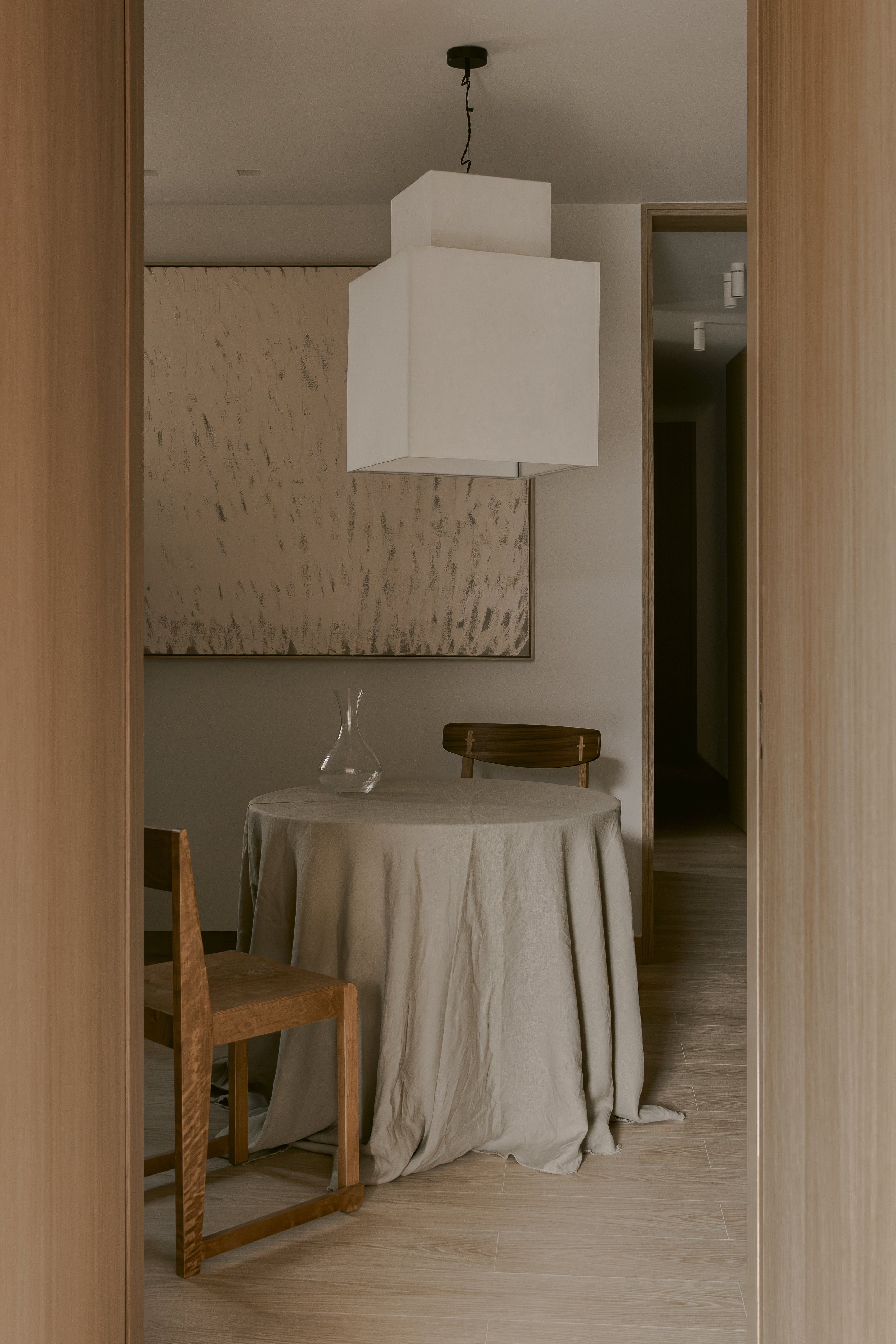
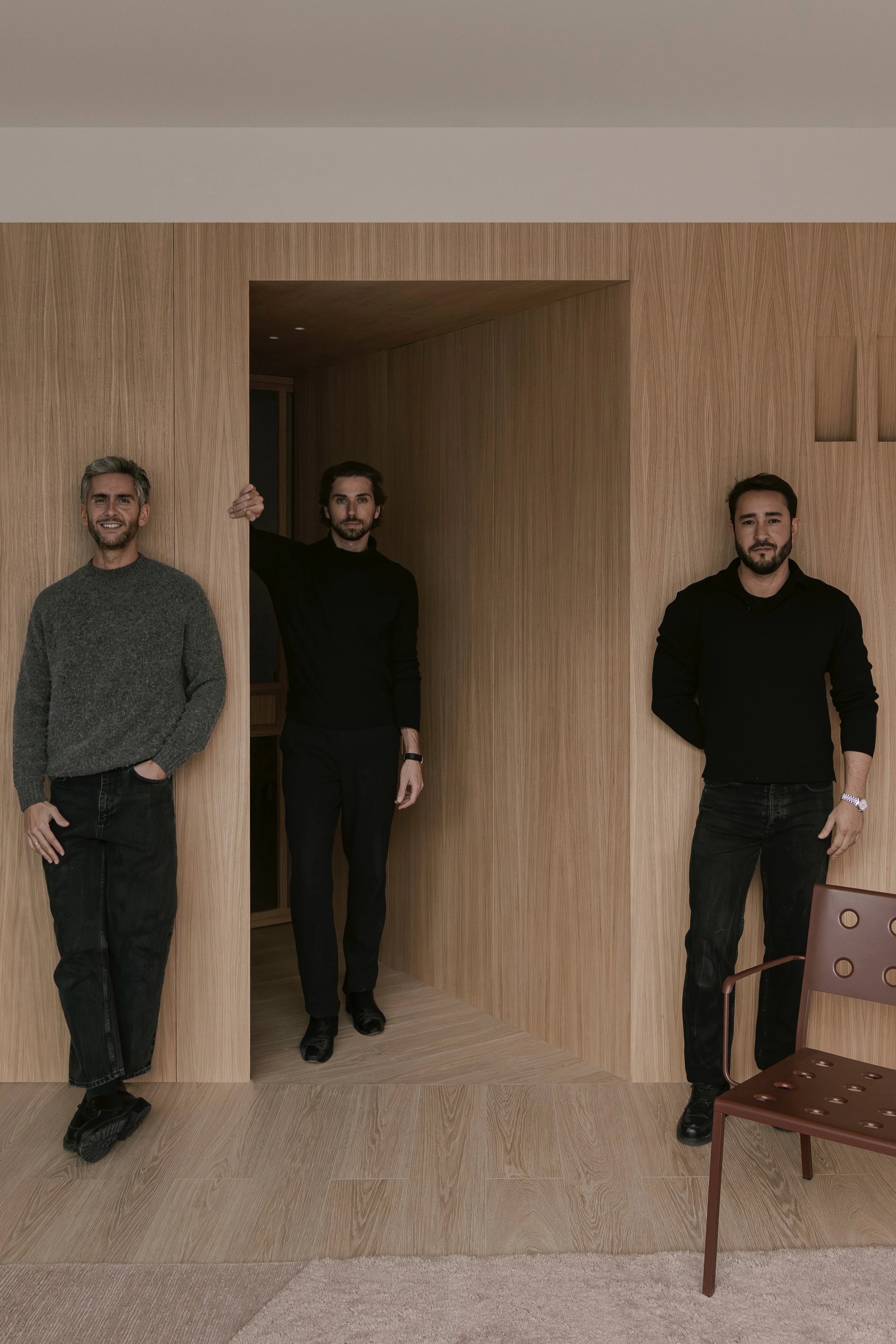
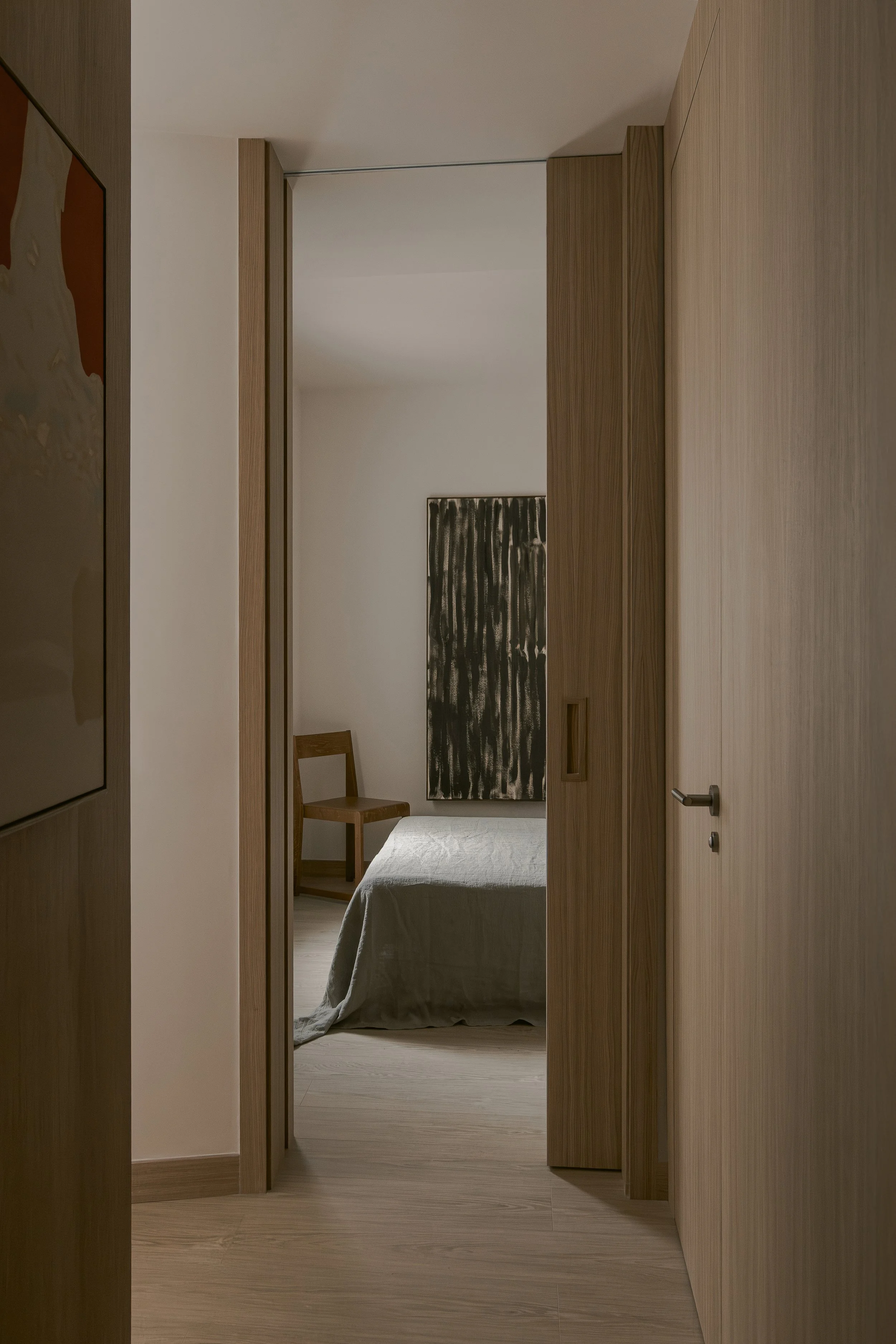
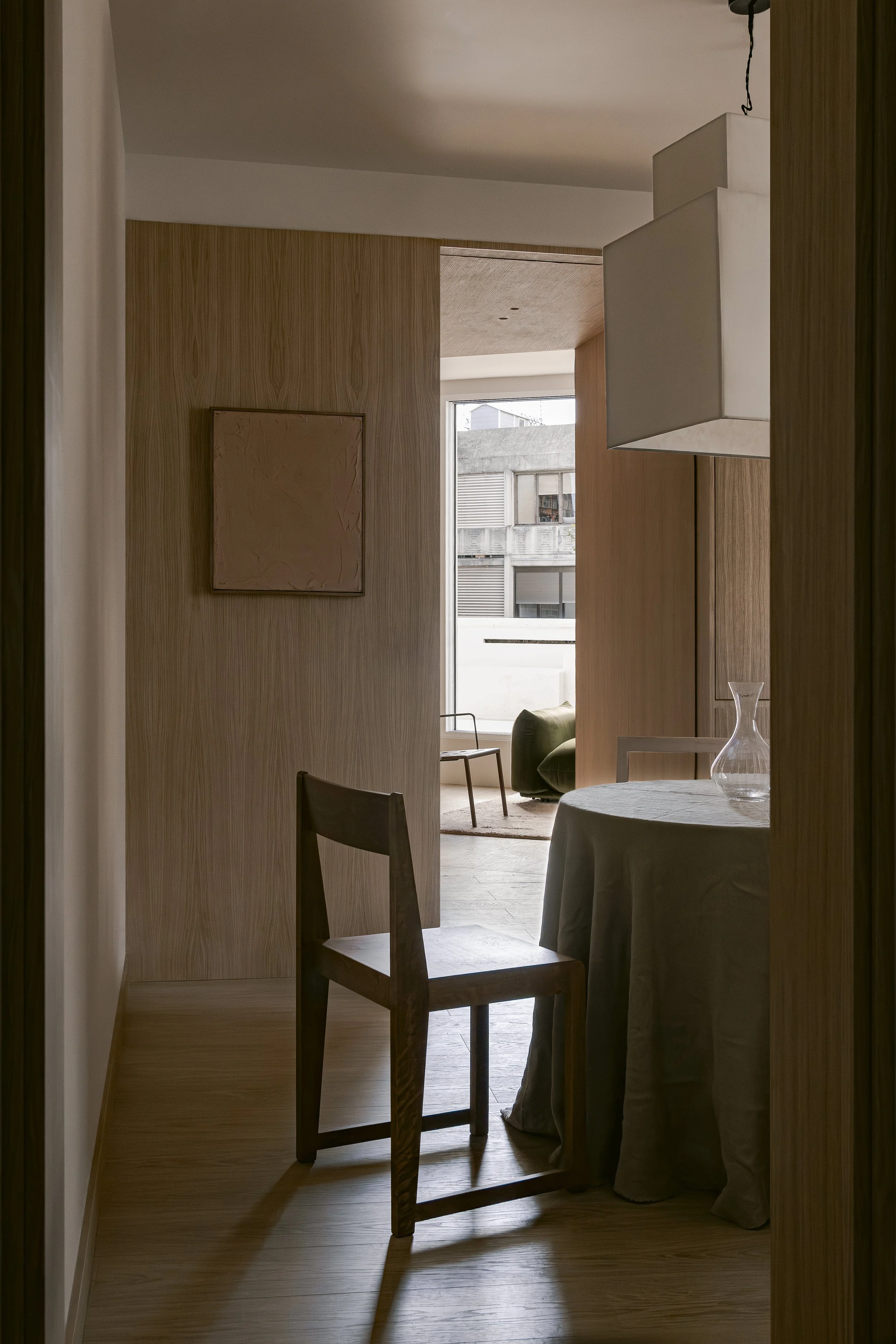
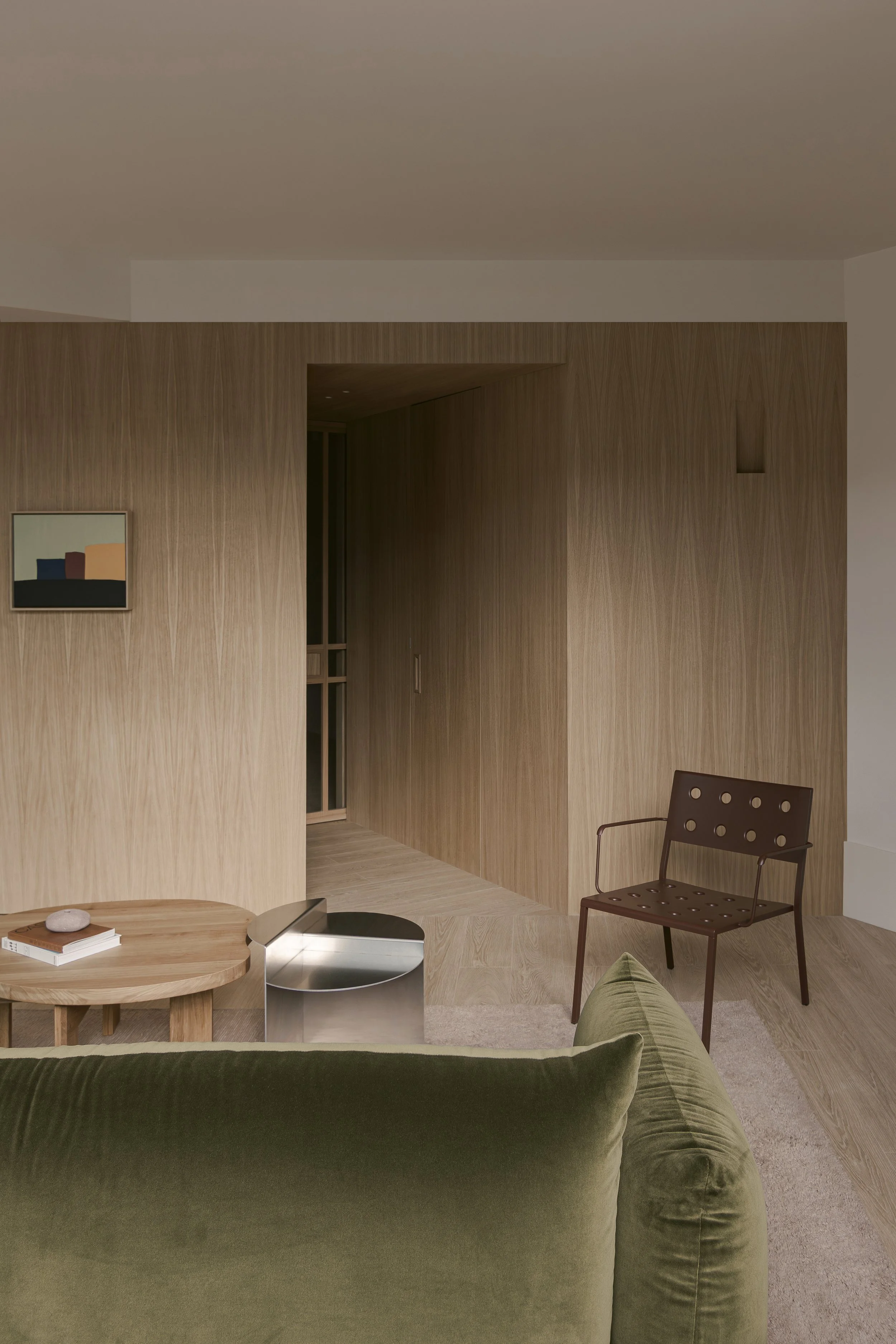
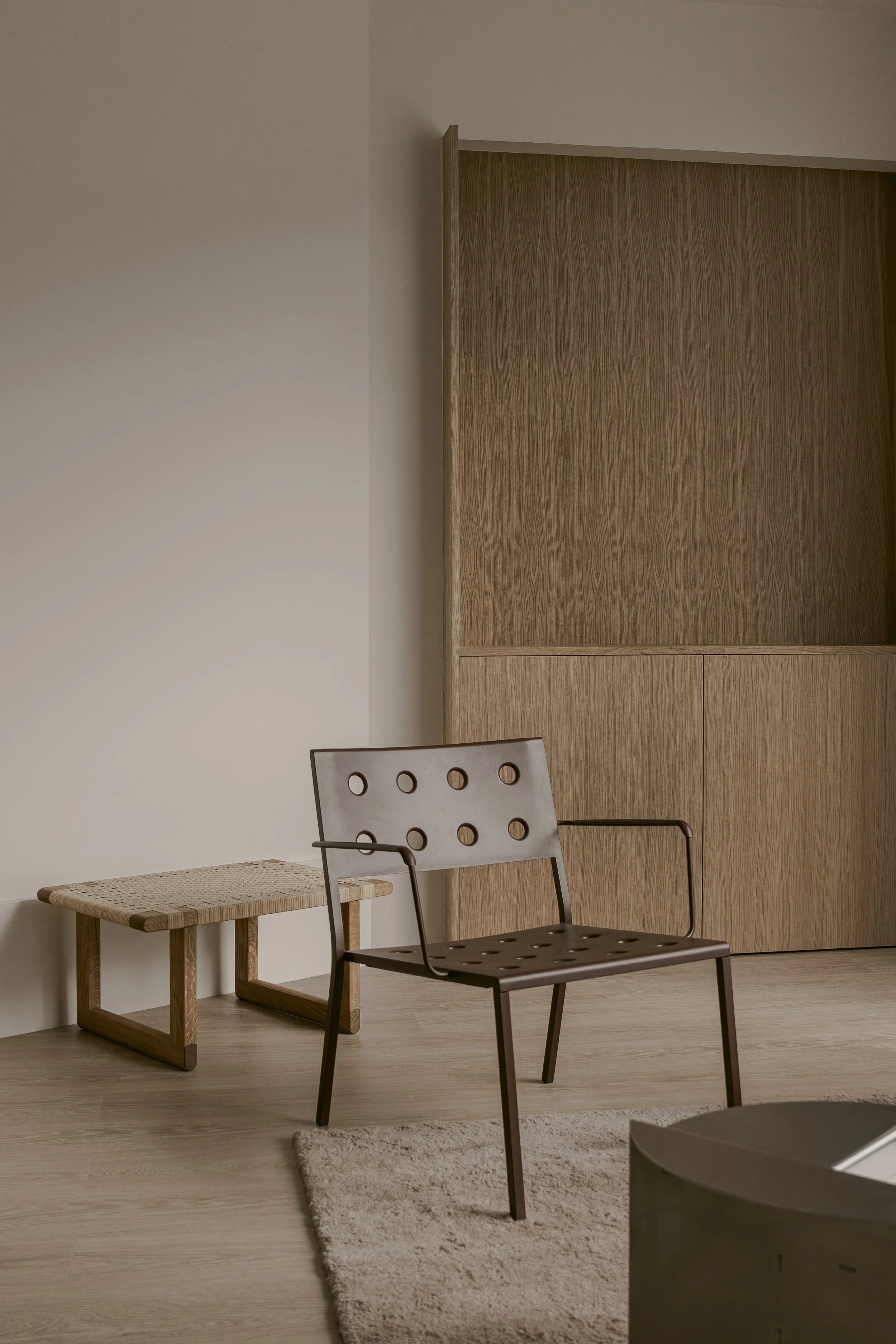
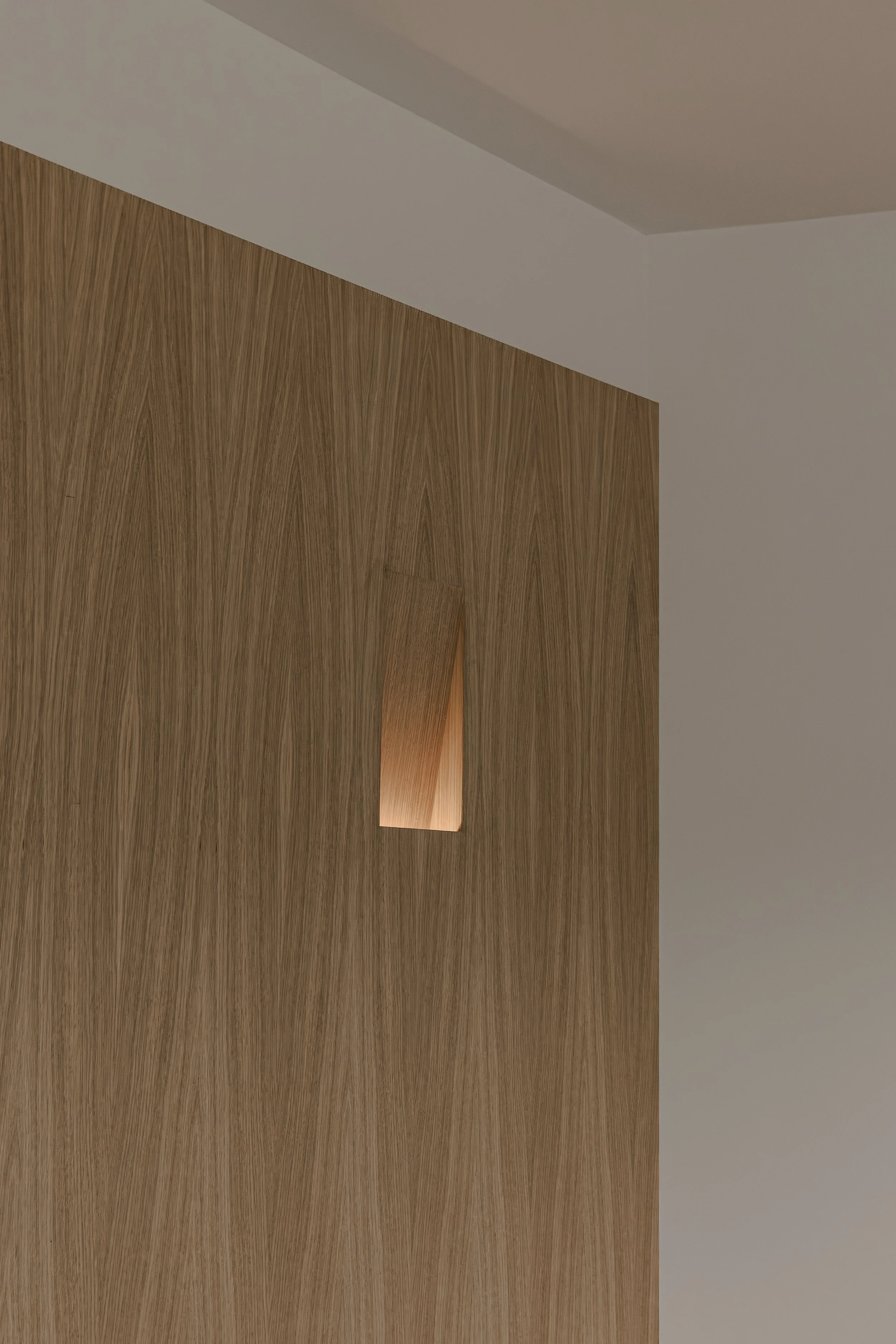
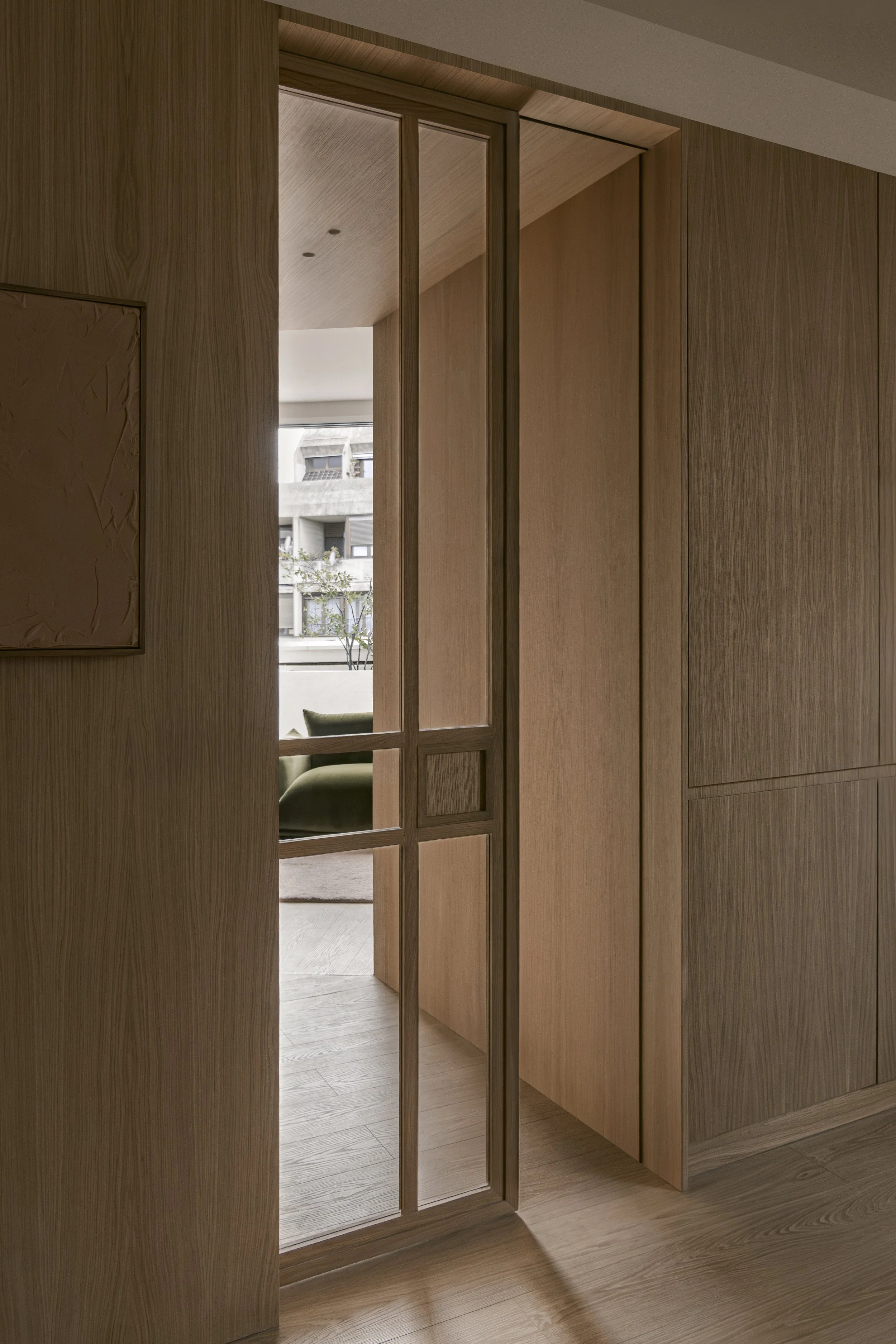
A warm, vertical-grain oak joinery system becomes the central organising element of the project, extending beyond the function of furniture or surface treatment to shape the apartment as a whole. It defines planes, absorbs storage, integrates services, conceals flush doors, and creates thresholds between rooms, giving coherence to the fragmented layout without relying on conventional partition walls.
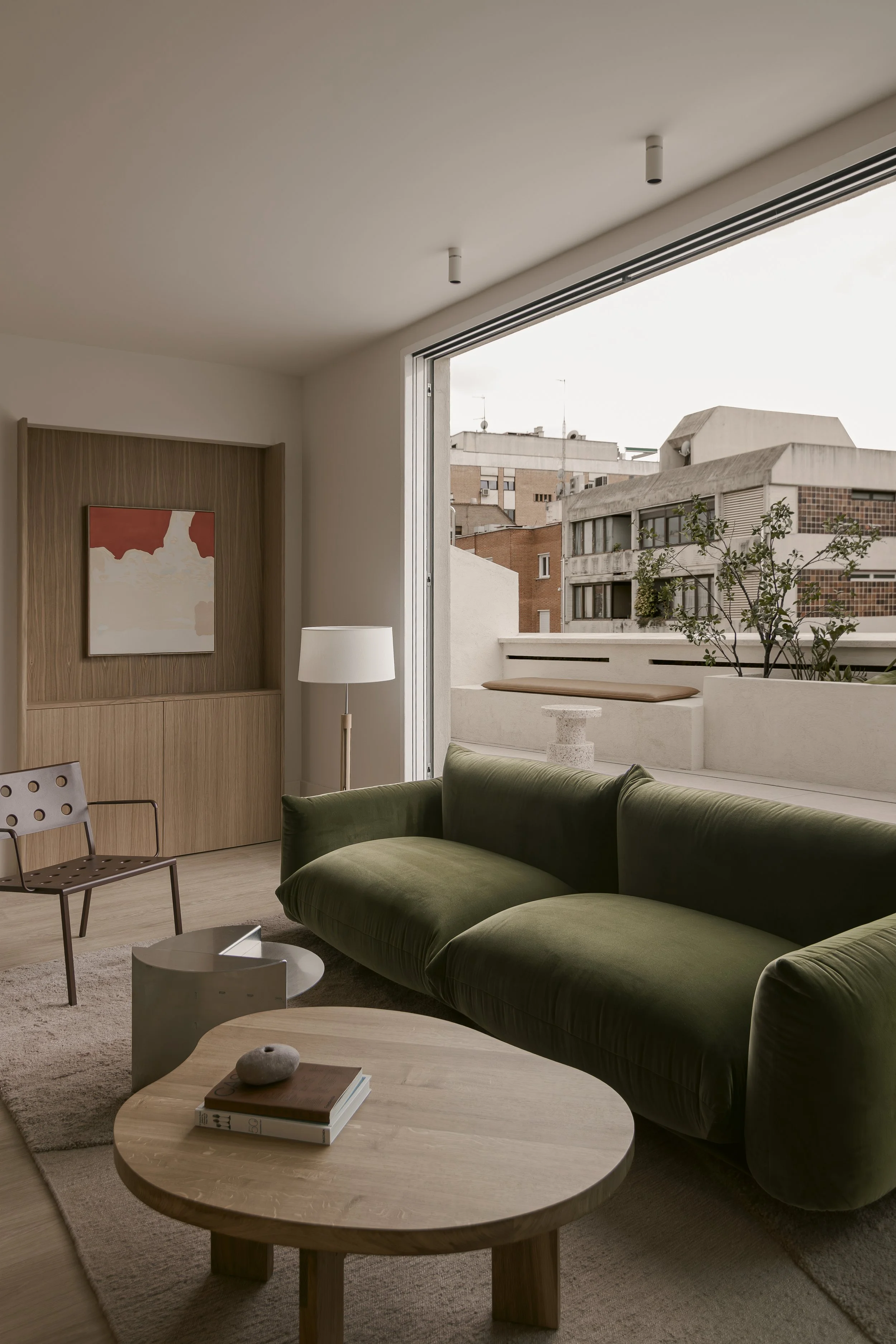
The home moves from an open social area at the entrance toward a more private rear zone, creating a gradual transition between shared domestic life and protected personal spaces. The living room, dining area, kitchen, and terrace form the first encounter with the apartment, while the guest bedroom and main suite are placed deeper within the plan and connected through a hallway that filters access and sightlines.
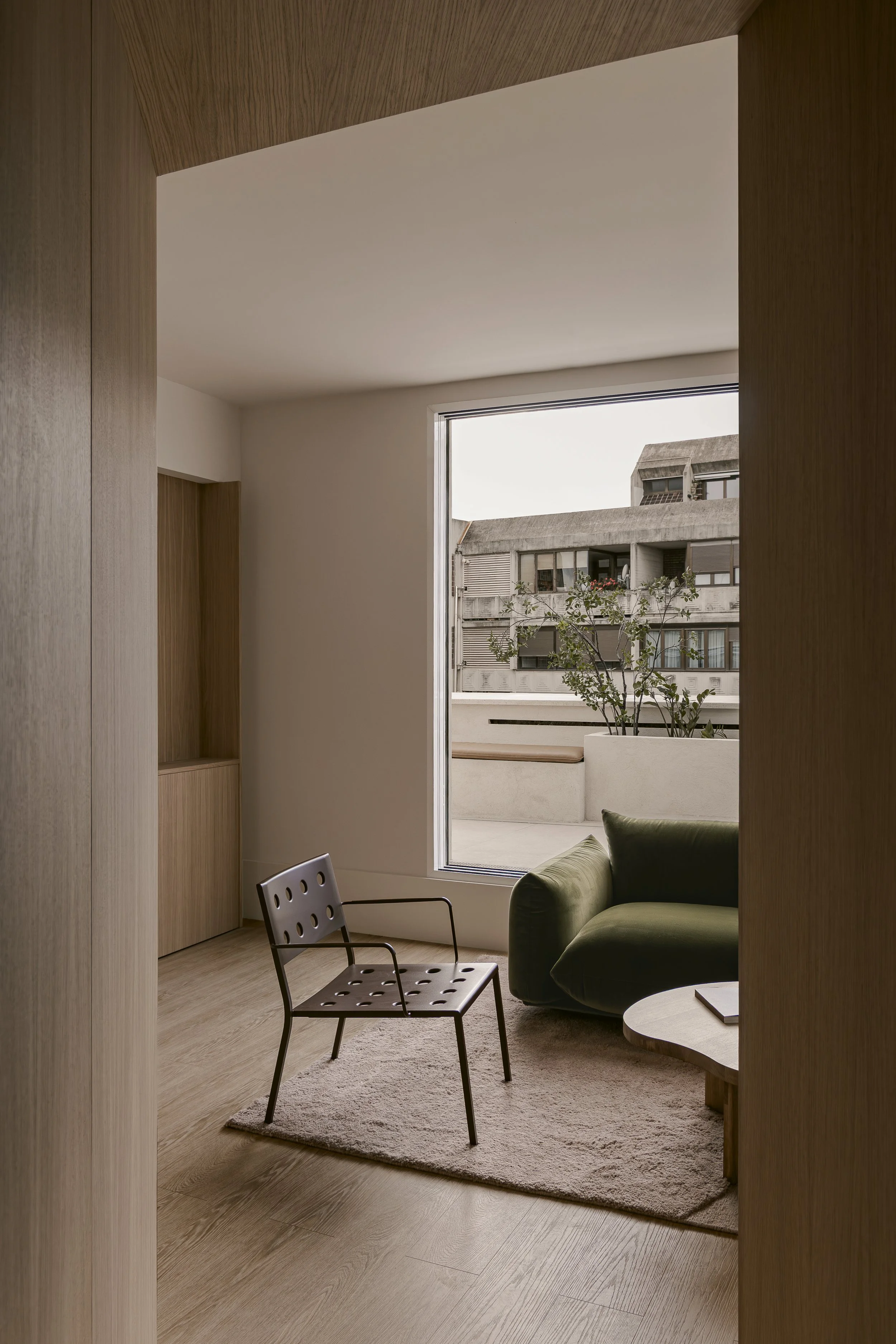
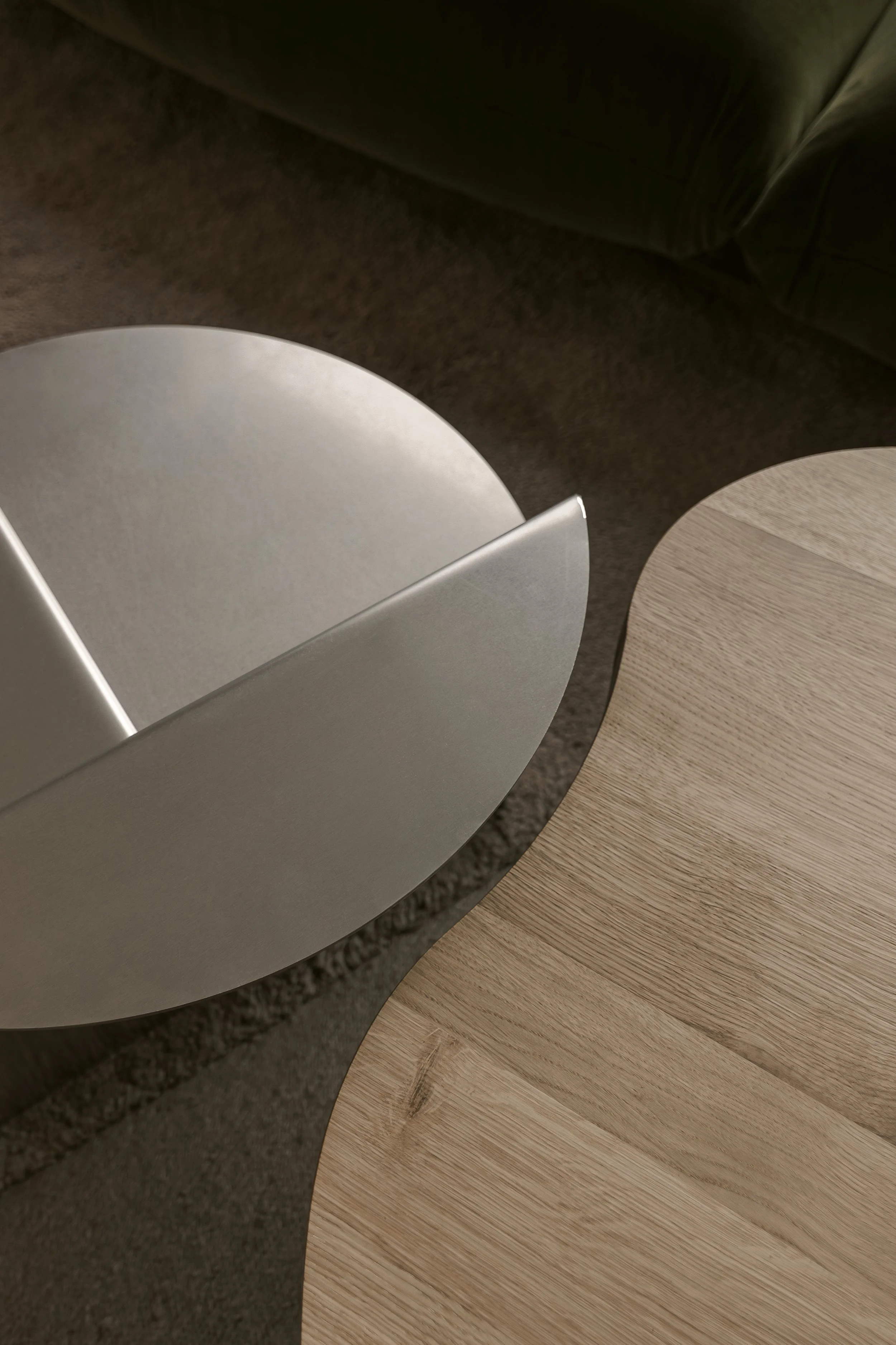
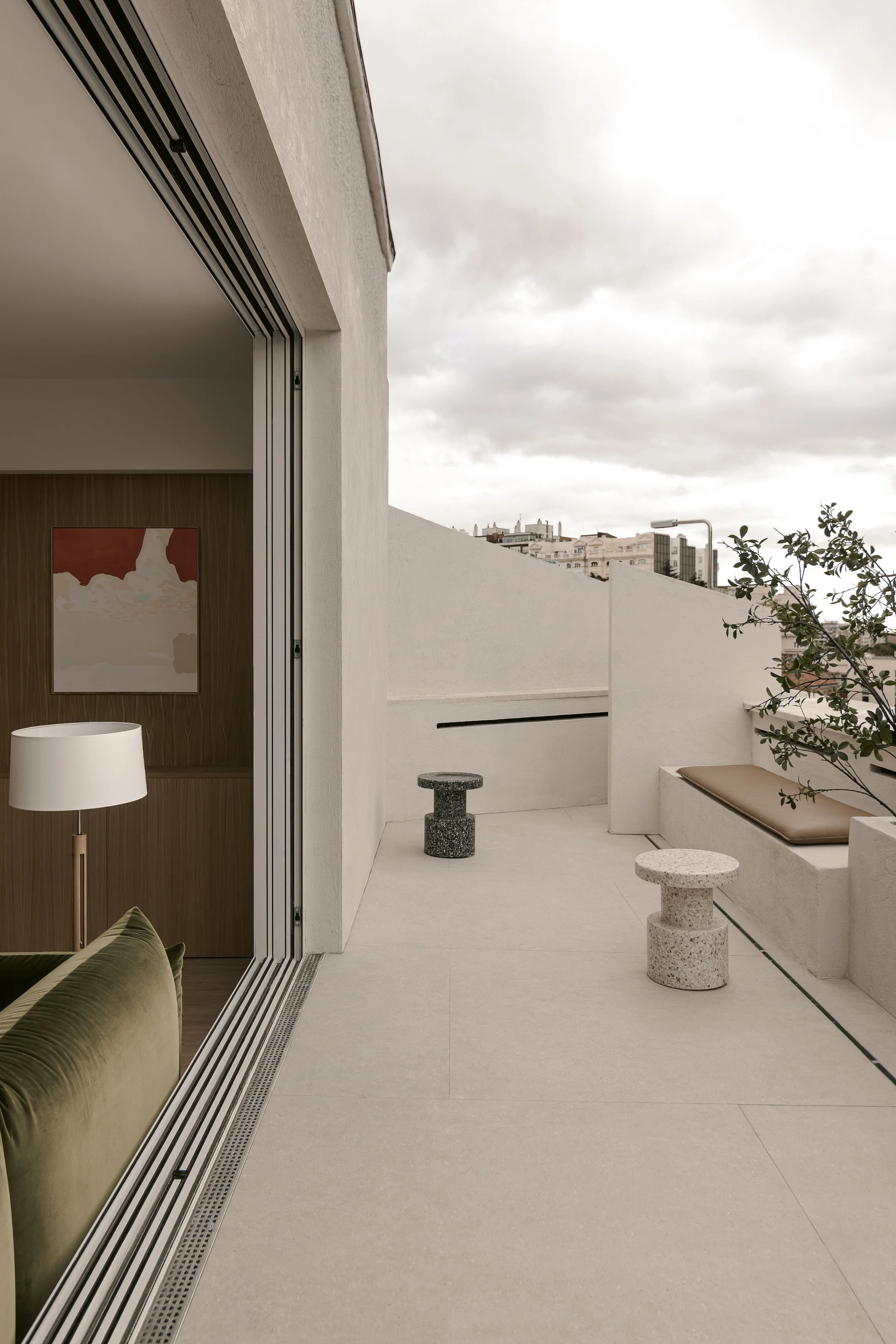
In the living room, a generously proportioned opening draws the terrace into the interior experience, making the exterior feel like a complementary room rather than a separate outdoor surface. Pale walls, a continuous floor finish, and a linear planter create a bright and uncluttered setting, where vegetation forms a quiet backdrop that adds depth to the view from inside and strengthens the connection between the apartment and the open air.
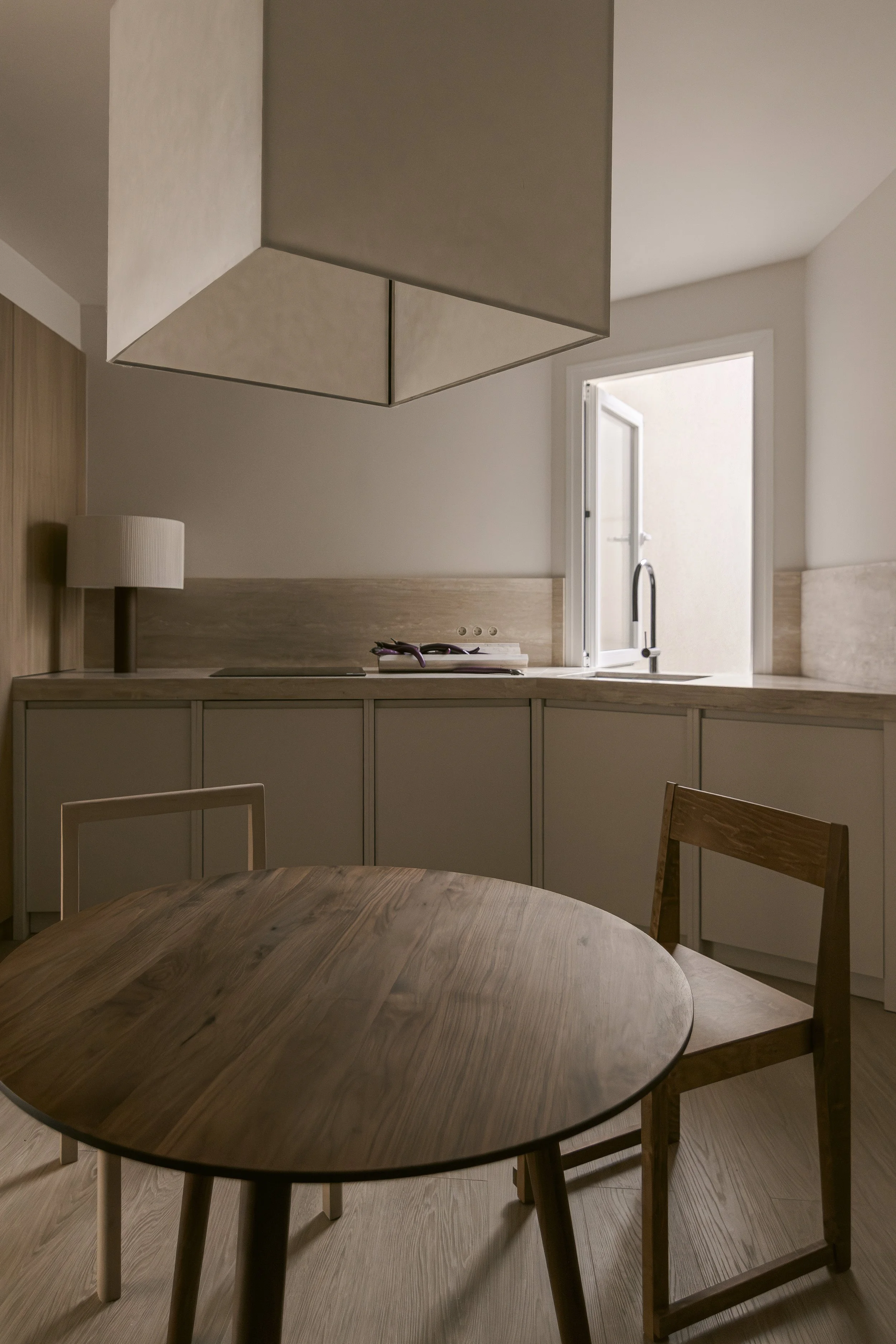
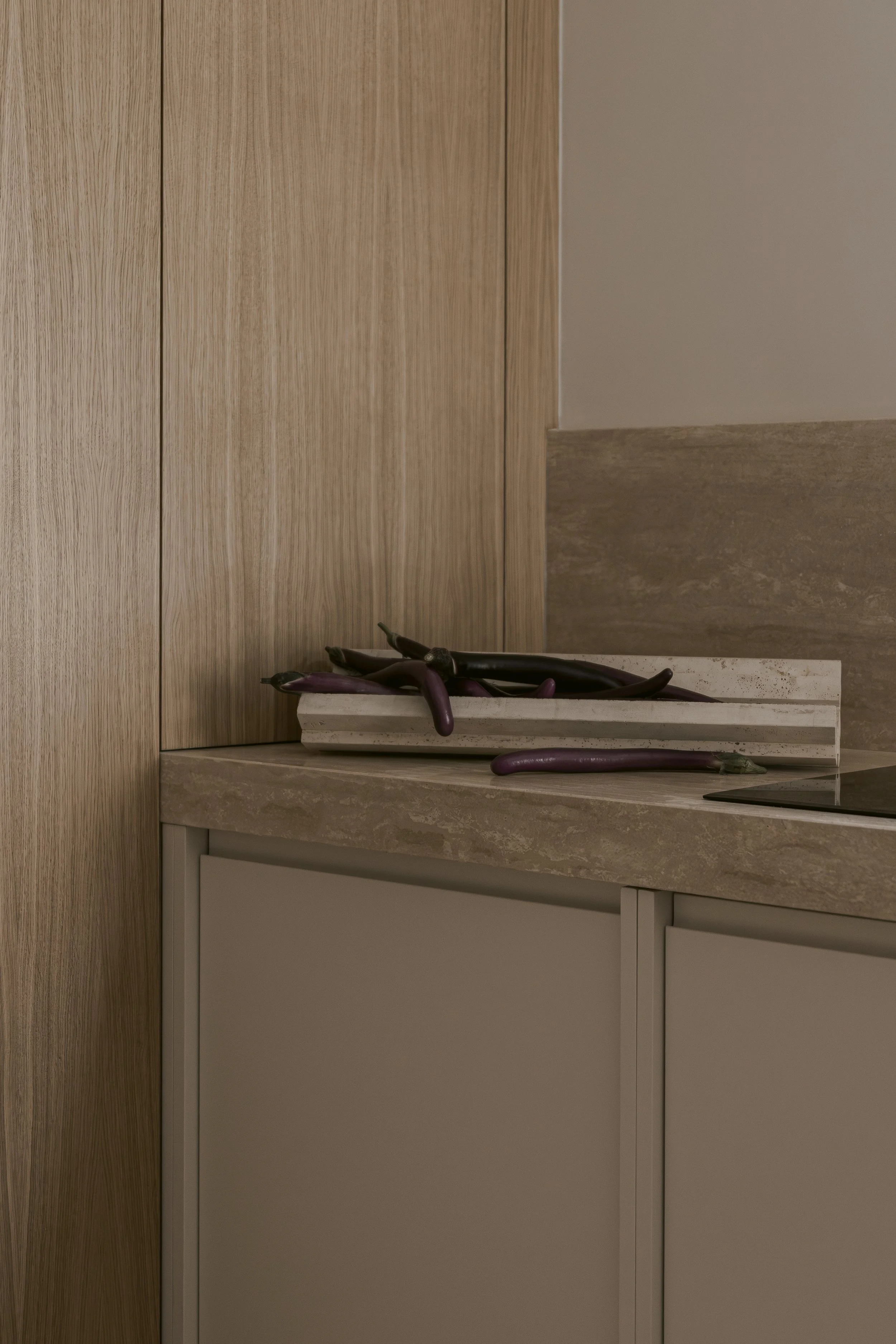
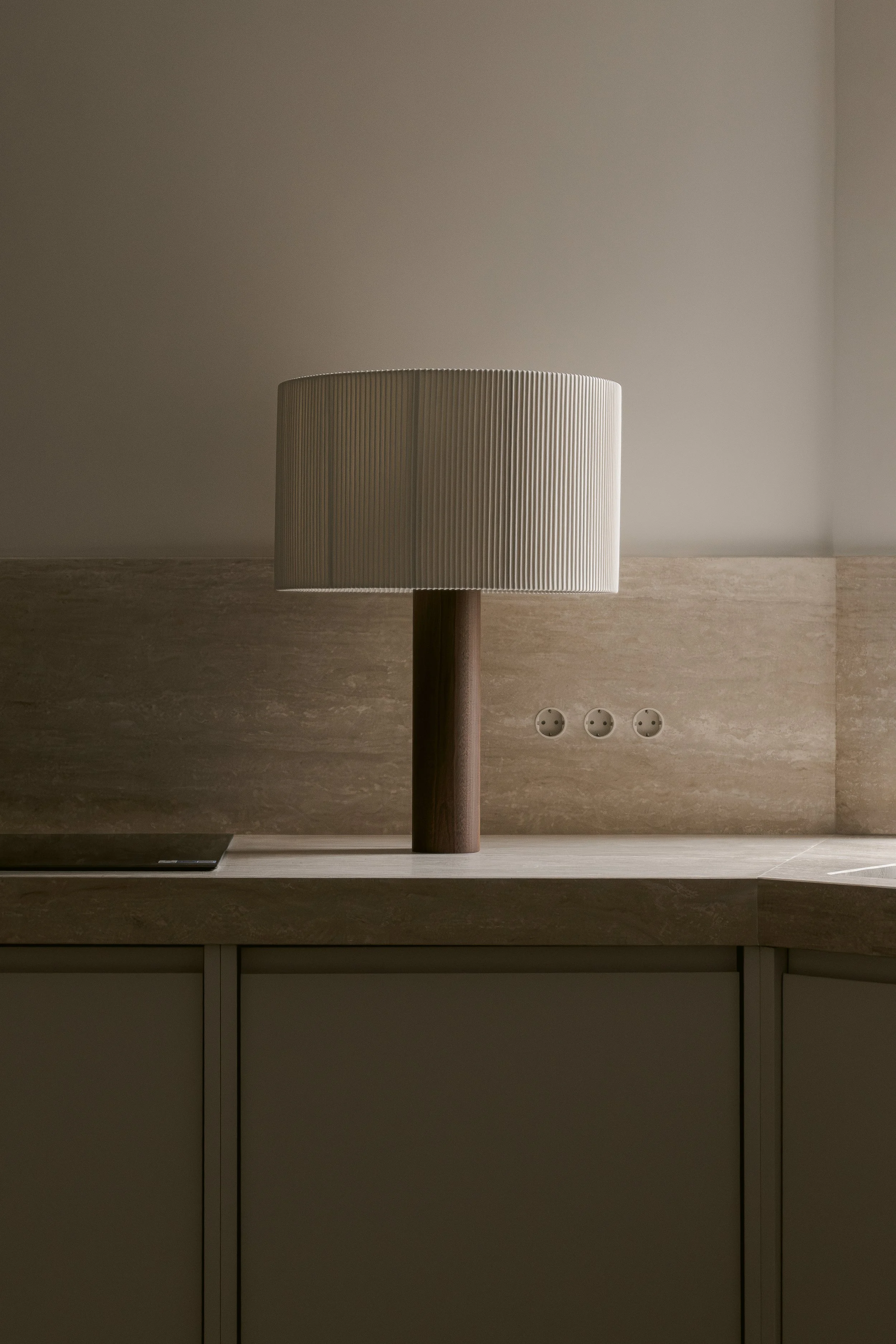
The kitchen occupies a more orthogonal portion of the floor plan and is reached through an oblique passage that preserves the apartment’s angular geometry while giving the cooking area a composed sense of enclosure. Natural travertine defines the perimeter worktop, while sober cabinetry fronts integrate equipment and storage into a clean architectural surface, continuing the project’s emphasis on concealment and allowing secondary functions to disappear within the oak joinery system.
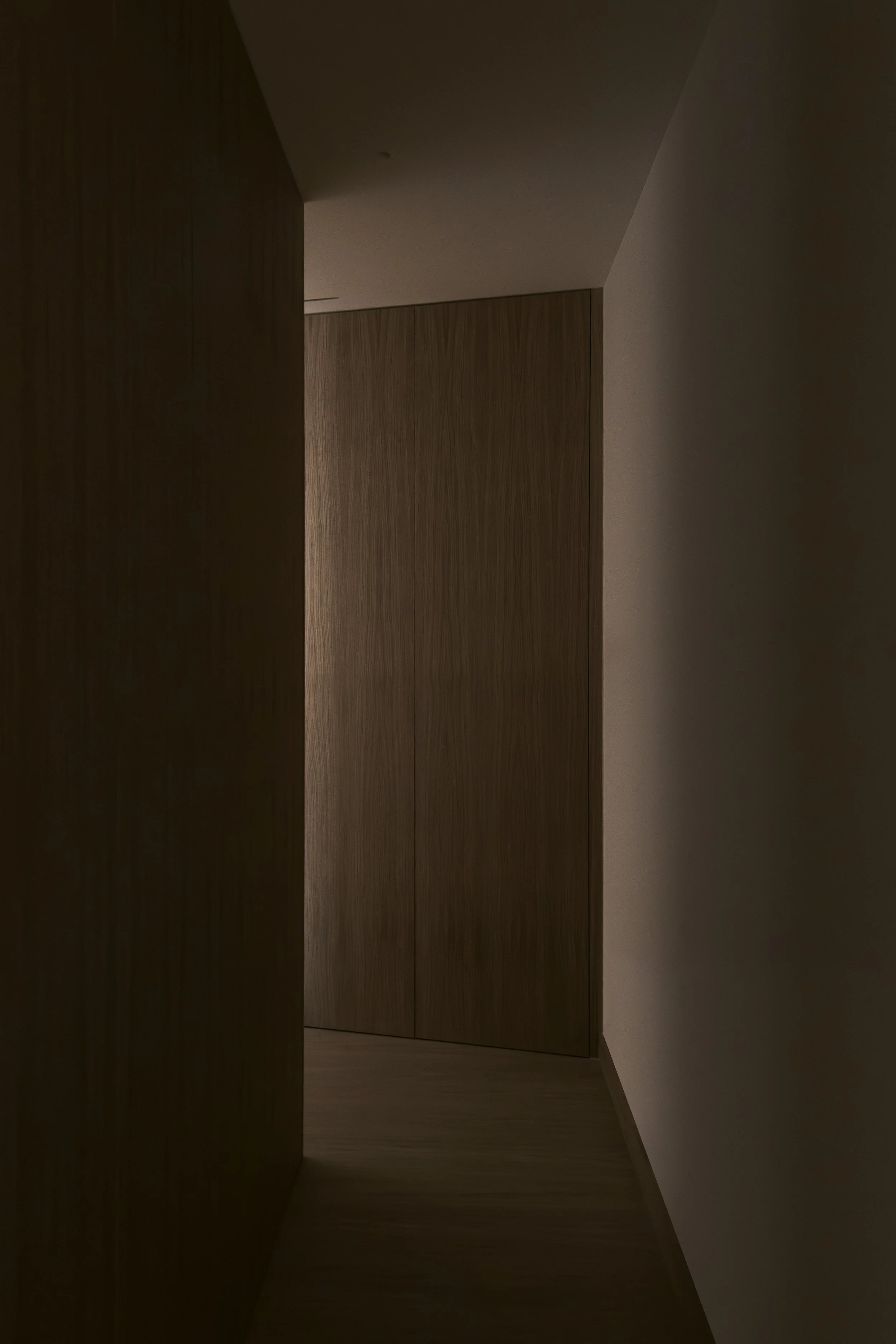
Toward the rear of the apartment, the passage to the main bedroom is shaped as a layered sequence that protects privacy through spatial arrangement rather than additional walls. The hallway, defined by timber planes, leads first into the dressing room before shifting through the irregular geometry of the plan toward the bathroom and bedroom, limiting direct views into the sleeping area while turning each threshold into a precise cut within the continuous joinery.
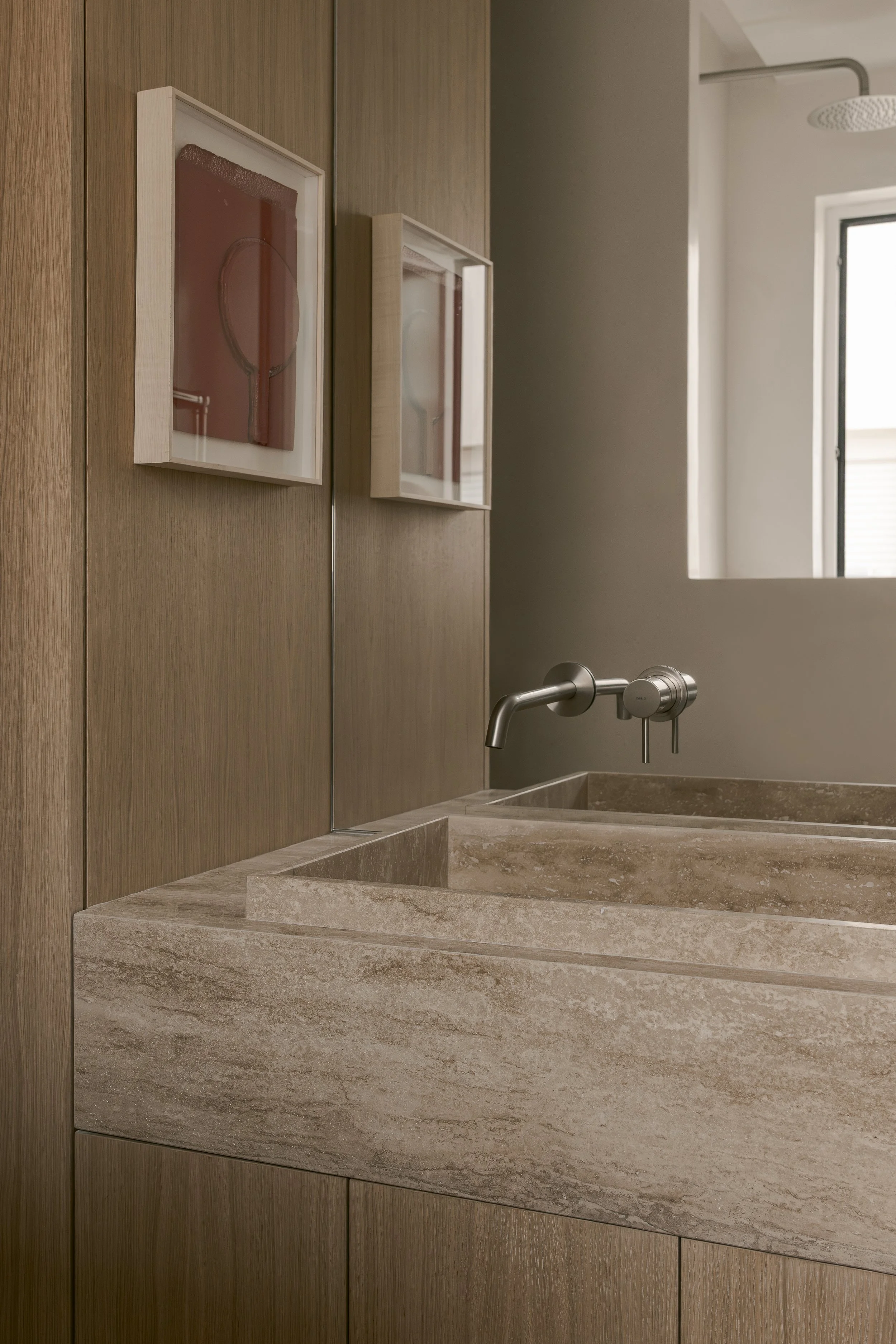
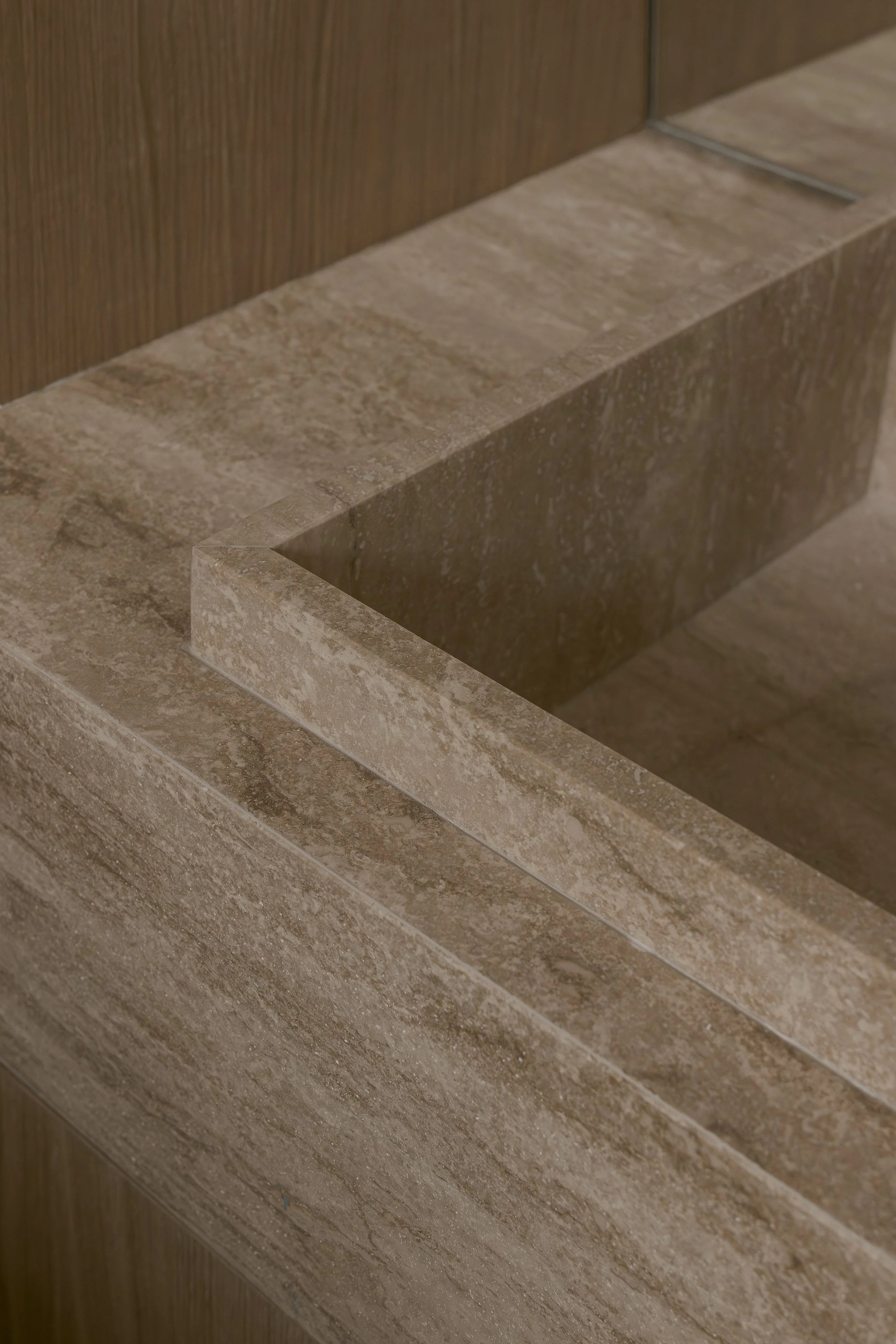
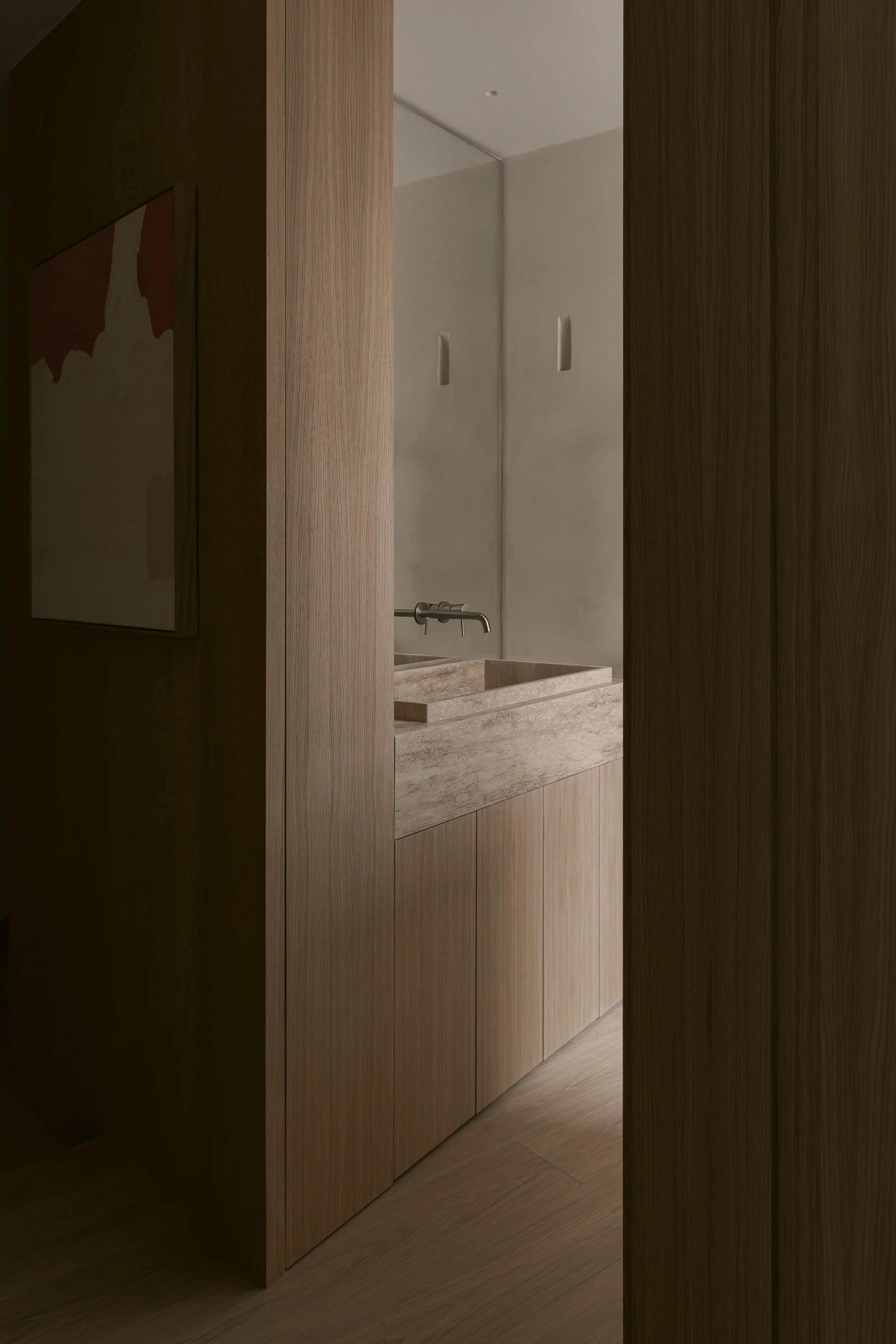
In the bathrooms, bespoke timber elements and natural stone surfaces extend the material dialogue established throughout the apartment, bringing warmth and mineral weight into close contrast. The main bathroom centres on a travertine washbasin conceived as a solid block, with a vertical composition reinforced by the mirror above and balanced by the surrounding oak surfaces.