Point Lonsdale House by Field Office Architecture
Conceived as a four-bedroom forever home for a semi-retired couple, the project balances the calm character of coastal living with the practical requirements of a residence intended to support its occupants well into the future.
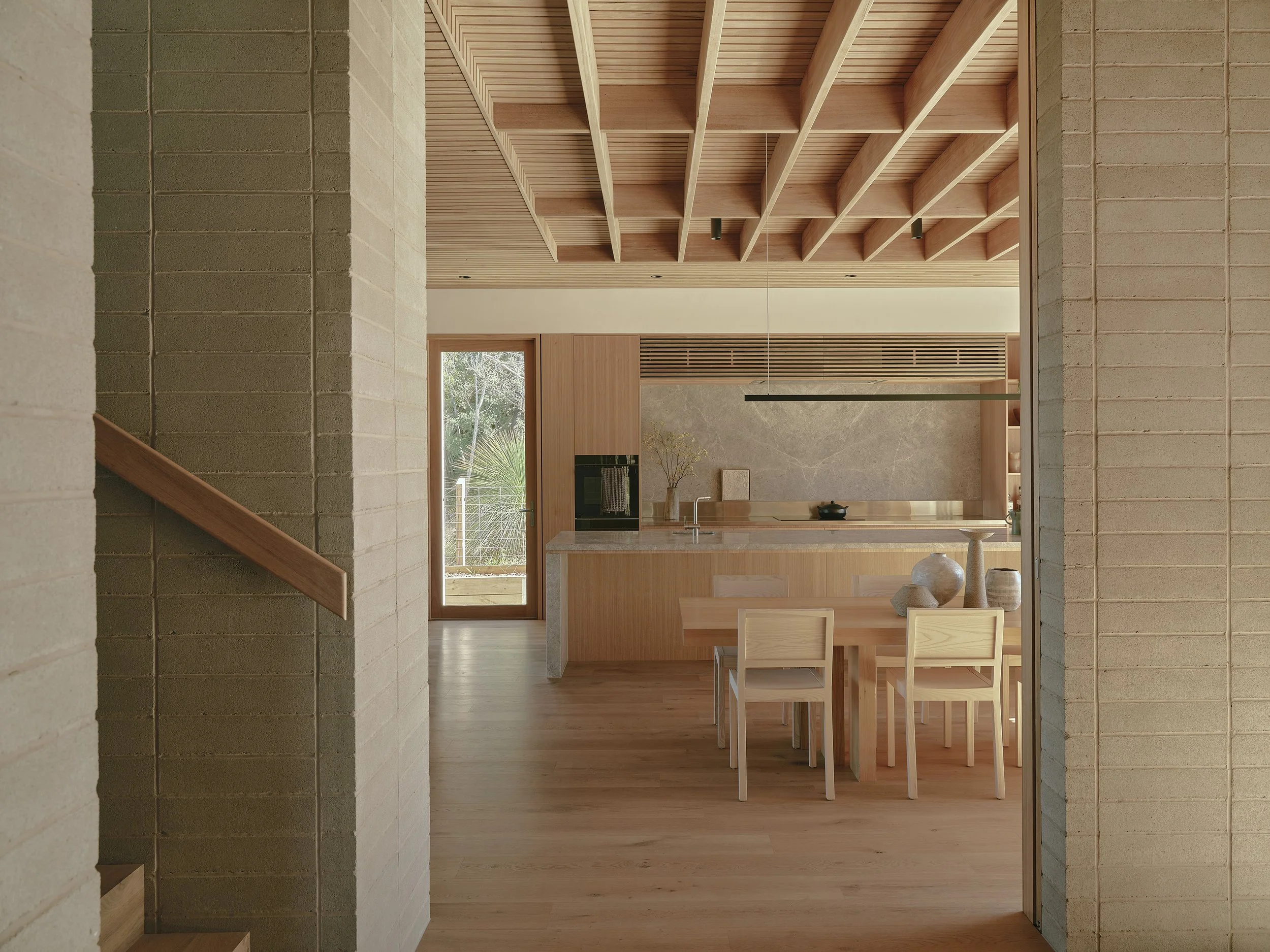
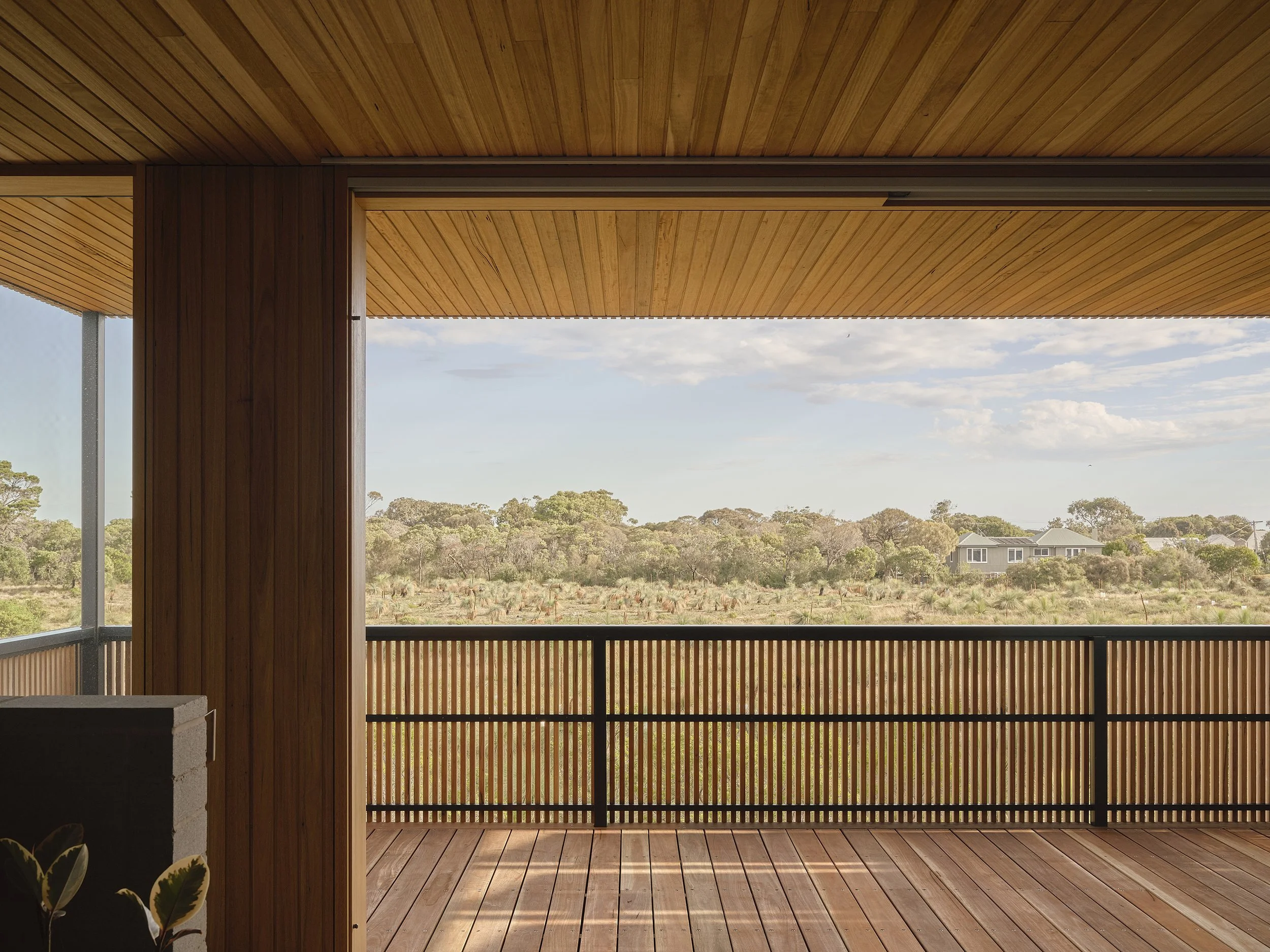
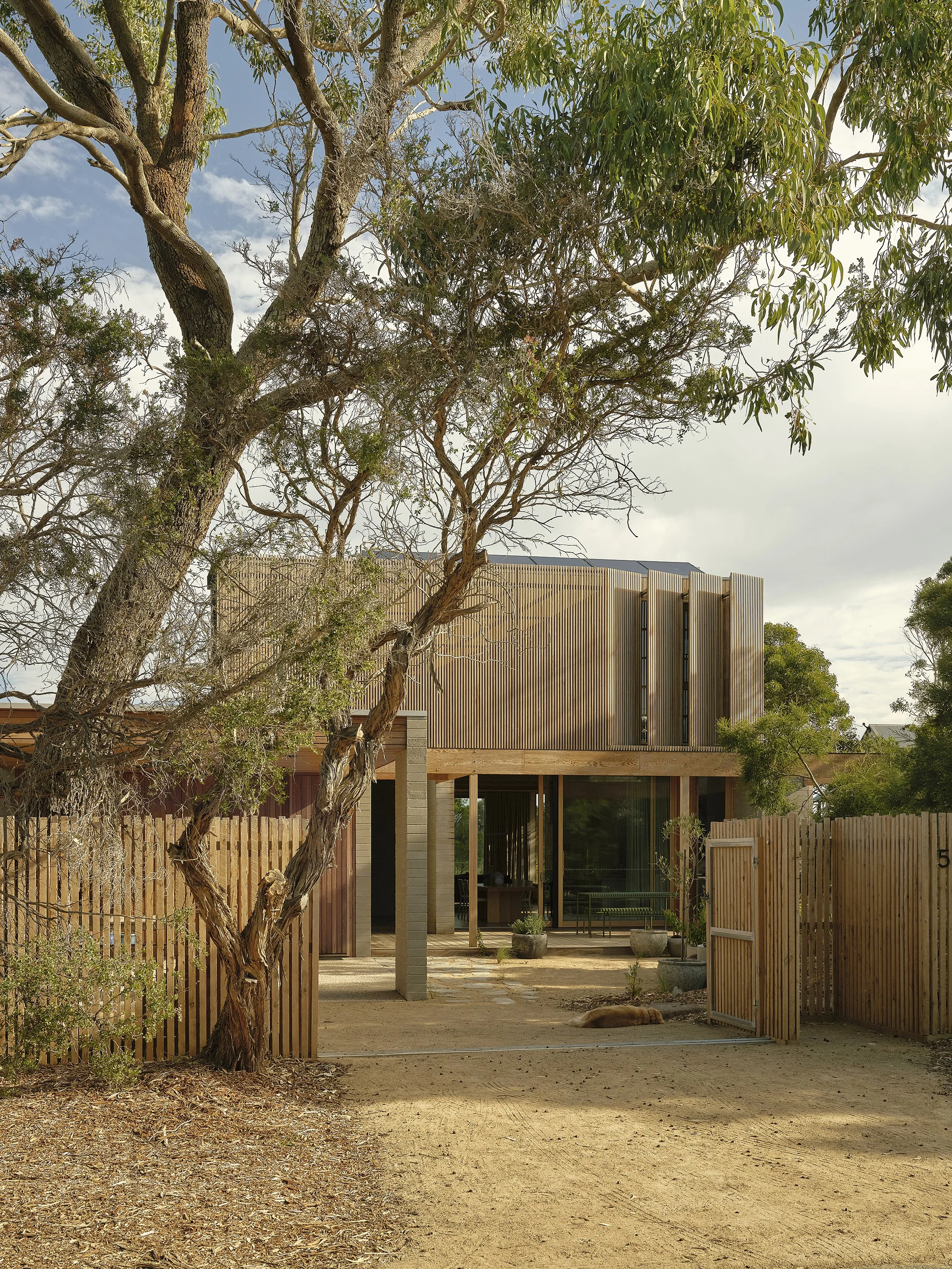
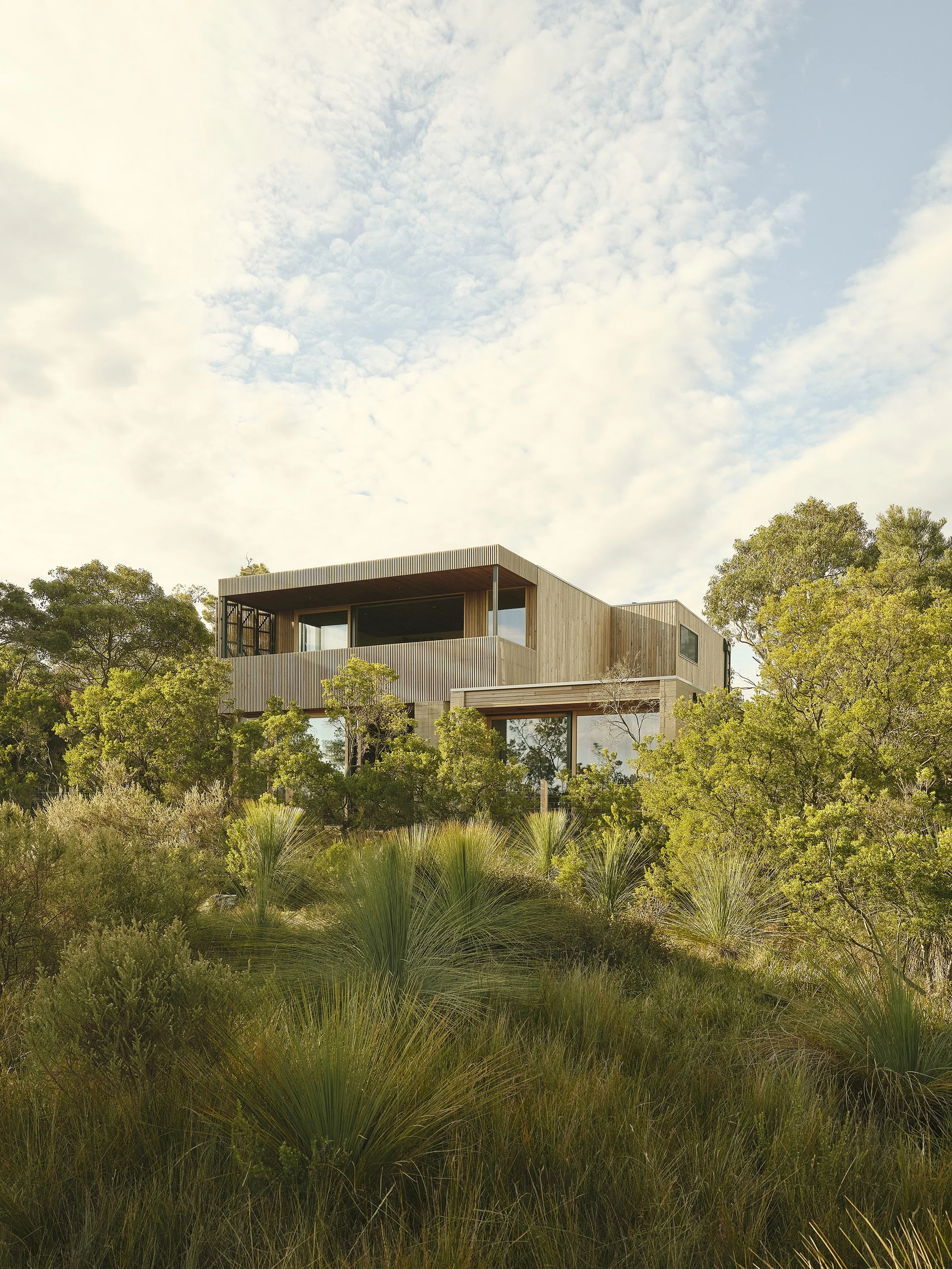
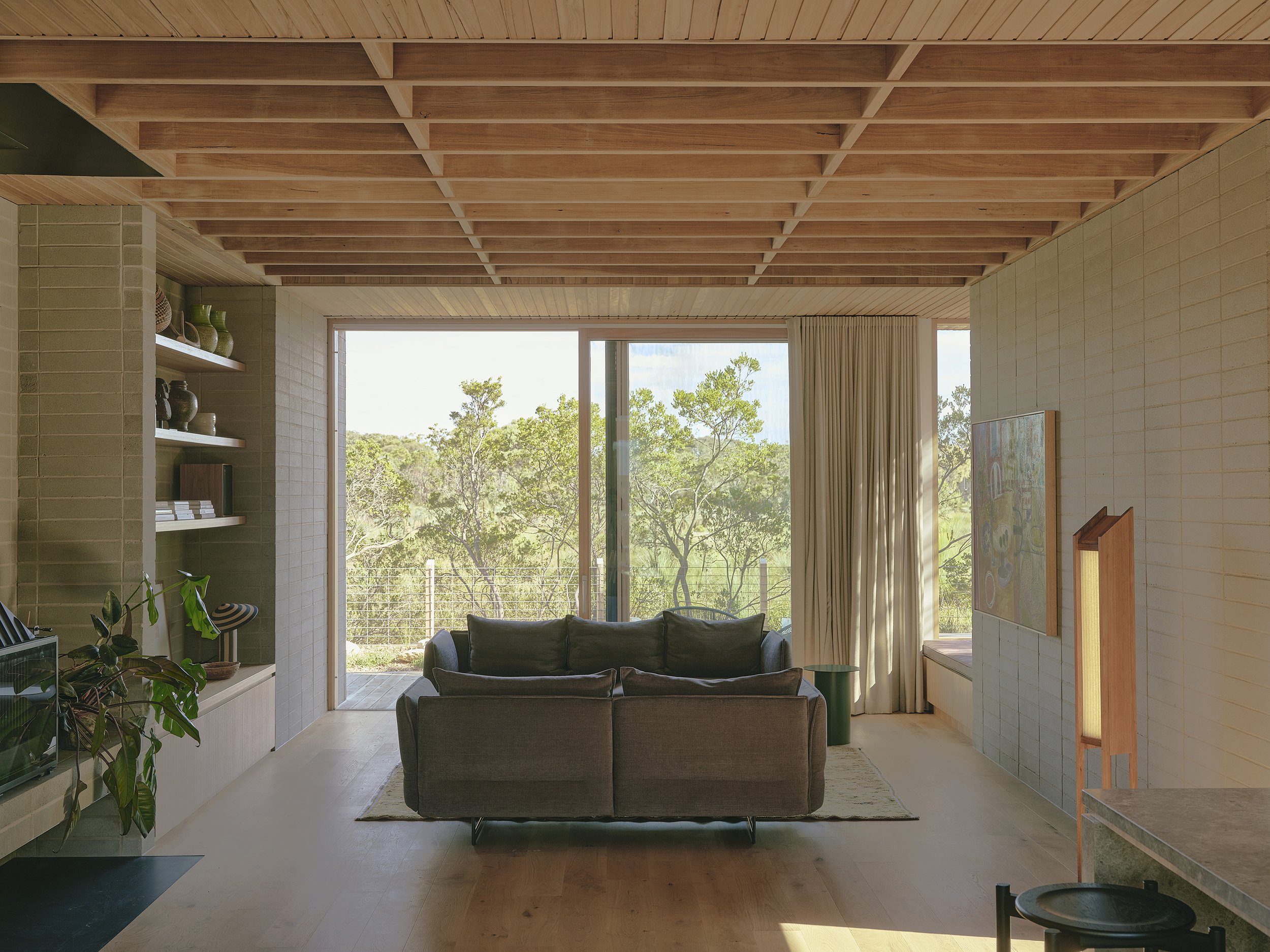
The planning of the interiors responds directly to the unusual orientation of the site, where views extend toward the south while sunlight arrives from the north, prompting a layout that carefully negotiates both outlook and daylight throughout the day. Living areas are positioned to maintain a strong visual connection with the garden while still capturing northern light, allowing the interiors to remain bright and comfortable without sacrificing the long views across the neighbouring estate. The decision to set the home further back from the street allowed a generous north-facing garden and outdoor living area to become an extension of daily life, ensuring that indoor and outdoor environments feel closely linked and naturally integrated.
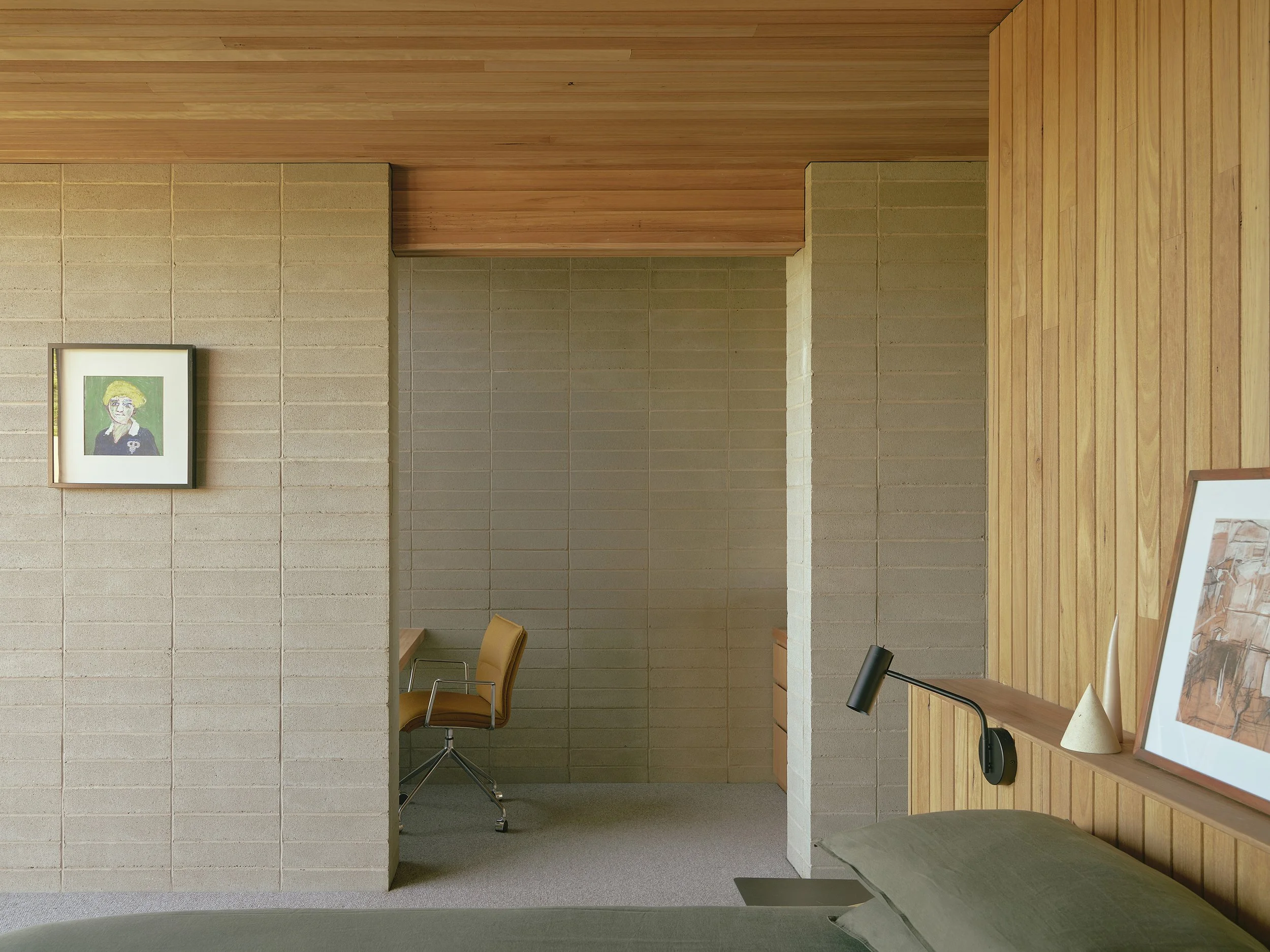
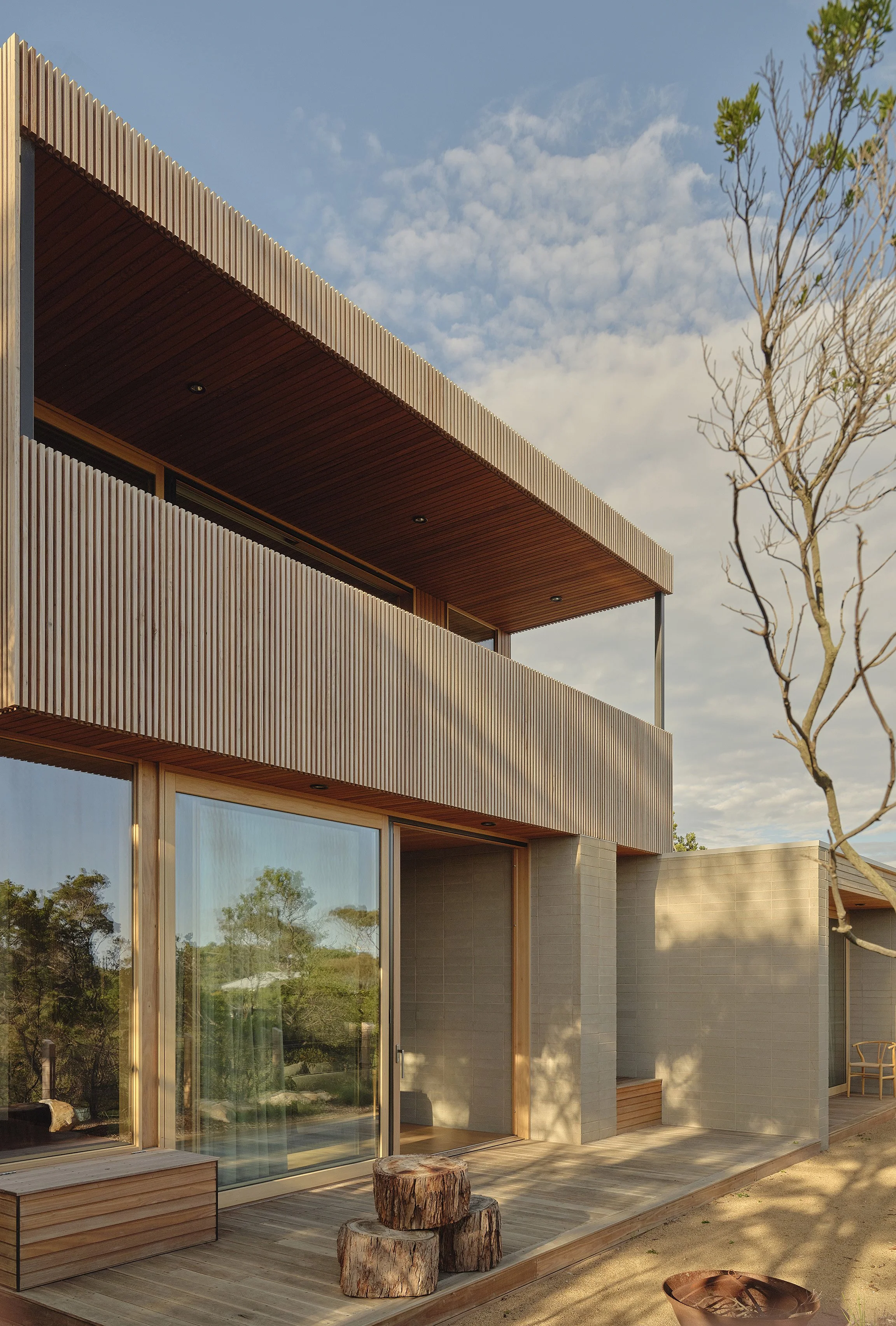
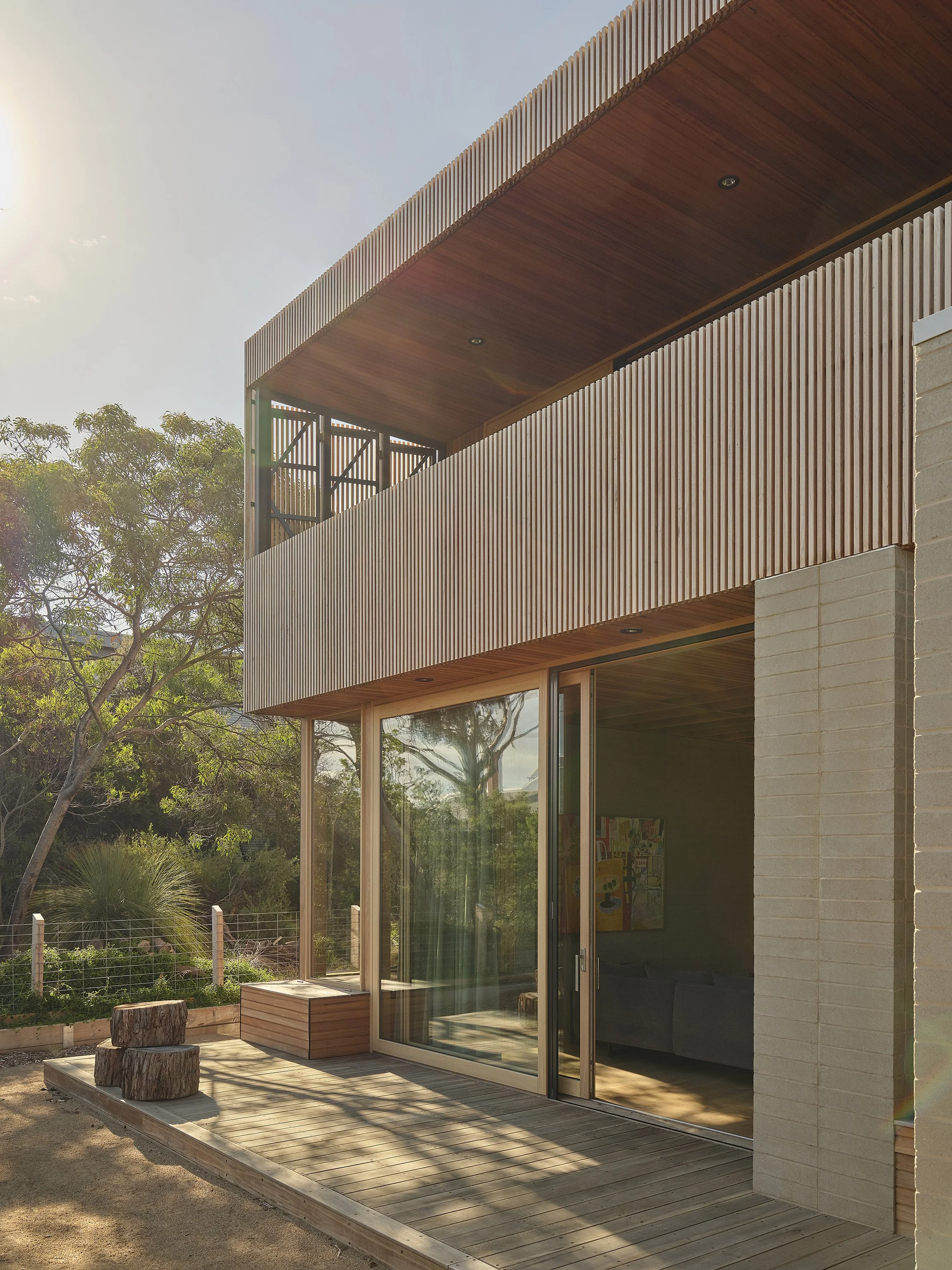
Within the home, the selection of materials contributes to a calm and enduring atmosphere, with finishes chosen for their warmth, durability, and ability to age gracefully in the coastal climate. The lower level is anchored by solid blockwork construction, which not only provides structural stability but also contributes valuable thermal mass that helps moderate the internal temperature throughout the year. Above, timber surfaces introduce a softer and more tactile character, drawing inspiration from the tones and textures of the surrounding vegetation and subtly reinforcing the connection between the interiors and the coastal environment beyond. Throughout the residence, the palette remains intentionally restrained, allowing the natural qualities of timber, masonry, and simple finishes to shape the character of each room without unnecessary embellishment.
The internal layout is organised to support ageing in place, ensuring that the primary living functions remain accessible and practical as the homeowners’ needs evolve over time. All essential areas, including the main bedroom suite, everyday living spaces, and a dedicated workshop, are located on the ground floor, creating a self-sufficient level that can comfortably accommodate daily routines without reliance on the upper storey. Circulation is generous and uncomplicated, with clear connections between rooms that reinforce a sense of openness while maintaining moments of privacy and retreat.
The upper level introduces additional flexibility within the home, providing a rumpus room and guest accommodation that can adapt to changing patterns of family life. Positioned among the surrounding treetops, these spaces offer elevated views across the adjacent estate while remaining visually connected to the landscape that defines the setting of the house. This upper portion of the home allows visiting family members to gather comfortably while maintaining a degree of separation from the quieter routines of the ground floor.
Located within the quiet coastal township of Point Lonsdale and sharing a boundary with the historic Ballara Estate—once the summer residence of Australia’s second Prime Minister, Alfred Deakin—Point Lonsdale House by Field Office Architecture presents a carefully considered interior environment that prioritises long-term comfort, practicality, and a close relationship to the surrounding landscape.
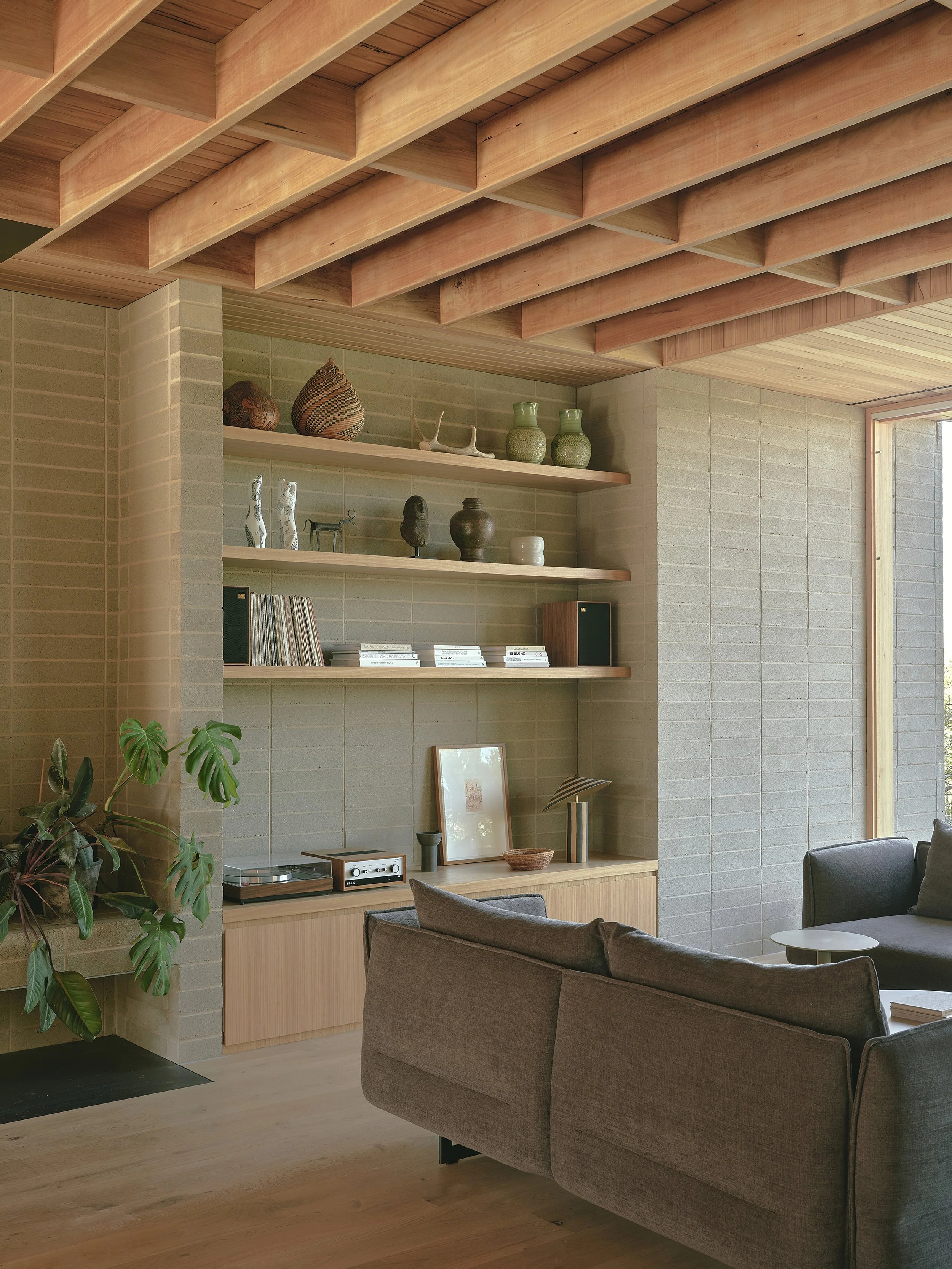
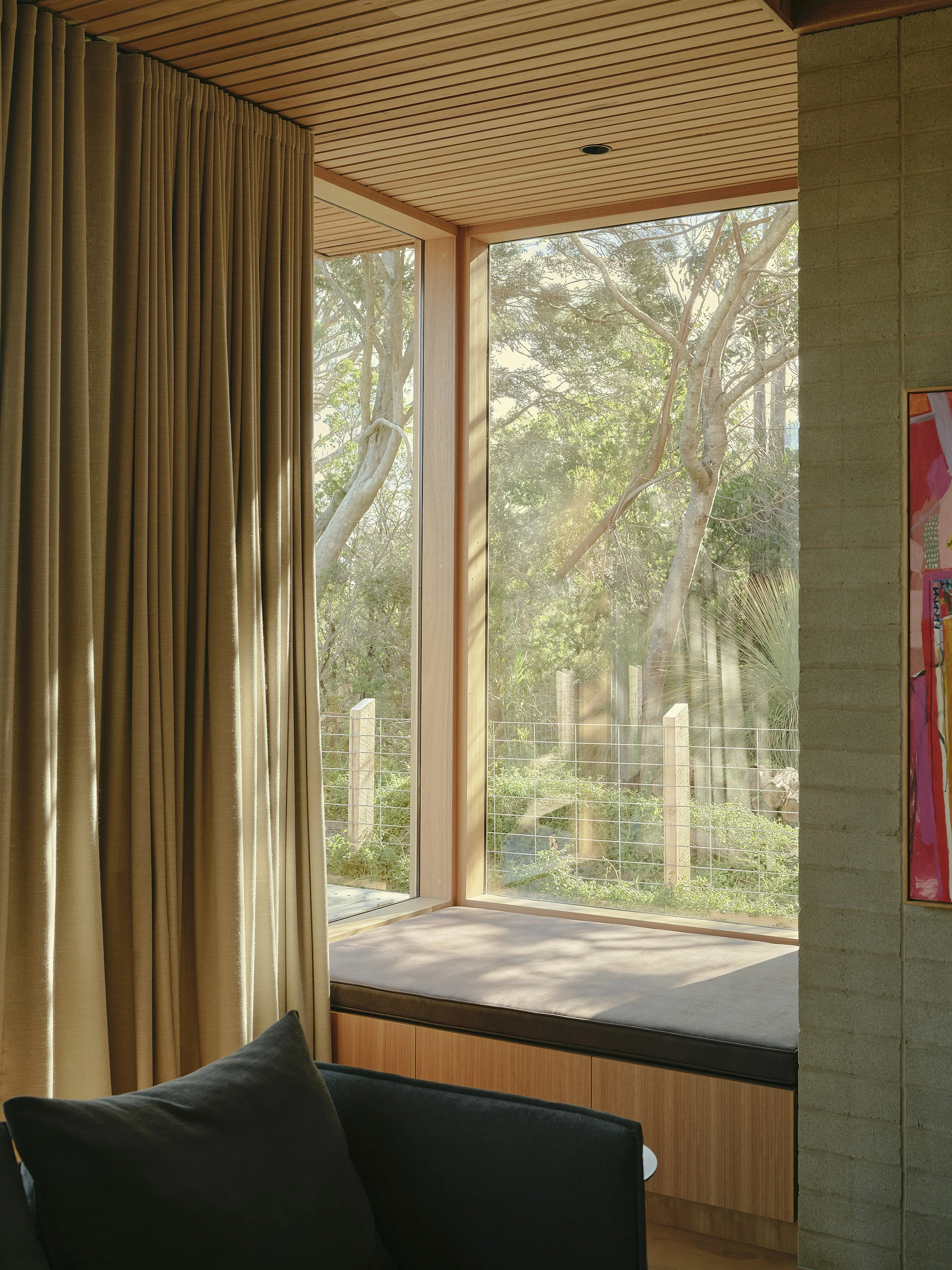
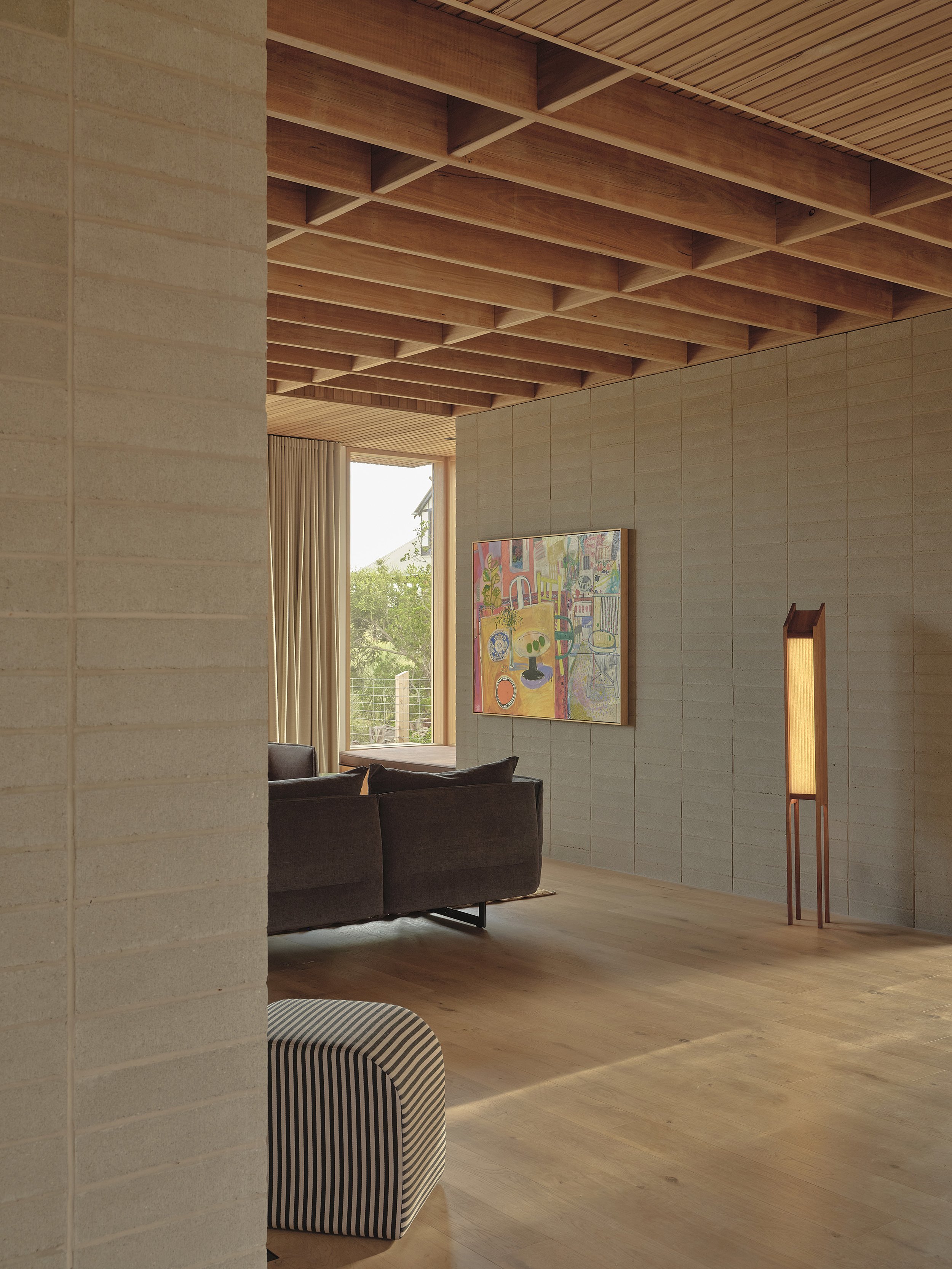
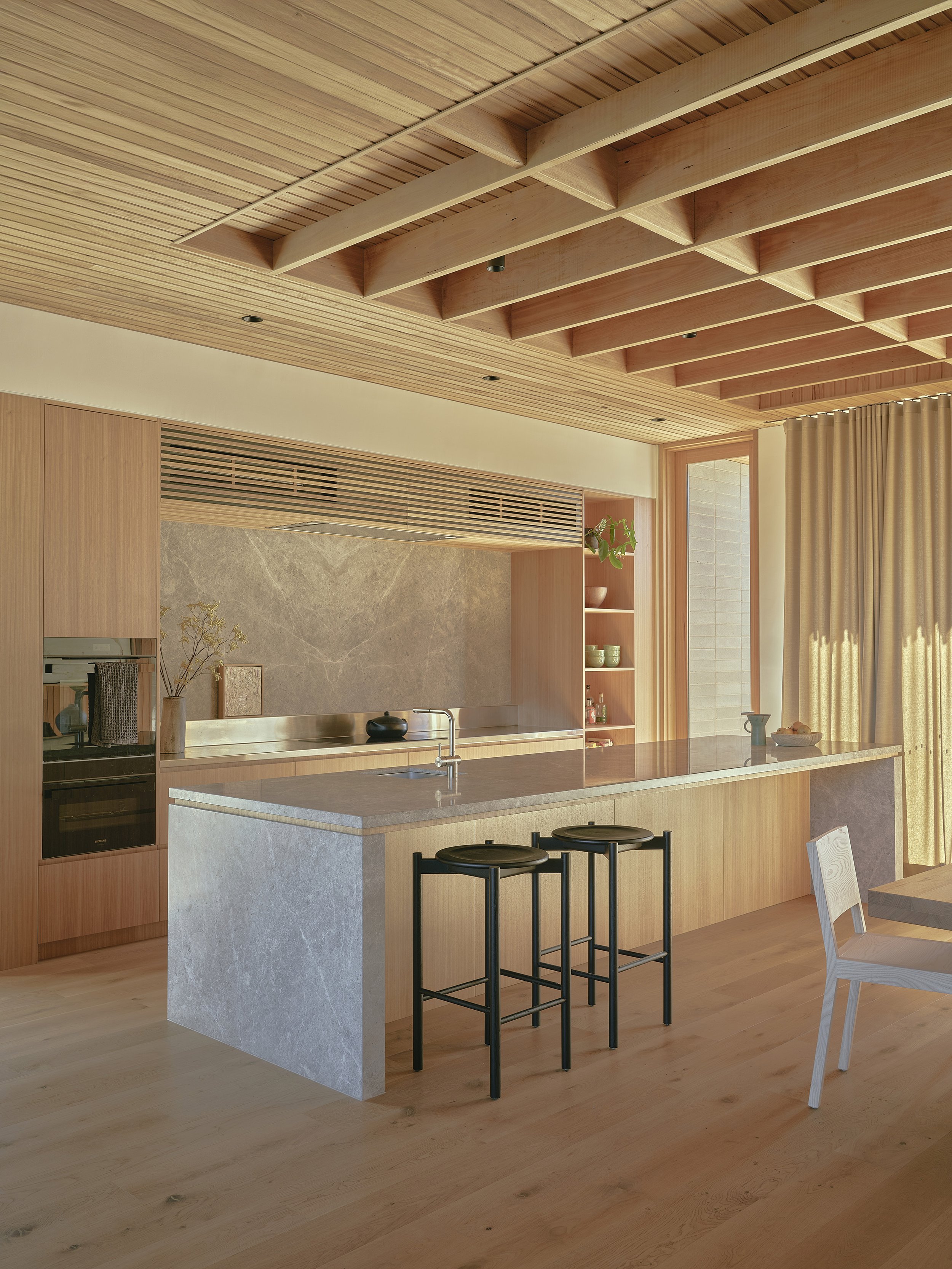
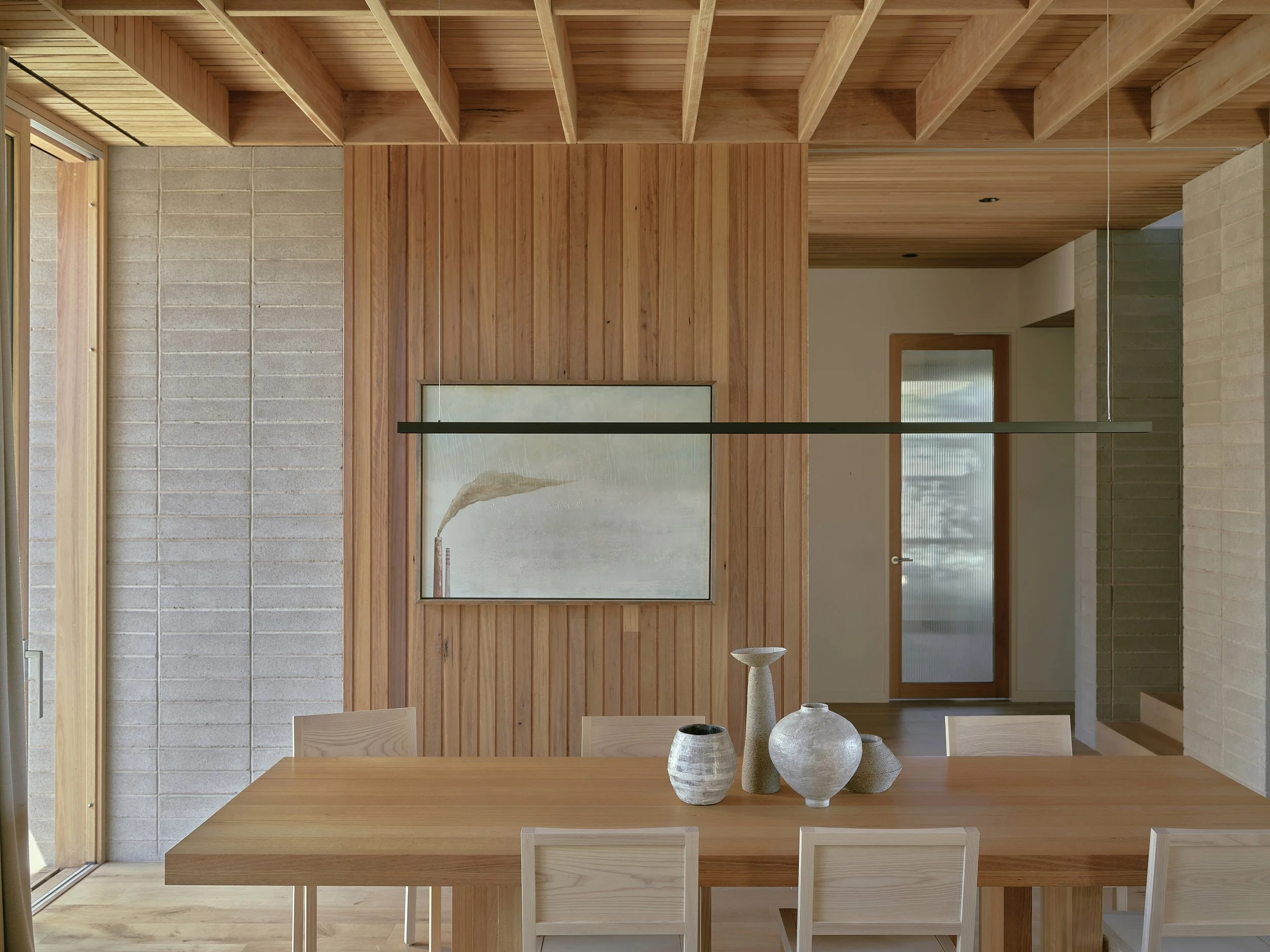
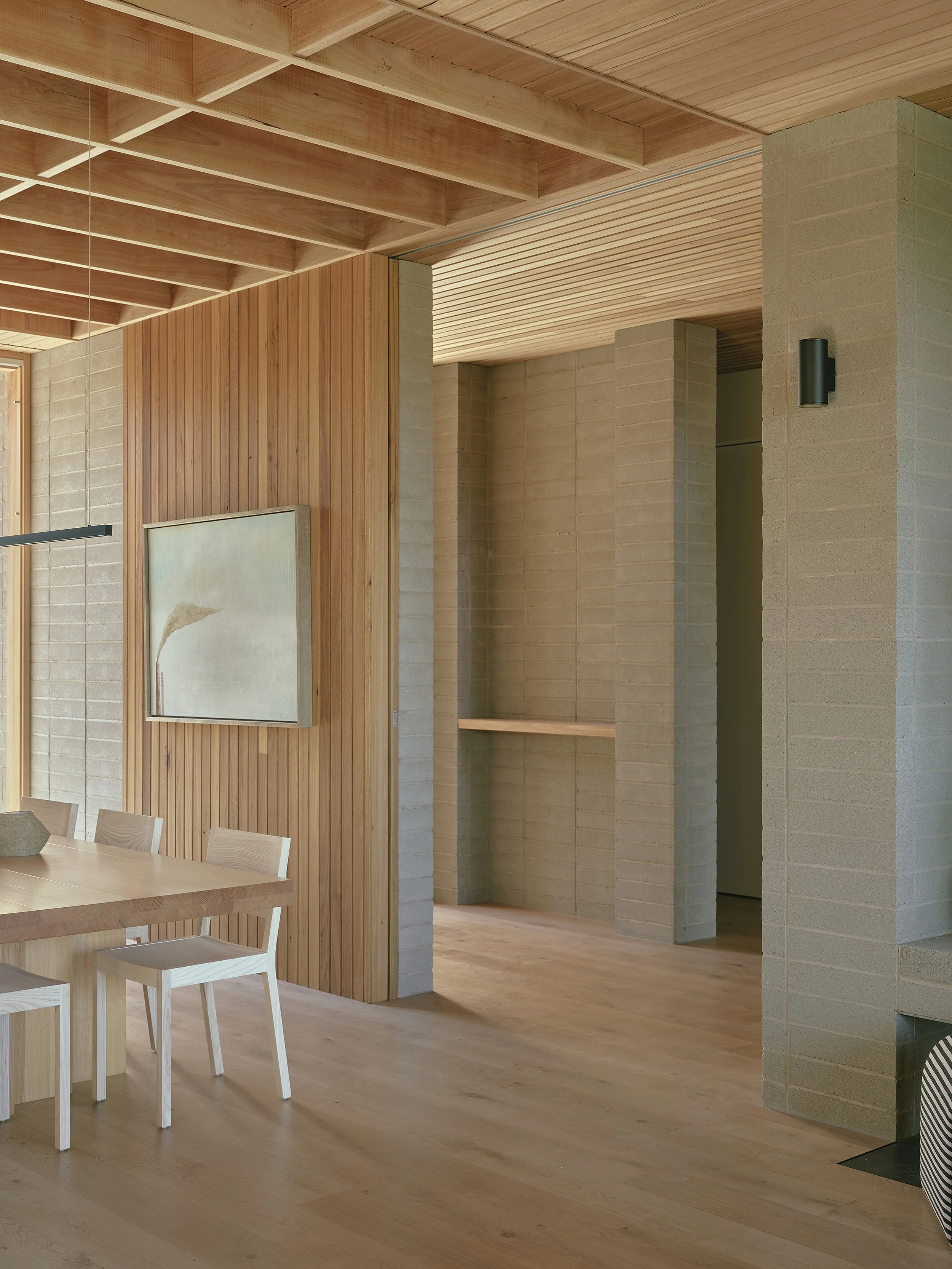
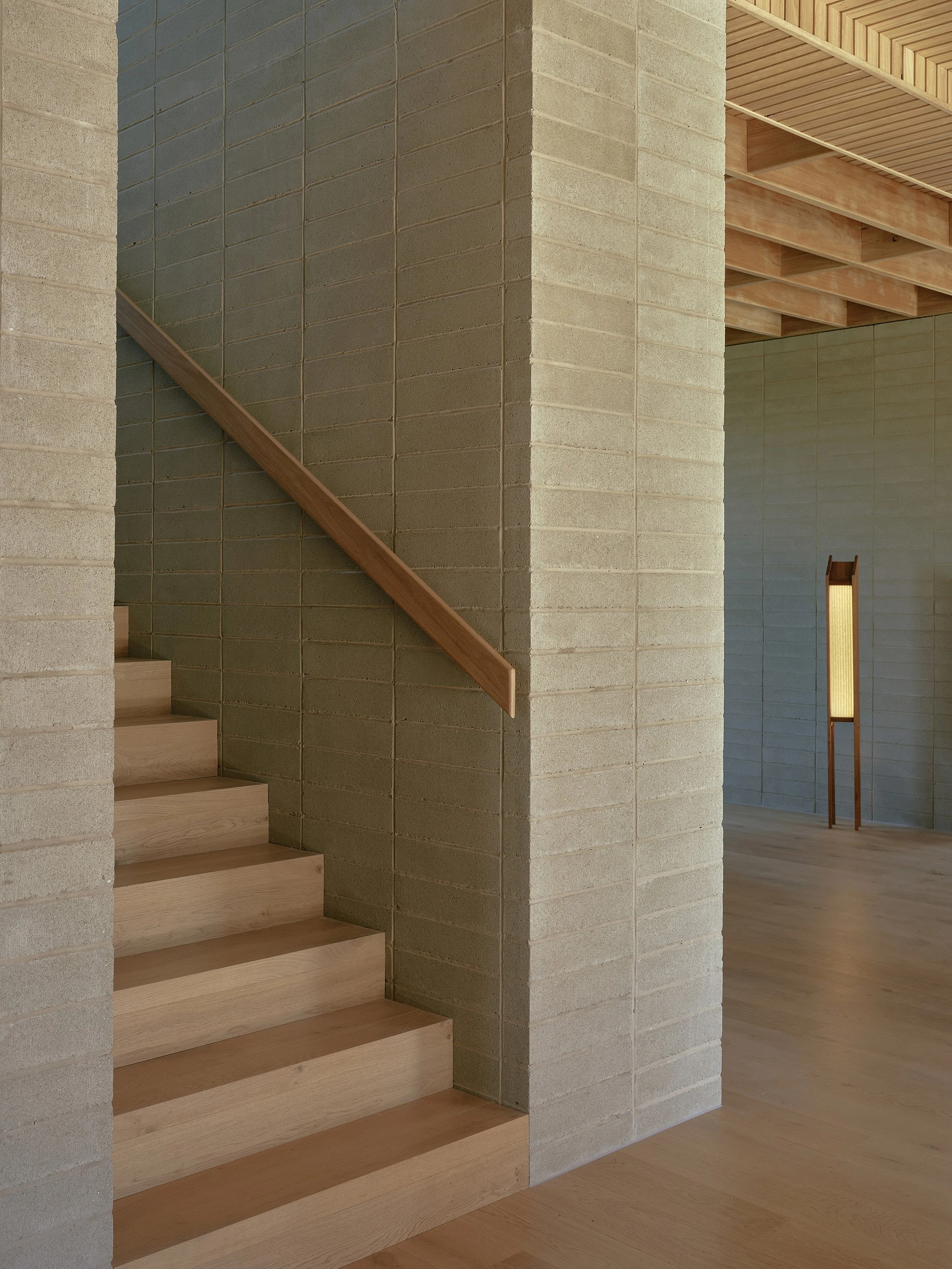
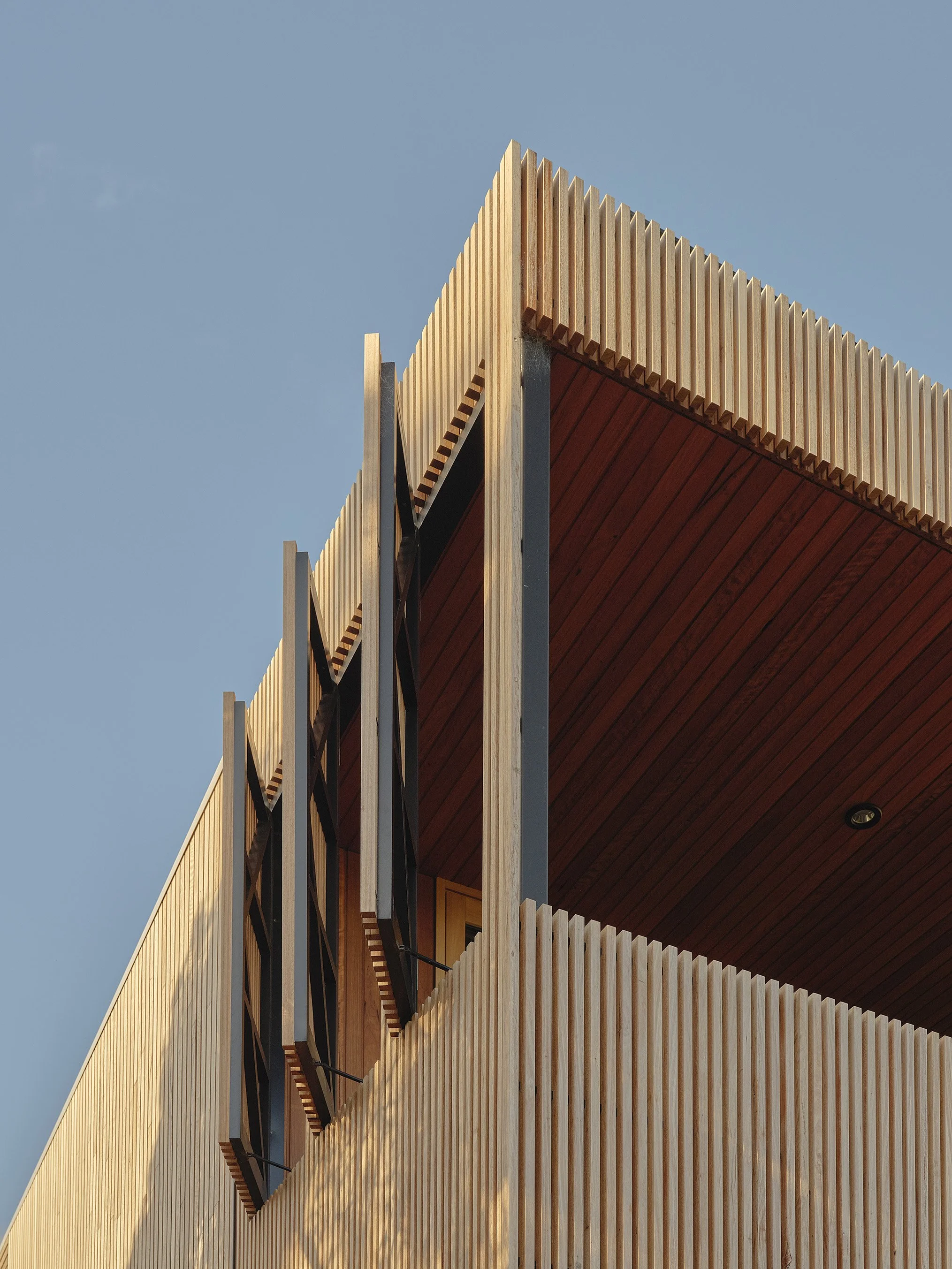
Timber screening elements wrap sections of the building and extend into the interior language of the home, filtering daylight and mediating the transition between inside and outside environments. These vertical elements reference the forms of the surrounding coastal flora while providing privacy and shade, allowing natural light to enter in a softer and more controlled manner throughout the day. The presence of these screens reinforces the relationship between architecture and landscape, creating layered thresholds that gently connect the interiors with terraces and garden areas.
Environmental performance is also integrated into the broader interior strategy, with the residence operating almost entirely off-grid through the use of solar power, battery storage, and rainwater harvesting systems. Passive thermal principles, supported by the mass of the blockwork base and the orientation of the living areas, help maintain a comfortable internal climate with minimal reliance on mechanical systems, while native planting and durable finishes further reduce the need for ongoing maintenance.
Rather than relying on dramatic gestures or decorative excess, the interiors of Point Lonsdale House emphasise quiet durability and thoughtful planning, allowing everyday living to unfold within an environment shaped by natural light, robust materials, and a strong connection to place. Through this approach, the home offers a refined interpretation of contemporary coastal living that values longevity, adaptability, and a calm, grounded atmosphere suited to the changing rhythms of life.