Memory Center by Ortega Diago
A new care facility in San Sebastián introduces a calm and tactile environment shaped through material contrast, filtered light, and a clear structural order.
Conceived by Ortega Diago, led by Gonzalo Sánchez Ortega and Armando Diago, the Memory Center transforms a previously dark and heavily structured ground floor into a carefully organized interior that prioritizes well-being and clarity for its users.
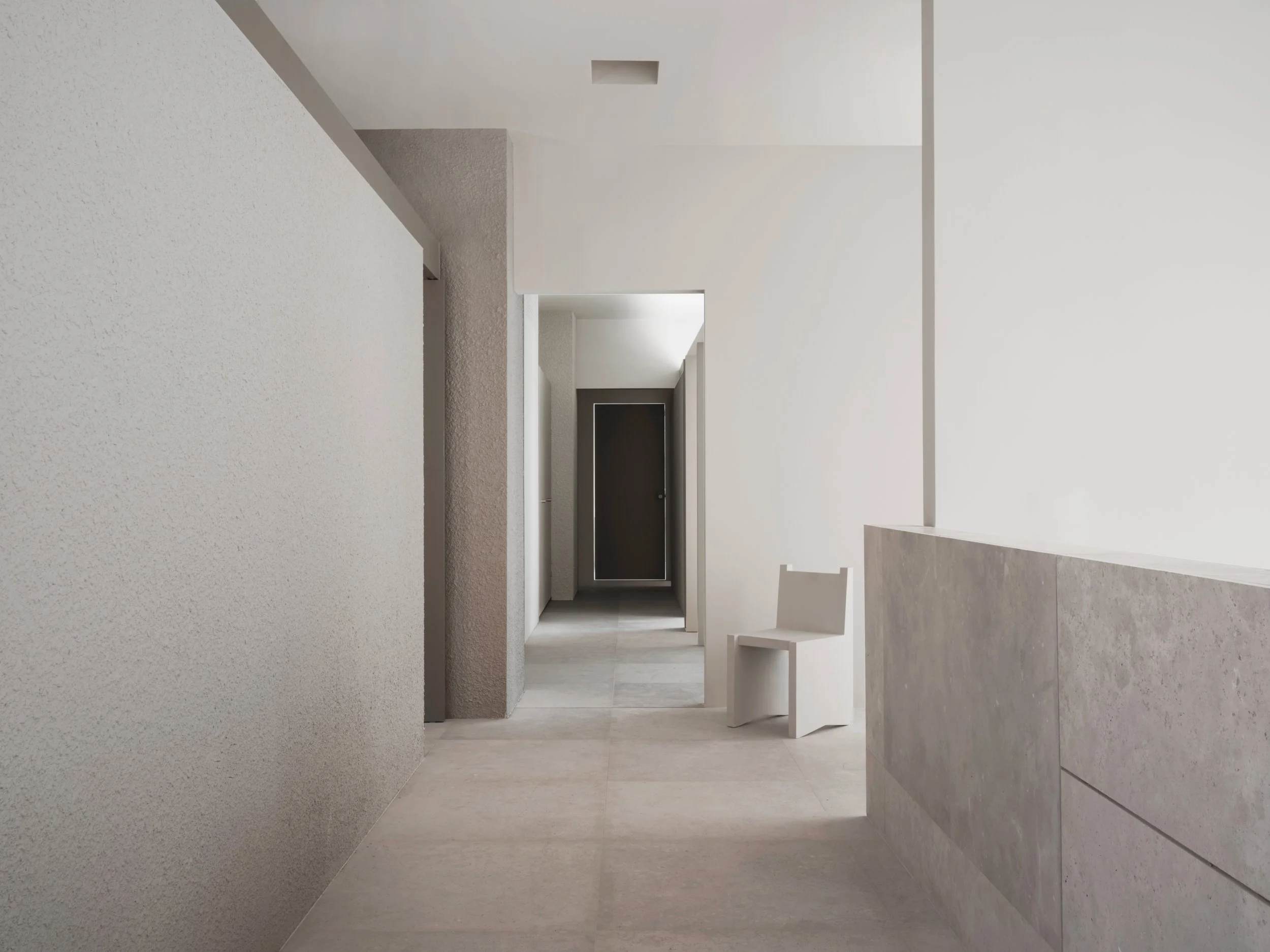
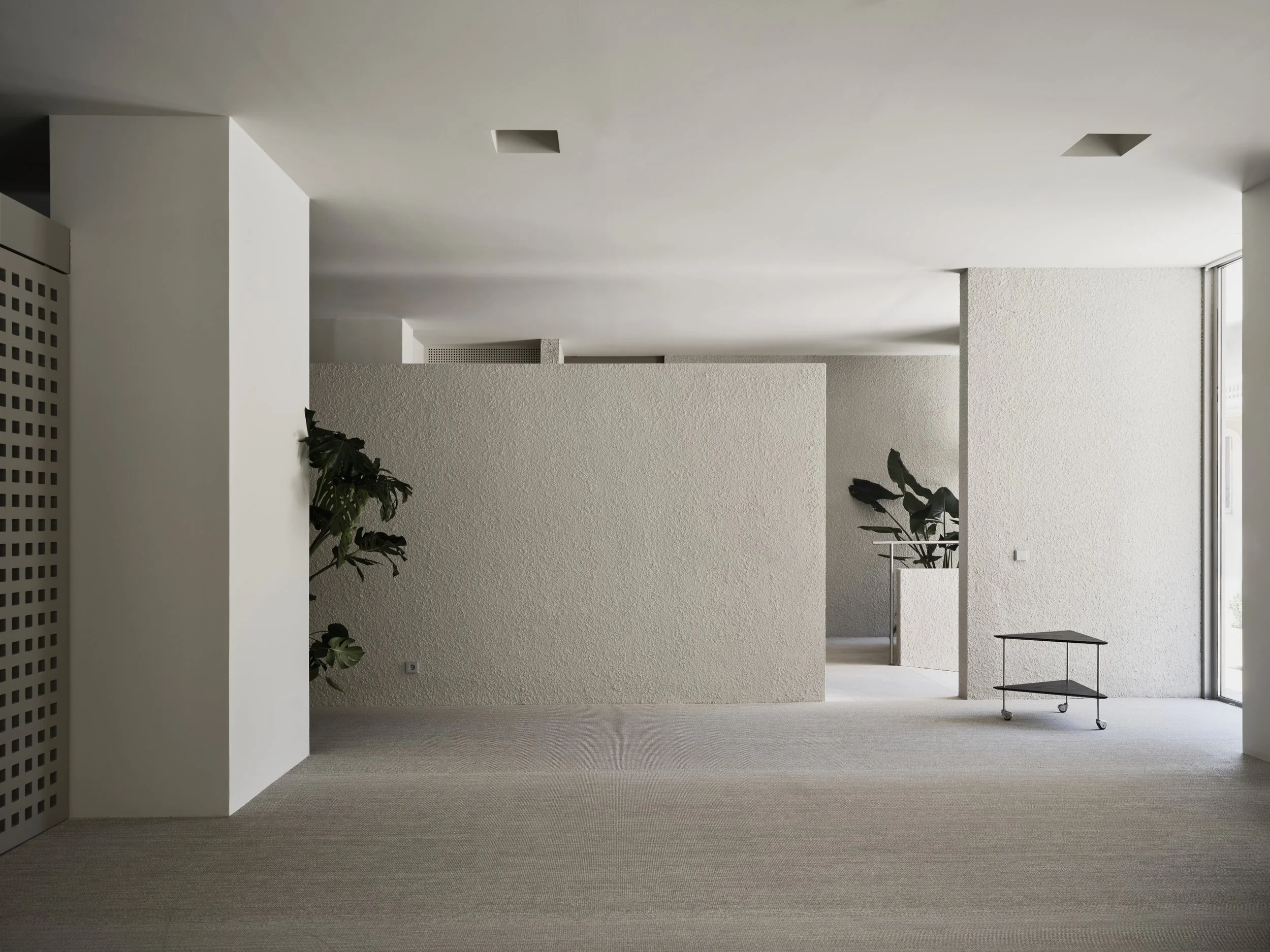
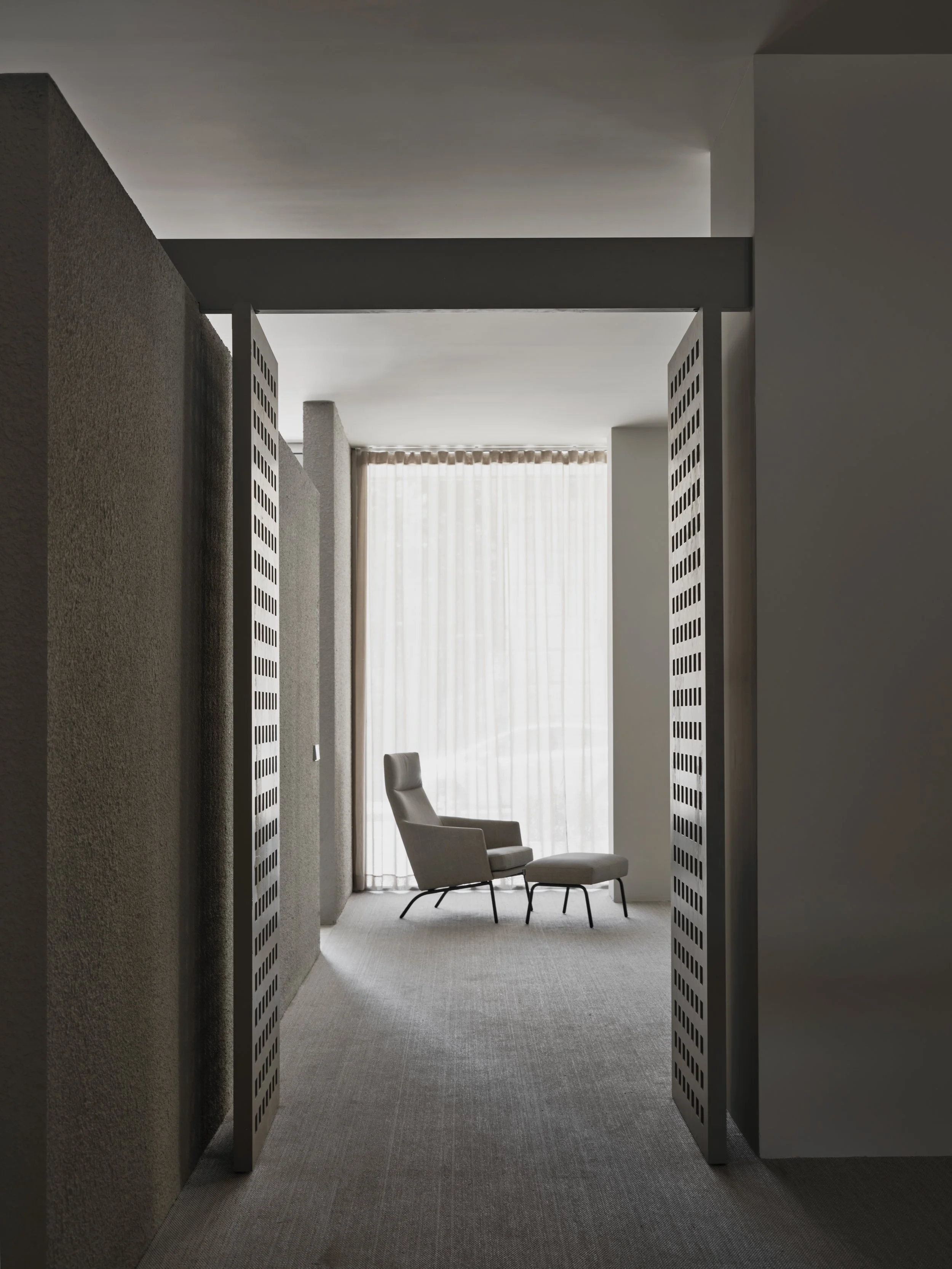
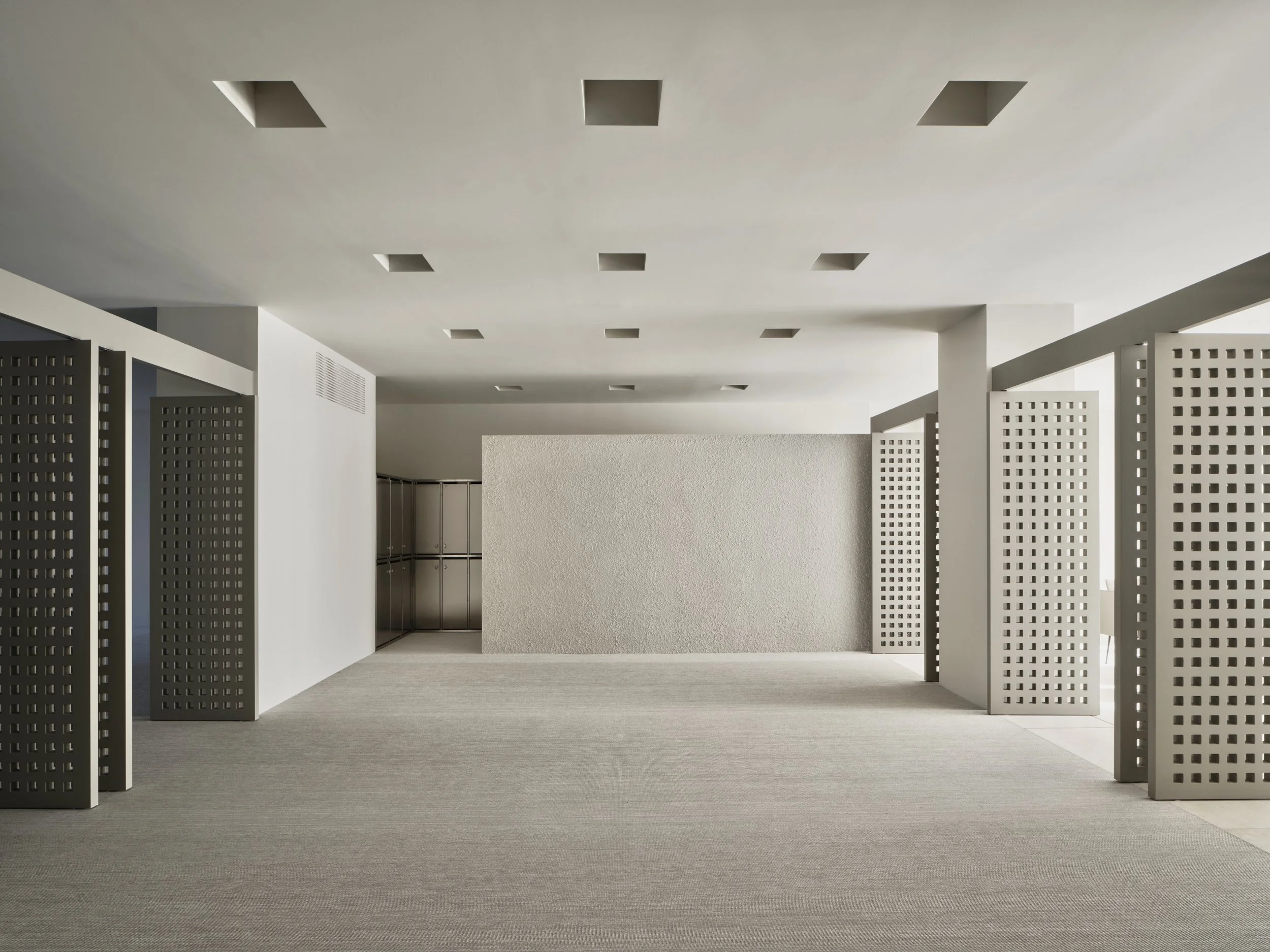
Occupying a 600-square-metre floor plate, the intervention begins with a close reading of the existing structure. The original layout was dominated by a dense grid of pillars that defined the character of the interior. These columns remain visible and become the framework that guides the new arrangement of rooms and circulation. Smooth pillar surfaces contrast with the new built elements, establishing a clear visual dialogue between the original structure and the additions that shape the program.
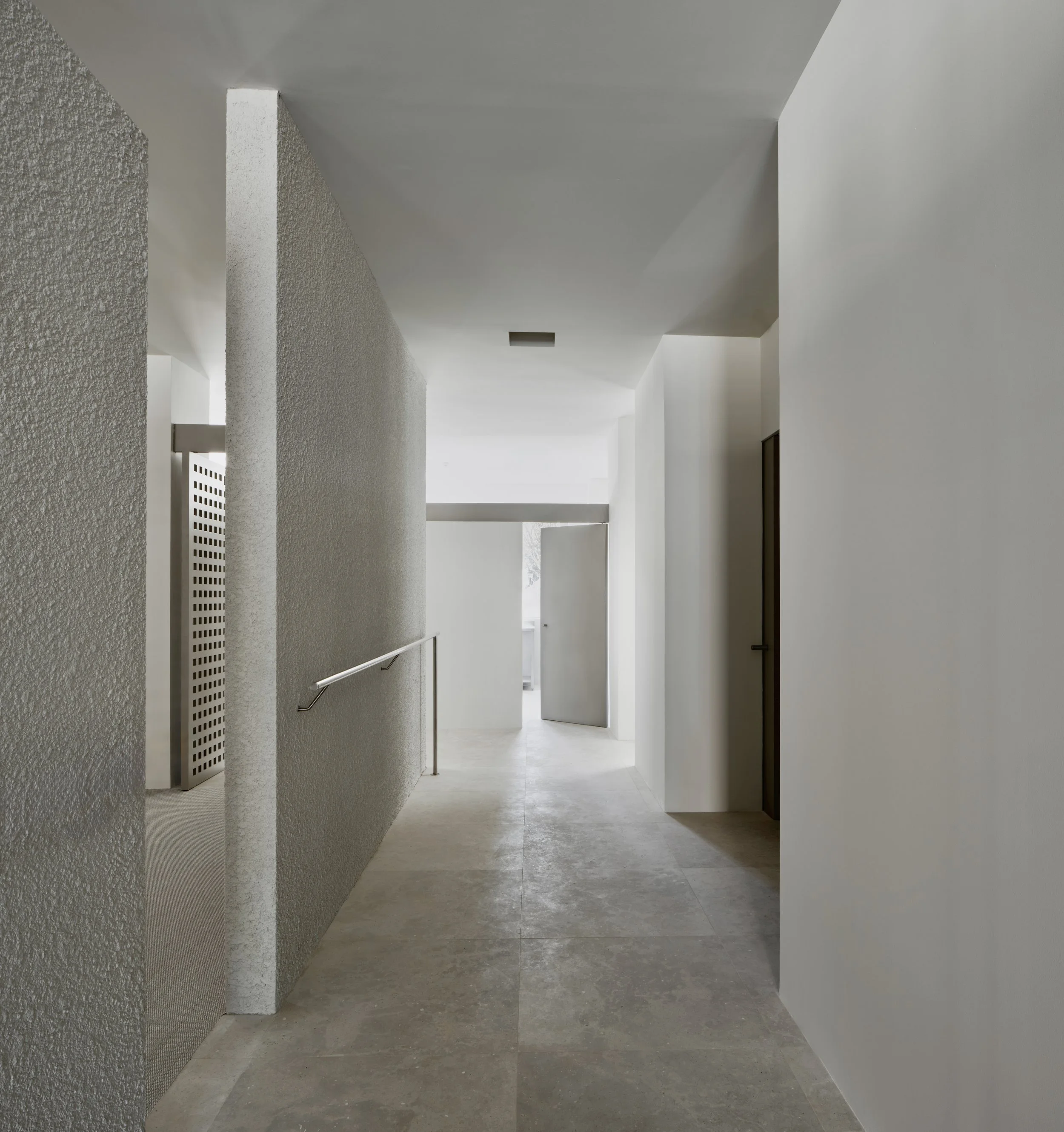
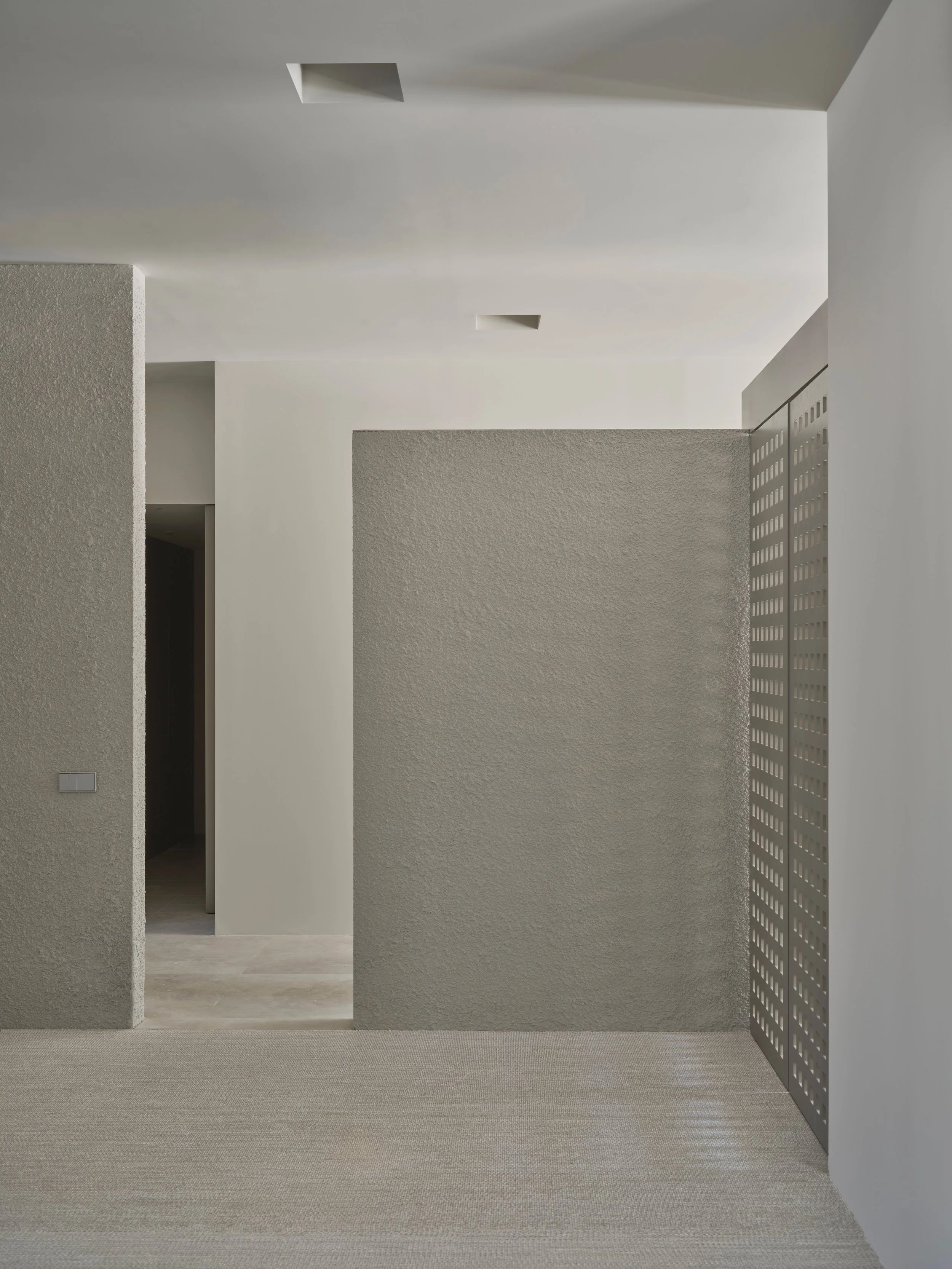
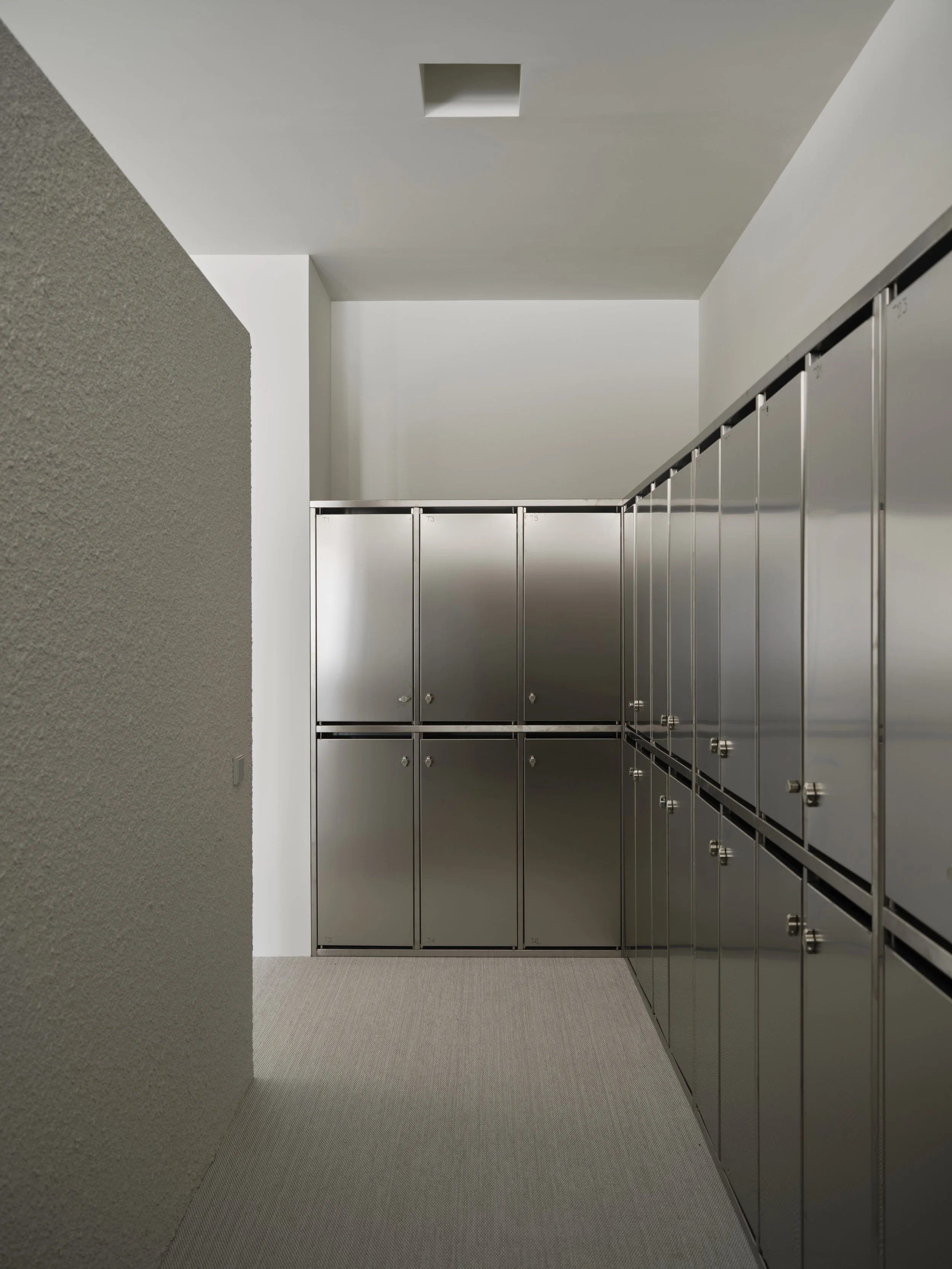
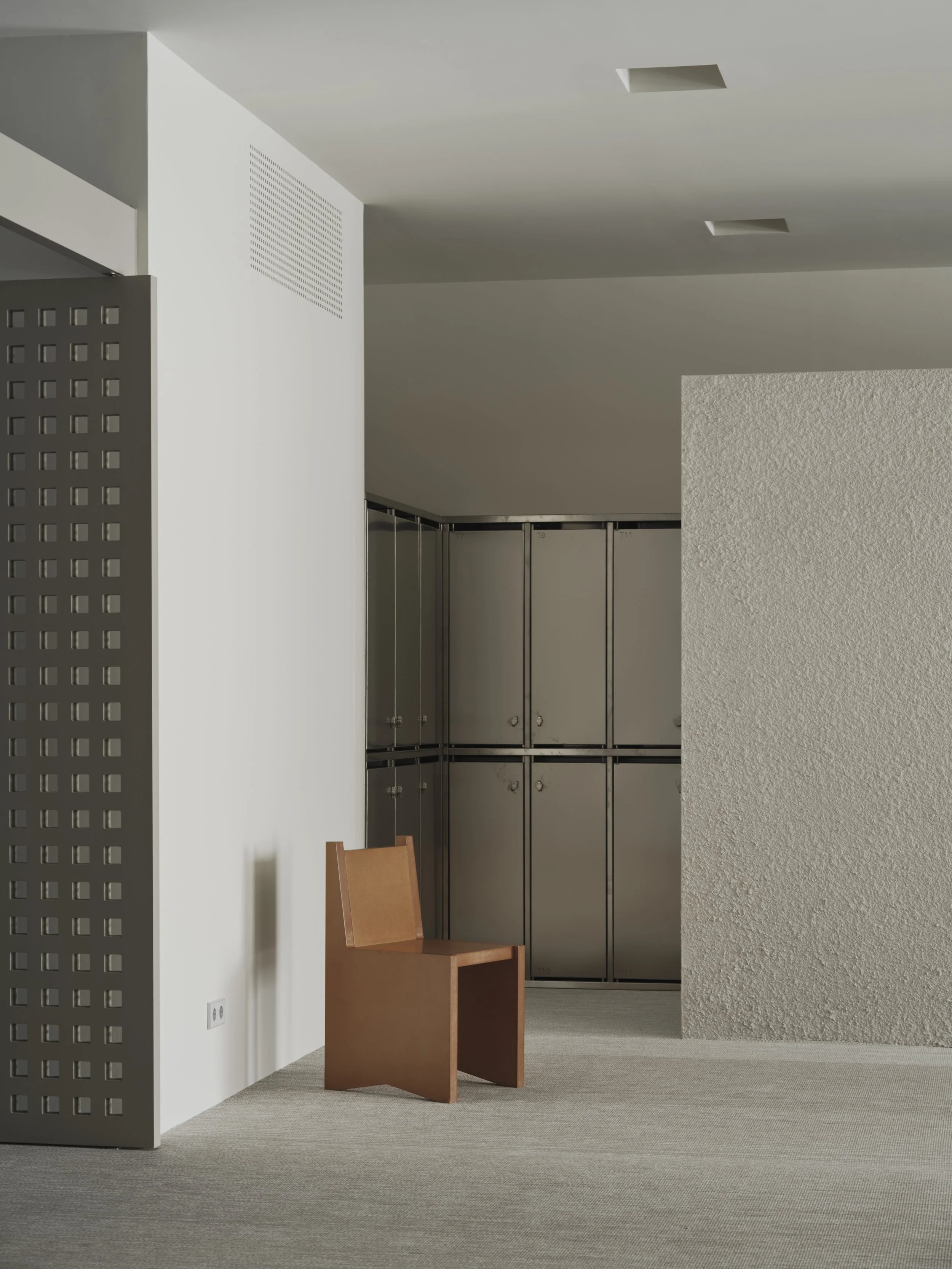
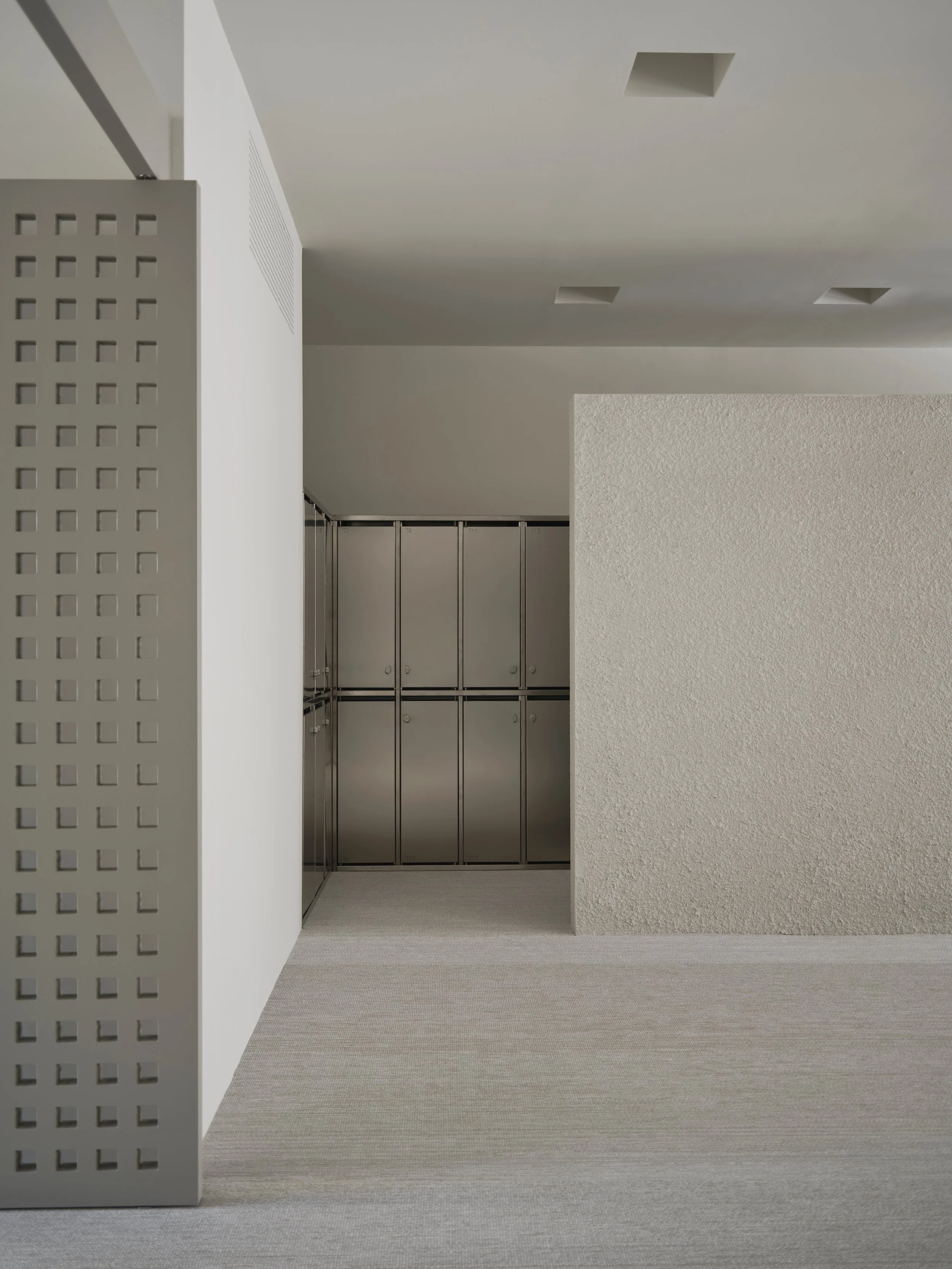
Materiality plays an essential role in shaping the atmosphere of the interior. New partitions are finished with rough, coarse-grained stone textures that introduce a tactile quality rarely found in healthcare environments. The textured surfaces add visual depth and encourage sensory engagement, softening the typically clinical character associated with medical facilities. Service areas and storage zones incorporate stainless steel, bringing a technical precision to the palette while reflecting light across the interior. Subtle glints and diffuse reflections help brighten areas that previously lacked natural illumination.
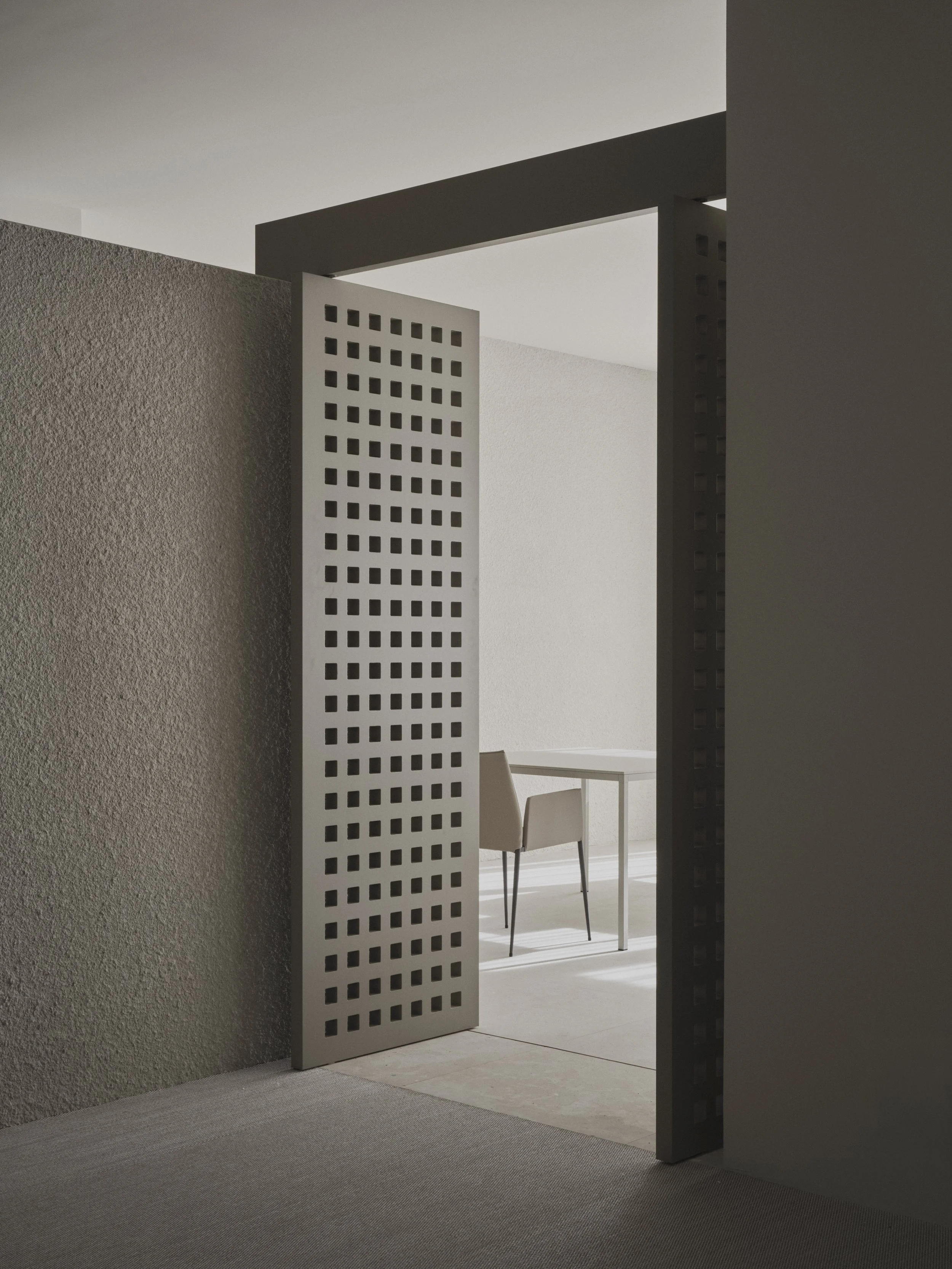
Flexibility within the plan is achieved through large pivoting doors made from perforated metal panels. These elements function both as partitions and as light filters. As daylight passes through the patterned openings, geometric shadows travel across the floor throughout the day, giving the interior a constantly shifting atmosphere. Light becomes an active component of the architecture, marking time and subtly changing the perception of the rooms as the sun moves.
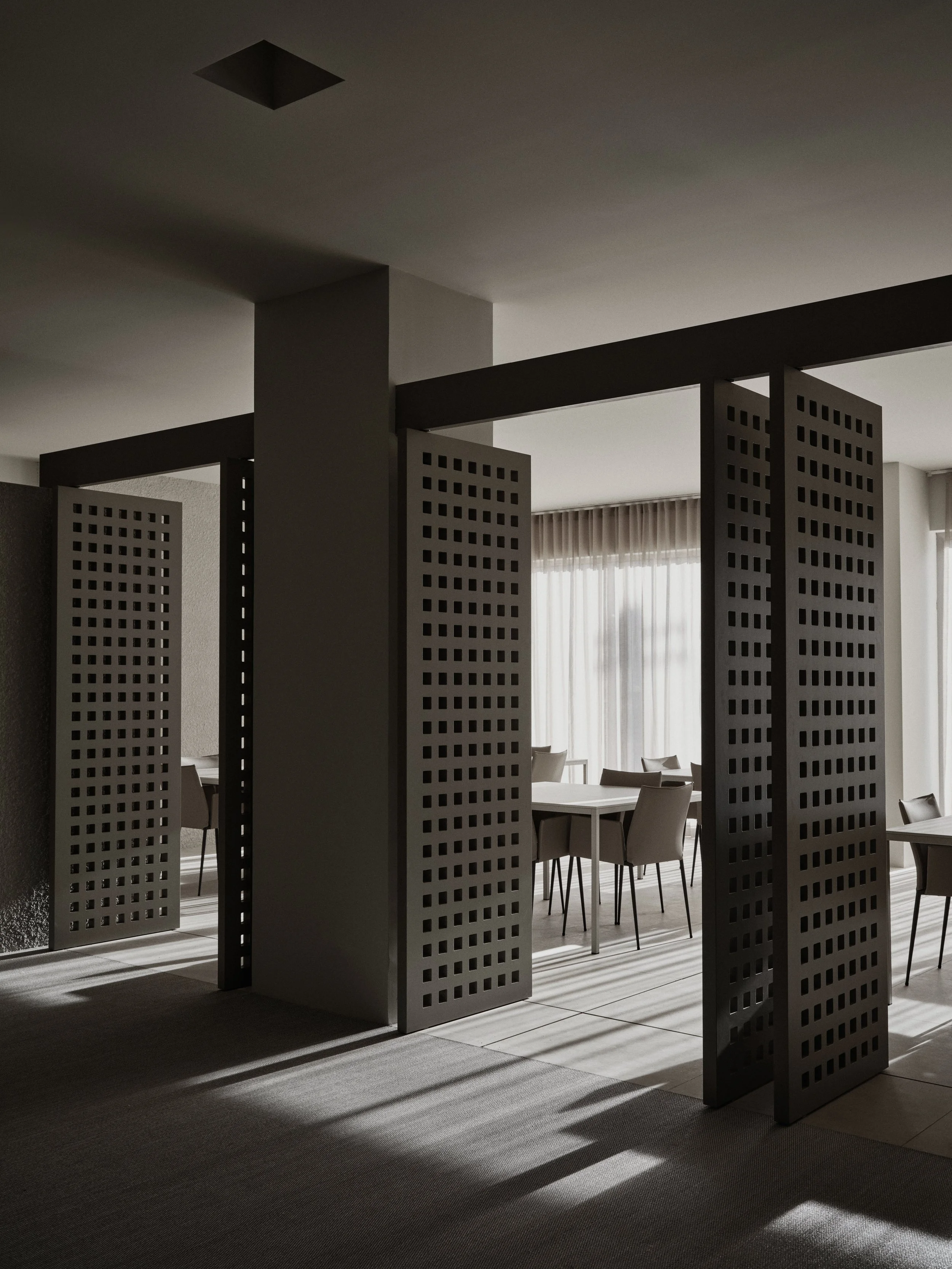
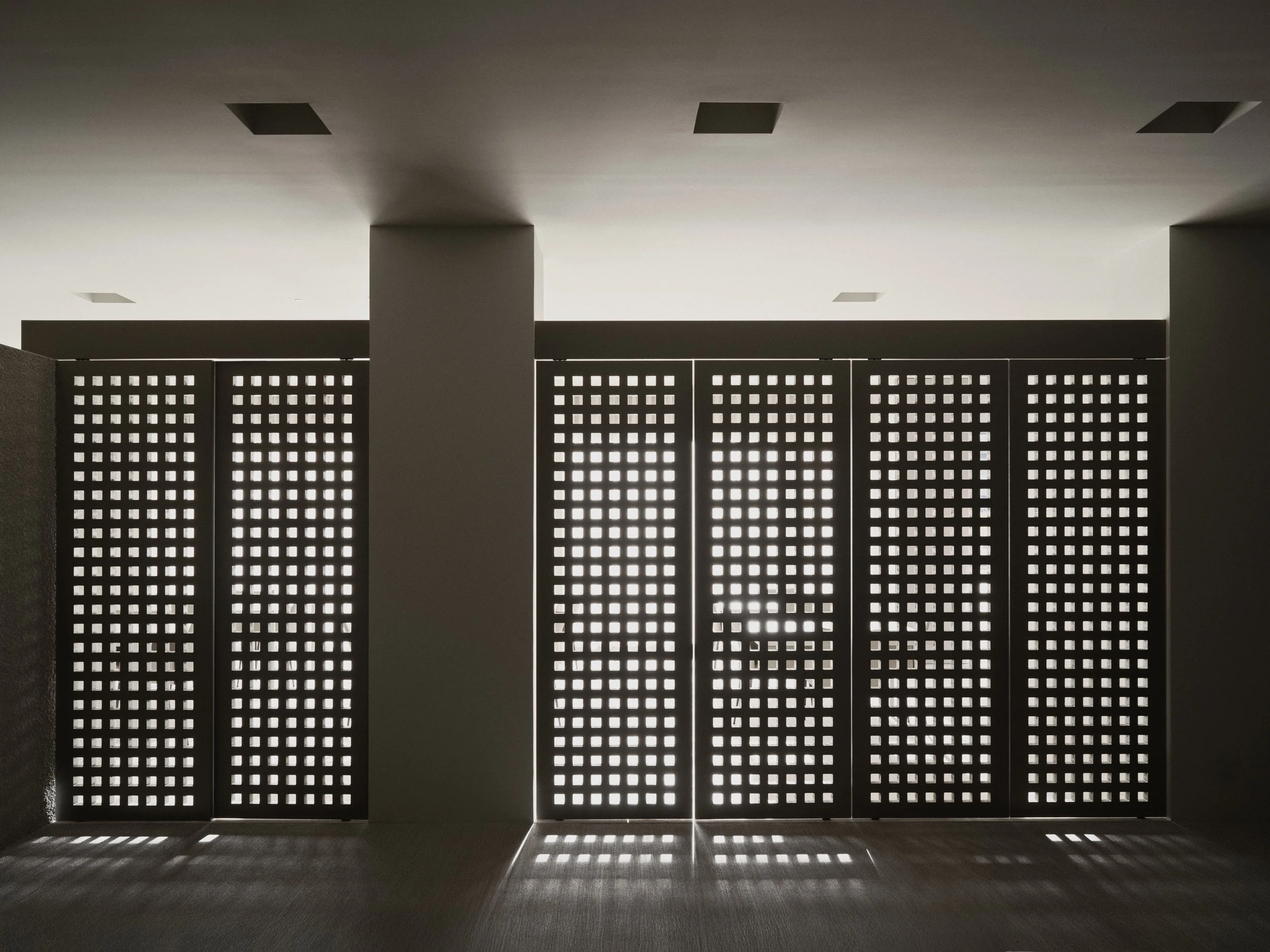
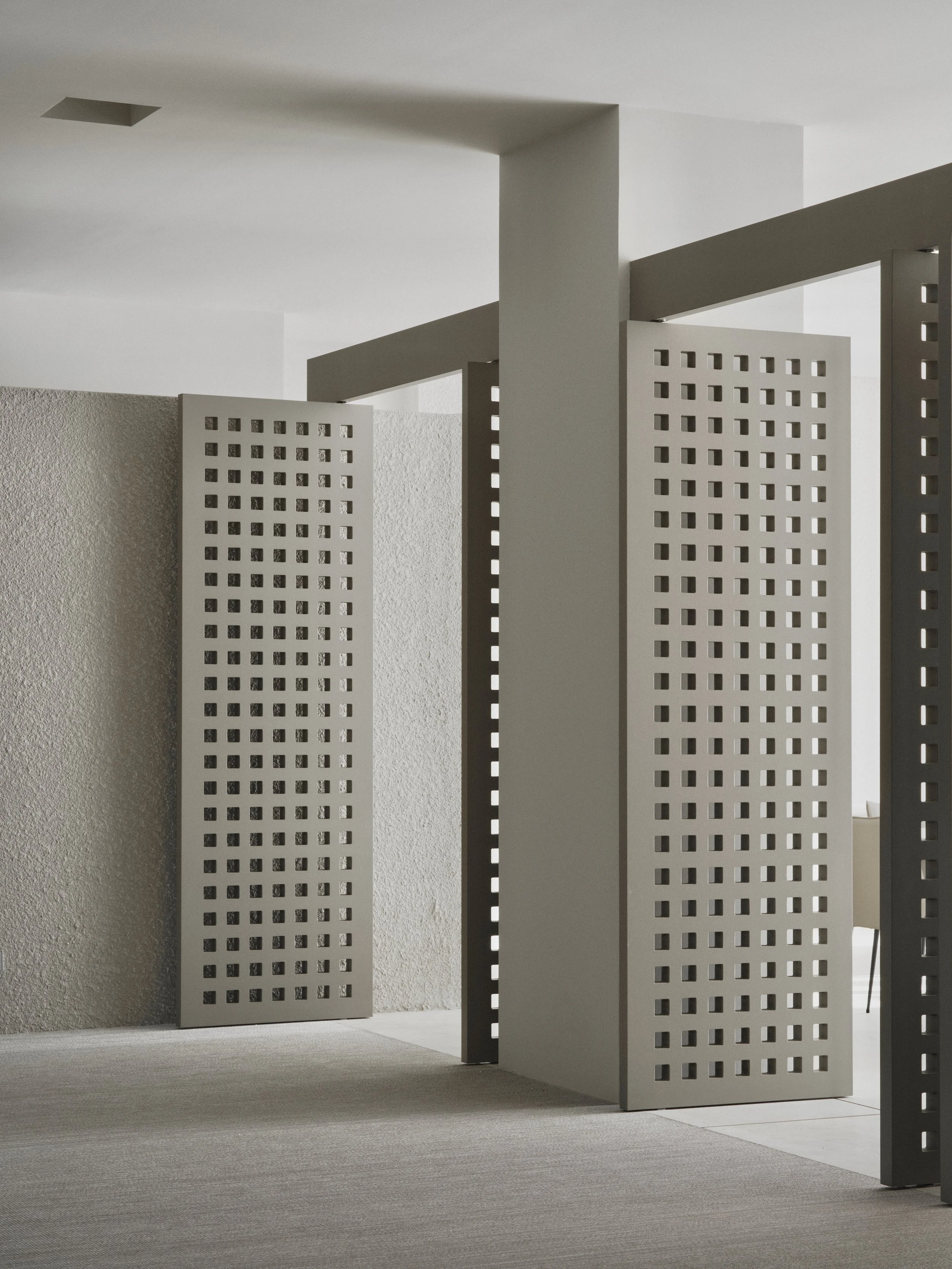
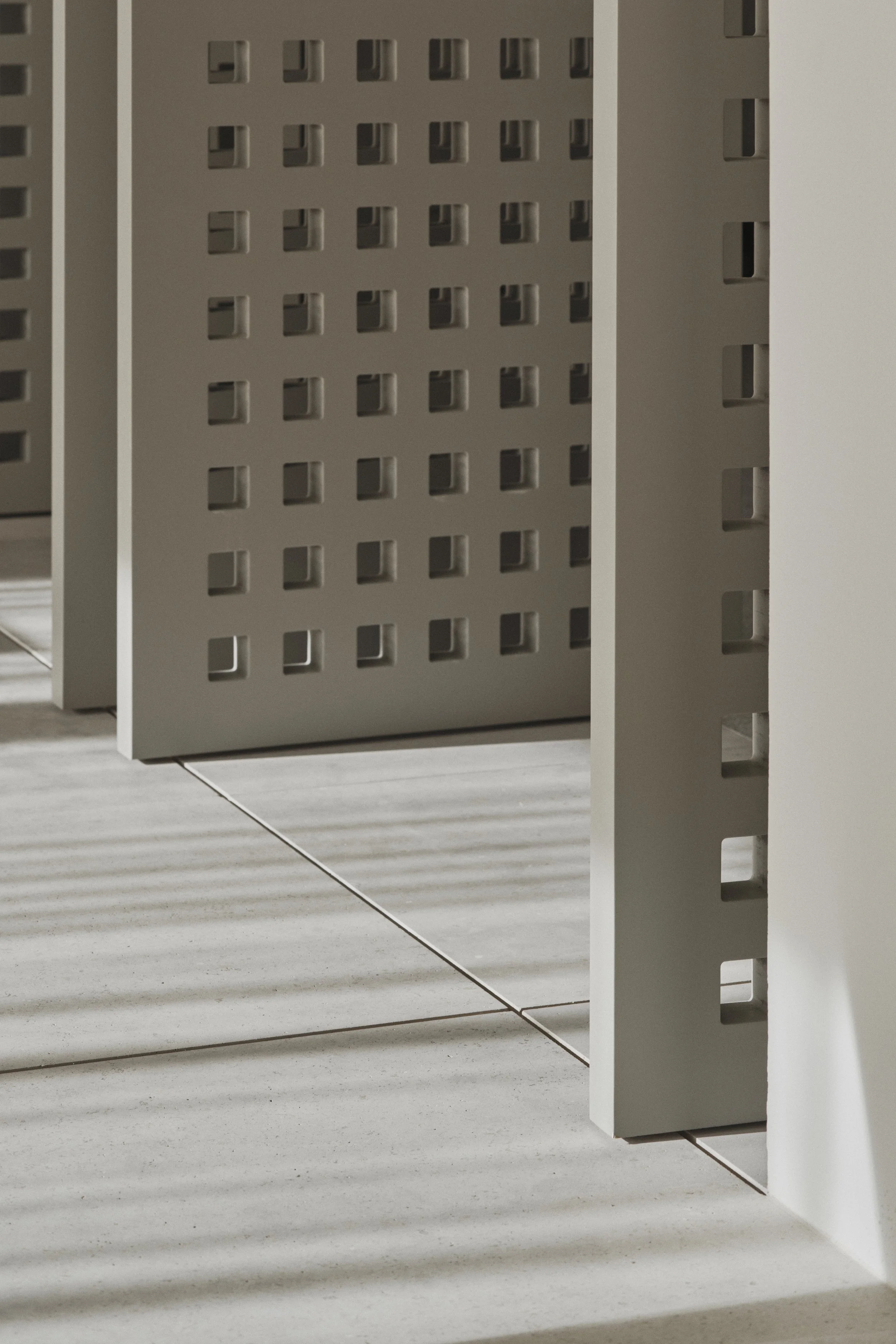
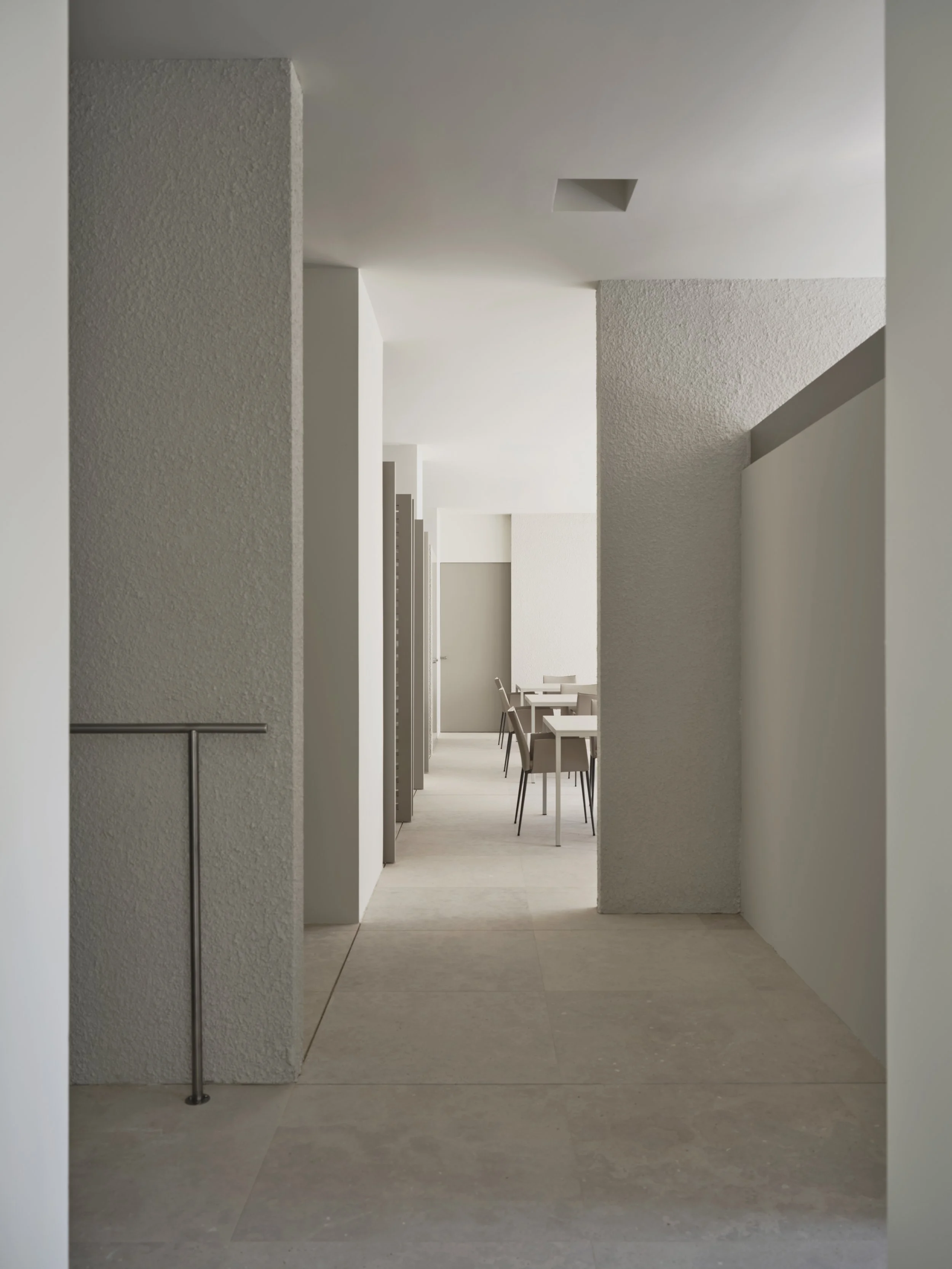
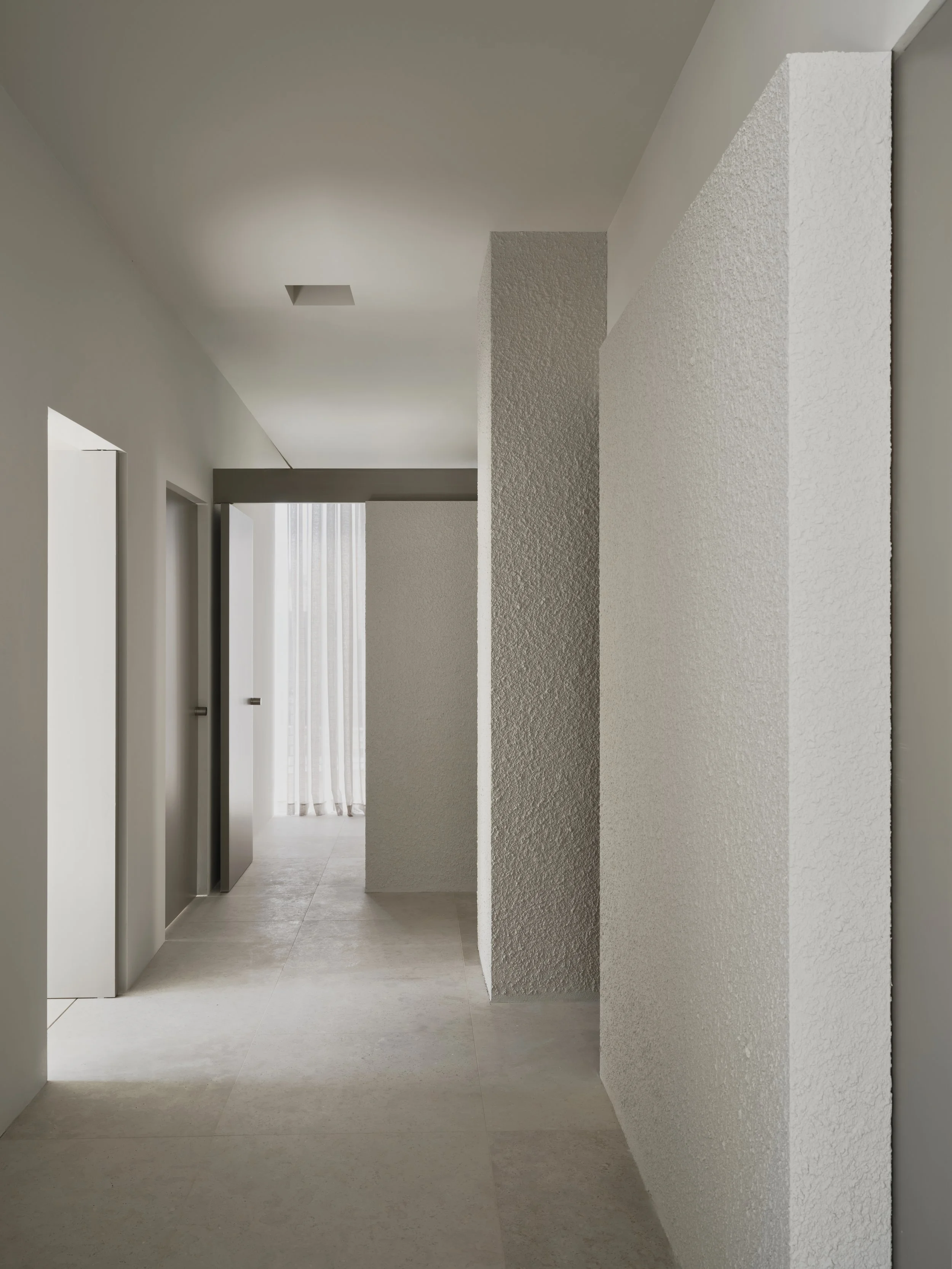
Creating a calm environment was central to the project’s approach. A continuous line of curtains wraps the perimeter, forming a soft barrier between the interior and the busy streets outside. The textile layer reduces visual distraction and dampens external noise, contributing to a quieter and more protective environment for visitors and staff.
Underfoot, sand-toned flooring with a textile-like appearance introduces warmth and acoustic comfort. The material softens footsteps and reinforces a domestic sensibility within the facility. Carefully selected furnishings in wood and leather further humanize the interior, balancing the scale of the structural grid and adding a sense of familiarity.
Circulation forms a key component of the overall experience. Paths weave between pillars and rooms in a gentle sequence that encourages movement and orientation. With separate entrances for users and staff, the Memory Center supports both daily care routines and administrative functions while maintaining a welcoming and supportive interior environment.