Banda Creative Agency Office by ater.architects
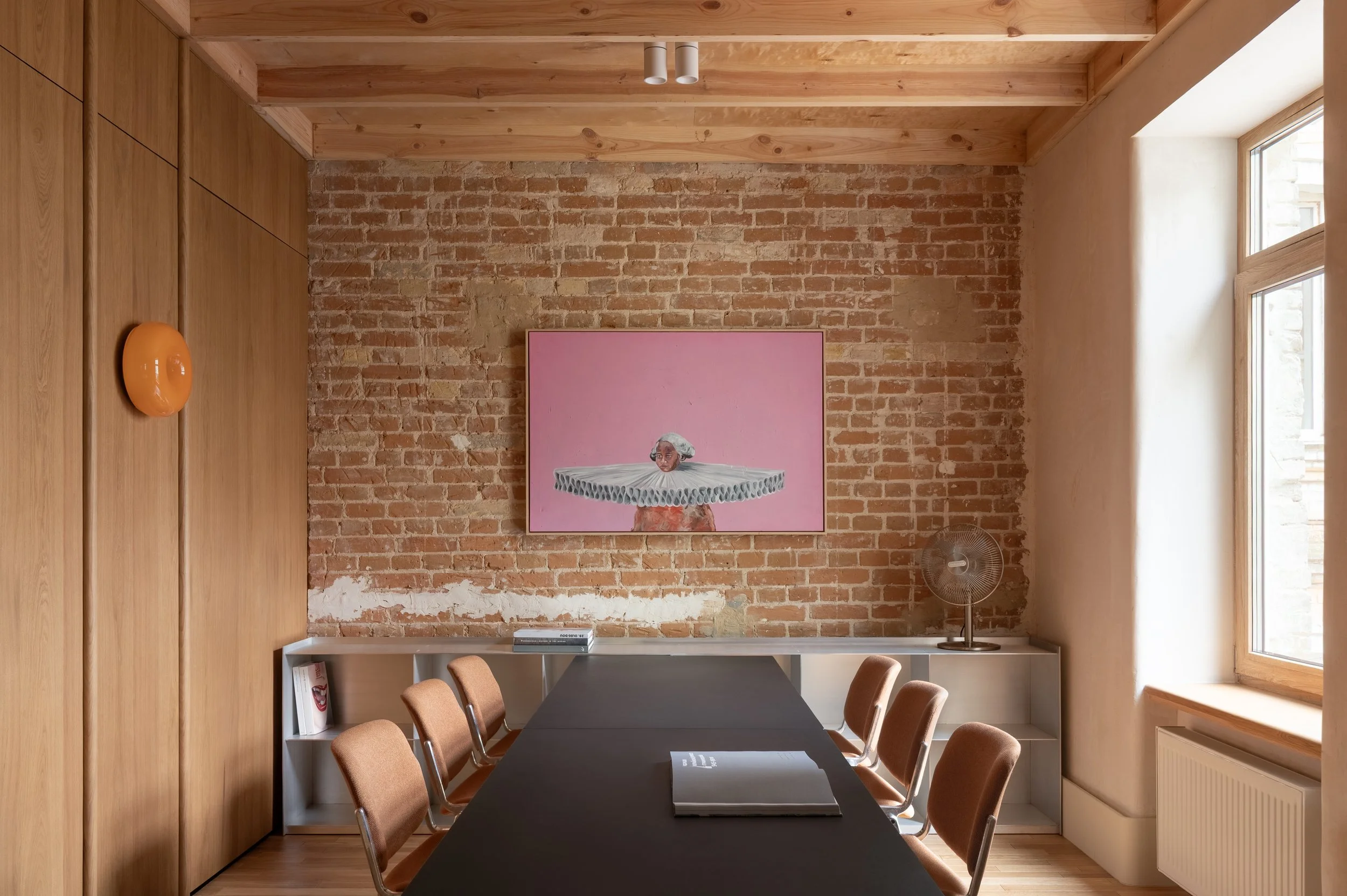
Banda Creative Agency Office by ater.architects is located on the second floor of an early 20th-century building on Yaroslaviv Val Street, in Kyiv’s historic centre.
Set within a structure defined by high ceilings, load-bearing walls and layered traces of time, the project reframes the office as a lived-in interior rather than a conventional workplace, aligning closely with the agency’s experimental approach to creativity and culture.
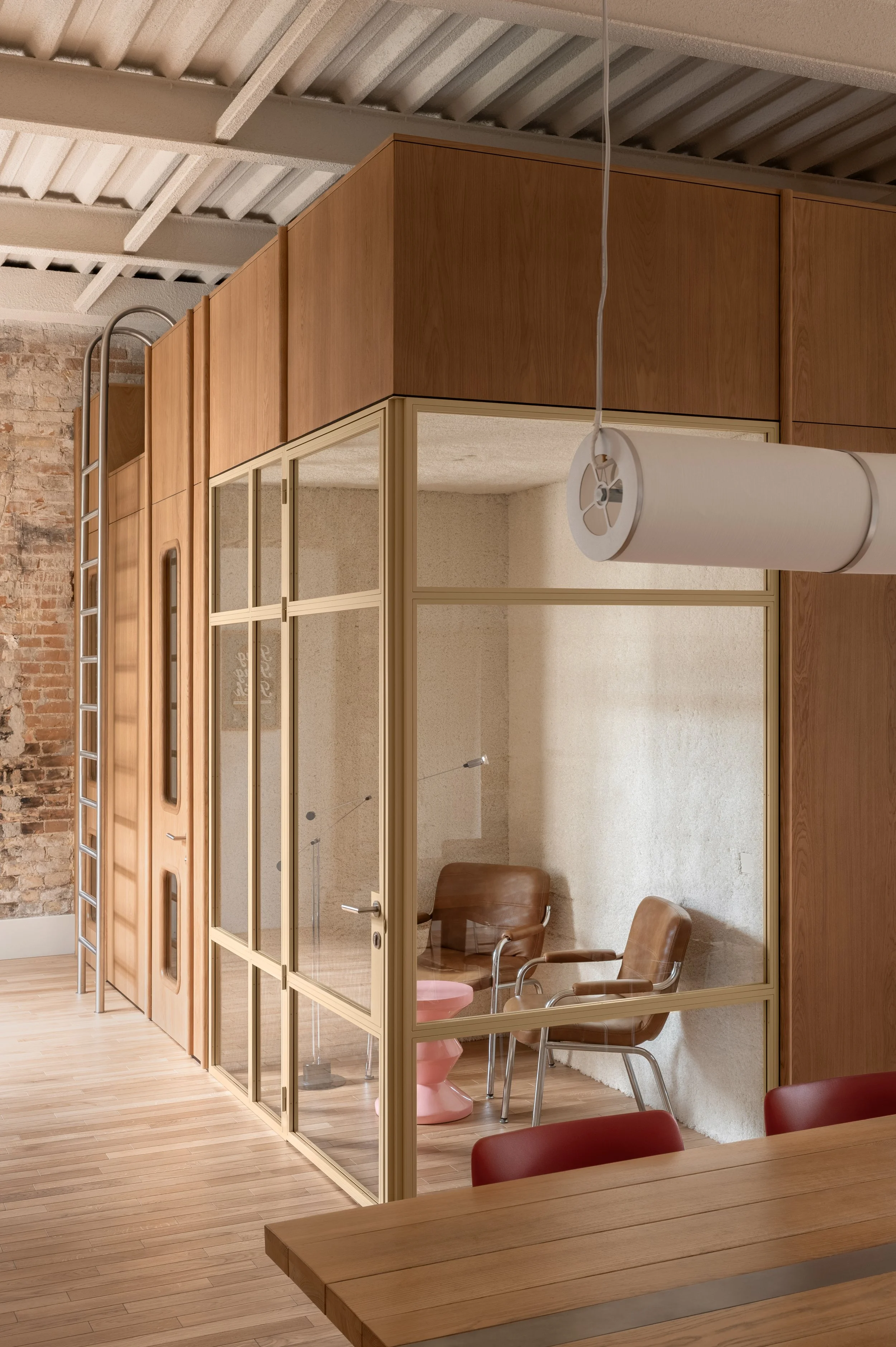
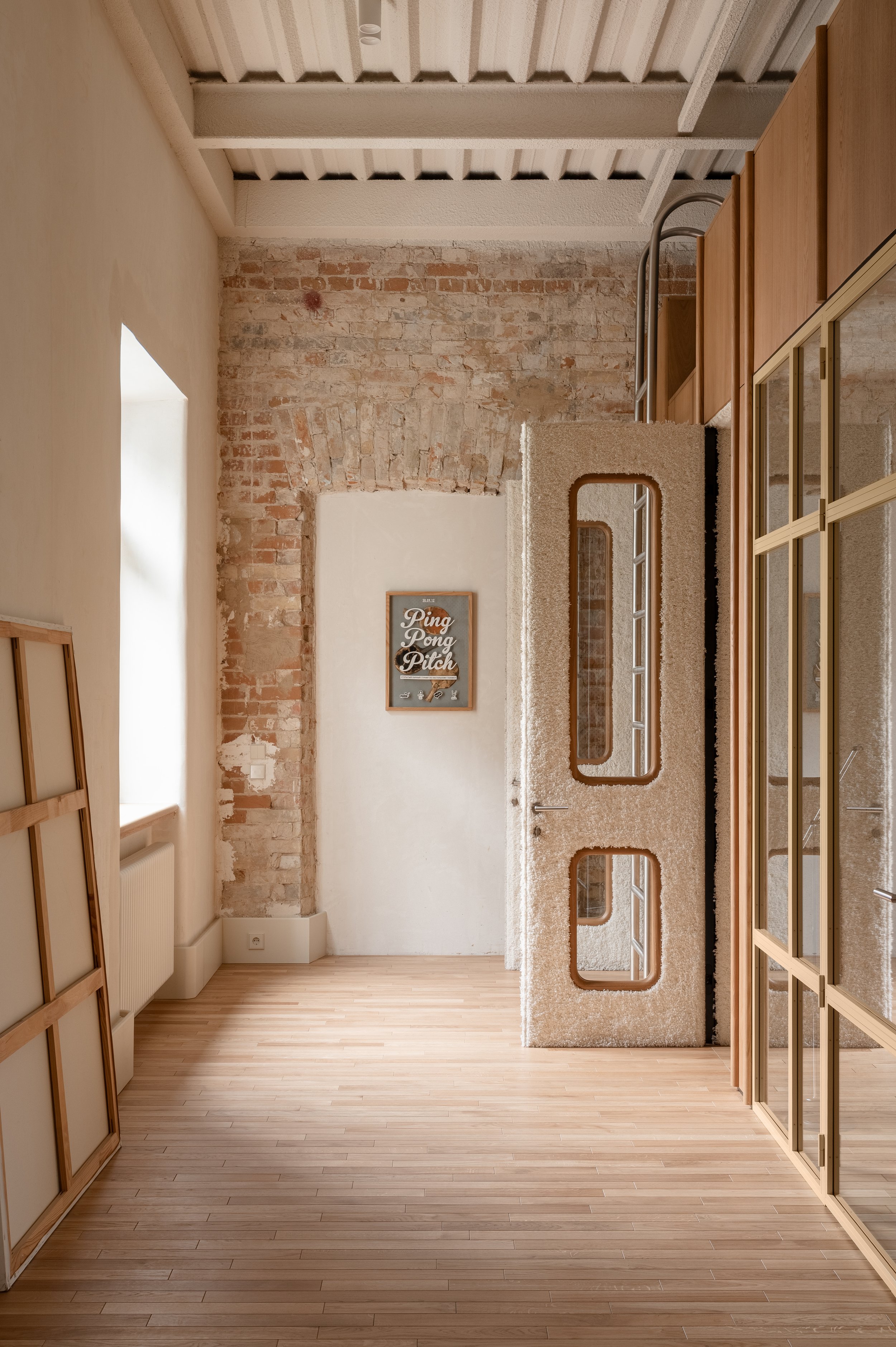
Occupying a floor plan naturally segmented by the building’s original construction, the architects introduced two cubic volumes capped with mezzanines, while keeping the surrounding areas open and flexible. This strategy preserves the integrity of the historic envelope while allowing contemporary interventions to sit clearly within it. From the entrance, a central hall leads through to a kitchen-dining area and an open workshop, establishing a sequence that supports both collective activity and focused work.
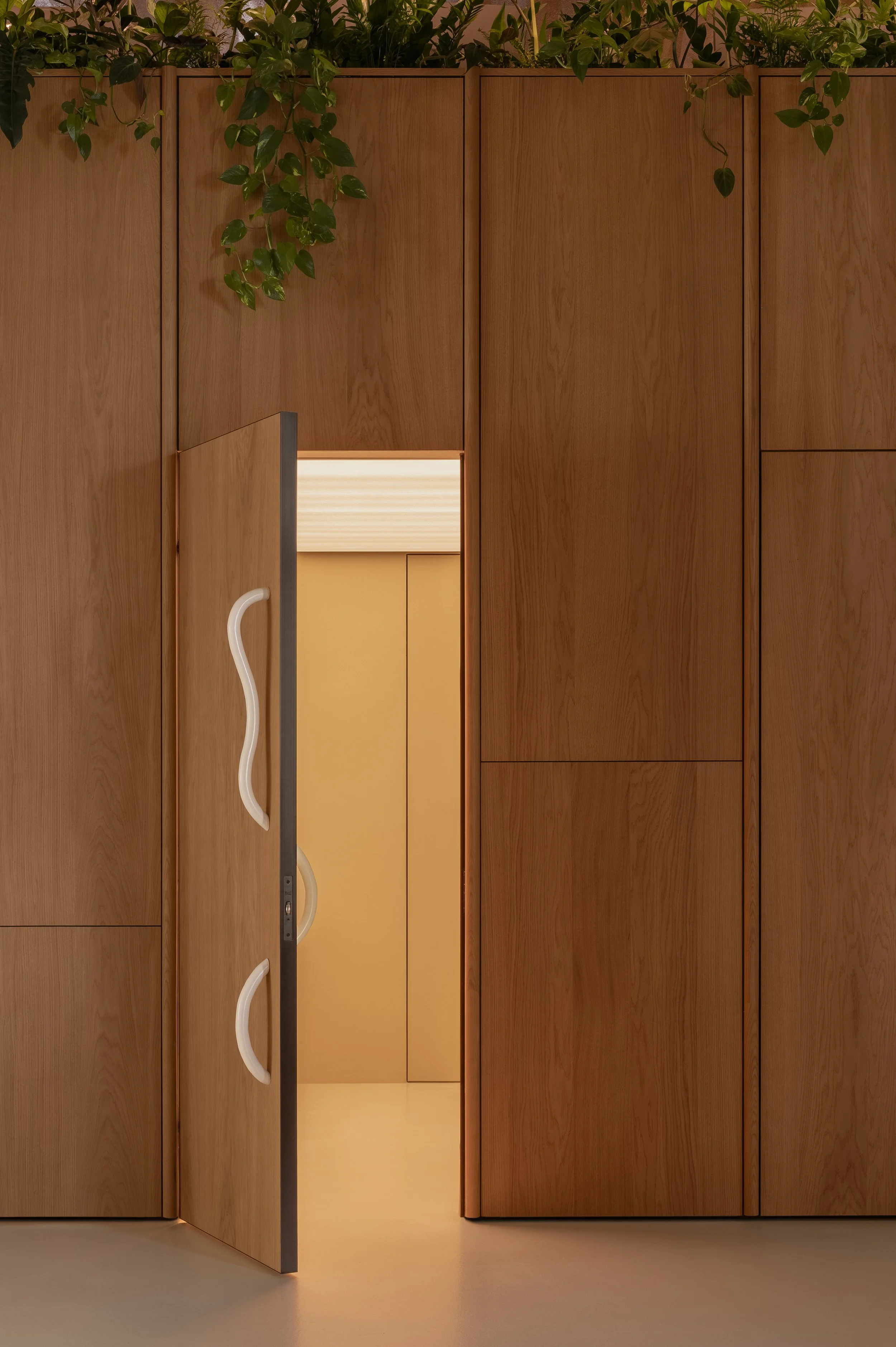
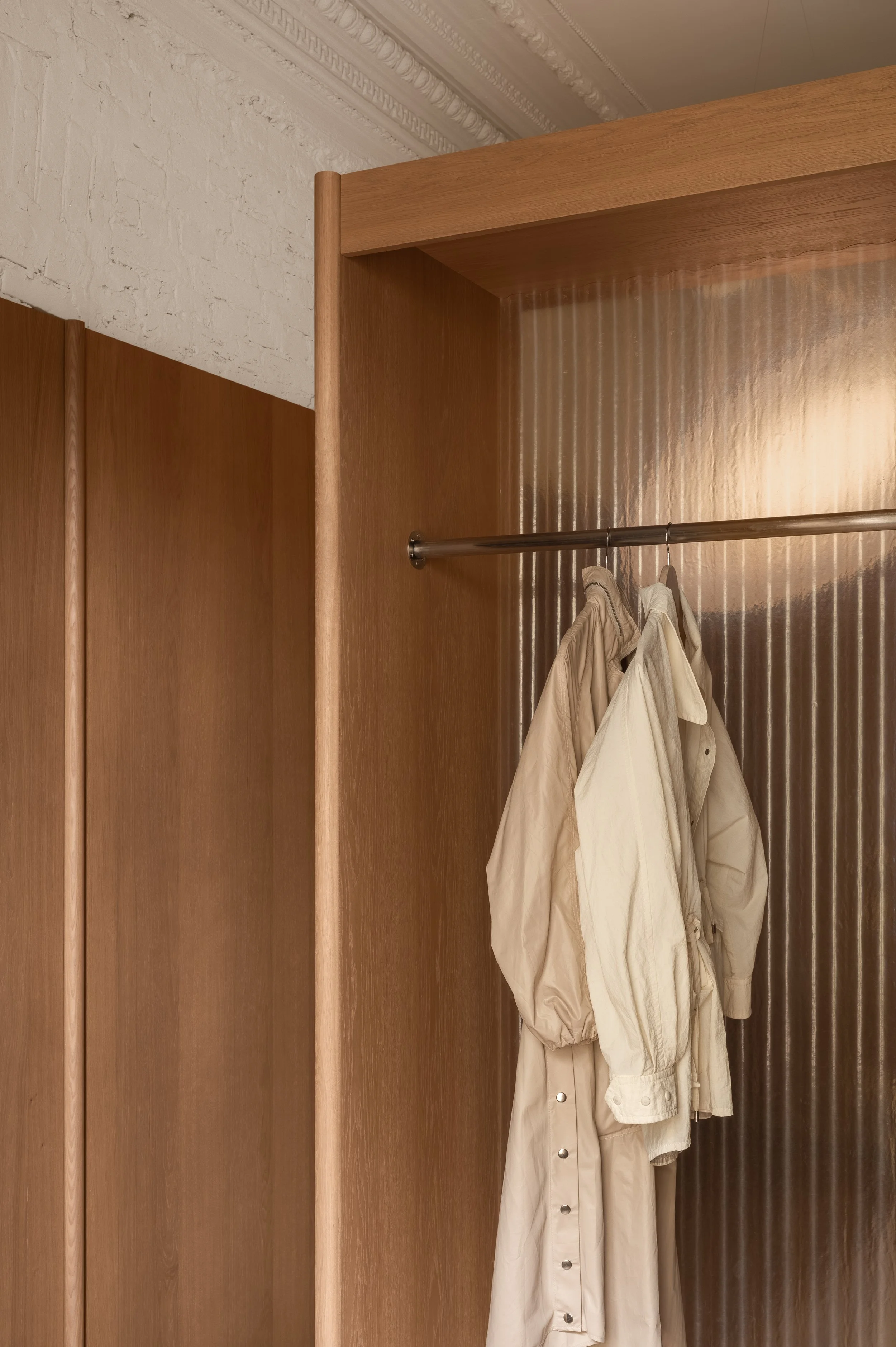
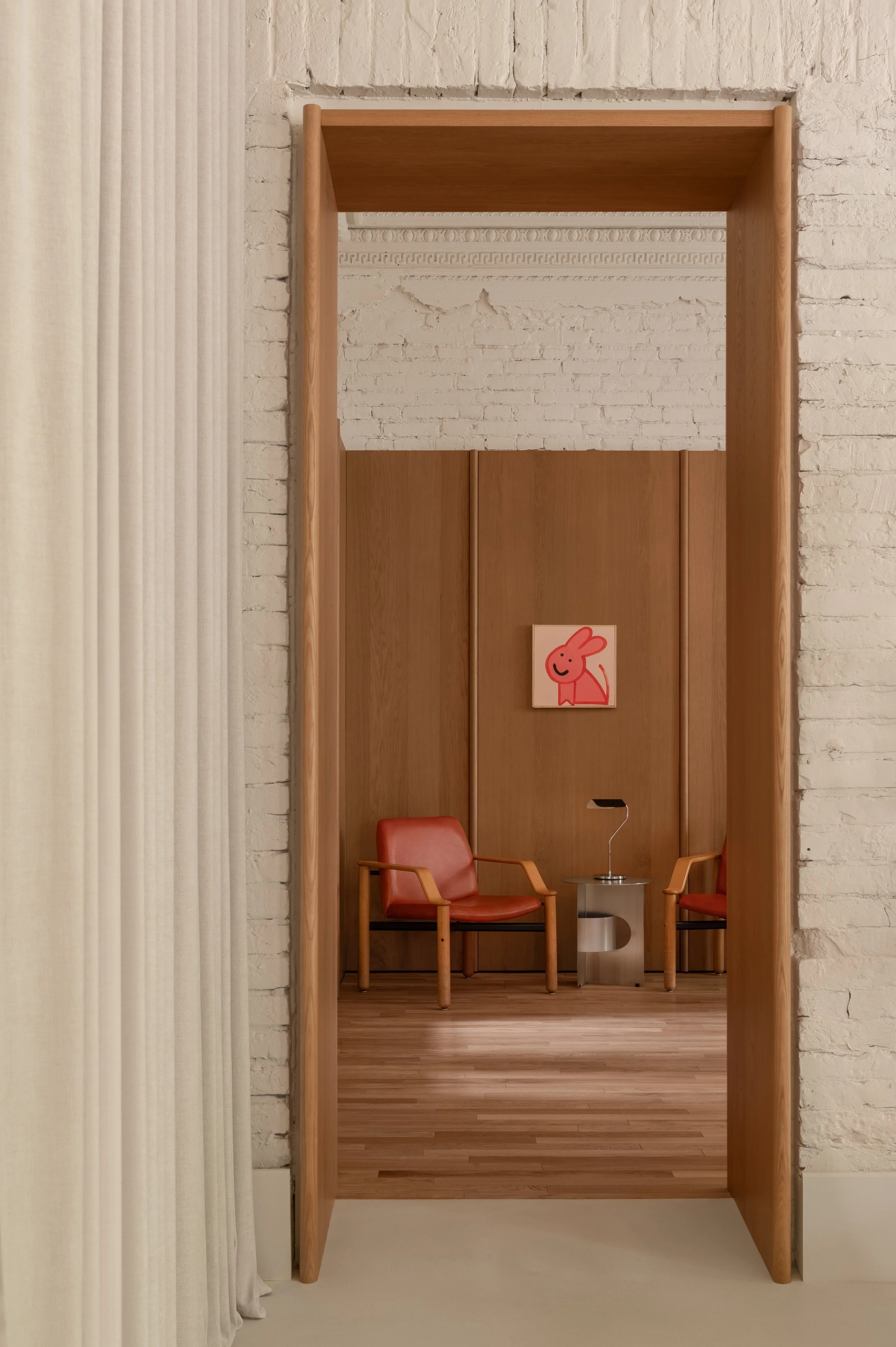
Arrival is deliberately understated. A simple wooden door opens into a space lined with oak wall panels that recall the atmosphere of a traditional administrative interior. Integrated storage is concealed behind the panelling, while a large glazed cabinet allows daylight to filter through from a window beyond. In the waiting area, red vintage armchairs by Dietiker sit alongside a coffee table by Ukrainian manufacturer Kint and a naive painting by Danik Manzhos, setting an early tone that blends seriousness with lightness.
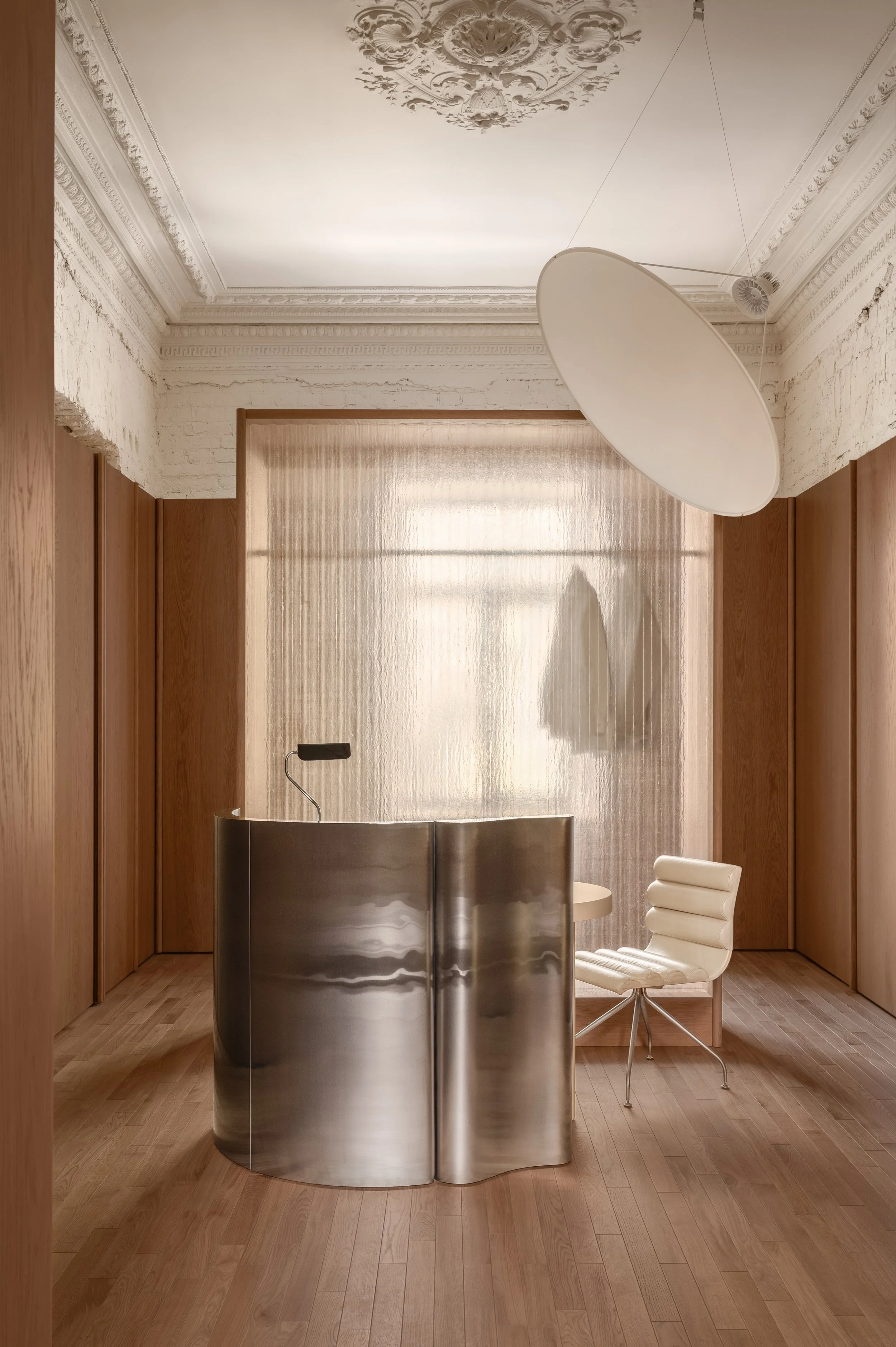
During demolition of the previous fit-out, original ceiling mouldings and decorative friezes were revealed and carefully restored. These classical details are set against contemporary elements, including an asymmetrical stainless-steel reception desk and minimalist lighting, creating a layered dialogue between old and new. The main hall continues this approach, furnished with soft seating clusters, restored vintage pieces and large communal tables that encourage informal exchange and group work.
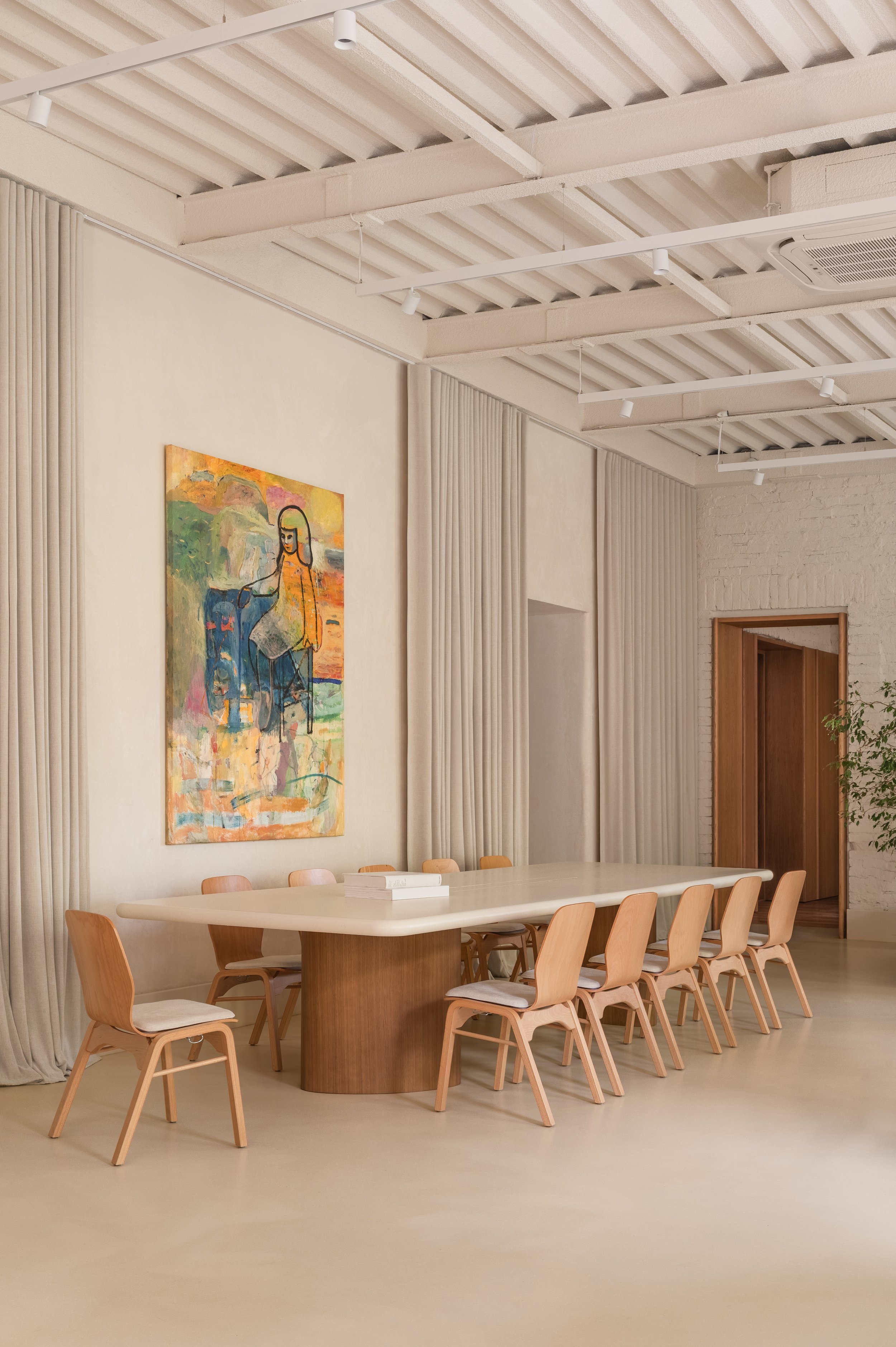
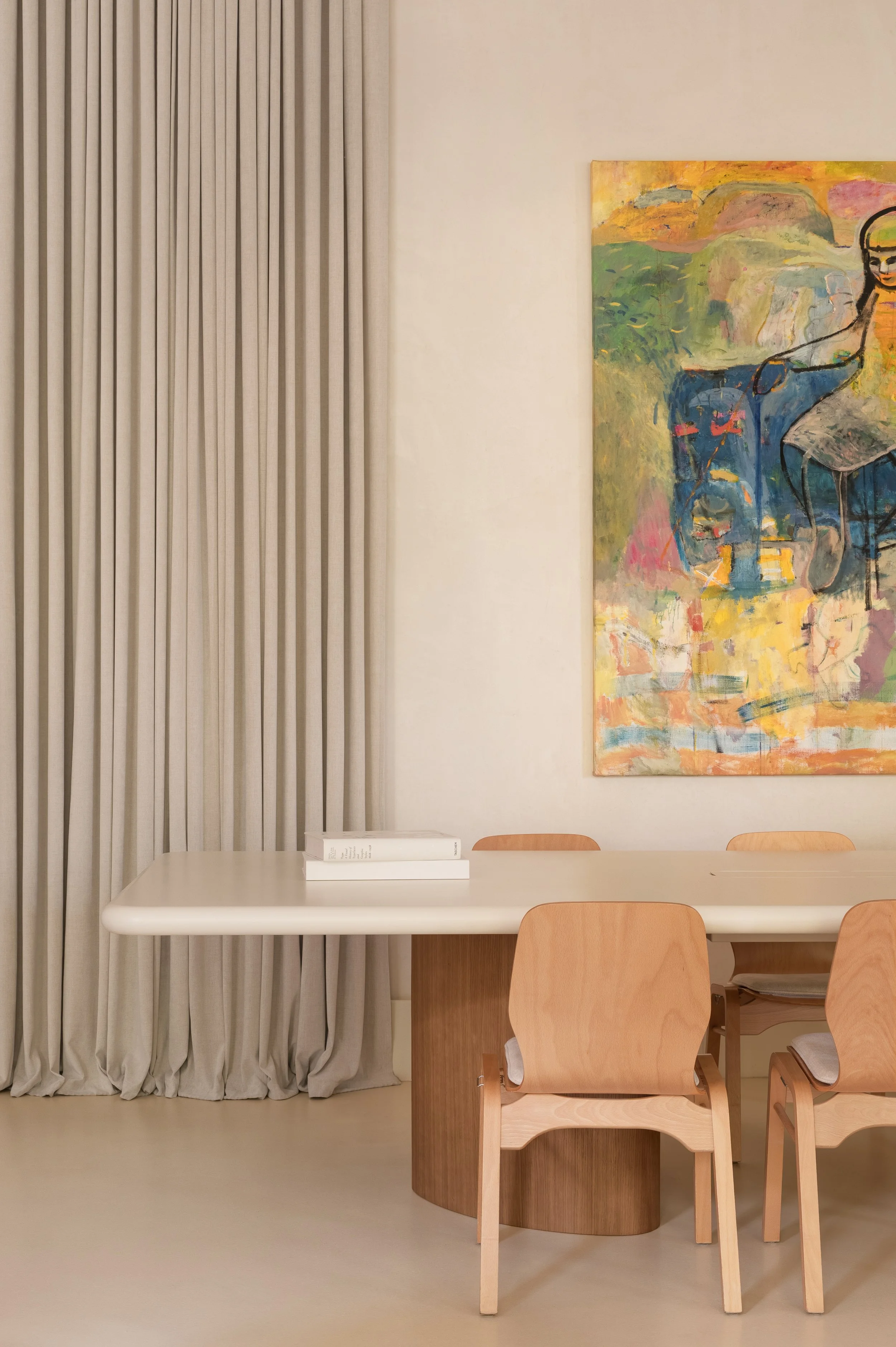
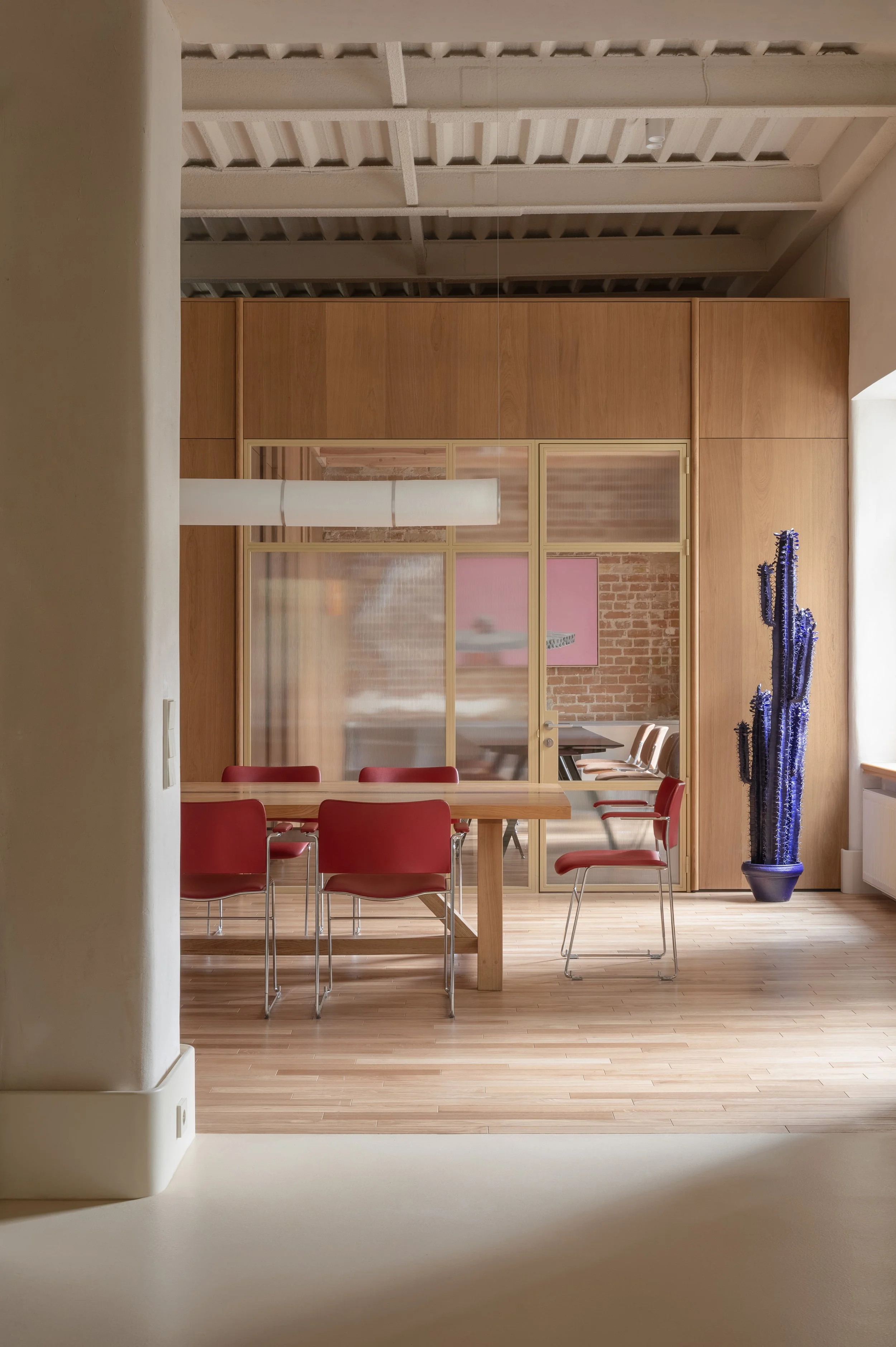
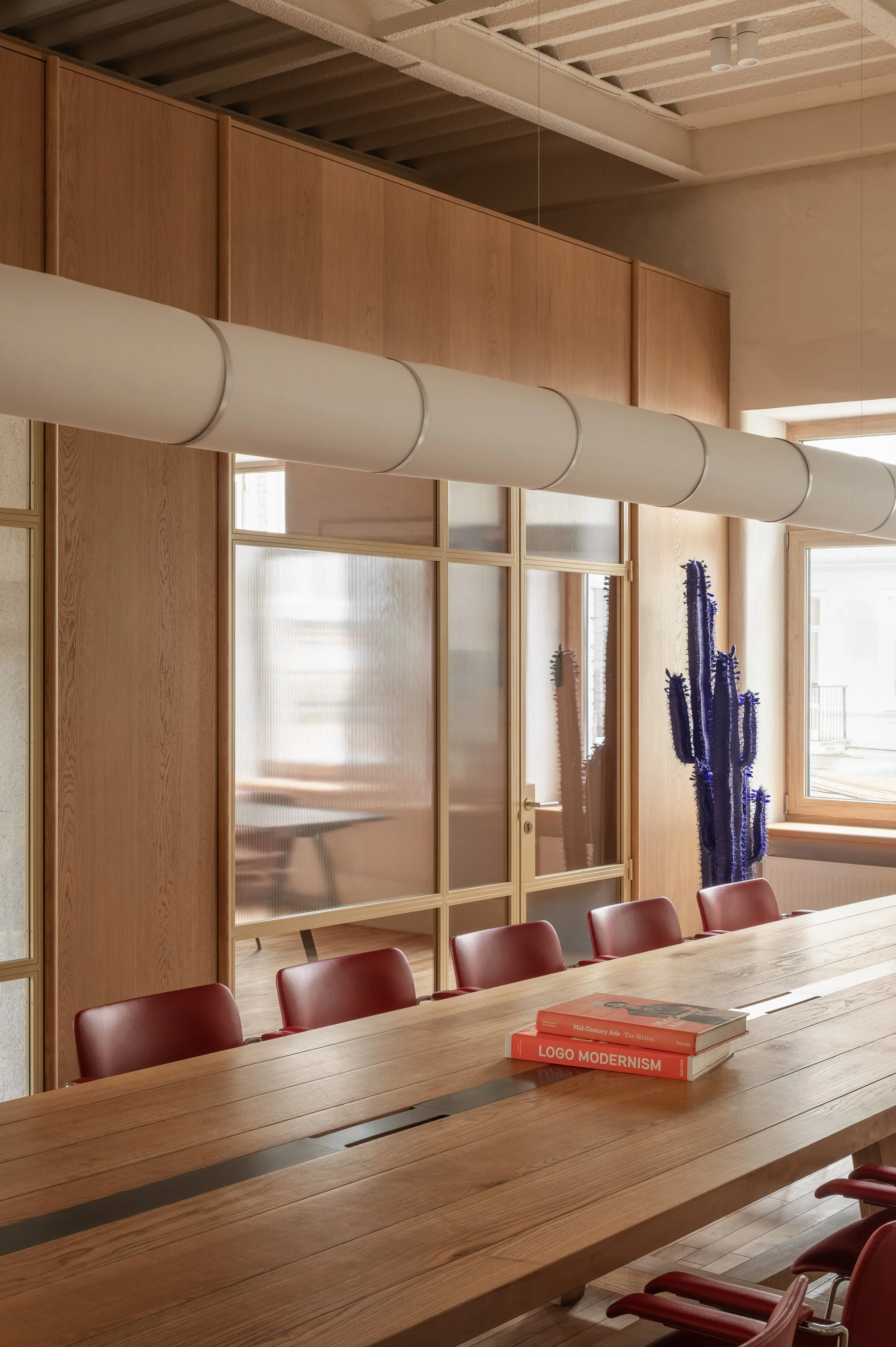
A raised podium within the hall functions as a stage for presentations and events. Custom mobile tables and lightweight folding chairs allow the area to shift easily between uses, while heavy fabric curtains provide the option of separation when needed. Nearby, a relaxed seating group of sofas, armchairs and a glass table offers space for quieter conversations. A twelve-seat communal table paired with bent plywood chairs from the late 1980s anchors one end of the room, while low storage units subtly divide smaller seating zones, each supported by carefully considered lighting.
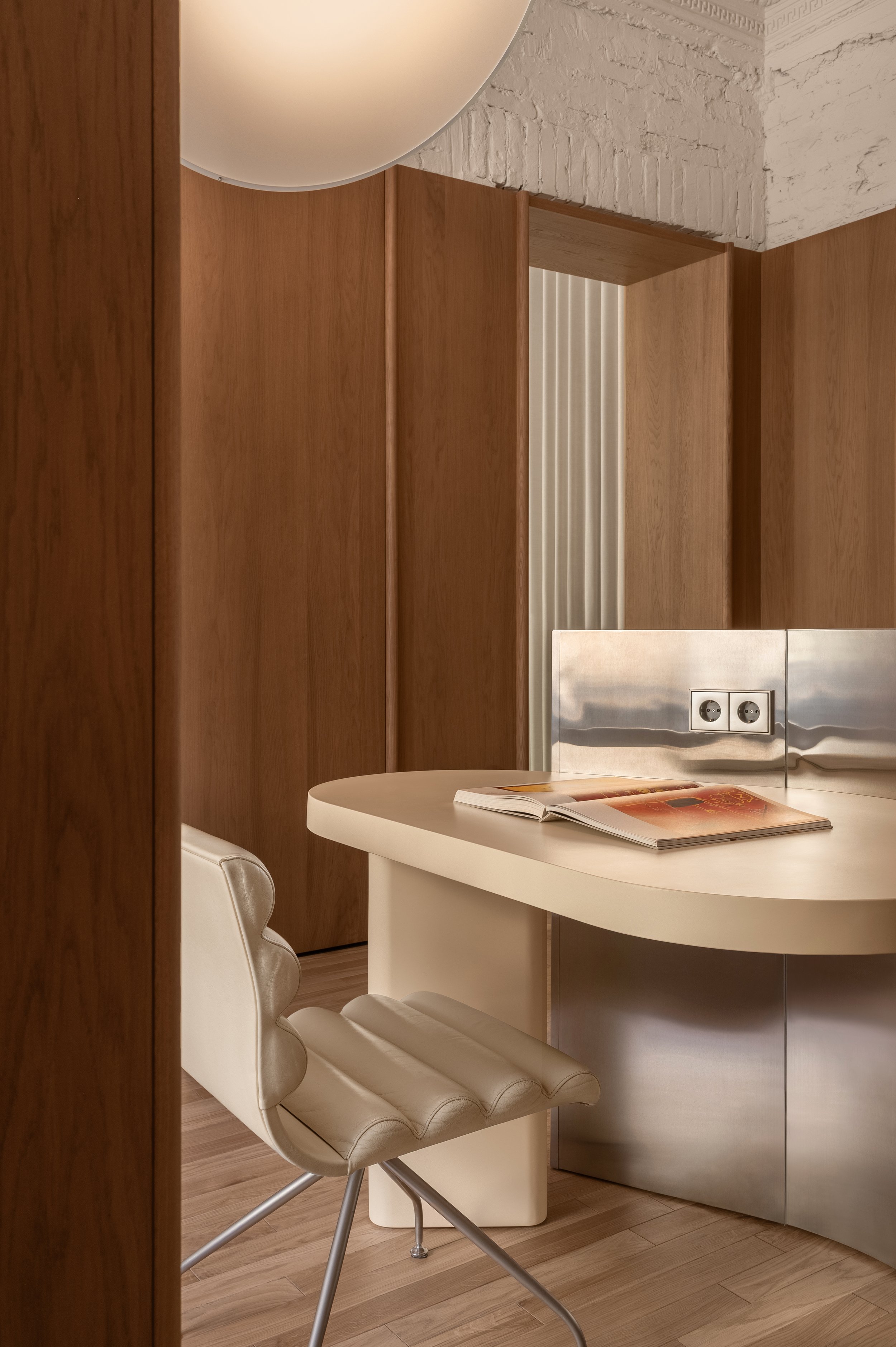

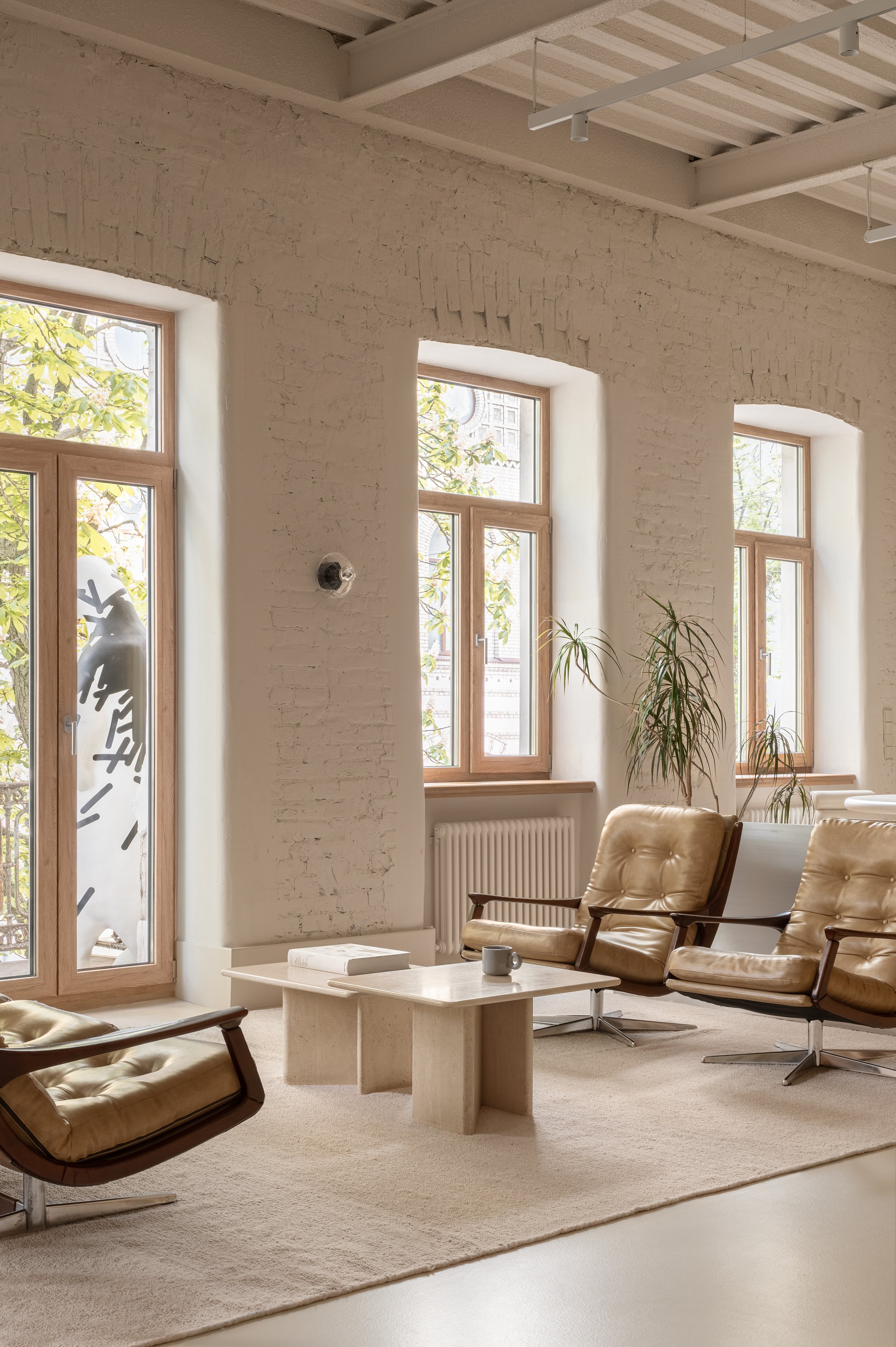
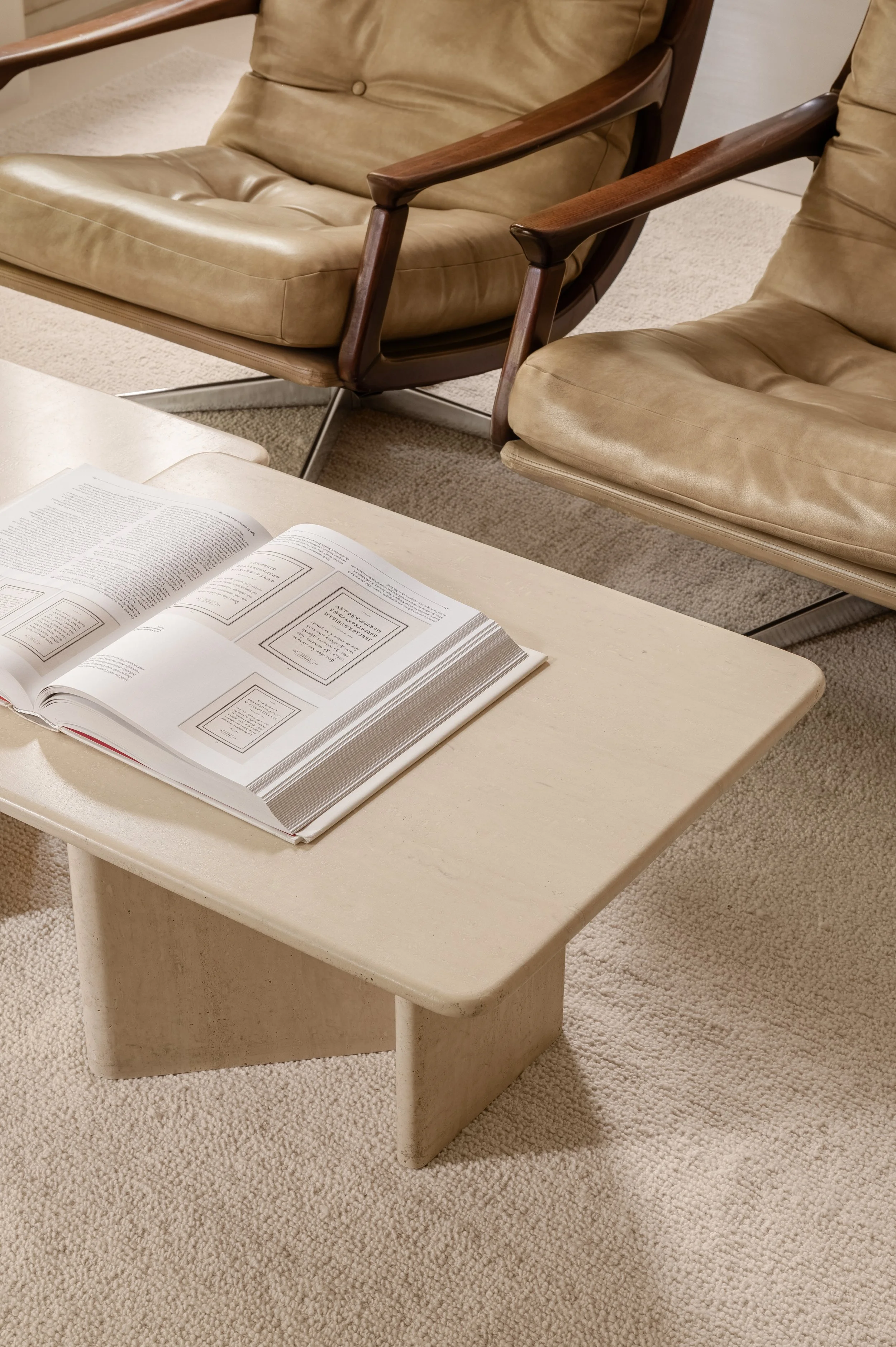
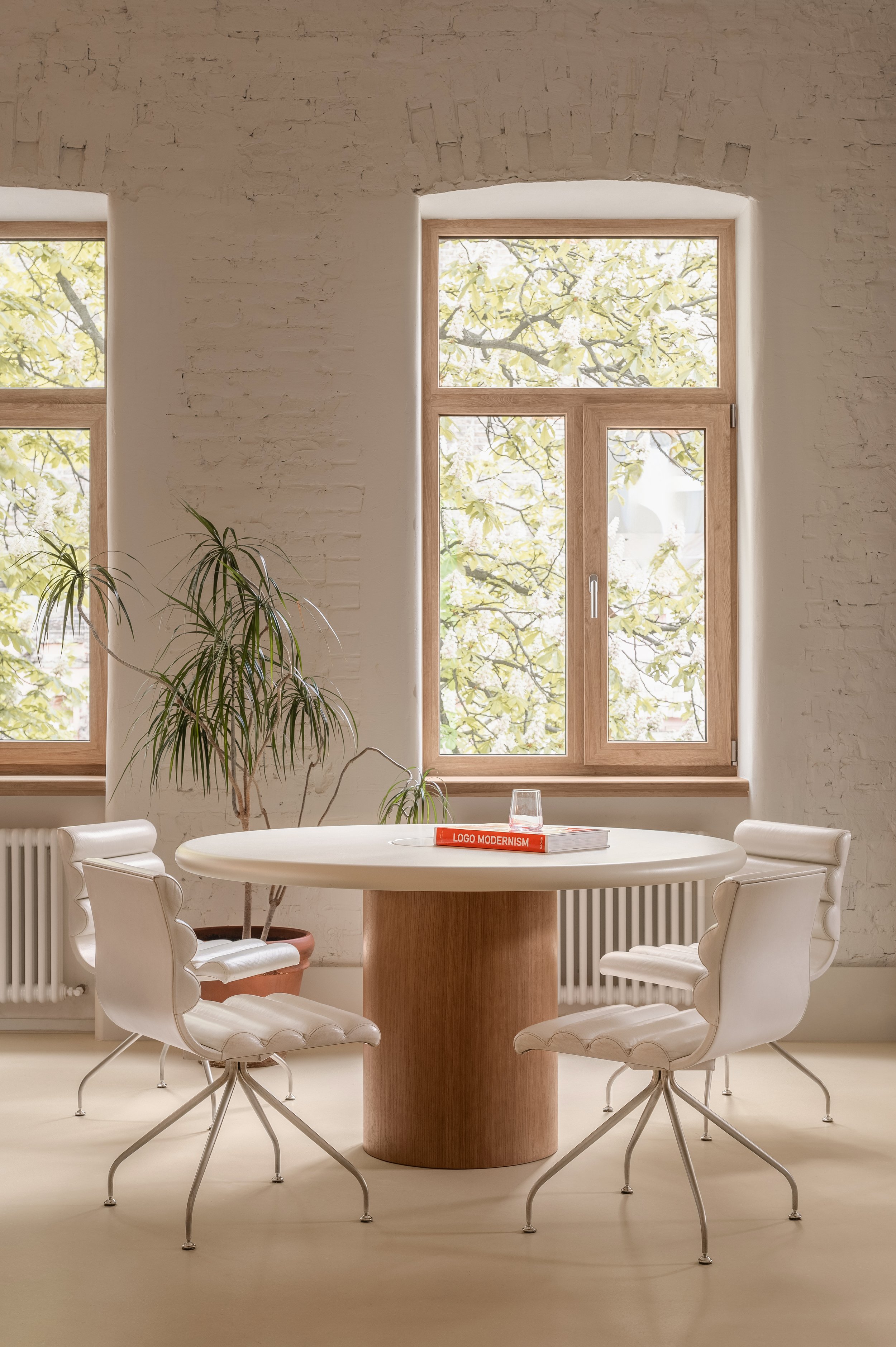
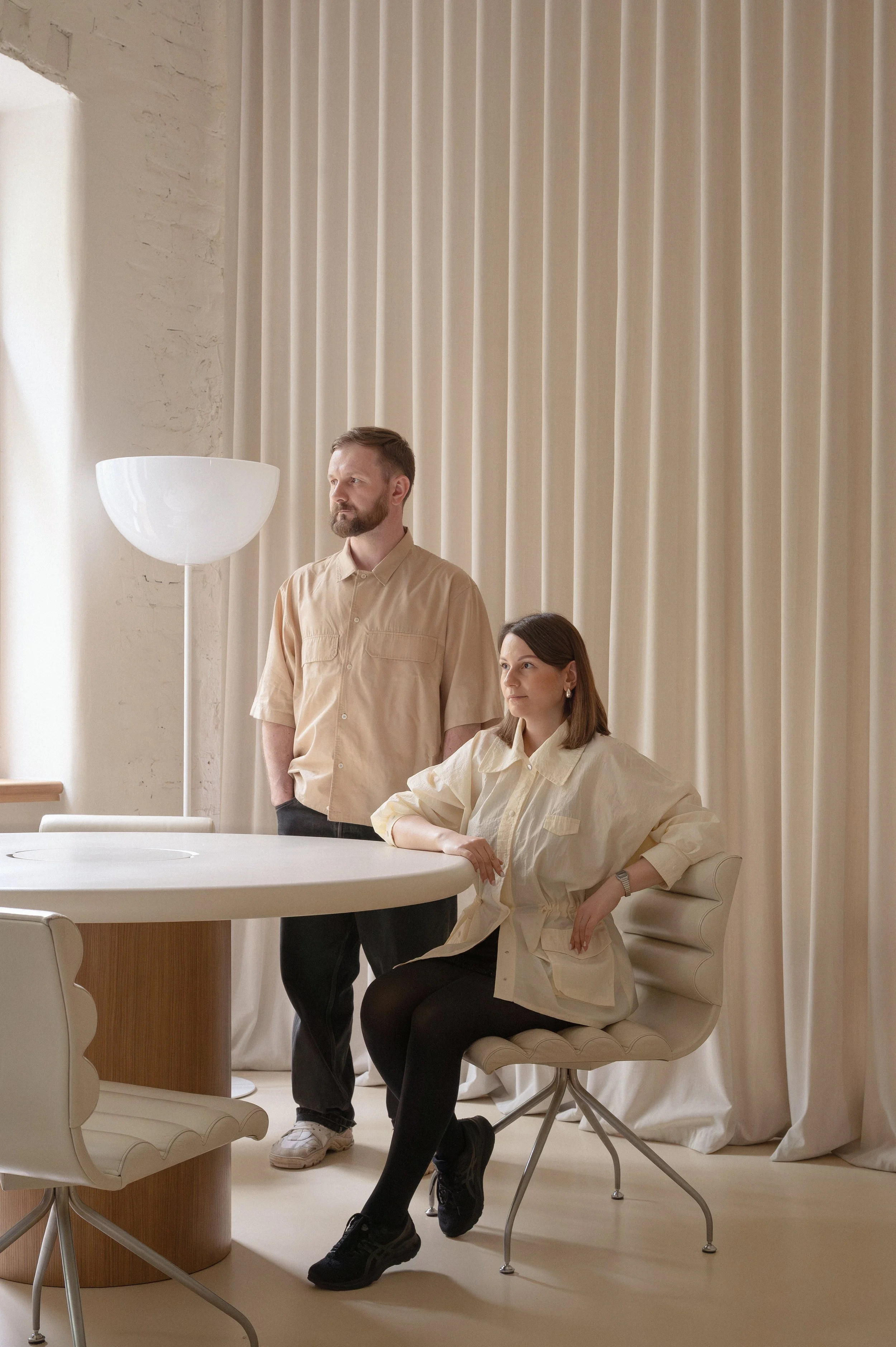
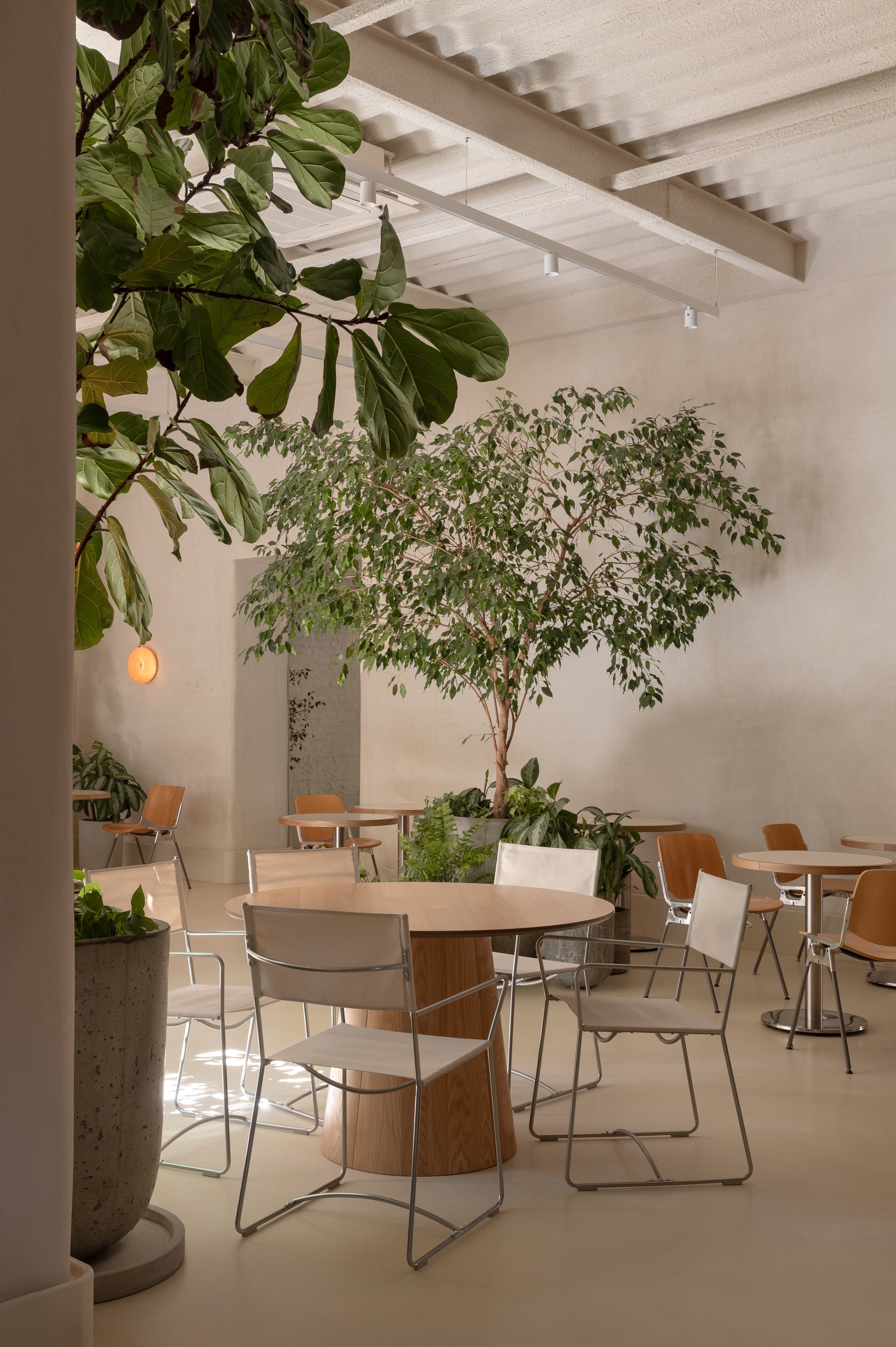
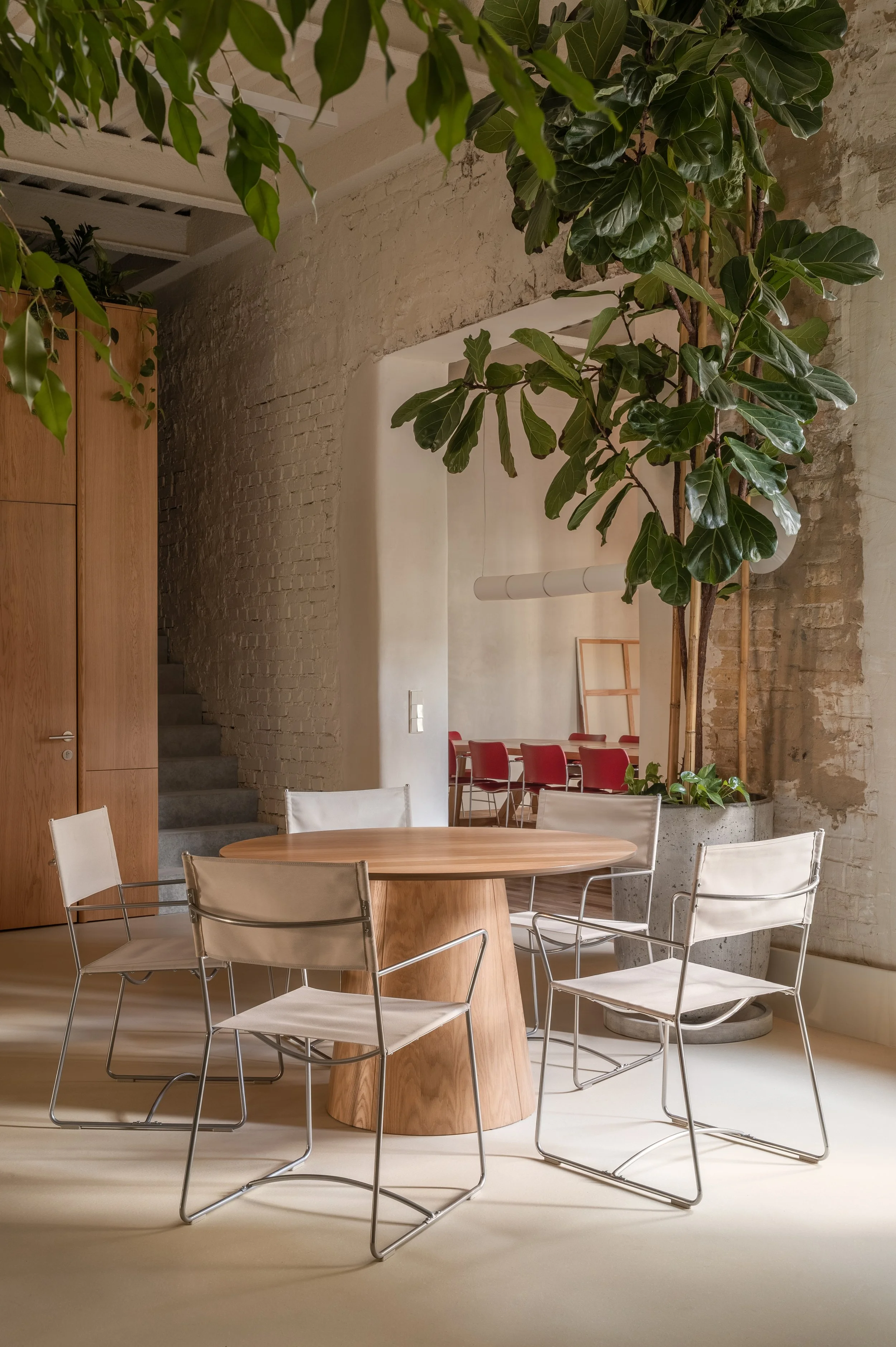
Vintage furniture plays a central role throughout the interior, reinforcing the sense of an apartment shaped over time. Pieces sourced from across Europe include leather seating by Eugen Schmidt for Soloform, white Canouan armchairs by Frag, and folding chairs by Chairworks. Artworks by Ukrainian artists, including a large painting by Serhii Dekaliuk, are integrated throughout, reinforcing the connection between creative production and everyday use.
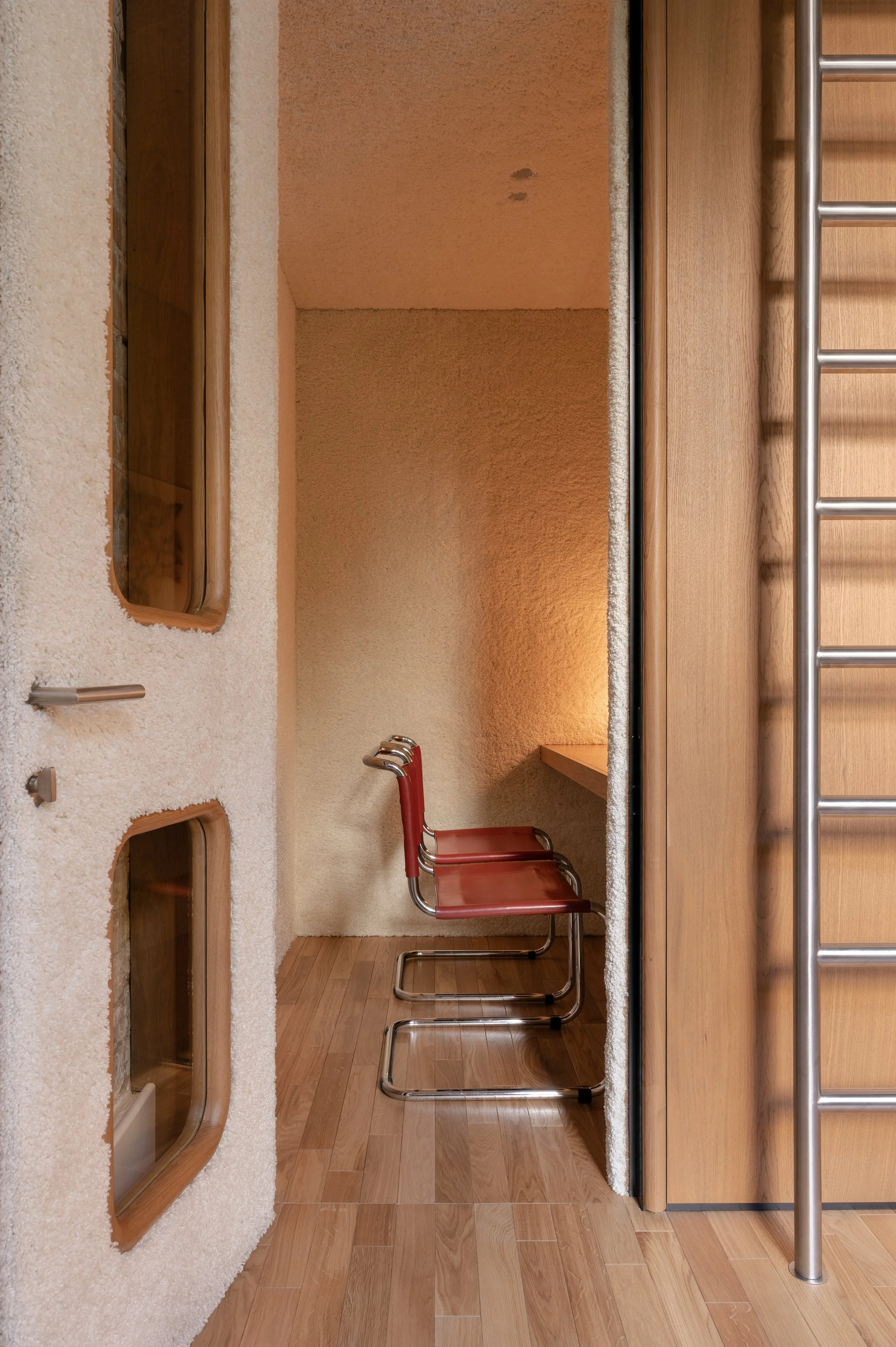
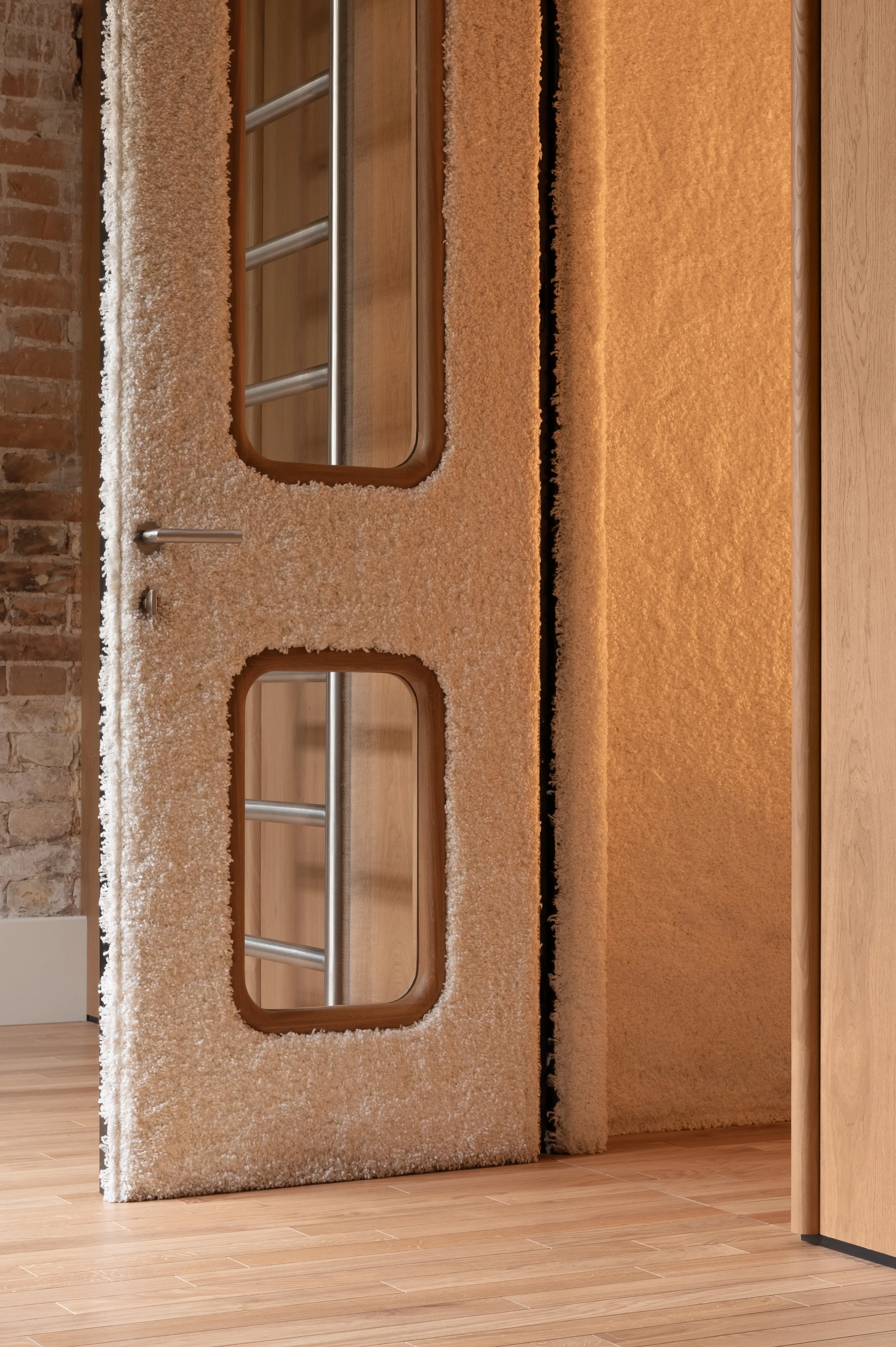
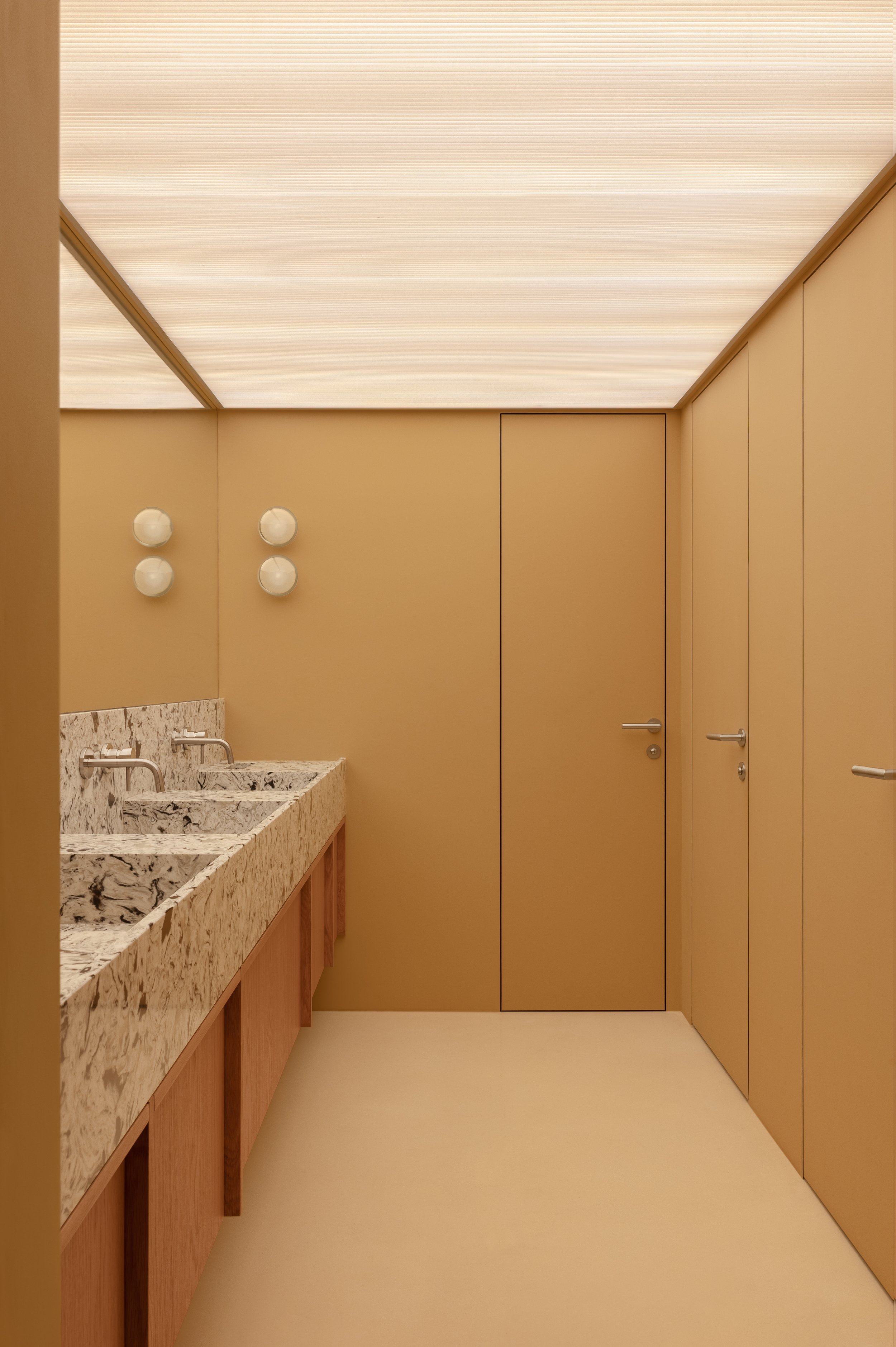
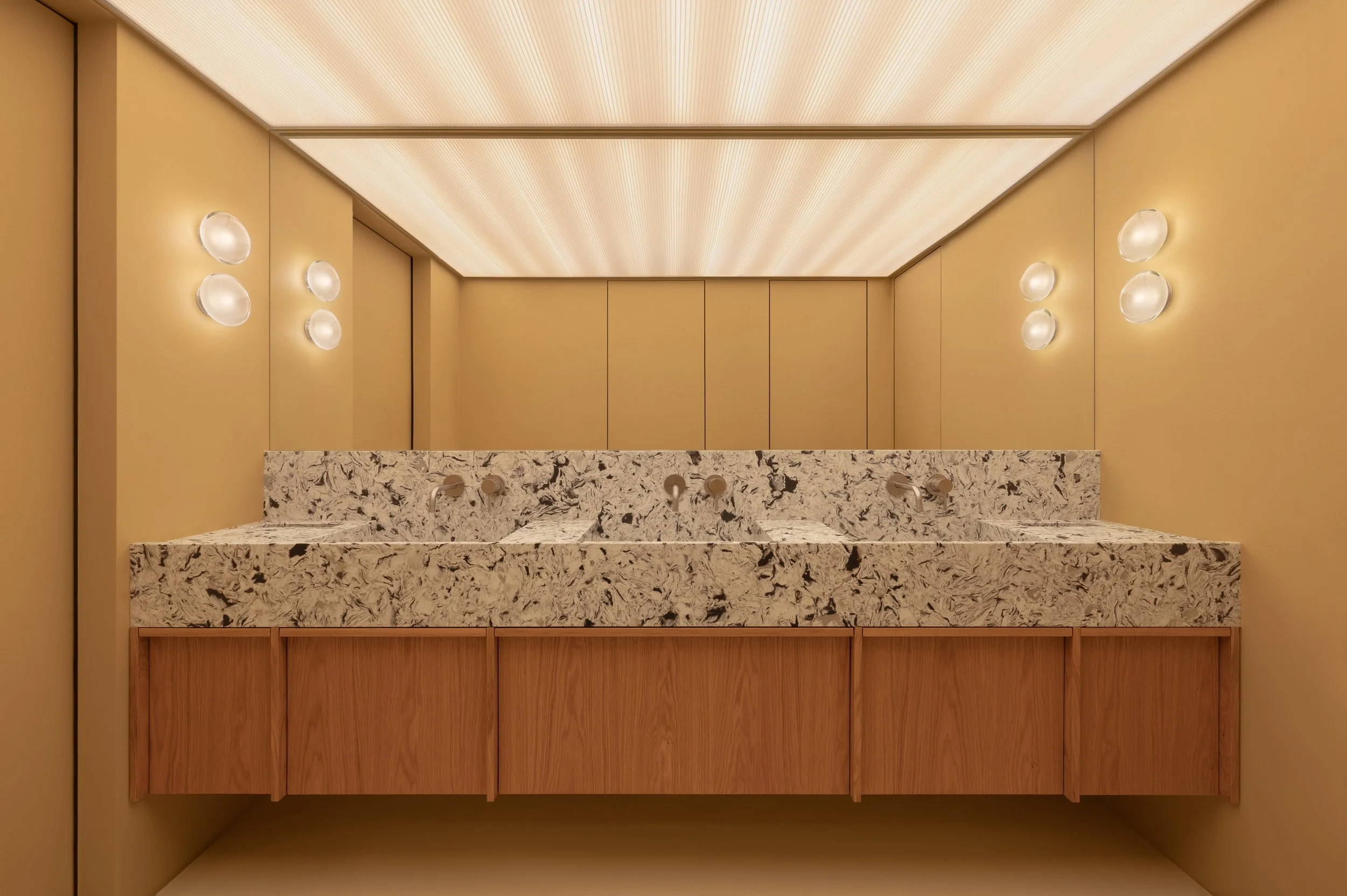
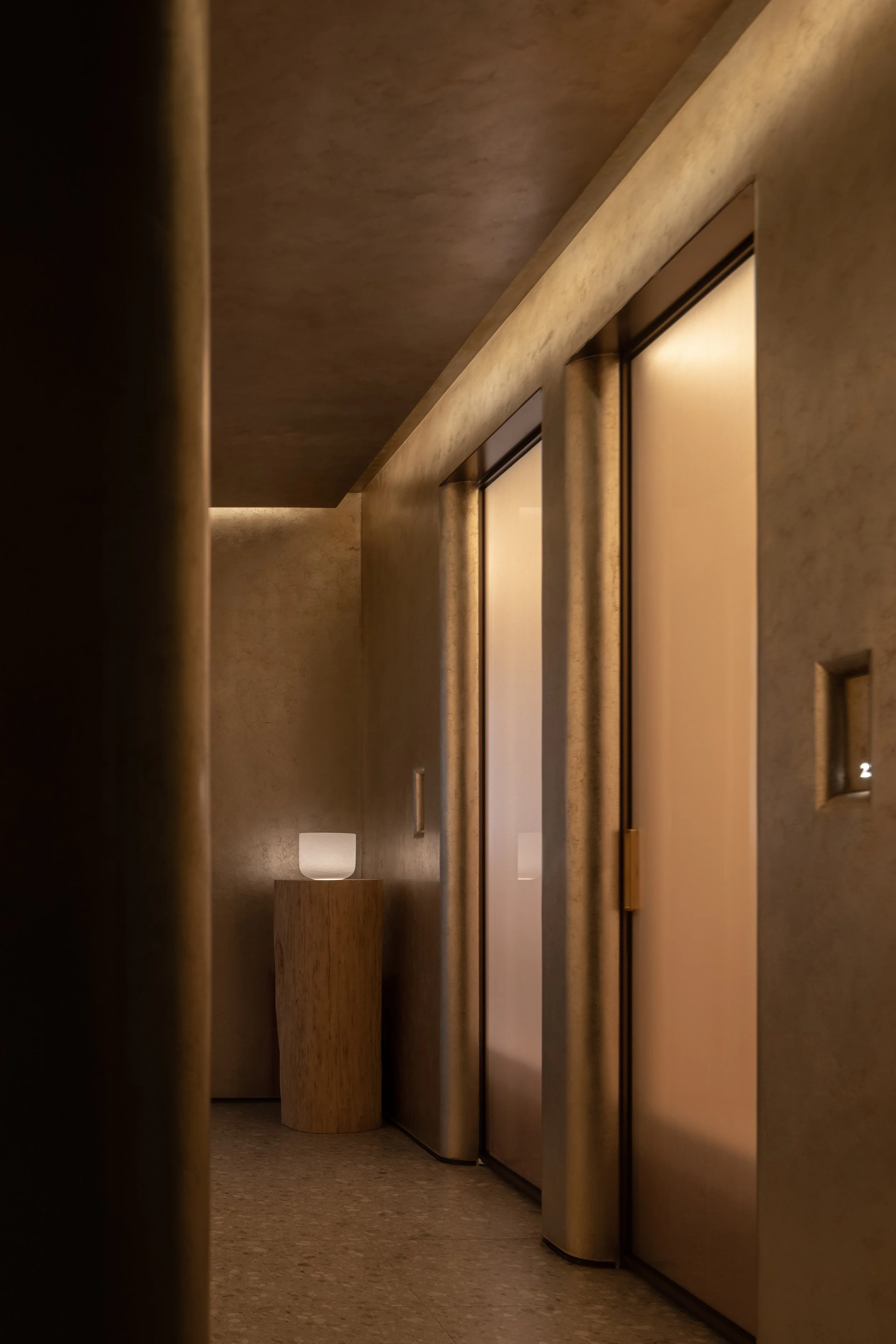
One of the cubic volumes contains bathrooms and technical rooms, finished with ochre walls, mirrored ceilings and a quartzite sink-countertop that amplifies light and colour. Above, a mezzanine houses the only permanent workstations, keeping screens and focused tasks elevated and discreet. The second volume contains meeting rooms and compact Zoom rooms, their rounded glass doors referencing Kyiv’s historic trams. The interiors are softly upholstered to improve comfort and acoustics.
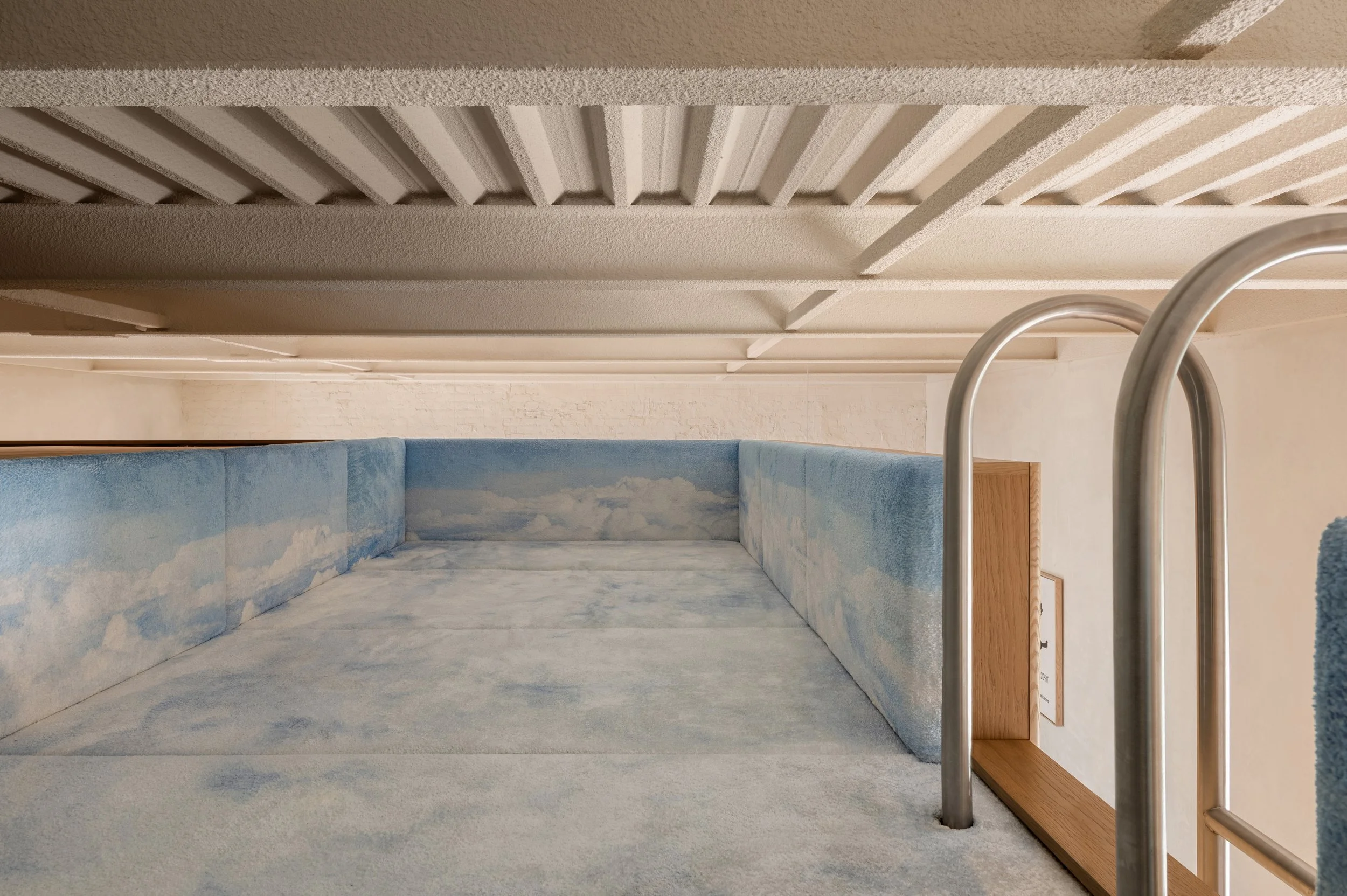
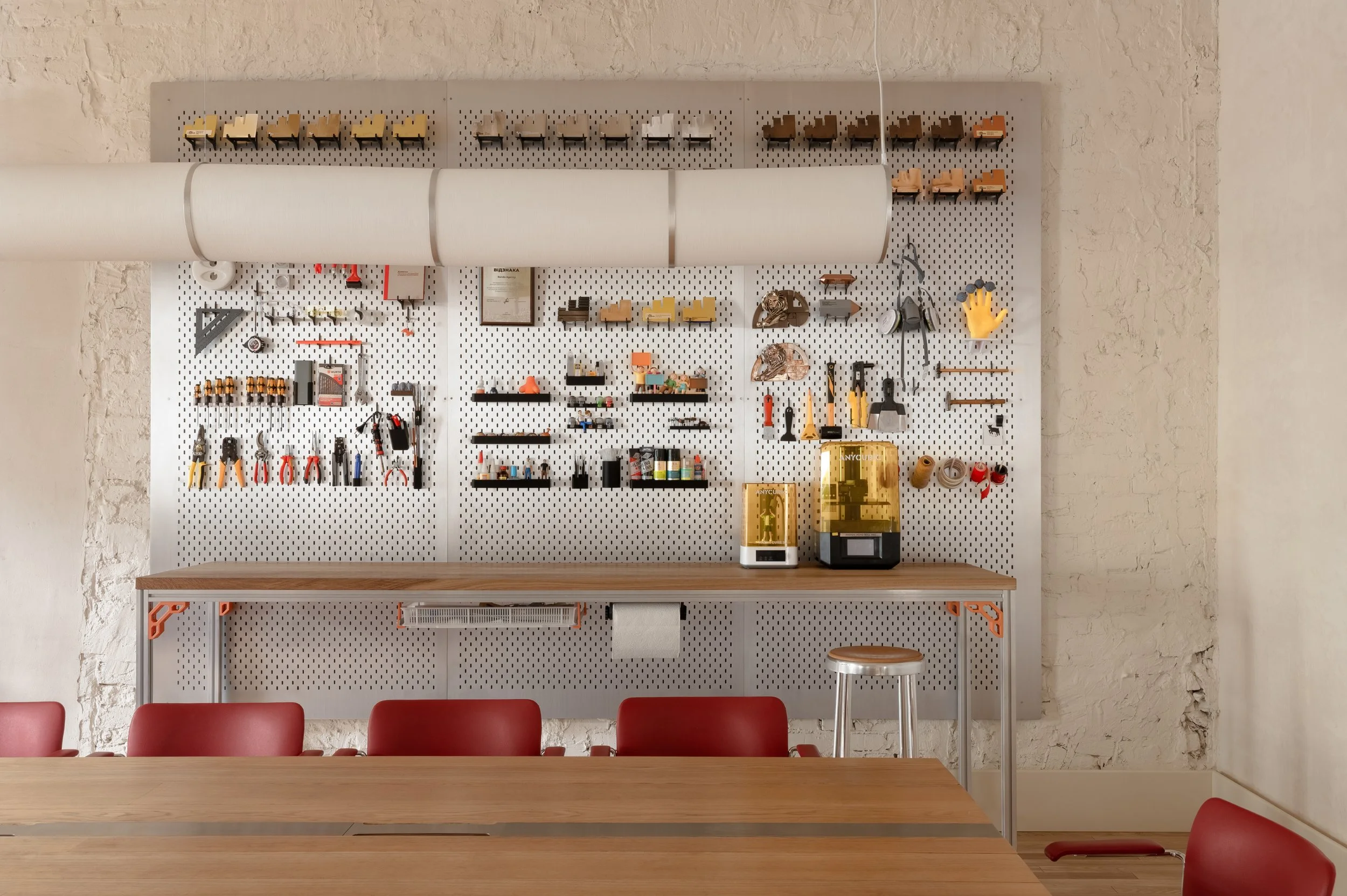
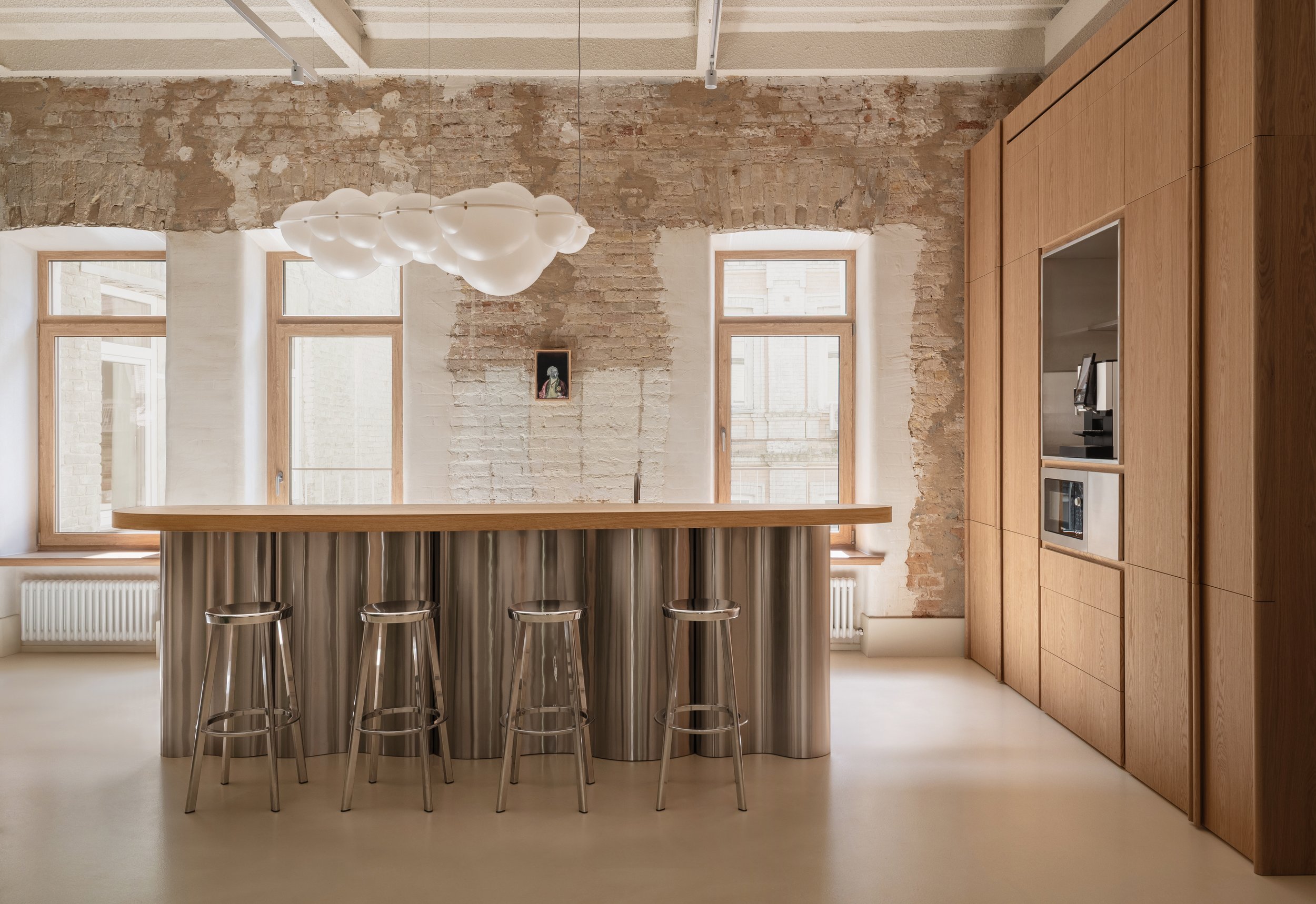
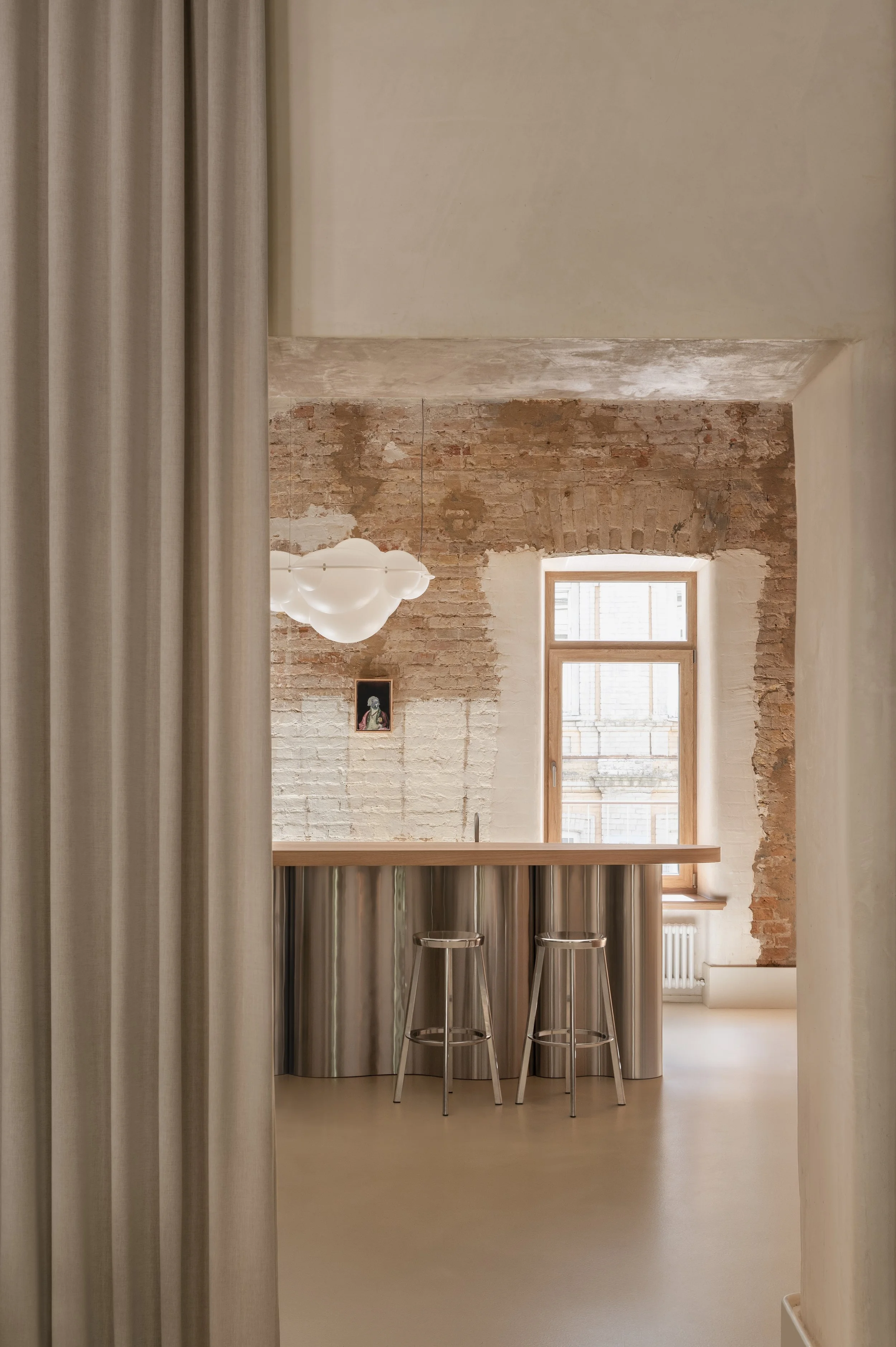
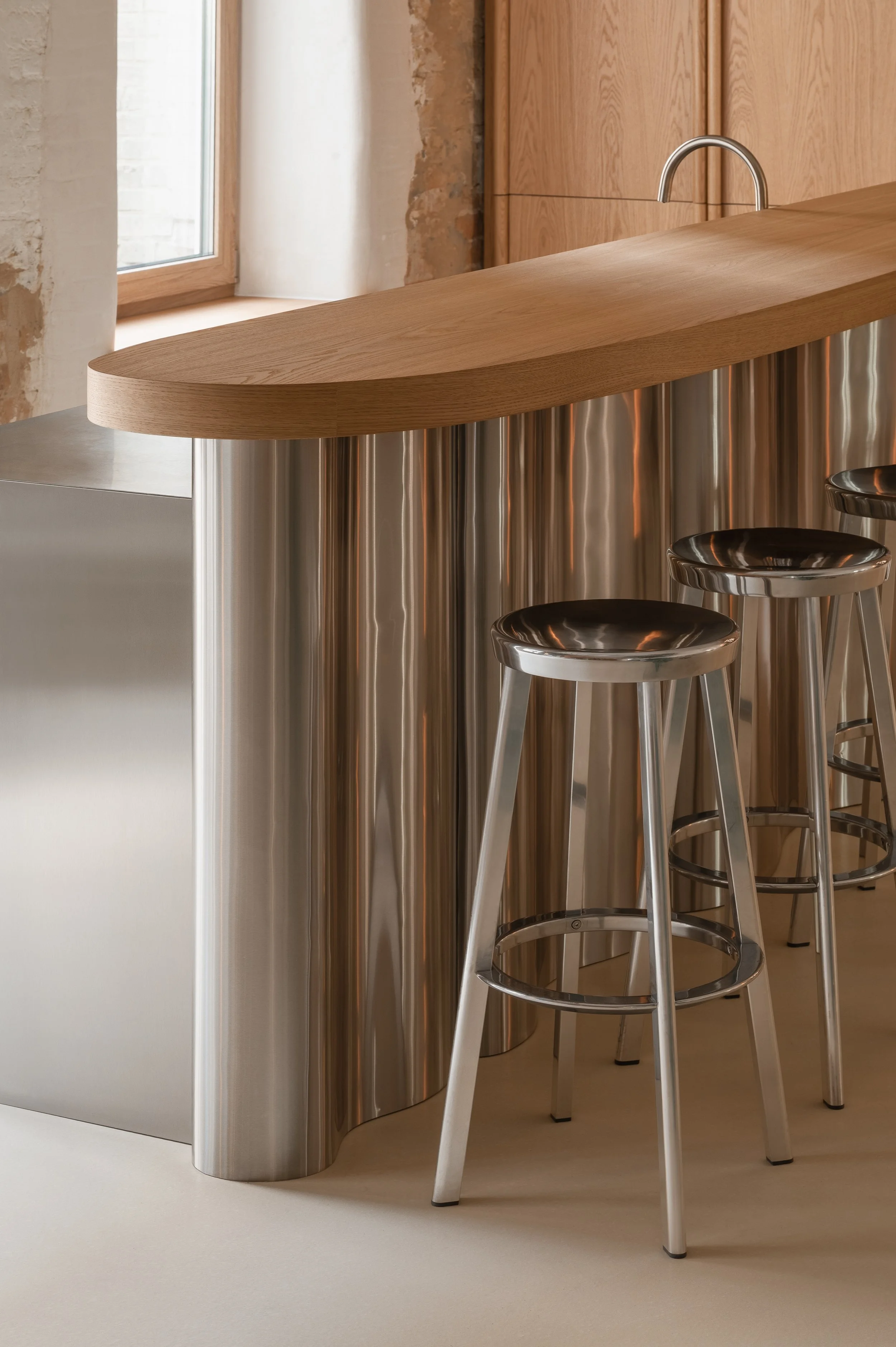
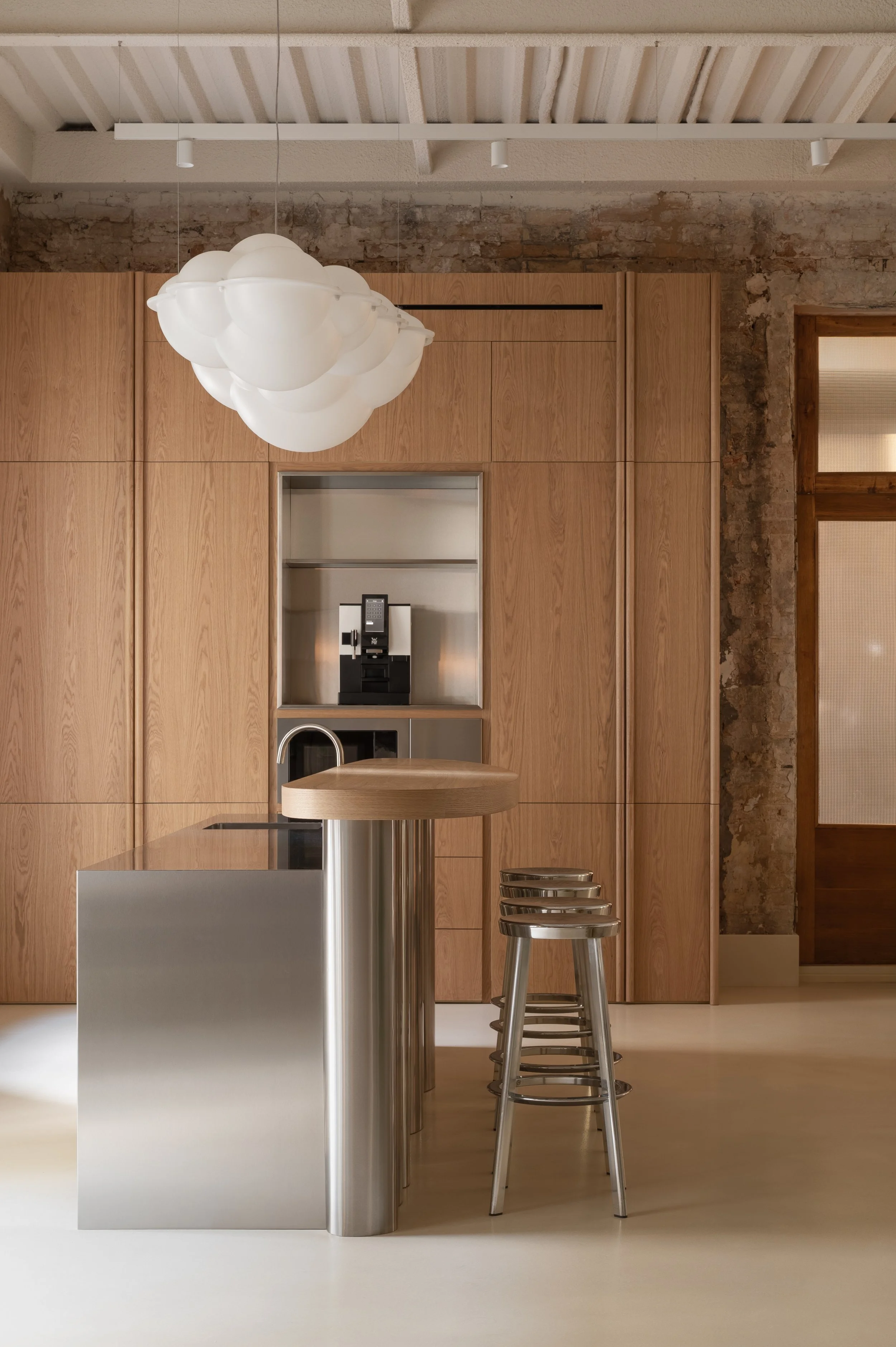
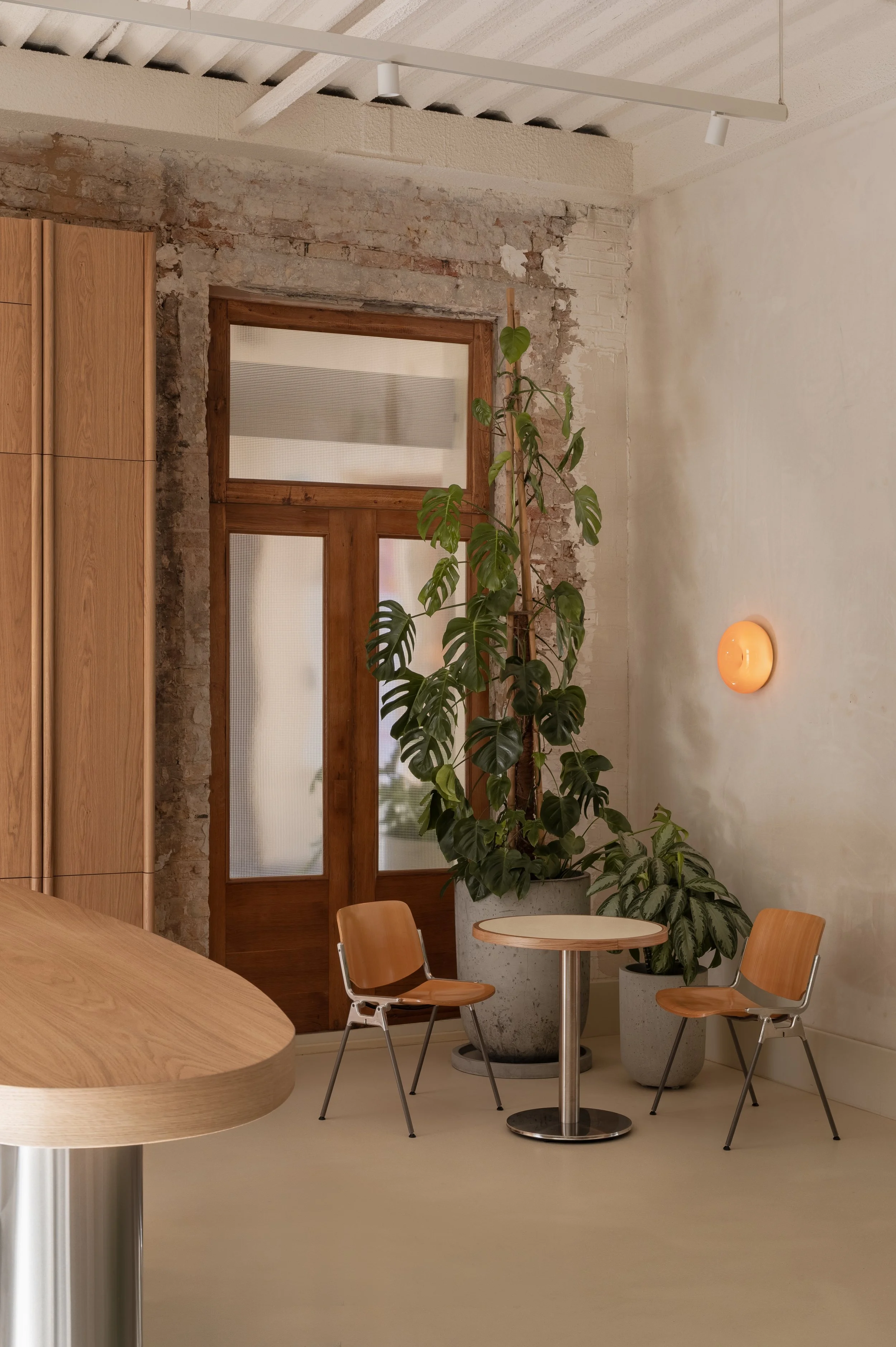
Above these rooms, a mezzanine lounge provides a contrasting retreat. Accessed via a steel ladder, the space is fully upholstered with sky-printed mats, forming an immersive, playful environment intended for rest and informal gathering. Adjacent to the main hall, the kitchen-dining room centres on a stainless-steel island and a sculptural bar counter paired with Magis stools. Wooden cabinetry conceals appliances, while preserved paint samples between the windows act as a quiet record of the making process. Vintage Castelli chairs, small tables and dense planting complete the dining area. At the far end of the plan, an open workshop supports hands-on experimentation and prototyping. Brushed aluminium pegboards line the walls, providing adaptable storage for tools and materials, alongside the agency’s awards. A long overhead light assembled from three standard fixtures underscores the project’s pragmatic, process-led approach.
Throughout the Banda Creative Agency Office, ater.architects balance refinement with imperfection, historic fabric with contemporary insertion, and work with domestic familiarity. The interior supports collaboration, experimentation and pause in equal measure, offering an environment that reflects the agency’s values as clearly as its output.