Alvico by De la Villa Studio
In La Latina, one of Madrid’s oldest neighborhoods, Alvico occupies a ground-floor premises shaped by the area’s medieval street pattern and street-level energy.
Narrow lanes open into small squares, and each Sunday El Rastro brings a dense mix of antiques, design objects, and found pieces. That nearby visual and material abundance informed an interior approach grounded in texture, proportion, and a calm backdrop for product and work.
Before the renovation, the space was divided into smaller rooms and split across two floor levels, limiting continuity and making it difficult to operate as both office and point of sale. De la Villa Studio addressed this with a direct spatial reset: partition walls were removed and the entrance level change was eliminated to restore a single, legible volume. The ceiling plane was also regularized to maximize clear height, improving both the sense of openness and the overall balance of the interior.
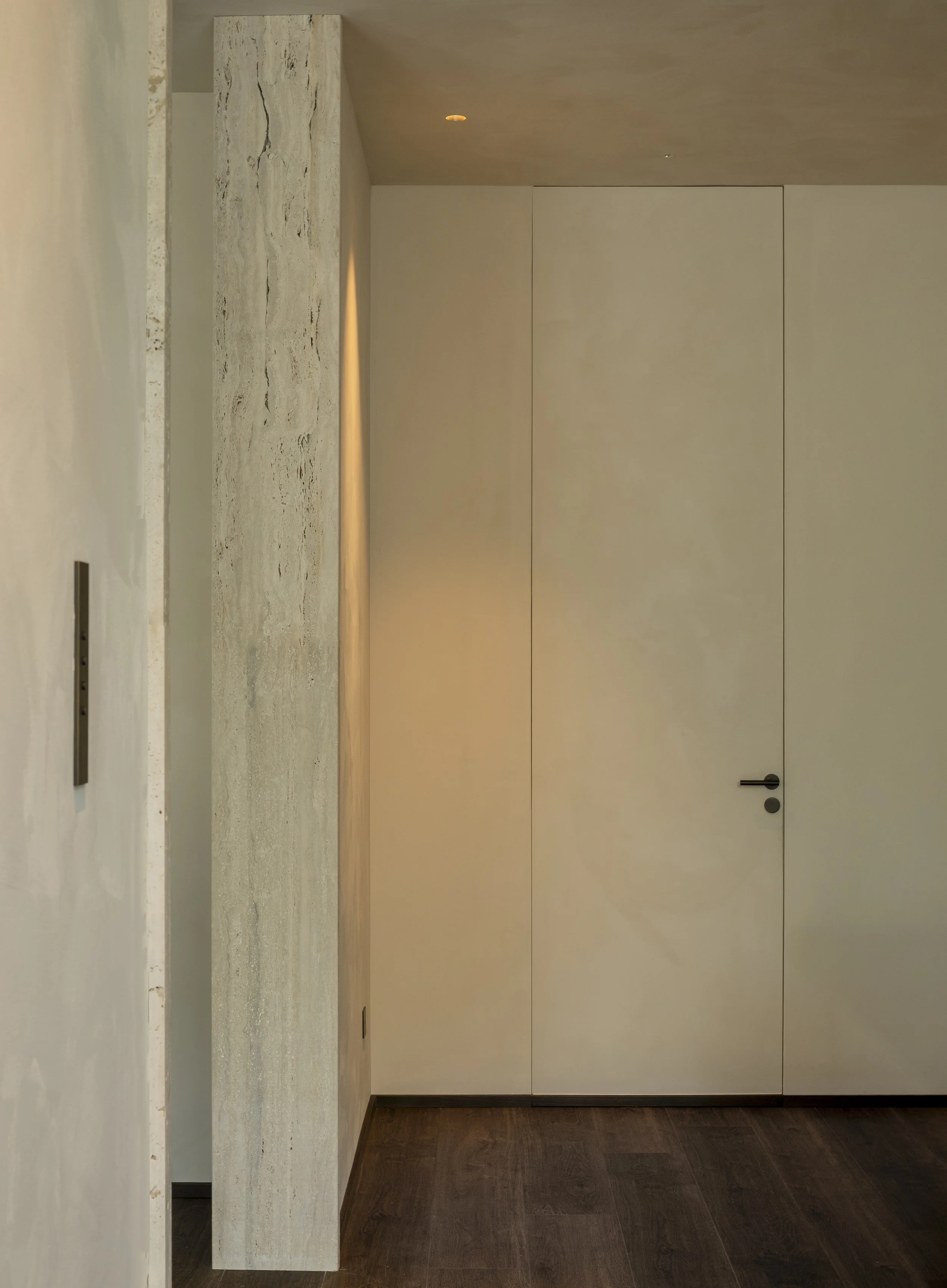
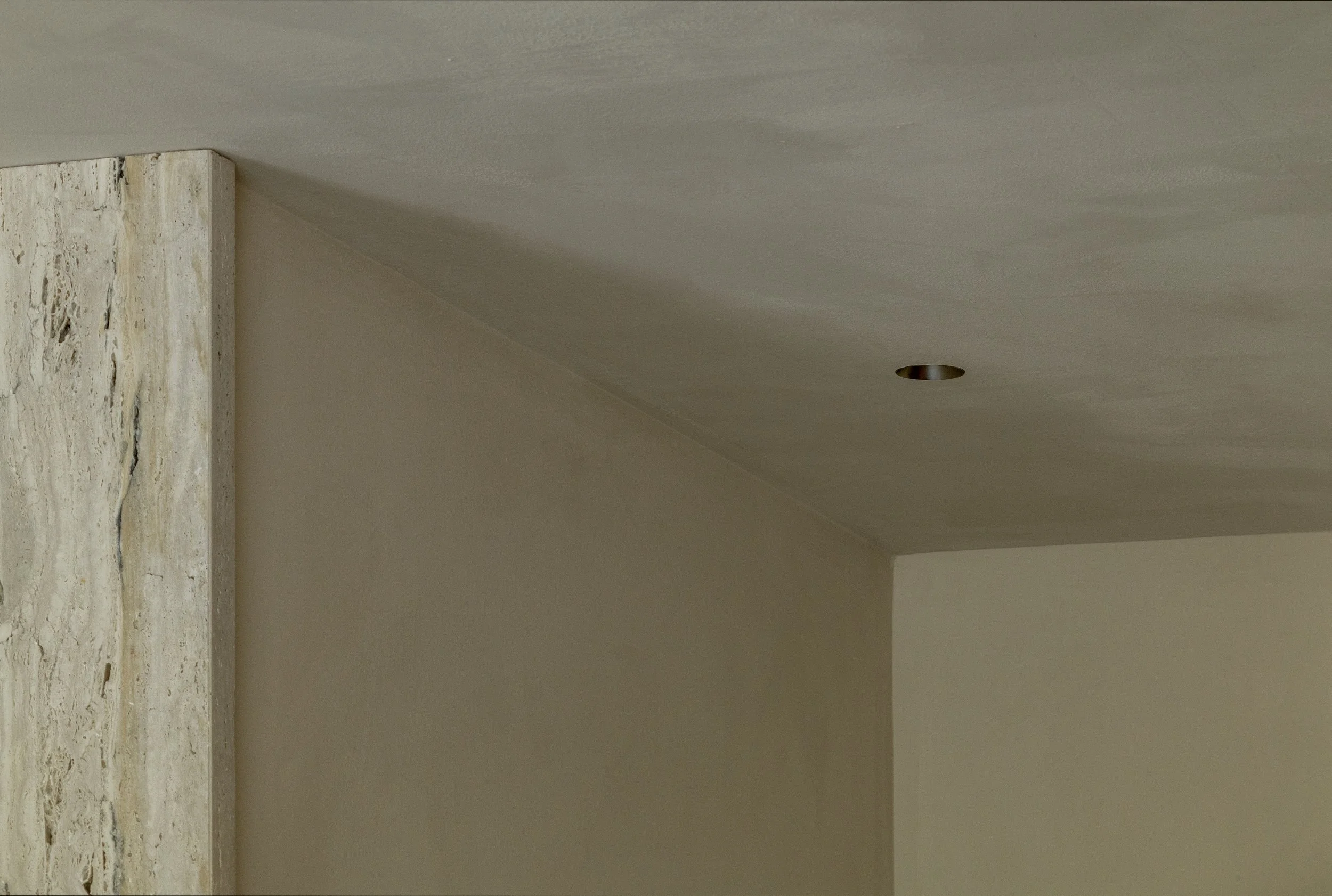
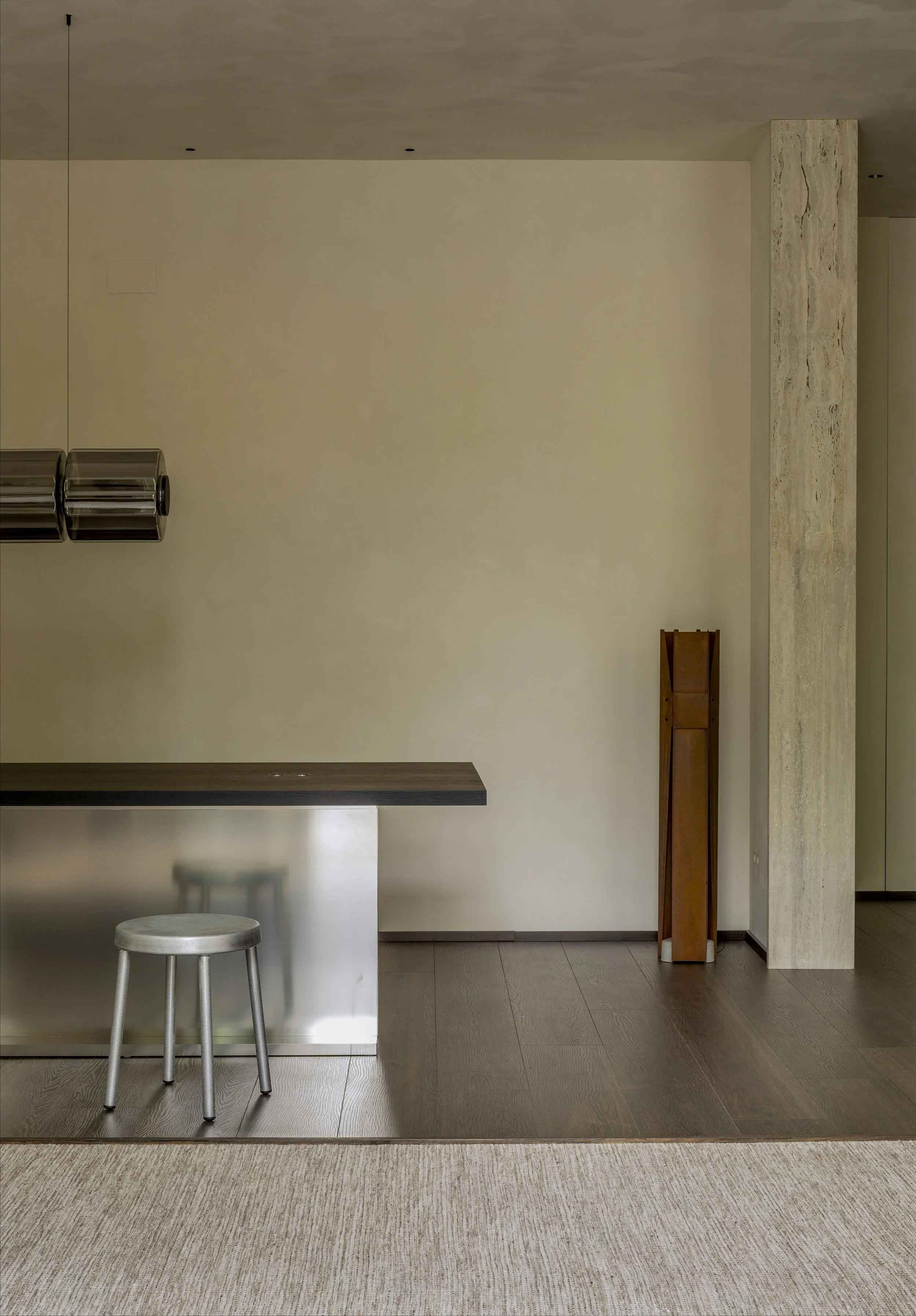
The plan is organized into two primary zones, defined by a natural travertine frame that acts as a threshold. More than a divider, it provides a tactile, architectural marker that guides movement between a meeting and exhibition area and the workroom beyond, introducing a moment of weight and craft at the center of the layout.
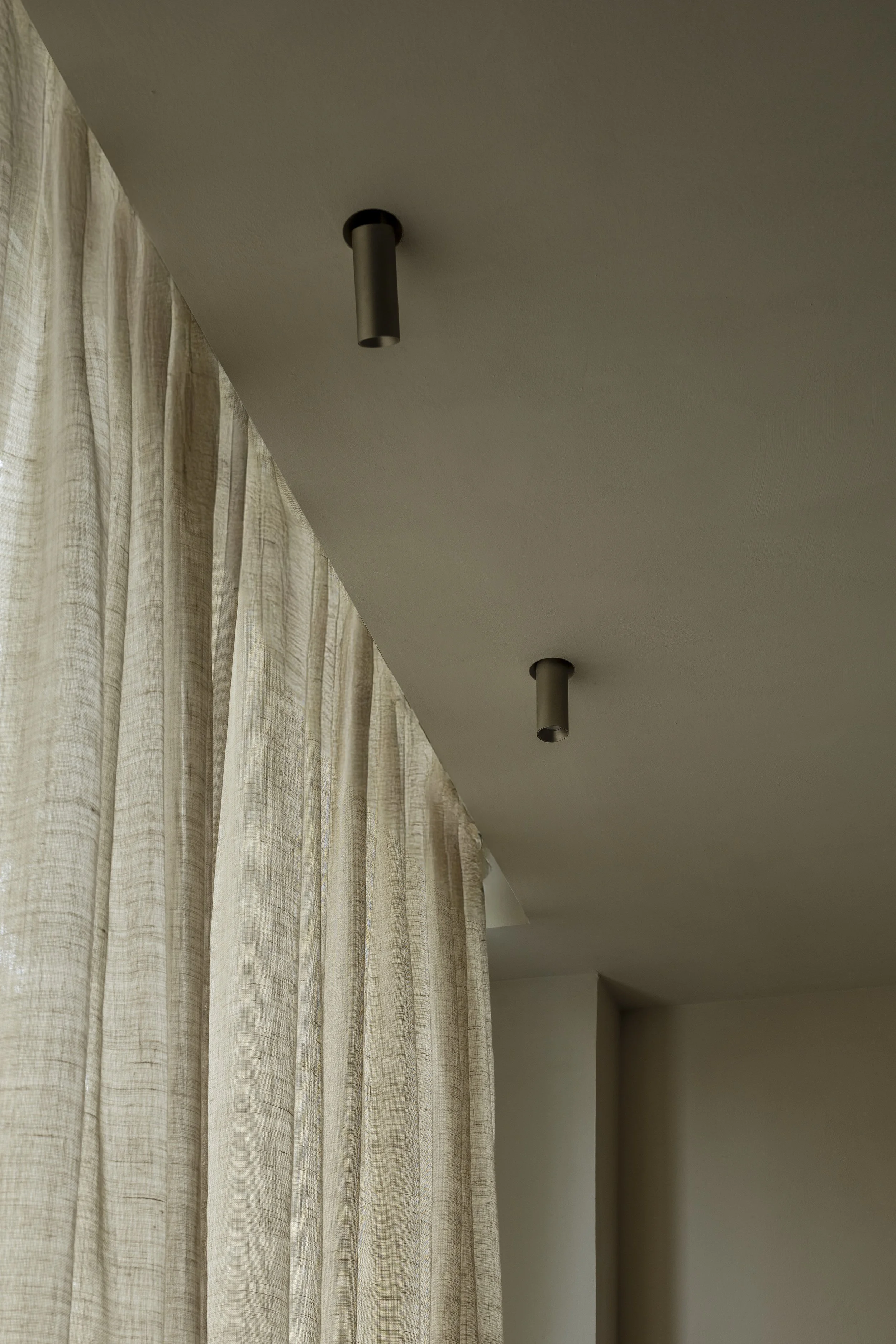
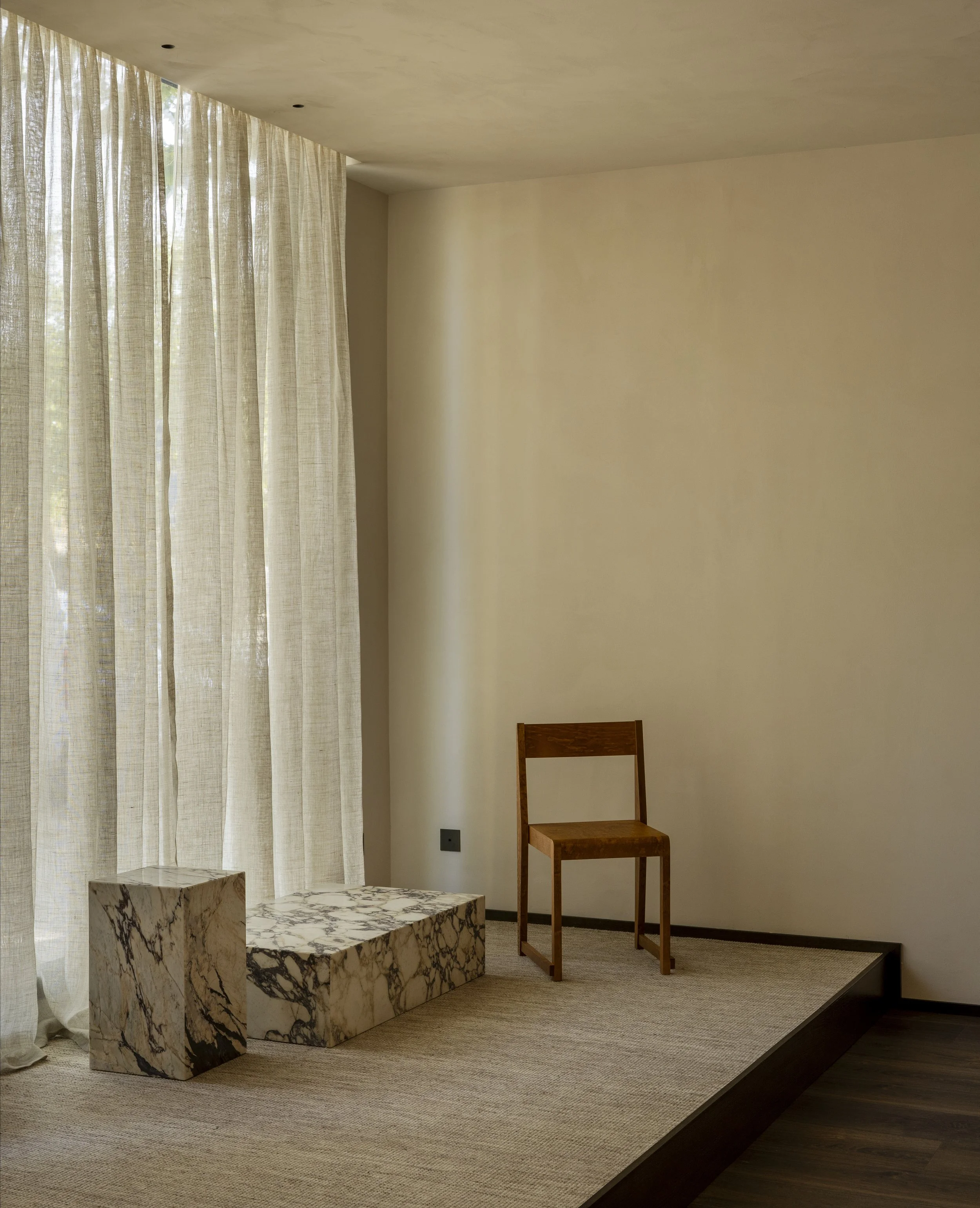
Material continuity supports the new clarity. A dark oak parquet, laid in long planks with concealed joints, runs through the premises as a single surface, reinforcing flow and visual cohesion. At the entrance, a slightly raised area is finished with a textured jute carpet that adds warmth and acoustic absorption. Linen sheers at the windows soften the street-facing edge, bringing a quiet, domestic sensibility to a workspace without compromising its professional character.
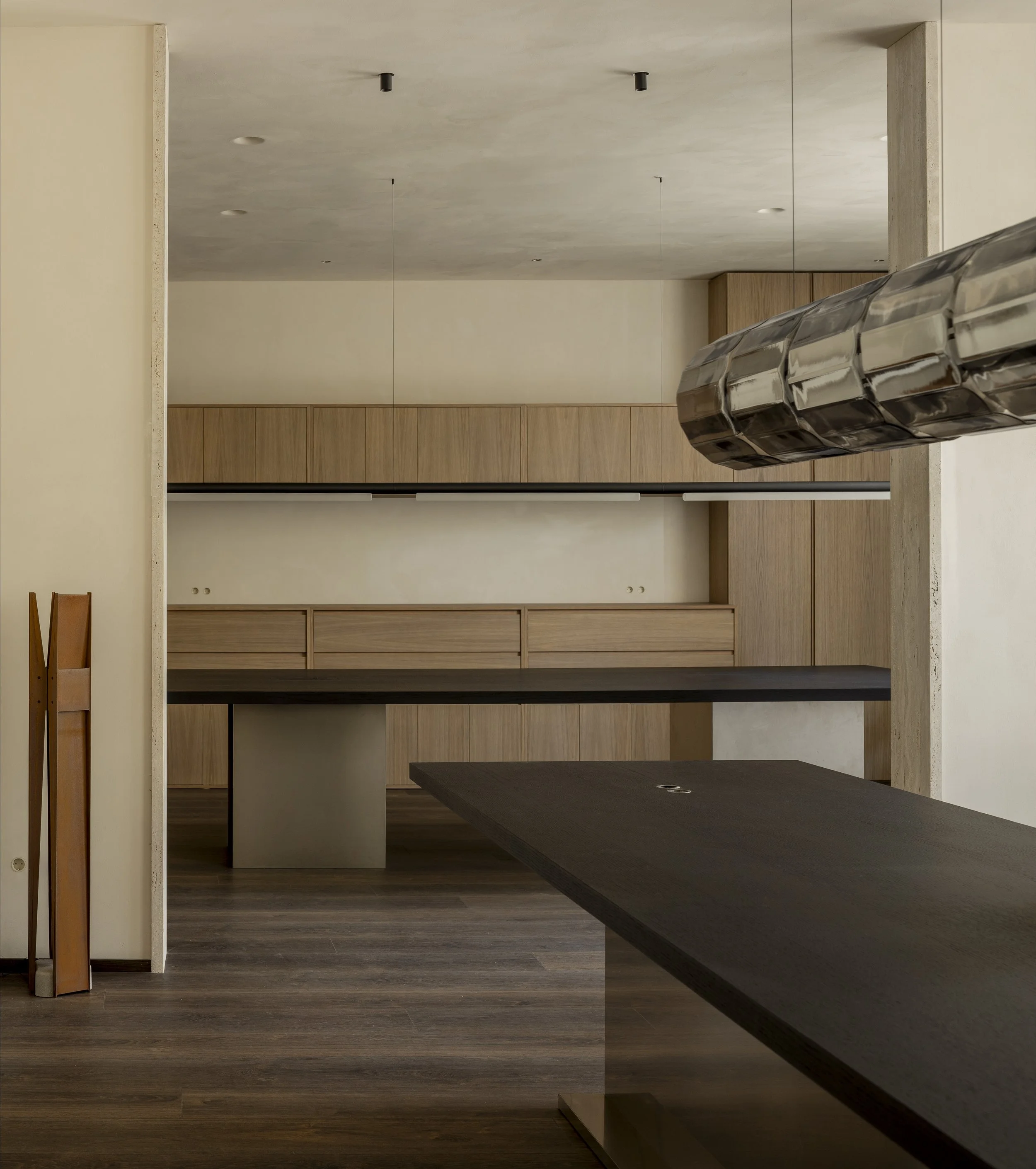
Walls and ceilings are finished in beige lime paint, chosen for its mineral texture and nuanced response to daylight. The finish subtly modulates across the day, keeping the interior luminous while maintaining a restrained, tactile palette that complements the products on display.
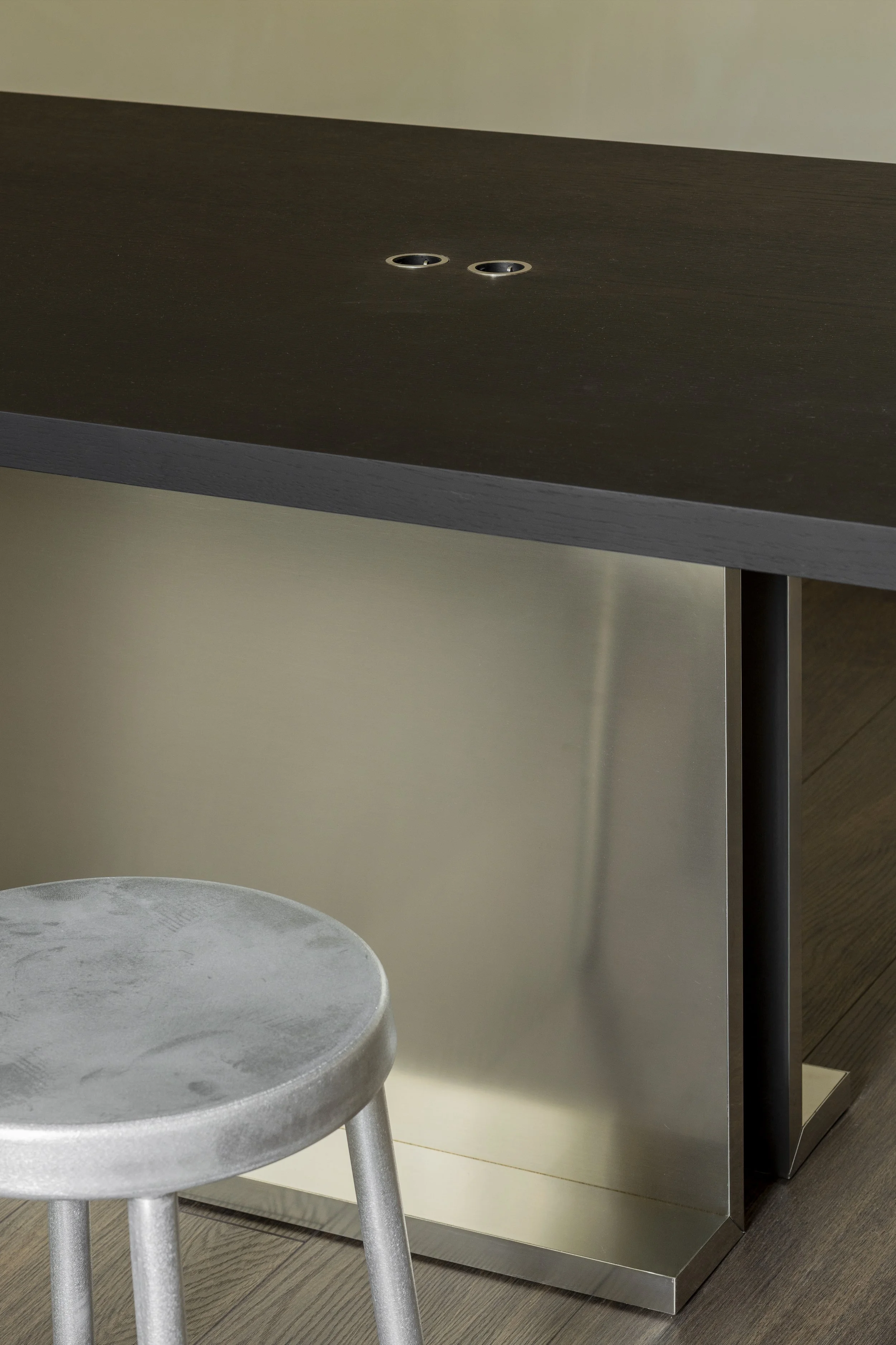
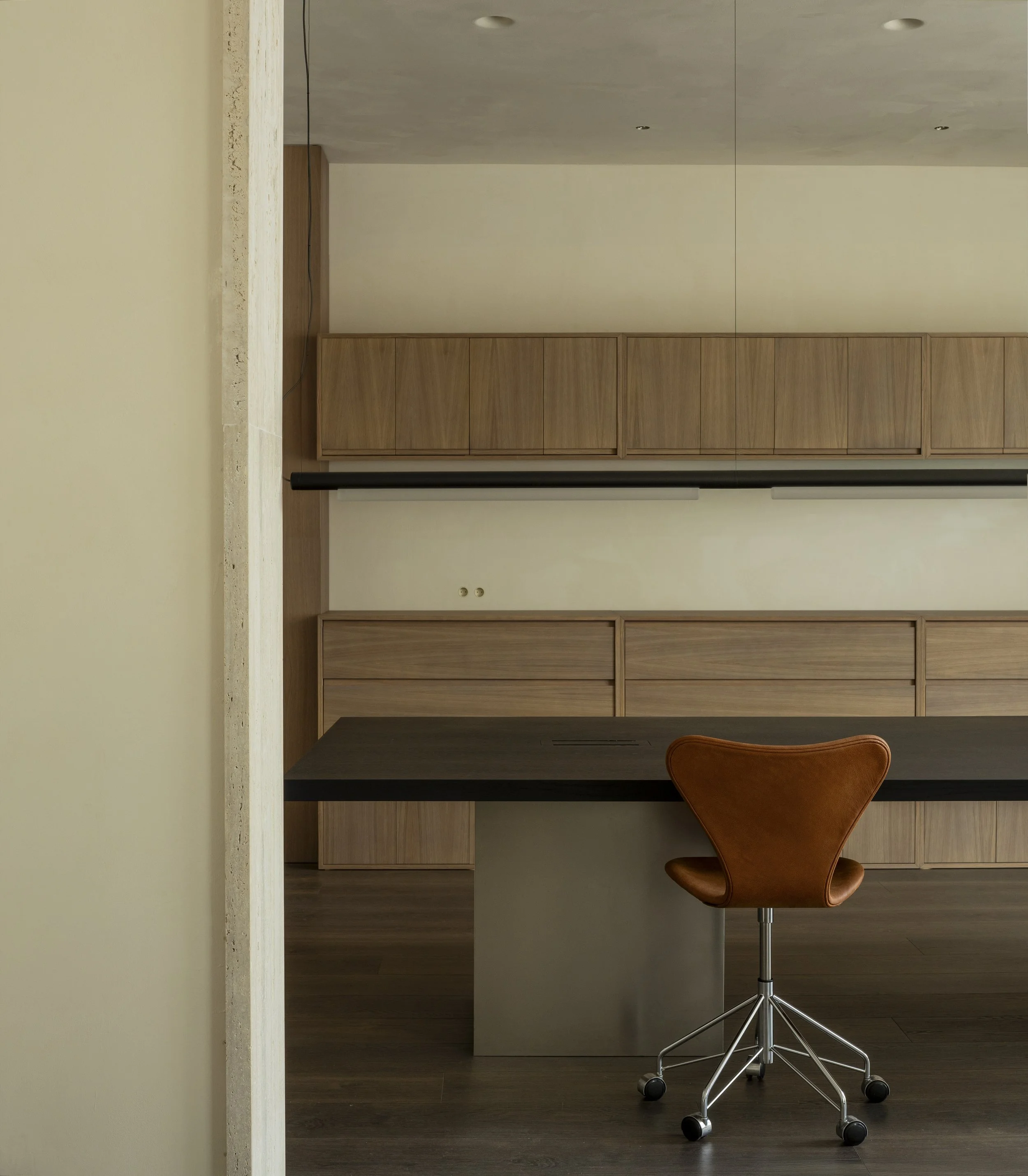
At the center, two custom large-format tables anchor daily use. Dark oak tops sit on sculptural stainless steel legs, allowing the same pieces to support work, meetings, and presentation. Storage is consolidated at the rear in a bespoke light oak unit, with taller elements at the ends and lower modules in the middle to reduce visual mass while maximizing capacity. A concealed door is integrated into this joinery, providing discreet access to the warehouse.
Street connection is strengthened by extending the windows from floor to ceiling. This adjustment increases natural light and turns the facades into clear shopfronts, offering passers-by a direct view into the space and its materials.